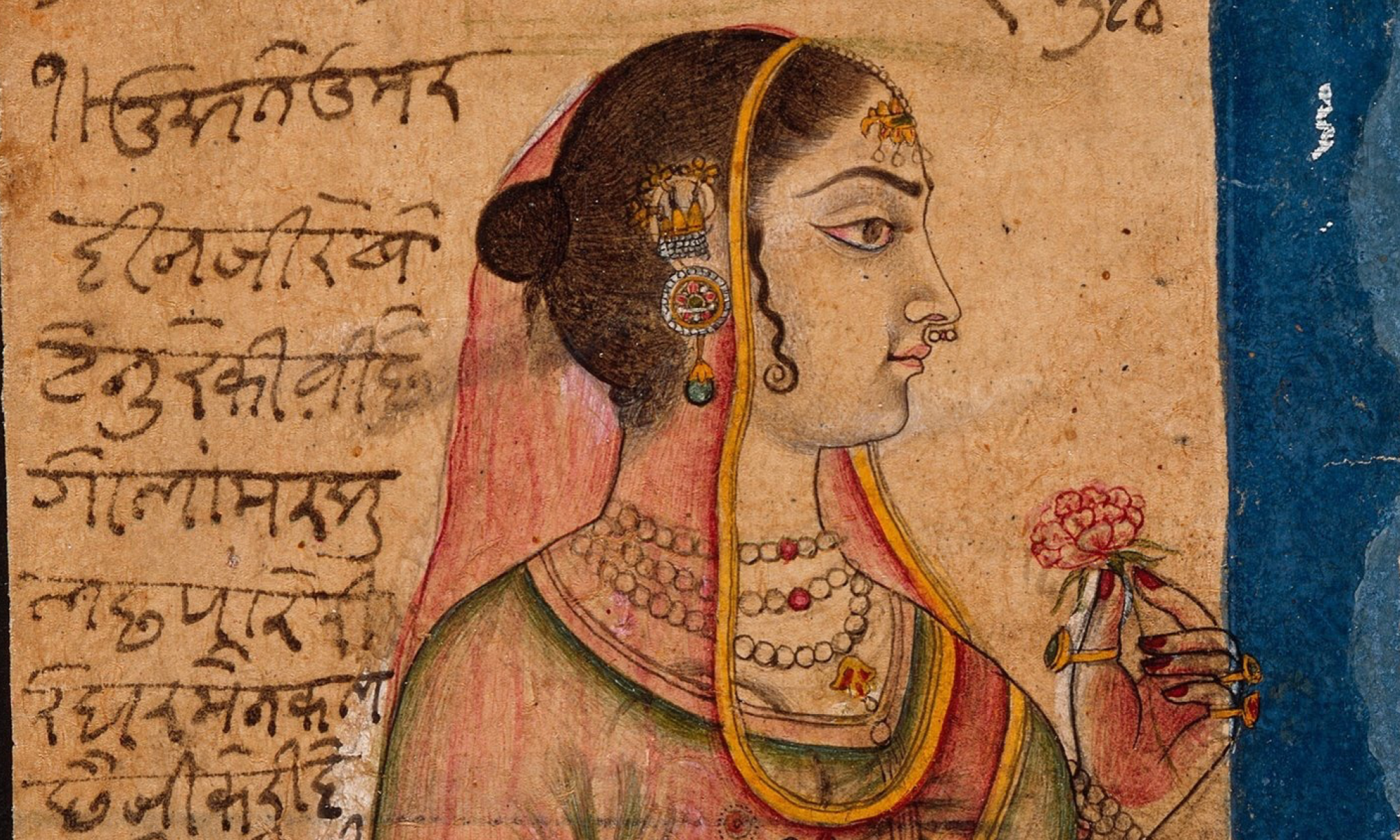
One Kalashnikov + two Kalashnikovs.

In 1996 I visited Afghanistan and Pakistan for an Australian NGO. The Taliban had just captured Kabul a fortnight earlier and thrust, very momentarily, the plight of everyday Afghans back into the international media’s spotlight. Given the current state of Truskland I think these voices are worth revisiting.

He was as new to town as I.

“I came here from Kabul the day before last. My name is Hashim.” He wore a hesitant smile and a blue waistcoat. He had been watching me walk up through the gardens and toward the street. “Will you make my photo?” he asked.

He posed with his arms across his chest and gazed away from the camera with a cinematic expression. I took his picture and asked what had brought him to Mazar-e-Sharif.

“My father told me to get of of Kabul as the Taliban are capturing all young me to fight. I’ll go back when my father tells me. I am staying in a hotel as I have no relatives in Mazar. Its very expensive. All day I sat here watch people in the garden. I sit and think but I try not to think of my family. We had a shoe factory in Kabul. But when the mujahideen came to power they stole everything. Now I am jobless. In Kabul I study English and also kung-fu. But now everything is closed. I don’t go out because it is too dangerous. I am Turkoman. The Taliban are against us. And the Tajiks and Hazaras.

“I saw Najibullah hanging in the street. It made me sad. None of these groups are Muslims. They only kill anyone who doesn’t agree with them. ‘Grow a beard!’ ‘Wear a hat!’ ‘Don’t go outside!” And if you disagree to grow a beard it is the end. For the last 5 years I have seen these people. They are not Muslim.

“See that man there, singing. He’s gone mad. I’ll go mad, too. I sit here everyday. I want to get out of here, to Germany or to an English speaking country but its too expensive.”

*****
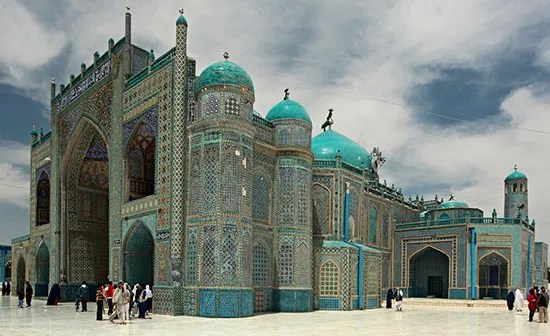
Blue Mosque/Tomb of Ali, Mazar-e-Sharif

“How is my English? I have been studying for two years but most foreigners do not like to speak with me. Why is that? One time I asked a foreign man what time it was. He told me, ‘Sharp 4 o’clock!’ That was that. He said no more to me.” Khaililullah spoke excellent English. He was a northern-Pashtun–dark, almost Indian in appearance. But he had born north of Mazar and had recently returned from over 10 years as a refugee in Pakistan.

“I teach English. In Monkey Lane. Will you come and visit our class?” I told him I would come but not today. Today I was interested in visiting the shrine of Ali, the grand blue-tiled mosque around which this desert town spills. I told Khalilullah how much I admired the mosque and its color. “You’re lucky to live so close to such a beautiful building.”

“By the grace of God we have a good leader. General Dostum. He used to be a communist but now he prays five times a day–he’s very good. And powerful. The Taliban are the trouble. They want to keep girls from school And this forcing men to pray in the mosque five times a day. Even our Prophet Mohammad himself only prayed 4 times a day sometimes So who are they to force us?

“Of course. There were excesses in Najib’s time. He gave too much freedom and too quickly. Especially to women. This corrupted us. Women went about barefoot–without shoes and wore nothing at all on their heads. According to Islam, a woman’s head should be covered. But not completely hidden. Both the Taliban and Najib are wrong. God save us from that much freedom. On the other hand under Najib, women and girls were educated and worked. That was good. So he was not entirely bad.”

Najibullah felt that the public hanging of Najibullah was inevitable. In his mind it was a justice of sorts for having allowed women to go barefoot and to be judges. But what he told me next I heard many times during my visit.

“Before they killed him they ordered him to sign his own release papers. He refused. He had denounced communism and discovered patriotism. He did not feel he had to confess to any crimes. But I know from an accurate source that he had memorised the entire Quran. But he refused to sign the papers confessing to anything. So they killed him. But in that, he was right. All Afghans respect Najibullah now. He wasn’t afraid to die. He was a true Afghan.”

When I visit Khalilullah’s school a few days later he refused to discuss anything except English and non-political subjects. “What do you call this?” he asked me, pointing to a shelf. He made not of my response, “A mantel.”

He and his fellow students discussed music and literature as if nothing was wrong with their country. The school had 600 students, women and men, learning English every day. “We want to prepare ourselves for the future. Today you must have knowledge of two things, English and computers, if you want to succeed.”

Jamil was adamant. “What do you believe will happen to Afghanistan?” Before I could respond he went on. “We are fanatics. This is no way to bring universal peace anywhere. And there is no way our people will talk. No way they can win in fighting either. I don’t know what will happen. This fighting will continue. All I know is that I will go to English class and then I’ll go home. Tomorrow? God only knows. Who sees beyond today? We are ready for anything though. My father is not a commander. We are civilians. We want peace and normality. Things like sports and music. My name is Jamil. It means beautiful. We want to help ourselves by learning English but our pronunciation is all bad. What do you think?”

*****
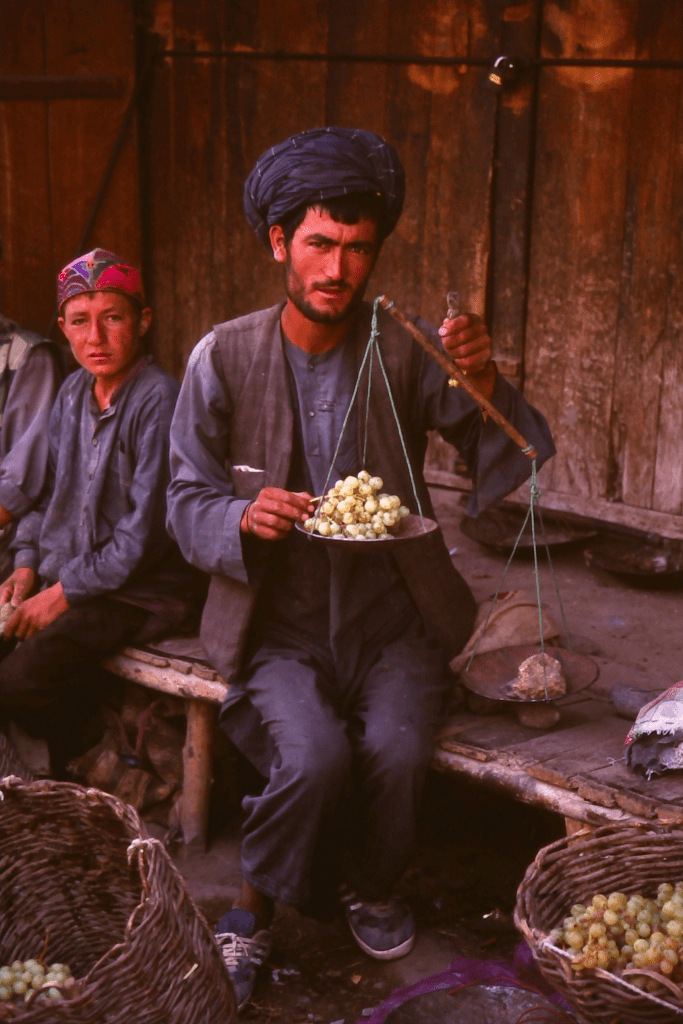
A Tajik grape seller, Faizabad, Afghanistan 1999

*****

“Welcome! Just have a look, no need to buy.”

The huge bearded Afghan stood beckoning to me from the doorway of his carpet shop in Peshawar’s Khyber bazar. It was a typical sales pitch but it soon changed when I enquired about the man who owned the shop next door. He was the son of a friend from Melbourne.

“You want to see Hamid?” he glared at me.

I nodded.

“Communisti!” The word hissed out of mouth like air leaving a tyre. His companions in the shop immediately turneds toward me and smiled sheepishly.

“Hamid is no good man. He is a foreigner. And communist. He supported Russians and speaks their language.” The man stumbled about for words to express his dissatisfaction with his neighbor. He spoke broken English and felt limited in what he could say.

“Communists. Uzbeks. Hazaras. Very bad.” He made a gesture with his finger slicing across his neck. “They are not Afghans. They are Angrez!”

I asked what he meant by calling Uzbeks and Hazaras, the most Mongol-featured of Afghans, Englishmen.

“He means they are foreigners. They have come to Afghanistan only recently. They are not true Afghans. We Pashtuns are real Afghans. The others are not. They are so small in number, not like us. Pashtuns are 60% of Afghan people. The others are only few. Miniorities, you know.” This man who spoke better English wouldn’t tell me his name but he did identify himself as working as a ‘spokesman’ for the Taliban office in Peshawar. “I know very well the Taliban. They are very good. They are against Communism and foreign domination.

“You see, we are refugees in Pakistan. It is not good for us to say that we want to control Pakistani politics of government. This is not our right. We should only sit quietly and do our business. It is not right for us to force our desires on the Pakistani public. And so it is with Uzbeks and Tajiks–though Tajiks are not so bad. But Uzbeks and Hazaras. They are refugees, not true Afghans. They came only in the last 40 years and now they want to dominate the whole country. But it is for us Pashtuns to control Afghanistan. This is our country. Uzbeks should return to Uzbekistan and Tajiks to Tajikistan. Why should they stay in Afghanistan?”

The bearded carpet seller broke in again. It is very dangerous here these days. Every day the Shi’a are attacking Sunnis. We must kill the Shi’a.”

Most Hazara Afghans, the poorest and historically most discriminated against of all Afghan minority groups, are Shi’a.

The TV in the shop began broadcasting an old Pakistani film romance. The men ignore me and lay down on the carpets in front of the TV. A woman danced through a rose and fountain garden to a lively folks tune. The men smiled as they watch the star dance.

I didn’t bother to ask them about the Taliban’s attitude toward women.

*****

The next day I had tea with an Afghan refugee family. They had come to Pakistan after the fall of the Najibullah government in 1992. They were secular, non-Pashtun Afghans. Educated abroad and middle class. For four and a half years they had lived in Peshawar.

The matriarch of the family, Hafeeza (not her real name) has lost a husband, two sons and two daughters. Her husband, a senior figure in the PDPA (People’s Democratic Party of Afghanistan), the Soviet-backed party that ruled Afghanistan from 1978-1992, was assassinated in 1989. Her eldest son and daughter were kidnapped in 1992 by triumphant and vengeful mujahidin in Kabul. “I have no idea why they were taken from me. These people hate everyone…especially people who they consider communists or Russians.

“My eldest daughter was a doctor. Since the day of her marriage I have not seen her. She may be dead. Or she may be living secretly someplace. But I’m sure she is dead because even if she was in Mazar or overseas she would contact me.”

Hafeeza had been the principal of a large school in Kabul. In Peshawar she had tried to get a job as a teacher but had been turned from every door, called a communist and foreigner. “I have even tried to have young children come here to our house for tutorials but parents forbid their children from attending because they believe I will teach them wrong things.”

She smiled ironically. Another member of the family took over. “In the schools here in Peshawar, which are controlled and run by the mujahidin and Taliban, Afghan children are taught to kill people like us.”

She puled out a text book which looked like any normal grade-school primer. Poorly drawn figures and large simple sentences filled each page. Instead of apples and kitten the lessons used AK-47s as object lessons. 1 Kalashnikov plus 2 Kalashnikovs equals how many Kalashnikovs? On the following page, a similar arithmetic problem used grenades.

“What will happen to our children? What is the future of our country if they are taught such things? They are taught to hate and kill. Their masters in school teach them that if they kill 3 Communists or kafirs they will become ghazi. No wonder they hate us. Our lives are in danger. We cannot get work and we are afraid to move about in the streets.” Hafeeza broke down.

The other family member told me, “Just six weeks ago, her only remaining son was kidnapped here in Shaheen town. He was going to an English class be he never returned. He had been threatened and warned by some bearded people a few times, ‘we know who your rather was. You are a communist and Russian.’ Hafeeza asked him not to go out but he was young and wanted to learn something. But now he’s gone and I’m sure he’s dead.”

Hafeeza stared blankly at the floor. Her only remaining child, a 19 year old daughter, comforted her mother, though she herself was in tears. “They do not go out at all these days. They are afraid after what happened. Who will protect us? We are not communists and we are not Russians. Our fault is we are not Pashtun and we oppose the Taliban. For this they want to kill us.”

The family has siblings and parents in Melbourne. But their repeated attempts to get visas to come to Australia have failed.

My Desi Heart: Intro

Allahabad, 1965

I was born in India in 1957.  The youngest of four siblings in an American missionary family from small town North Dakota and Minnesota. We were evangelicals. Conservative in a Protestant theology heavily influenced by the Holiness movement of the 19th century. Small sect Methodism that believed all sinners could be completely ‘sanctified’ or perfect, in their lifetimes. Among other things of course. 

I was born in the southern Tamil temple city of Madurai but we lived 850 kilometers northwest in a Kanarese speaking area of what is now the Indian state of Karnataka. Dad’s employer, the Oriental Missionary Society or OMS, had established a bible training college in the town of Gadag, famous for producing one of classical Indian music’s noblest performers, Pandit Bhimsen Joshi, and a lively printing industry. 

Dad taught theology and related subjects to young Christian men and women from the surrounding areas. He regularly preached at outdoor revival meetings with his colleagues and students. Mom helped out wherever she was needed, sometimes as the bookkeeper for the college, sometimes she would join the pastors’ wives in their rural evangelizing campaigns but mostly she raised us kids.  

They had landed in Bombay after a long voyage across several oceans from New York in February 1952. They were appointed to join another American family, The Davises, who had two boys round about the same age as my two brothers, and a jolly, tubby spinster from Baltimore, Mary Ella Taylor. 

Mike my oldest brother was 5. Gregg, next up was 3. My sister Rebecca would arrive 3 years later, in 1955 and I brought up the rear in ‘57. There is a good case to be made that another sister was stillborn before I came along. 

We lived on the campus of the Karnataka Bible Seminary, whose red brick buildings dated back several decades. It was well shaded at least in the front part and served as a safe, walled but sprawling little world for me to explore as a kid.  

We were generally happy and normal. Among our subcultured circle of missionaries anyway. In fact, compared with the Davises,  mom and dad were liberal youngsters, which did cause ongoing friction between them over the years.  As is the wont of every child what they see in their homes they project onto the entire Universe.  There was nothing different about us. We all believed broadly the same things about the Bible and God and Jesus. We shared a barebone existence with few physical comforts. It was simple, filled with good food, devotions, trips to exotic places like the temples of Hampi, Shravanabelagola and the beaches of Karwar. Of course, “we” in these instances refers to other OMS missionaries or white folk in India more broadly.  

It was impossible not to notice that most everyone else around us and among us did not believe these things. But then, that was the whole point of our landing up in rural southern India. To try to get as many of them as possible to come over to our team.  A spiritual kabaddi match. 

Only recently have I begun to distance myself from the lived experience of my childhood. To look at it not from within but from a distance of 60 year; and from the outside. How did this rural, poor family from Minnesota end up in the villages of central India, speaking strange tongues and eating strange food? Why?  What was going on in India at the time? And how did being surrounded by religion and spirituality, in the home or everywhere you went in India, and speaking Kanarese simultaneously as fluidly as English and having Indian friends to whom I was closer than to my brothers who were away in boarding school?

What does /did this niche childhood-–Minnesota, Holiness Methodists, missionaries, newly Independent India, bilingual communication–influence who I am today?   

This is about that.  

India has been an indivisible aspect of my life since 10 July 1957. At times some have found it irritating and maddening.  Others have seen it as fascinating and exotic. Most just shrug, especially now in this tiny world we live in, in the 2020s.   

My connection to India is something I’ve always loved but haven’t known how to incorporate into my story. Or stories. It depended on the audience of course, as all stories do. My wives have felt threatened by India which is so easy to love in comparison with a real complex woman. So, there is shame and protection mixed in with my love of India. I’m sure many, including myself, thought I would outgrow my romantic childhood when I became an adult and that its influence would settle into a manageable and quaint curry now and then and perhaps one grand tour with the family when the kids are old enough to enjoy an adventure.  

But it hasn’t happened that way. The older I got the more attached and fascinated by and in love with the place I become.  I chose to study Hindi rather than Latin or French in high school. At the University of Minnesota, I jumped from majoring in Anthropology and Journalism and English before settling on South Asian Studies and History. I studied Urdu as well as Hindi. I spent a year after university studying in Lahore Pakistan. I was thinking of doing a PhD on one of the most important figures in modern South Asian Islam, Maulana Maududi. But then I got a job with the UN in Islamabad and began a career that took me around the world. India faded into the background for those years but never died.  

I began blogs about South Asian music and wrote a novel set in Pakistan. I read books on the caste system, Tamil anti-Brahmanism, Aurangzeb and the film industry, travelled and photographed across India whenever I could, did an ongoing deep dive into south Asian music and film and wrote a weekly column on the subject for an Indian online paper. I was asked to write a history of the Pakistani movie industry and now I’m thinking of leading tours to the sub-continent.   

India is not fading away like it was supposed to.  

Many of my kind (Missionary Kids from India and Pakistan) break into song when asked by Indians to explain ourselves.   

Mera juta hai Japani 

Yeh Patloon Englstani 

Sar pe lal topi Russi 

Phir bhi dil hai hindustani 

(I wear Japanese shoes and English trousers, The red hat on my head is Russian but still my heart is Indian)  

It’s a hackneyed trope but does capture the essence. 

My first blog I named, the Washerman’s Dog which is the English version of another famous Indian aphorism: na ghar ka na ghat ka, dhobi ka kuta (neither of the ghat nor the home, the washerman’s dog) 

Both sets of lyrics resonate with me. I do feel homeless in a way, neither from here nor there. But also completely blended in with India.  

Hence, it seems appropriate to name this column, My Desi Heart. A place where I’ll explore the story of my love-affair with the sub-continent. 

The Silent One

After a breakfast of cold TBJ (toast butter jam) at one of the several ‘hippie cafes’ that line the narrow tarmac road running along Puri’s beachfront, I walked down to the station to buy a newspaper.  When I arrived, I was informed that as today is the day after Republic Day there are no papers. 

On my way back to the café I stopped to observe a sadhu who was holding court outside a colourfully decorated, low-ceilinged temple not far from the entrance to the station. 

He was toking up when I arrived. The chilam was offered to me but I declined. A group of rickshaw walas and assorted young men squatted in a semi circle near him. Each drew deep on the pipe as it made the rounds. 

I asked them if they weren’t afraid that the police would round them up. 

This has been purchased under a government license. No problem. 

A man with rotting teeth told me that smoking hash was essential to the people’s daily existence.  Some people eat  paan, others smoke ganja, some like bhang, others charas. Its all for digestion of the food.  It is necessary. 

I reply that I get paranoid when I smoke it.  

They all laugh. Their tired red eyes remain motionless while their faces move in different ways.   Like all addicts, they agree that moderation is the attitude to be employed. But they exclude themselves from their own advice with a shrug of the shoulders. 

I am told the sadhu has not spoken for 12 years.   

He has four more to go before his vow is complete. 

I wonder if he will still remember how to form words after 16 years of silence. 

He communicates through gestures and a penetrating gaze but cracks an engaging smile once in a while. His sidekick, also a sanyasi, seems to have sworn the opposite vow: to talk as much as he can in as short a space as possible. 

He interprets the silent one’s flailing arms and pointing fingers.  He details their recent past and spells out their future intentions. (They are headed to Nepal, next). The sidekick tells of fabulous bright silver coins and good charas in Kashmir.  

We sleep wherever we find a spot. A sanyasi has no home.  

Do you travel by foot, I ask. 

He laughs.  No. No. No. We are sanyasis. We go by train.  Whoever has heard of a sadhu paying for his travel? 

As I leave, the silent one pinches some ashes from his smoldering fire and signals that I should smear some on my forehead, which I do.  

Sidekick then rattles, Now swallow the rest. 

I hesitate but do he says.  I walk away with a gritty taste in my mouth. 

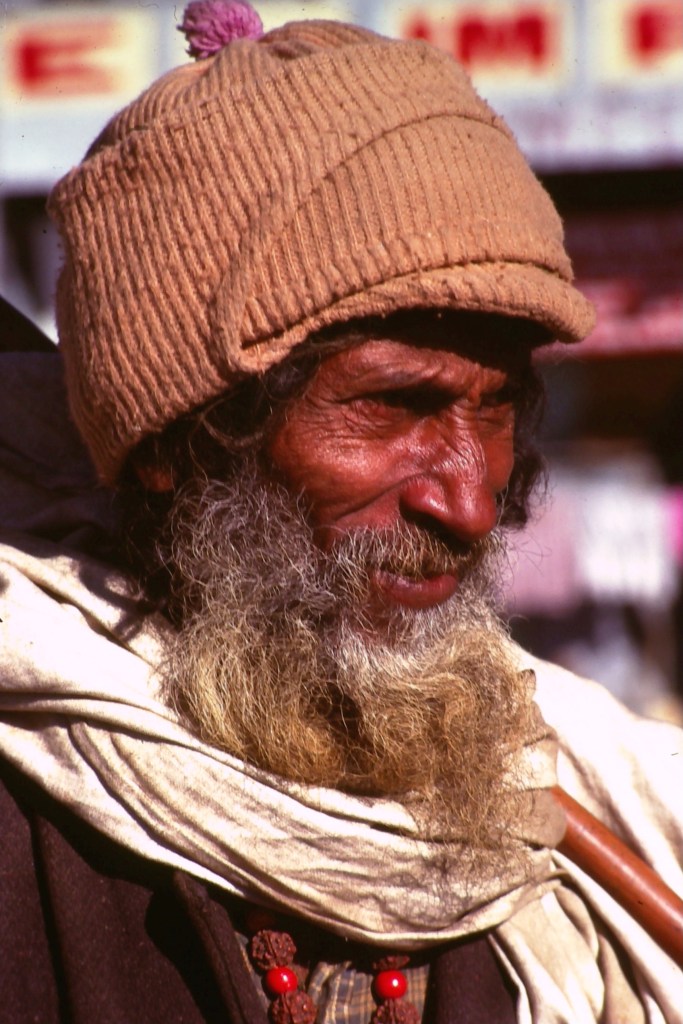
This piece was written in January 1989 while on a holiday in eastern India. The image is called ‘Mussoorie baba’ It is NOT a portrait of the Silent One of Puri, but of a wanderer I met in the hill station , Mussoorie, where I did my pre-university education in a storied boarding school. Such men could be classified as sadhus or sanyasis but are more endearingly referred to as baba. The former terms have a spiritual connotation; that one’s wandering is part of one’s spiritual practice. Baba on the other hand is a more generic term for men who amble around the countryside with no precise motive or destination. It is also sometimes used to refer to young boys. I was referred to as Nate baba, while growing up, by many older Indians.

The photo was one of the first of mine to be published by a company in the Twin Cities that published brochures for churches!

1600 Porky’s Avenue

The only way to describe the governing class of the United States of America today is as a frat party. Or a cage match on WrestleMania. Even as a frat party in a cage match of WrestleMania. 

A couple things got me jogging along this (in no way, original) line of thinking. One is the person of Pete Hegseth, a fellow Minnesotan who looks and acts the part of the president of Sigma Alpha Epsilon, nominated some time ago, as America’s worst fraternity by Bloomberg. The Smooth Operator’s responses to questions in his Senate confirmation hearings about his excessive drinking and aggressive behaviour towards women call to mind that other Lord of the Realm, Supreme Court Justice, Brett Kavanaugh.  Both men brushed aside detailed, multiple and intimately-sourced revelations with an entitled and unflappable wave of the hand as if to say, “Take a chill pill, dude! I was just having a good time. Is the other keg open yet?” 

The other thing that got me going was the book, Ringmaster: Vince McMahon and the Unmaking of America. It’s a funny, sad and tangled story to follow about the influence of one man, Vince McMahon, founder and owner of the WWE (formerly WWF) and his product’s influence on a couple generations of American young people, and Saudi billionaires; I’m looking at you MBK. 

Aside from the garishly overdrawn characters, the blood, the steroids, the sexual assault, the violence and the appeal to our lowest human instincts (to act without consequences; to win at all costs) the biggest contribution pro wrestling has made to contemporary America is kayfabe. According to prowrestling.fandom.com, kayfabe (pronounced KEI-feib) refers to the portrayal of events within the industry as real, that is the portrayal of professional wrestling as not staged. Referring to events as kayfabe means that they are worked events, and/or part of a wrestling storyline. In relative terms, a wrestler breaking kayfabe during a show would be likened to an actor breaking character on camera. In short, kayfabe is pretending that what is fake is real and what is real, is irrelevant. 

Ringmaster details how Vince completely destroyed the quaint ‘sport’ of pro wrestling that has been a popular sub-culture of American entertainment (not sport) for decades and built in its place a monopoly of gore, noise, excess, violence and abuse of people in and out of the ring. Something known as World Wrestling Entertainment (WWE) which Vince recently sold to the company that owns UFC for 9 point 3 billion smackaroos. More than Disney paid for Marvel and Star Wars together! 

Of course, the American President, Donald John Trump is a “yuuuge” WWE fan.  Apparently, Vince McMahon is one of only two people whose phone calls DJT takes in private. And Melania is not the other one.  Vince’s wife, Linda, headed up the Small Business Administration in Trumpdom1 and is now slated to be in charge of American educational policy and priorities! She (and indeed, the whole McMahon family) has herself participated in wrestling kayfabe events. 

It is not hard at all to see in Trump the lessons he’s learned from Mr. McMahon. His promotion of violence, his mixing up reality and fakery, his wild stories, the sexual hanky-panky and the tearing down of all norms. 

It takes no imaginative stretch to see the lines that connect all these dots-Hegseth, Kavanaugh, ‘Hang Mike Pence’, Stormy Daniels, Oath Keepers and ‘Lock her up!’-with the cultures of the wrestling ring and frat house.  

An era of uncontrolled young man testosterone 

One journalist summarized the culture of that frat house as having a “history of mistreatment of women, of systematic racism and of providing a path for an already elite portion of society (white men) to get ahead even further, usually in lucrative fields of business, finance and politics.” 

Indeed, Geoff Duncan, a Republican and former lieutenant governor of Georgia, in a recent TV chat, said, “[Donald Trump’s] legacy is more built on a Ponzi scheme—a Ponzi scheme of populist ideas—and every day it’s going to get a little bit more edgy and a little bit more daring and bombastic. And I think you have to look no further than [his] nominees to see it as part of that next step in the Ponzi scheme. 

If you told me that Donald Trump was building an administration to run a frat house, I’d believe you,” he added. 

And so, here we are.  

Time to get the old toga out of the closet I guess. 

The final nail? Trusk do away with USAID

The decision by Trump/Musk to do away with USAID should be a development we are not surprised by. But I am.  It does not bode well for millions of people and communities around the world whose American tax-payer-funded assistance will cease. But its certainly, a huge nail in the nearly completed coffin of the aid sector as we know it. 

The move to disappear stand-alone aid agencies is not new.  Canada did it. Boris Johnson did it. And it happened here in Australia in 2013 when a pugnacious let’s-move-back- to-the-past Prime Minister mandated the death of AusAID.  

Everywhere it has happened it has had a similar effect.  The quantum and impact of the ‘aid’ decreases dramatically. Experts with decades of experience and knowledge are turfed out and replaced by graduates and bland bureaucrats with no interest in the subject matter. When Australia did its downsizing over a decade ago, the budget for international aid had been growing steadily and significantly every few years. Both parties, pledged to make Australia a good global citizen and set a target of .7 GNI (gross national income) to be the annual goal.  This would have taken Australia from a medium sized supporter of community development and humanitarian response to the major leagues.   

When Tony Blair became Prime Minister of Britain in 1997, he removed the ’Aid’ office from the Foreign Office and created a separate and well-funded agency which dominated the sector for the next 15 years. DFID, as it was known (Department for International Development) was very well funded, filled with recognised technical experts and championed new ideas. It was the thought leader of the global sector, respected by all for its commitment to addressing some of the inherent problems that exist in such an agency. 

USAID was the Daddy Warbucks of the industry. The agency with the deepest pockets, largest infrastructure and a pioneer in the financing of major infrastructure projects like dams and roads that were critical for countries to building their sense of nationhood and post-colonial economies.  It had its political constraints imposed by Republicans (no support to abortion or reproductive services, for example) but it was so big these things got lost in the shuffle.

As a kid in India, one of the regular features on the landscape were American men sporting crewcuts and white shirts running around in the most remote places laying the groundwork for or directing the building of such projects.  I attended school with several kids whose parents were in India or Bangladesh or Burma or Ceylon for a few years, working for USAID or the Canadian aid agency on these massive projects. 

It seems those days are now gone forever.  I lament not the white men and crewcuts or even the massive projects, but that governments no longer consider soft power and aid to be something of value. And the implicit if unspoken belief that poverty can be defeated. And that the ‘West’ has a degree of responsibility for taking steps to reduce that poverty and vulnerability. 

DFID is no more. BJ smooshed it back into the Foreign Office and its budget was stripped to support other brilliant schemes like sending asylum seekers to imaginary camps in Rwanda. And to support other underfunded Tory projects. Where if once was a beacon, Britain’s aid program, like so much else in the UK, is flickering candle in a rainstorm.  Canada means well but has lost its importance as an aid donor.   

Australia, flying high with billions of dollars and ambitious plans to support climate change around the world, is now a sick, in-house joke.  Rather than .7% of GNI, the aid budget represents .19% GNI! The lowest level since the 1950s! It’s important presence in South Asia, Africa, and SE Asia has disappeared. It’s only significant programs are in Papua New Guinea (former colony) and a few other Pacific Island nations.  Its priority is pro-business and infrastructure. Issues like public health, agricultural support, education support or humanitarian response is as thin as the storyline the politicos spin in front of the cameras. 

For well over a decade now, Interntional non-governmental organisations (INGOS) have been struggling to find a reason to stay alive.  This is a long and inglorious story of strategic blindness, consolidation and refusal to face the reality of a changing world.   In this way, perhaps Trump’s bull-in-a-China shop approach will finally bring on the crisis that will at last bring reality crashing through the cubicle partitions. That could be good. But the damage will be massive and the chances of it leading to anything but chaos and corruption, extremely low.

More likely what we will see is the aid budget going to support Trusk designed projects (Trump hotels in Myanmar, rocket ships for Kazakstan, oil drilling in South Sudan, shopping malls and data farms in Greenland). And huge disruption to the financial viability of INGOs around the world that have built themselves into large often-bloated institutions whose main source of revenue is USAID. Which is now shuttered. 

I just tapped in “USAID.gov”  

Stay tuned for further developments on this front. 

Letter from Dushanbe

Rudaki Square, Dushanbe

LETTER FROM DUSHANBE 
 
There are two things that could kill you in Tajikistan these days. The first is a massive earthquake. Tajikistan, the poorest of the former Soviet Central Asian republics with a population of six million, is the place where four major mountain ranges meet as the Indian subcontinent inexorably crushes and grinds northwards into Europe. You feel the earth tremor here almost every week: sometimes just a low quiver; at others a quick chiropractic snap that rattles your windows and creaks the walls. 

The second way you can be deprived of your life is to be slammed by a vehicle with tinted windows (could be a Jeep Cherokee, could be a tiny Lada 1500) whizzing dangerously through the shaded intersections of Rudaki Avenue, equally scornful of traffic signals and pedestrians as of the sour-faced militia that hang thick as bats along the main drags of the capital, Dushanbe. Not too long ago the odds on being kidnapped and then murdered, or shot in the crossfire of street fights were definitely better than the first two scenarios. 
 
So, on the face of it, things have improved in Tajikistan. Gangsters may be bad drivers but at least snipers aren’t drawing a bead on you when you go shopping. Tajikistan’s society fell apart the same moment the Soviet Union declared itself null and void. Seventy years of communist wall papering had done nothing but thinly cover the rifts that had been cracking across the landscape for centuries. Northern Tajiks, long the “blessed ones” of the political system began to squabble with uppity, uncouth Southerners. Democrats from Dushanbe and Islamicists from the isolated, honey producing Karategin valley joined forces against Communist party hacks. Ethnic Uzbeks, Russians and Germans were attacked, harassed and forced to quit the country. Fighting broke out in the streets of Dushanbe and carried on for five years. Tens of thousands of Tajiks fled into Afghanistan (could there be a worse place on earth to seek refuge?) as hundreds of thousands more became displaced within the country. 

Tajikistan, like many other recently independent states, is one of the lost nations of our world. Though not yet a failed state, Tajikistan is falling with increasing velocity towards the bottom of the misery stakes. It has always been a poor country and except for a couple of centuries a millennium ago, when Tajiks were the undisputed rulers of this part of the world, holding the northern borders of the first Islamic Persian empire, the Tajik people have always been lesser partners in the power arrangements of Central Asia. The fabled cities of Bukhara (ascetic and spare), and Samarkand (opulent and gregarious), are their proudest contribution to world civilization. But with the gradual loss of the northern realms to Turkic tribes the Tajiks were unequivocally usurped and subjugated to a life of cultural domination and political irrelevance. Until, that is, 1924, when the new Soviet state carved out a Tajik Autonomous Region. For the first time the Tajiks began to imagine themselves as a distinct national group. The Tajiks’ feelings toward the Soviet Union were, not unnaturally, largely positive. They were grateful for bringing them into the world. And being part of a sprawling powerful Union gave the tiny land-locked country much greater security and prosperity than it would have been able to acquire on its own. If there was any doubt about what their fate could have been without the Soviet Union, one only has to glance south of the border to the basket case called Afghanistan. Ten years ago, when Tajikistan followed the general trend and declared its independence the occasion was a cheerless event. Those once fond feelings have given way to bitterness and regret. The civil war that broke out almost immediately achieved little of positive consequence. The industry, farms and orchards of the most dependent economy of the former Soviet Union (40% of the budget had come in direct subsidy from Moscow) fell into utter neglect and disrepair. Nothing was produced and very little grown. Factories stood as empty as the revolutionary slogans that had suddenly fallen out of vogue. Bazaars were deserted. Restaurants were beyond imagination. Since an UN-brokered peace settlement four years ago Tajikistan has struggled to find its way in the big bad frightening world marketplace. It will be years before the people of this country enjoy the standard of living they had as Soviets when time extended securely into the future and holidays in Georgia were assured. 
 
Ten years after independence there remains little warm feeling for the capitalist, free market and democratic jargon their leaders mouth each day in the smudgy, thin, state-controlled newspapers. Hunger and poverty are growing in Tajikistan. The World Bank estimates that 96% of the people live on less than $28 a month. More than a third live on less than $5. Forty one percent of children under five years of age are seriously malnourished and weigh less than children their age in all except the poorest countries. Basic buying power is the issue in this country. Most Tajiks don’t have any. There is no work and what is available pays a paltry sum. Many agriculture workers working the old state and collective cotton farms have not seen a wage for three years. In most households outside of the capital (and increasingly here as well) the day’s meal is a loaf of round naan bread and tea. Russians, once the prime beneficiaries of the system, but now among the poorest, have taken to stewing dogs in some urban centers. Poverty can be measured in any number of ways. But if you calculate the degree to which a people’s standard of living has fallen (evaporated nearly overnight) then the collapse of most of the Soviet-dependent societies has produced one of the cruelest forms of privation. Recently I visited the home of a deaf pensioner who receives a small donation of American wheat flour and vegetable oil. The effects of a stroke twist his face. His flat, on the first floor of a concrete tower on the outskirts of Dushanbe, is shabby and dark. His trousers are pinned together and his shirt collar is worn; old spectacles off kilter. “I used to be a highly skilled type setter at a publishing house. Now all I can do is cry.” As I left the building I recalled what one man said to me when I asked him what he thought of the new world order. “The Russians used to say ‘We’ll screw you but then we’ll feed you.’ Now we are being fucked but there’s no food.” 

This piece appeared first on the blog Hackwriters in 2003

I lived and worked in Dushanbe, Tajikistan between 1999-2001. Dushanbe is the Tajik word for the second day of the week, (Tuesday) and was named for a historical weekly Tuesday market that had been held in the area for centuries. During the Soviet era the city was known as Stalinabad (1929-1961). With the ‘thaw’ that followed the death of Josef Stalin, the ancient historical name was reinstated.

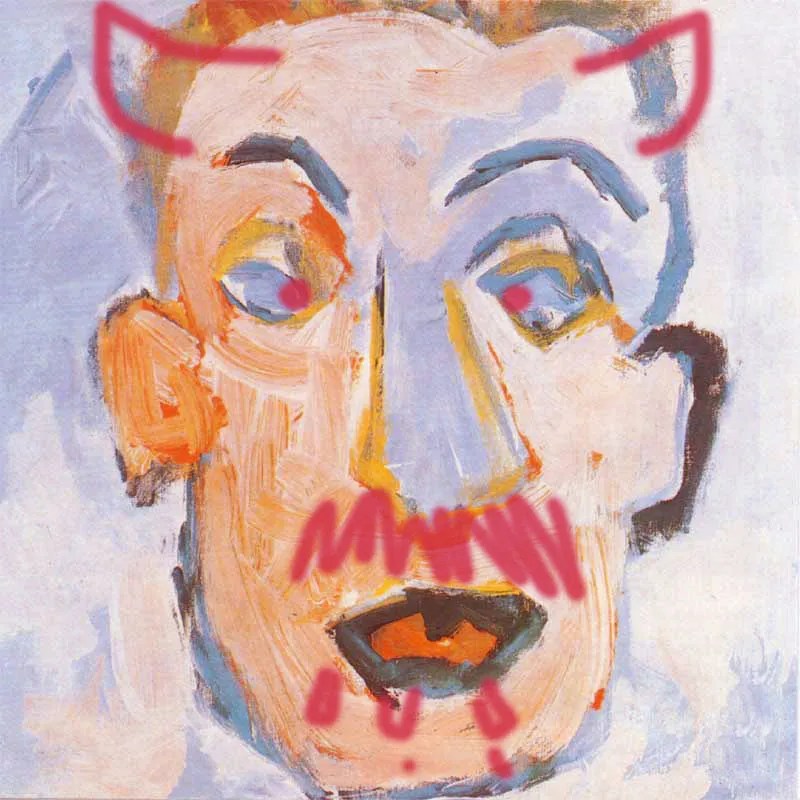
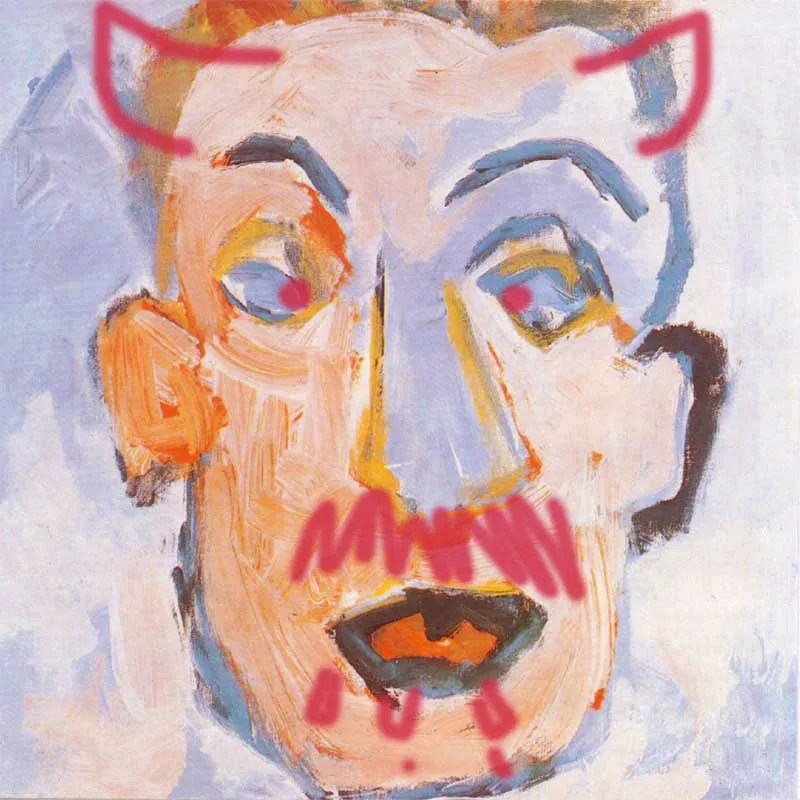
Dylan’s Turn of Phrase

I was lucky to get a pass to a pre-release viewing of A Complete Unknown, the new Dylan biopic, this week.  The event included a free drink (which turned out to be a Thatchers Gold Apple Cider in a can, which is so wrong on several levels) and an ‘Australian exclusive’ interview with director James Mangold and leading man, Timothée Chalamet. A great night. 

The film itself was very good. I can’t think of another film where an actor captured a character many of us think we know intimately, with near perfection. It was almost as if Dylan himself had morphallactic-ly returned to his early years in the physical form of Chalamet. All the essentials were there. His smirking disdain, his obsessions, his hair, the shades and the voice, bursting at the seams with creativity.  A stellar artistic performance by the actor.   

[Not to be discounted is Edward Norton as Pete Seeger. His understated performance as Dylan’s early champion is worth the price of a second ticket. The crushing disappointment he conveys when Woody Guthrie makes it clear Dylan is to be his successor, not Pete, is so good.] 

The Australian exclusive interview was prerecorded. It featured a local B grade entertainment interviewer who knew little of Dylan’s mystique or music and who received each response from Chalamet with a cooed ‘Ooo, that’s so great!’, more appropriate to an interview with parents of a severely disabled child or a granny fighting back against online scams.  Chalamet was pissed and swilled big gulps of vodka straight from the bottle. His answers were disjointed, sometimes coherent. He seemed to be channelling Dylan’s own irritated approach to dumb interviewers. For his part Mangold tried to keep disaster at bay by praising the drunken luvvy next to him and speaking of how they had ‘sculpted’ the performance and their relationship over ‘many years’.  O.K.

Definitely go see this film. 

As I walked to the cinema, I reflected for the umpteenth time on what it is about Bob Dylan that I love so much. I’m sure I could dig out several dozen reasons but the one that immediately jumped to mind was his ability to turn a phrase.  Though I’m a Dylan lifer, there are few if any songs of his that I could recite in their entirety. Maybe Blowing in the Wind if the wind were behind my back.  But I can rattle off dozens of phrases that absolutely live within my soul every day. 

All I really want to do, is baby be friends with you 

It ain’t me babe 

He not busy being born is busy dying 

She wears an Egyptian ring that sparkles before she speaks 

I contain multitudes 

Flesh-colored Christs that glow in the dark 

I used to care, but things have changed 

Lincoln Country Road or Armageddon? 

A few words, seemingly simply, even thoughtlessly, placed together stand out like sparkling jewels throughout his work.  They are adornments. In Indian/Sanskrit aesthetics these are known are ‘alankara’, poetic ornaments or decorations designed to enhance the joy and delight of the reader/listener. 

I find myself repeating Dylan’s phrases at random moments and situations.  I get a kick out of marrying Dylan’s words with the situations and events of my meagre life. That feeling of delight, according to the ancient Indians, is the entire purpose of poetry, music, art and literature.  According to Vijay Kumar Roy, Associate Professor of English, University of Allahabad, “all artists are expected to have a kind of gift, through which imagination can provide the reader [something to] ‘savour’ or ‘relish’, [rasa, in Sanskrit], which is the highest form of joy or supreme bliss (delight). (1) 

Sometimes Dylan seems to throw all manner of phrases together, seemingly indifferent to whether they make sense as a whole narrative.  For years scholars and fans have tried to unpack and dissect the meaning of each of Dylan’s songs to find a coherent message.  Yet if you look at a song like It’s Alright, Ma (I’m Only Bleeding) the phrases pile up and it’s hard to draw direct links of meaning between them. 

Darkness at the break of noon 
Shadows even the silver spoon 
The handmade blade, the child’s balloon 
Eclipses both the sun and moon 
To understand you know too soon 
There is no sense in trying 

Temptation’s page flies out the door 
You follow, find yourself at war 
Watch waterfalls of pity roar 
You feel to moan but unlike before 
You discover that you’d just be one more 
Person crying 

These verses are full of brilliant lines. Indeed, each line is full of meaning, but you’d be hard put to say exactly what he’s singing about. A simultaneous solar and lunar eclipse? Is the page of temptation a book or a young lad? I’ve seen waterfalls but don’t know what a waterfall of pity is and what that has to do with said page.  

But as the song progresses it’s clear Dylan is conjuring a scene of madness, darkness and confusion.  He is describing a disjointed disconnected modern society and so there is a certain rasa/taste to this song. Indian aesthetics identify 8 main ‘rasa’ or flavors that an artist may induce in a reader, observer or listener. One of them is Raudra: The Rasa of Anger and Fury which Dylan employs to demonstrate his righteous fury over the state of his country, society and times. It’s a heavy song. It’s got the weight of Jeremiah or Isaiah. But it is decorated and ornamented with the most beautiful turns of phrase. 

Darkness at the break of noon 
Shadows even the silver spoon 

While money doesn’t talk, it swears 

You never know how future generations will view yesterday’s heroes but it’s hard to imagine Dylan’s writing being forgotten.  His turns of phrase, dozens of them, have entered our daily banter.  

The times they are a changing.  

Blowing in the wind.   

It ain’t me, babe. 

You gotta serve somebody 

Pick up any of his records, or read his poems/lyrics on line and you’ll discover hundreds of magical delightful phrases that capture the whole gamut of human emotions. But which also mark Dylan as one of the greatest manipulators of words. 

Here is one of his phrases I use regularly, in a lot of situations. 

A change in the weather is known to be extreme 
But what’s the sense of changing horses in midstream? 
I’m going out of my mind, oh, oh 
With a pain that stops and starts 
Like a corkscrew to my heart 
Ever since we’ve been apart 

(You’re a Big Girl Now, Blood on the Tracks, 1974) 

  1. Roy, Vijay Kumar. 2012. “Indian Aesthetics and the West” In Explorations in Aesthetics, edited by Alka Rastogi. New Delhi: Sarup Book Publishers. 


The Night Bus to Tarbela

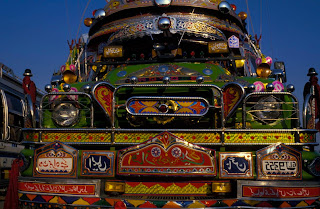
This photo was taken at the massive Pirwadahi bus station in Rawalpindi. It is from Pirwadahi that long haul buses commence and it is at Pirwadahi that they end their journeys. At least up it was until the early 1990s, when my time in Pakistan came to an end.

I took this photo at my favorite time of day, an hour or so before sunset. It was winter, probably January or February 1989/90 giving the light a warm golden hue. The bus’s windscreen and body had just been washed so the usual dust and streaks of wipers are not a hinderance.

Pakistani bus decorating is one of the country’s great folk arts. What often looks like garish sticker-mania in fact often can be decoded. In this instance starting from the lower left: a religious poster depicting Hazrat Hussain, the Prophet Mohammad’s (PBUH) grandson and spiritual icon to Shi’a Muslims all over the world. The large script at the top of the windscreen is a Q’ranic or other spiritual saying and at the very top you can the words 1988 Model. Signifying the year not of the manufacture of the bus but of the decorations. Multiple stickers of vases and flowers reference one of the most popular design motifs from the Persian world. Scholars find many pre-Islamic references and continuities in such images. In this case, I would imagine the bus’s owner (a Shi’a) has used the stickers merely as pretty decoration, just like the image of the two kittens in the far right lower corner. The open palm stickers, like in many ancient cultures, represent an attitude of blessing and protection as well as invitation. Signaling to the passengers, “Come in, god Bless and protect you on your journey.” As these iron behemoths are not insured, its about as much assurance as you can expect. The calligraphy that balances the Hussain poster notes the destination of the bus, Tarbela Dam, one of Pakistan’s major pieces of infrastructure completed between 1968 and 1976. The pièce de ré·sis·tance is the pair of drapes which can be pulled close when the sun is too bright!

The following piece appeared first on my original blog Washerman’s Dog (17 May 2012). It included a mixtape of music you would be likely to hear on such a trip. The road system in Pakistan has improved immensely since I lived there (’86-’91.) And the music is a bit dated to that era. If you would like to download that mixtape check out the Downloads page.

When I first landed up in Pakistan I was surprised to discover that the way you got around between major cities was not by train, as in India, but by road. Unless your destination was Karachi or Quetta, in which case you flew.  And for your road trips you had several choices of transport: bus, Flying Coach or wagon.

Bus

Bus: usually a Bedford, gloriously liveried in multiple colours, decorated with beaten tin, twinkling lights, curtains, festooned with flowers (plastic, real and painted) and covered with pithy aphorisms like ‘Maa ki dua/Jannat ki hawa’ (A mother’s prayer is a breeze from heaven). Clientele: general public; those who have more time and less money.

Flying Coach

Flying Coach: a no-nonsense and business-like large Mazda or Toyota mini-bus with hydraulic doors that sigh when they open, excellent air conditioning and in most instances reclining seats. Clientele: businessmen, foreign students; those who want to get ‘there’ quick.

Wagon

Wagon: a Ford van imported from England by Kashmiris. Painted only one colour. Body dented. A few perfunctory invocations of Allah’s blessing on the front.  Seats hard. No aircon. Clientele: the slightly better off member of the general public; those with high-risk appetites.

One of the several issues confronting those who choose to travel long distance by road in Pakistan is that the vehicles (with the exception of the Bedford buses) are imported. They can move quite quickly and powerfully, designed as they are for motorways in Japan or UK.  The Pakistani highways, alas, are narrow, rutted, poorly lit and crowded. The combination, especially when blended with a driver who is exhausted, just learning his trade or stoned on charas (all three at once, is a permutation I’ve encountered) can give rise to anxiety. 

I shall never forget the dear driver (with me in front seat right beside him) who, as we sped into the fast-setting sun that nearly blinded us, decided to change the cassette and light a cigarette at the same time.  He did it! And we made it to Gilgit in one piece 12 hours later!

For some reason whenever I found myself on the road it was evening heading into night. Though the hazards increased significantly once the sun went down, I found barreling through the night in some strange way, relaxing and appealing.  Probably because there was inevitably a good concert of music to be had. After the first 45 minutes of the journey, most passengers were nodding off or whispering quietly to their companions. The driver would light another cigarette and turn up the cassette and entertain us with a selection of current and evergreen hits.

Inevitably, the concert would include the patron saint of all vehicle drivers, Attaullah Khan Niazi. Indian film music, qawwali and few sharabi ghazals, some folk and other odds and ends like a piece or two from the driver’s home region, often the Northern Areas around Gilgit.

I loved those trips because I was introduced, anonymously, to so much good music.

Sometimes I Lie Awake at Night and Wonder

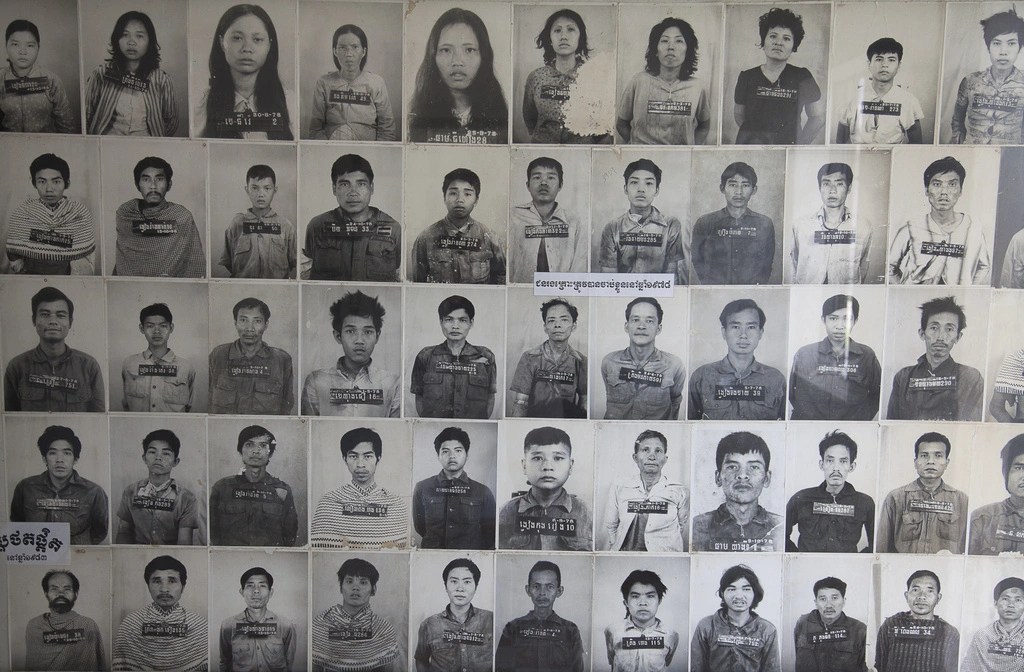
Some of Pol Pot’s victims, S-21 Prison. Phnom Penh

Tonight I’m in Phnom Penh and can’t sleep. I seem to always wake up at this time, when the day is still dark and the only sound is that of lazy thoughts shuffling inside my head. On the other side of the hotel window a boat bangs softly against the jetty.

It is windy and the monsoon is nearly at an end. I was told Cambodia is a land of dusty sunsets but I find the county resplendent with green paddy and the gurgle of the pale brown Mekong in flood. I expected, too, to meet a morose and sullen people. But the Cambodians are warm and can’t repress their smiles.

Throughout the town small but smart restaurants cater to the foreigners that work for the NGOs and UN agencies that finance and prop up the social welfare system of struggling countries like Cambodia. Banners pronouncing tourism as a ‘tool to build cooperation’ droop in the thick air. The tourists are back. Backpackers from Australia, packs of Japanese and most ominously, ugly aging men on the prowl for sex with young Khmer girls and boys. Cambodia is challenging Thailand as the premier destination for sex tourism. Such are the hairline cracks of a poor country’s development.

There is another macabre little industry in Phnom Penh centred around the horrific torture chamber known as Tuel Sleng or S-21. Tucked deep inside a residential neighbourhood the former high school transformed by the Khmer Rouge into a laboratory of evil, S-21 is a ‘must see’ for any visitor to Cambodia.  Along with the temples of Angkor, part of the grand tour.  Moto drivers call out to you, ‘Tuel Sleng. Look at Khmer Rouge jail’. You can buy T-shirts with disgusting recreations of faces behind bars on the backs.  They also sell bags and skirts made of bright Khmer silk right next to building B where Pol Pot’s most important enemies were kept in tiny wooden cages before being cut open like animals and fed to the demon, Angkar, ‘the Organization’. 

I certainly remember the name Pol Pot but his crimes were still unknown outside of Democratic Kampuchea in those years, 1975-1979. It’s an old story now, how this country was transformed, almost overnight, into a giant slave camp. Cities were evacuated and left empty and the population forcibly moved from province to province to reshape the face of the land. Canals were gouged out of the earth. Dams glued together. Millions of paddy fields planted. All done without the help of machinery, with only bare hands and fingernails. Machines were deemed impure and imperialist. Money was abolished as was religion, privacy and even talking. Democratic Kampuchea was a massive experiment in applied paranoia. The people were starved and then themselves became fodder: sustenance for Angkar. Hundreds of thousands, even more than one million, perished. There is not a family here that doesn’t harbour the loss of a sibling, parent, child or spouse.

Why didn’t we hear of this when it was happening, I wonder?

I recall an exhibit at S-21. Instructions painted on a signboard to those under torture. Among the many protocols is the command not to ‘yell out or make any sound when you are beaten with electric wire’.

The single most important factor in the success of Pol Pot’s revolution, according to most scholars, was the carpet-bombing by American B-52s between 1970-1975.  By the time Phnom Penh fell the people of Cambodia were massively traumatized from years of dodging falling explosives that wiped out their villages, families and animals.

I used to work in Iraq. One night the Kurds went wild and fired their machine guns into the air. We lived in tents against the side of a hill. We ate under a thatch and open sided cabana. For several minutes I felt the terror of having no control over my well being. Shells from the celebrating Kurds’ guns rained down from the sky thwacking into the earth and cracking into rocks. I ran for cover but why, I don’t know. There was nowhere to hide. How was a canvas tent to protect me from a hot piece of iron falling from the sky?

And how was a Cambodian peasant to protect himself from a massive cluster bomb falling from an unseen American warplane? And not just once but night after night, week after week? When the Khmer Rouge came to town they didn’t have to ‘recruit’. The people swarmed to anyone who claimed they could stop the bombing.

Daylight is breaking over the city.  I can hear street children laughing now and the sky is white. It’s going to rain some more today.

I wonder.

In the 1970s an American President doggedly pursued the ‘national interest’ and filled the air with airplanes and bombs and mighty words about the need to stop communism from sweeping across the world.  More quickly than Presidents Johnson, Nixon or Ford could have imagined and certainly more inelegantly than the American people were led to believe, communism and the horror that the planes and bombs were to supposed to eliminate, ran the Americans out of town. And tore apart the people and society they were supposed to save.

A year ago another American President began massive bombing against another weak and troubled Asian country. “We’re going to get him dead or alive” the world was told. And something else too. “This time we’re not going to let the Afghan people down. We’ll change the leadership, establish the rule of law and stick around to rebuild the country.”   One year on the Taliban are gone but still active on the periphery. Osama is neither confirmed dead nor alive, apparently relegated to the ‘too hard basket’.  The rule of law remains a fantasy in Afghanistan and donor fatigue has already set in. Of the billions pledged to rebuild Afghanistan to ensure that terrorism has no room to hide, much has not been delivered. The Afghans, it appears have once again been sold a line by their ‘saviours’.

President Bush is once more in dogged pursuit of American interests. Come hell or high water, right or wrong, support or not, we are told he must “change the leadership in Iraq, establish the rule of law and get the UN to pay the billions needed to rebuild the country”.

Sometimes I lay awake at night and wonder.

What sort of new horror is going to arise from the ashes of Afghanistan and Iraq, similar to that arose here in Cambodia? Will Americans wake up and see the links between their crusades against communism and their wars against terrorism and the misery and hatred that follow in their wake?

Phnom Penh, Cambodia 2003