Country music is all about beer (crying in it; drinking too much of it), Mama cryinโ and Daddy prayinโ, adultery, trains and murdering your girlfriend. And lately, pick-up trucks.
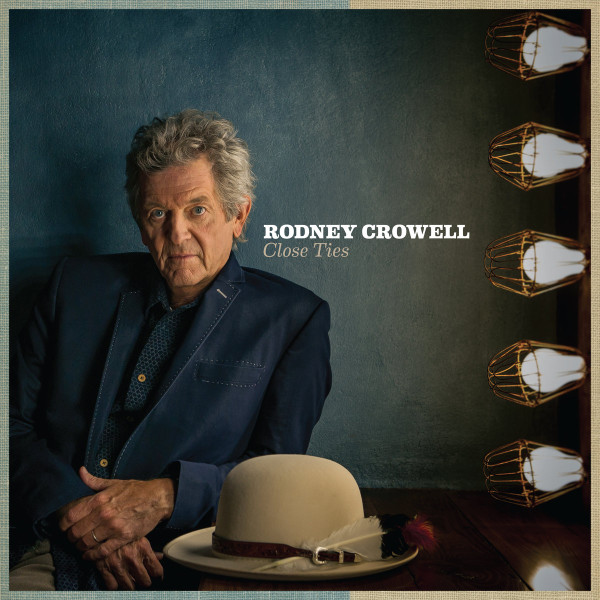
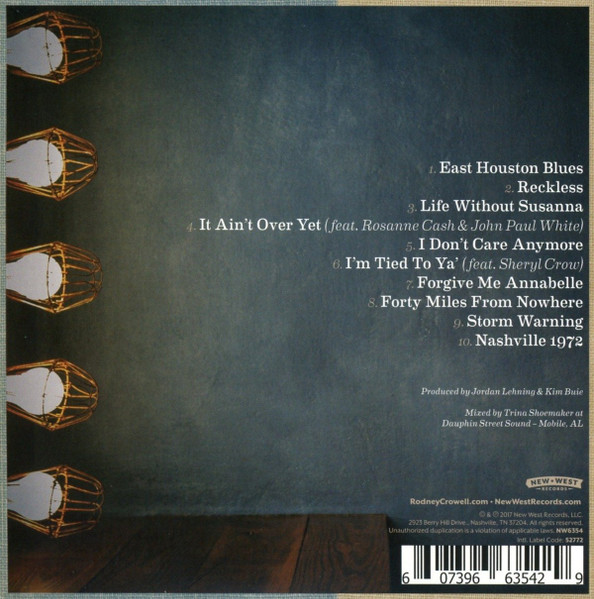
Rodney Crowellโs album Close Ties (2017) is a country record that is about none of that. Or if it is, it is taking those things and skinning them alive. It is the testament of a fully matured man. A man who has pulled off the road to a lookout to behold a not always scenic landscape.
Crowell grew up poor in East Houston, moved to Nashville in the early 70s where he wrote a slew of hits for others, released a few albums, produced several more for his then wife Rosanne Cash and by the end of the โ80s was one of the faces of the so-called โneo-traditionalistโ country set. Guy Clark, Emmylou Harris, Townes van Zandt and Steve Earle were peers and friends.
In 2017, Crowell was sixty-seven years old. In those years heโd
been lied on, spied on, cried on, tried on, taken for a ride you bet Fracked, cracked, smacked jack, what you see is what you get Iโve been spit at, hit at, quit at, shit at, shouldnโt hurt a bit at, what Iโm trying to get at
and had somehow transformed all that into a record that reveals adults inhabiting adult relationships more confusing, messy and meaningful than anything their younger selves thought possible.
He sings about taking too much and giving not much. Taking love for granted. And about the sort of love that disappears but never really dies.
With faith beyond religion, we search the great unknown Free fall into darkness, someplace weโve never gone Iโm tied to ya Iโm tied to ya
I know a guy, someone Iโm just getting to know a bit better, who finds himself kneeling on the bloodied battlefield of Love. To one side stands the woman he married but pushed away. To the other is the woman he loved beyond imagination who has pushed him away. He tells me he canโt imagine being squeezed for another drop but canโt stop wishing for their hands to massage, pummel and prod him. Especially those corners of him that havenโt seen the light of day for years. Maybe ever.
The first time I saw her she threw me that smile
Pure angel of mercy east Texas style
A poet in gingham, an assassin in jeans
The most near perfect woman I’d ever seen
She was hardly routine
Heโs trying to find signs of who he is in the things heโs done.
Life without [her] Troubles me in ways hard to express As she withdrew I grew distant and judgmental A self-sure bastard and a stubborn bitch Locked in a deadly game of chess The upside of my status a cut above the rest
His marriage was a constant battle. His love affair an unexpected oasis.
The last time I saw her was close to the end I cried like a baby for the shape I was in No lipstick or powder to soften the tone The most worthy opponent Iโve ever known Was already gone
That second to last line describes both women, he says.
And then Crowell cruelly, or perhaps mercifully, reminds us
It ain’t over yet You can mark my word I don’t care what you think you heard We’re still learning how to fly It ain’t over yet
And what isnโt over yet? Our love? Our prideful ways? Our cluelessness? Our life? All of the above. And more.
These are songs that only a man who has marched his demons up the hill and back down again could write. And sing. Crowell, the singer is every equal to the songwriter. He has an uncanny talent of delivering cutting self-criticism as well as the bitter tears of the jilted without self-pity or indulgence or pleading. This comes, youโd think, from that place every pilgrim hopes to reach, where the storms of life neither seduce nor reduce you. That place where parental approval, manly accomplishment and perfect love are finally stripped naked.
But I donโt care anymore about the fortune and the fame I was better off before I tried to make myself a name
Close Ties is really a break-up album. A man breaking-up with the masks he has worn, the roles heโs played, the sins heโs denied committing. A man whose world is so shaken and crumbly he sees ghosts everywhere.
I don’t care anymore who does what and why
I was better off before when I was just another guy
I see why my friend keeps listening to it. Because Crowell is expert at bringing to life the oldest of all break-upsโlove.
When you walked out on me, it tore my heart in half
And I hid behind a laugh
As I became a slave to shame I cursed your name
God Damn you, rot in Hell
Can you forgive me Annabelle
He is full of regret and clarity. But there is precious little calm here and not much confidence he wonโt keep offending. This record is a tale of how many ways a brokenheart feels horrible.
Right about now it gets quiet around here, what with nightfall in the wings The floorboards creak and faucets leak, but itโs the emptiness that sings
The wind grows chill and then lies still Forty miles from nowhere At the bottom of the world
Yet, in the end, full of hope.
I wonโt deny that I believe these things you say are true Iโve seen the way you gauge each distant star As long as I can be myself and still be there with you Iโll go anywhere you ask me, near or far Iโm tied to ya Iโm tied to ya
What a rush at the airport. A huge group of Raiwindi[1]s was heading to Lahore from Karachi. It was a jumbo.
Wally met me in the drizzle at the airport and took me straight to the border. Heโs pretty bummed out with the developments in the States. Berkeley has fucked him over the BULPIP directorship; hiring someone else and informing him that he was not even in the running for this yearโs directorship.ย Wally takes these things very hard but I know I would too.
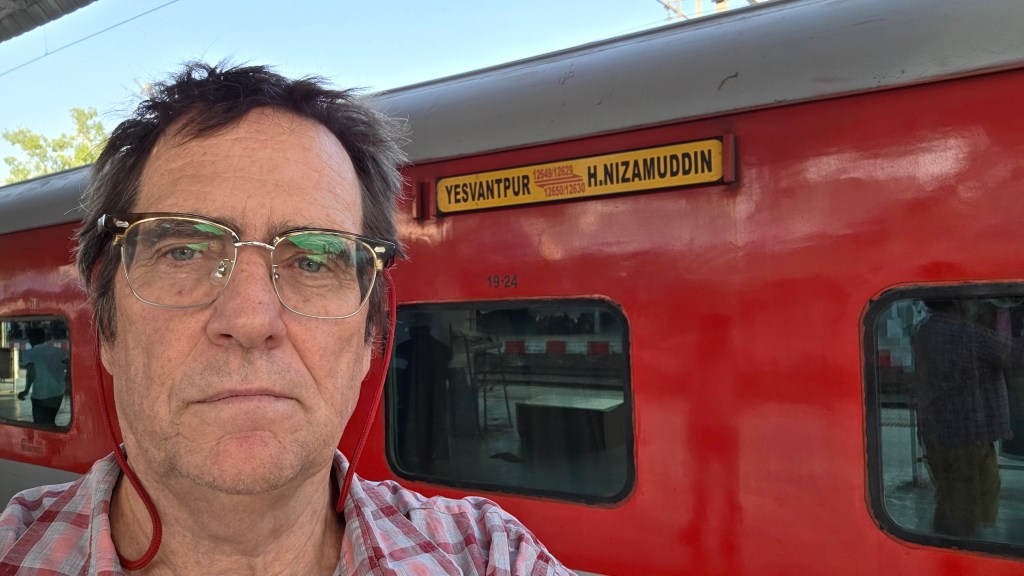
Got across to Amritsar in an Ambassador[2] which stopped every half kilometer or so due to โblockageโ in the fuel pump. An ansty Aussie shared the front seat with me. He was wiredโshouting at the drunks, pissed off with having to pay Rs. 20 for the taxi and going on and on about missing concerts and plays back in London. Not the kind of travelling companion I want. We parted at the Railway Station.
I was greeted by 2 friends–rickshaw walasโfrom my last trip to Amritsar. Made a new oneโa hustler who first told me there was no way Iโd get a berth on the Amritsar-Howrah Mail tonight. He left and then came back after a brief interval. He suggested if I paid a little โchai paniโ[3] Iโd definitely get one. So, I paid Rs. 20 for the ticket clerk and Rs. 40 to my new friend for the luxury of a sleeper berth. A good deal. Rs. 220 for a 1879km journey.
I asked my rickshaw friends if he was a โgentโ. Not the English term but a shortening of the word โagentโ, used in these parts to refer to touts and fixers. โYesโ, they replied, โbut an honest one. Heโll do what he says he will.โ And he did.
I had asked if there were any bombings on the rails[4] these days.
They looked at me disappointingly. โThis is written at the time of our birth. There is no changing it. Bombs or no bombs, when your number is up, itโs up.โ
One of the rickshaw walas then broke into a parable.
โThere once was a man. A mad camel got to chasing him and to escape the man jumped into a well. The camel sat outside the well and said to himself, โHeโs got to come out one day and when he does Iโll bite himโ. He settled down to wait. After a couple of days a poisonous snake slithered by and bit the camel. In an instant the camel was dead.
โThe man in the well finally crawled up to have a look. He saw the camel lying bloated in the sun, rotting away. He triumphantly strode forward and gave the camel a mighty kick. His leg sunk deep into the rotting belly of the camel. The manโs leg got infected and he died.
โSo, you see,โ said the rickshaw wala, โeven when we take precautions, Fate tricks us.โ
With such encouragement I set off for Calcutta.
19 January 1990
A long journey across northern India. Lucknow, Pratapgarh, Benaras, Patna. People flow in and out of the aisles as if choreographed. Itโs stuffy on the top tier but I sleep a lot. Iโm surprised at the spareness of the big stations. Itโs hard to find even a packet of Marie biscuits. The thought crosses my mind that maybe the great lurch into the 21st century that India Today so proudly heralds has been at the expense of the further impoverishment of most Indians.
I share a smoke with a masala magnate from Calcutta. Heโs actually Punjabi but his family moved to Calcutta from Lahore over a century ago. He never goes back to Punjab.
โI like Calcutta because itโs the cheapest and safest place in India. You have no riots, no ghadbad.[5] The loadshedding is tolerable-nothing like in Benaras. The prices of everything is cheapโliving, food, transport.โ
Heโs a real Calcutta booster. At one point to tells me, โYes, the police are corrupt but at least a Bengali will do what heโs bribed to do. You give him some money and your work is done. Itโs the honesty I like.โ
He speaks in a soft voice. He begins to tell me about how he used to drink like a โmad manโ.ย Always drunk. Always looking for a drink.ย He was, as he puts it, โat the last stageโ.ย He then sought the help of a guru, whose name is drowned out by the clacking of the rails as we whoosh by a dark Bihari village. He pulls out an amulet with a hand tinted image of his guru. โWhatever he says, has to happen,โ he quietly says. He places the image back under his shirt and against his chest. He begins relating more miraculous acts of his guru to a couple sitting next to him.
I climb up again to the 3rd tier and fall asleep.
20 January 1990
Calcutta is the city of superlatives. There is no end to the seeming premier-ness of the place. Most dirty city, most crowded. Most posters per pillar, most taxis per person. Most specialised bazaars. I saw one this morning which catered entirely to shoppers interested in balloons and rubber bands. Most cruel means of public transportation (hand-pulled rickshaws). Most diverse inhabitants, most rundown colonial buildings. Most cultured city: International Film Festivals, Classical music programs, Beatlemania stage show. Most touts. Itโs hard to find anything new to say or any new superlative to add to Calcuttaโs already superlative list of stellar โmosts and bestsโ.
I have found a room in the Paragon Hotel, one of these new tourist hostels which are the same no matter where you go nowadays. The Ringo Guest House just off Connaught Place is no different than the Paragon Hotel just off Chowringhee.
TouristsโGermans, Dutch, Japanese, Australians and a few frightened Americansโwriting in small script in their journals, talking to each other about their similar discoveries and eating out at the same restaurants.
I walk up Sudder Street. I remember coming here, to the Red Shield Guest House[6],with my family every other year enroute to a deserted beach in southern Orissa/OdishaโGopalpur-on-Sea.
Iโm afraid to go Gopalpur these days. Afraid to find sparsely dressed Germans scowling at me as they strut around like they discovered the place.
In those days (late 60s) we seemed to be the only white faces in Calcutta. Sudder Street was quiet; New Market cool and refreshing; the Globe Theatre ran movies like The Bible. Now it shows Young Doctors in Love and New Market is crawling with sad Muslim touts begging you to buy or sell something. Hotels proliferate. Tourists swarm.
These tourists are backpackers. Young folks from the 1st world bumming around the 3rd. In Benaras they learn sitar, in Dharmsala they take a course in Buddhist meditation. In Jaisalmer they ride camels into the desert and here in Calcutta they volunteer for a week or so at Mother Teresaโs. They then catch a train to Puri or Gaya.
I admire (in a way) their altruism for washing and feeding the dying. I wish I could do the same. But something rubs me the wrong way. There is a feeling of inevitability to their righteousness. Mother Teresa is another stop along the wayโlike the journey of the cross in Jerusalemโfull of good material to write home about. Mother Teresa is now another tourist franchise, another neat thing to do.
Calcutta is a pleasure to visit again despite the restless 1st Worlders who hang on like frightened knights of the tourist round table. The locals donโt seem to give a damn about your origins here.
Calcutta by Nate Rabe
22 January 1990
Spent a thrilling few hours wandering among colonial tombstones in the Park Street Cemetery (opened 1760). The image that comes to mind is a ghost ship shipwrecked on an isolated reef, forgotten and dark. Like all cemeteries it has an immediate calming effect. Jumbled and disorderly tombstones and mausoleums crumble in silent gloom among trees and hundreds of potted plants. Some of the paths are under repair but other outlying areas are as untouched as they were a hundred years ago.
Iโm instantly aware this place is an entire city. Stately and expansive.ย Towering citadels with Corinthian columns, baths and porticos keep watch over a host of long-dead nabobs and Company servants far from home.ย Each tomb is grander than the next. Spires rise 6, 8, 10 feet above the soil in honor of a young civil surgeon downed by โfeverโ or an indigo planter consumed by the pox.ย The most ordinary of Indiaโs first British colonizers have erected over their bones and spirits structures few Presidents can boast.
The Raj was young when Park Street opened. The Battle of Plassey was only three years won. Young men with no social standing back home, here had a chance to be rajahs off the plentitude of Bengal. These young men had never dreamed of the fortunes to be made in Bengal; Bengal had no way to stop them. Park Street memorialises the sense of destiny and ostentation of the early Raj. The world was waiting to be plucked from the mohur trees. Fortunes were huge and readily won for those who showed their ruthless ambition. For them this was a larger-than-life world. I suppose a bereaved father felt it perfectly natural to raise a small Roman temple in honour of his nine-month old infant son, dead by flux. The cemetery, like the period, like the characters buried here is an overstatement. The epitaphs are sentimental and overegged. There was never a disliked, cruel or greedy person buried here.
Of course, not everyone buried here is insignificant. William Jones, the great Orientalist icon who was the first to propose the idea of a shared kinship between Sanskrit, Greek and Latin, lies under a 15-foot obelisk. Charles Dickensโ second son has been lovingly moved here by students from Jadavpur University. Richmond Thackeray, father of William Makepeace Thackeray, a senior servant of the Company, lies here, as does the wife of William Hickey, Indiaโs first prominent English journalist.
Teachers of Hindoostanee at Fort William College, traders and fair maidens, Park Street Cemetery is, more than any other place in India, a memorial to the Raj.ย Here one can taste the self-aggrandisement, the self-importance and most of all, the self-pity which characterises British India. You only need to close your eyes to hear them speak again. Little do they realise that their ostentatious moments of death are long forgotten and ignored.
23 January 1990
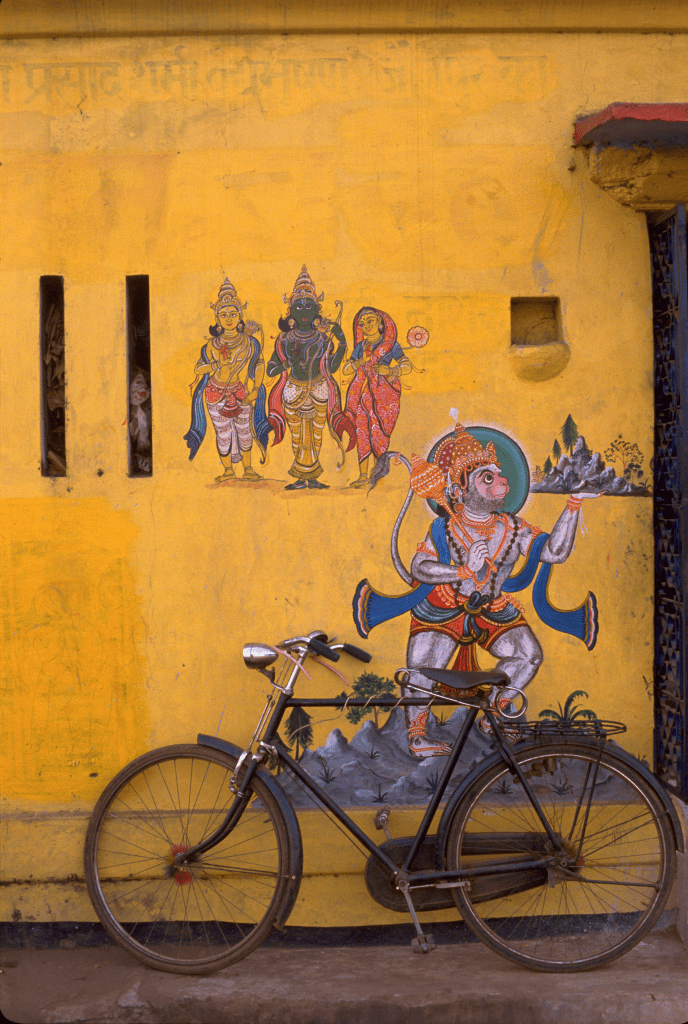
Residential mural in Bhubaneshwar by Nate Rabe
Today I arrived in a cemetery of a different sort. The great ancient temple city of Bhubaneshwar. Anย initial quickie around the city has left me awed with the grandeur of Indiaโtruly the Wonder That Was. Iโm none too impressed however by the greedy mahantas and pundits who follow me with visitor books filled with the names of foreigners who have come before me and donated Rs. 100 or 150. They are like blood suckers who will not detach themselves from you until you fork over some cash.ย Muttered curses follow me when I hand over a fist of Rs. 2 notes or a tenner. โYou should give at least Rs. 50,โ one calls out as I walk away.
24 January 1990
Had a sleepless night. The bed in the Janpath Hotel was infested with bedbugs and the room abuzz with mosquitos. I was so tired and on the verge of the final descent into sleep only to be woken by a damn katmal gnawing at some remote part of my body. The room was distinctly shitty. A weak but persistent stench wafted across the room. No windows, only some cement grating at the top of the wall which allowed easy access for the mosquitos.
I flung my few large pieces of cloth on the floor and turned on the fan. I caught a cold and my neck ached but I must have fallen asleep between 2 and 3.
I blearily wandered off toward the Lingaraja complex which was still as impressive as it was yesterday evening.ย The priest left me alone to take some photos. I met two young pandas[7] who were only interested in chatting, not in extracting money from me.ย One was Kuna and the other Bichchi. Kuna kept classifying women into a personal scale of โsexualโ.ย โWestern lady very sexualโ, or โJapanese lady most sexualโ.ย He was full of obscure English aphorisms.ย โEvery book has a cover every woman a loverโ, was his favorite but others addressed less sexual subjects as well.
Bichchi was interested in telling me about politics. One of the Patnaik[8]s was in power. Another Patnaik was trying to squeeze him out now that he (the second Patnaik) had the leverage of the National Front government in Delhi. Bichchi was confident that his Patnaik (the second one) would be victorious in the end. The main complaint against the ruling Patnaik was thatโas best as I could understand from Bichchiโs broken Hindiโhe liked to consort with little boys. If not that he drank or smoked something that wasnโt good.
Kuna immediately spoke up. โIs there only one tiger in the jungle? They all do these things. Have you ever seen only one tiger in the jungle?โ
They tried to encourage me to drink some bhang[9]. Being already light-headed from a sleepless night I declined.ย They extolled the virtues of bhang but cursed heroin, charas [10]and alcohol.ย All these vices Bichchi attributed to the Pakistanis.ย He saw a nefarious attempt to destroy his country. Apparently, there are in Bhubaneshwar a growing number of drug addicts.
Kuna again offered his own interpretation. โIt is good. We have 90 crore[11] people here in India. If a few kill themselves with heroin good. It will keep our population down.โ
I took my leave after an hour under the shade of the Lingaraja, one of 125,000 temples said to be scattered around the city. This statistic came from Bichchi. I was tired and wanted to nap but didnโt want to do it in the Janpath Hotel. Over a beer at the Kenilworth Hotel, I resolved to head immediately to Puri in search of cleaner mattresses and an airy room.
25 January 1990
ย Puri strikes me as an overgrown seaside fishing village. Except for the fact that it is one of Hinduismโs four major dhams[12], there didnโt seem much to commend the place.ย The beach is here too, of course, but it has none of the isolated charm of Gopalpur or the lushness of Kovalum. The alleys are dark and damp and only Hindus are permitted to enter the ancient Jagganath[13] temple. For a photographer it is also frustrating. The temple is set at an awkward angle which makes it almost impossible to capture well. The square in front of the temple is in glaring light most the day so people huddle in the shadows under the tarped awnings.ย After walking around searching for some good light, I put my cameras away. From now on Iโll stick to the alleys where little icons and shrines add color to the landscape.
I talk with Mohammad Yusuf who is selling reptile scales for the cure of piles and general unwanted blood flow. He makes rings of these and advises his customers to wear them on their left hand so as when they perform their toilet, the ringsโ magical effects will โmake you 100% clean. You can spend Rs. 10,000 on a doctor but these rings will cure you completely.โ
He is an Oriya[14] but like most Muslims in the north speaks quite good Urdu. When I told him I was living in Pakistan he quietly asked, โWhatโs the news? Is it good?โ I find the Muslims Iโve run into โa lotโto be sad people, though Iโm probably projecting. In Calcutta all the booksellers and tape hawkers on Free School Street are Muslims from Howrah. One told me with a bit of over enthusiasm that โHindus are the best. I have more Hindu friends than Muslims. We have no problems here!โ
Another, Salim, is a waiter at the Janpath Hotel in Bhubaneshwar.ย He was soft spoken and left me with a feeling tender. He claimed to make Rs 200 a month in the hotel of which $150 he remits to his family.ย He used to work in Calcutta in a factory that makes cooking utensils but for some reason came, as he put it, โinto the hotel line.โ He doesnโt like the work but is stuck.ย He saw two postcards I had bought from a sidewalk dealer on Sudder Street. One was of the Kaaba[15] the other was of Imam Hussain on his horse. Salim kissed them and pressed them against his forehead when I offered them to him.
The Muslims seem to be accepted and other than a slight hesitation before telling me their names, they seem content. They confess to cheering for Pakistanโs cricket team but have been quite uninterested in asking me about life in Pakistan. Only one, a cloth merchant in Bhubaneshwar, asked me if I preferred India or Pakistan.
Tomorrow, I take a day trip to Konarak. Itโs Republic Day and will be overrun with tourists undoubtedly.
26 January 1990
I was accompanied to Konarak by a Gujarati, Dr. Parwar. A pleasant and gentle man who had pulled himself up to a position of considerable rank and authority in a government hospital. His father was a manual labourer in Pune, โso I have seen life from close up.โ Through hard work he got his MBBS and MD from one of the best medical schools in India and has since added a triad of MAโs in subjects like Public Health, Venereal Diseases and Administration. He has been attending a conference in Calcutta on Public Health Administration and has come to Puri to kill some time.
He is deeply committed to serving the people of India as a doctor back in Ahmedabad. He has no desire for an overseas job or money. He proclaims more than once how proud he is of being Indian. This is not something I hear in Pakistan very often.
Konarak is impressive. The stone sculpture is beautiful and majestic. The monument is set out as a sun chariot with 24 giant wheels pulled by 7 rearing horses. Most of the original temple has been destroyed but the remaining bits inspire awe for their size and beauty. The original temple rose more than twice as high at the remaining remnant which rises 80 feet into the air.
Dr. Parwar and I climb to the top of the temple and gaze into a deep opening. A pedestal is at one edge where we overhear a guide explain, โThis is the place where the image of the Surya (the Sun God) stoodโ. Inside his stone head and feet, apparently, was magnet which when a certain interaction of physics and metaphysics transpired โcaused the Godโs head and feet to move.โ
The Indian government is preserving the temple. Dozens of lungi[16] clad workers scratch the eroded stone with water-soaked bamboo brushes. Here and there new plinths and slabs of granite have been fitted into the chariot spokes and walls. Up near the top they have placed two huge Buddha-like images, upon which, during the Eastern Ganga dynasty[17] which built the temple, the sun was said to have shone continuously. One at dawn, one at noon and one at dusk. The third image is yet to be restored.
Dr Parwar and I silently take in this magnificent piece of human-divine cooperation before boarding a bus back to Puri.
[1] Raiwind, a town near Lahore, famous as the headquarters of a major Islamic missionary organisation, Tablighi Jamaโat
[2] Hindustan Ambassador. Iconic Indian manufactured sedan which for decades was about the only car available in most parts of India.
[3] Literally, ‘tea water’. Colloquially used to indicate a small gift/bribe.ย
[4] A Sikh movement for Khalistan as a separate country was raging in the 80s and early 90s. Often trains passing through Punjab were bombed as part of the terroristic tactics of militant Sikh groups. By 1990 things had calmed down quite a bit but my question was not entirely unjustified.
[5] Hindi/Urdu word meaning โchaosโ; โconfusionโ; โdisorganisationโ. Colloquially, โhassleโ.
[6] Part of the Salvation Armyโs global charity empire. Cheaper rates for Christian missionaries right in the heart of Calcutta!
[7] Hindi word for priest or guide to a temple. Not the Chinese animal.
[8] A prominent political dynasty in the state of Orissa/Odisha.
[11] Hindi/Urdu for the numerical value of 10,000,000
[12] The four dham are the major Hindu pilgrimage destinations located at each cardinal point of the compass. Dwaraka (West), Puri (East), Badrinath (North) and Rameshwaram (South)
[13] From which we get the English word, juggernaut.
In the late 80s European pop music seemed to be busting with African sounds. A second generation of immigrants, settled mainly in the UK, France and Belgium, shot to prominence thanks in part to record labels like Sterns, Barclay, Afro Rythmes and RealWorld. As well as a large population of young people and musicians hungry for music other than disco, schlager and rock.
Especially consequential was the emergence of a prosaic marketing gimmick for record stores and music journalists–โWorld Musicโ. A new category for obscure (to Western fans) African and Asian artists, singing in non-English languages.
The music these artists performed and recorded stood out sharply from the pop music of the time (especially, the American variety) with heretofore unheard instruments, revamped rhythms and lyrics in Arabic, Yoruba, Bambara, Zulu, Swahili, Lingala and colonial creoles.
The creation of this immediately contentious category/genre not only gave these artists a legitimate place within European record stores but more importantly, a platform from which they could grow their audiences, make a bit of money and in some cases become internationally feted stars.
In fact, โworld musicโ proved to be a much-needed shot in the arm for a music industry struggling with oversaturation, commercialisation and a technological transition from vinyl to cassette tapes to CDs. African bands and artists took to these new media without hesitation, especially cassette tape, relishing in their inexpensive production costs and portability. Suddenly their music was available everywhere, at home in Africa but also in Manchester, Dusseldorf, Minneapolis and Copenhagen. Fans loved it. And in no small way, โworld musicโ, dominated by African sounds and artists, rejuvenated the global music business of the time.
This wasnโt the first wave of African music in Europe. The performersโ fathers and uncles, who came of age in the 1950s and 1960s just as the political โwinds of changeโ blew across Africa, had been the first to introduce African music to Europeans: Congolese rumba, soul drenched crooners from Portuguese Africa, South African jazz, Ghanian highlife. These were the sounds of the dance halls, boรฎtes (night clubs) and musseques (shantytowns) of Johannesburg, Kinshasa and Luanda transplanted into the pubs and community halls of London, Brussels and Lisbon.
Iโm not sure what sort of fan base this first wave of African music had beyond the immigrant communities themselves. Apart from South Africans Mariam Makeba, Hugh Masekela and Abdullah Ibrahim who enjoyed relatively prominent reputations internationally, few Africans broke into the American cultural mainstream. But given the nature of post-colonial European societies, especially the large number of Africans moving to Europe in the 70s and 80s, Europeans seemed to be quite receptive to this music.
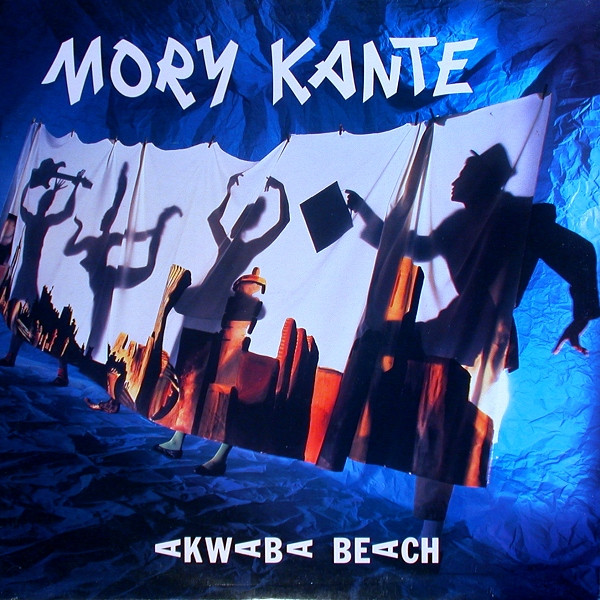
In the 1980s Paris became the centre of this new-fangled Euro-Afro pop music. Small recording studios such as Studio Caroline were magnets for bands and musicians from across Francophone Africa. Ace musicians like the singer Kanda Bongo Man whose first record, Iyole, announced the arrival of soukous on the world stage in 1981, lightning-fingered guitarist Diblo โMachine Gunโ Dibala and Guinean singer Mory Kantรฉ who along with a former mate from the Rail Band, Salif Keita (Mali), began making waves on a fast growing Afro-pop scene.
My first encounter with contemporary Afro-pop was in 1991. I was a junior staff member in the UN assistance program in northern Iraq. Living in tents against the side of a brushy hills a few klicks from the Iranian border, our evenings were monotonous. Beer, whiskey, cigarettes and music was about it. The nearest town, Sulaymaniyah, was 90 minutes away by road and in any case, offered no entertainment for European/American tastes.
Every so often weโd roast a wild boar and circle our 4x4s around the fire, open the doors, slip a cassette into the tape player and dance about until the wee hours. On one such occasion one of our Scandinavian colleagues slipped Akwaba Beach into the deck and cranked the volume.
People speak of those lightning strike moments. The Beatles at Shea Stadium. Elvis on the on Ed Sullivan Show. Dylan at Newport. A piece of music and moment in time that changes their lives forever.
The opening notes of Yรฉ kรฉ yรฉ kรฉ with its brazen blasts of brass, rapid fire vocalising and jerk-me-till-Iโm-dead rhythms hit me like a bolt from on high. I had never heard anything like this. My entire body felt as if it were captured inside the music. The song sparked every dull, fuzzy and ho-hum part of my experience into a mass of shivering electricity. I hadnโt realised just how much I needed to hear this music. We played that tape over and over for months and the album has enjoyed a permanent seat on my musical security council ever since.
According to our Nordic DJ Yรฉ kรฉ yรฉ kรฉ was not some niche crate-diggerโs discovery but a huge hit across Europe. Africaโs first million seller and a #1 hit on both continents. And no wonder.
Mory Kantรฉ was born in Guinea but moved at a young age to Mali to learn the kora and further his family griottraditions. His big break came when he joined the Rail Band where he teamed up with Salif Keita and Djelimady Tounkara as part of the classic lineup of one of Africaโs iconic musical groups. When Keita left, Kantรฉ stepped into the lead singer role before pursuing what came to be one of the most successful solo careers of any African performer.
Akwaba Beach, a dazzling example of Euro-Africaine dance/club music, opens with the #1 smash hit Yรฉ kรฉ yรฉ kรฉ and continues in the same upbeat vein for the rest of the album. Fast moving synth pop mixed with Kantรฉโs thrilling tenor voice, punchy kora riffs, blaring brass, feisty backup choruses led by Djanka Diabate and the percussion riding high in the mix. Dance music distilled to its essence.
Released in 1987, Akwaba Beach pounds with drum machines and shimmers with the synths that dominated the music of that decade. But unlike a lot of other relics of the 80โs, these machine instruments fit Kantรฉโs music to a โTโ. It is the cocky, blatant sound required when performing in a crowded, noisy club. Unapologetic disco. If youโre looking for folk-lorish โauthenticโ African music, youโve come to wrong place. Kantรฉโs singing and playing is so good, his musicians so tuned into his vision, all that matters is the quickening of your blood.
Akwaba Beach shot Kantรฉ into outer space as a world music superstar and opened the field for other Africans to experiment and go boldly into new territory.
__
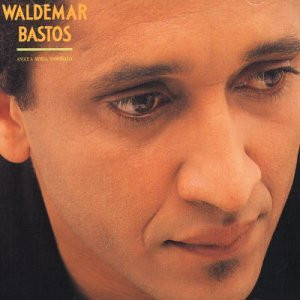
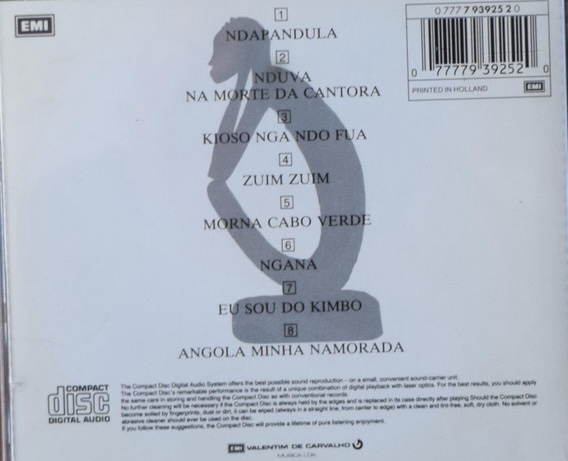
On the other end of the BPM spectrum is Waldemar Bastosโs 1990 album, Angola Minha Namorada (Angola, My Beloved). Recorded in the picturesque Portuguese coastal town of Paco DโArcos and released in 1990, this music is urbane and sublime. There is none of the frenetic energy of Akwaba Beach within 100 miles.
Waldemar Bastos, who passed away in 2020 was born in colonial Angola in 1954. Like so many creative Angolans, he self-exiled himself from his country to settle in Portugal after it became clear that the revolution was willing to strike down musicians and other artists, not just ideological opponents. Music had played a huge part in mobilising the Angolan people to support the anti-colonial revolution, but many popular singers and musicians found themselves caught up in the 27th of May 1977 purge unleashed by the ruling Marxist-Leninist party in reaction to an internal ideological challenge. Within 18 months of securing independence, artists and musos were realizing that the dream was turning into a nightmare. Bastos left his homeland in 1982, aged 28.
Blessed with a warm and supple voice not dissimilar to that of Al Jarreau, Waldemar was considered in his lifetime a giant of Angolan music. His album, Angola Minha Namorada, was released nearly a decade before Pretaluz, the record that saw him โbreakthroughโ to European and American music fans in 1998.
Itโs a gorgeous album. Calm, somewhat laid back in pace but deeply felt lyrically and musically. This record is the thing you want to listen to on late Sunday morning. When there is no reason to rush, nowhere to go and everything to be gained by letting Waldemar’s soulful voice slowly insinuate itself into your being. Hues of fado and tints of jazz colour this beautiful music. Though entirely different from the club music of Mory Kantรฉ this album is another fine example of Euro-Afro pop.
The Flying Coach had just pulled out of Gujrat. Passengers were settling in for a couple hours of sleep before our arrival in Pindi. Quietly whispering to each other, fussing with their reclining seats. Yawning. I had a window seat. My head rested against the glass. Outside, pitch black.
The driver inserted a tape into the deck and a mix of recent Indian film songs competed with the post-dinner clamour. Indian film songs in Pakistan are hugely popular. Slowly the coach fell silent and the music was the only thing to be heard.ย One of the songs immediately caught my ear. It had a smooth, soft-rock sound with a steady disco pulse at the bottom. Definitely catchy. Much closer to Western pop than โclassicโ Hindi film fare. The singers teased each other by asking, โKaisa lagata haiโ (How do you like it?) and responding, โAchha lagata haiโ (I love it).ย
Pure earworm stuff.
Hearing the song again the other day, memories flooded back, not just of that road trip but of that general era. The very end of the โ80s and the beginning of the โ90s were hugely turbulent years in India. ย One ุฏูุฑ (daur/epoch) was quickening to an end. The new age, still undefined, was just beginning to emerge.
Kaisa Lagata Hai, was a super hit from the 1990 film Baaghi (Rebel) and fit perfectly with the times. It is filmi music in transition. The song hints at the more international sounds that were soon to turn Indian film and popular music from an obscure sub genre to one of the biggest categories in the world. The cheeky, mildly suggestive lyrics cleared the way for the openly sexual content of the current scene.
Though many of the giants of the โ60s and โ70s were still in the game, all across the film world fresh young faces, alluring voices and disruptive attitudes were pushing their way into public consciousness. Kishore Kumar whose peak came in the 70s, was still recording as were the nightingale sisters Lata (Mangeshkar) and Asha (Bhosle). But Kishoreโs son Amit, who won Best Playback Singer of 1990 for Kaisa Lagata Hai, was in big demand. Lata and Asha were still beloved but new arrivals Anduradha Paudwal, Alka Yagnik and Kavita Krishnamurthy were popular among the younger set.
The scene from the movie in which the song was inserted depicted a country starting to creak toward a major makeover. The stars Salman Khan and Nagma were fresh and young. Salmanโs red white and blue striped jumper clearly represented kids who looked to America rather than the Soviet Union as did many of their parents. They are shown shopping at Foodland one of Bombayโs early western-style supermarkets and buying large blocks of Toblerone chocolateโฆhitherto a rarity other than in Duty Free stores. Despite their new cool clothes and products their behaviour very much was still line with the flirty, cutesy comportment of previous eras; devoid of any adult sensuality.
**+**
India felt like it was going to explode in those years. Something had to give. There was so much potential being held back by an inefficient bureaucracy and the sclerotic โnetas/เคจเฅเคคเคพโ (leaders) of Independence-era politics. The subterranean rumble of a vibrant business, media, creative and learned sector was impossible to ignore. The political system was fizzling with sparks and thick smoke while shooting colourful lower caste personalities who leveraged significant political influence, into the public realm. Something unstoppable was going on. India was changing. Perhaps too fast. Perhaps long overdue. But with no clear vision (yet) of the destination.
I lived in Pakistan at the time which was trying to cope with its own massively shifting tectonics. (Another story for another time.) Many of my holidays were spent in India, where I had been born and lived until the age of 17. As soon as you crossed the border the energy of a changing culture was everywhere to be seen, heard and felt.
Whatever you thought of Rajiv he was not your usual Indian politico. The Great Leaderโs grandson, who flew commercial jets. Undoubtedly young and handsome ย but also henpecked by his fierce Italian wife. Rajiv was the first national leader with some actual experience of the world beyond Congress and JP politics. He was admired pretty much universally. For a few years anyway. ย With his blood connection to Nehru and Indira, Rajiv led the country to the base camp of the political Everest that would eventually be summited and claimed by Narendra Modi.
Mud vessels were replaced overnight by cheap bright colored plastic buckets. Tea was now always served in a porcelain cup or glass tumbler. Youโd get it in a clay mutka only in certain out-of-the-way places.
Doordarshan, the stuffy national television station was being bruised up by Star TV and Zee TV. Networks that provided youth-centric game shows, music videos and reruns of international television hits. Bandits were in the news. Phoolan Devi and Veerapan. Multiple states were sites of โrebellionsโ: Punjab, Assam, Kashmir. Khalistan and Gurkhaland were put forward as new ideas. Naxalites seemed to be resurging in Andhra. Hand painted movie hoardings were quickly fading away. Digitally produced adverts choked off one of the great pleasures of being a film buff.
Everything was in flux. It was an edgy time. Assassinations of Prime Ministers. Caste politics. Phoolan Devi was sent to jail for her crimes against the upper castes but then was elected to Parliament. Elections, held once every five years, had been up to this point, a yawning affair in which Congress or Indira seemed always to win. But between 1996 and 1999 the country voted 3 times. Seven PMs took the oath of office in the 90s. Most of them lasted a year, tops. Some a few months. A fatigued shopkeeper in Mysore sighed deeply as he gave me my change, โToo many elections.โ
India as a real center of global power and influence was still largely rhetorical but everyone knew it was only a matter of time before the โold waysโ of running India were shredded for good. ย Looking back, it was a generational change. A transition from a solid base built by a single political organisation and its most prominent family, to skyscrapers, flyovers, Pepsi and the birth of India’s billionaire class, Ambanis jaise. Hard to believe today the Nehru/Gandhis could ever have been relevant and admired.ย Narendra Modi was a state based political apparatchik at the time but the wave he would ride to successive victories was starting to swell.ย A group of young men talked loudly to me as we rode a train through central India. The Muslims had it coming. They were tricky and dirty and evil minded. This is a Hindu country.ย ย
**+**
Pop music, which in India equates to filmi[1] music, was sounding different too. ย A decade earlier the first lightning bolt to electrify the airwaves struck in the form of a 15yr old Pakistani girl singing the catchy, Aap Jaise Koi (Somebody Like You) in Qurbani (Sacrifice), the biggest movie of 1980.ย With a sound that mirrored perfectly the soft rock heard on American AM radio in the mid-70s (groovy bass, scratchy rhythm guitar, synth, soaring melody lines) the singer (Nazia Hassan) and producer/composer (Biddu) went on to become international stars throughout the 80s. Disco-lite had arrived in India.
A transition from the founding fathers and sons of Hindi film music, to a new crew of shamelessly self-promoting producers/writers/composers like Bappi Lahiri began chipping away at the thick walls that had protected film moguls from even considering changing their decades-old formula. Four voices[2], two female and two male, had completely dominated filmi music since the 60s. The soundscapes in which they were asked to sing were equally dominated by Indian instruments and compositions based upon classical ragas or Punjabi/Bengali folk songs. If Western sounds and instruments were heard it was to signal the arrival of the vamp or the Vat 69-drinking villain.
Bappi Lahiri was a different kind of music director. He reveled in excess. As big as Barry White, he draped himself in bling, wore flamboyant shades 24/7 and embraced the wildest ideas. ย A true disrupter. He could compose in the comforting, long-standing sound of the 50s-70s with real conviction and skill. ย But a trip to a nightclub in Chicago in 1979 changed his career from a respected composer/arranger into the badass of Bombay. โAfter a Chicago show,โ Bappi told an interviewer. โWe went to a club.ย A DJ was playing the most amazing music. Something completely new and fresh. John Travolta and the Bee Gees. I asked him what this was and he said, โDisco.โโ ย
Disco hit Bappi hard and upon return to India he introduced its thumping beats into nearly every one of his projects. If Biddu had snuck sweet Western pop melodies into Qurbani, Bappi turned the volume up to 11 and exploded woofers from one end of India to the next. Bappi was shameless. For the rest of his career his name was synonymous with upbeat, percussive dance music. Though the โDisco Kingโsโ formula rarely strayed from a steady, 4 on the floor beat, and vapid, repetitious lyrics, there is no question that without Bappi Lahiri there would be no AR Rahman.
Huge as Bappi was (he died in 2022) it was technology that really laid the walls of filmi music to waste. Cassette tapes came to India later than the rest of the world. They started to appear in the late 70s but import restrictions and decades-old laws that promoted local manufacturing meant they were priced as a luxury item. Or at least the machines that played them were. But as demand increased some restrictions on manufacturing both tapes and tape recorders were lifted and Indian entrepreneurs jumped into the deep end with gusto.
In the winter of 1984 on a visit to Allahabad I was blown away by the carts of cassette tapes being hawked in every bazar in the city. Literally hundreds of titles by artists I had never heard of. Everyone was browsing and buying, even rickshaw walas, school kids and policemen, who until that moment had probably never owned anything but a radio. Especially popular was a genre called ghazal. Especially as sung by a husband and wife pair, Jagjit and Chitra Singh. Their tapes sold fast and new ones released just as fast. What was even more remarkable was that this was not filmi music.
Ghazals and Jagjit and Chitra may have been the most successful genre in cassettes but they were not the only style and type being bought up. All sorts of regional folk styles hitherto untouched by the major recording companies (EMI and Polydor), in every language and dialect under the Indian sun were suddenly available dirt cheap. Tapes with sexy lyrics, comedy tapes, religious chants and pop music by wannabe stars from small cities in the hinterland were available everywhere.
Not just a giant tech leap forward, the cassette boom must surely rank as one of the great economic stimulants of that period. Piracy helped the revolution along. What just a couple years before had been seen as a โforeignโ object for the well-to-do, was now available for a few rupees. This was a very exciting period to be a music lover in India. I could not get over the fact that here were the faces of Kishore and Rafi or Amitabh on a cassette cover, equally at home as Michael Jackson and the Rolling Stones .
In the words of Peter Manuel, whose 1993 book Cassette Culture: popular music and technology in north India documents this period of transition, โโฆcassette technology effectively restructured the music industry in India. In effect, the cassette revolution had definitively ended the hegemony of GCI,[3] of the corporate music industry in general, of film music, of the Lata- Kishore duocracy, and of the uniform aesthetic which the Bombay film-music producers had superimposed on a few hundred million listeners over the preceding forty years.โ
Filmi musicโs share of the market shrank immediately and dramatically to less than 50%. Indipop, as this new wave of non-film music was labeled, stormed into public consciousness. New stars singing in new languages, including loads of English phrases, new factories set up in places like Bhopal, Coimbatore and Dehra Dun opened thousands of new markets. ย It seemed filmi music was going to die a quick death. ย Indipop flourished, thanks to the plastic cassette and the arrival of what Indians call โliberalisationโ.
By the late 80s, Indiaโs protected and insular economy was no longer fit for purpose. All political parties understood this and in 1990 a process of doing away with the restrictive import duties, tariffs and allergic attitude to foreign investment especially in products valued by the booming middle class began. Satellite and cable TV showed foreign movies and TV shows. People with money could travel more freely and experience the same things people outside of India took for granted.
The film industry was given government financing for the first time in its 60 year history. More movies were being shot overseas. Sound quality of the music improved dramatically. Audiences thrilled to see their idols dance through the streets of Paris, Cairo and Sydney all in the same song! But filmi music held on. It learned from the changing times and by the early 2000s had once again grabbed back its near monopoly of the popular music market. Indipop stars, once the great โaltโ pop singers, were invited to sing in the films. ย The half dozen geriatric (though immensely beloved) singers who had โownedโ filmi music were steadily pushed aside, along with those folk and classical talas and sensibilities.
Songs like Kaisa Lagta Hai were among the first to move in a new direction. Kishore Kumarโs son, Amit, sang the male lead. Anuradha Paudwal the female lead. Amit eventually retired, blown away by the likes of Anu Malik, Kumar Sanu, Udit Narayan, Lucky Ali and in the late 90s and early 2000s exciting singers from Pakistan: Atif Aslam, Zafar Ali and Adnan Sami. ย Sophisticated, widely influenced and wildly talented composers, exemplified by AR Rahman were now firmly in control of the filmi ship.ย American and European audiences grooved to Jai Hoย and Mundian Bach Ke. Bappi Lahiriโs compositions found new life in American/European songs like Addictive (Truth Hurts), Freeze (Madlib) and Come Closer (Guts).
And India today, whether you like Modi or not, is a true global power center and influence peddler. It all began when the floor of old India and the old Hindi filmi world fell away with the tentative arrival of songs like Kaisa Lagta Hai.
[1] Music and songs from Indian, mainly Hindi/Urdu language, movies.
[2] Lata Mangeshkar, Asha Bhosle, Mohammad Rafi and Kishore Kumar
[3] Gramophone Company of India, formerly known as His Masterโs Voice, was until the late 60s the only significant producer of recorded music.
Yesterday was the biggest day on Melbourneโs sports calendar, the Australian Football Leagueโs Grand Final. This year the pre-game entertainment featured none other than Snoop Dogg. A controversial choice to be sure. But then so was Meatloaf back in 2011. Ranked as one of the stupidest moves by the money fiends that control Australiaโs beloved, unique form of football, Meatloafโs appearance was hated by fans (Meatloafโs included) and forced the Has-Been to publicly apologize for his poor outing.
Itโs the Australian way it seems when it comes to welcoming international superstars. There was Judy Garland in 1964 (deprived of her pills by Australian Customs) who refused to leave her hotel for three days. And Joe Cocker busted a few years later.
In 2015, Johnny Depp and his girlfriend, Amber Head, were forced to grovel in front on our media and courts to express their regret for failing to declare two pet dogs that accompanied them, thereby avoiding the usual 10-day quarantine. At one point the fiery (and often inebriated) Minister of Agriculture, threatened the dogs with pet-euthanasia, if the Hollywood power couple refused to pay public penance. In the words of Depp, โwhen you disrespect Australian law, they will tell you!โ
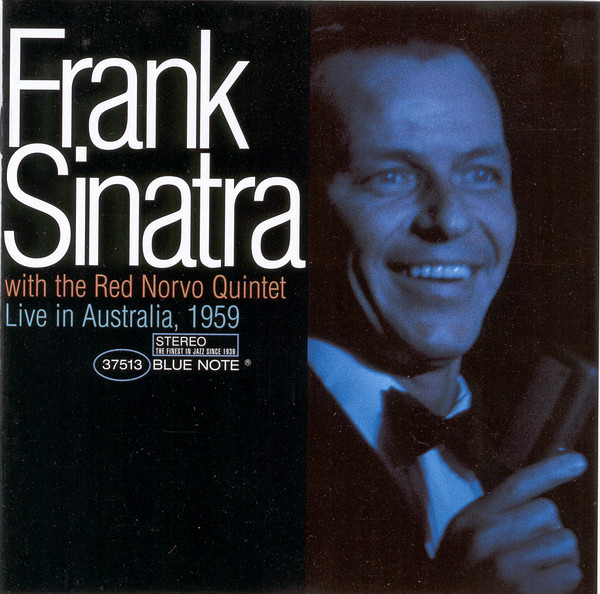
Frank Sinatra would have 100% concurred with that statement. Perhaps of all the superstars weโve harassed, it is somehow appropriate that The Chairman of the Boardโs experience sits at the very top of the list.
Frank first toured Australia to in 1955. But from the moment he and 14 year-old Nancy stepped off the plane at Melbourneโs Essendon airport, he was met with derision. Fans who had gathered at the airport hoping to share a bit of banter with their hero, quickly turned hostile when he managed but a single wave and half a smile before stepping into a limo and being whisked away to his hotel.ย From Cheers to Jeers went the headlines.
The shows themselves went off a treat. Fans raved how he sounded just like his records. Motorists passing by the West Melbourne Stadium double parked as his voice carried out into the street. A triumph all round. Frank loved Melbourne, the fans loved Frank. The (lack of) incident at the airport the day before was forgotten. After all, it had been announced that Sinatra would appear at his hotel for breakfast; fans would surely be able to get a second chance to hear him speak to them.
Alas, the headlines the following day read: Frank Sinatra Fans Miss Out Again. The hotelโs manager was given the task to confront the angry fans and chock it up to a โmisunderstandingโ.
Two years later, a second tour Down Under was scheduled but Ol Blue Eyes abruptly turned around in Honolulu. Apparently, Frankโs decision was based on the fact that sleeping arrangements for his musical director had been overlooked for the onward journey to Australia.
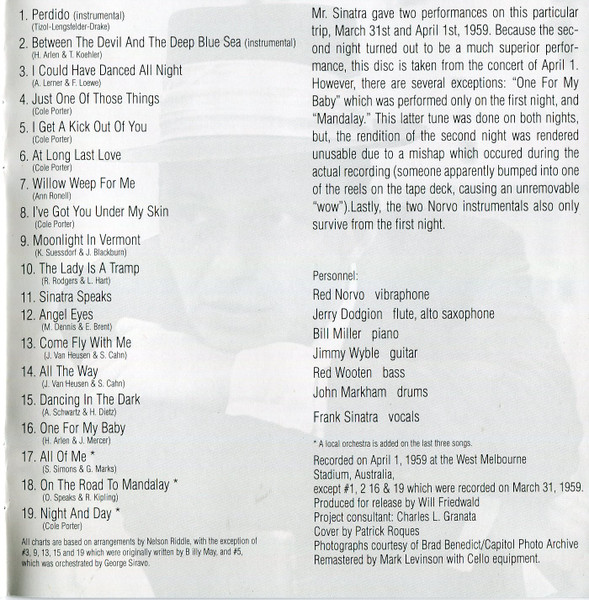
Seven shows were cancelled leaving his promoter the ugly job of refunding 23,000 tickets to ever-more cheesed off Australian fans. In January 1959, Frank tours again. Heโs still stand-offish in public but in outstanding form in his shows which are supported by the Red Norvo Quintet.ย His private life is dominated by his unsuccessful attempts to regain the love of Ava Gardner, who just so happened to be in Melbourne as well, filming (with Fred Astaire and Gregory Peck) On the Beach.ย When a reporter in Melbourne dares to ask him a question, Sinatra grunts, โMisquote me kid, and youโre dead with me. In fact, Iโll sock you on the jaw.โ
On the 1961 tour he ignored Melbourne altogether, doing four shows in Sydney and then flying back to familiar Californian shores.
Things got completely crazy in 1974. After being tsunamied by rock โn roll for most of the previous decade, Frank was finding a fresh relevance. He was out and about. Touring the world. Australian fans once again forked out their new Aussie dollars to spend an evening with their Man.
On 7 July, Frank flew into Sydney as grumpy and aloof as usual. Plane to Rolls Royce to Hotel. Nary a smile or wave to his adoring fans and a press corps salivating at the prospect of a scandalous headline or so.
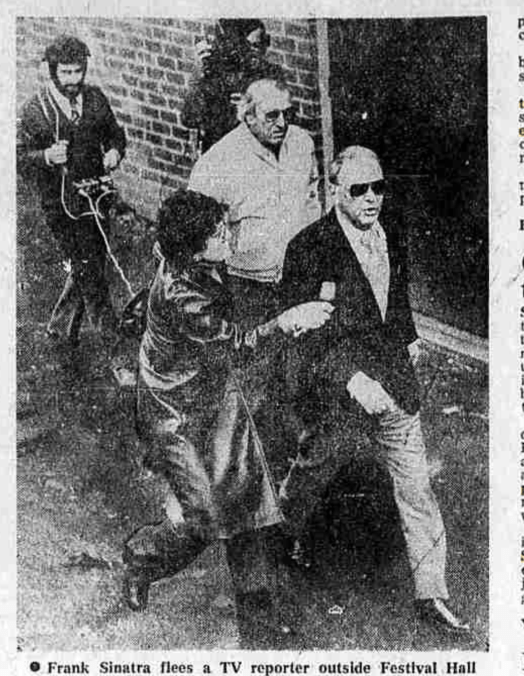
On 9 July, Frankโs arrival in Melbourne was memorable in the main for his refusal to acknowledge the press and shoving a fan out of the way. So harassed did he feel that he ran from his private jet to the awaiting limo. So far, typical Frank behaviour.
At that eveningโs show at Festival Hall, Frankโs first appearance in the city in fifteen years, he delivers what is now considered one of his best live performances.ย Heโs relaxed, his voice is as good, if not better than itโs ever been.
So relaxed was he that in his first monologue Frank sums up his views on the local press. Horrified and shocked, a couple of local unions (The Professional Musicians Union and the Australian Theatrical and Amusement Employees Association) announce that his second show, scheduled for the following evening, would be cancelled unless Olโ Blue Eyes issues an apology.ย This demand is met with scorn by Sinatra and his entourage. The press, he said, owed him an apology for 15 years of treating him like “shit”.
Now other unions pile on. Frank is not permitted to leave his Boulevarde Hotel room. He places a call to his pal, Hank, aka Henry Kissinger, asking him to intervene. Word on the street has it that Jimmy Hoffa has also been contacted to threaten his Aussie counterparts.ย An international incident is brewing.
The foam in the mouths of the press can no longer be hid. After the first show in Melbourne, his bodyguards, beefy mafia types, assault a news cameraman nearly chocking the man to death.ย The unions respond with a โblack banโ. He is to benefit from no public services whatsoever. No security. No police escorts. No room service. No fuel for his plane. No passport checks. Nothing. Frank Sinatra is a prisoner.
The overlord of all of Australiaโs powerful trade unions, a certain Bob Hawke, is persuaded to step in. In the initial meeting neither party budges. Frank sends word to Hawke, โIโve never apologized to any one and Iโm not about to start now.โย As the unions huddle Sinatraโs entourage sneak him out of the hotel and race to the airport where the media reports, he will meet with Hawke.ย But his private jet defies air traffic control and takes off to Sydney, leaving an embarrassed and royally pissed off Hawke looking like a chump.
Unfazed but seething, Hawke flies up to Sydney.ย In response to Sinatraโs lawyer’s demand for his plane to be refueled, Hawke delivers a classic Aussie ultimatum. This brings the Chairman of the Board out to meet Hawke for the first time. Hawke issues his ultimatum again to the Man himself.ย After several minutes of โnatteringโ Sinatra returns and asks Hawke for suggestions of what to put in the apology. Within an hour or so they agree on the words, and Frankโs lawyer descends to the press and reads the statement. Frank Sinatra apparently โdid not intend any general reflection upon the moral character of working members of the Australian mediaโ and regretted both โany physical injury resulting from attempts to ensure his safetyโ and the inconvenience to patrons.
A few days later at Carnegie Hall, Frank told his audience, โA funny thing happened in Australia. I made a mistake and got off the plane.โ He then went on to target Rona Barret, a prominent female journalist of the day, by saying, โWhat can you say about her that hasnโt already been said aboutโฆ leprosy?โ
As it happens, Snoop Doggโs show was the bomb. Most punters on social media are saying itโs the best show the AFL has ever put on.ย As for Frank, well, he did return to Australia 14 years later, in 1988. Bob Hawke was now Prime Minister.ย Upon arrival Frank meets with the press and even poses with the โbums and parasitesโ.ย He may have been an asshole but he was no dummy.
Here is the famous first Melbourne show in March 1959.
Long the favorite of collectors, who have cherished their bootlegged copies of the concert for years, Frank Sinatra with the Red Norvo Quintet — Live in Australia 1959 was finally released officially in 1997, nearly 40 years after the concert was given. In many ways, the wait was actually positive, because Sinatra’s loose, swinging performance is a startling revelation after years of being submerged in the Rat Pack mythology. Even on his swing records from the late ’50s, he never cut loose quite as freely as he does here. Norvo’s quintet swings gracefully and Sinatra uses it as a cue to deliver one of the wildest performances he has ever recorded — he frequently took liberties with lyrics while on stage, but never has he twisted melodies and phrasings into something this new and vibrant. The set list remains familiar, but the versions are fresh and surprising — “Night and Day,” where the song is unrecognizable until a couple of minutes into the song, is only the most extreme example. And the disc isn’t just for the hardcore fan, even with its bootleg origins and poor sound quality — it’s an album that proves what a brave, versatile, skilled singer Sinatra was. It’s an astonishing performance.ย [All Music Guide]
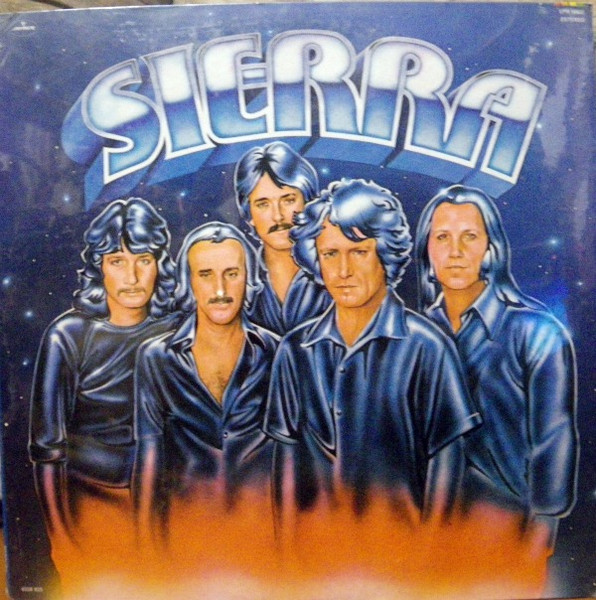
One of those albums that sunk like a stone. Released and then gone. Mores the pity, because this collection of 11 songs by Sierra is more than just alright.ย
Sierra was a single-album band of refugees from a bunch of country-rock and rock bands of the late 60s. By 1977, when their only and self-titled record was unleashed upon the buying public by Mercury, the individual players were in the sort of professional limbo that comes about regularly but is usually swept under the carpet in the biography. Which is too bad and a bit unfair, because Sierra was made up of some formidable names with very respectable curricula vitae.
Gib Guilbeau, on rhythm guitar, had played in a whole series of country-rock and proto-Americana bands like The Flying Burrito Brothers, Swampwater and the legendary Nashville West. On drums, Mickey McGee had credits as the drummer for Jackson Browne (Take it Easy), JD Souther, Linda Ronstadt, Chris Darrow, and Lee Clayton (Ladies Love Outlaws), not to mention an early country-rock outfit Goosecreek Symphony. Oh, and late Flying Burrito Brothers! Eddieโs nephew Bobby Cochran contributes blistering lead guitar and lead vocals. โSneakyโ Pete Kleinowโs steel has graced hundreds of rock and country rock albums and was first brought to wide attention as a founding member of The Burrito Bros and New Riders of the Purple Sage. On bass, Thad Maxwell, another vet of the 68-75 scene, and band fellow of Gib in Swampwater. Felix Pappalardo Jr. produced and contributed piano parts. A storied figure, throughout out his life Pappalardi supported or produced everyone from Tom Paxton to Cream, not to mention his own weighty Mountain.
So, no slouches these guys. They were not suburban lads looking for a break. Their combined talent and credits were formidable. In the parlance of job advertisements they had a โproven track recordโ of making excellent music.ย
But alas, here the sum of the parts didnโt add up. Which is not to say this a shit album. Far from it. Sierra is a very good record of late 70s American pop and deserves to be hauled up from the bottom of the deep lake of forgotten country-rockers.
The art work is a put-off and no doubt played a big part in the recordโs stillbirth. A perfect example of a cover designed by some free lance artist with no idea about the sort of band Sierra was. Many styles did they play, but spacey country-disco was not one of them. You could be forgiven however for thinking this was in fact, their speciality, if you had access only to the dumb, lifeless cover art.
On the black wax we are treated to high quality examples of soft rock (Gina; If I Could Only Get to You), So Cal country-rock (Farmerโs Daughter; Sheโs the Tall One), British blues (I Found Love), top 40 slick pop (Honey Dew), boogie, rock โnโ roll (Strange Here in the Night; Iโd Rather be With You) all sauted in the spicey warmth of the Tower of Power horns. (In this era if you were good enough to entice the ToP to record with you, you were ensured at least one extra star from the reviewer.)
But it didnโt work. The album suffered not from a dearth of talent or poor production. It sank because it had no focus. Spaghetti was all over the wall, perfectly al -dente no doubt, but spread across too wide a plane.ย For country-rockers in search of Gilded Palace of Sin or even One of These Nights, this was bland stuff. Waaay too poppy, man!
But for this old guy living 50 years in the future, and slightly anxious about the coming extinction of human made music, Sierra deserves 7 stars out of ten, for capturing several trends of America popular music current in 1977.ย Especially the eternal wrestle between Country and Rawk.
There are some blatant and pointless rip-offs like You Give Me Lovin, which is essentially a copy of the Eagles,Already Gone, but what did more than the front cover to kill this album, is its refusal to rise above the very good level. The album should really have been titled, Bob Cochran and Sierra, as he is the real star. It is Bob (the only non ex-Burrito), who shows the most excitement here. His guitar is sharp and always stands out. His high-tenor voice fits perfectly in both soft rock and popโaudiences the record label was clearly trying to attract.ย Sadly, the band of sages behind him seem content to play perfectly, expertly, confidently but, alas, with very little real energy or pizzaz.
Ratings:
Musicianship-8/10
Listenability-8/10
Energy: 6/10
Songwriting: 5/10
Cover: 3/10
Historic Value*: 7.5/10
*a subjective ranking of combined significance & interest to the history of North American (mainly) popular music of the 1970s. Judged by myself on a particular day. Significance could include the musicians, the cover art, the producer, production quality, songwriting, influence, innovation, listen ability etc.
UN Forces (Get Out of the Democratic Republic of Congo)(Vumbi Dekula) Cry, Accursed country! The people of the Democratic Republic of Congo formerly, Zaire, and before that Belgian Congo a.k.a. King Leopoldโs personal estate, have endured war, genocide, Cold War politics, Grand Corruption, death and despair and neighbourly interference from Rwanda, Angola and Uganda for decades. The UN mission MONUSCO, which stands for the United Nations Organizationโs Stabilization Mission in the Democratic Republic of Congo (in French) like several other such missions has been given a shitty job which they are , according to many critics, like Vumbi Dekula, a guitarist from East Kivu one of the worst spots in a sad and violent country, doing a shit job of. My recommendation for a wonderful podcast which often takes deep dives into this part of the world is the International Crisis Groupโs Hold Your Fire.
New York Time Blues (Tony Dolan) OK, this I did not expect. Anthony R. Dolan, long -time advisor and speechwriter for Ronald Reagan and prominent Republicans in the 80s and 90s, โTonyโ Dolan gave the world The Evil Empire speech and the Ash heap of History, two of the Ray-gunโs memorable public outings. He was still giving advice to DJT in the (real) early days of Trump2 but passed away in March this year. Before his stellar rise in conservative politics, Tony tried his hand as a protest singer; with a twist. He was conservative and like all good Cons loved to rail against the New York Times which probably was regularly rejecting his submissions!
(Wanted) Dead or Alive (The Manhattan Transfer) calypso tribute to some our favourite tyrants of the 60s and 70s. No gold stars for identifying the songwriterโthe one and only Mighty Sparrow.
Ready or Not (Jackson Browne) The one he wrote after breaking up with Joni Mitchell and getting his new girlfriend โin a family wayโ. The last verse of which he is horribly embarrassed by, even today. Start at 28.30
The Battle of Blair Mountain (JD Allen) Born in Detroit, Michigan, on December 11, 1972, sax player JDAllen first became interested in music listening to classic funk and R&B albums by Sly and the Family Stone, Prince, and Marvin Gaye. The Battle of Blair Mountain sonically depicts the 1921 labor uprising (the largest in American history) and armed resistance in West Virginia, sounding half-heroic and half-doleful in its procedures.
In Bed with the Enemy (Jack Hardy) As an antidote to track 5 here is a more modern protest song calling out the usual rats who run Big Business and Big Politics. Jack Hardy has been around a long time making good records. Heโs featured in several volumes of my Forgotten Country Rock of the 70s series.
Abe Lincoln vs. Madison Avenue (Bob Newhart). Bob never gets old!
The Year King Uzziah Died (The Soul Stirrers) Unlike so many of the Biblical heroes (David, Solomon, Abraham, Moses) King Uzzaih is on pretty solid ground as far as historicity goes. In another weird interest of mine, Biblical Archeology, I recommend a lively, irreverent yet serious podcast that explores the Bibleโs narratives against the solidity of history.
Brisbane Blacks (Mop & The Dropouts) In September 1982, Brisbane hosted the 12th Commonwealth Games. With the worldโs eyes on Australia, First Nations people from around the country converged on the Queensland capital to march for Aboriginal rights. Local muso Mop Conlon wrote ‘Brisbane Blacks’ so Aboriginal rights wouldn’t become yesterday’s news. Despite what seems like an annual hand-wringing of hands over โwhat to do about the Aboriginalsโ Australiaโs leadersโ ability to make headway is one of the sorriest stories in First Nations history. Deaths of black Australians in custody is something that just keeps on happening, despite countless โinvestigationsโ and thousands of recommendations for change. Shame.
Tijuana Bible (Tom Russell) Lana Turner, a violent gangster and a frightened girl. What is a Tijuana Bible you ask? Have a look. What does Johnny Stompanato have to do with Tijuana Bibles, you ask? Well, he may not have been a featured character in a Tijuana Bible but as Russell suggests, the story of his death is exactly the sort of sensational scandalous material TBโs loved to publish.
Remember listening to music back in the day? Settle down in a bean bag or stretch out on the couch and read the back of the album cover. You do this enough and over time youโve developed a mental map of world of rock โnโ roll. The studios. The producers. Even the fricking engineersโ names became familiar. Even if there were no lyrics to read this minutiae seemed to be as revelatory as the Dead Sea scrolls. I devoured it as part of the โexperienceโ of music and over time these names lodged in my brain.
One such name that seemed to pop up all the time was Jim Gordon (drums). My initial rock โnโ roll dream was to be a drummer. So, I paid attention to these guys. Steve Gadd. Jim Keltner. Jim Gordon. Levon. Keith โFuckingโ Moon, man!
Jim Gordonโs name came up most often so I figured he must be good (duh!). But I knew nothing about him. He didnโt have the lifestyle of Keith โFuckingโ Moon nor feature in Rolling Stone in any way that would make his name register for anything other than his prolific credits.
A couple months ago I read Drugs and Demons: The Tragic Journey of Jim Gordon by Joel Selvin. (Highly recommended if youโre into this sort of stuff.) Many of you will know the story and Iโm not going to retell it here. I was not only stupefied to learn just how prolific, adored (by his peers and fans) and influential (โhe invented rock โnโ roll drummingโ) he was but I was shocked to learn he murdered his mother with a kitchen knife. And that he spent the rest of his years in prison where he died just two years ago in 2023.
Surfing through the internet after that I learned that Iโm a late comer to this story. There are dozens of interviews with fellow drummers on YT and other places which both praise the drummer and condemn the man. ย And itโs that latter attitude that has left me unsettled.ย Iโm not an apologist for murder. He got what the law says was coming to him.ย But to simply condemn one of the great geniuses of popular music, a man who dominated the session culture of the 60โs and 70โs, who could always be relied on to deliver exactly the sound and beat the producer or the artist needed, even when they didnโt know it, who was by all accounts a quiet, gentle giantโthough these qualities worn off when the drugs really kicked inโbut a man who was tortured for years by disembodied voices in his head that drove him to murder, seems unfair.
I personally donโt know what thatโs like. But I know people who do. I do have experience with torturous mental health and know of the despair and the desperation this brings.ย To summarize Jim Gordonโs life as that of a drug-addled murderer is a complete misreading of the manโs life.ย ย It seems he was relieved to be put away, where he was unable to harm anyone else.ย I get that; and I’m glad he found some safety and peace before he died.ย RIP Jim. You deserve it.
Here is a just the thinnest of thin scraping of Jim Gordonโs work. He started out drumming for the Everly Brothers in the early 60s and then went on to be nearly every groupโs and producerโs go-to sticks man for twenty years. He mostly worked alone, as a session drummer but did join Delaney and Bonnie and Derek & the Dominos for a while in the early 70s. And you know that beautiful elegiac piano outro on Layla? Well, that was Jimโs idea. And him playing.
If you donโt know by now, let me lay it out there once and for all: I am in love with the music of the 1970s. Itโs when my musical ears started to grow up. I am emotionally tied to the โ70s, the years that took me from a 13-year old dork to a married man in 1980. University, travel, losing the Big V, jobs, drinking too much, etc. Formative years.
This doesnโt mean I spend my days listening only to peak Elton and Born to Run. I spend a lot of time in the weeds in music from around the world, especially the Indian barsageer, and contribute to the profits of Bandcamp quite faithfully. But with age comes many things. One of which is a dropping away of the need to be considered hip. Another is going deep into things. The music of the 70s may be comforting and familiar but in the same way I knew nothing of India until I came to America, it is only in the 3rd decade of the 21st century that Iโve begun to try to really listen to what was going on in the popular music of those years.
I knew of Ramsey Lewis from regular visits to the local record store. His albums of that time, especially Sun Goddess (1974) and Salongo (1976) were very attractive. Covers that stood out from the mass that called out to be picked up handled. Being poverty struck I was never going to put $4.98 down to actually buy one, but man, I really did love the look of those albums.
Ramsey had got his start in Chicago in the mid-50s. He played what I call club jazz. A sort of diet-Jazz that was accessible, occasionally funky and generally soothing. Youโd hear it in small clubs in big cities across America. Les McCann and Lou Rawls, would be there the week before you, maybe Willis Jackson or Brother Jack McDuff, the week after.
Ramsey was a very accomplished pianist/keyboard player and a warm person. But the overseers of โJazzโ showered him with putdowns like lightweight, mainstream, โhappy clappyโ and bland. He didnโt care. Some of the giants of jazz, including the Duke himself, were fans and mentors. And besides, he was actually making money and had a mixed audience of black and white fans who liked his cross-pollination of styles.
When jazz synced up with R&B and became soul-jazz in the late 60s and allowed George Benson, Grover Washington Jr., and the like to become pop stars in the 70s, Ramsey fit right in. Heโd been laying the foundations of soul-jazz for years.
Sun Goddess was released at the end of 1974. The cover pictured the gilded face of a beautiful woman set against what looks like a background of liquid silk shooting out like rays of the sun. Bold & beautiful. Confident. Daring & intriguing.
When the stylus hit the wax that lush, warm sound of the times filled the room. Maurice White and several mates from Earth, Wind & Fire were in the studio as players and producers which gives several of the tracks, especially the title and opener, a funky EW&F feel. Maurice and Ramsey went way back. Maurice had been picked up as a session drummer by Ramsey after the departure of Redd Holt in 1966. They had stayed together for several years until Maurice laid out his idea for a large, dance, funk and pop group to Ramsey around 1970. Ramsey smiled and wished him every piece of luck as Maurice moved to LA.
By 1974 Whiteโs group was about to release their breakthrough That’s the Way of the World which included the Billboard Number 1, Shining Star. That EW&F were in essence Ramseyโs backing band on Sun Goddess no doubt gave him and the album a huge boost of street cred.
The music exemplifies that strain of African-Americana which is confident, unapologetic and intensely positive. On the charts in those years were songs like Love Train (The OโJays), Wake Up Everybody (Harold Melvin & The Bluenotes) and Black Wonders of the World (Billy Paul). Sun Goddess is the sonic realisation of the popular slogan, โProud and Blackโ.
Scratch guitars look forward to disco, about the happiest music ever created, but which was still an underground phenom. Ramseyโs keyboards, on piano or Fender Rhodes, always stand out even though he is surrounded by some of the best musicians working at that time. Critics consider Sun Goddess to be a deliberate attempt by Lewis to cross over to R&B. Could be. But there is no sense that he is out of his depth or uncomfortable with the increase in funk that defines the sound. Heโs perfectly at ease and as accomplished and classy as ever.
If youโre interested in understanding the music of the 1970s, then youโve got to get this record.