WHO NEEDS A BULLET TRAIN WHEN YOU HAVE SO MUCH TIME TO KILL?

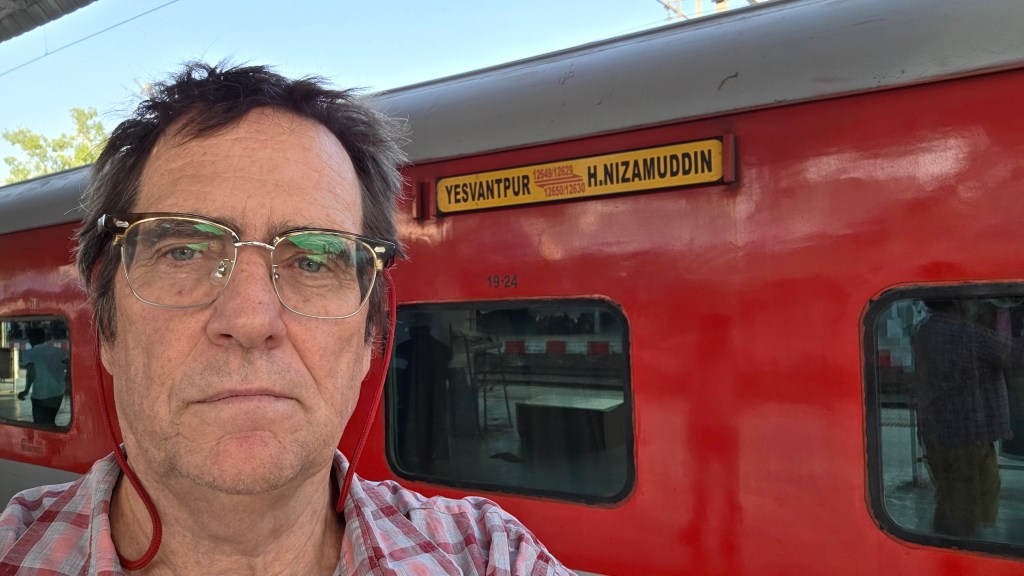
I just took a thirty-seven-hour train trip straight down the center of India.  Like a surgeon’s scalpel, the train sliced open the skin of the land to reveal worlds usually unseen and taken for granted, but hiding in plain sight.  

It was a long-distance train with an equally long-winded name–12630 Hazrat Nizamuddin – Yesvantpur Karnataka Sampark Kranti Super Fast Express.  As she sped along, we travelled through time traversing ground whose extrusion 66 million years ago helped bring the age of the dinosaurs to its end. We were carried through the myths of Lord Krishna playing on the banks of the Yamuna in Mathura; the Taj Mahal watched us from a distance.  The number of dynasties that ruled these thorny, dry hills boggles the mind. I lost count at ten but love saying their names to harmonize the clickety clack of the train’s wheels.  Shunga, Kanva, Naga and Shilahara. Bundela, Maratha, Scindia and Patwardhan.   

The trip touched not only the mythical origins of Hinduism but the peaks of Indian Buddhism and glories of medieval Islam.  We swayed our way by supreme icons of Indian art such as the seven storied stone palace at Datia, built as a guesthouse by Bundela king Maharaj Bir Singh Deo for the World Conquering Jahangir who never set foot inside. And the seven-meter-tall pillar of quartz sandstone gifted to Shunga king,  Bhagabhadra,  by Heliodorus the Greek ambassador of Taxila, to commemorate his conversion to Vishnu worship. The sublime Great Stupa of Sanchi commissioned by Ashoka for his wife, the first Buddhist power couple of South Asia, just a short distance from the tracks near Vidisha.  

On and on I could go. 

We crossed two of India’s sacred rivers, the Yamuna within the first few minutes of the trip and the Krishna just before entering northern Karnataka 30 hours later. We climbed up and down several mountain ranges:  the Satpuras, the Sahyadris and the Dharwad Crags. And of course, the range that divides the north from the south–the Vindhyas–about which I’ll tell you an old story. 

Once upon a time Vindhya, the king of mountains, felt slighted that Suryadev (the sun) circumambulated Mt. Meru, the original mountain of creation, but ignored him. He demanded that Suryadev include him in his orbit. But Suryadev explained that his route was not his call but the command of Lord Shiva.  Sorry, dude. 

Vindhya flew into a rage. To show his power he and his fellow mountains began growing higher and higher, and promised to block out the sun . The gods panicked. They begged the sage Agastya, who Vindhya respected as a guru, to have a talk with Vindhya. “Convince him to stop growing, dear Sage. You are our only hope.” 

 Agastya felt compassion for the gods and began his journey southward.  As he approached, Vindhya called out a welcome to his guru and asked where he was going.  Agastya replied that he was on his way to the southern part of Bharatvarsha (India) and requested  his friend to let him pass.  “And while I am away, I would like you to bow your heads until I return this way, at which time you can again stand straight and tall.” 

Vindhya and his followers unquestioningly bowed their lofty heads and swore to remain thus until such time as the Sage returned North.  In the South the sage did many wonderful things and was so feted he never returned North. And so, until today, Vindhya and his clan of mountains remain bent low, as they promised, allowing the Himalayas to reign supreme as the Land of the Gods.  

All this lore and history in 37 hours; in a single train journey covering 2100  kilometers.  Hundreds of books could be written about the stories that echoed against the glass and steel of the train as it tracked that single course through central and western India.  

Sage Kakbhusundi

There is another story, a favorite, about the sage Kakbhusundi, the immortal crow-man who is playfully swallowed by the infant Rama.  Inside the god’s young belly Kakbhusundi is entertained by a phantasmagoric, psychedelic, wild and crazy show of multiple worlds, multiple timelines, multiple universes all unfolding simultaneously in the past, present and future.  When the crow sage is burped back out of the child’s belly, he discovers that in fact, no time has passed whatsoever. On this particular journey, in the late spring of 2026, that strange and wonderful creature took the form of an elderly Bihari man travelling to his son’s home in Pune and became my travelling companion.

I normally am a ‘stick to myself’ traveler. I’ll be polite and converse, but rarely will I introduce myself or initiate a conversation. But as soon as I entered the cubicle, I found myself saying, ‘Namaste. My name is Rabe. I am travelling to Hubli.’ 

I am Pradeep Kumar Yadav. 

The speaker wore a dark blue flat cap, a new, still-creased purplish-blue shirt that changed color depending on the light and, track pants. He reminded me instantly of my mom’s oldest brother, Uncle Omer, a kindly, gentle-countenanced school cook from Minneapolis. Shri Yadav had my uncle’s cherubic face, his quick warm smile and balding pate (which I noticed a bit later, was peeling from being outdoors too long without his cap). He was quiet. His black corvid eyes sized me up while I exchanged the usual traveler’s chitchat with his daughter and grandson who had come to see him off.  Before too long they asked his blessings, wished him safe journey and took their leave.   

Yadavji opened the proceedings. 

What job do you do in Australia?  

I told him, but not fully trusting my Hindi asked if he was familiar with what I had described.  

Oh, of course, I know NGOs. They do good things for people. Bahut accha. Retired? I see. Ok. Ok. I understand.  

When he spoke I could see he loved his paan(betel nut). He was missing several of his upper teeth; the rest were stained a dark reddish brown especially in the fault lines where they met. I marveled at his coloring. He was not an albino but every part of his skin including his toes and feet were closer in hue to mine than those of any other passengers.  I asked him what he had done for work. 

I was a junior engineer in the railways. Actually, a little above junior engineer. Mostly worked in the big Jamalpur workshop, on the loop line between Patna and Calcutta. No no no. I was not a driver. I was mechanical. Working inside the shop itself.  My original place is Munger. Next to Bhagalpur. In the 1960s some Baba set up a big yoga school and now people come from all over, mostly Ingland and America, to study yoga.  You know when I was young, between 1962-65, we used to see lots of American young people in India.  We used to call them hippies! ‘Look at that hippie. This hippie is doing that.’ That is what we called them. Hippies.  

He broke into little chuckles as he spoke. His eyes twinkled at certain points for emphasis. As is commonplace in India his hands and fingers moved as well, unconsciously adding visual punctuation. 

Bihar is very ancient, isn’t it? 

Very ancient. Yes. Very much . All the great philosophers, Buddha (well, he came from Nepal actually but he became enlightened in Bihar), Mahavira the saint of Jainism.  Adi Shankaracharya, you know his name? Yes? Good. He travelled all over India, going from one corner to the other. But he found the greatest fame in Bihar.  He was the one who emphasized Jnana. Knowledge. But you know, today, even though  the teaching of these philosophers has spread across India and the world, in Bihar itself everyone has turned it all upside down. No one considers the teachers’ main message which was ahimsa. Non-violence. Instead, today people practice only himsa. Life is all about violence, power, corruption only.   

He was clearly a man well-read for this station in life. He talked about Israel and Iran, Max Mueller, and theorised about the benefits of ‘evil’ being a step toward human development.  He asked me what my favorite place in the world was, seeing as ‘you’ve been everywhere.’ Before I could finish my usual too-long answer, he was talking again.   

Our Vedas and purans you know are full of amazing things. They have written that the gods would use bows with arrows that shot fire! And even that they could shoot the other arrows out of the sky. And if the arrows   collided in the air they would join together and shoot straight up into the heavens. Zhoom! Rockets!  Even, some scientist discovered, that in Mohenjo-Daro the people could write something on one tablet here, and on the same sort of tablet hundreds of kilometers away, the same exact thing would be written. 

I push back at this. ‘How does anyone know that? No one has deciphered the script and how can you say any two slabs of stone were written at the same time.”  I suspect he might be what they call these days a bhakt. A Hindu chauvinist who believes that nearly everything we experience in the contemporary world from plastic surgery and the internet to air travel existed in Vedic times (1500 BCE).  But I see that I’ve missed the point he is making. 

Of course, you are correct. But you see scientists discovered that in some of those stones in that area there was some sort of magnetism that allows this process to happen. Here, one thing. There, the same! 

He quickly shot his arms in different directions to help me understand what he was saying. Here. There.  

I want to mention quantum entanglement theory; the one Einstein called ‘spooky action at a distance’ but knew I would never figure out how to do so in Hindi, so let him continue.  But he’s in no hurry. He falls into silence. I look out the window. He tells me we are coming up to Mathura, the land of Krishna.  I watch the station of the modern city whiz by. Our train doesn’t stop. Neither does it at Agra, a further half hour down the track.   This is the agricultural heartland of UP he says, before nodding off. When the train lurches he wakes up and continues the thought. 

One time during the British days, Germans came to India to study our philosophy. They studied it deeply and took back 500 Sanskrit scholars to Germany and set up a Sanskrit University! Yes! In Germany itself. People from every country, even from India, go there to study. Can you imagine!   

That Indian scholars would travel to Europe to gain knowledge of their own culture seemed to simultaneously tickle and disappoint him.  

These Germans began to look for the science in our scriptures. The Vedas are actually about science, they concluded. But our Indian pandits say the Vedas  are only religious books. They are content with that much only. They are happy to say, “you see, we are the world’s best religion because we invented all these modern technologies before anyone else.”  But the Germans wanted to understand and discover how they could use the Vedas and purans to benefit mankind.  So, they did deep research to discover and explain the Vedas in scientific terms. As a result  they invented so many things like rockets and missiles.  And today we have the modern world. You see Europeans, especially the French and the Germans, not so much the English, were clever. They didn’t just say, ‘we thought of these things first.’ They wanted to test to see if Vedic science could be made to work. That is why Europe and the West are so much more productive than India. We Indians are content to simply know. And make statements about things. But take action.  Look at those fields. The soil here is so rich but the productivity is so low.  Go into any village and you’ll come across a group of men here, and one over there, and more over there someplace else, playing cards. That’s what they do. Play cards and gamble all day. When others could make the land so much more productive for the benefit of everyone.  That is why Europe and Japan are so far ahead of us. They work and use their minds to help others, not just to chant slogans. Which is all these pandits and holy babas our government likes to promote, do. This is our predicament.  

While he’s talking a part of me sees glimpses of other people I love in his face. Mike, my oldest brother. Yadavji shares his birth year (1947), and he has the same inquisitiveness about the world as my brother did. I hear Phil, a school mate, in the way Yadavji speaks Hindi; especially the way he becomes more confident towards the end of a story or a thought. His cadence quickens and his mannerisms, slightly challenging, like a fired-up cock, match the way Phil spoke Hindi back in the day. 

Stanley, a dear friend for many years, also seems to be winking at me from within Yadavji. They shared a love for Bihar and told the same kind of jokes. Simple ones. Not especially clever ones but ones you could not help laughing out loud to because the punchlines pointed to the foibles of being human in a crazy world.   Like this one:  

Modi wanted to get a bullet train for India so went to Japan. He had a ride and was very impressed. On return home he invited the Japanese PM to come and visit India. Having been so impressed by the bullet train and Japan in general, Modi wanted to show his counterpart the best of India. So he took him to Varanasi.  They spent  hours floating around the river, up and down, in front of the bathing ghats and temples. 100s of priests and pandas chanted mantras and did aarti with incense and small diyas.  There was loud religious chanting and resounding drums.  After four hours, the officials got off their boats and climbed to the top of one ghat for the official ceremony.   The Japanese PM leaned over to Modi and said, “I don’t know why you’re so interested in a bullet train when you’ve got so much time to kill!” 

We both burst out laughing at this absurdity. And then we laughed a bit longer because we were both laughing and enjoying the moment.  This was exactly how Stanley would get me to tears of joy and draw me in. As Yadavji and I looked into each other’s eyes, I felt the uncanny presence of my deceased friend, chortling and smiling back at me.  

As to his halting Hindi this is what he had to say.   

In Munger we speak Angki. The area is old and in those days that area was known as the kingdom of Ang. No, no. It is Hindi. My language is Hindi but my boli, my tongue, is Angki.  

I knew about Maithili and Magadhi. I even could understand a bit of Bhojpuri, all dialects and boli from Bihar and Eastern UP. But I’d never heard of Angki. 

Yadavji was from the Hindi belt but messed up his genders, cases and tenses. Like me and Phil. This was another little bond that connected us for the time we were together. We didn’t care about the delivery but the content of what we were saying.  And yet when his family called, his words flowed smoothly without any hesitation. I could understand a word here and there, but not many. It was a completely different language than what I knew as Hindi.  

I later discovered that Angki is one of the oldest living languages in India, stretching back to the 5th and 6th centuries before Christ. Indeed, as Aramaic was to Jesus of Galilee,  Angki was to Gautam Budh. Kakbhusundi it seemed, had avtared as Yadavji, from a lost world speaking a language that Buddha would have preached in. And morphing from one familiar face to another in some sort of play.    

Yes, indeed, Bihar is an ancient land.  

We rolled into Pune about an hour late. There was a lot of slow going as maintenance crews bolstered the tracks against the dynamic earth that shifted frequently and radically just a few meters below the surface.   He plugged in his earphones and returned to watching something on his phone. He laughed to himself. I watched the big city grow around us.  But I couldn’t stop thinking of the crow-man in the belly of Rama. And how within a single soul, the soul of one man, a myriad of worlds, histories, and incarnations exist, not in conflict but in some weird harmony. 

By the time I helped him on to the platform at Pune we had sailed together through several worlds.  From geologic epochs up to the present day. Dozens of kingdoms and rajas had risen and fallen over the hours. Timeless ragas and sermons had been  composed  and  preached and yet this all had unfolded in a single train compartment. 

Yadavji, like Kakbushundi, the man who became a crow who worshipped Vishnu who in turn became Rama and later Krishna, and Hanuman who could leap across time and space with ease, was a man who contained avatars of my family, my friends and myself. Displaced outsiders living in just one of the many possible multitudes of universes laughing  and  discussing and sitting as two friendly ghosts, translucent to all who observed us. 

Hello again. I’m seeking help.

This is yours truly dropping in from Landour, a pretty hill station 7000 feet up in the Western Himalayas in north India. This is where I attended boarding school between 1964 and 1975 and where I have been for the last ten days or so.

I thought I’d let you know of a pretty significant change in direction for me personally and sneak in a request at the the same time.

After years of huffing and puffing about being a writer I have taken the leap. I came to India for 6 weeks to revisit some of the places I spent my youth and now that those six weeks are coming to a end, I have decided to stay on. Indefinitely. I can make my meagre income go much further here than in Melbourne and as I’ve always known, this is the country that is most tangled up in my mind, heart and soul. Over the past 18 months I’ve seen my ‘settled life’ as an aid worker, father, husband and ‘known entity’ change dramatically. The speed and extent of that change has only quickened and probed into depths I had not expected over the last month. Writing has been my preferred way of making sense of this world and so it makes sense to launch my new life here, while I’m here.

I will keep this site open but due to my reduced financial circumstances will be unable to maintain most of the music links associated with this and other blogs like C90 Lounge much longer. So if you are interested in downloading any of them I think you may have about 48 hours max. Good luck.

I am writing a lot but not really posting much anywhere as I’m not sure how to proceed. There is Substack, Medium, and lots of specialised writing communities out there. I know a few writers do drop by here from time to time. I’d love to hear from you (ajnabi1957@gmail.com) if you have any preference for any particular platform or site or how you approach sharing your work.

I think what feels right for me at this point is finding/creating a small community (as small as one other person even) who would be interested in sharing, reading and critiquing each other’s work. A sort of minor league of mutual criticism. It would require a commitment of some time and thought and effort on both (or all three or four) of our parts but may be quite rewarding as we support each other in getting better at connecting thoughts with words. If you’re keen or you know someone who might be or of a small group looking for another participant, I would really be grateful if you reach out. [ajnabi1957@gmail.com]

I am more a non-fiction/memoir/narrative fiction/historical fiction sort of guy but have written a couple of novels so am open to either genre.

As always thank you for your support and encouragement across the blogs and years. As a small gift here is a piece I’ve written recently, post arrival in India. No critique necessary to enjoy it!

What’s the Point of a Bullet Train When You Have So Much Time to Kill? 

Closing and Opening

Twelve months ago I separated myself from my family. In that time I have had my 35 year career as an international aid worker come to an emphatic close. I have been and continue bed-surfing and residence hopping as one does when you leaves a marriage suddenly. My 18 year old daughter does not talk to me. Thankfully, my 22 year old son, does (though he did keep to himself for several months). I have found that the age pension with a bit of taxi hacking meets my daily needs quite adequately. I have returned to driving cab for a second time, after spending a year between MA and potential PhD, driving the icy roads of Minneapolis for Blue & White taxis. I have had my license suspended for running too many red-lights and am on enforced leave until July 8. That is fine by me, because in early March, while still tending a broken heart over so much loss and change, I nearly killed myself, two lovely young women passengers and the driver of the car that smashed into my taxi as I did a careless U-turn.

The most significant change I have made over this time, is to embrace the fateful decision to no longer be (just) a weekend blogger, novelist and retro-fitted writer. Rather I am placing that long-echoing call at the centre of my retired life. Beginning a new adventure is what some people call this. I’ve heard it called Fool’s Errand, too.

And in a little less than three weeks I will be heading back to India, the land of my birth and first 18 years on a sort of ritual pilgrimage. I am going so I can feel the wind blow through the ‘cobwebs of my mind’, feel the heat burn the detritus of the professional salary man, and let the sounds, smells and sights of that fabled land wash over me wave upon wave.

Why do I tell you these things?

Though I’ve not met you in the analog sense, some of you have been fellow travelers and kindred spirits. And you have always wished me well. I have not been entirely dedicated to my blogging in the period under review and it is always good to explain oneself. Given where I’ve paused to catch my breath at this point in time and space I am inclined to direct my creative energies towards a memoir. As a way to make sense of some of old, chipped and stained pillars that have held up my world for as long as I can recall: India & my missionary-kid childhood.

I am daunted, excited, confused, compelled and called by, about and to this. I’ve not been to India since 2012 and not been to the places on my itinerary for between 62 and 19 years. So I’m looking forward to whatever awaits.

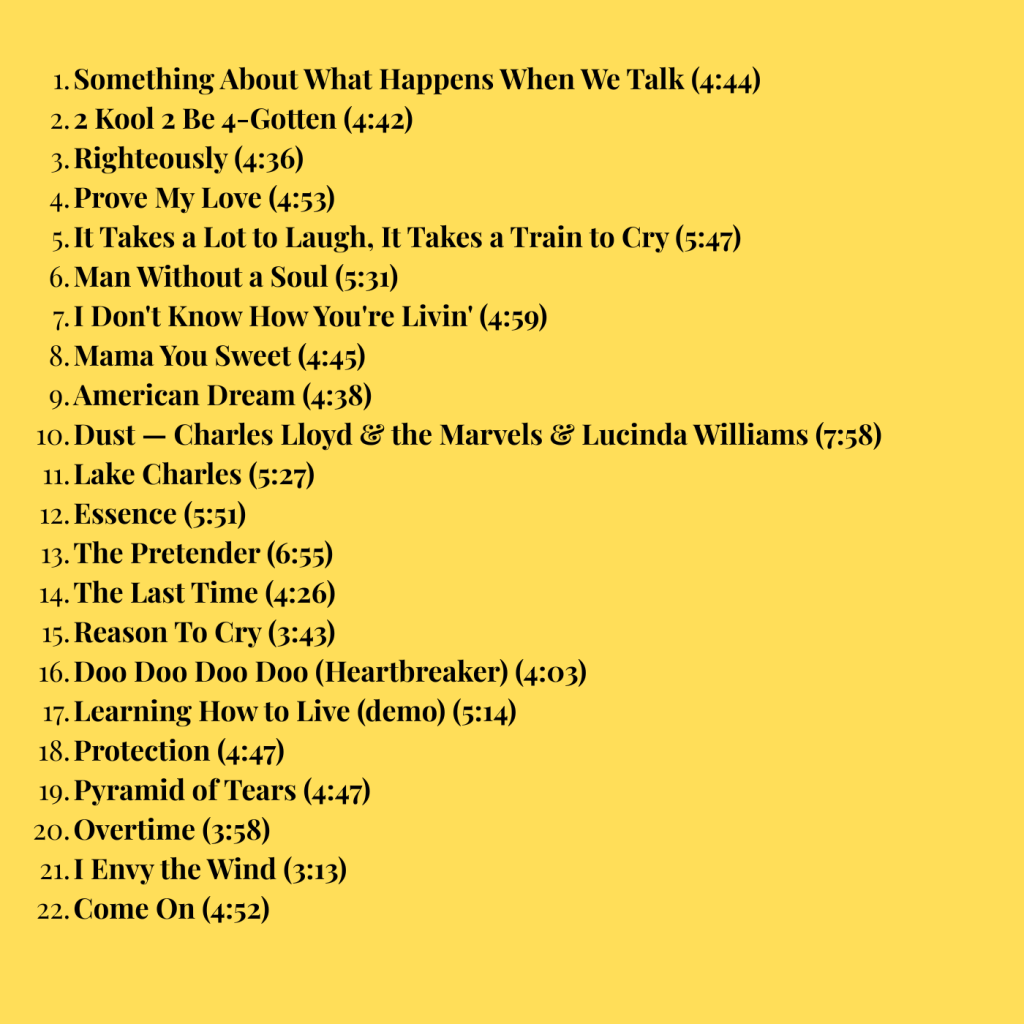
I may post a bit along the way but look forward to having your good wishes as I depart. As a small gift here is a mixtape of World Fusion which just so happens to be heavily colonised by South Asian sounds.

WF2

5 Best American Pop Songs as understood by a teenager in a hill station in North India in 1970

In the 1960s and ’70s, India wasn’t a place to buy the latest Western pop music. In the few shops that sold LPs, you might find some Mantovani, the odd Herb Alpert and the TJB, quite a bit of Ventures and always, India’s very own Englebert Humperdink. 
 
The Beatles was rare, as was Deep Purple and The Doors. But amazingly, Simon and Garfunkel’s Bridge Over Troubled Waters was readily available and quite popular. Indeed, so precious was Western vinyl in those ancient days that I once made a handy sum selling some old Elvis and Beatles LPs to the management of Allahabad’s coolest dining venue, El Chico. I knew nothing about the music and cared even less. I was a 13 year old cashing in. But the two middle-aged men didn’t even bargain when I offered them the records. They handed over the 25 or 30 rupees I thought they might be worth. An early example of what is now called a “win-win” situation. 
 
But somehow, some way, we young people, did develop an ear for rock ‘n roll, or what we thought qualified as such. I, much later, learned that there were indeed ultra-hip clubs in Delhi, Calcutta and Bombay where not just rock ‘n roll was bashed out by Indian bands, but also some very cool jazz, I was too young at the time to get to such clubs. 
 
Instead, my early learning began during the intervals at Rialto or Picture Palace cinemas in Mussoorie. As the lights came up and the hawkers entered the hall like storm troopers, a scratchy recording of Cliff Richards or the Beatles would fill the room. It would blast  over and over, for the next 20 minutes, while ticket holders relieved themselves, sipped a Fanta or puckered their faces to the taste of mango papad dipped in chili salt. 
 
In eateries like The Tavern (on the Mall) and Kwalitys you could also hear the odd rock song. How our teenage hearts thrilled! It made us American kids feel like we were somehow connecting with the “homeland” even though we had only the vaguest idea of what the States, Australia or England were really like. 
 
Here are five of the most famous Western rock ‘n roll songs that nurtured and inspired an entire generation of Indian (and American expat) boys and girls. 

For what seemed years, this was the song that blasted out of the Rialto cinema in Mussoorie during intermission. We went every Saturday to see a show and soon knew this song by heart. Sir Cliff, of course, like Mr Humperdink, was another native son and thus had pride of place in any rock and roll rotation.

An absolute icon of a song. This suave Santana anthem penetrated the consciousness of India’s urban, West-looking youth, like nothing else. It was almost guaranteed to be heard in every darkened restaurant, bar and coffee shop from Srinagar to Srirangapatnam. 

Someone eventually had a quiet word with the projectionist at the Rialto.  Congratulations was ditched for The Ballad of John and Yoko.  This was then played for the next three years straight. We loved it! “Christ! You know it ain’t easy.” Boy! Lennon was singing for us! 

Like Black Magic Woman, CCR’s first big hit Born on the Bayou touched something in the Indian spirit. It’s heavy, bluesy riff seemed to connect with nothing that Bollywood was producing. Perhaps that is why it caught on.  So influential was this song that an Indian garage band called the X’lents made a cover of it. 

The Ventures were pretty well known in India in the ’60s and ’70s. If you couldn’t identify their name you knew the sound. Their album covers were bright and as the ’70s broke, covered with very beautiful babes in interesting poses. This crisp little number was as big a hit in Hyderabad as it was in Honolulu. 
 
Peace, man! 

Close Ties: Rodney Crowell

Country music is all about beer (crying in it; drinking too much of it), Mama cryin’ and Daddy prayin’, adultery,  trains and murdering your girlfriend.   And lately, pick-up trucks.

Rodney Crowell’s album Close Ties (2017) is a country record that is about none of that.  Or if it is, it is taking those things and skinning them alive. It is the testament of a fully matured man. A man who has pulled off the road to a lookout to behold a not always scenic landscape.

Crowell grew up poor in East Houston, moved to Nashville in the early 70s where he wrote a slew of hits for others, released a few albums, produced several more for his then wife Rosanne Cash and by the end of the ‘80s was one of the faces of the so-called ‘neo-traditionalist’ country set.   Guy Clark, Emmylou Harris, Townes van Zandt and Steve Earle were peers and friends.

In 2017, Crowell was sixty-seven years old.  In those years he’d

been lied on, spied on, cried on, tried on, taken for a ride you bet
Fracked, cracked, smacked jack, what you see is what you get
I’ve been spit at, hit at, quit at, shit at, shouldn’t hurt a bit at, what I’m tr
ying to get at

and had somehow transformed all that into a record that reveals adults inhabiting adult relationships more confusing, messy and meaningful than anything their younger selves thought possible.

He sings about taking too much and giving not much. Taking love for granted. And about the sort of love that disappears but never really dies.

With faith beyond religion, we search the great unknown
Free fall into darkness, someplace we’ve never gone
I’m tied to ya
I’m tied to ya

I know a guy, someone I’m just getting to know a bit better, who finds himself kneeling on the bloodied battlefield of Love. To one side stands the woman he married but pushed away. To the other is the woman he loved beyond imagination who has pushed him away.  He tells me he can’t imagine being squeezed for another drop but can’t stop wishing for their hands to massage, pummel and prod him.  Especially those corners of him that haven’t seen the light of day for years. Maybe ever.

The first time I saw her she threw me that smile

Pure angel of mercy east Texas style

A poet in gingham, an assassin in jeans

The most near perfect woman I’d ever seen

She was hardly routine

He’s trying to find signs of who he is in the things he’s done.

Life without [her]
Troubles me in ways hard to express
As she withdrew I grew distant and judgmental
A self-sure bastard and a stubborn bitch
Locked in a deadly game of chess
The upside of my status a cut above the rest

His marriage was a constant battle. His love affair an unexpected oasis.   

The last time I saw her was close to the end
I cried like a baby for the shape I was in
No lipstick or powder to soften the tone
The most worthy opponent I’ve ever known
Was already gone

That second to last line describes both women, he says.

And then Crowell cruelly, or perhaps mercifully, reminds us

It ain’t over yet
You can mark my word
I don’t care what you think you heard
We’re still learning how to fly
It ain’t over yet

And what isn’t over yet?  Our love? Our prideful ways? Our cluelessness? Our life? All of the above. And more.

These are songs that only a man who has marched his demons up the hill and back down again could write. And sing.  Crowell, the singer is every equal to the songwriter.  He has an uncanny talent of delivering cutting self-criticism as well as the bitter tears of the jilted without self-pity or indulgence or pleading.   This comes, you’d think, from that place every pilgrim hopes to reach, where the storms of life neither seduce nor reduce you.  That place where parental approval, manly accomplishment and perfect love are finally stripped naked.

But I don’t care anymore about the fortune and the fame
I was better off before I tried to make myself a name

Close Ties is really a break-up album. A man breaking-up with the masks he has worn, the roles he’s played, the sins he’s denied committing.  A man whose world is so shaken and crumbly he sees ghosts everywhere.

I don’t care anymore who does what and why

I was better off before when I was just another guy

I see why my friend keeps listening to it. Because Crowell is expert at bringing to life the oldest of all break-ups—love.

When you walked out on me, it tore my heart in half

And I hid behind a laugh

As I became a slave to shame I cursed your name

God Damn you, rot in Hell

Can you forgive me Annabelle

He is full of regret and clarity.  But there is precious little calm here and not much confidence he won’t keep offending.  This record is a tale of how many ways a brokenheart feels horrible.

Right about now it gets quiet around here, what with nightfall in the wings
The floorboards creak and faucets leak, but it’s the emptiness that sings

 The wind grows chill and then lies still
Forty miles from nowhere
At the bottom of the world

Yet, in the end, full of hope.

I won’t deny that I believe these things you say are true
I’ve seen the way you gauge each distant star
As long as I can be myself and still be there with you
I’ll go anywhere you ask me, near or far
I’m tied to ya
I’m tied to ya

Close Ties

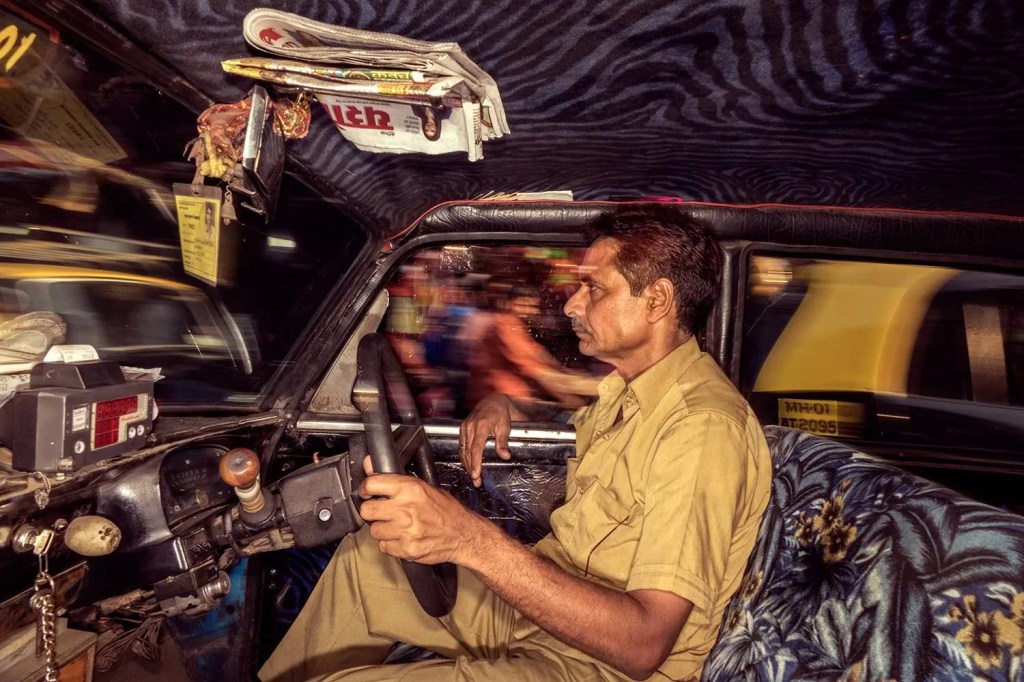
Recalled Conversations: Taxi driver, Delhi.

Photo by Dougie Wallace

For the first several minutes he said nothing, just guiding his yellow and black Suzuki taxi through the clamorous traffic of midday Delhi.   My daughter wanted me to ask him what his name was.  “Jai Bhagwan,” he said. “An old-fashioned name.” His smile is half apologetic.

“You’ll be going to Jaipur? That’s a beautiful city. They call it the Pink City. Its a five hour drive from Delhi and Pushkar is another 2 or 2 and half hours further.  You’ll stay in Pushkar for a few days? No? I see, just for a day. Ajmer is just half hour more away. What a place that is. Moinuddin Chisti…the Emperor of India!  Will you be taking the train from Ajmer to Varanasi?  No, from Agra. Ok. I see, your agent arranged it that way. Watch out for these agents. They’re in it for themselves, a lot of them.

This traffic is like this but not for too long. There’s a fly over up  ahead and the road narrows so everything slows down to a crawl. But soon we’ll be moving again.  Yes, that metro line was made for the Commonwealth Games in 2010. What a rip off!  The organizers stole 80% of the investments. Only 20% was spent on the infrastructure. The main crook, Kapladi is in jail but what does it matter. It won’t change anything. The rich and our netas don’t give a shit. All the rules are for the poor, not one of them is for the rich.  It never changes.

My people used to own the land around the airport.  A long time ago the government came and forced us off the land and gave us Rs1.40 per square meter! A very low price. But they got what they wanted. You know Gandhi? They say he is the father of the nation. We say he’s the number one Thief. Don’t believe me? What did he ever do for us? Did he do anything to improve our lot? He and Nehru did everything for themselves and to make their own money and name.  Gandhi, the old bastard, used to feed his goat grapes while the rest of the country starved. 

The real hero of India was Subhas Chandra Bose. What a guy. You know what his slogan was? Give me your blood and I’ll give you freedom!  He was a man of action. That’s why they killed him. You know Gandhi could have freed Bhagat Singh but he didn’t. He let him hang. All for his own glory.

Ambedkar? Yeah, he was a good man too.  He wrote the Constitution. No one else could have done that. He was a great man actually. I have nothing bad to say about Ambedkar.

Right, we’re almost at your destination. Just 5-10 minutes more.”

Two Euro-Afro Pop Beauties

In the late 80s European pop music seemed to be busting with African sounds. A second generation of immigrants, settled mainly in the UK, France and Belgium, shot to prominence thanks in part to record labels like Sterns, Barclay, Afro Rythmes and RealWorld. As well as a large population of young people and musicians hungry for music other than disco, schlager and rock. 

Especially consequential was the emergence of a prosaic marketing gimmick for record stores and music journalists–‘World Music’. A new category for obscure (to Western fans) African and Asian artists, singing in non-English languages.

The music these artists performed and recorded stood out sharply from the pop music of the time (especially, the American variety) with heretofore unheard instruments, revamped rhythms and lyrics in Arabic, Yoruba, Bambara, Zulu, Swahili, Lingala and colonial creoles.

The creation of this immediately contentious category/genre not only gave these artists a legitimate place within European record stores but more importantly, a platform from which they could grow their audiences, make a bit of money and in some cases become internationally feted stars.

In fact, ‘world music’ proved to be a much-needed shot in the arm for a music industry struggling with oversaturation, commercialisation and a technological transition from vinyl to cassette tapes to CDs.  African bands and artists took to these new media without hesitation, especially cassette tape, relishing in their inexpensive production costs and portability.  Suddenly their music was available everywhere, at home in Africa but also in Manchester, Dusseldorf, Minneapolis and Copenhagen.  Fans loved it.  And in no small way, ‘world music’, dominated by African sounds and artists, rejuvenated the global music business of the time.

This wasn’t the first wave of African music in Europe. The performers’ fathers and uncles, who came of age in the 1950s and 1960s just as the political ‘winds of change’ blew across Africa, had been the first to introduce African music to Europeans: Congolese rumba, soul drenched crooners from Portuguese Africa, South African jazz, Ghanian highlife. These were the sounds of the dance halls, boîtes (night clubs) and musseques (shantytowns) of Johannesburg, Kinshasa and Luanda transplanted into the pubs and community halls of London, Brussels and Lisbon.

I’m not sure what sort of fan base this first wave of African music had beyond the immigrant communities themselves. Apart from South Africans Mariam Makeba, Hugh Masekela and Abdullah Ibrahim who enjoyed relatively prominent reputations internationally, few Africans broke into the American cultural mainstream.  But given the nature of post-colonial European societies, especially the large number of Africans moving to Europe in the 70s and 80s, Europeans seemed to be quite receptive to this music.

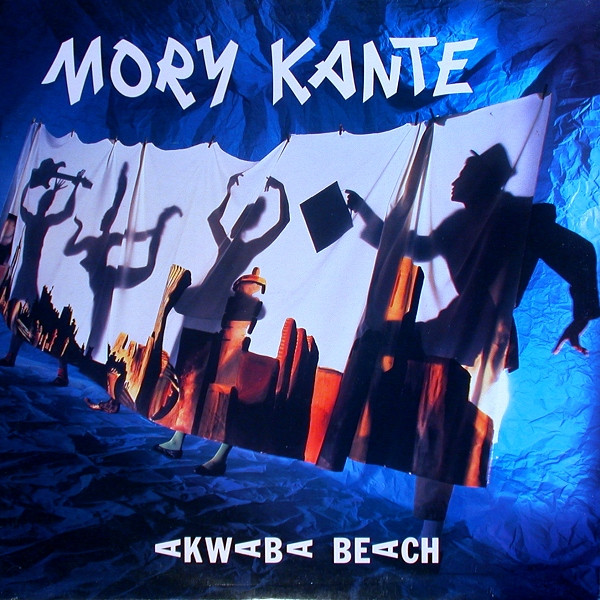
In the 1980s Paris became the centre of this new-fangled Euro-Afro pop music. Small recording studios such as Studio Caroline were magnets for bands and musicians from across Francophone Africa.  Ace musicians like the singer Kanda Bongo Man whose first record, Iyole, announced the arrival of soukous on the world stage in 1981, lightning-fingered guitarist Diblo “Machine Gun” Dibala and Guinean singer Mory Kanté who along with a former mate from the Rail Band, Salif Keita (Mali), began making waves on a fast growing Afro-pop scene.

My first encounter with contemporary Afro-pop was in 1991. I was a junior staff member in the UN assistance program in northern Iraq.  Living in tents against the side of a brushy hills a few klicks from the Iranian border, our evenings were monotonous. Beer, whiskey, cigarettes and music was about it.  The nearest town, Sulaymaniyah, was 90 minutes away by road and in any case, offered no entertainment for European/American tastes.

Every so often we’d roast a wild boar and circle our 4x4s around the fire, open the doors, slip a cassette into the tape player and dance about until the wee hours. On one such occasion one of our Scandinavian colleagues slipped Akwaba Beach into the deck and cranked the volume.

People speak of those lightning strike moments. The Beatles at Shea Stadium. Elvis on the on Ed Sullivan Show. Dylan at Newport.  A piece of music and moment in time that changes their lives forever.

The opening notes of Yé ké yé ké with its brazen blasts of brass, rapid fire vocalising and jerk-me-till-I’m-dead rhythms hit me like a bolt from on high. I had never heard anything like this. My entire body felt as if it were captured inside the music. The song sparked every dull, fuzzy and ho-hum part of my experience into a mass of shivering electricity. I hadn’t realised just how much I needed to hear this music.   We played that tape over and over for months and the album has enjoyed a permanent seat on my musical security council ever since.

According to our Nordic DJ Yé ké yé ké was not some niche crate-digger’s discovery but a huge hit across Europe.  Africa’s first million seller and a #1 hit on both continents.  And no wonder.

Mory Kanté was born in Guinea but moved at a young age to Mali to learn the kora and further his family griot traditions. His big break came when he joined the Rail Band where he teamed up with Salif Keita and Djelimady Tounkara as part of the classic lineup of one of Africa’s iconic musical groups. When Keita left, Kanté stepped into the lead singer role before pursuing what came to be one of the most successful solo careers of any African performer.

Akwaba Beach, a dazzling example of Euro-Africaine dance/club music, opens with the #1 smash hit Yé ké yé ké  and continues in the same upbeat vein for the rest of the album. Fast moving synth pop mixed with Kanté’s thrilling tenor voice, punchy kora riffs, blaring brass, feisty backup choruses led by Djanka Diabate and the percussion riding high in the mix. Dance music distilled to its essence.

Released in 1987, Akwaba Beach pounds with drum machines and shimmers with the synths that dominated the music of that decade. But unlike a lot of other relics of the 80’s, these machine instruments fit Kanté’s music to a ‘T’. It is the cocky, blatant sound required when performing in a crowded, noisy club. Unapologetic disco.  If you’re looking for folk-lorish ‘authentic’ African music, you’ve come to wrong place. Kanté’s singing and playing is so good, his musicians so tuned into his vision, all that matters is the quickening of your blood.

Akwaba Beach shot Kanté into outer space as a world music superstar and opened the field for other Africans to experiment and go boldly into new territory.

__

On the other end of the BPM spectrum is Waldemar Bastos’s 1990 album, Angola Minha Namorada (Angola, My Beloved). Recorded in the picturesque Portuguese coastal town of Paco D’Arcos and released in 1990, this music is urbane and sublime. There is none of the frenetic energy of Akwaba Beach within 100 miles.

Waldemar Bastos, who passed away in 2020 was born in colonial Angola in 1954.  Like so many creative Angolans, he self-exiled himself from his country to settle in Portugal after it became clear that the revolution was willing to strike down musicians and other artists, not just ideological opponents. Music had played a huge part in mobilising the Angolan people to support the anti-colonial revolution, but many popular singers and musicians found themselves caught up in the 27th of May 1977 purge unleashed by the ruling Marxist-Leninist party in reaction to an internal ideological challenge.  Within 18 months of securing independence, artists and musos were realizing that the dream was turning into a nightmare.  Bastos left his homeland in 1982, aged 28.

Blessed with a warm and supple voice not dissimilar to that of Al Jarreau, Waldemar was considered in his lifetime a giant of Angolan music. His album, Angola Minha Namorada, was released nearly a decade before Pretaluz, the record that saw him “breakthrough” to European and American music fans in 1998.

It’s a gorgeous album. Calm, somewhat laid back in pace but deeply felt lyrically and musically. This record is the thing you want to listen to on late Sunday morning. When there is no reason to rush, nowhere to go and everything to be gained by letting Waldemar’s soulful voice slowly insinuate itself into your being.   Hues of fado and tints of jazz colour this beautiful music. Though entirely different from the club music of Mory Kanté this album is another fine example of Euro-Afro pop.  

Akwaba Beach

Angola Minha Namorada

Book of Accounts (Instalment # 10)

XII

General Petros Zalil, known to the public as head of Party Intelligence, but to Abdul Rahman as Director General of Jihaz Haneen, was a vile Christian bug. A failed doctor and scholar, Zalil had amused his way through youth by decoding ancient dead languages and practising ‘surgical interventions’ on a variety of household pets. His family of shopkeepers, who had left Lebanon to settle in Tikrit during the Ottoman times, despaired of young Petros ever bringing honour or profit to the name Zalil, but then shopkeepers never care for politics. And no one was surprised more than his father when, after the first failed Ba’ath revolution in 1963, young Petros was charged with the task of constructing the Ba’ath Party’s secret apparatus.

Though a Christian (he liked to remind people that a cousin had once served the Patriarch of the Maronite Church as personal secretary), Petros Zalil cared nothing for God and less for man. A feverish, personal sense of injustice had fired him into the steel rod so needed by the Ba’ath Party. Zalil hated everyone and everything lukewarm, especially those weak in their commitment to the Ba’ath. He resented and eliminated communists wherever he smelled their foul stench. Timeservers in every Ministry, he smoked out like hares from their holes. Officers who had joined the ranks during the time of President Aref were cashiered, then jailed. And it was Zalil who almost single-handedly cleansed Iraq of the Jews. His bitter hateful feelings were distributed universally and democratically; there was no one Zalil did not loathe, except Saddam Hussein, the man who had personally chosen him to build the party’s secret police: the Instrument of Yearning. Jihaz Haneen. And it was because of Zalil and his secret organs that the first Ba’ath President, al Bakr, and Vice President Saddam Hussein, were able to keep the power they grabbed in July 1968.

Of course, Zalil had no military or security training — where was a poor shopkeeper’s son to find such means? — but Saddam knew that Zalil understood the most fundamental law of Ba’ath survival: loyalty. Saddam was confident that Zalil, Christian though he was, could, and would, bring order to the secret groups, which by 1963 had been completely infiltrated by the army’s generals. Perhaps because he was snatched from obscurity (Zalil was a mere sergeant in the Tikrit police when Saddam discovered him) Petros Zalil did not disappoint his master. From that day forth his mind remained vigilant to anything and anyone who threatened his Almighty, his God, his Creator, his Comrade, Brother, Father Saddam. In fact, Zalil’s personal devotion to his Saviour became the only standard by which Jihaz Haneen was to be judged. Truly, Petros Zalil was a giant of the Iraqi nation.

In the early days, General Petros Zalil — he had been promoted in 1965 — could not trust his good fortune; lest he lose the grace of his benefactor, Petros Zalil took upon himself the task of demonstrating his loyalty to Saddam at every opportunity. Even the triumph of the 1968 July Revolution did not allow him to relax. But then in December 1968 a very nasty conspiracy designed to bring down the young Ba’athist State was publicly exposed by Zalil and at last, once and for all, his place close to Saddam’s breast was secured.

The entire nation, including Abdul Rahman, had watched the disgusting interview on television or listened on the radio. Three men (one of them a Party big shot) confessed that they had been recruited by a merchant of kitchen utensils in Basra: a Jew named Nadji Zilkha. The Jew used a radio set he had manufactured and hidden inside a church to contact Israel. He had arranged for Iraqi Jews to receive military training in camps in the mountains of Iran and, with the help of the Kurds in the north, succeeded in setting up a channel through which large amounts of dollars from Israel to Iraqi Jews flowed. Such a terrible plan could only have been imagined by a Jew! Of course, Zilkha, the Persians and  the Kurds were not alone. The President of Lebanon, Henry Firoun, arranged for the Director of the American Ford car company in Baghdad, also a Jew, to smuggle the Iraqi Jews into Iran by means of a Pakistani shipping company! When the men completed their pitiful confession, the judge sent them directly to prison. They never were seen by their families after that day. But the others, mostly Jews, thirteen in all, were rounded up by Zalil’s men and executed within three weeks.

On the day of the executions, Abdul Rahman and his friend Aziz went with the crowds to watch the Jew corpses swinging in Nafura Square. What a marvellous sight! Iraqis came from all across the country. Even Bedous, stinking of date oil, emerged out of the desert on their camels and pressed into the square, jumping up and down to get a glimpse of the criminals. President al Bakr shouted encouragement to the crowd, vowing to foil all the plans of the Zionists.

Like the other spectators, Abdul Rahman had no particular feelings about Jews. They had shops which everyone knew about, but they spoke like Arabs and looked like them too. As the corpses dangled in the square, the crowd was excited not by feelings against the Jews but by feelings of pride. Of victory over traitors. Until the Ba’ath, Iraqis had resigned themselves to foreign domination: Persians, Turks, the English. Everyone wanted to remove Iraqi oil at low prices. It was only when Petros Zalil took control of the secret organisations that Iraqis dared feel confident. To see the limp bodies of those traitors was a great day in Iraqi life. The people were sure that from now on all foreigners would think very carefully before attempting to undermine the State; especially, but not only, the treacherous Jews.

The response of the public and the President encouraged Zalil; more and more conspiracies were exposed. Every week the papers published the names of those who had been caught in their plottings and executed. Hundreds of Iraqis swung from lampposts in those days; and not just Jews. Christians too, and even Muslims. Zalil’s power grew with each triumph. With every exposed plan, the head of Party Intelligence’s confidence swelled. Newspapers and officials praised his efforts. His speeches, full of long, impressive words, were printed and sold as pamphlets. On the second anniversary of the Revolution Zalil gave a speech in Tahrir Square which Abdul Rahman never forgot.

‘The Iraq of today,’ Zalil shouted, ‘the great Ba’athist and Arab homeland, the womb of culture, will henceforth not tolerate traitors, spies, foreign agents or fifth columnists. Not a single one. The bastard-child Israel, Imperialist America and Persian lackeys must hear this message. We will discover their dirty tricks! We will take punitive action against their agents! We will suspend their spies from Iraqi trees, even if they despatch thousands of them! You, each of you, are the protectors of the great Iraqi nation. You must not slacken the pace we have set since the advent of our pan-Arab revolution! We have just taken the initial steps of the revolution! The great immortal squares of Iraq shall be filled up with corpses of traitors and doublecrossers! Just wait!’

The Christian general praised the success and efficiency of his secret police. But, he noted with regret, some, especially those not ‘entirely Arab and purely Iraqi’, seemed to be questioning whether it was indeed necessary any more, at this stage of the Revolution, to fill up the squares and alleys of Iraq with traitorous corpses. Some newspapers, he screamed, had begun to sow seeds of doubt within the public. The crowds attending the executions were decreasing in size. The papers were writing shorter and shorter articles on the public humiliations and executions. One rag especially, Al Anwar, was leading the way. Wasn’t the paper’s proprietor a pre-Revolutionary minister in Qasim’s thug government? A new plan was needed, Zalil bellowed, which would meet this new challenge to the victory of the Revolution.

‘Any strategem to achieve victory over the enemy,’ he continued, ‘must consider from the outset liquidating those pockets which guarantee that the enemy has information, and that play a role in generating destabilising propaganda, thereby weakening the spirits of the people and their resolve for victory. This leads to a loss of self-confidence in preparation for defeat. When we Arab Iraqis become determined to wage war against the foreign un-Arab espionage networks, we of necessity must be aware, and we must be possessed of the certitude that hitting at these networks must necessarily be accompanied by an assault on the pockets of mongrel Judeo-Persian-American exploitation. In order to purify the nation and its people, I propose to refocus our efforts on these sinister pockets of public treason.’

Three days after the speech, the owner and editor of Al Anwar daily newspaper died when his car exploded into the evening sky of Baghdad. The next day a bus carrying Jewish schoolchildren to their college was bombed as well. Throughout Baghdad, and even in other cities like Mosul and Kirkuk, prominent but suspicious journalists, professors and priests were murdered in a terrible campaign of car bombs. The explosions were so frequent that Baghdadis avoided all vehicles, preferring to walk about the city. The taxi drivers petitioned the government to take action to save their livelihoods.

Zalil’s campaign succeeded beyond his own wild imagination. Not only were dozens of State enemies eliminated but within months President al Bakr announced Zalil’s elevation to the Revolutionary Command Council. Al Bakr, they said, nearly showed tears during his speech. Iraqis had always been known for their loud mouths and boisterous ways but from the time of the rise of Petros Zalil, Iraq was transformed into a country more quiet than midnight. ‘My proudest achievement,’ Petros Zalil never tired of repeating.

Indeed, turning a nation of hotheads into a laboratory of mice within five years was a grand accomplishment. And for more then ten years Zalil was satisfied. But it was only a matter of time before the situation began to change. For ten years Zalil feared Saddam. But slowly he developed his plan to devour him.

‘Is it not often the case that the gateman is more powerful than the king?’ Zalil enjoyed speaking to his own image each morning as he shaved. As the most feared man in Iraq he had few friends but even as a boy he had preferred his own company. Other humans were an annoyance. The razor cut a path through the thick white cream, and he said out loud. ‘The king, busy within the castle, manages the affairs of his people, but he must trust the gateman to keep the enemy beyond the city walls. But should the gateman not be worthy of the king’s trust, or decide that the throne is rightfully his, since it is he who determines whether an usurper gains access to the inner court, then the king is transformed into a pawn. Who has more power? Surely, not the one who must trust in the other?’ As he splashed water onto his freshly shaved face he was satisfied that no one stood between him and President Saddam.

The gateman began to plan his own coronation.

*

In 1980 Zalil had applauded Saddam’s audacious invasion of Iran, but for years he had not been happy with the way the President was conducting the war. When Khomeini sent waves of children to face Iraqi tanks, the television and newspapers were filled with photos of fields, covered with little dead boys. Eight or nine years old. Who could comprehend the beastly nature of the Persians? Who could sacrifice their own sons in such a way?

Zalil of course cared nothing about the children. ‘Iraq,’ he shouted into the mirror one morning, ‘has been brought to its knees by toddlers.’ The refusal of Iraq’s top officers to slaughter the children was a point of humiliation, a sign of weakness that Zalil could not admit. ‘What better chance will God give to Iraq than this?’ he demanded. He ran water over the razor to relieve it of his heavy whiskers. ‘Never again will the road to Tehran be covered with such a plush carpet. Our tanks should roll over these Persian children as if they were a field of onions.’

It was not just the army’s reluctance to kill children; there was Saddam’s frequent change of field commanders which tried Zalil’s patience beyond all limits. For more than ten years Zalil had developed Haneen networks in every barracks and every regiment and battalion in the army and airforce. Many of the top brass were either fully Haneen or had sympathies with the head of Party Intelligence. Of course, these men were loyal Ba’athists; their allegiance to the Ba’ath Revolution was unquestionable. But they had been groomed by Zalil. It was he who had rigged their promotions and plotted their careers with the mind of a chess player; their ultimate loyalty was to him, not the President. ‘See again, how the gateman is more powerful than the king.’ He winked at himself in the mirror.

One year the Iraqi army lost over twenty top field commanders. And middle rank officers? Beyond counting. Every time a battle was lost and even once when the broken axle of a supply truck caused a delay in the refuelling of an advance unit the commander in charge was summoned back to HQ. Bang. Dead. Soon the High Command didn’t bother to make the arrangements to bring the officers back to Baghdad; they were shot in their own units, usually by their own soldiers.

‘This is intolerable. How can the President demand vigilance if he is intent on plucking out every eye I have put into place?’ He made another large sweep through the remaining foam of his pudgy face. ‘Damn!’ A small trickle of maroon blood moved down his right cheek. Zalil grabbed a towel with exasperation. ‘This man’s erratic behaviour threatens my entire life work. I cannot permit this to happen.’

*

The message was dispatched in a sealed envelope from the Ministry of Antiquities to each of their homes by the official ministry courier. In the envelope was an invitation to a celebration organised on the occasion of President Saddam’s birthday on April 28. Each of the recipients — thousands of officials around the country — was invited to make a donation of no less than one hundred dinars, and to select an ancient Sumerian symbol provided in a list by the Ministry of Antiquities. The donation would be used to mint a coin embossed with the name of each official and the special ancient Sumerian hieroglyph and was to be presented to the President on his birthday as a sign of the gratitude of his ministers.

The thousands of envelopes contained identical letters, worded exactly the same, and included the same set of Sumerian hieroglyphs. But in the envelopes delivered to the Ministers of Oil and Transport and Industry, Generals Fikri and Mahmood, and Dr Idris, Chairman of the Regional Command Council of Baghdad, Petros Zalil included his own short list of Sumerian symbols. Each man, a conspirator with the head of Party Intelligence, had been instructed to select one symbol only from Zalil’s list and return it with their invitation, and in this way indicate their participation in the gateman’s move against the king. Within a week Zalil had received five of the six special invitations properly marked. The Minister of Transport had lost his nerve and decided not to return his invitation. Without a second thought the viperous Zalil struck: two days later the Minister was discovered by the departmental cleaner, dead on his office floor, a bottle of turpentine next to his head. Five litres of fluid were pumped from his stomach when his bloated body was delivered to the Emergency Ward at Medinatul Tib hospital.

Each of the plotters had been in contact with their spider, Zalil, for some time, and each had his own private complaint. The Minister of Oil had been brought to financial ruin by the blackmail of Saddam’s half-brother, Barazan. Dr Idris’s son had been denied treatment for his cancer in Germany and died at the age of seventeen. The Generals, of course, feared for their lives as long as the Persian war raged on year after year. The Minister of Industry, Haider al Haji Younus, Abdul Rahman’s relative, had been three times denied a seat on the Regional Command Council of Tamim Region.

After the untimely, but little mourned, death of the Minister of Transport, Zalil arranged a large dinner party at his residence to mark a grand Revolutionary occasion. Among his guests were not just his colleagues in the conspiracy, but members of the President’s family, members of the RCC and the Prime Minister, Mr Izzat Qureishi. Zalil had prepared, and delivered very dramatically, a grand speech to mark the occasion and, of course, crates of whiskey, arrack and vodka and the most sumptuous meal had been laid on for the guests. But by the early hours of the morning Zalil was left alone with just his five co-conspirators. In a private study, in which every listening microphone and every hidden eye had been disabled prior to the start of the evening’s festivities, Zalil called the final meeting of the plotters to order. Each of the men present had been given their assignments: the Generals confirmed the availability of two thousand men and many armoured personnel carriers; the Oil Minister had already begun to scale down production, and the pipeline to Turkey was ‘closed for repairs’. Haider, Minister of Industry, had been in contact with Iraqi exiles in Europe for the past two years. Some had already returned; others were on the way. The only thing remaining was to finalise the actual plan. Zalil confirmed that Saddam would be out of the country for two weeks in June, on official visits to the Soviet Union, East Germany and Finland. Upon his return to the country, the group would assassinate the President.

Assassinating Saddam was a game of Russian roulette. The President of Iraq never travelled in his official, announced motorcade. Always, five dummy convoys were sent through the streets of Baghdad, each taking different routes to the destination, and even Saddam himself knew which motorcade he would choose only at the very moment he stepped into a vehicle.

But it was Zalil’s belief that as gateman he could successfully foil the system. The system, after all, had been designed by him. Within Haneen a unit answering to Colonel Nizar, was responsible for monitoring each and every alley and street in the city. Every lamppost, every window, every turn and every manhole was known to them. Colonel Nizar’s information was priceless, and he was with the plotters. Determining the routes of each convoy would not be difficult: Nizar’s unit was responsible for selecting and preparing and securing all routes on every Presidential journey. Only the driver of the lead vehicle, a Haneen employee, knew the route of the convoy, and that only a few moments before the beginning of the journey when he received the instructions, in code, on a secure radio channel.

Zalil and Nizar had arranged that along each route, near a predetermined crossroad, the first vehicle of each convoy, pre-planted with a bomb, would explode. Discovering which vehicle would lead each convoy was also simple. Always a dark-green, almost black, Mercedes provided by Party Intelligence and driven by Haneen drivers. This system had been instituted by Zalil in 1970 and it had never changed. A wire laid across the road would send an electronic signal causing the bomb to explode just as the first vehicle rolled through each prearranged junction. This is where the Generals became useful. Ten armoured vehicles and two hundred men fully equipped with rocket launchers, machine guns and grenades, hiding in pre-arranged vacant rooms and buildings in the side streets, would burst forth, firing openly on the remnant of each convoy. Zalil’s intention was to decimate all five convoys. The explosion was only diversionary. The President’s vehicle is always fourth in the convoy. As the first two or three cars were caught in the mêlée, the driver of the President’s car, trained for such exigencies, would turn instinctively into the nearest street. Because Zalil and Nizar had selected especially narrow cross streets for each explosion, the driver of vehicle number four in each convoy would have no option other than to turn unthinkingly into the plotters’ side streets. There was no way Saddam would be able to escape.

The plan was faultless. While the convoys were under attack Zalil planned to announce a popular uprising, which the returned exiles were responsible for generating in towns all around the country. ‘By noon, Ba’ath power will be wiped from the pages of Iraqi history,’ he cooed at his tired but eager guests. The sun was rising over the Tigris. Zalil’s dinner party was over.

*

It is true, Zalil’s plan was daring and bold and he had more support than any other plotter before him. To have even the overseas Iraqis supporting the show was Haider Younus’s great contribution. Zalil could not fail. Everything was under control. But then something unexpected and miserable happened. In May, the Prime Minister, Mr Izzat Qureshi, ‘resigned’ and the plotting Minister of Industry, Haider al Haji Younus, was appointed in his place.

As much as anyone, Haider was taken by surprise by this sudden twist of fortune. For years he had struggled for promotion to the Regional Command Council and each of his attempts had been rebuffed. He had resigned himself to dying as Industry Minister, until resentment led him to Zalil’s group. But now, so unexpectedly, Haider was Prime Minister! A seat on the Regional Command Council, dreams of which, until then, had tortured his every waking moment, now, from his lofty new perch, seemed ridiculous. And the resentment he had harboured towards the President for so many years turned, overnight, to bottomless gratitude.

Of course, Haider had been selected as Prime Minister because he was a weak and completely dependent character. Unlike Prime Minister Qureshi who preceded him, he did not enjoy the backing of foreign interests. He was extremely dispensable. The country was in the midst of unexplained bombings and unrest was increasing, not just in Baghdad but throughout the country. If Haider Younus was unable to do what was needed, no one would shout or cry when his time came to be sacrificed.

Naturally, Haider was in a state of confusion as he took his oath of office. He swore allegiance to the Party, the State and the President himself, but at the same time he had made promises to the gateman to destroy all three. It was time to make a quick calculation of risk, but nothing is ever valuable if done quickly. On one side, he knew that Zalil was still depending on him for his support. In fact, on the day of his promotion, Zalil sent a message and a bottle of twenty-one year old Chivas Regal to Haider, congratulating him on his good fortune and predicting an even brighter future — a signal that the plan was to go ahead on schedule. On the other side of the balance, there was the President. Haider was overcome with gratitude by his elevation. Horses, it is said, sometimes bite their master’s hand, but Haider did not consider himself to be a horse. Not unnaturally, his views on the plot changed dramatically.

But not only was Haider not a horse, he was not a decisive creature either. For three weeks he did nothing to suggest to Zalil and his conspiring colleagues that he was in two minds about the plot. And just like Zalil, and all the others who had been drawn close to the Presidential breast had done before him, Haider wanted to demonstrate his loyalty to Saddam. So on the day the President was to return to Iraq to meet his almost certain death at the hands of Zalil, Haider requested the President’s son, Uday, to pay a visit to the Prime Minister’s office.

‘I must notify you,’ Haider told Uday, ‘as the President is out of the country, that a plot to assassinate your father has been uncovered. The plotters are at this very hour gathering at the airport.’ He then elaborated the plan in detail.

*

At Saddam International Airport, Zalil, with most of the government’s senior officials and military top brass, had arrived to welcome the President. At 9.45 a.m. he noted that Haider had not yet arrived; the President’s plane was due to land at 10.10 a.m. Without hesitating, he approached the Minister of the Interior and the Minister of Defence.

‘I fear there may be trouble today. The Prime Minister, that rodent Haider Younus, is not here. Indications are that he is involved with Generals Mahmood and Fikri and Colonel Nizar as well as that old fart, Basil, the Oil Minister. I have just received information that their objective is to assassinate not only the President but most of us here.’ He paused. A vehicle pulled up behind the men. ‘Do I need to insist that we should depart immediately and return to the city and do our best to protect the President?’

The three men ducked into Zalil’s vehicle. Inside, Zalil and his two bodyguards removed their pistols and pressed them against the sweating necks of the Ministers. Zalil commanded his driver to head north to Baq’ubah. Before Uday and Haider had been able to notify Military Intelligence, Zalil had disappeared from Baghdad with his two hostages like a cloud in a drought.

When the President’s plane landed, Saddam was advised to remain on board while the plotters, Generals Fikri and Mahmood, Colonel Nizar and the Oil Minister, Basil Hamdoon, were arrested. The army units waiting quietly in their hideouts on the side streets panicked when the time for their action long passed. By evening more than three hundred arrests had been made.

The following day, after the body of the Interior Minister was recovered from an alley in Kirkuk with nails throughout his body, Saddam placed a price on the gateman’s head. Three days later, the Minister of Defence was discovered by a taxi driver, lying in the middle of the highway at Chamchamal. His throat was slit and not a stitch of clothing was on his flabby body. Zalil, the rumours went, escaped to Iran where the Persians welcomed him like an Olympic champion.

Abdul Rahman had been aware of these incidents. Who hadn’t? Each new development was presented in the papers as another demonstration of the invincibility of the President. And so it seemed. If Zalil, that most intimate confidant, could not succeed in his evil, surely the Spirit of the Arabs rested on Saddam. Abdul Rahman trimmed the newspapers like a rose bush, grafting the small news items into his accounts ledger. The involvement of his relative in the mess had disappointed him but, as Haider had acted properly by exposing the plot, Abdul Rahman rested in the confidence that it was the President who was now indebted to his relative. Abdul Rahman’s own destiny was secure. Of this he was certain.

But Saddam was not fooled. For Haider to know about Zalil’s plot in such detail he must have been in on the conspiracy. Prime Ministers, despite their lofty office, do not enjoy direct access to the secret goings-on of Jihaz Haneen. Saddam had chosen Haider because he was expendable and so he was expended. After a meagre six weeks in office, Haider was arrested by the Emergency Law and Order Administrator and taken to Abu Gharaib prison. Within eight hours he was no more.

*

That damp July morning, after the arrest of his relative, as Abdul Rahman drove through the city to his small flat, scales fell from his eyes. His household was in an uproar. He strode into the dining room with motivation and strength, persuaded that whatever confusion he himself felt he would not show it to his family. At the dining table his wife sat sobbing. Jamila, the servant girl, tried to comfort the woman, but was pushed away each time she reached toward Abida’s face. Haroun and Hassan jumped up as soon as they saw Abdul Rahman and said in unison, ‘Father… ’ They wanted to say more but reconsidered. Abdul Rahman sat down next to his weeping wife and told Jamila to bring a cup of coffee. His sons remained standing as if frozen in ice.

‘What is the matter, Abida?’ he asked. ‘Why all the commotion?’

Abida continued to sob for several seconds before lifting her face. She tried to speak but only managed to blub more tears.

‘What is it? Has someone broken into the house? Come now. Be calm. What happened?’ Abdul Rahman’s composure was strained; his mind already confused by the night’s momentous changes. He reached towards his wife and placed a hand on her shoulder. He squeezed her firmly. His mind remained filled with the weirdness he had seen on the streets; he was exhausted. A strong urge to consult his ledger for reassurance that the Prime Minister was, in fact, still on his seat, washed over him. He wanted nothing more than to look at the man’s photos and to re-read the articles of his appointment.

He was growing more impatient with his wife every passing second.

‘Abida!’ he said sternly. ‘Stop nittering and tell me what is the problem! I have a headache like a mountain.’

She wiped her wet face deliberately. Her lips quivered. ‘Zubeida has disappeared. She hasn’t returned since last night. With the changes today I’m afraid she… ’ Abida could say no more.

His hand fell from her shoulder. In the kitchen Jamila, the servant girl, had stopped making coffee, and waited. The house was quiet except for Abida’s soft, unceasing sobs. Haroun and Hassan stood still, daring only to blink. Abdul Rahman leaned back in his chair and closed his eyes.

‘Why did you allow her to leave the house? And where did she go? Why didn’t you send a message to inform me last night?’ His voice shook with fear.

‘She went to the tutor’s house yesterday afternoon, I think.’ Abida said, still looking at her lap. ‘You are the one who is always pushing her to keep studying even though the world is crumbling around us.’

‘But why didn’t you inform me yesterday?’

‘How am I to contact you? There is a curfew in the city from six p.m. Of course, that is something you haven’t noticed is it? But I’ve noticed it. So has the rest of the city. If we go outside this house after that hour we can be killed. How am I to inform you? I have no number to call you at your office.’

‘Of course, there must be an explanation. If there was a curfew she must have stayed at Mr Mohsin’s overnight. I’m sure Zubi will return as soon as the buses begin to move.’ He felt relieved as he spoke the words.

‘I have called Mr Mohsin. He had no plans to see Zubi yesterday. Only on Thursdays and Mondays since about the last two weeks.’

‘Don’t speak rubbish, bitch!’ he shouted. The chair fell over as he pushed away from the table. The two boys scampered from the room like startled rabbits.

‘In one night my relative, Prime Minister Haider, has been deposed and jailed. The country I thought I lived in and served has changed before my very eyes. I see devils parading up and down the streets. The radio is chanting strange names and barking strange orders. And now…this.’ He moved closer to his wife and pulled her from her chair. She averted her puffy face, flushed from a night of tears. She shivered in his hands. Abdul Rahman had never beaten his wife or children, but that day he raged within himself. He wanted to lash out and hit her for suggesting that his little canary had disappeared. As he loosened one hand he remembered Jamila, the servant girl in the kitchen. ‘Get out! You should never have been in this house. Go! Run! Now!’ he shouted. The front door shut quietly as she slipped away.

Abdul Rahman turned his attention toward his wife. He let her drop to the floor and kicked her; she rolled over and hit her head against the dining table. ‘Where is my daughter? What are you hiding from me? Where is Zubi? Zubi, where are you?’ he called out. His voice bounded off the walls and back into his face as if it were slapping him. Absolute desolation crept into his heart. ‘Where is she? Where is my angel?’

Abida pulled herself up against the wall. She shook her head in silence.

Unable to control his grief he lunged and fell to the floor next to her. His fist hovered for a moment above her face but instead slammed into the wall. And then again, and again. He shouted and pounded until his knuckles split and blood stained the sleeve of his shirt.

That day he didn’t sleep. His mind was a slab of grey slate. Heavy bags were tied to his feet and dragged behind him everywhere he went. Although he drank lemon water constantly, each time he opened his mouth his tongue felt as dry and unwieldy as an old shoe. His heart danced in his chest like a drop of water on a hot plate. He asked Abida to call a doctor, but which doctor was willing to leave his house and come to Abdul Rahman’s? Throughout the day he tended a grief so deep his limbs and ears stung.

Abida refused to join him in his room, and sat without moving in front of the TV, staring at the announcer who read ever longer and more detailed proclamations from the Emergency Law and Order Administrator. ‘In order to ensure maximum peace and stability in the coming week…’ Abida paid no mind. The images coming from the screen passed before her as if they were paying last respects to an acquaintance. Her head was cut slightly where she had rolled into the table; there was no blood but she sucked on her bitter thoughts. ‘I no longer care about your daughter,’ she said in the evening. ‘Zubeida has always been yours, not mine. Your grief leaves no room for me to partake.’

*

Thirty-three days later the Emergency Law and Order Administrator himself was deposed. The new Emergency Law and Order Administrator, Colonel Abdallah, proclaimed that Iraq was now under temporary martial law. In his first address to the people he condemned by name the man he had just overthrown, calling him a jackal. Abdallah emphasised his sincere desire to set the country back on its historic and stable path of development. He said, promised, stressed and underlined many other things but one in particular shocked Abdul Rahman beyond belief.

‘The motivation of President Saddam Hussein and the RCC in embarking on this unprecedented act of armed intervention is to ensure the secure and stable and prosperous future of our country and its citizens. In the recent past some leaders of the State have been isolated from the people. The aspirations and ideals of the common man, the demand for justice and honesty, have been ignored. Even more, they have been deliberately trampled upon. A vast network of repression has been operating in this country with the primary purpose of crushing the spirit and voice and will of the people. It is a sad and bitter reality that in our country there have been many abuses of human rights. The police and special branches have arrested thousands without reason. Hundreds of these have disappeared or been returned to their families after having endured horrific torture and bodily abuse. Some intelligence organisations have been the leaders of this atrocity against the country’s dignity and honour. While there is a legitimate need for the State to defend itself against internal enemies the activities and intentions of some intelligence networks can only be termed criminal. Is it any wonder that you the people of Iraq have demanded the overthrow of this band of murderers? It is only because the President of the Republic knows that you endorse this intervention that I am able to proceed.

‘With immediate effect and until notified by the Emergency Law and Order Administrator, the activities of all intelligence, counter-intelligence, investigative and interrogative bureaux and departments are disbanded and dissolved. All personnel employed by these departments and bureaux are ordered to remain at their place of residence until further notice. They are forbidden to travel beyond the borders of the country until such time as the ELOA determines their appropriate recompense.’
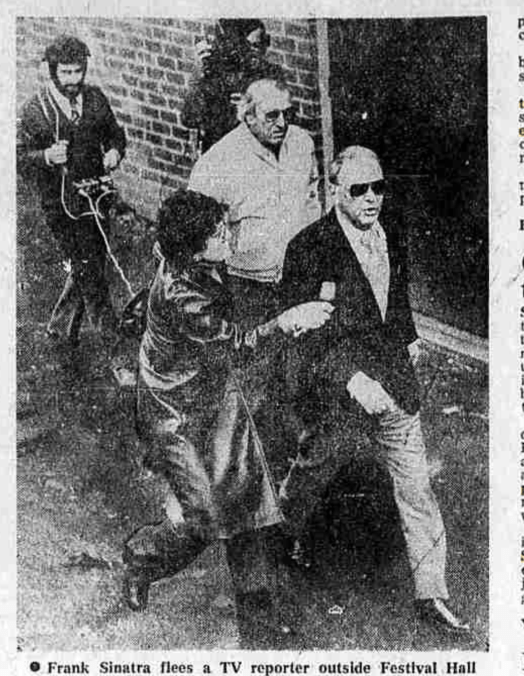
The Time Australia Kicked Sinatra’s Ass

Yesterday was the biggest day on Melbourne’s sports calendar, the Australian Football League’s Grand Final. This year the pre-game entertainment featured none other than Snoop Dogg.  A controversial choice to be sure. But then so was Meatloaf back in 2011. Ranked as one of the stupidest moves by the money fiends that control Australia’s beloved, unique form of football, Meatloaf’s appearance was hated by fans (Meatloaf’s included) and forced the Has-Been to publicly apologize for his poor outing. 

It’s the Australian way it seems when it comes to welcoming international superstars. There was Judy Garland in 1964 (deprived of her pills by Australian Customs) who refused to leave her hotel for three days.  And Joe Cocker busted a few years later.

In 2015, Johnny Depp and his girlfriend, Amber Head, were forced to grovel in front on our media and courts to express their regret for failing to declare two pet dogs that accompanied them, thereby avoiding the usual 10-day quarantine.  At one point the fiery (and often inebriated) Minister of Agriculture, threatened the dogs with pet-euthanasia, if the Hollywood power couple refused to pay public penance.   In the words of Depp, “when you disrespect Australian law, they will tell you!”

Frank Sinatra would have 100% concurred with that statement.  Perhaps of all the superstars we’ve harassed, it is somehow appropriate that The Chairman of the Board’s experience sits at the very top of the list.

Frank first toured Australia to in 1955. But from the moment he and 14 year-old Nancy stepped off the plane at Melbourne’s Essendon airport, he was met with derision. Fans who had gathered at the airport hoping to share a bit of banter with their hero, quickly turned hostile when he managed but a single wave and half a smile before stepping into a limo and being whisked away to his hotel.  From Cheers to Jeers went the headlines.

The shows themselves went off a treat. Fans raved how he sounded just like his records. Motorists passing by the West Melbourne Stadium double parked as his voice carried out into the street.  A triumph all round.  Frank loved Melbourne, the fans loved Frank. The (lack of) incident at the airport the day before was forgotten. After all, it had been announced that Sinatra would appear at his hotel for breakfast; fans would surely be able to get a second chance to hear him speak to them.

Alas, the headlines the following day read: Frank Sinatra Fans Miss Out Again. The hotel’s manager was given the task to confront the angry fans and chock it up to a ‘misunderstanding’.

Two years later, a second tour Down Under was scheduled but Ol Blue Eyes abruptly turned around in Honolulu. Apparently, Frank’s decision was based on the fact that sleeping arrangements for his musical director had been overlooked for the onward journey to Australia.

Seven shows were cancelled leaving his promoter the ugly job of refunding 23,000 tickets to ever-more cheesed off Australian fans. In January 1959, Frank tours again. He’s still stand-offish in public but in outstanding form in his shows which are supported by the Red Norvo Quintet.  His private life is dominated by his unsuccessful attempts to regain the love of Ava Gardner, who just so happened to be in Melbourne as well, filming (with Fred Astaire and Gregory Peck) On the Beach.  When a reporter in Melbourne dares to ask him a question, Sinatra grunts, “Misquote me kid, and you’re dead with me. In fact, I’ll sock you on the jaw.”

On the 1961 tour he ignored Melbourne altogether, doing four shows in Sydney and then flying back to familiar Californian shores.

Things got completely crazy in 1974.  After being tsunamied by rock ‘n roll for most of the previous decade, Frank was finding a fresh relevance. He was out and about. Touring the world. Australian fans once again forked out their new Aussie dollars to spend an evening with their Man. 

On 7 July, Frank flew into Sydney as grumpy and aloof as usual. Plane to Rolls Royce to Hotel. Nary a smile or wave to his adoring fans and a press corps salivating at the prospect of a scandalous headline or so. 

On 9 July, Frank’s arrival in Melbourne was memorable in the main for his refusal to acknowledge the press and shoving a fan out of the way.  So harassed did he feel that he ran from his private jet to the awaiting limo. So far, typical Frank behaviour.

At that evening’s show at Festival Hall, Frank’s first appearance in the city in fifteen years, he delivers what is now considered one of his best live performances.  He’s relaxed, his voice is as good, if not better than it’s ever been.

So relaxed was he that in his first monologue Frank sums up his views on the local press. Horrified and shocked, a couple of local unions (The Professional Musicians Union and the Australian Theatrical and Amusement Employees Association) announce that his second show, scheduled for the following evening, would be cancelled unless Ol’ Blue Eyes issues an apology.  This demand is met with scorn by Sinatra and his entourage. The press, he said, owed him an apology for 15 years of treating him like “shit”.

Now other unions pile on. Frank is not permitted to leave his Boulevarde Hotel room. He places a call to his pal, Hank, aka Henry Kissinger, asking him to intervene. Word on the street has it that Jimmy Hoffa has also been contacted to threaten his Aussie counterparts.  An international incident is brewing.

The foam in the mouths of the press can no longer be hid. After the first show in Melbourne, his bodyguards, beefy mafia types, assault a news cameraman nearly chocking the man to death.  The unions respond with a ‘black ban’. He is to benefit from no public services whatsoever. No security. No police escorts. No room service. No fuel for his plane. No passport checks. Nothing. Frank Sinatra is a prisoner.

The overlord of all of Australia’s powerful trade unions, a certain Bob Hawke, is persuaded to step in. In the initial meeting neither party budges. Frank sends word to Hawke, “I’ve never apologized to any one and I’m not about to start now.”  As the unions huddle Sinatra’s entourage sneak him out of the hotel and race to the airport where the media reports, he will meet with Hawke.  But his private jet defies air traffic control and takes off to Sydney, leaving an embarrassed and royally pissed off Hawke looking like a chump.

Unfazed but seething, Hawke flies up to Sydney.  In response to Sinatra’s lawyer’s demand for his plane to be refueled, Hawke delivers a classic Aussie ultimatum. This brings the Chairman of the Board out to meet Hawke for the first time. Hawke issues his ultimatum again to the Man himself.  After several minutes of ‘nattering’ Sinatra returns and asks Hawke for suggestions of what to put in the apology. Within an hour or so they agree on the words, and Frank’s lawyer descends to the press and reads the statement. Frank Sinatra apparently “did not intend any general reflection upon the moral character of working members of the Australian media” and regretted both “any physical injury resulting from attempts to ensure his safety” and the inconvenience to patrons.

A few days later at Carnegie Hall, Frank told his audience, “A funny thing happened in Australia. I made a mistake and got off the plane.” He then went on to target Rona Barret, a prominent female journalist of the day, by saying, “What can you say about her that hasn’t already been said about… leprosy?”

As it happens, Snoop Dogg’s show was the bomb. Most punters on social media are saying it’s the best show the AFL has ever put on.  As for Frank, well, he did return to Australia 14 years later, in 1988. Bob Hawke was now Prime Minister.  Upon arrival Frank meets with the press and even poses with the ‘bums and parasites’.  He may have been an asshole but he was no dummy.

Here is the famous first Melbourne show in March 1959.

Long the favorite of collectors, who have cherished their bootlegged copies of the concert for years, Frank Sinatra with the Red Norvo Quintet — Live in Australia 1959 was finally released officially in 1997, nearly 40 years after the concert was given. In many ways, the wait was actually positive, because Sinatra’s loose, swinging performance is a startling revelation after years of being submerged in the Rat Pack mythology. Even on his swing records from the late ’50s, he never cut loose quite as freely as he does here. Norvo’s quintet swings gracefully and Sinatra uses it as a cue to deliver one of the wildest performances he has ever recorded — he frequently took liberties with lyrics while on stage, but never has he twisted melodies and phrasings into something this new and vibrant. The set list remains familiar, but the versions are fresh and surprising — “Night and Day,” where the song is unrecognizable until a couple of minutes into the song, is only the most extreme example. And the disc isn’t just for the hardcore fan, even with its bootleg origins and poor sound quality — it’s an album that proves what a brave, versatile, skilled singer Sinatra was. It’s an astonishing performance. [All Music Guide]

1959