Book of Accounts (Installment #6)

Only one thing had given Abdul Rahman more pleasure than the accounts ledger. Zubeida. Darling Zubi. His daughter โ€” sweet canary โ€” on whom he had doted from the minute of her birth. But since fleeing Baghdad โ€” was it truly two full years now? โ€” Abdul Rahman had not permitted himself more than a sliver of reminiscence. Probably because the memories which swirled up inside of him, like black windy currents, were too painful to control. And Abdul Rahman was a man who prided himself on self-control. Since being on the run he could not allow anything, not even a few moments with his beloved Zubeida, to distract him from the task of staying alive. But here he was trapped. I am in the hands of others. For the moment. And he was glad. Now there was no good reason why for just a few minutes he could not visit his angel, Zubi. There was no photo of Zubeida. Not in the accounts ledger or in any other album. In fact, he had only ever kept one photograph of his daughter, but that, like the rest of his life, seemed lost and beyond recovery. The photograph, like a buried treasure, had lain hidden in the top right drawer of his desk under lock and key. For weeks on end he had drawn pleasure from the fundamental assurance that it was there. The mere knowledge of its existence gladdened him. No need to ogle it every day. But every so often, maybe once in a month, he’d unlock the drawer to admire the features it revealed. The image of a smiling, pretty young woman seemed slightly adrift inside the oversized brass frame. Though it had been made in a studio, how relaxed and candid was Zubeidaโ€™s pose. In fact, it was not a pose at all. Her natural confidence and modesty were irrepressible. She was the true lost treasure of his life. She had given the photograph to Abdul Rahman on the day she had been admitted to the university: the same day as his fiftieth birthday. My birthday was of no importance but you insisted on creating a fuss.

For weeks prior to the day, she had made arrangements with the kitchen of a new foreign hotel to prepare a feast of kishmish rice and Greek lamb. A baker in the same hotel constructed a bulky cake in two pieces, one a number five and the other, slightly larger, slightly lopsided, a zero. Her mother had paid over forty dinars without Abdul Rahman’s knowledge, and by some miracle, or threat, had succeeded in keeping the boysโ€™ mouths shut until everyone broke into laughter and screamed, Happy Birthday! over and over again until Abdul Rahman begged them to be quiet.

โ€˜Father, Happy Birthday,โ€™ Zubi kissed his cheek.

โ€˜The greater occasion is your successful entrance into university, Zubi. That achievement means, and will always remain, more significant than any milestone I will ever pass. Especially one as inevitable as a birthday,โ€™ he said.

Zubeida, still not eighteen, smiled. Her eyes were sparkling fountain-spray. โ€˜Without your encouragement I would never have entered university. You are the source of my success, father.โ€™

Zubiโ€™s modesty was a trait Abdul Rahman had nurtured from her youngest days. That day as she stood on the edge of womanhood, modesty enhanced her physical beauty. She had felt shy in presenting her father with a framed portrait of herself. Such silliness. Self-centred indulgence. Being the centre of attention had always made Zubeida anxious. Her mother had had an argument with Zubi over what sort of frame to put around the gift; she had suggested a simple wood frame painted black, but Zubeidaโ€™s natural reluctance to be noticed forced her to choose a wide brass frame painted with a gaudy enamelled paisley pattern instead.

Abdul Rahman and Zubeida shared the sort of understanding only found between a father and daughter: his strength and love guarded her from danger; she protected him from sadness. Since the day of her birth, Abdul Rahman had regarded Zubi as more than his first born. More than even a princess. She was an angel sent to earth especially for him. And as she grew, Abdul Rahman’s fundamental purpose became to serve her. Never had he felt such an urge toward God or religion. Her accomplishments encouraged him as much as her exquisite features cheered him: skin as pale and smooth as milk, eyes the colour of young dates.

Whenever he found a few empty moments or hours, they would sit together and she would tell him about school or her friends. She recited childrenโ€™s poems; he taught her songs in return. Folk songs, which somehow through the miserable soundtrack of his village youth, he’d managed to retain like the odd coin from a collection long ago abandoned. But his favourite, and Zubi’s as well, were songs from the Indian โ€˜dance and fightโ€™ films which played in every townโ€™s cinema from Mashad to Moscow. He taught her how to sound the words and she repeated them slowly, deliberately and accurately. Even as a young girl she insisted that her father explain what each song meant. If he refused or hesitated, she pouted and pretended to be angry. โ€˜You are a cheater, Father. Why do you not do as I request? A big cheater! She would repeat this over and over until he surrendered and explained what the words meant. Abdul Rahman himself cared nothing for the words. Melodies were what he craved. The tunes which came from her bird-like throat entranced him in the same way a cobra is spellbound by the charmerโ€™s gourd pipe.

Zubedia sought her father’s advice on everything: which subjects should I study when I complete high school? Is this a sweet name for the dove? (He had had the bird shipped especially for her from Mosul.) Whatever he requested โ€” sing a song for guests, or bring him coffee in his room โ€” she did gladly.

It was through his little canary that Abdul Rahman discovered colour in

the world. Each pair of her shoes, all her frocks, and the ribbons she tied in her hair, were bright. Yellows and oranges and purples, deep blues and greens. Abdul Rahman made sure she had a new frock for any and every occasion, but one time she pouted after he gave her a billowy dress of pink lace.

โ€˜Pink is for dolls, not dresses. I donโ€™t like pink.โ€™ She threw the dress at him as if it were a rag. Abdul Rahman could see her point but he had to tell her that he disapproved of her attitude.

โ€˜You must never refuse a gift. Especially a gift from your father, someone who loves you more than any other.โ€™ He made a mental note that day to avoid the colour pink in all future gifts, but Zubi never again objected to anything her father gave her. In this way they both were satisfied, and found joy and pleasure in each otherโ€™s happiness.

By the time she turned eleven, Zubi understood that she was, to him, the most important person in the world. This pleased her. Who would not feel special if they received such affection as he lavished on her? But he did notice, only occasionally, but very clearly, that his darling angel, in the midst of all his generosity, did feel disturbed as well. It was if she felt that such powerful love was somehow undeserved, and in her modesty she tried to deflect some of the attention she received on to her mother and her two younger brothers.

After Zubeidaโ€™s birth Abdul Rahman would have been content to have had no more children. His lifeโ€™s entire ambition was met in her. Most of his relatives were driven to near madness to produce a son, but for him the idea had no substance whatsoever. They suffered an illness he had never understood. Sons, or even a second daughter, he considered, would be mere accessories. Superfluous to his needs and life, not part of them. Barnacles clinging for dear life to the ship. But his wife, Abida, was like everyone else, and to give birth to a son was of supreme importance. โ€˜Perhaps she detects that I love her less than Zubeida,โ€™ he once confided in his friend Aziz.

โ€˜Do you?โ€™ Aziz asked.

โ€˜It is true, I confess. Perhaps not less, but differently. Abida has been ignored by her mother and as an adult she has grown sensitive to such things. To give birth to another child is the only way she can diminish her resentment.โ€™

But until Zubeida was six she remained the only child. Two boys, Haroun and Hassan, followed but Abdul Rahman hardly took notice. There was not much left over to give the boys after a day’s doting on his little canary. Of course, there were reasons why they lagged behind their sister when it came to their fatherโ€™s affection. Neither of the boys liked to study very much; the very word โ€˜universityโ€™ turned their stomachs. Football or comics. That’s what they wanted, and as much as he tried to get them to think straight and to think about the future, (โ€˜how are you ever going to support your family by reading cartoons?โ€™ was his desperate appeal), their attitude only got worse. Somewhere in their young years, Abdul Rahman abandoned his sons to the care of Abida in the hope that she would have better luck than he.

As far as Zubeida was concerned, all he demanded in return for his love was that she study diligently and enter the university. They sometimes talked of her qualifying as an engineer or perhaps a doctor, but he refused to impose his preferences on her. His only demand was that she succeed in her studies. And by the time she entered secondary school it was obvious that the angel would never fail. On more than one occasion Abida passed on to her husband comments from Zubiโ€™s teachers. โ€˜Mr Nabil was full of praise for Zubeida in the most recent reports. He came personally to the house yesterday to tell us that he believes she has the potential to be a scientist.โ€™ Such comments pleased Abdul Rahman, but not unduly. He considered that he himself had struggled hard and for many years, to mould Zubi into what she was; not to have received such praise would have alarmed him.

โ€˜Zubi, I want only that you enter university. Whatever subject you choose, whichever path your heart leads you to follow, that is the one you must follow. You will succeed in anything you do. Of that I am certain. But you must train yourself now and study hard.โ€™ Zubeida knew her father was right. She appreciated his sincerity.

V

Although it was through Faris’s intervention that Abdul Rahman attained his first professional position in the Ministry of Transport, he did not become friendly with Faris. Not because Faris was an unpleasant man. No. Simply because Abdul Rahman had little interest in or time for friends. Between work’s end and the beginning of another day most of his attention was devoted to maintaining the accounts ledger. A garden could not have been tended more lovingly. He dug and trimmed. He clipped and pasted. Each day he visited his relatives and each day the connection between them grew stronger. Encountering Faris was something for which he would be forever grateful, but Faris was soon transferred to another division and the two men lost contact.

Several years later, Abdul Rahman himself was transferred to the Interior Ministry as Senior Clerk. Not much of a move but the salary was slightly more and his duties were slightly more interesting. For the first time Abdul Rahman was working with people, and was given the task of training and supervising new clerical workers. It was a job that appealed to him because he was able to organise the recruits to do things in an orderly fashion. The way he believed things should be. The head of the Financial Control Division praised Abdul Rahman’s combination of discipline and kindness; Abdul Rahman, the head of Division said, seemed to know how to get the most out of people.

In those days, between the first failed Ba’athist uprising and 1968, when they finally got what they wanted, blood washed the streets of Iraq. The army supported the Baโ€™athists the first time round but then got fed up with their unsubtle tactics. Within nine months the Baโ€™athists were put out like a cat into the night. For a while things improved. But by the end of the Six Day War the grand Iraqi army, which had squashed the Ba’athists so decisively just a few years before, now looked weak to everybody. The Zionist humiliation (all Arab armies wiped out in less than one week!) was too much to bear. Which Iraqi can say he wasn’t baying for military blood? A strong government, that’s what we want. And we want it now. No more excuses and delays. So the cat bided its time, and in the morning the door was left open and in marched the Baโ€™athists once more. This time they refused to budge for anyone.

A month later Faris made an unexpected appearance, with another proposition for Abdul Rahman to consider. Again, Abdul Rahman was waiting for a bus when Faris strolled up acting as if he was just passing by. โ€˜Oh! Abdul Rahman, brother. How long its been,โ€™ he said. โ€˜Come, let me buy you a coffee.โ€™

Around the corner a Palestinian named Mazin, famous for serving his coffee with fresh almonds, ran a filthy parlour. The cafe was always full, morning till night, but the two old acquaintances managed to find two seats against the front window.

โ€˜Brother, how is the Finance Division?โ€™ Faris always called Abdul Rahman brother. As his own brother had died as a lad, Abdul Rahman appreciated this.

They chatted about Abdul Rahman’s work and Faris’s own affairs for several minutes. Then very directly Faris looked into Abdul Rahman’s cave-like eyes and said, โ€˜Brother. Would you like to play an important role in helping to maintain the Revolution? Very good salary. You know,โ€™ he went on without allowing Abdul Rahman to respond, โ€˜behind President al Bakr is one of our own countrymen. Number two in the Baโ€™ath set up and heโ€™s from Tikrit. Like you. And my family as well. Al Bakr is President but people are saying that this Tikriti is the true revolutionary leader.โ€™

That was the first time Abdul Rahman had heard the name of Saddam Hussein. Politics, revolutions and parties, even the Baโ€™ath Party, were to him like the stars and moon. They provided protection and could be lovely to observe, but who has ever visited a star? The place of stars is the skies. The place for humans is in their homes, with their families. On earth. But on the other hand, who could ignore the chaos and uncertainty of the last few years? Every day, the roads of Baghdad seemed to be filled with angry mobs shouting for this and that. Family life had been disrupted by all the strikes. And during the war the price of all essential commodities โ€” sugar, olive oil, tomato paste, flour โ€” left everyone hungry most nights. Abdul Rahman hoped those days were over. Who did not? Everybody knew that the Baโ€™athists were tough bastards. Things were bound to get better now.

But unlike Faris, who became more excited as he talked of the Baโ€™ath party โ€” โ€˜this man from Tikritโ€™, โ€˜the peopleโ€™s Revolutionโ€™, โ€˜Arab brotherhoodโ€™ โ€” politics bored Abdul Rahman. His relative’s talk of politics and revolution did not interest him at all. But Farisโ€™s proposition was quite attractive: the chance to leave clerical matters behind. And to be paid more. Zubeida was just two years old and Abdul Rahman knew that he would not be able to provide for her the things a young girl needs on his low ministry salary.

โ€˜Listen, brother,โ€™ said Faris. โ€˜This man Saddam Hussein has made it known in Tikrit that the fate of the Baโ€™ath Revolution ultimately lies with those from that area. Many affairs can be given to those from other regions, but finally this is a Revolution of and for those who live in the areas surrounding Tikrit and Sammara. And it is to us that the Baโ€™athis have entrusted the most sensitive tasks of the State.โ€™ Faris used such phrases and words as if he had invented them himself, but Abdul Rahman sensed that he hardly knew their meaning. Abdul Rahman had only studied to the eighth class and he knew that Faris had even less education.

Abdul Rahman strained forward to hear Faris because his voice had fallen to a frantic whisper. โ€˜Under the direct orders of Saddam, a secret department has been established within the Party, Jihaz Haneen, which is responsible directly to one of Saddamโ€™s trusted fellows. When I visited home last week I was approached by a Colonel Petros โ€” or was it Paulus? โ€” who told me all about this new division. And that loyal and committed brothers from the area are required. I immediately thought of you, brother Abdul Rahman. Your village is al Khazimiyah, no? No more than fifty kilometres from Tikrit, no? Perhaps you know of this man already, eh? You know more than I? Is that it?โ€™

He looked at Abdul Rahman, who imagined that Faris’s eyes would pop out of his face at any moment.

โ€˜No, I am sorry. I have never heard of this man, Hussein. In fact, I have never set foot in Tikrit, except that the bus from my village passes that way. Perhaps I am not who you are searching for.โ€™ Abdul Rahman prepared to leave, thinking Faris had nothing to offer except his excitement about the political changes. โ€˜Excuse me brother Faris, thank you very much for the coffee. I must leave now.โ€™

โ€˜No wait, brother! Why so eager to leave? Drink another cup. Here, boy!โ€™ He shouted loudly at the gloomy child rubbing the tabletop next to theirs with an oily cloth. โ€˜Bring two more coffees, quickly! Before I slap you.โ€™ He turned to Abdul Rahman again.

โ€˜I am not mistaken. You are like my brother, Abdul Rahman. This is an opportunity for you as well as me. You see, this man, Petros, he told me โ€” that is a Christian name, no, Petros? โ€” that al Jihaz Haneen is seeking one hundred persons. Immediately. In the future more will be needed. But now he is eager to recruit one hundred people from the districts surrounding Tikrit and Samarra. All directions. Up to Jebel Hamrin. No further. Beyond those mountains the people are untrustworthy. That is what the man…Petros…said.โ€™

โ€˜What are these one hundred persons to do?โ€™ Abdul Rahman asked.

โ€˜Research. That much I know. But what of that? He told me that the salary is to be seventy-five dinars a month! I know you brother. You will work in the ministry for seventy-five years before you make such a salary!โ€™ Faris smiled and bobbed his head as if he had made a subtle philosophical point. He slurped his coffee.

โ€˜Of course, that is a fine salary. But what is research?โ€™

โ€˜No idea! Surely it means investigation of some kind. After all, the division is secret, like al Amn: those boys are always watching and collecting information arenโ€™t they? We will do the same, Iโ€™m sure. Whatever it is,โ€™ and once again he was whispering, โ€˜it is very important. Only reliable and loyal Tikritis are to be recruited.โ€™ He gave Abdul Rahman’s shoulder a poke. โ€˜Like you and me. Those who believe in the Revolution. The division will be very important and responsible to Saddam, that man I told you of just now. Next in line to the President himself.โ€™

Abdul Rahman wasnโ€™t sure. The salary was excellent but the rest of Farisโ€™s talk was vague.

โ€˜I am not Tikriti. And what do I care of the Revolution?โ€™ He pushed back his chair.

โ€˜Shh…h…h.!โ€™ The sound Faris made was like air rushing from a tire. โ€˜Brother! Donโ€™t ever say that again. By Tikrit I mean the area surrounding the city, not only the town itself. I have explained this already. Your native district.โ€™ He was becoming exasperated. โ€˜The Baโ€™ath Revolution is our mother and father. Are you not Arab? This Revolution is more important than your parents. They eventually die and become useless. But the Baโ€™ath Revolution will be the eternal mother and father of all Arabs, and will realise our destiny. I too, know little about the Party, but brother, never say you donโ€™t care. Promise me, brother.โ€™ He looked over his shoulder like a thief. โ€˜We Arabs have never had such a friend as the Baโ€™ath Party. Look around us. Arab society is trampled on by foreigners: Jews, Persians, Europeans, and even in this country, Kurds. Under the Baโ€™ath, society will be based on Arab principles. There will be order and structure, not like when Aref was around, throwing Iraq before anyone who happened along. Even Communists!โ€™

President Aref. The idiot responsible for the recent upheavals. One of the military’s pawns. Thank heavens al Bakr and the Baโ€™ath had tossed him out like a squatter from the palace. Abdul Rahman’s flagging attention revived. He appreciated stability and an orderly society. Hadn’t his father created havoc and left only turmoil for his mother and him?

โ€˜What am I to do if I say I may be interested in your proposition?โ€™ he asked.

โ€˜Excellent! Abdul Rahman you are a true revolutionary. I will notify you soon about the next stage.โ€™ Suddenly, Faris jumped up, threw some fils on the table and ran from the cafe.

For a month, maybe more, Abdul Rahman did not see Faris. He began to think of his talk as that of a fool. Abdul Rahman continued on in the Finance division at the Interior until October, (Zubeida had been admitted to the hospital with appendicitis and Abdul Rahman had spent two nights by her side) when Faris came to his office, wobbly as if he was intoxicated. He told Abdul Rahman that he should report to a certain room at the Baโ€™ath Party office next to the GPO the following day. At home, during the night, Abdul Rahman decided not to go, but in the morning his head and arms vibrated with the fever. He had no choice.

When he arrived at the Party office Abdul Rahman’s head was lighter than cotton. The small room was filled with nearly thirty men. He picked a chair against the wall away from the others. He didn’t dare let them observe his shaking hands. But though his anxious state caused him discomfort, a certainty of something momentous about to transpire excited him. Like the day he’d first met Faris.

Faris was not present and after twenty minutes Abdul Rahman had determined to leave, when a man dressed in a military uniform introduced himself as Major Walid al Sammaraโ€™i. He began speaking about revolution, enemies, the Party, Arab fraternity. All things which Abdul Rahman knew or cared nothing for. The men were congratulated for stepping forward to play a crucial role in the revolution of the Baโ€™ath Party; a repetition of what Faris had bumbled that day in the coffee parlour. Then the Major informed the men that Saddam Hussein was personally interested in each of them. At last! The first point of interest. That such a senior and important personage as Saddam would be interested in Abdul Rahman made him weak with gratitude; a curtain had been pulled back in his mind. Light poured in, and for the first time he understood exactly what Faris and the Major were talking about. It was true. Certain tasks of the State could only be entrusted to those from Tikrit. They were too precious and delicate to hand over to strangers. That day, Abdul Rahman became a Tikriti, and by joining Jihaz Haneen, he became wedded to the future President of the Republic.

At the end of the meeting Major Walid instructed the men to return to their departments and ministries. โ€˜You will continue to work until you are contacted again.โ€™ He threatened them that they were not to mention the meeting or Jihaz Haneen to anyone. โ€˜Even your heart should not be aware of Haneen.โ€™ Weeks passed but still Abdul Rahman received no further information. No one contacted him. Not even Faris. In fact, he never saw his relative again. Of course, he obeyed Major Walidโ€™s command and did not speak of the meeting or Haneen to Abida or anyone else.

In later years, Abdul Rahman loved to reflect on those events, even though he could not say precisely what steps he had taken to arrive at his destination within Party Intelligence. Indeed, it hadn’t been a destination he had been conscious of wanting to reach at all. But in retrospect there was no doubt that it was the fortuitous hand of fate which had selected him and put him on the path.

God Help Us All!

On the one hand you have BIG CHURCH influencers, TV preachers, small town Reverends, fundamentalist Bible scholars, Young Earth Christo-theme park owners, Creationists,  Pre as well as Post Millennialist theologians and millions upon millions of ordinary Bible bros and sisters looking at the Bible as 100% accurate reliable history, geography and sociology.  The Garden of Eden and the Serpent and the apple core  can be found if we just dig deep enough somewhere up in northern Iraq. Jesus turned water into the finest Shiraz wine. Millions of Hebrew slaves sought asylum in the Sinai desert where they wandered about for 40 years eating bread that fell from heaven and water that fountained out of stone. 

These nuts have an inordinate amount of influence on American politics, society and culture. Whenever they have a problem to solve they look back to the Book of Numbers to figure out what a tribe of olive farmers in the 8th century BCE wrote down on some scroll.

On the other hand you have BIG TECH billionaires, Weird as shit TECH bros, AI enthusiasts, Chainsaw wielding neo Nazis and millions upon millions of basement dwelling boys and girls who aspire to be the worldโ€™s first Tech Trillionaire, watching Star Wars, Dune and reading Heinlein, Asimov, Dick and the Strugatsky brothers as a precise guide to life in the future. Warp Drive? Why not. Eternal Life? Letโ€™s go.  Colonies on Mars? Just a few years and tax breaks away, bro.

These goons have an inordinate amount of influence on American politics, society and culture. Whenever they have a problem to solve return to Luke Skywalker and Yoda to figure out what a bunch of CGI movie characters think.

God Help Us All!

Book of Accounts (Installment #5)

Abdul Rahman’s marriage ceremony had been morose. During his childhood his father had bankrupted the family through his uncontrollable gambling. In the early days his lust for money had motivated him, but like all gamesters he quickly became a complete and hopeless slave to his passion. For weeks without end he gambled borrowed cash, or his rare winnings, in some secret location away from the home village, Khazamiyah. From a young age Abdul Rahman had been left alone with his mother and paralysed brother to manage the familyโ€™s small shop, which sold matches, rice, candles, soap boxes and string; the kind of cheap items villagers could afford.

Angry strangers and desperate men came to the house at every hour of the night and day demanding to see his father, who, if he was inside, would send Abdul Rahman to the door to placate them while he hid under the bed. The strangers would not leave the house until they had fed their own greed with something which did not belong to them. His motherโ€™s plea, โ€˜We have nothing to give you, sir. If only you can wait until Abdul Karim returns, perhaps any day, Iโ€™m sure he will be able to satisfy your claimsโ€™,was inevitably ignored. Their raging, angry desire for payment would only soften if they went away with something in their hands; a chair was as good as a piece of lace or a picture frame.

One time, just before the end of Ramadan, a vicious looking man from Baโ€™qubah with yellow teeth and a head of curling, violent hair, insisted upon removing the green silk cover embroidered with golden threads, which covered the Koran Abdul Rahman’s grandmother had passed on to her daughter. His mother pleaded. She hugged the manโ€™s knees and wailed, but his only response was to become even more greedy. As he rushed from the house he grabbed a small Japanese transistor as if he were a hungry frog and the radio a fly. The loss of the radio was bearable โ€” was there time in a day to enjoy such a thing? โ€” but the Koran cover was a loss too great for his mother to bear. And during the holy month! The rest of her days she passed in unrelenting supplication to God for his forgiveness. Abdul Rahman vowed on the day of his marriage that he would never leave Abida with her needs unmet. He would give to his children that of which his father, the foul shyster, had been incapable. Love.

Under such circumstances Abdul Rahman had no expectation that his wedding would be happy. Hiring the traditional wedding band was out the question; a neighbour boy banged an irritating beat on a leather drum but after fifteen minutes Abdul Rahman paid him with a handful of sweets to keep quiet. Even the qazi who performed the ceremony complained to uncle Habib that it had been many years since heโ€™d received such a poor feed. The man of God found it sinful that the pieces of meat were so small and so few. He burrowed into his plate of rice and asked rhetorically if this was a piece of meat or a raisin. What few relatives and guests attended the ceremony in the back of the shop came out of pitiful curiosity. The shame on the house was unbearable. The ceremony over, Abdul Rahman sold the shop to one of the guests and, with the money, paid his fatherโ€™s most impatient creditors, settled his mother with uncle Habibโ€™s family, and three days later, with his chubby new bride Abida by his side, caught a bus to Baghdad. Being away from the small town of his unhappy childhood was a great relief, and within two weeks he was employed as a filing clerk in the Ministry of Transport.

โ€˜Ooh what luck!โ€™ Abida squealed when Abdul Rahman came home that afternoon with a small cardboard box of sweets. โ€˜So many others have been waiting and begging for work for months, even years, but you have found a position so quickly.โ€™ She clapped her hands. โ€˜I have married a lucky man. Oh, thank God!โ€™

Naturally, Abdul Rahman shared Abidaโ€™s joy, and together they celebrated by eating the box of baklava. But his wifeโ€™s belief in luck was something Abdul Rahman definitely did not share.

From his earliest years, throughout his entire life in fact, Abdul Rahman had been eaten inside by a restlessness. He called it a fever. His body temperature did increase when it was most persistent, but sometimes it was nothing more than an overpowering feeling of anxiety. Whatever its manifestation, the feeling was the earliest indication that he shared an unnatural (maybe supernatural) bond with unknown persons and that his life was a part of a larger force and purpose. When his fever came he would lie awake at night, unable to rest. In the morning his legs would feel weak. It stole his desire for food and he dreaded the heat it generated in his arms and head. For long stretches the fever would be absent, but then, like an unexpected shadow across the sun, it would darken his mood. He had tried to ignore it, to subdue it, especially as a youth, but as the years passed he understood that it was to be as constant a reality as any in his life. And he came to appreciate his โ€˜feverโ€™ as a rare gift that would some day carry him to his ultimate destiny. What words could explain this sensation? Even Abida knew nothing of this. Abdul Rahman’s โ€˜feverโ€™ was his most hidden secret, but in time he learned to nurture the heat and to welcome its wisdom. It was to this restless anxiety that he attributed his success in finding employment so quickly. Nothing to do with luck.

Although the fever had oppressed him for many years, his meeting with Faris Fadhal Wathban was the first time Abdul Rahman appreciated the value of keeping records of such encounters. He had heard of an office in Souq al Quadimiyah that was accepting applications for labourers to build a bridge across the Tigris. As Abdul Rahman stood waiting for the bus, quite by chance, because he knew no one in Baghdad, he was approached by Faris. The man came to stand next to Abdul Rahman and, without introducing himself, asked for directions to the Ministry of Transport. Abdul Rahman apologised and told him that he was new to the city himself. โ€˜Then you must be looking for a position just as I am.โ€™ Abdul Rahman replied that he had already approached several companies but none had offered any hope.

โ€˜Then letโ€™s find the Ministry together. My brother-in-law is an official there and he said to meet him as soon as I arrived in Baghdad. He swore that he is able to employ me with no difficulties. The salary is not much but it is secure employment. Perhaps if he is able to find me a position he can do the same for you. What do you say?โ€™

Abdul Rahman agreed. Together, by asking several people and walking a great deal through the wide streets, they found the Ministry. Along the way, Faris told Abdul Rahman how he had come to Baghdad. As he spoke, Abdul Rahman sensed the heat in his arms and stomach increasing. He heard Farisโ€™s words but did not comprehend the sentences, or the story he was telling. Abdul Rahman grew agitated but managed to hide this from Faris. When they met the brother-in-law at a big building near the Martyrโ€™s Monument, Abdul Rahman was struggling to keep his hands from shaking, so much energy was pulsing down and up his arms and to his head. Faris chattered away with his relative: โ€˜I have come as you said and here is my new friend, if you help me you must help him, I insist. No. Who can drink coffee on a day as hot as today, but a juice I will accept, what do you say, eh, Abdul Rahman?โ€™ Abdul Rahman was observing them from a great height. He was a bird on the sill, or a gecko on the wall near the ceiling, frightened and wide-eyed; they spoke in foreign whispers far below him. He wanted desperately to leave the building but would his legs not collapse if he stood up? Faris turned at last and winked, โ€˜All arranged. Come tomorrow at nine a.m. to begin your work. Do you know about files? I know nothing of such things, but my brother-in-law assures me that the work is light and easy to understand. Agree?โ€™

Outside in the shady boulevard the pressure in Abdul Rahman’s head decreased somewhat. He breathed deeply with the realisation that his fingers no longer twitched and tingled; the ringing between his ears was silent. โ€˜Thank you for your assistance, Faris,โ€™ he said. โ€˜I will definitely be here tomorrow morning.โ€™ Abdul Rahman turned to leave but Faris pulled his shoulder.

โ€˜You canโ€™t hide your tongue. You are from the north is that right? My family are northerners as well. Whatโ€™s your village?โ€™ Faris demanded.

Abdul Rahman told him.

โ€˜Do you know Habib Nasruddin? He is a prominent man there.โ€™

Abdul Rahman replied, โ€˜He is my uncle. Of course I know him.โ€™

Faris laughed and clapped Abdul Rahman on both shoulders as if he were a big pair of brass cymbals. โ€˜Wallahi! He is also my motherโ€™s cousin, Samihaโ€™s, relative. You are my relation!โ€™

That was the first time his fever, call it his spiritual anxiety, directly benefited Abdul Rahman. It brought Faris to him on the street that morning and it, not luck, as Abida squealed, led to his employment, in his freshly married state. Soon after that day Abdul Rahman bought the book of accounts. And since that time, a consciousness was born in Abdul Rahman that an event of great significance in his life was often signalled by the rising heat in his body and the mental disquiet that accompanied it. He liked to tell himself that his fever was the breath of othersโ€™ good fortune passing close by.

*

Abdul Rahman closed the ledger and tucked it away in its blue cloth. Sweat rolled off his face and beaded in dirty black drops on his hairy arms; oil seemed to be seeping into him as surely as if he were one of the discarded rags littering the shed floor. A swig of warm, no hot, water from the jerrycan made his stomach jump in protest. He spat on the ground. Who knows how long he’d be caged like a strange jungle animal in this dingy space? In case it was a long wait, Abdul Rahman didn’t dare deplete his most precious resource so early on. Not water. They’d give him more of that. But the luxurious feeling which came over him each time he opened the heavy green cover of the ledger: that was precious.

Pulling on Threads

Trying to untangle my family’s German Russian roots

What I know or thought I knew about my fatherโ€™s family line was the following.  Dadโ€™s dadโ€™s arrived in America as a very young boy in the company of his mother and older brother, Uncle Julius, around 1906.  They somehow ended up in the flatlands of North Dakota where grandpa grew up, became an itinerant preacher, a sort of Methodist circuit rider, raised a large family of nine children, with Dad stuck in the middle at number 4, moved to the suburbs of Los Angeles where some of his children had settled, got cancer and in 1955 passed away two years before I wandered onto the stage.

Grandpa was German and had come from that vague geography known as Prussia. โ€˜Around Danzig,โ€™ I would tell people. Thatโ€™s it.  The history of the Rudolph Rabe line was a concise one. It began somewhere in the eastern German lands, beyond which stretched a vast, silent horizon of Nothing.

There are cousins who have done some research and who have known more than this for a long time. But as I have lived in distant lands, far from the continental USA, for most of my adult life I have not been privy to family gatherings where such tales and faded photographs are shared.  To be honest, the thumbnail history Iโ€™ve just retold was sufficient for my purposes. I never met grandpa Rabe and had little curiosity about exact details.

__

It’s inevitable that a day would come when I would want to know more. Iโ€™ve spent a lot of time throughout my life thinking about the sort of family I was raised in.  At various times Iโ€™ve tried to write about being raised in India as a missionary kid. Or being raised as an evangelical preacherโ€™s kid.  Having studied history at university I am always interested in the โ€˜but why did that happen?โ€™ questions. Once I make sense of one part of the story, I like to zoom out a couple layers and see the wider view and understand the context.

When Dad died in 2018, I did a bit of reading on the Holiness movement, the cultural pond he was spawned and swam around in as a child. Camp meetings โ€˜down by the riversideโ€™ featured bigly in this history; both dad and mom talked about the Watson Camp Meeting in southern Minnesota where they met and where Dad was inspired to pursue a career as a missionary in India. 

Dad and Mom jointly wrote a memoir of their life together in which grandpa Rabeโ€™s history was covered off in the first two paragraphs.  Grandpa was born in Poland of German parents wrote my dad, which helps to explain why Danzig always popped into my head, as that cityโ€™s name in Polish is Gdansk, which everyone got to know through the Solidarity movement in the early 80s.

Grandpa had kept a diary for some years in which he talked about his life as a poor Methodist preacher in the Dakotas, Montana and Minnesota. I read it but donโ€™t remember him shedding any light on his childhood, family or history in Europe.  What was interesting about his diary was his obvious total commitment to his Christian faith. That fit in well with my own experience. His son, my dad, who shared his name, Rudolph, was also a barnacled believer in Jesus.  Like father, like son.  Senior and Junior.

Together the memoir and diary added a lot of color to my imaginary family portrait. I got a glimpse of how financially unstable grandpaโ€™s upbringing had been. And how that continued for most of my dadโ€™s childhood.  The diary revealed grandpa to be a man tormented by regular and frequent emotional highs and lows. He was, it seems, a manic depressive.  Many of my immediate family, including myself, have also battled with the Big D and other mental illness avatars.  I was starting to feel more connected to this guy. 

As for his religion, I began to understand just how specific a world it really was.  The Holiness Methodist churches in which he preached were small, rural and probably quite marginal as far as the broader German community went. Most parishioners were farm folk who clung to their German lifestyle and language, mainline Lutheran mainly but also some Catholics. Grandadโ€™s family appears to have come out a Pietist dissident movement whose adherents migrated from Germany to the Black Sea regions of southern Russia in the early 19th century.

Here was a thread that tied together my own strong evangelical upbringing back into a history of a particular religious group who espoused many of the same principles that both Rudolphs held dear.

__

There was this guy named George Rapp who lived in the German-speaking state of Wรผrttemberg. Rapp believed he was a prophet and when he said as much in front of the Lutheran church hierarchy he was jailed and quickly thereafter, gathered some followers, who like him believed that Christโ€™s second coming would take place in the United States, fled Wรผrttemberg for Pennsylvania.  There, he established a community–the Harmony Society–that emphasised separation from the world of non-believers (enemies number 1 and 2 being other Christians), personal holiness, celibacy and communal ownership of community assets. 

Influential in his time as a radical Pietist [1] among similar โ€˜evangelicalโ€™ sects, denominations and communities but also with some important early figures of the Methodist movement in the US in the early 1800s, he once met the President, Thomas Jefferson, who personally interceded with Congress to allocate 40,000 acres of land for Rapp to establish his spiritual colony.

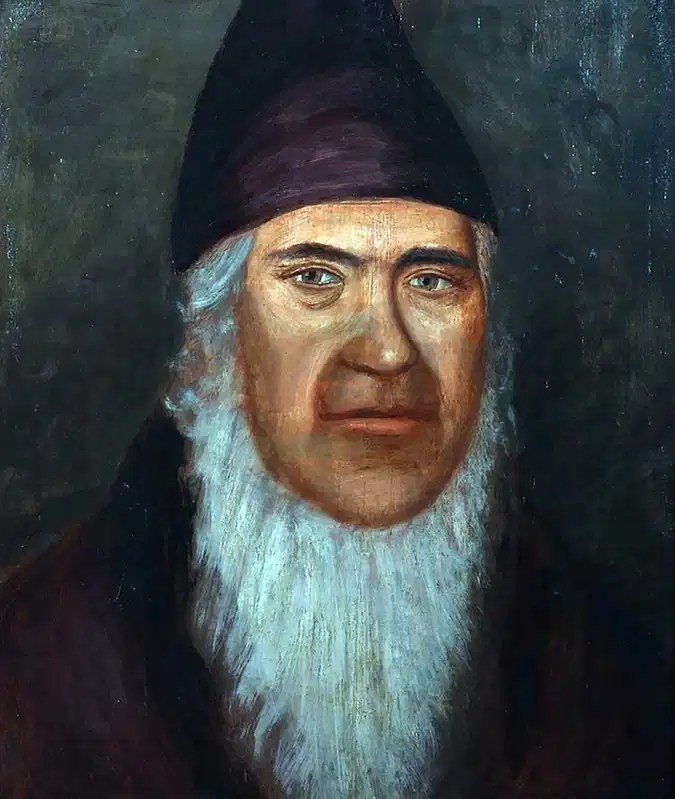
George Rapp

If he lived today, he would be called a cult leader and be the subject of a Netflix documentary. In addition to believing in the second coming, personal sanctification and wealth accumulation (which Rapp somehow believed was essential to winning Jesusโ€™ favour upon his return), the Rappists as they were sometimes called, believed in alchemy, direct communication with God and submitted themselves to complete domination by Father Rapp.  In the words of a journalist at the time, โ€œThe laws and rules of the society were made by George Rapp according to his own arbitrary will and command. The members were never consulted as to what rules should be adopted; they had no voice in making the laws.โ€[2]

What does this have to do with the European phase of my family history? Maybe nothing, as Iโ€™ve not read much on Rapp and the whole Pietist movement that came out of the Lutheran church in Wรผrttemberg. But the link between this radical evangelical, holiness-focused cult with the growth of Methodism, especially among German speaking immigrants in the States, is interesting. To what extent (if any) was the Holiness Methodist denomination, in which grandpa preached and in which my Dad and his siblings, as well as Momโ€™s family were raised, influenced by Rapp and his teaching? 

Even more interesting is that the surname Rapp is closely connected with the surname Rabe. They both trace their origins to the Middle High German[3] word โ€˜ravenโ€™, hence a nickname for someone with black hair or some other supposed resemblance to the bird.[4] Though Rapp has become its own family name, it was originally an abbreviated form of Rabe (Raabe).

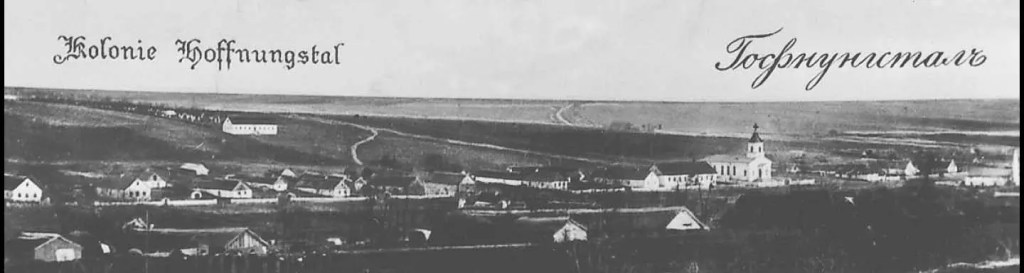
The third thin but interesting thread of this tapestry is that our step Great-Grandfather, husband of Grandpa Rabeโ€™s mother at the time of their arrival in the States, Frederick Kenzle (Kingsley) a.k.a. โ€œGrandpa Fritzโ€, according to family conversation, was born in a village called Hoffnungstal, in the Bessarabian region abutting the Black Sea.

Hoffnungstal Colony, Bessarbia

So what?

Hereโ€™s what.

George Rapp was not the only religious radical dissident to take leave of Wรผrttemberg in the early 19th century. The Holy Roman Empire State of Wรผrttemberg, in the southwestern corner of modern Germany, was one of the first States to embrace Lutherโ€™s Reformation. The kingdom became a power center of the Evangelical Lutheran Church but also threw up several important โ€˜Pietistโ€™ movements in the 18th century that positioned themselves against the formality and rituals of what was in essence the State religion.

Pietists were Lutheran dissidents who reacted against Big Church. They emphasised personal piety and purity, social separation, small worship circles often in houses and often a communal approach to property and wealth.[5]  They also expected the second coming of Christ to happen โ€˜soonโ€™ but had different opinions on where in fact Jesus and his white horse would land.  Rapp thought the new country of the United States was the site.  Others believed it would be Jerusalem.  This group, led by another evangelical leader, J. Lutz,  looked eastwards, towards the vast plains of Russia, as a place to move to, since it was quite a bit closer to the Holy Land. Come the Day, they would be able to get to Jerusalem quicker than if they stayed in Germany or moved to Pennsylvania, like the Rappists.

__

Germans, with their reputation as good farmers, were invited by Catherine the Great to move to Russia where she promised them attractive special privileges[6] especially freedom of religion. First settled in the Volga River region, the response was so positive that in 1803 the newly acquired territories of the Crimea and southern Ukraine surrounding the Black Sea were opened up to German and German-speaking settlers.  These allotments too quickly filled up with Mennonites, Lutherans and Pietists migrants, a lot from Wรผrttemberg, setting up German colonies and villages where they were free to do things in their German way, including speaking German and practicing their own version of Christianity.  Germans had over the centuries settled elsewhere in Eastern Europe, including Prussia, Czechoslovakia and Poland.

Soon after Rapp moved to America, another group of Pietist Wรผrttembergers headed towards Odessa where a large number of Germans were settled.  They settled and moved around the Odessa area for a couple of decades but didnโ€™t always have friendly relations with other settler colonies. In fact, a feature of many German settlements was their physical and social isolation from other villages, especially Russian, Ukrainian, Polish and even other Germans. Economically they were self-sufficient, selling their produce in regional markets and giving birth to smaller โ€˜coloniesโ€™ close to the โ€˜mother colonyโ€™. 

In 1819, the Pietists established a colony they named Hoffnungstal (Valley of Hope) near Odessa (Ukraine) ย but in 1842 moved their colony to what was then Bessarabia and over the next century was to be found on maps as part of Romania, Ukraine and Russia, depending on the political configurations of the time.ย  Germans who had settled in Poland earlier also flowed into this final bit of land set aside for German immigrants. Today the site of Hoffnungstal is in the Ukrainian town of Nadezhdivka, about 20 km south of the Moldovan border.

The unstable political situation naturally made it difficult for lots of Black Sea Germans to identify precisely the country of their birth.  Grandpa Rabeโ€™s birthplace in the 1930 Federal Census lists his birthplace as Russia. And that of his father and mother as Germany.  Dad wrote in Our Life Together, that his dad had been born in Poland. We know that Grandpa Fritz was born in Hoffnungstal (in Bessarabia, Romania, Ukraine or Russia, take your pick) and that Grandpa Rabeโ€™s mother, Karolina, is listed as being born in Ukraine in 1858. 

For what itโ€™s worth, here is my take on our garbled family heritage.

Karolina Schieve/Schultz/Raabe/Kingsley

Karolina Schieve (mother of Rudolph Rabe Snr.; grandmother of Dad; my great grandmother) was probably born into a German speaking Lutheran evangelical community settled in the areas around the Black Sea, near Odessa, in 1858. Maybe Hoffnungstal, maybe a similar colony.  She married Adolph Schulz whom it seems already had some children, namely Amelia (Mollie), William and Mary all of whom settled in Guelph, North Dakota a tiny, unincorporated village on the plains in the early 20th century. The Schultzโ€™s had lived for some time (if not permanently) in a small town, Lemnitz, not too far from the border with the modern Czech Republic.

Adolph, it seems was a widower and probably quite a bit older than Karolina.  One characteristic of the German speaking settlements across Eastern Europe was they moved around a lot. If things werenโ€™t working out in Poland then they would try somewhere else, perhaps around the Black Sea or the Caucasus region.  They were double and triple migrants. Maybe Adolph, after the death of his first wife, found himself near Odessa/Bessarabia and married Karolina (or she was compelled to marry him for economic or social reasons; often the case).   In any case, Adolph and Karolina had no children together. Perhaps the old (er) man passed away but in February 1885, Karolina married Karl Wilhelm Raabe. She was 27 years old. Raabe was perhaps a couple years older but far closer in age to her than Adolph. 

With this liaison, and the entrance into the drama of my Great-Grandfather, Karl Wilhelm Raabe, our familyโ€™s deep religious roots once again break the surface. Karl Raabe was born in Leipsig. Not the large, historically famous city and home of Johann Sebastian Bach, Richard Wagner and Richard Schumann. No. But the small German enclave of Leipsig, far away on the eastern steppes of the Ural Mountains and spitting distance from the border with the modern country, Kazakhstan.  The bulk of German-speaking immigrants to Imperial Russia had settled in the Volga River basin and around the Black Sea with smaller communities in the northern Caucasus region.  But Leipsig, where Great Grandpa Karl was born, was truly โ€˜in the middle of nowhereโ€™.  Podunk, Russia. 

Given that social and physical isolation was valued among Pietist/evangelical/non-conformist Christian sects, all the more so they could remain pious as they awaited the second coming of Christ, itโ€™s not stretching it too far to suggest that the Germans in this far outback of Russia, were particularly devout & committed to removing themselves from the world and creating a holy society on earth. Given the small size of the town (never more than a few hundred souls) it seems fair to conclude that the Raabeโ€™s adhered to this strain of spiritual living. Interestingly, the commune of Leipsig was established in 1842, the same year that Hoffnungstal Colony, 3000 kilometers to the south, and from where Karolina and her children emigrated to North Dakota, found its ultimate home in Bessarabia.

Transportation and communication in late 19th century Russia were neither easy nor frequent. But historians have shown that there was considerable movement of Germans across the Russian lands as they sought better opportunities. As many of the communities shared a theology, worldview and lifestyle and came from similar regions back in โ€˜Germanyโ€™[7], it is not at all inconceivable that the Raabe clan way out in the boonies were in touch with the Schieves and or Schultzโ€™s down in Hoffnungstal. Especially when they were searching for suitable mates for their children.

In any case, Karl Wilhelm and Karolina were joined in holy matrimony in February 1885 and enjoyed 15 years of married life together.  Edward was born 18 months later in 1886, followed by Wanda (1887), Olga (1890), Julius (1891) with Rudolph, my grandfather, bringing up the rear in 1894. By the time Karolina was 36, she had been married twice and given birth to five children. All on the cold Russian steppes!

__

In 1897, Karl and Karolina and their five young Rabe[8] children were among nearly 2 million Germans living in Russia.  They had been drawn by promises of land, non-interference in matters of religion, language and education, exemption from military service and despite the tough environment (blizzards, floods, droughts, armed conflict, hostility from locals) had thrived. Few were outright wealthy but Germans in Russia did enjoy a privileged status. In 1926, 95% of German Russians spoke German at home and few spoke the local languages. We can assume the same about Karl and Karolina.

In the 1870s however, Tsar Alexander II introduced a โ€˜modernizationโ€™ agenda which broadly cancelled all the privileges the Germans had enjoyed for nearly a century. In effect, Germans were now Russian citizens and subject to all the laws and obligations of every other Russian, including military service (6 years upon reaching the age of 20). For Mennonites and other pacifist groups, this presented a crisis. Even if they had no ideological, theological or moral position against military service, few Germans relished sending their sons to war in far away parts of the Empire.

In 1891-92 a major famine (largely man made, as most famines are) ravaged the Volga River basin, and even extended south into Bessarabia, southern Ukraine and even parts of Chelyabinsk region where the Raabe clan had settled in Leipsig.  

In 1862, over in the United States, Congress passed the Homestead Act which granted 160 acres of surveyed public land to any adult male who had not borne arms against the American government if they agreed to stay on it for a full five years. Ten years later, in 1872, our dear northern neighbours, the Canadians, enacted the Dominion Lands Act with a similar hope of attracting immigrants to settle their vast prairie lands. And, to ensure America did not encroach on the land and claim it as part of American Territory. Oh, how history repeats itself!

And thus, began another massive wave of German immigration. This time across the oceans to the New World.

In 1874, Germans across Russia began immediately looking for opportunities to move elsewhere. Emissaries were sent from colonies in Bessarabia to investigate migrating to nearby Dobrudscha, in what is now Bulgaria and Romania, and, at the time, a part of the Ottoman Empire. They found it a suitable place to move and left Russia to settle in both existing and newly founded villages. Others migrated to recently opened areas in Central Asia and Siberia, where, although still a part of Russia, there was plenty of land and the laws werenโ€™t strictly enforced yet.[9] 

Karl and Karolina must have discussed all these developments as they watched their children grow.  In 1900 Karl passed away aged just forty-five leaving Karolina with five young children to manage and take care of.  Resilient as she had proven herself to be already, Iโ€™m sure the death of Karl increased dramatically her sense of vulnerability and anxiety, especially as Edward her eldest son approached his later teen years.  Pretty soon after Karlโ€™s passing Karolina married again, this time to Frederick Kenzle (later Kingsley) who Dad and his siblings referred to Grandpa Fritz. Born in 1860 in Hoffnungstal Colony, it seems possible he and Karolina knew each other at the time they joined forces. Both had children from previous marriages and in 1902 they dispatched Edward Raabe and all three of Fredโ€™s children, Mollie, Mary and William, to North America. To Guelph, North Dakota to be exact.  Edward was only 16 but โ€œbeing happy with what they found America to be, made arrangements for the rest of the family to join themโ€,[10] which they did the following year, 1903.

Karolina was remembered in her obituary as a โ€˜good Christian womanโ€™ but I suspect life had caught up with her. 3 marriages. 5 children. Who knows how many significant relocations in โ€˜Russiaโ€™ before arriving in a country where she did not know the language. According to Dadโ€™s memoir, โ€œFritz Kingsley was a kind man, but unfortunately an alcoholic who at times made life miserable for his family.โ€

Karolina (mother) and Olga (daughter) headstones, Ellendale, North Dakota

Karolina, the matriarch of the Rudolph Rabe family, passed away in 1908, just fifty years old.


[1] Radical Pietism has been defined by Chauncy David Ensign as ”That branch of the pietisitic movement in Germany, which emphasized separatistic, sectarian and mystical elementsโ€. Quoted in Scott Kisker, Radical Pietism and Early German Methodism:  John Seybert and The Evangelical Association, Methodist History, 37:3 (April 1999): 175-188

[2] James Towney, โ€œDivine Economy:  George Rapp, The Harmony Society and Jacksonian Democracyโ€ (Masters Thesis, Liberty University, 2014), pg. 6.

[3] 1000-1350 C.E.

[4] Ancestry.com RAPP and Ancestry.com RABE

[5] John Wesley, the founder of Methodism, was strongly influenced by the Pietists and adopted the principles of the centrality of the Bible, personal spiritual transformation and spiritual disciplines such as Bible study and devotions.

[6] 1) free transportation to Russia; 2) freedom to settle anywhere in the country; 3) freedom to practice any trade or profession; 4) generous allotments of land to those who chose agriculture; 5) free transportation to the site of settlement; 6) interest-free loans for ten years to establish themselves; 7) freedom from custom duties for property brought in; 9) freedom from taxes for from five to thirty years, depending on the site of the settlement; 9) freedom from custom or excise duties for ten years for those who set up new industries; 10) local self-government for those who established themselves in colonies; 11) full freedom to practice their religion; 12) freedom from military service; 13) all privileges to be applicable to their descendants; 14) freedom to leave if they found Russia unsuitable.

[7] Modern Germany was not established until 1871. Prior to this it was a crazy quilt of independent regional kingdoms, and duchys such as and including, Wรผrttemberg.

[8] Raabe, Robey, Robie or Robbie, as per your preference.

[9] Sandy Schilling Payne, โ€œ16 June 1871โ€”Tsar Alexander II Revokes German Colonists’ Privilegesโ€, Germans from Russia Settlement Locations (Blog) 16 June 2021

[10] No author credited, โ€œGuelph North Dakota: Granary of the Plains 1883-1983โ€, Guelph Centennial Committee, 1983, pg. 279

Book of Accounts (Installment #4)

โ€˜Shhhhhht. Shhhhhht. Hey! Iraqi. Shht.โ€™ It was the tea man with the billowy turban and the long shirt below his knees, and he was agitated. His face was pressed between the bars of the window as if for some incredible reason he actually wanted to join Abdul Rahman inside. He whispered loudly but Abdul Rahman seemed dead to the world. A tiny pebble sailed through the thick air and hit the Iraqi’s cheek. โ€˜Shhht. Iraqi. Refugee. Wake up!โ€™

Abdul Rahman turned towards the window to see the tea man beckoning frantically with the same floppy hand that had called him out of the sun the day before. He stood up and walked to the window. The tea man started to put words together, some Arabic, some Persian and the little ones in between in a language that Abdul Rahman had no idea what to call.

โ€˜Refugee. You.โ€™ The giant pointed at Abdul Rahman who nodded. โ€˜Allah.โ€™ Pointing to the sky this time, โ€˜Allah.โ€™ Something. โ€˜Refugee.โ€™ Another strange word, followed by โ€˜help.โ€™ And did he say โ€˜dutyโ€™? The tea man beat his chest. โ€˜Duty. Holy duty.โ€™

โ€˜Allah says it is your duty to help refugees,โ€™ Abdul Rahman put what he thought the tea man was trying to say together.

โ€˜Yes. Yes. Me,โ€™ he beat his chest again, โ€˜help refugees. Allah say good action.โ€™

Now that he had decoded the man’s message Abdul Rahman didn’t know what to say next. He waited. The tea man smiled and bobbed his head as if he were a servant. He looked back across the road and then, quickly, as if he were handing over a kilo of heroin, lifted up a bundle wrapped in a faded piece of blue cotton. Abdul Rahman’s heart stopped. He searched the man’s face for an explanation.

โ€˜Holy Koran,โ€™ said the tea man as he pushed the bundle through the bars of the window. As if he were giving a blessing, he pulled Abdul Rahman’s face forward, planted a kiss on his forehead, and walked back in the direction of his teashop on the other side of the village.

He thinks itโ€™s the Koran! Abdul Rahman laughed to himself. It’s enough to make me believe. Abdul Rahman cradled the bundle in his arms as if it were his first born, and stared at the dirty cloth with the sort of love others would give an infant who has smiled for the very first time.

II

Swaddled in the blue cloth was a book. Not the Koran, but just as holy. Abdul Rahman’s scriptures. Covered in deep green leather, worn but not yet cracked. Heavy. It would take a strong man to lift the book with one hand. Perfectly etched in lush gold print as if by the hand of an angel, a third of the way down from the top edge, was the

word al Hisab. Accounts. The edges of the each page were delicately gilded and not a one was dog-eared. Inside, the pale-yellow pages were ruled by thin spartan lines: Balance Brought Forward. Transaction. Cash Payment. Credit Billed. New Balance. For thirty years or more Abdul Rahman had kept the Accounts Ledger, but it showed nothing of income or cash outflows, debits or credits. The debits he recorded and transactions he credited referred not to financial matters but to the balance sheet of his life.

Delicately, he removed the cloth that covered the ledger. They would think me mad if they knew I carry such a heavy thing. With exaggerated tenderness Abdul Rahman opened the book and let his eyes run over the photos and newspaper clippings and diagrams and notations as if he was reassuring them that all would be fine now that they were reunited and rescued from the hands of strangers. The photographs were of his relatives. Not his wife and children, but of more distant relations: the outer and upper branches of the great family tree that hid him in its shade. Some of them were insignificant. But most were very high officials. Famous people in Iraq. In the early years he had felt he was doing something morally wrong by keeping non-fiscal records such as photographs and bio-data of prominent persons in a ledger made specifically for charting the flow of money. He had never liked to mix such things up; it always struck him as contrary to the will of fate. But he had spent considerable time searching the bookshops and paper markets of Baghdad for a volume large enough to house his dreams and in the end the accounts ledger was the only book available.

Over many years Abdul Rahman had developed a philosophy which demanded that he keep abreast of the lives of prominent members of his family. Between sleep and work, most of his time had been given

over to the practice of his own personal faith. Abdul Rahman was not a religious man. He could not remember ever visiting a mosque, even as a child, and certainly he refused to believe in God. But he possessed a sensitive nature, acutely aware of the tuggings and yearnings of the spirit, and it was from his ledger that the invisible fingers of destiny caressed Abdul Rahman’s heart and soul. Here in the accounts ledger were details of Generals, Directors, Vice-chancellors and diplomats. All his relations. Beside each photograph or clipping he noted in a meticulous script their names, the significant dates of their lives (marriage, births, deaths, promotions, prizes), the schools which educated them and the departments which employed them. And most important of all, by way of simple diagram (or not so simple depending on the person), he demonstrated the nature of each personโ€™s relationship to himself.

There was Mustafa Badawi, Mayor of Kifri (1979โ€“1984) and third cousin to Abdul Rahman’s wife. Mustafa had served in the airforce before becoming mayor. From his birth he had led a blessed life. Success was all around him. Unfortunately, several years after his appointment as mayor, Mustafa’s progress slowed. His wife, (her name, Salwa, was noted next to her husband’s) operated a hair salon and restaurant in Kifri. She was prominent in the town and began to take an active role in Mustafa’s political affairs. He appointed her chairman of the Education Council and eventually Deputy Mayor. The Governor cautioned Mustafa that he could be seen as favouring his family and that his career could suffer, but Mustafa paid no attention. A brother of Mustafaโ€™s, Rasul, became Director of the Agricultural Co-operative Bankโ€™s regional office. Nobody minded that he had no qualifications for the post but the Party had not recommended him and that was a problem. Mustafa then awarded the contract for expanding the sports complex to a cousin, Muโ€™aza. One night, Mustafa

was found dead in his office. Traces of poison were discovered in the tea leaves. The sports complex was given to another contractor and Salwa left the country within six weeks. She now lived in Jordan.

In the margin of Mustafaโ€™s page there was a notation that one of Abdul Rahman’s back teeth had caused so much trouble around the time of Mustafaโ€™s murder that he had been admitted to the hospital for three days. Root canal procedure not done properly. A week of non-stop pain, was the neatly written note.

And here on another page was Rahim Bazzaz, brother-in-law to some cousin, who had decided it would be advisable to say his prayers in the office. On the same page, Uncle Lutfi, who questioned the appropriateness of banning the import of certain literature from abroad, peered up in a scholarly manner towards the camera, in a badly reproduced news clipping. As he revisited the pages of the ledger, Abdul Rahman could not help but feel cheated by these members of his family. My stupid relations. You have let me down. Most definitely. They had come to their inevitable early end because they lacked control. They had been unable to understand that the secret of success is to be found, not in the indulgence of whims, but by maintaining mastery over oneโ€™s fancies and inclinations. Opinions and rights may all be valid. Abdul Rahman, too, had these; but the difference between his opinions and those of his ‘stupid relations’ was that he had always understood the place of things. Chaos and confusion flow when one is unable to keep separate the various parts of life. These men, now forgotten or unaccounted for, had led uncontrolled lives. God is in the mosque, Abdul Rahman would tell himself. Only fools such as cousin Bazzaz insist that the Almighty must accompany them to the office.

But though he had no religious feeling, Abdul Rahman gained sustenance from reflecting upon the lives of his relations. Even the stupid ones were able to teach a lesson. His account ledger was his Koran: holy and true. It showed him the path of right living, as well as the consequences of an uncontrolled, mixed-up life. His spirit received strength not from Friday prayers or recitations but from following the trajectory of the stars of his relations. These were the sextants by which he had divined his own path for over thirty years. Whenever he could he sought asylum in his fantasies. Hours would pass like seconds when Abdul Rahman gazed into the photographs and re-read the articles and made notes. Peace and clarity of mind came to him from these pages; between the images and newsprint he was assured of a refuge, protected and removed from the everyday persecutions of life. And always, without fail, his relatives talked with him and encouraged him, or warned him, as surely as if they were sitting right by his side. When his relatives succeeded, he too became hopeful. But when their lives become troubled, Abdul Rahman prepared himself for a jolt in his own affairs. That not one of these prominent men knew of his existence didn’t bother him; it was not necessary that they know him. Families are large in Iraq. It was not a strange thing to have many unmet or unknown relatives.

A faith worn on the sleeve is no good for anything. Matters of the heart, believed Abdul Rahman, were best kept secret, and so he shared his accounts ledger with no one. Only Abida, his wife, knew of the ledger, and she disapproved. But hers was a principled disapproval; the principle being that everything done in life should produce some tangible, and hopefully material, benefit.

โ€˜If you approached these big shots and got them to do some tricks for us, fine. But what’s the point of only watching? It’s just

shopping.โ€™ She always curled her nose distastefully when he mentioned one of his relatives. โ€˜It may look very nice being General So and So’s fifth cousin by marriage and Professor Bighead’s step-nephew, but has our situation improved because of them? Don’t even bother to answer!โ€™

She was right to a degree. Not once had his important relatives gifted Abdul Rahman with a car, or granted him a plot on which to build a shop or house. But this was not the point. Abdul Rahman had never cared for the material things his wife so craved. What he received from his ledger was not material, but it was just as real. Just as essential for existence.

โ€˜Everything is connected,โ€™ Abdul Rahman would try to explain to his plump wife. โ€˜Fate, perhaps what you call God, has established connections, hundreds and thousands of unseen links, like those of a spiderโ€™s web, between each of us. And not just links of blood, such as the connections in this ledger, but between our doubts and desires as well. My own desires are a part of the yearnings of many others. They are not my own private, individual affair. So too, my failures have been committed by others: those to whom fate has connected me so mysteriously. Othersโ€™ failures and triumphs are drops in my own cup, which in turn overflows into the cups of others. I am alone neither in victory, nor in disaster. I cannot, and have never sought credit or praise for my achievements. And by the same token, why should I assume responsibility for my mistakes? This is what my ledger provides: eternal principles.โ€™ But Abida detested spiders and webs and always turned off her ears when Abdul Rahman spoke this way.

*

Abdul Rahman settled himself as comfortably as he could on the grass mat and, with care not to let even a hint of the filth of the shed fall on the pages, opened the ledger to the very first entry: Faris Fadhal Wathban, whom he had met soon after his marriage to Abida.

The Book of Accounts (Instalment #3)

The others were jealous of the little space they shared, and stared at the newcomer with resentment. I want to sleep but my mind wonโ€™t be still. Is this Quetta? Am I a criminal to be kept with these rats? Abdul

Rahman surveyed his companions. Two or three were sleeping but the others averted their cold eyes whenever the newcomer looked in their direction. Iranians. But that one over there scratching his balls, he’s no Persian. Too dark and hairy. Pakistani? Afghani probably.

The itchy Afghan seemed separated from the Iranians by an invisible glass wall. No one spoke to him. He ignored everyone. Was he mute? Someone patted Abdul Rahman’s arm and broke his examination of the Afghan. The Arab turned irritably to see a thin boy with oversized round frames on his nose holding up a cigarette as if it were a major discovery. He made it clear he wanted a match. Abdul Rahman stared at the boy for a few seconds with slowly narrowing eyes then turned his attention back to the Afghan, who yawned and scratched his armpit before shifting his shoulders against the wall as if he believed it was made of silk cushions and not hard hot cement.

โ€˜Marhaba. You’re an Arab isn’t it?โ€™ The kid with glasses had put the cigarette behind his ear. โ€˜I can tell.โ€™

Abdul Rahman muttered, โ€˜Leave me alone.โ€™

โ€˜A difficult request to fulfil,โ€™ said the kid glancing around the lockup. โ€˜How is my Arabic?โ€™

Abdul Rahman said nothing. Refused to look at the squirt. He put his head on to his knees and closed his eyes.

โ€˜I lived in Najaf for three years. Studying the traditions. After Imam Khomeini of course, but still, there were many other wise teachers in the madrassa. Are you from Najaf?โ€™

Lifting his head Abdul Rahman planned to tell the boy his conversation was of no interest. Words started to form but just before reaching his tongue they sank deep within him again, like anchors heading for the ocean floor. Each word carried the weight of years. Who had the strength to pull them up? He closed his eyes and placed his head against the concrete wall and muttered, โ€˜So tired.โ€™

Then he fell asleep.

*

The light and heat bored into the room like a magnifying glass burning dry leaves.

Though he had been asleep, he thought, for hours, his mind was just as wobbly as before. The sun was a long time away from setting. The green door had been opened slightly to allow some air, but the turbans and carbines were still on the other side. The kid next to him had found a match. He was sharing a smoke with a middle-aged man whose purple shirt was ruined by the dry whitish stains of sweat that hung in rings under each arm. The fag passed languidly from one set of fingers to the other. Wisps of smoke moving like a belly dancer in slow motion twisted towards the door. A game of Three Two Five played by the guards was the only sound. Thup. A card slapped the floor. Thup. Thup. The others threw their cards down like gauntlets. Thup.

Abdul Rahman considered his situation. He wanted to select his next move but until he understood where he was, how could he? Who were these others? Must be like me. Crossing into Pakistan without papers. For what? The idea that others might be in the same boat as he, that these men and boys were also running for their lives, seemed ludicrous. Indeed, he had never considered that he was running from anything. More like towards something. But what he couldnโ€™t say. At least not out loud. Or even to himself. The one thing he sought was an impossibility. Don’t be ridiculous, he scolded the part of him which insisted upon whispering her name. But now that his forward motion had been stopped and he found himself under arrest in an airless desert lockup in the middle of nowhere he admitted that he had been running to save his life. He shivered involuntarily.

The feeling of relief, almost joy, which had washed over him when the fat manโ€™s soldiers had pulled him up the hillock to the lockup had been displaced by a stronger feeling of humiliation. How could I have done a deal with that black bastard? Knew he was a snake. And then he saw Bashirโ€™s gaudy hat and his only money disappearing under it and the shame soaked deeper. Such a ridiculous team. But they took me. He would have laughed but it required too much.

The lethargic strings of cigarette smoke caught his eye again. As he followed the swaying movement Abida came into view. His wife had fallen asleep in front of the television; she still clutched the remote control. Her cheeks were pudgy. Abdul Rahman liked them that way. Healthy and baby-like. Suddenly, the Pakistani doctor was rocking his head back and forth telling him about the saintโ€™s tomb but then mid-sentence he disappeared, making way for Zubeida. She was singing his favourite song. And with his head resting against the concrete wall, Abdul Rahman let the song be his lullaby and he nearly return

to sleep, but the ugly dark face of Fuโ€™ad popped into view. He rubbed his eyes as if they were the dials of a radio and tried to recover his daughter’s voice, but as much as he cursed and threatened his mind its power to grasp any idea for longer than a few seconds was gone. His inability to hold the reins of his ideas worried him. Havenโ€™t been thinking properly for weeks. How else could he explain giving money to that black bastard, Fuโ€™ad? And letting those grease monkeys deprive him of the last of his cash without so much as a bleat?

*

The sun set, and with it disappeared the warmth. Sleeves were rolled down and collars buttoned. Some men rubbed their arms because they wore only T-shirts. Abdul Rahman zipped up his leather jacket. The cool evening had everyone talking. The Afghan (obviously not a mute) was arguing loudly with the turbans on the other side; Abdul Rahman thought he understood the Persian word for piss. Iranians chatted in groups of twos or threes, their teeth lighting up slightly as the darkness grew. Fag ends glowed and dimmed like June bugs on a summerโ€™s night.

The kid with glasses smiled and remarked that Abdul Rahman seemed to be very tired and did he feel better now. Abdul Rahman grunted an indistinct and uninformative response but the boy didnโ€™t mind. He appeared satisfied that Abdul Rahman had responded at all. He was about to say something more when the green door rattled open and a dim electric light, lonely under the dust and hanging from the middle

of the ceiling, flickered on. The fat man who had arrested Abdul Rahman earlier in the day stood before the men like a Mexican warlord surrounded by granite-faced, turbaned bandeleros. He was still in bedclothes as far as Abdul Rahman could see, but they were pressed stiffer and whiter than paper.

He spoke. Every time he hesitated or took a breath the Iranians bombarded him with questions and shook their fists. A few minutes passed and then the fat man in white pyjamas turned and waddled away like a ghost receding into the night. Abdul Rahman had understood nothing. The boy scooted closer to Abdul Rahman and said, โ€˜An official from the UN is coming. Here to Nuskhi.โ€™

โ€˜Nushki?โ€™ mumbled Abdul Rahman. โ€˜This is not Quetta?โ€™

The boy giggled. โ€˜Oh no! Quetta is a big city with airport and trains and hotels. And a UN office. They are sending an officer to interview us. That is what the fat man says.โ€™

โ€˜Interview? Why interview? Have we committed crimes? I have never broken the law. Who has the right to interview me?โ€™ Fu’ad had failed to mention the UN was interested in asking questions. Abdul Rahman cursed the African another time.

โ€˜Oh, don’t worry, sir. The UN is not police. The questions they ask are for purposes of helping us.โ€™ Abdul Rahman was dubious. โ€˜Believe me. Truly. Simple questions: your name and why you left your country and your job. On that basis you will receive assistance.โ€™

โ€˜You know quite a bit.โ€™

โ€˜My cousin told me. He came this way two years back. Now he is in Norway!โ€™

โ€˜Norway?โ€™ The concept was laughable. The boy could have said his cousin was on the moon and it would have been more believable.

โ€˜Yes! Sent by the UN!โ€™ The boy beamed in the dim light. โ€˜I intend to join him there.โ€™

Abdul Rahman asked who the fat man was.

โ€˜The District Commissioner, sir. A big shot in this country. He’s the king of this desert. All the way from the border to Quetta, his word is better than Allah’s.โ€™ The boy lowered his eyes as if he had just blasphemed.

โ€˜I must have him release me. When will he return?โ€™

โ€˜Without an interview, no one is to be released. That is what he said,โ€™ the lad rubbed his feet vigorously against the night that was becoming colder each minute. โ€˜How is my Arabic, sir? You have not said. I don’t like to keep asking but I believe it isn’t bad, eh?โ€™

The boy’s presumption that he could just keep on addressing Abdul Rahman like he was his uncle rubbed him the wrong way. But he needed the punk’s information. โ€˜Your plurals need work. What else did the fat Commissioner say?โ€™ Abdul Rahman asked. โ€˜Must speak with him,โ€™ he added but more to himself than to the boy.

โ€˜No one is to be released until the UN interviews us. Then, he said, the UN will decide everything. If they agree, we will be released and

taken to Quetta and given refugee cards. If they, the UN, do not agree he, the fat one, will send us back to Iran. Pakistan has, he said, plenty of refugees already. More than three million. There is no more room for you fellows. That was his phrase exactly. You fellows.โ€™

โ€˜What will he do with me? I am not from your country.โ€™ Something to be grateful for. Abdul Rahman sensed relief creeping back. The fat man thought he was an Iranian asylum seeker like the rest of these brooms in the closet. What he said was for them, not Abdul Rahman.

โ€˜He will send you to your country.โ€™ The boy’s attitude was matter of fact. He spoke as if he were already in a queue waiting to board a plane for Norway, not shivering on the floor of a Pakistani jail. Abdul Rahman did not share the boy’s exuberant naivetรฉ. Iran was a dangerous place to return to. Iraq, certain death. Must get out of here. Must find that fat man again and tell him I am not like these others.

โ€˜I do not want to go to Norway,โ€™ Abdul Rahman was thinking aloud.

โ€˜Oh, don’t worry, sir. Norway is my destination. You can choose Australia or England or Germany or even America. Everyone is eager to go there. I too, but my cousin, he’s in Norway, and he said he will find me work and I can carry on my studies. After learning Norway language, of course.โ€™

โ€˜No country. I do not want to go to any country. Norway, America, England. Nowhere. I want to speak to the Commissioner. That is what I want.โ€™

Unbelievable! The boy could not trust what he heard coming from the Arab’s mouth. โ€˜If you do not want to go to any country,โ€™ he stopped and scratched his ear, โ€˜why then are you here?โ€™

โ€˜They will kill me,โ€™ was all Abdul Rahman said. He turned towards the wall, lost in thought. The boy’s question was reasonable, at least part of it. Why am I here? Until he confessed that he feared for his life he had not thought through his decision to flee Iraq. Certainly the idea of ending up in such a place as Norway had never even suggested itself. I am here because, he started to put the thoughts together, they would have killed me if I had stayed. Where am I headed? He stopped. No answer to that. I had no plan to come even to Pakistan. It was the next place to go and Iran was dangerous. They too, would have killed me. Just for fun. Fu’ad said UN would give me papers and money. But this news about interviews and settling in Europe… I want the papers. Papers are good to have for protection. And I need money. The fat man. He will understand if I tell him I want to stay here. Not here, exactly, in this place. But in Pakistan. I’ll go to Peshawar, that saint’s tomb. Need rest and quiet. I need the fat man. He can save me.

Jumping up as if he had been administered a jolt of electricity Abdul Rahman stumbled over the shoulders of the Iranians and shouted in Arabic, โ€˜Open the door. I want to see the Commissioner. Open the door!โ€™

The Iranians laughed. The guards on the other side of the door banged loudly and yelled something. From the far wall the young kid called out: โ€˜They are telling you to keep quiet. Food is coming. Then we will piss!โ€™

โ€˜I am not hungry. Tell them to open. I need to see the fat man.โ€™ Abdul Rahman banged the door again and yelled, โ€˜Open! Open! Open!โ€™

The Afghan with the itchy balls tugged Abdul Rahman’s jacket and tried to pull him to the floor as he was standing on the Afghan’s foot. Abdul Rahman slapped his hand away and continued to bang on the door.

โ€˜Hey! Saudi donkey,โ€™ the Afghan growled. โ€˜Get it off or I’ll break it off.โ€™ A second more violent pull of the jacket brought Abdul Rahman to the floor and on to an Iranian who had been watching the show with a grin. Abdul Rahman reached out without thinking to steady himself and pulled the Afghan’s thick black beard. From beneath him the squashed Iranian no longer was grinning; he was struggling into a position from which he could push Abdul Rahman off, which he did. Abdul Rahman sailed into the arms of the Afghan. The bundle which Abdul Rahman had not let go of since his ejection from the lorry fell to the floor. He scrambled and reached for it, but the aggrieved Afghan grabbed him by his neck as if he were a lamb and said, โ€˜I would give my mother to the communists to fuck before I let you cause any more trouble. Go back to your little boy and let him lick your wound.โ€™ The Iranians let loose a chorus of whoops and laughter at this but the Afghan didn’t release the Arab. He enjoyed humiliating the man and took the smiles and catcalls of the others as if he had masterfully recited one of Hafiz’s more humorous poems. He was thinking of another thing or two to say when Abdul Rahman’s elbow caught his open chuckling mouth and cracked his teeth together. The Afghan’s grip loosened, allowing Abdul Rahman time to twist around and grab the man’s hair in one hand and, with the other hand, press the blade of a red pocket knife, drawn from no one saw where, against a huge throbbing blue jugular.

โ€˜Time for a shave, hairy monster.โ€™ Abdul Rahman breathed heavily, but his fatigue had left him and his grip was like iron. The blade moved up towards the Afghan’s nose and into one nostril. โ€˜Moustache a bit bushy too.โ€™ As he withdrew the blade the slightest trickle of blood appeared on the Afghan’s nose. โ€˜Mother’s cunt,โ€™ Abdul Rahman spat. The room was silent. โ€˜Tell them out there I want to see the Commissioner.โ€™ Abdul Rahman was looking for the young boy who spoke Arabic with bad plurals. โ€˜Or else this heap of Afghani shit will never live to see his mother buggered by Gorbachev.โ€™

The boy’s voice quivered, but he did what Abdul Rahman said. The guards opened the door and immediately grabbed Abdul Rahman and pulled him off the startled Afghan. On the way out Abdul Rahman scooped his bundle from the floor, and as the doors shut again he smiled. Especially for the Afghan.

*

Another building and into a room. Abdul Rahman looked at the bed with a sheet and pillow, and at the chair. They beckoned like a naked woman. For an instant he actually thought they were for him. Two candles, one nearly burned completely, and a box of matches. Under the bed a small tin suitcase. Two windows, both without glass, made of warped wood painted green just like the door of the lockup.

One of the guards pushed him with unnecessary roughness to the floor and positioned his rifle near his forehead. The second guard ran into the darkness. The man with the rifle muttered under his breath at Abdul Rahman, who could sense the man’s nervousness and that the rifle was probably empty. But he had no plans to keep up his show. They got the message. The fat man will be here soon. He leaned against the wall and crossed his arms over the bundle in his lap.

The bundle was heavy and covered with a faded blue cloth. It was rectangular and appeared to the nervous guard to be a large book of some sort. Like a really nice Koran, the type you buy for 300 rupees and that has gold flowers printed along the edge of each page. Or like the book in the District Commissioner’s office where all the criminalsโ€™ names and particulars are registered. None of the Iranians or this man had been registered. They must be special. This one sure is. The guard poked the rifle at Abdul Rahman as a menace but the Arab didn’t flinch.

โ€˜Arabi?โ€™ the second guard had returned with the fat man who wasn’t speaking. He had the expression of someone whose amorous intentions had been thwarted with a slap. The guard asked Abdul Rahman the question again. โ€˜Arabi?โ€™

Abdul Rahman nodded.

โ€˜Mujrim!โ€™ This was the fat man. Spitting the Arabic word for criminal.

โ€˜La. Ana mohajir.โ€™ Abdul Rahman answered in Arabic, pleased to discover the fat man understood his language.

โ€˜A refugee, huh? That’s what you told me this morning.โ€™ The fat man pulled his white pyjamas up and sat on the string bed. The guard with the rifle jumped away as if he had been singed by the shadow of the Almighty.

โ€˜Exactly,โ€™ said Abdul Rahman. โ€˜I am a refugee. You must help me. I do not…โ€™

โ€˜You have no manners. Fucking Arabs. Don’t know how to address your betters, huh? The same as this morning. Very rude you were. Where are you from? Saudi? Don’t think so. Too much money in Saudi for anyone to want to escape. Syria?โ€™

โ€˜Iraq.โ€™ Abdul Rahman snapped.

โ€˜Ah! Of course. That explains your poor behaviour. How civilisation began in such a place is a deep mystery. Look at you. Without the faintest notion of civilisation.โ€™ For a few seconds he watched Abdul Rahman as a falcon would a small sand mouse. โ€˜They tell me you are a troublemaker. A real Iraqi rabbler, huh? Did you hope to kill that Afghan? Huh? Killings can be arranged.โ€™ The fat man had eyes like dull black buttons.

Abdul Rahman said nothing. His hopes of persuading the Commissioner to sympathy were nearly crushed. But the sand mouse feared nothing and returned the falcon’s stare.

โ€˜What do you want me for? I am just about to make my evening prayers. It will not be good for you if you irritate the Creator as well as me.โ€™

โ€˜I am a refugee. I apologise for my behaviour but I am not in the same class as those boys andโ€ฆanimal, I may say in one case. They are seeking flights to Europe. To join their brothers and cousins in Sweden and such places.โ€™

โ€˜They are also refugees,โ€™ the fat man growled. โ€˜Or asylum seekers hoping to become refugees. Chrysalises bursting to be butterflies.โ€™ His laugh was dry like the air.

โ€˜They are tourists. I am a refugee. I will be killed if you return me.โ€™

โ€˜That is not for me to judge. Perhaps you will be killed. Perhaps you deserve to be killed. I do not know. These are matters for the UN to decide. They are expert. I am not. In such matters at least.โ€™

โ€˜I do not need the UN. If an interview is essential I will tell you. You can ask me what you will.โ€™

โ€˜No interest. None at all.โ€™ The fat man flicked a tiny fleck of snot from his fingers. โ€˜Your life bores me. UN in Quetta has agreed to send an officer to interview all of you as soon as possible. They will decide who is on holiday and who is a refugee. For your sake I hope they find you not to be a tourist as you so confidently accuse others.โ€™

The fat man stood up. His belly was huge but didn’t quiver as Abdul Rahman expected. How he was able to touch his forehead to the mat during prayers was hard to imagine. โ€˜Tomorrow we will find a more suitable location for an anti-social Arab. One more thing. The UN will not be here for a few days. Should I even hear your name mentioned…what is it by the way?โ€™

โ€˜Abdul Rahman.โ€™

โ€˜Mr Abdul Rahman. If I even hear that name between now and the time the UN makes its esteemed decision on your fate, I will personally drive you to Karachi and hand you to the Iraqi chargรฉ d’affaires. Do not doubt me. God bless you, huh. Mr Iraqi refugee.โ€™ The fat man left to pray.

The second guard went out and when he came back he carried a leg iron which he fastened to Abdul Rahman’s left ankle. A steel bar connected the iron ankle ring to a heavy set of chain handcuffs. Then he clanked like a mechanical man and was marched across the sand, back to the lockup. All night he sat on the floor with his leg extended in front of him and his hands chained together. His bundle was kept on the desk where the guards sat. Around ten o’clock he was given a dry chapati, half an onion and a cup of sweet milk tea.

In the morning with the iron still wrapped around like ceremonial garments, he was led down the main road he had walked up the previous morning. Except in the other direction. Camels opened their eyes but didn’t stop chewing their cud as he clanked clumsily along. Buses slowed to let passengers stick their heads out the window to gawk and two boys pushing home-made cars made out of bent wire and beaten tin giggled just behind his heels until the guards stopped behind a petrol pump. A door to a dark storeroom stacked almost to the ceiling with leaking drums of oil and wet rags and reeking with the fumes of benzene and rubber was kicked open and he was pushed inside. A small space had been cleared and a grass mat placed on the dirt floor, which glinted a silvery grey from years of sucking in oil. Thank God, there’s a window. And so there was. It was barred, and towers of oil filters and other auto parts in cardboard boxes blocked

out most of the light. But air would circulate if a breeze bothered to blow. The temperature in the hole was higher than outside, but next to the grass mat, like valets awaiting their master’s orders, stood a plastic five litre jerry can and an enamel mug with an orange rose-like flower painted on one side. The water was lukewarm and the mug was grimy. There was no light and no candle. No matches. Too much oil to risk that.

The guards removed the leg iron and locked the door behind them.

All the comforts of Baghdad. Abdul Rahman forced an ironic smile, but then panicked. His bundle. It was still with the guards. Immediately, he kicked the door and shouted. Nothing in particular just lots of noise and loud.

โ€˜Sisterfucker!โ€™ The door flung open and the turbans stepped in. One grabbed Abdul Rahman’s arms and the other slapped him, first once and then twice more in quick succession. Then again and again. Each time saying, โ€˜Sisterfucker.โ€™ Slap. โ€˜Sisโ€™ slap โ€˜terโ€™ slap โ€˜fuckโ€™ slap โ€˜erโ€™ slap. Abdul Rahman waited until it was over then said hoping they would understand, โ€˜Kitab. Kitab. Book. My book.โ€™ He carved a squarish shape about the size of his bundle in the air and repeated the word again. โ€˜Kitab.โ€™

Some more slaps. โ€˜Low dog.โ€™ Slap. โ€˜Motherfucker.โ€™ Slap slap. โ€˜No. No. No. No book!โ€™ Another tight one for good measure. The man holding Abdul Rahman grew tired and asked his friend to stop. They pushed Abdul Rahman to the ground and locked up again. This time they refused to open the door no matter how loud he shouted, and after more than ten minutes Abdul Rahman fell to the ground, more alone and frightened than he had felt since the day he’d left Baghdad. All

day he paced the small space of the oily shed. The heat had no effect and the darkness and lack of wind he hardly noticed. The book. This is hell. What are you doing, you fool? Have you lost your mind to leave it? They will burn it or shred it and laugh. Animals have no way to value such things. He strained to see if he could find a way out of the hole. The window was impossible: three armed turbans sat slurping tea just waiting to greet him if he should try something stupid. The door was weak. Pop that thing open in a blink, but they’ll shoot me this time. Let them shoot me. I must have it. Never has it been without me. Ever. Not until now. Oh God. What hell have you dropped me in? My mind is going. Unable to keep the simplest things in line.

The day crept by like a snake shedding its skin. Abdul Rahman was in torment. He returned to the window every few minutes, hoping that not only the guards but the bars too would have disappeared. He paced the less than two-metre space, cursing himself and the fat man and the Afghan and that Sudani bandit and the day Zubeida had disappeared. It was from that day, years ago now, that fate seemed to have washed her hands of Abdul Rahman and left him to dangle. Several times he smashed his fist into the brick wall and when he closed his eyes he could see the bundle where he had left it the night before, on the desk in the lockup.

In the evening a guard handed him his chapati and tea. No onion this time. Just a wilted piece of radish lying shamelessly exposed in the breadโ€™s lap. He swallowed the radish and gulped the tea after he had soaked the bread. The jerrycan was nearly out of water. His feet and hands were black from the grease that covered everything in the shed. Inside, he raged at himself. Cursed his name. Spat on his existence and stomped his thoughts into the black dirt below him. At last, a few hours after nightfall, the sound of rattling outside the door

had Abdul Rahman up on his feet again. He knew they were back with the leg iron but he didnโ€™t care. They’re taking me back to the lockup. I’ll recover it now! He was like a child waiting on the night before his birthday party. He nearly jumped with excitement.

Three men with guns greeted him. The slapping-addict stepped forward with a threatening grunt and got to work putting the leg iron and chains on Abdul Rahman’s ankle and wrists. Time for a piss. He was led slightly away from the door then made to stop. He pissed on to the sand next to some old tires. Before he had shaken himself dry, the guards were pulling him back towards the lockup. The fat man was already speaking to the other prisoners, who smiled grimly when they saw Abdul Rahman in his shackles. The Afghan glared like a wolf.

The fat man turned to Abdul Rahman and said, โ€˜The UN is very busy. No one will be able to come here for at least a week. If there is no remedy within that time, I will take my own action. How long will I be expected to feed you and water you? Costs money these things, huh. This is Pakistan. Not UN-istan. Huh!โ€™ As he retreated he squeezed Abdul Rahman’s cheeks as if he were a newly arrived baby. โ€˜Don’t forget, huh! I hear your name and…โ€™

Abdul Rahman was not listening. I’ll piss on your grave. His panicked eyes were focused on the desk where his bundle had lain the night before. It was gone. His eyes tore the room apart but could find it nowhere. The turbans closed the green door again. Was it inside? Does that Afghan have it? I’ll rip his tongue out. He stumbled as the guards pulled and twisted him around. The iron rod poked into his stomach as if it had its own point to make, and for a second he couldn’t breathe. Across the sand to the road and back to the shed.

Off with the iron and chains. No slap for good night. Just a shove this time. The door slammed behind him and that was the end of the day.

Jim Gordon (drums)

JG(D)

Remember listening to music back in the day? Settle down in a bean bag or stretch out on the couch and read the back of the album cover. You do this enough and over time youโ€™ve developed a mental map of world of rock โ€˜nโ€™ roll.  The studios. The producers. Even the fricking engineersโ€™ names became familiar. Even if there were no lyrics to read this minutiae seemed to be as revelatory as the Dead Sea scrolls. I devoured it as part of the โ€˜experienceโ€™ of music and over time these names lodged in my brain.

One such name that seemed to pop up all the time was Jim Gordon (drums). My initial rock โ€˜nโ€™ roll dream was to be a drummer. So, I paid attention to these guys. Steve Gadd. Jim Keltner. Jim Gordon. Levon. Keith โ€˜Fuckingโ€™ Moon, man!

Jim Gordonโ€™s name came up most often so I figured he must be good (duh!). But I knew nothing about him. He didnโ€™t have the lifestyle of Keith โ€˜Fuckingโ€™ Moon nor feature in Rolling Stone in any way that would make his name register for anything other than his prolific credits.

A couple months ago I read Drugs and Demons: The Tragic Journey of Jim Gordon by Joel Selvin. (Highly recommended if youโ€™re into this sort of stuff.) Many of you will know the story and Iโ€™m not going to retell it here. I was not only stupefied to learn just how prolific, adored (by his peers and fans) and influential (โ€˜he invented rock โ€˜nโ€™ roll drummingโ€™) he was but I was shocked to learn he murdered his mother with a kitchen knife. And that he spent the rest of his years in prison where he died just two years ago in 2023.

Surfing through the internet after that I learned that Iโ€™m a late comer to this story. There are dozens of interviews with fellow drummers on YT and other places which both praise the drummer and condemn the man. ย And itโ€™s that latter attitude that has left me unsettled.ย  Iโ€™m not an apologist for murder. He got what the law says was coming to him.ย  But to simply condemn one of the great geniuses of popular music, a man who dominated the session culture of the 60โ€™s and 70โ€™s, who could always be relied on to deliver exactly the sound and beat the producer or the artist needed, even when they didnโ€™t know it, who was by all accounts a quiet, gentle giantโ€”though these qualities worn off when the drugs really kicked inโ€”but a man who was tortured for years by disembodied voices in his head that drove him to murder, seems unfair.

I personally donโ€™t know what thatโ€™s like. But I know people who do. I do have experience with torturous mental health and know of the despair and the desperation this brings.ย  To summarize Jim Gordonโ€™s life as that of a drug-addled murderer is a complete misreading of the manโ€™s life.ย ย  It seems he was relieved to be put away, where he was unable to harm anyone else.ย  I get that; and I’m glad he found some safety and peace before he died.ย  RIP Jim. You deserve it.

Here is a just the thinnest of thin scraping of Jim Gordonโ€™s work. He started out drumming for the Everly Brothers in the early 60s and then went on to be nearly every groupโ€™s and producerโ€™s go-to sticks man for twenty years. He mostly worked alone, as a session drummer but did join Delaney and Bonnie and Derek & the Dominos for a while in the early 70s. And you know that beautiful elegiac piano outro on Layla? Well, that was Jimโ€™s idea. And him playing.

Hope you enjoy.

Book of Accounts (Installment #2)

Book 1/Part 1

It was one of the self-evident truths of his life that everything has its place. Or consider the proposition conversely, that lifeโ€™s worst eventuality is for things to end up in places they are not supposed to be. The fundamental purpose of his life had been to guard unceasingly against this eventuality. So, when at last he was arrested, the Arab was surprised to feel a relief as satisfying as any he had ever known. The act of being gathered up and placed in a room brought with it a pleasantness unexpectedly reminiscent of boyhood, evening, and his mother.

โ€˜So tired,โ€™ he muttered as he pressed a thumb and a thick index finger deep into the sockets of his eyes as if he bore them a grudge. The others in the tight lockup, mostly Persians sporting chins untouched by razors or water, would have been surprised, had they known that a man such as he shared their space. They, the leftover youth of Iran’s cities in search of an alternate route to Europe; a route unhindered by passport checks, boarding passes or hefty airline fares. He, Abdul Rahman al Fazul. Senior Inspector Abdul Rahman. Or used to be. Now just another cat in the sack. Waiting for someone to tell him if he would be allowed to continue his journey, or if he would be sent back across the border he had crossed just the night before. Illegally. Without papers and cash. And with a half-cocked idea that he’d find a United Nations refugee office in some town called Quetta.

The small, shared space was stuffy. A tiny hole near the ceiling allowed the sharp light of the desert afternoon sun, and all of its heat, to barrel into the room; but it was too insignificant an opening to stir up a breeze. A wooden door painted bright Islamic green and locked from the outside was guarded by men balancing loosely wrapped

turbans on their heads and old double-barrelled carbines on their shoulders. The Arab counted thirteen men, fourteen including himself, standing or sitting on their haunches, as one of the turbans pushed him into the room. The men (there were no women) were like brooms in a closet. Someone asked him something, but the question was in Persian. Being Iraqi he spoke only Arabic. And, of course, a few words of English collected over the years like knickknacks from the television and radio. Hello. Good evening. OK. What is your name? Welcome. Cigarette. Please take a seat. I love you. Thanks God. His arrival in the lockup had the effect of a pebble landing in a pond. Ripples of whispers moved around the room growing dimmer and dimmer until within a few minutes the heat, hanging like a stage curtain, heavy and patient, was all there was.

*

Two months in Iran, always with an eye over his shoulder or fifty metres out in front, on the lookout for Revolutionary Guards or basijis. Forever aware of his accent and afraid that his dark skin would do him in. Speaking nothing more than simple phrases and commands. Moving in the shadows always takes its toll. Zahedan, the border town, wasnโ€™t a problem. Every sort of criminal and smuggler huddled at the bus stand openly discussing the price of hashish and hawking fake Afghan passports. Fuโ€™ad, of course, had been a help. Yet crossing into Pakistan had been the easiest part of the journey.

Fuโ€™ad, a Khartoumi, black and smelly like a backstreet sewer, spotted his accent immediately. โ€˜From which part of Baghdad are you, my friend?โ€™ he hacked as he slid in beside the Arab at a teashop next to the railway station where Abdul Rahman had come in dubious hope of catching a train to Pakistan. The line had been closed since the days of the Shah. Rusted steel track running crazily toward the desert horizon was all that survived of the railway. He’d have to find another way; three hundred american for an Afghan passport was more than he could afford. I’ll walk across if need be. He ordered another cup of tea. When will I enjoy a small sweet glass of coffee again? He didnโ€™t say a thing to Fuโ€™ad, but the black man went on as if the Iraqi had called him over to share a secret.

โ€˜Student in Kirkuk I was. Geological engineering. Visited Baghdad many times. Are the girls still so expensive in al Mansour?โ€™ He inhaled with a hiss and slapped two bony fingers against each other by way of exclamation. โ€˜On a government scholarship I was but when the war began fell victim to the expulsion of all foreigners. Abandoned the academic life. Fish are fatter in these ponds.โ€™ Fuโ€™ad indicated, by rolling his eyes, the pond he meant: this dried-up, gritty corner of the world where the smugglers’ routes mocked the paper borders separating Persia from the Indian sub-continent and both from the madness of Afghanistan. Civilisation from chaos. The past from the dissolution yet to come.

The Arab glanced obliquely at the African, whose uneven false teeth flashed like signals from a ship that everything about the man was crooked and unreliable. He wanted the Iraqi to pick up the conversation, but the Arab remained silent. Not about to start chatting to Africans within walking distance of the borderline. He

sipped at his tea, then made an effort to get up, but Fuโ€™ad didnโ€™t give an inch.

โ€˜Returned to Khartoum I did, but after living in a foreign country for so many years my own seemed somewhat less wonderful.โ€™ The Arab was trapped. Fu’ad must be working for the Revolutionary Guards. Any moment his sidekicks will jump out and grab me. The teashop reeked of goat piss. Tribals in white and yellow turbans, wearing long-barrelled rifles, brassy knives, and leather ammunition straps across their chests, spoke in shouts. They stroked their moustaches with the backs of their huge coppered hands. Fuโ€™ad raved on about living in Saudi Arabia before joining the Afghan jihad. A few years ago he had set up here in Zahedan, the last Iranian town before the border. He had no particular reason to be here except that it was the frontier and should the situation unwind too badly he could disappear across an international border in less time then it took to grease a shipment of Johnny Walker through Iranโ€™s Revolutionary customs.

โ€˜Going to Pakistan?โ€™ he asked. โ€˜Be of assistance I can. Only because you are a Baghdadi like me.โ€™ His laugh broke down into the watery hack of a heavy smoker.

Youโ€™re no Baghdadi. There were plenty of Sudanese and Somalis in Iraq; all part of the fraternal policies of the Baโ€™ath Party designed to attract cheap labour from the Muslim world. They did the shit work. Pumping petrol. Standing by doors all day waiting to open them for more important people. Cleaning up oil spills. They sent home pay packets heavy with oil money, but no proper Baghdadi would allow a black African to eat in his home. Not Lt Colonel Abdul Rahman. It was Fuโ€™adโ€™s over-friendly manner, his insistence that they shared something, ev

to be done with him. But the black man pushed a shoulder into Abdul Rahman โ€” foul breath undermining his flashy smile โ€” and whispered. โ€˜A contact. In the army. Pakistani that is; Iranians only do business with themselves.โ€™ Another short cough and a quick look over his shoulder. โ€˜Arrange things for him. Logistically I do. Time to time. Friday he’s running a convoy from here to Chaman on the Afghan border. For a very reasonable price,โ€™ he took a moment to look his prey up and down, โ€˜only two hundred and fifty american, I can have you dropped in Quetta.โ€™

โ€˜What is Quetta?โ€™

โ€˜Quetta is nothing. Like a camelโ€™s fart, it is has no substance. But for you it is heaven.โ€™ The sweating black face floated closer to Abdul Rahman’s. โ€˜In Quetta you will find a UN office and there you will receive your ticket to breathe freely. The UN will give you a card that certifies that you are a refugee, and then no one will bother you. You will be protected by the world. If you are lucky you may even go to America or Germany with that card.โ€™

None of this impressed Abdul Rahman. He was not in the habit of believing the words of strangers, especially when they spoke of freedom or heaven. His life had been dedicated to doubting and challenging the statements of others, and besides, visiting a UN office was the same as registering with the Revolutionary Guards; a place to avoid, not seek out.

And what if he did not stop in this Quetta? If he paid more would Fu’ad’s contact arrange to take him to Peshawar? One of Abdul Rahman’s ironclad rules had always been never to trust anyone’s plans except his own. In Tehran a few weeks ago he’d met a Pakistani

doctor who had sold him some strong pills for the pain that never seemed to leave his head these days. โ€˜If pain persists, your only hope is a visit to the tomb of Zinda Pir near Peshawar,โ€™ the doctor had confided, as if he knew his medicines were useless. โ€˜Visit the tomb, sir. Its powers are appropriate for all disorders. Physical, mental, and those of the spirit. And of course, your sexual desire will dare not slacken after the saint accepts your prayer.โ€™ Dead saints held no interest for Abdul Rahman and he had put the conversation out of his mind. But he distrusted Fu’ad, and suddenly the doctor’s advice came back to him from nowhere.

โ€˜Of course. Drop you anywhere he will. Peshawar. Lahore. Even Karachi. But why?โ€™ The African smiled again. Then burped. โ€˜What is your number one problem? Money? Papers? Money and papers. Without these you will not leave even this place.โ€™ He rolled his eyes around the teashop and the bright white heat beyond. โ€˜But visit the office in Quetta. Not only will you receive papers you will not need money. All refugee cardholders receive a monthly salary from the UN until they are resettled in America or Europe. Both problems solved. You see, Mr…Mr… โ€™ Fuโ€™ad wanted his new friend to fill in the blank but Abdul Rahman ignored him. โ€˜See, the UN office in Quetta will give you a card. Will make you a refugee. And when you become a refugee the world feels it owes you for the suffering you have endured. And I can judge myself that you have endured more than enough. Now. What do you say?โ€™

Abdul Rahman was no longer wary of Fuโ€™ad. If he had come to grab me he would have made his move long ago. In the end it was agreed. Abdul Rahman paid only one hundred and twenty five dollars: more than he wanted, but far below the bazaar price. They met the following day at the same teashop; Fu’ad introduced him to Bashir

who would drive him across the border in his lorry. Bashir spoke no Arabic and Abdul Rahman was glad. He didnโ€™t want talk of any kind. Sleep more than anything was what he craved. He handed the money over to Fuโ€™ad who instructed him to be at the terminal at nine thirty on Friday night.

The next night Bashir showed surprise (or was it disappointment?) that his Arab passenger had no bags. Abdul Rahman held out two small bundles. โ€˜Only this.โ€™ He tried the words out in Persian but didn’t like their sound, which struck him as effeminate and pompous. The lorry driver sniffed and pulled his passenger into the cabin. From behind the wheel a boy, no more than sixteen, scanned Abdul Rahman through red eyes. They were barely open but they penetrated with the viciousness of a mistreated dog. The truck lurched into motion even before Abdul Rahman had time to shut the door.

It was only when they had left Zahedan city behind and were crawling into the desert โ€” the fifth lorry in a convoy of seventeen trucks, like a trail of ants โ€” that he realised how easy the border crossing had been. His companions were absolutely unperturbed by him sharing their lorry and made no attempt to hide him. They passed through Iranian checkpoints unchecked. At the first one Abdul Rahman caught a glimpse of a Persian officer โ€” big plate hat, brown uniform, ugly as a turd โ€” counting a tabletop full of notes. Bashir saw him too and grinned insanely, then sniffed; he rubbed his thumb and finger together as if he were counting the notes. He laughed out loud, but the angry boy kept his bloodshot eyes unblinkingly on the red dots of the taillights in front.

After passing into Pakistan, Bashir gave Abdul Rahman a plate of meat and bread, which he ate in the cabin. The Iraqi stayed awake until three in the morning. Then, at last, he fell asleep.

Bashir shook him awake and offered a drag from his cigarette. Abdul Rahman declined. I would rather share tea with smelly Fuโ€™ad than smoke with a dirty simpleton like you. The red-eyed boy was sleeping; his head tapped an irregular beat against the steel window with every bump, but he didnโ€™t wake. Bashir had taken the wheel. The sun was shining brightly and already hot; the sleeping boyโ€™s sweating body cooked in the heat and made Abdul Rahman’s stomach queasy.

08.00 a.m.

A milestone flashed by. Someplace. 28 kilometres.

An hour and a half later the trail of ants stopped. Or rather, the fifth of the seventeen teeny mechanised bugs crawling across the sand pulled to one side of the narrow tarmac strip. Lorries rumbled by like monsoon thunder and when the last one was nothing more than a shimmering bit of sound on the horizon Bashir turned toward Abdul Rahman with a knife. He sniffed and smiled but didn’t bother to explain. What would an Arab know of the language of the deserts of Baluchistan? Abdul Rahman didn’t move except to notice that the boy had woken up. A kalashnikov peered at Abdul Rahman’s freshly cropped head. As if he were reaching for the flesh of a young girl’s breasts, Bashir patted Abdul Rahman’s chest and delicately twiddled his fingers in the pockets of his shirt. Nothing there except three twenties; they went under Bashir’s purple and orange skullcap, whose

small cracked mirrors sparkled in the early sun. It seemed that anyone who didn’t have a turban wore one of these sparkly hats. Abdul Rahman observed himself being thieved in silence, as if the sound on the television was turned off. The boy pulled him from the cabin giving him no time to reach for the small plastic bag with an airlineโ€™s faded imprint on both sides, containing the only clothes he had except those on his back. All night he had held his other bundle in his lap, and now that he was on the ground and the truck was shifting prematurely into third gear he was thankful that at least they had not taken that.

Fu’ad was right. There was nothing here of substance. The sun blinded his eyes, but Abdul Rahman thought he could make out a few buildings right about the place on the horizon where the lorries had faded from view. He moved towards them like a camel that smells water. Within twenty minutes a village had grown out of the desert sand. A handkerchief around his neck to protect him from the sting of the sun came off and he wiped his face. Adjusted his eyes. Nothing suggested coolness or rest. But a desert animal doesn’t lie down to die. It keeps moving until it finds the water it needs.

Flies rose to his lips and eyes as he stepped over the swollen, stiff corpses of three dead goats. Exactly what I expected of Pakistan. His money, thanks to Bashir and the slit-eyed boy, was finished, but it didn’t register with him yet to consider how he was to continue his journey. The sun chewed into the back of his neck. Sweat drew out his strength and left it to evaporate.

A man with a loose white turban and long shirt hanging below his knees watched the Arab from inside a thatch hut. He called out, โ€˜Mohajir. Repyugeeโ€™, motioning to the stranger with his hand. When

Abdul Rahman didnโ€™t move he strode out of the hut and demanded, โ€˜Irani?โ€™

Abdul Rahman stood motionless.

โ€˜Iraqi? Kurdi?โ€™ he yelled Unable to communicate, he kept on trying neverthless; rattling on for several minutes and flapping his arms. At last he stopped shouting and laughed. He grabbed the Arab’s hand. Abdul Rahman pulled away but the grip was like rock. He was pushed on to a sting bed and a cup of sweet milky tea appeared in his lap. โ€˜Chai. Chai,โ€™ the turban laughed. The slurping sound he made reminded Abdul Rahman of a donkey. Out of the horizon a white jeep, with its horn sounding, skidded to a stop outside a walled compound. Gates opened from within and the jeep entered.

Nothing stirred.

The tea man nodded his turban at the compound where the jeep had just entered. The Arab approached the gate and knocked, then began kicking, but there was no response. The heat against his back made him weak. Still no response. On the far side of the road some donkey drivers stopped to stare. A head wrapped in a red pressed turban with a gold medallion on the side emerged unexpectedly from a small door in the gate. More abuse. Another push. The onlookers across the road laughed. One or two even clapped as if Abdul Rahman were a dancing bear. He continued to bang on the tin door, but not for long. The gate swung open and the jeep that had just gone in came out. It stopped in front of Abdul Rahman. A fat man in bedclothes rolled down the window and rattled something off at the sweating Iraqi.

Abdul Rahman shouted. โ€˜I am refugee. Refugee.โ€™

โ€˜No refugee office. Go to Quetta.โ€™ The fat man spoke a mix of Persian and Arabic, just like everyone in the borderlands. The glass rolled slowly up again sealing off the fat man from the heat. And Abdul Rahman. The obese man motioned his driver to proceed but Abdul Rahman jumped in front of the jeep and yelled again, โ€˜I AM REFUGEE.โ€™

The fat man, probably some sort of local big shot, spoke quickly, but Abdul Rahman understood nothing. Again the driver was instructed to move but Abdul Rahman stepped in front of the jeep and shouted, โ€˜Refugee. I am refugee.โ€™

Armed men jumped from the back of the jeep as if they had been shot from a rocket, and pinned Abdul Rahman to the ground. The onlookers across the road had stopped clapping. The fat man harrumphed out of the air-conditioned jeep and squeezed Abdul Rahman’s face with strong, fleshy hands. His foot rested on the Arab’s groin. Whatever he said sounded like stones rattling in a tin cup, but his armed soldiers took hold of Abdul Rahman and dragged him into the lockup.

The Book of Accounts: a novel

My first novel was published in London in 2000. It was nominated for a couple of awards including the Guardian First Novel Award. I will be serialising it here as it is out of print.

AUTHORโ€™S FOREWORD

The Book of Accounts is a work of fiction and imagination. The inspiration comes from the many Iraqi friends and refugees with whom I have worked, who have endured the hell of torture.

Although this novel is fictional many of the events described โ€” including the gassing of Halabja, the hostage-taking incident and the Muhyi-Ayash conspiracy โ€” are historical facts. The organisations mentioned: al Amn al Khas, Mukhabarat, Estikhbarat and Jihaz Haneen are real. In the case of Jihaz Haneen very little is known of the organisation even within Iraq, and therefore any description of its structure in the Book of Accounts is based largely (but not entirely) on speculation. These organisations are integral to maintaining Saddam Husseinโ€™s and the Baโ€™ath Partyโ€™s grip on the Iraqi people.

Other than Saddam Hussein, Muhyi Rashid, Mohammad Ayash and โ€˜Chemicalโ€™ Ali, and one or two very minor personalities, all characters in the book are fictional, though some have been based on historical personalities. All revolutionary parties, including the Peopleโ€™s League, are also fictional.

The historical context of the novel is the recent past of Iraqi history from the late 1950s to the late 1980s. Unlike the characters almost all locations in the book are actual villages, towns and neighborhoods. I have provided a historical timeline of the major events referred to in the novel as well as a glossary at the end of the novel.

For the reader who knows Iraq and who may find some of the liberties have taken for the sake of the story irksome, I beg your indulgence.

_________

PROLOGUE

He lay shivering on the stone floor in a cell in Baghdad that had become colder as the storm outside built in intensity. He hugged himself tightly and let out a sharp sneeze.

โ€˜Oh! Lucky boy. Someone is thinking of you!โ€™ laughed the guard.

For two nights no one had bothered him. But on night number three as he lay sleeping, pushed up against the stone wall, they called his name. โ€˜Please,โ€™ he said, โ€˜it is very cold,โ€™ but the words were lost somewhere between his mouth and the wall. Two men in grimy uniforms pulled him from the cell; one of them held him tightly while the other tied a band around his eyes then reached down to secure the young manโ€™s hands behind his back. When he was pushed forward into the corridor, a lady guard stepped towards him and whispered, โ€˜This way. Your time has come.โ€™

The small party made its way through the building. He tried to imagine the surroundings. When they didnโ€™t leave the building he thought, Executions must be carried out inside. I only wish I could see. Why stop me from seeing if I am to be killed? I am glad they didnโ€™t give me any warning. I wonder if this is how everyone feels. He felt calm. He did not feel self-pity. Thoughts of his family, and of picnics and parties, of books unread and questions unasked, seemed tiny and hard to pick up. He remembered the soft fullness of his loverโ€™s breasts, and for a moment he even thought he caught her scent.

The lady guard pressed the prisonerโ€™s shoulder as a signal to stop. A door opened and the prisoner was nudged forward. He thought he

saw a room with no back wall. A line of men with rifles stared straight ahead with dull eyes. White billowy clouds and a blue sky. He felt the wind on his neck as he took up his position against the openness. Each man raised his rifle but he saw only one; an eye squinting, a finger resting against the trigger. An arm wavered slightly as the marksman took aim. The bound man stared directly into the one open eye and for a second the executioner hesitated, then a bullet shot forward. The prisoner watched as it spun through the air. The woman guard wore a crooked smile. Suddenly the prisoner felt warm.

โ€˜Sit down here and wait. Do not try to see anything.โ€™ It was the voice of the lady guard, who pushed him firmly into a chair and removed his blindfold; a cloth hood fell over his head as a substitute. She squeezed the prisonerโ€™s shoulder then left him alone in the room.

The hood over his head was damp and stank of fear. He stared at his feet on the floor until the opening of the door diverted his attention. Footsteps on one side of the room. A chair scraped against the concrete. Must be the man with the gun.

As the newcomer came in, did he even notice the shivering figure tied like a rabbit to the chair? Or did he see him and feel only scorn? What was he thinking? This is him. Disgusting dog. His mind was already familiar with the territory ahead. The map was drawn.

The newcomer, the invisible one, was eager to proceed. He lifted his head and stared at the hooded prisoner in front of him. He sized him up like a chicken in the market. They shared the silence and the relief an actor feels when the curtain goes up on the last night.

The chair scraped across the floor again and the hooded prisonerโ€™s muscles tensed involuntarily. His saliva tasted sweet and cool. He sensed the other behind him and waited. But for what?

A blow?

A shot?

He was lost without a compass. Is he still behind me or has he moved to my right? The hood was hot and suffocating. He was being stalked by a lion and prepared his body for the pounce. But nothing happened. The beast was examining its catch. Admiring another fish in the net. The big one at last? But after what seemed an hour, the hunter still had not slapped or even clawed his captive. Slowly โ€” he was back behind the boy again โ€” the invisible man lifted the bloodstained woollen hood from the prisonerโ€™s head and let it drop to the floor.

He had decided that his prey deserved to see his tormentor from the beginning. And he was determined to enjoy the young manโ€™s fright

Crossing the Line

He is coming soon. I can sense it. Heโ€™ll be here before dawn, in a few more hours, just as daylight cracks on the mountaintops. Like warmth fading from a bath, I feel his coldness creeping steadily up the valley.  Iโ€™ve given word to the men to let him through unhindered, though heโ€™ll never be out of their sight. 

My name is Michaelson. Youโ€™ve  heard of me. Iโ€™m the one they call mad. โ€˜Gone nativeโ€™ was what they used to say about people like me. They say Iโ€™m evil, a sort of human tumor. Iโ€™m an object of hate. A mirror reflecting the darkness they fear. 

I no longer believe. 

They want to see me dead.  Five times theyโ€™ve sent their assassins up this valley. Always this time of year, as soon as the snows melt and the apricot blossoms cover the trees. Five times theyโ€™ve forced me to act. He who lives by the sword shall die by the same, my father used to say.  Evangelista, the one on his way, the latest assassin, will be here soon. Perhaps this time they will succeed. I am tired. My insides are eaten away. Perhaps I do have the madness. It is such a thin line. Iโ€™ll let you decide. But first let me tell you my tale. 

I came to Afghanistan after the big quake. Four, maybe five years ago now.  The villages around here were flattened–the landscape was a wasteland.  Houses which had once protected little children and animals had become murdering things, squashing, splitting apart and covering all living beings. Mountains slipped away as new ones rose from the earth. For those minutes of terror, the ground became as unstable as the sea, sucking everything into its swirling mouth. 

By the time I arrived, the first outsider, five days later, the survivors had crawled out from beneath the stones and earth, but they moved and blinked in slow motion.  They spoke in whispers as if afraid to disturb the mountains again.  Women wailed in silence for their dead. I had come with medicines, water pipes, sacks of food and gear of all types. Ready to rehabilitate the survivors, bury the dead and quarantine chaos from order.  The agency had sent me up to establish a beachhead against the forces of disorder and local helplessness.  It was nothing new. Thatโ€™s what I do. I am an aid worker. A post-modern missionary. 

That was before. Now I am mad. 

My former colleagues, my co-religionists, who once praised and promoted me as a secular saint, now want me dead. Murdered is all right with them. I havenโ€™t left the Wakhan, Afghanistanโ€™s thin extended finger, since the quake. This is my home now, and these people are my family. I am safe with them, and they leave me alone. I ask nothing of them, but they give me all I need.  

My father was a man of the old religion who believed in the salvation of souls and the mandate of Heaven. But I gave my soul to another Faith. I became an apostle of Humanitarianism. A creed universal and acceptable to all. Infallible and intolerant of dissent.  My conviction in the Greater Good was no less strong than my old manโ€™s had been in the Almighty. He had his Great Commission, given by the Spirit to spread the Word to every corner of the globe. We Humanitarians had the Imperative, given by ourselves, to ourselves, to feed the hungry, reconcile the fighting, empower the weak and to spread the new gospel: that the day of salvation was at hand once we arrived with our trucks full of kit, our experts full of knowledge, our bags of food, our tents and latrines. 

I was a true believer. One of the Elect.  If you wanted to make sure your program was a success, if you wanted to get a real mess cleared up, you got Michaelson. I cut my teeth in the Cambodian refugee camps in Thailand and in the dry lands of Ethiopia. Since then, Iโ€˜ve been spreading the gospel in dozens of places: Mogadishu, Kurdistan, Sudan and Guatemala.   Freetown in โ€˜97, Sarajevo in โ€˜92.   Great Lakes I and Great Lakes II. The biggest human disasters of our time.  I liked that they called me great. 

I accepted the agencyโ€™s call because they were paying well and because the Wakhan seemed about the farthest place from where I was: Angola, where I went cross-line. 

*** 

They flew me in from Brussels and didnโ€™t let me leave Luanda airport.  Three pot-bellied big wigs, one each from the American Embassy, the European Union and the UN, briefed me for three hours in a huge room with grimy windows facing the sea.  Russian cargo planes and fat troop transporters skidded and roared down the runway.  The American is the only one I can still remember.  Dick Jaspers was who he said he was as he shook my hand; I canโ€™t remember who he said he represented. 

I introduced myself but the other two didnโ€™t say much.  The UN guy slid his card across the table like he was putting a deposit down on a dirty deal.  The European mumbled his name and took the notes. Jaspers, a former military man–I could read a hairdo–was in charge of the show. 

He knew my CV real well, and ran through it; for the benefit of the other two, he claimed, but I think he really just wanted to let me know how much he knew.  While he did, I stared out at the Atlantic and thought of all that oil beneath the surface and of the Indian diamond dealer who had sat next to me on the plane.  Angola was rich and a rich country in Africa is to be pitied. 

Jaspers stood up and with the aid of the UN man was blu-tacking a badly reproduced map of the country to the wall, making Angola look like a mess of spilled ink. There was a pocket of displaced persons, internal refugees, โ€œright about here,โ€ he said, moving his finger in a circle on the map. โ€œIn the Altiplano, the highlands. Rebel country.โ€ There were, he reckoned, about 30,000 in Chitembo, 14 maybe 16, 000 in Cangote and an unknown number in the jungle between Vila Nova and Jamba. โ€œAbout a hundred thousand, a hundred and a half, tops.โ€ 

Naturally, Jasper and his friends wanted to get food and relief to these people immediately. The jungles of the Altiplano were thick and the roads completely fucked if they existed at all.  Most of the fighting was further to the west, Jaspers said, but mines were a problem and the fact that the DPs, the displaced persons, were spread over a space of several hundred square kilometres would mean this project needed strong leadership. โ€œWhich is why we insisted upon you, Michaelson.โ€ 

Iโ€™d run similar missions deep in Zaire, before it became Congo. At least these DPs werenโ€™t on the run moving deeper into the jungles like Hutus fleeing Rwanda. Setting up a camp is one thing but running mobile soup kitchens in the middle of a forest that hasnโ€™t been penetrated in centuries is insane.  This operation, what Jaspers and these other two wanted me to do, seemed a cinch. 

The hitch of course was that it wasnโ€™t.  Angola was not Congo. War here was a refined art; theyโ€™d been at each otherโ€™s throats, burning each otherโ€™s villages, stealing each otherโ€™s children, and violating one anotherโ€™s women for thirty years without intermission.  Lines here were never crossed. You chose to work on one side of the line or the other. Either you worked with the government or you worked with United Movement for Angola, UMFANG. The rebels.  No question. Angola was an expensive place to operate out of.  Every agency had to run double programs. Like working in two different countries. People who worked in UMFANG-controlled areas never saw Luanda. And if you worked in Lobito forget visiting your colleagues in Caimbambo, just thirty klicks up the pike.  The country was stained in hate and distrust and we agencies began to act that way too. You distrusted your sisters and brothers working across the line. You despised them. Hate grew inside you like a hungry worm. 

Jaspers was saying that this project was unique and innovative. Cutting edge was the phrase he used. This was the first cross-line operation ever attempted in this country.   

โ€œThe front lines in this area,โ€ Jaspers was tracing his finger down a river and then inland and then back towards the river, โ€œare always shifting.โ€  Because the DPs were stuck behind both lines and because the armies were so close, they were pretty freaked out. Constantly moving a few miles this way and then back the other direction. They were getting pretty weak; some had already died from desperation. They need help, Jaspers said, but no one was willing to set up a program across the lines. Too risky. Who wanted to lose all their vehicles and supplies? No one wanted to put the lives of their staff at risk. The government troops up in the Altiplano were the toughest; they had been given liberties, a different rulebook, than their fellow soldiers in the lowlands.  

โ€œI thought the DPs were in rebel-controlled land,โ€ I said to Jaspers, still looking out at the black ocean. 

โ€œSome of them are. Chitembo is a UMFANG town. Vila Nova isnโ€™t. Cangote goes back and forth, depending.โ€  

The European kept taking notes. The UN just nodded. 

โ€œDepending on what?โ€ 

โ€œThings.โ€ Jaspers wasnโ€™t a smoking man ,but he looked like he could use a cigarette.  I turned away from the window to look at him. He had sat down next to the UN man and for a moment avoided my eyes.  I waited. 

โ€œHell, Iโ€™ll level with you, Michaelson,โ€ he stood up again but then sat right back down. โ€œThis is Angola weโ€™re dealing with. Itโ€™s different here.โ€ 

โ€œWhat are you telling me?โ€ 

Angola, he said, was not just another screwed-up African backwater ala Somalia. There were things at stake here. Lots of things, like wealth and influence, for example. Oil and diamonds. Coastal waters thick with fish and the richest soil in Africa. Angola was prime real estate. South Africa right there, Congo to the east. French, British and American oil companies had been here for decades, but they had never been allowed to truly exploit the black crude because of the fighting. The time had come, Jaspers said. The world wasnโ€™t prepared to stand around any longer waiting for the government and UMFANG to settle this thing. โ€œTheyโ€™ve had 30 years already, for Chrissakes, and theyโ€™re no nearer ending the war then when the Portuguese left in โ€˜75.โ€ 

Angola needed development. But that just wasnโ€™t going to happen, Dick Jaspers said, as long as the military situation remained as it was. One side had to get the upper hand.  Sure, everybody, the UN, the Europeans, we Americans, hell, even the Russians, were trying their damnedest to keep both parties true to the peace accord, โ€œBut to be honest, Michaelson,โ€ Jaspers sighed, โ€œthere comes a day when you gotta draw a line.โ€ 

I suspected there was more to come. 

โ€œSince the last government offensive in November,โ€ Jaspers was back at the map pointing at things, โ€œUMFANG hasnโ€™t been able to get back to Vila Nova. Itโ€™s immensely important to them, symbolically. Where their movement started back in the early sixties. A holy sort of place. But the government has the town locked up tighter than a you know what.โ€ Jaspers coughed but didnโ€™t smile; I was getting antsy. I could sense where he was leading but I just wanted the bottom line. 

The bottom line was that this was not your straightforward humanitarian mission.  Sure, the DPs, on both sides of the front line, needed assistance, but so did the UMFANG units in the area. If they could recapture Vila Nova, the government would suffer a psychological blow that just might bring the whole corrupt facade down like the walls of Jericho. 

What did they need me for, I wondered.  

โ€œTo make sure that the two programs go ahead with equal urgency but that the, ah…um, assistance to UMFANG segment doesnโ€™t get out of the bag. Thereโ€™ll be lots of publicity, media interest and what not, in the relief program โ€˜cause itโ€™s the first time anyoneโ€™s attempted it across the lines. So thatโ€™ll be a natural diversion, so to speak, from the other operation.โ€ 

The other operation, the guns for the rebels part. I raised my eyebrow and turned around and asked who was running that? 

Jaspers said not to worry. What he needed me to do was to keep the focus on the relief side of things. He and his sour companions wanted a perfectly run operation, something the media and the UN could feel proud about. Something so clean, so big, even Woodward and Bernstein wouldnโ€™t suspect the shadow operation. โ€œCan you handle it?โ€ Jaspers asked. 

I know what youโ€™re thinking: running guns and grain in parallel convoys, you got to be kidding, right? But what Jaspers had to say didnโ€™t phase me. Iโ€™d seen the same thing done in Afghanistan in the early โ€˜80s and youโ€™re looking at one of the Contras biggest fans.   You canโ€™t swim in the river without getting wet.    

I could handle it, I said, as long as we kept a couple of things absolutely crystal clear. One, UMFANG kept Jaspersโ€™ guns pointed at government soldiers and, two, they stayed out of the DP camps. As long as the Greater Good was being served, Jaspersโ€™d have no problems from me. In this world things arenโ€™t always as clear-cut as weโ€™d like them to be. Making sure the rebels got a steady stream of weaponry may be a humanitarian act. Who knows? Depends which side of the line you look at it from.  

*** 

I set up base in Chitembo because it was the furthest settlement from the fighting and because the airstrip there seemed like it could be re-rolled quickly if we needed to. The few buildings that hadnโ€™t been destroyed had no windows and were pock marked from bearing the brunt of thousands of artillery shells. Kids in tattered shorts and barefeet played on the rusting Russian tanks that lay half buried in grass and clay on the edge of town. The DPs were huddled close to the town to avoid the constant shelling in the jungles. Every building overflowed. Excess humanity  shivered under tin, or plastic, or shanties with leafy roofs. The highland colours are the only pleasant memory of the place I have. Wide blue skies, the burnt red clay roads, green green jungle, black faces. Red mangoes, yellow plantains, avocados by the ton. 

The little market started to grow again as soon as we arrived. The three camps around town and the market drew people out of the jungles like a magnet. Creaky lorries, with old tires bolted on the wheels, splashed through the puddles. Twisted, rusted metal-framed beds, scraps of blue plastic, roots, cassava, scrawny chickens and porcelain toilet bowls looted from the houses, were put on sale on the side of the road. That thin, skittish Congolese music flowed out of battered tape machines from morning till night. Chitembo was a carnival at the gates of hell. 

Jaspers found some Australian engineers and a slew of Irish nurses. We set up camps near Vila Nova and in Cangote as well.   Jungle was cleared, roads were bulldozed, latrine pits three meters deep were gouged into the earth, huge tin water tanks erected. Overnight six new villages complete with clinics, food stores, administrative offices, whorehouses and video halls sprung up on the outskirts of the three camps. We worked our asses off but when the camps were finally up and the displaced families issued with their ration cards you couldnโ€™t help but feel good. The Europeans made sure we had all the money we needed, and those camps were the best Iโ€™d ever seen. Each time I drove through the camps with the kids jumping and hanging from the jeep, seeing the queues by the water collection points and nurses weighing the new babies, I tell you it was a feeling like a king. Almost divine. We had done it again. Drawn a thin line between madness and order.  

After an endless series of meetings and negotiations with government and UMFANG, both sides agreed to let our vehicles move freely across the lines. As long as we gave each side notice each morning and as long as we kept to the one radio channel they allowed us. There were teething problems, to be sure.  Government commanders tried to negotiate a cut of the food rations. Some of our nurses were detained for 6 hours by drunken UMFANG soldiers at a checkpoint, but they were just young boys having a hoot. Both UMFANG and the government were glad to have us in the area because our camps meant they could officially wash their hands of any responsibility for the displaced and concentrate on the real objective: continuing the war. 

I didnโ€™t see Jaspers much once the camps were set up. On one of his trips up from Luanda he introduced me to the UMFANG regional supremo, Joao Batista Mulagu, a tall man with a wrestlerโ€™s chest who never removed his sunglasses and who wore a rubber shower cap under his blood-coloured beret. Once a week Iโ€™d travel out to his bush headquarters to be briefed on the โ€˜otherโ€™ operation. Whenever his people harassed us at the checkpoints, I reported it to Joao Batista, and he took care of it. He was always interested to know how the camps were running, and expressed his appreciation for the international communityโ€™s kindness to his people.   I wasnโ€™t looking for a friend and only visited him to make sure his men stayed away from my camps. 

Commander Joao loved to smoke, and had a collection of smoking paraphernalia. One afternoon before the rains started in earnest, with the sky bruised all black and blue with heavy, threatening clouds, he pulled out his leather case and proudly showed me his collection of pipes, cigarette cases, lighters, worn leather tobacco pouches and Portuguese wooden match boxes, decorated with pictures of old Popes and the dictator Salazar.   

โ€œIn three days we go for Vila Nova,โ€ he said, setting the case on the camp bed. We sat inside his large canvas tent drinking rum and warm banana beer.  Outside you could hear the low rumble of heavy lorries rolling through the camp; Jaspersโ€™s convoy of arms, mines and ammunition.   

โ€œWill you take it?โ€ I asked. I hoped so. That would mean easier access to the camps around Vila Nova. I didnโ€™t think, like Jaspers and Joao Batista, that the government was going to collapse if they lost the town but if the rebels managed to move the front line back towards the lowlands, that would give the DPs more protection. 

โ€œWe have the weapons this time,โ€ Joao was tamping the tobacco into a large-bowled pipe.  โ€œAnd the men are eager and brave. But in warfare you always need some luck.โ€ He smiled at me from behind the veil of smoke that rose from the pipe with each deep pull. 

The rum was sweet but the banana beer rancid. I avoided the dirty glass of it that he had placed in front of me. I returned his smile but wanted to leave. 

โ€œYou have been good to us Mr. Michaelson, to my people. Without your camps we would not have been able to concentrate on our main goal.โ€ 

โ€œThatโ€™s what it’s all about, Commander Joao,โ€ I said. I had no idea what it took to win a battle, whether luck played a part in victory or not. All I knew was that on this continent there were millions of people who needed help and that it was up to people like me and the nurses and our logisticians and engineers to save them.  Nothing would happen if we left it to the government of Angola or UMFANG. Without me and my people, his people were snowballs in hell.  

I finished my rum and lit a cigarette of my own. I stood up to leave. Commander Joao rose as well and put his hand on my shoulder. I bent my head and moved out of the tent into the humid, greying evening. Commander Joaoโ€™s pipe needed lighting too, so I held out my old Zippo lighter with the faded โ€œHHH in 68โ€ logo on it. His tobacco was nearly gone; he was having trouble getting the smoke going. But I was edgy and wanted to leave. โ€œAdd it for your collection, Commander,โ€ I said.  โ€œGood luck at Vila Nova.โ€ 

A weak ray of sun flickered against his reflector shades as he waved to me. I drove out of the bush towards Chitembo. 

The assault on Vila Nova never took place.  The rains began to fall the night I left UMFANG headquarters and didnโ€™t stop for a week. Floods were reported on several rivers and half of Cangote II camp was under water. One of my people radioed me to come as soon as possible but I couldnโ€™t do anything till the rains stopped. On the ninth day after my meeting with Commander Joao, I took a driver and a jeep and headed down toward Cangote town. 

The road was rutted deep making progress slow. We kept the jeep in low gear, moving steadily forward lest we got bogged in the red gluey mud. It was a beautiful morning. The black clouds were far to the east hovering over the hills but on three sides we had blue sky and revealing sunshine making the water on the avocado trees sparkle. You had the feeling, as so often in Africa, of looking out onto Eden. 

At midday we had to turn off the main road because a bridge was out and a lorry had broken its rear axle and would block the way for days.  The higher we climbed into the hills the rockier the narrow path became but the less muddy. We made good progress. With my arm out the window I was enjoying the sun for the first time in days.   

Very few people were on the track. Most of the villages in this area had been forcibly evacuated years before. Both warring parties were desperate to ensure that no civilians remained to give succor or support to the enemy. The only people who lived outside the camps were the families of UMFANG fighters and the nuns who kept a watch over the churches and convents that lay in the shallow valleys like they were trying to avoid detection.  

The wet sunshine stung my arm and neck. The driver said that his sister was a nun at the convent of Donna Maria de Corrao, just a few klicks up the road. Could we stop and have some coffee? The difficult driving conditions had exhausted him. I said yes, but that we had to make Cangote before dusk.  Iโ€™d never been to the convent of Donna Maria de Corrao but some of my nurses visited the place every fortnight to deliver high protein cereal for the orphans. 

We could see the square steeple of the conventโ€™s chapel with its huge white cross from across the small valley.  The driver moved faster, eager to see his sister and stretch his limbs.   

When we pulled into the gate a half hour later we realised that the chapel was the only building not destroyed.  Three long residential halls to one side, the school rooms behind the chapel and the shacks which housed the animals the nuns kept for food and milk were burned to the ground. All that remained were charred smouldering limbs of timber. All around the courtyard, strewn like cans of beer at a festival, were the heads and limbs of infants, small stuffed toys and grey and white pieces of the nunsโ€™ habits. The sisters, their bodies contorted and twisted, some with the horror still on their dead faces, lay to one side.  Blood, like pink spray paint, covered the chapel walls and next to a mound of burned animal and human carcasses lay a Bible and a calendar photo of an old church in Lisbon.  

The driver walked through the carnage muttering to himself. He didnโ€™t stop moving, just walking around and around in circles, whispering to himself as if heโ€™d gone mad.  The government had been active in this part of the country. The front line was on the other side of the bridge that had washed out, but the convent was definitely on the government side. Dirty fucking bastards. 

The smell of death made my neck cold; my rage made me queasy. I was desperate to get to Cangote to protest to the governmentโ€™s man. This sort of thing threatened our continued humanitarian presence in the area. I called to the driver who was still muttering and rubbing his fingers against his dry lips.  I would drive.  I started the jeep and was about to turn the wheel when near the pile of charred bodies Iโ€™d just come away from I saw something glint in the sun. I donโ€™t know why but I got out of the car and walked toward it.  It was only a few paces away. I stooped to pick it up. A battered Zippo lighter.  

*** 

Jaspers couldnโ€™t understand why I was leaving. Iโ€™d done, he said, such an outstanding job. Both operations were a success. Things were working out just like we planned. For once. 

I said I couldnโ€™t explain. I had to go.  I caught the Sabena flight back to Brussels and then the quake happened. Sent eighteen villages and four thousand people under the ground. An agency Iโ€˜d done work for from time to time was surprised I was in town. Would I go? It was a humanitarian disaster. The worst thing to hit this part of the world since the last worst thing. Already they had raised a million and a half dollars without even trying. The victims needed food, medicine, shelter, the whole shooting match. 

Youโ€™re our man, they said. We pay well. 

I accepted. 

It wasnโ€™t Angola that I was afraid of, or running from. It was the blackness.  Something had worked its way inside me at that convent, and it had begun to devour me from inside.   Itโ€™s still eating me alive.  The world ended for me at Donna Maria Corrao and I saw it for what it was. A conjurerโ€™s trick.  The lid popped off, revealing nothing but an empty box. The curtain of the temple had been rent from top to bottom. Dunant was dead. 

That day when they said go to Afghanistan the people need you, they are suffering, I wanted only to cover the blackness. I flew to Islamabad and two days later, with a lorry loaded with pipe, chlorine, plastic sheeting, sacks of wheat and tins of oil, I jumped out on to a narrow mountaintop and surveyed the scene.  The agency had sent a Dutch administrator and a water engineer from Bangladesh as my team.  More would be recruited they told me, just get there now. Itโ€™s an emergency. 

It was too late that day to do anything. And that night I saw the dream. The same one I had had since my visit to Donna Maria de Corrao.  A vast landscape of devastation. Trees have been turned to stumps, rivers have run dry. Fields no longer produce paddy or wheat. People have shrunken into grotesque children.  The sky is red and purple and the giants on the earth are ghostly and silent. They reach down with pale hands full of food but as the โ€˜children-peopleโ€™ reach up the food disappears and the hands throttle the supplicantโ€™s throats.  Some โ€˜children-peopleโ€™ do not come forward, preferring to cower in the shadows, afraid of and yet desperate for the attention of the giants of the land.  In the earth are scraps of tattered clothes, broken pottery, shards of glass and twisted striplets of iron.  It is ugliness.  I am observing the scene, unsure of where I am but with a warm sense of familiarity. Iโ€™ve been here. This is where I live.  

Slowly, a โ€˜child-personโ€™ crawling on all fours approaches me. Its face is that of an old woman, wrinkled and ashen, but her body is of a nine month infant.  Her eyes are black and impenetrable but as she moves with such fragility I am not afraid. I look at her. She moves closer and reaches out her small, fleshy hand. In it is a shard of green glass and I am afraid lest she harm herself. I come close and try to remove the glass from her hand but now she is growing larger, more adolescent.  I reach for the glass but she moves her hand away and brings it to my neck. I know what she is to do. I donโ€™t move. I feel the glass press against my skin and feel the vein pop as she cuts me open. She has now lost her childโ€™s body and her face has become young. Her body is strong and adult and beautiful. She moves away and I see that the other โ€˜children-peopleโ€™ have grown as well and the giants have disappeared.  I am alone and dying. The people have turned away and left me. 

*** 

The agency wanted to know what had become of the Bangladeshi and Dutch. Why did I not allow the helicopter to land?  How could I explain the lack of communications from my side? Why didnโ€™t I answer their messages? Had I forgotten that there were people to be saved? The world had responded to helplessness and chaos once again. What the fuck are you doing? 

*** 

Heโ€™s here. I know he has arrived. Feel my him in limbs and neck. Here. They are cold. Heโ€™s brought the coldness. Even though itโ€™s summer, I am shivering.   

It will consume the little of me that is left. 

They say Iโ€™ve gone mad. Iโ€™m the devil, is what they say. Michaelson is the devil. Iโ€™ve heard the reports. I know what goes on. Donโ€™t think I donโ€™t.  This one, Evangelista, the sixth emissary to come and collect me. Why should I allow him to get away? I canโ€™t resist any more. Iโ€™ve tried. Iโ€™ve tried to forget. To cover the blackness. Iโ€™ve prayed to it and cursed it and pleaded and let my mind be ravished by it, but it is never satisfied.  There is no salvation. 

My father was a man of faith. I told you that, didnโ€™t I. He used to warn me, but what son listens to his father? I remember his warning. I can hear it now: the devil comes as an angel of light. 

This is a story I wrote many, maybe 30 years ago. None of the people I shared it with liked it. They found it silly. I think its derivative and a bit too earnest. And pointless. But it was fun to write.