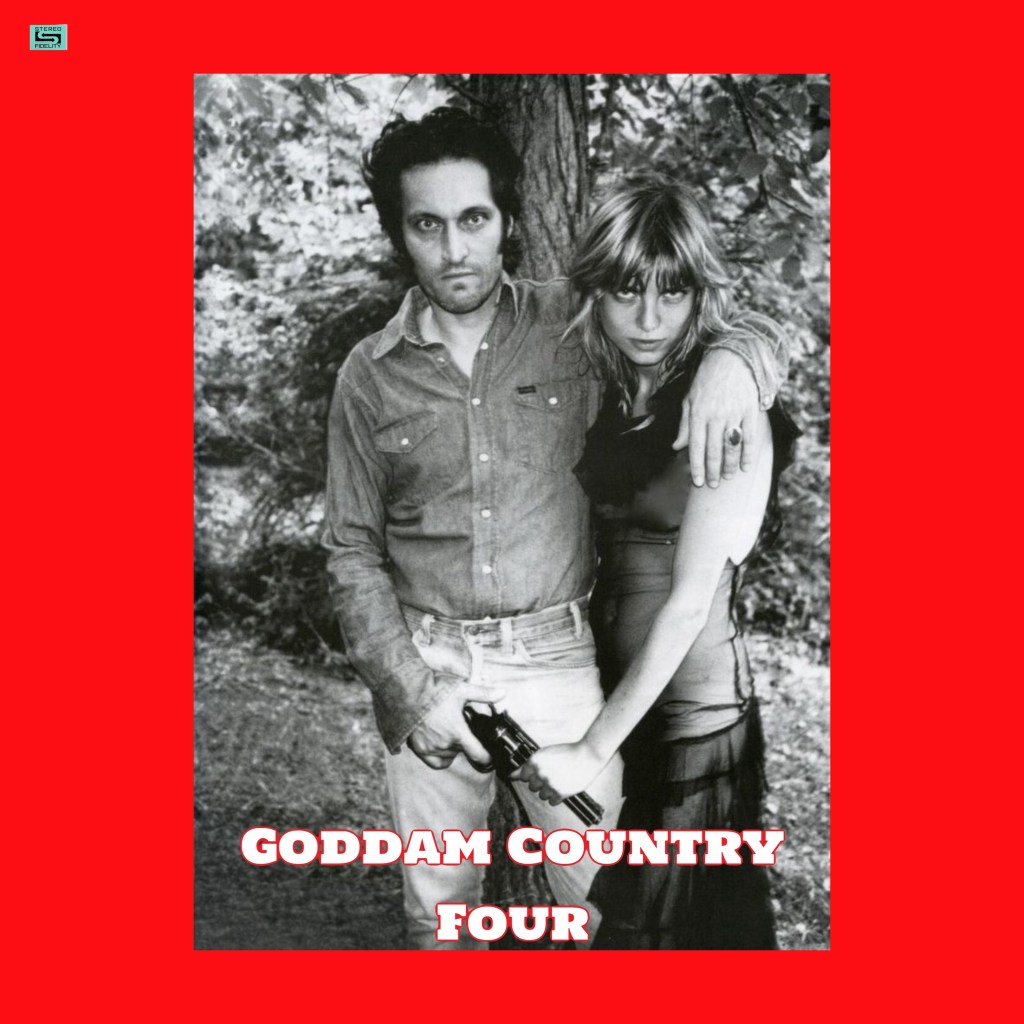

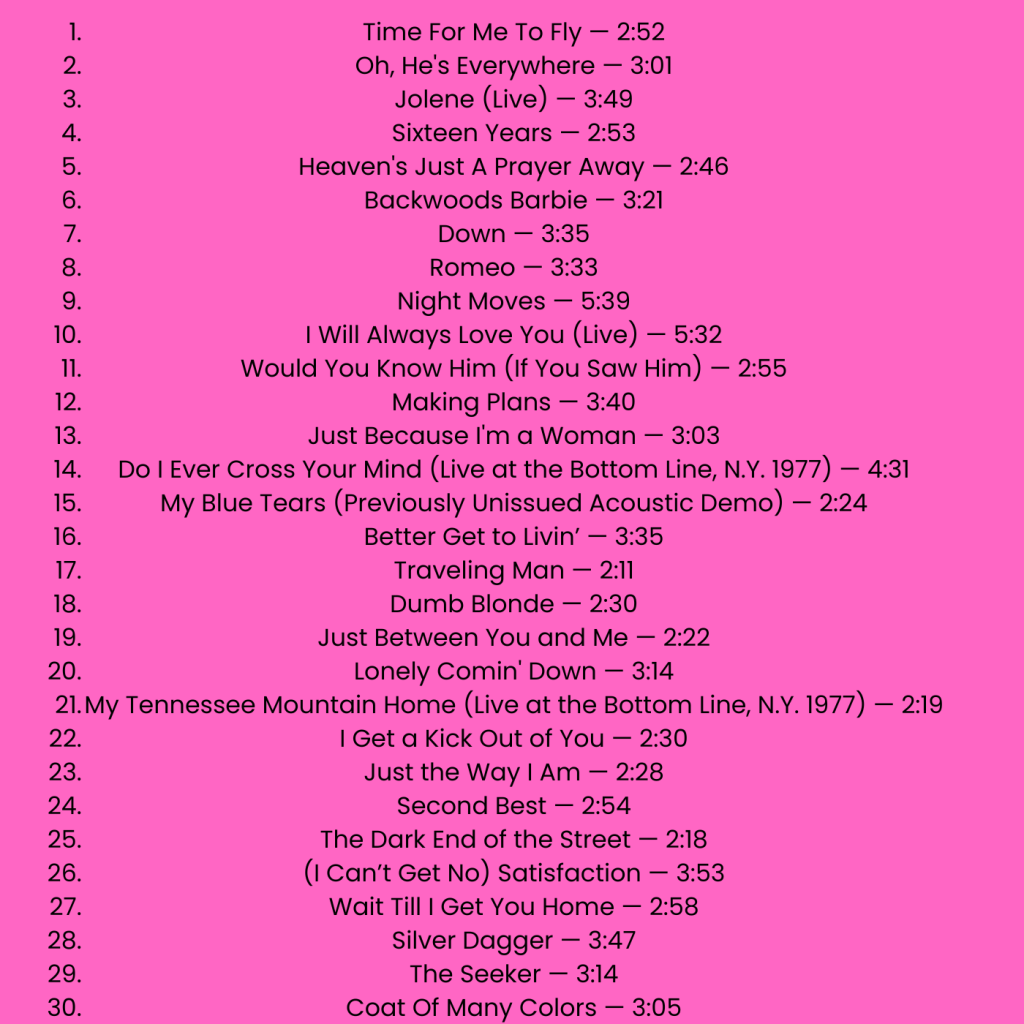
Dolly Parton STREAM
Country music is all about beer (crying in it; drinking too much of it), Mama cryin’ and Daddy prayin’, adultery, trains and murdering your girlfriend. And lately, pick-up trucks.
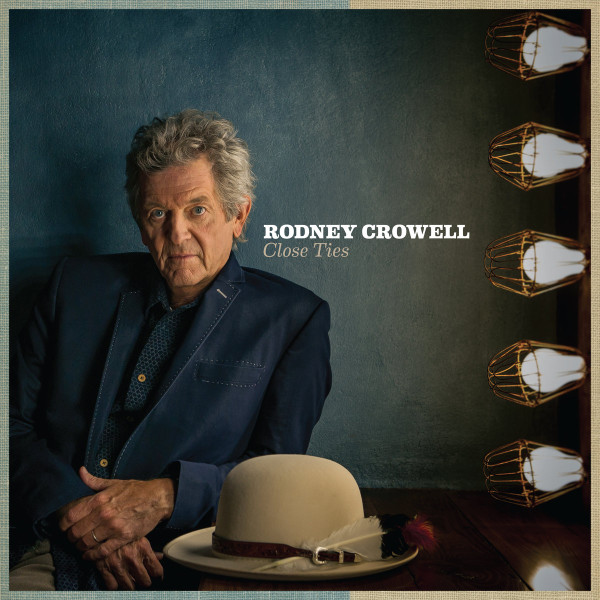
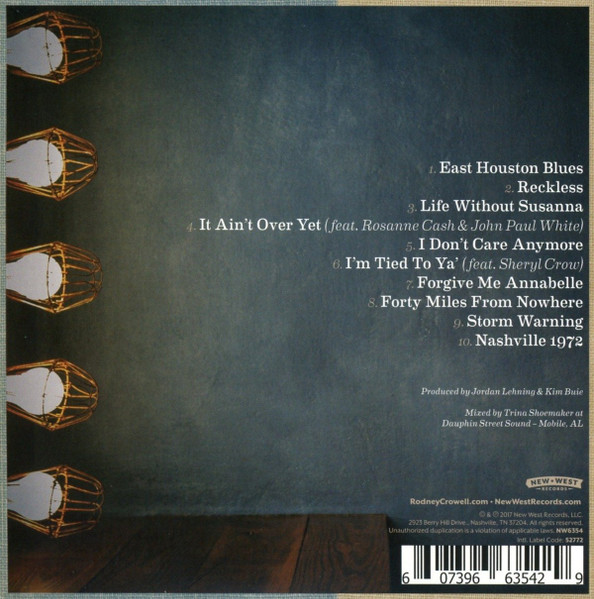
Rodney Crowell’s album Close Ties (2017) is a country record that is about none of that. Or if it is, it is taking those things and skinning them alive. It is the testament of a fully matured man. A man who has pulled off the road to a lookout to behold a not always scenic landscape.
Crowell grew up poor in East Houston, moved to Nashville in the early 70s where he wrote a slew of hits for others, released a few albums, produced several more for his then wife Rosanne Cash and by the end of the ‘80s was one of the faces of the so-called ‘neo-traditionalist’ country set. Guy Clark, Emmylou Harris, Townes van Zandt and Steve Earle were peers and friends.
In 2017, Crowell was sixty-seven years old. In those years he’d
been lied on, spied on, cried on, tried on, taken for a ride you bet
Fracked, cracked, smacked jack, what you see is what you get
I’ve been spit at, hit at, quit at, shit at, shouldn’t hurt a bit at, what I’m trying to get at
and had somehow transformed all that into a record that reveals adults inhabiting adult relationships more confusing, messy and meaningful than anything their younger selves thought possible.
He sings about taking too much and giving not much. Taking love for granted. And about the sort of love that disappears but never really dies.
With faith beyond religion, we search the great unknown
Free fall into darkness, someplace we’ve never gone
I’m tied to ya
I’m tied to ya
I know a guy, someone I’m just getting to know a bit better, who finds himself kneeling on the bloodied battlefield of Love. To one side stands the woman he married but pushed away. To the other is the woman he loved beyond imagination who has pushed him away. He tells me he can’t imagine being squeezed for another drop but can’t stop wishing for their hands to massage, pummel and prod him. Especially those corners of him that haven’t seen the light of day for years. Maybe ever.
The first time I saw her she threw me that smile
Pure angel of mercy east Texas style
A poet in gingham, an assassin in jeans
The most near perfect woman I’d ever seen
She was hardly routine
He’s trying to find signs of who he is in the things he’s done.
Life without [her]
Troubles me in ways hard to express
As she withdrew I grew distant and judgmental
A self-sure bastard and a stubborn bitch
Locked in a deadly game of chess
The upside of my status a cut above the rest
His marriage was a constant battle. His love affair an unexpected oasis.
The last time I saw her was close to the end
I cried like a baby for the shape I was in
No lipstick or powder to soften the tone
The most worthy opponent I’ve ever known
Was already gone
That second to last line describes both women, he says.
And then Crowell cruelly, or perhaps mercifully, reminds us
It ain’t over yet
You can mark my word
I don’t care what you think you heard
We’re still learning how to fly
It ain’t over yet
And what isn’t over yet? Our love? Our prideful ways? Our cluelessness? Our life? All of the above. And more.
These are songs that only a man who has marched his demons up the hill and back down again could write. And sing. Crowell, the singer is every equal to the songwriter. He has an uncanny talent of delivering cutting self-criticism as well as the bitter tears of the jilted without self-pity or indulgence or pleading. This comes, you’d think, from that place every pilgrim hopes to reach, where the storms of life neither seduce nor reduce you. That place where parental approval, manly accomplishment and perfect love are finally stripped naked.
But I don’t care anymore about the fortune and the fame
I was better off before I tried to make myself a name
Close Ties is really a break-up album. A man breaking-up with the masks he has worn, the roles he’s played, the sins he’s denied committing. A man whose world is so shaken and crumbly he sees ghosts everywhere.
I don’t care anymore who does what and why
I was better off before when I was just another guy
I see why my friend keeps listening to it. Because Crowell is expert at bringing to life the oldest of all break-ups—love.
When you walked out on me, it tore my heart in half
And I hid behind a laugh
As I became a slave to shame I cursed your name
God Damn you, rot in Hell
Can you forgive me Annabelle
He is full of regret and clarity. But there is precious little calm here and not much confidence he won’t keep offending. This record is a tale of how many ways a brokenheart feels horrible.
Right about now it gets quiet around here, what with nightfall in the wings
The floorboards creak and faucets leak, but it’s the emptiness that sings
The wind grows chill and then lies still
Forty miles from nowhere
At the bottom of the world
Yet, in the end, full of hope.
I won’t deny that I believe these things you say are true
I’ve seen the way you gauge each distant star
As long as I can be myself and still be there with you
I’ll go anywhere you ask me, near or far
I’m tied to ya
I’m tied to ya
Bob Dylan: King of Country Music
Taking the voice of both subject and object, in 1964, Bob Dylan put out one of his defining public statements in the song, All I Really Want to Do.
He assures his lover that he has no interest in classifying, categorising, advertising, finalising, defining or confining her. The same lyrics can be read as well, as a plea to his fans for a reciprocal respect.
And yet, here I go.
Alongside the many ‘Hello! My name is…’ stickers we’ve slapped on his lapel—voice of a generation, Nobel Laureate, fundamentalist whack job, protest singer—I would like to suggest the following: Bob Dylan, King of Country Music.

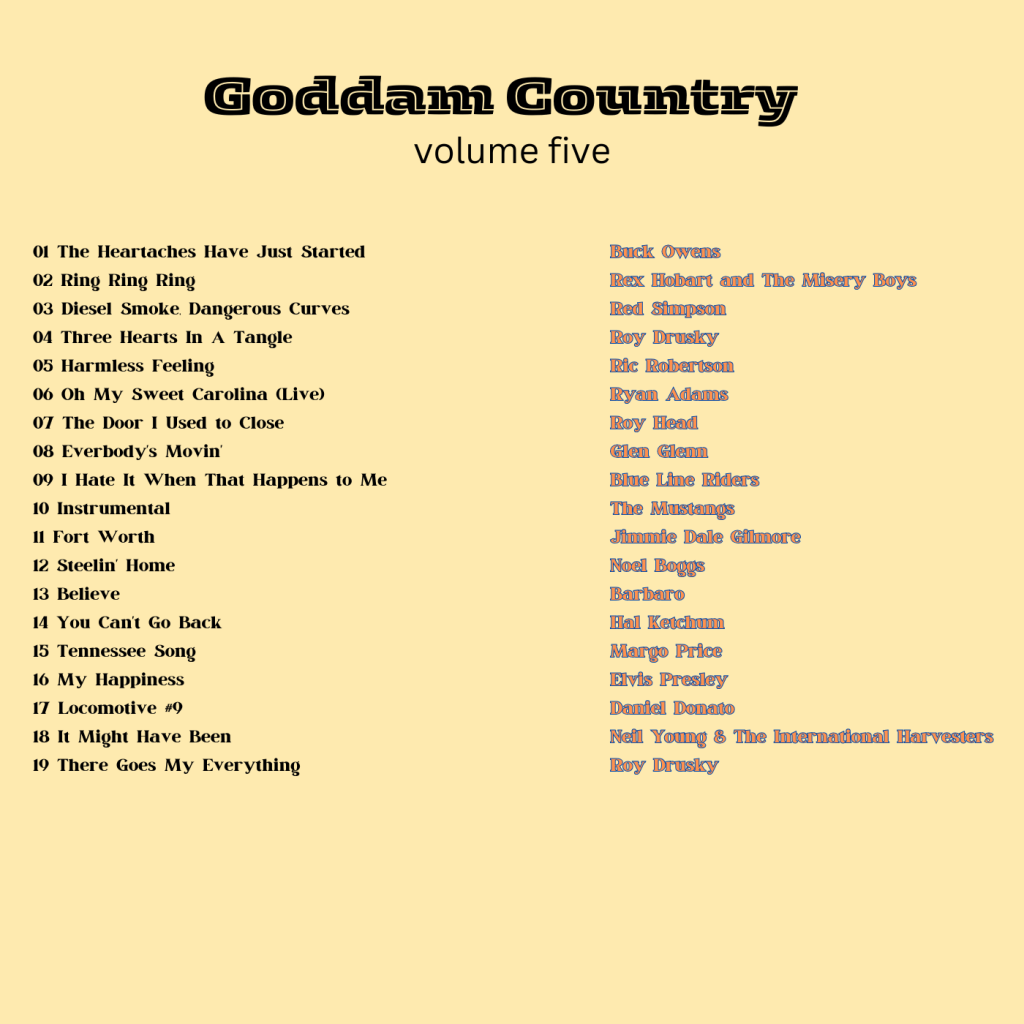
I’ve sensed this forever, but as I listened to a mixtape I posted recently, it has become clear as day.
Dylan was not just inspired by Hank Williams, Cash and Woody Guthrie, he has throughout his career, drawn deeper on the well water of country music than any other so-called genre. It wouldn’t be too hard to argue that very few albums in his vast catalogue are NOT country or country-rock albums. Bringing it All Home; Highway 61 Revisited; Street Legal jump to mind immediately. Of course there are some others too, but generally the sonic atmosphere of country music and his approach to his art is heavy and sticky with Mississippi mud.
I will go further.
Dylan is a better country singer than a rock ‘n’ roll singer. His voice tends to divide the public. A lot of people can’t stand it. Croaky, wheezy, shallow, awful, they saw. I am obviously not in that camp though it’s hard to deny that of late it is pretty tuneless and frail. I prefer the adjective, quirky. Country music loves quirky; Bob’s nasally and rough delivery fits perfectly alongside that of others like Kris Kristofferson, Jimmie Dale Gilmore or even Willie Nelson. So too his quirky pronunciation and phrasing. Very country.
It works another way too. Some of his quirkiest songs, like Dogs Run Free, a wired and weird folk-jazz oddity on New Morning (1970), is transformed into a perfect country ballad on Another Self Portrait (1969–1971): The Bootleg Series, Vol. 10. Nothing weird or wired. A curly song like this works much better as straight-ahead country. As I’ve mentioned before Dylan’s Bootleg Series are chocker block with alt.country versions of almost every song he’s ever sung. And often these studio scraps are better than his more famous rock and folk stuff. Honestly.
My I admit as evidence, One of Us Must Know (Sooner or Later) a sparkling, sneering gem from Blonde on Blonde (1966 and recorded in Nashville with country session players). An all time personal favorite. But he also released an instrumental version on The Bootleg Series, Vol. 12: 1965–1966, The Cutting Edge. The song works in both idioms and as a western canter, outshines, for its short duration of 4 minutes 57 seconds, any Chet Atkins instrumental.
At the height of his artistic powers he could release two outstanding albums in the same year, 1975. Blood on the Tracks, his mid-period masterpiece and The Basement Tapes, a double LP of random musical experiments and frolics that qualifies as the first perfectly formed album of ‘Americana’ music. Both albums are perennial near-the-top finalists in every ‘Best Albums of Dylan’ list ever published.
What followed in TBT’s wake (recorded 1967-68 but released in 1975) were John Wesley Harding (1967) a proto-Outlaw country album, and Nashville Skyline (1969) pure country pop in which Dylan channels Jim Reeves.
Even during his ‘lost 80’s’ period, some of his most memorable songs were his country ones: You Wanna Ramble & Brownsville Girl (Knocked Down Loaded/1986); Silvio & Shenandoah (Down in the Groove/1988); The Ballad of Judas Priest (Dylan & The Dead/1989). The last is really a Grateful Dead track. Dylan’s singing is pushed along by the band’s amazing rhythm section and Jerry Garcia’s delicious guitar, but it demonstrates that other masters recognised the country potential of his words and tunes.
Let me wrap this up by asking you to listen to this version of I Shall Be Released, recorded live with Joan Baez on the Rolling Thunder tour. Dylan’s voice is absolutely beautiful here. And Joan’s subtle but essential supporting vocals makes a fucking good song, a fucking masterpiece. It is such a spiritual, earthy rendition, with no artifice whatsoever.
Bob never is so relaxed as when he sings his country stuff. His unique timbre and phrasing don’t grate or stand out as weird. Sure, he was only 34 when he recorded this, but his voice is not just physically strong, his performance is one of complete commitment. Whereas his mid 60s stuff sometimes comes off as angry and performative, in this and most of his other country-flavored repertoire, he is nothing but authentic and true.