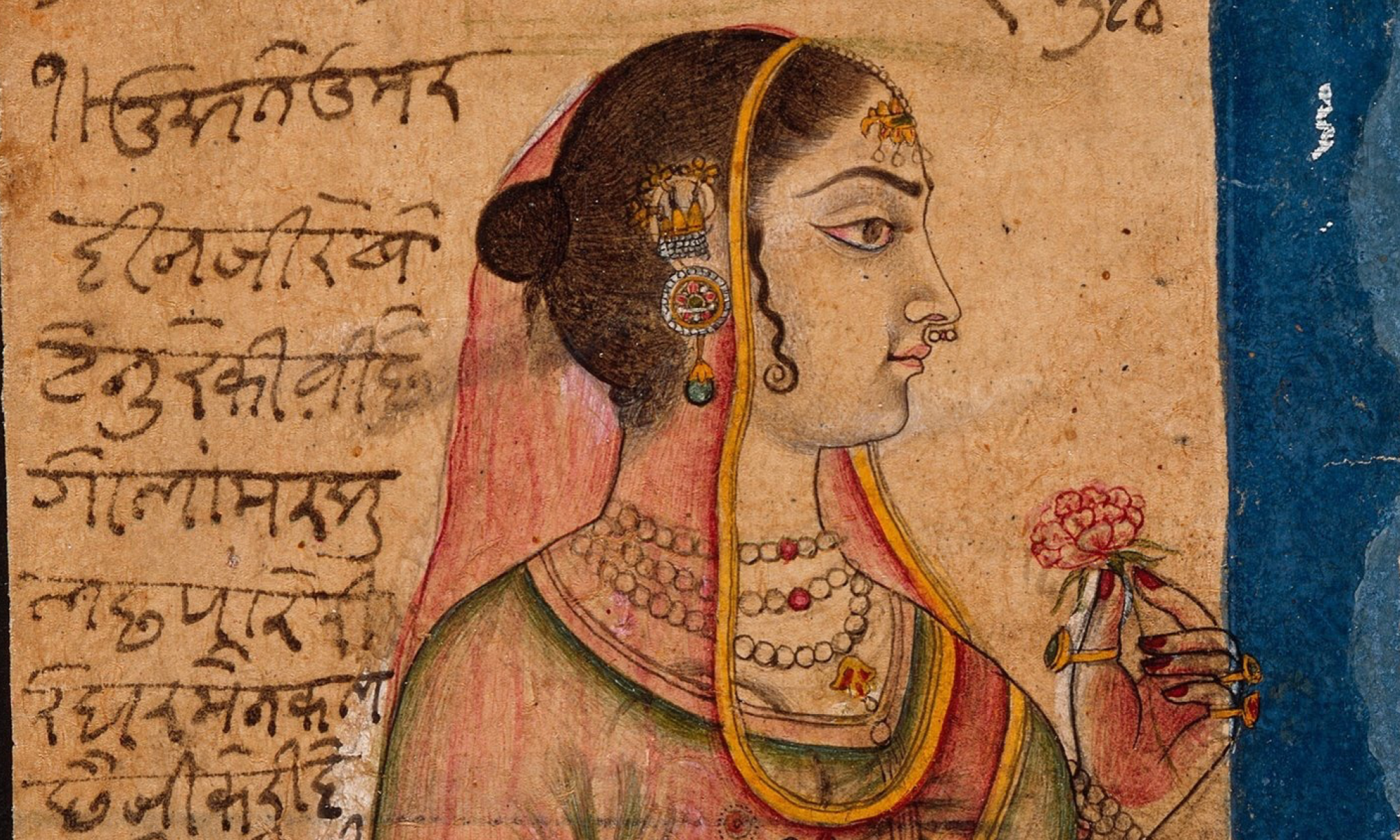
There is an ultra-thin niche in the Ameri-Euro music business that is best described as ‘world fusion’. Colourful, mostly upbeat music, played by globalised musical combos or artists that draw on all manner of culture and creeds for their musical inspiration and membership. Indian wedding bands alongside southern funk outfits. Spanish flamenco coloured by qawwali. Politically-charged West African hard rock. Reggae played by Mexicans. Indian ragas recreated in a bluegrass style.
I actually don’t know, but as a rusted-on fan of this sort of music, I would suspect this sub-sub-no-genre is not huge. Certainly not in Australia and the States, the two Western countries I think I know the best. Even in the home countries of many of the performers of this music, their following is tiny compared to hip-hop, J or K pop or the dozens of local musical styles. It is a hybrid music which can seem to the casual listener to be contrived. Forced rather than natural. A sort of international muzak for weirdos. Exactly the sort of thing missionaries, mercenaries and misfits would love. Among my own circle of friends, few, I reckon, would echo my pro-‘world fusion’ sentiments.
I’ve not spent time reflecting on who the ‘ideal market’ segment for this music might be, but fans seem to be generally well-read musically and well-travelled in life. Immigrants, refugees, aid workers, guestworkers, academics, third culture kids, diplomats and children of missionaries, such as myself. World fusion lovers usually have some significant personal or emotional connection with WF’s endless, restless creativity.
I find this musical omnium gatherum–corny as a lot of it sounds to the vast majority of music listeners–as essential to my comfort zone as shag carpet was to our homes in 1972. I may not listen to it every day but I could never not enjoy listening to it.
I was born and lived most of my pre-University years in India. I’ve had the unbelievable privilege of working as an ‘aid-worker’ in every continent bar Antarctica and South America. Though I didn’t seriously listen to and pay attention to the ‘world music’ that I had been exposed to, be it an all-night Ravi Shankar concert in Delhi or the soukous bubbling out of every taxi in Nairobi until I began blogging in 2010, I have always enjoyed keeping my ears open to the music of wherever I happened to be at any given moment.
I’m not interested in defending or attacking the marketing category known as ‘world music’, one of the more pointless ways to spend time. I’m not in any position to write a ‘history’ of world music if even such a history could be written. What I am interested in exploring is why I so love ‘world fusion’.
World music is arguably the loosest, broadest and most inclusive genre out there. I mean, it’s music. From the world. The usual line in the sand that it must be from non-English speaking countries/artists, has always been misleading. Taj Mahal, to cite just one quick example, is as much a world music artist (starting with his very nom du chanteur) as Nusrat Fateh Ali Khan. If you doubt me, check out Mkutano or Music Fuh Ya’ (Musica Para Tu) only two of his several ‘world fusion’ discs.
The much-loved Reddit debates about breaking music into sub and sub-sub categories is the second most pointless debate. Spotify the evident source of all important musical data has come up with a list of over 1300 genres from #1 A Cappella to #1383 Zydeco. It’s hilarious but kind of useful. There are those, like my nephew, who eschew noting any genres in their music collections. I empathise with that policy but find some sort of labelling is essential for me to keep track of a sprawling digital music hoard. I generally cram everything into one of two dozen genres and forget about it. But I’m wandering here.
On Spotify’s master genre list, just barely holding on by its fingernails at #1370, is a genre they call ‘world fusion’. And that’s what I’m on about here.
I have no idea how ‘world fusion’ is actually defined by the Scandihooligans as I don’t have a sub to Spotify, but I would guess it would include everything from spa music to Buddha Bar and not much else.
Here’s my definition.
World fusion music is a style, performed primarily by groups rather than individuals, that consciously mixes musical traditions, instruments, languages, singing styles from one or more cultural/musical traditions. The purpose is exploratory, adventure-seeking and overlaid with what these days would count as a ‘woke’ ethos; i.e. there is often a deliberate message of the unity of all humans and equal value to all of our cultures; a conviction that playing music with our politically identified enemies is actually a really good way to create some safe spaces in this world. And as such, WF is a threat to the ever more popular “my country is the best” version of nationalism that is spreading across our weary planet. And to that extent, please call me ‘woke’.
Corny? Self deluded? Perhaps, but it’s the music I’m interested in not the political commentary.
In this category are bands like The Kronos Quartet, Tabla Beat Science, Hindugrass, Abrasaz, Bansal Trio, Ifriqiyya Électrique, Bustan Abraham and hundreds more. Bands that freely experiment with blending bluegrass with ragas, rock ‘n’ roll with North African gnawa, Western classical with jazzy Hindustani violin, oud and sitar, jazz and Carnatic horn blowing.
I love this music. It not only reminds me of places, experiences and people I’ve met, worked and lived with over the past 35 years but it keeps me connected to the world. In diminished circumstances, it allows me to travel the world. It is hopeful music in that if global cooperation, respect and decency are not politically palatable at least WF musicians are keeping these things alive notionally. Which is critical in our destructive times. World fusion simultaneously connects my personal story with a once and future state of mind. It is an almost invisible way to Resist.
On a more mundane plain ‘WF’ inspires me to dig into a particular instrument (kamancheh; duduk) which often leads to learning about musical movements in which some of the artists or bands participated. It helps me appreciate what a particular music scene was like in a particular country at a particular moment (pre-Revolutionary Iran; 1980s Somalia). All of which feeds back into my understanding and appreciation of the many places I’ve lived and visited. The music adds tonal depth, colour and additional realities to places like Angola and Afghanistan which during my sojourns there were understood almost entirely in political or humanitarian terms.
While some of the musical blends WF comes up with (bluegrass with Hindustani classical?) can seem contrived or dead-upon arrival, many times it works far better than you can imagine. As I listen more and more to this music I marvel at how natural and organic it sounds. It turns out the tabla is one of the most versatile and expressive drums ever invented; it sounds good almost anywhere. The oud of Araby has a strong resemblance to the lute of Europe and both pair well with sitar. The Afghan rubab is fucking exhilarating when used as a lead guitar. Bansuri, the Indian bamboo flute, is another instrument that seems universally suited to almost any other strain of music.
World fusion can slip into dinner background music. It’s generally very melodic and interesting rhythmically. Maybe too much like smooth jazz for some ears. I for one don’t mind pleasant music playing in the background when I’m cooking or paying the bills or chatting over chocolate pudding. Much as I love soft rock, chill-out, lo-fi or Top 40. In the right context anything can do the trick.
But when I pay attention, the better bands or groups amaze me with their inventiveness. Such as the group Abrasaz, a Germany-based collective with members from Austria, Turkey, Singapore and Japan. A true ‘world fusion’ outfit who came together to release a single album, Biraminket, in 2008.


There is a strong South Asian atmosphere here with Ravi Srinivasan’s tabla featuring prominently throughout, especially on the opening track in which a racing pattern of drums and steady, plucked bass line (Akira Ando) set the stage for an intense musical hymn to Maya Wati, the mother of illusion and magic. Paul Schwingenschlögl’s trumpet/flügelhorn keeps the feel edgy and like Srinivasan’s drumming is the other magical part of this record.
On Samraat, Srinivasan, in addition to keeping the beat going, joins Mustafa el Dino in vocalising lines of one of South Asia’s great qawwalis, Shams-ud-duhaa Badr-ud-dujaa Teri Bari Tauqir Hai, which switches over to jazz scatting while Schwingenschlögl solos on flügelhorn.
Lhasa opens with a lovely piano alaap played by Schwingenschlögl which then he turns into an equally beautiful semi-ballad. Pentagram introduces the Kashmiri dulcimer (santoor) played by Srinivasan, whose slivery-steely tones immediately move us to a dream-like plain. The flügelhorn alternates between drone and improv.
Though Indian/Pakistani themes and titles abound, none of the performers is actually from those countries. Yet they have been able to build on that platform to explore the limits of their instruments and voices in interesting directions. Purists of all types would find much to be offended here and sometimes it does seem that things are being thrown against the wall to see if the spaghetti sticks. For me that is what makes this album so endlessly entertaining. Because they owe no professional loyalty to qawwali or khayal they are able to approach each as a discrete musical element that can be tested to see if it fits. Thus, scatting against the Indian musical scale or picking out a line or two of a traditional much more famous piece, means they can connect to both European and Indian ears. The sound is familiar enough to both but neither pure jazz nor Indian. Or anything else. Oiwake, based on a much-loved Japanese folk song, allows Ando to foreground his bass before singing inspired by khayal soars above the driving rhythm, ultimately creating a twirling dervish chant. The transition is as seamless and satisfying as George Harrison’s ‘hallelujah’ to ‘Hare Krisna’ chorus on My Sweet Lord.
If there is one thing that I wish I could change it would be highlighting more of the saz, the only stringed instrument featured here. The saz, like its cousin the bouzouki, is suited to both rhythm and solo and always adds excitement to the proceedings. Unfortunately, it is heard far too little here but has a nice turn on Kalbimiz Bir and Abraxis II.








 Missionaries, Mercenaries and Misfits