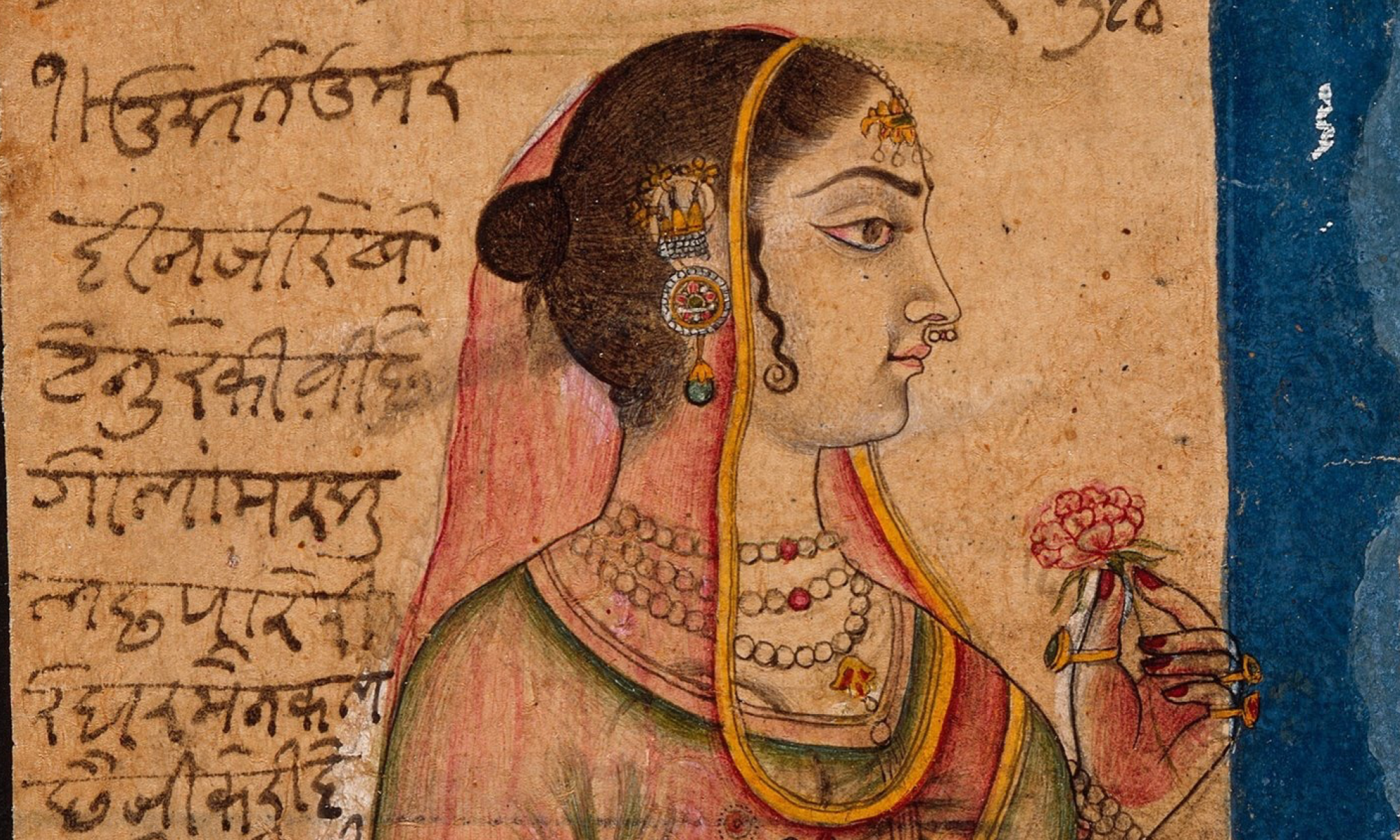
Across North India by Train and Some People I Met

Calcutta bus by Nate Rabe

18 January 1990

What a rush at the airport. A huge group of Raiwindi[1]s was heading to Lahore from Karachi. It was a jumbo.

Wally met me in the drizzle at the airport and took me straight to the border. Heโ€™s pretty bummed out with the developments in the States. Berkeley has fucked him over the BULPIP directorship; hiring someone else and informing him that he was not even in the running for this yearโ€™s directorship.ย  Wally takes these things very hard but I know I would too.

Got across to Amritsar in an Ambassador[2] which stopped every half kilometer or so due to โ€˜blockageโ€™ in the fuel pump. An ansty Aussie shared the front seat with me. He was wiredโ€”shouting at the drunks, pissed off with having to pay Rs. 20 for the taxi and going on and on about missing concerts and plays back in London.  Not the kind of travelling companion I want. We parted at the Railway Station.

I was greeted by 2 friends–rickshaw walasโ€”from my last trip to Amritsar. Made a new oneโ€”a hustler who first told me there was no way Iโ€™d get a berth on the Amritsar-Howrah Mail tonight.  He left and then came back after a brief interval. He suggested if I paid a little โ€˜chai paniโ€™[3] Iโ€™d definitely get one.  So, I paid Rs. 20 for the ticket clerk and Rs. 40 to my new friend for the luxury of a sleeper berth. A good deal. Rs. 220 for a 1879km journey.

I asked my rickshaw friends if he was a โ€˜gentโ€™. Not the English term but a shortening of the word โ€˜agentโ€™, used in these parts to refer to touts and fixers. โ€œYesโ€, they replied, โ€œbut an honest one. Heโ€™ll do what he says he will.โ€ And he did.

I had asked if there were any bombings on the rails[4] these days.

They looked at me disappointingly. โ€œThis is written at the time of our birth. There is no changing it. Bombs or no bombs, when your number is up, itโ€™s up.โ€

One of the rickshaw walas then broke into a parable.

โ€œThere once was a man. A mad camel got to chasing him and to escape the man jumped into a well. The camel sat outside the well and said to himself, โ€˜Heโ€™s got to come out one day and when he does Iโ€™ll bite himโ€™. He settled down to wait.   After a couple of days a poisonous snake slithered by and bit the camel. In an instant the camel was dead.

โ€œThe man in the well finally crawled up to have a look. He saw the camel lying bloated in the sun, rotting away. He triumphantly strode forward and gave the camel a mighty kick. His leg sunk deep into the rotting belly of the camel. The manโ€™s leg got infected and he died.

โ€œSo, you see,โ€ said the rickshaw wala, โ€œeven when we take precautions, Fate tricks us.โ€

With such encouragement I set off for Calcutta.

19 January 1990

A long journey across northern India. Lucknow, Pratapgarh, Benaras, Patna. People flow in and out of the aisles as if choreographed. Itโ€™s stuffy on the top tier but I sleep a lot. Iโ€™m surprised at the spareness of the big stations. Itโ€™s hard to find even a packet of Marie biscuits. The thought crosses my mind that maybe the great lurch into the 21st century that India Today so proudly heralds has been at the expense of the further impoverishment of most Indians.

I share a smoke with a masala magnate from Calcutta. Heโ€™s actually Punjabi but his family moved to Calcutta from Lahore over a century ago. He never goes back to Punjab.

โ€œI like Calcutta because itโ€™s the cheapest and safest place in India. You have no riots, no ghadbad.[5] The loadshedding is tolerable-nothing like in Benaras. The prices of everything is cheapโ€”living, food, transport.โ€

Heโ€™s a real Calcutta booster. At one point to tells me, โ€œYes, the police are corrupt but at least a Bengali will do what heโ€™s bribed to do. You give him some money and your work is done.  Itโ€™s the honesty I like.โ€

He speaks in a soft voice. He begins to tell me about how he used to drink like a โ€˜mad manโ€™.ย  Always drunk. Always looking for a drink.ย  He was, as he puts it, โ€œat the last stageโ€.ย  He then sought the help of a guru, whose name is drowned out by the clacking of the rails as we whoosh by a dark Bihari village. He pulls out an amulet with a hand tinted image of his guru. โ€œWhatever he says, has to happen,โ€ he quietly says. He places the image back under his shirt and against his chest. He begins relating more miraculous acts of his guru to a couple sitting next to him.

I climb up again to the 3rd tier and fall asleep.

20 January 1990

Calcutta is the city of superlatives.  There is no end to the seeming premier-ness of the place. Most dirty city, most crowded. Most posters per pillar, most taxis per person. Most specialised bazaars. I saw one this morning which catered entirely to shoppers interested in balloons and rubber bands. Most cruel means of public transportation (hand-pulled rickshaws).  Most diverse inhabitants, most rundown colonial buildings. Most cultured city: International Film Festivals, Classical music programs, Beatlemania stage show. Most touts. Itโ€™s hard to find anything new to say or any new superlative to add to Calcuttaโ€™s already superlative list of stellar โ€˜mosts and bestsโ€™.

I have found a room in the Paragon Hotel, one of these new tourist hostels which are the same no matter where you go nowadays. The Ringo Guest House just off Connaught Place is no different than the Paragon Hotel just off Chowringhee.

Touristsโ€”Germans, Dutch, Japanese, Australians and a few frightened Americansโ€”writing in small script in their journals, talking to each other about their similar discoveries and eating out at the same restaurants.

I walk up Sudder Street. I remember coming here, to the Red Shield Guest House[6],with my family every other year enroute to a deserted beach in southern Orissa/Odishaโ€”Gopalpur-on-Sea.

Iโ€™m afraid to go Gopalpur these days. Afraid to find sparsely dressed Germans scowling at me as they strut around like they discovered the place.

In those days (late 60s) we seemed to be the only white faces in Calcutta.  Sudder Street was quiet; New Market cool and refreshing; the Globe Theatre ran movies like The Bible. Now it shows Young Doctors in Love and New Market is crawling with sad Muslim touts begging you to buy or sell something. Hotels proliferate. Tourists swarm.

These tourists are backpackers. Young folks from the 1st world bumming around the 3rd.  In Benaras they learn sitar, in Dharmsala they take a course in Buddhist meditation. In Jaisalmer they ride camels into the desert and here in Calcutta they volunteer for a week or so at Mother Teresaโ€™s. They then catch a train to Puri or Gaya.

I admire (in a way) their altruism for washing and feeding the dying. I wish I could do the same. But something rubs me the wrong way. There is a feeling of inevitability to their righteousness. Mother Teresa is another stop along the wayโ€”like the journey of the cross in Jerusalemโ€”full of good material to write home about. Mother Teresa is now another tourist franchise, another neat thing to do.

Calcutta is a pleasure to visit again despite the restless 1st Worlders who hang on like frightened knights of the tourist round table. The locals donโ€™t seem to give a damn about your origins here.


Calcutta by Nate Rabe

22 January 1990

Spent a thrilling few hours wandering among colonial tombstones in the Park Street Cemetery (opened 1760). The image that comes to mind is a ghost ship shipwrecked on an isolated reef, forgotten and dark. Like all cemeteries it has an immediate calming effect. Jumbled and disorderly tombstones and mausoleums crumble in silent gloom among trees and hundreds of potted plants. Some of the paths are under repair but other outlying areas are as untouched as they were a hundred years ago.

Iโ€™m instantly aware this place is an entire city. Stately and expansive.ย  Towering citadels with Corinthian columns, baths and porticos keep watch over a host of long-dead nabobs and Company servants far from home.ย  Each tomb is grander than the next. Spires rise 6, 8, 10 feet above the soil in honor of a young civil surgeon downed by โ€˜feverโ€™ or an indigo planter consumed by the pox.ย  The most ordinary of Indiaโ€™s first British colonizers have erected over their bones and spirits structures few Presidents can boast.

The Raj was young when Park Street opened. The Battle of Plassey was only three years won. Young men with no social standing back home, here had a chance to be rajahs off the plentitude of Bengal. These young men had never dreamed of the fortunes to be made in Bengal; Bengal had no way to stop them. Park Street memorialises the sense of destiny and ostentation of the early Raj. The world was waiting to be plucked from the mohur trees. Fortunes were huge and readily won for those who showed their ruthless ambition. For them this was a larger-than-life world. I suppose a bereaved father felt it perfectly natural to raise a small Roman temple in honour of his nine-month old infant son, dead by flux.  The cemetery, like the period, like the characters buried here is an overstatement. The epitaphs are sentimental and overegged. There was never a disliked, cruel or greedy person buried here.

Of course, not everyone buried here is insignificant. William Jones, the great Orientalist icon who was the first to propose the idea of a shared kinship between Sanskrit, Greek and Latin, lies under a 15-foot obelisk. Charles Dickensโ€™ second son has been lovingly moved here by students from Jadavpur University. Richmond Thackeray, father of William Makepeace Thackeray, a senior servant of the Company, lies here, as does the wife of William Hickey, Indiaโ€™s first prominent English journalist.

Teachers of Hindoostanee at Fort William College, traders and fair maidens, Park Street Cemetery is, more than any other place in India, a memorial to the Raj.ย  Here one can taste the self-aggrandisement, the self-importance and most of all, the self-pity which characterises British India. You only need to close your eyes to hear them speak again. Little do they realise that their ostentatious moments of death are long forgotten and ignored.

23 January 1990
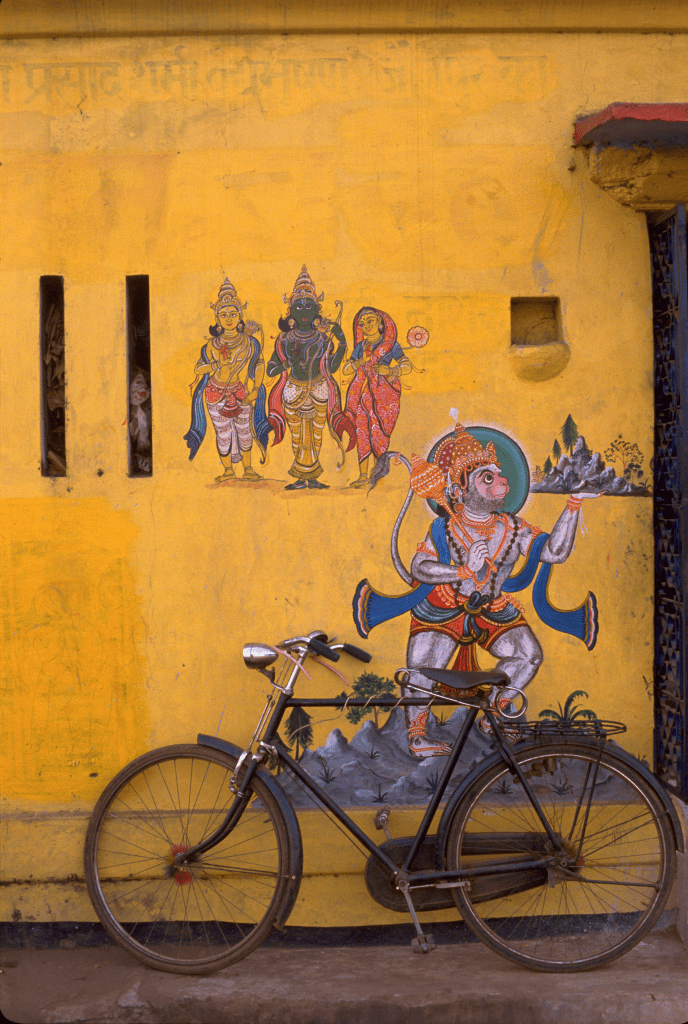
Residential mural in Bhubaneshwar by Nate Rabe

Today I arrived in a cemetery of a different sort. The great ancient temple city of Bhubaneshwar. Anย  initial quickie around the city has left me awed with the grandeur of Indiaโ€”truly the Wonder That Was. Iโ€™m none too impressed however by the greedy mahantas and pundits who follow me with visitor books filled with the names of foreigners who have come before me and donated Rs. 100 or 150. They are like blood suckers who will not detach themselves from you until you fork over some cash.ย  Muttered curses follow me when I hand over a fist of Rs. 2 notes or a tenner. โ€œYou should give at least Rs. 50,โ€ one calls out as I walk away.

24 January 1990

Had a sleepless night. The bed in the Janpath Hotel was infested with bedbugs and the room abuzz with mosquitos. I was so tired and on the verge of the final descent into sleep only to be woken by a damn katmal gnawing at some remote part of my body. The room was distinctly shitty. A weak but persistent stench wafted across the room. No windows, only some cement grating at the top of the wall which allowed easy access for the mosquitos.

I flung my few large pieces of cloth on the floor and turned on the fan. I caught a cold and my neck ached but I must have fallen asleep between 2 and 3.

I blearily wandered off toward the Lingaraja complex which was still as impressive as it was yesterday evening.ย  The priest left me alone to take some photos. I met two young pandas[7] who were only interested in chatting, not in extracting money from me.ย  One was Kuna and the other Bichchi. Kuna kept classifying women into a personal scale of โ€˜sexualโ€™.ย  โ€œWestern lady very sexualโ€, or โ€œJapanese lady most sexualโ€.ย  He was full of obscure English aphorisms.ย  โ€œEvery book has a cover every woman a loverโ€, was his favorite but others addressed less sexual subjects as well.

Bichchi was interested in telling me about politics. One of the Patnaik[8]s was in power. Another Patnaik was trying to squeeze him out now that he (the second Patnaik) had the leverage of the National Front government in Delhi.  Bichchi was confident that his Patnaik (the second one) would be victorious in the end. The main complaint against the ruling Patnaik was thatโ€”as best as I could understand from Bichchiโ€™s broken Hindiโ€”he liked to consort with little boys.  If not that he drank or smoked something that wasnโ€™t good.

Kuna immediately spoke up. โ€œIs there only one tiger in the jungle? They all do these things. Have you ever seen only one tiger in the jungle?โ€

They tried to encourage me to drink some bhang[9]. Being already light-headed from a sleepless night I declined.ย  They extolled the virtues of bhang but cursed heroin, charas [10]and alcohol.ย  All these vices Bichchi attributed to the Pakistanis.ย  He saw a nefarious attempt to destroy his country. Apparently, there are in Bhubaneshwar a growing number of drug addicts.

Kuna again offered his own interpretation. โ€œIt is good. We have 90 crore[11] people here in India. If a few kill themselves with heroin good. It will keep our population down.โ€

I took my leave after an hour under the shade of the Lingaraja, one of 125,000 temples said to be scattered around the city.  This statistic came from Bichchi.  I was tired and wanted to nap but didnโ€™t want to do it in the Janpath Hotel.  Over a beer at the Kenilworth Hotel, I resolved to head immediately to Puri in search of cleaner mattresses and an airy room.

25 January 1990

ย Puri strikes me as an overgrown seaside fishing village. Except for the fact that it is one of Hinduismโ€™s four major dhams[12], there didnโ€™t seem much to commend the place.ย  The beach is here too, of course, but it has none of the isolated charm of Gopalpur or the lushness of Kovalum. The alleys are dark and damp and only Hindus are permitted to enter the ancient Jagganath[13] temple. For a photographer it is also frustrating. The temple is set at an awkward angle which makes it almost impossible to capture well. The square in front of the temple is in glaring light most the day so people huddle in the shadows under the tarped awnings.ย  After walking around searching for some good light, I put my cameras away. From now on Iโ€™ll stick to the alleys where little icons and shrines add color to the landscape.

I talk with Mohammad Yusuf who is selling reptile scales for the cure of piles and general unwanted blood flow. He makes rings of these and advises his customers to wear them on their left hand so as when they perform their toilet, the ringsโ€™ magical effects will โ€œmake you 100% clean. You can spend Rs. 10,000 on a doctor but these rings will cure you completely.โ€

He is an Oriya[14] but like most Muslims in the north speaks quite good Urdu.  When I told him I was living in Pakistan he quietly asked, โ€œWhatโ€™s the news? Is it good?โ€  I find the Muslims Iโ€™ve run into โ€“a lotโ€”to be sad people, though Iโ€™m probably projecting.  In Calcutta all the booksellers and tape hawkers on Free School Street are Muslims from Howrah. One told me with a bit of over enthusiasm that โ€œHindus are the best. I have more Hindu friends than Muslims. We have no problems here!โ€

Another, Salim, is a waiter at the Janpath Hotel in Bhubaneshwar.ย  He was soft spoken and left me with a feeling tender. He claimed to make Rs 200 a month in the hotel of which $150 he remits to his family.ย  He used to work in Calcutta in a factory that makes cooking utensils but for some reason came, as he put it, โ€œinto the hotel line.โ€ He doesnโ€™t like the work but is stuck.ย  He saw two postcards I had bought from a sidewalk dealer on Sudder Street. One was of the Kaaba[15] the other was of Imam Hussain on his horse. Salim kissed them and pressed them against his forehead when I offered them to him.

The Muslims seem to be accepted and other than a slight hesitation before telling me their names, they seem content. They confess to cheering for Pakistanโ€™s cricket team but have been quite uninterested in asking me about life in Pakistan. Only one, a cloth merchant in Bhubaneshwar, asked me if I preferred India or Pakistan.

Tomorrow, I take a day trip to Konarak. Itโ€™s Republic Day and will be overrun with tourists undoubtedly.

26 January 1990

I was accompanied to Konarak by a Gujarati, Dr. Parwar. A pleasant and gentle man who had pulled himself up to a position of considerable rank and authority in a government hospital.  His father was a manual labourer in Pune, โ€œso I have seen life from close up.โ€ Through hard work he got his MBBS and MD from one of the best medical schools in India and has since added a triad of MAโ€™s in subjects like Public Health, Venereal Diseases and Administration.   He has been attending a conference in Calcutta on Public Health Administration and has come to Puri to kill some time.

He is deeply committed to serving the people of India as a doctor back in Ahmedabad.  He has no desire for an overseas job or money. He proclaims more than once how proud he is of being Indian.  This is not something I hear in Pakistan very often.

Konarak is impressive. The stone sculpture is beautiful and majestic. The monument is set out as a sun chariot with 24 giant wheels pulled by 7 rearing horses. Most of the original temple has been destroyed but the remaining bits inspire awe for their size and beauty.  The original temple rose more than twice as high at the remaining remnant which rises 80 feet into the air.

Dr. Parwar and I climb to the top of the temple and gaze into a deep opening. A pedestal is at one edge where we overhear a guide explain, โ€œThis is the place where the image of the Surya (the Sun God) stoodโ€.  Inside his stone head and feet, apparently, was magnet which when a certain interaction of physics and metaphysics transpired โ€œcaused the Godโ€™s head and feet to move.โ€

The Indian government is preserving the temple. Dozens of lungi[16] clad workers scratch the eroded stone with water-soaked bamboo brushes. Here and there new plinths and slabs of granite have been fitted into the chariot spokes and walls.  Up near the top they have placed two huge Buddha-like images, upon which, during the Eastern Ganga dynasty[17] which built the temple, the sun was said to have shone continuously. One at dawn, one at noon and one at dusk. The third image is yet to be restored.

Dr Parwar and I silently take in this magnificent piece of human-divine cooperation before boarding a bus back to Puri.


[1] Raiwind, a town near Lahore, famous as the headquarters of a major Islamic missionary organisation, Tablighi Jamaโ€™at

[2] Hindustan Ambassador. Iconic Indian manufactured sedan which for decades was about the only car available in most parts of India.

[3] Literally, ‘tea water’. Colloquially used to indicate a small gift/bribe.ย 

[4] A Sikh movement for Khalistan as a separate country was raging in the 80s and early 90s. Often trains passing through Punjab were bombed as part of the terroristic tactics of militant Sikh groups. By 1990 things had calmed down quite a bit but my question was not entirely unjustified.

[5] Hindi/Urdu word meaning โ€˜chaosโ€™; โ€˜confusionโ€™; โ€˜disorganisationโ€™. Colloquially, โ€˜hassleโ€™.

[6] Part of the Salvation Armyโ€™s global charity empire. Cheaper rates for Christian missionaries right in the heart of Calcutta!

[7] Hindi word for priest or guide to a temple. Not the Chinese animal.

[8] A prominent political dynasty in the state of Orissa/Odisha.

[9] Traditional Indian cannabis drink.

[10] Hashish

[11] Hindi/Urdu for the numerical value of 10,000,000

[12] The four dham are the major Hindu pilgrimage destinations located at each cardinal point of the compass. Dwaraka (West), Puri (East), Badrinath (North) and Rameshwaram (South)

[13] From which we get the English word, juggernaut.

[14] A native of Orissa/Odisha

[15] The stone building at the center of Islam’s most important mosque and holiest site, the Masjid al-Haram in Mecca, Saudi Arabia

[16] sarong

[17] 11-15th century CE
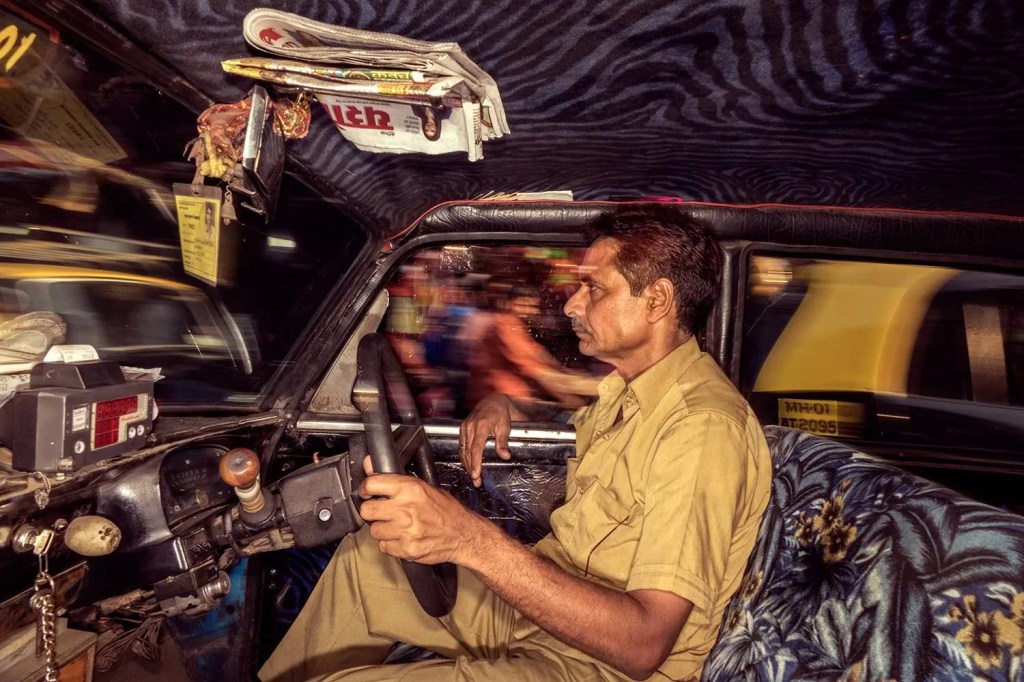
Recalled Conversations: Taxi driver, Delhi.

Photo by Dougie Wallace

For the first several minutes he said nothing, just guiding his yellow and black Suzuki taxi through the clamorous traffic of midday Delhi.   My daughter wanted me to ask him what his name was.  โ€œJai Bhagwan,โ€ he said. โ€œAn old-fashioned name.โ€ His smile is half apologetic.

โ€œYouโ€™ll be going to Jaipur? Thatโ€™s a beautiful city. They call it the Pink City. Its a five hour drive from Delhi and Pushkar is another 2 or 2 and half hours further.  Youโ€™ll stay in Pushkar for a few days? No? I see, just for a day. Ajmer is just half hour more away. What a place that is. Moinuddin Chisti…the Emperor of India!  Will you be taking the train from Ajmer to Varanasi?  No, from Agra. Ok. I see, your agent arranged it that way. Watch out for these agents. Theyโ€™re in it for themselves, a lot of them.

This traffic is like this but not for too long. Thereโ€™s a fly over up  ahead and the road narrows so everything slows down to a crawl. But soon weโ€™ll be moving again.  Yes, that metro line was made for the Commonwealth Games in 2010. What a rip off!  The organizers stole 80% of the investments. Only 20% was spent on the infrastructure. The main crook, Kapladi is in jail but what does it matter. It wonโ€™t change anything. The rich and our netas donโ€™t give a shit. All the rules are for the poor, not one of them is for the rich.  It never changes.

My people used to own the land around the airport.  A long time ago the government came and forced us off the land and gave us Rs1.40 per square meter! A very low price. But they got what they wanted. You know Gandhi? They say he is the father of the nation. We say heโ€™s the number one Thief. Donโ€™t believe me? What did he ever do for us? Did he do anything to improve our lot? He and Nehru did everything for themselves and to make their own money and name.  Gandhi, the old bastard, used to feed his goat grapes while the rest of the country starved. 

The real hero of India was Subhas Chandra Bose. What a guy. You know what his slogan was? Give me your blood and Iโ€™ll give you freedom!  He was a man of action. Thatโ€™s why they killed him. You know Gandhi could have freed Bhagat Singh but he didnโ€™t. He let him hang. All for his own glory.

Ambedkar? Yeah, he was a good man too.  He wrote the Constitution. No one else could have done that. He was a great man actually. I have nothing bad to say about Ambedkar.

Right, weโ€™re almost at your destination. Just 5-10 minutes more.โ€

How Do You Like It?

Nagma and Salman Khan

The Flying Coach had just pulled out of Gujrat. Passengers were settling in for a couple hours of sleep before our arrival in Pindi. Quietly whispering to each other, fussing with their reclining seats. Yawning. I had a window seat. My head rested against the glass. Outside, pitch black.

The driver inserted a tape into the deck and a mix of recent Indian film songs competed with the post-dinner clamour. Indian film songs in Pakistan are hugely popular. Slowly the coach fell silent and the music was the only thing to be heard.ย  One of the songs immediately caught my ear. It had a smooth, soft-rock sound with a steady disco pulse at the bottom. Definitely catchy. Much closer to Western pop than โ€˜classicโ€™ Hindi film fare. The singers teased each other by asking, โ€˜Kaisa lagata haiโ€™ (How do you like it?) and responding, โ€˜Achha lagata haiโ€™ (I love it).ย 

Pure earworm stuff.

Hearing the song again the other day, memories flooded back, not just of that road trip but of that general era. The very end of the โ€˜80s and the beginning of the โ€˜90s were hugely turbulent years in India. ย One ุฏูˆุฑ (daur/epoch) was quickening to an end. The new age, still undefined, was just beginning to emerge.

Though many of the giants of the โ€˜60s and โ€˜70s were still in the game, all across the film world fresh young faces, alluring voices and disruptive attitudes were pushing their way into public consciousness. Kishore Kumar whose peak came in the 70s, was still recording as were the nightingale sisters Lata (Mangeshkar) and Asha (Bhosle). But Kishoreโ€™s son Amit, who won Best Playback Singer of 1990 for Kaisa Lagata Hai, was in big demand. Lata and Asha were still beloved but new arrivals Anduradha Paudwal, Alka Yagnik and Kavita Krishnamurthy were popular among the younger set.  

The scene from the movie in which the song was inserted depicted a country starting to creak toward a major makeover. The stars Salman Khan and Nagma were fresh and young. Salmanโ€™s red white and blue striped jumper clearly represented kids who looked to America rather than the Soviet Union as did many of their parents. They are shown shopping at Foodland one of Bombayโ€™s early western-style supermarkets and buying large blocks of Toblerone chocolateโ€ฆhitherto a rarity other than in Duty Free stores. Despite their new cool clothes and products their behaviour very much was still line with the flirty, cutesy comportment of previous eras; devoid of any adult sensuality.

**+**

India felt like it was going to explode in those years. Something had to give. There was so much potential being held back by an inefficient bureaucracy and the sclerotic โ€œnetas/เคจเฅ‡เคคเคพโ€ (leaders) of Independence-era politics. The subterranean rumble of a vibrant business, media, creative and learned sector was impossible to ignore. The political system was fizzling with sparks and thick smoke while shooting colourful lower caste personalities who leveraged significant political influence, into the public realm. Something unstoppable was going on. India was changing. Perhaps too fast. Perhaps long overdue. But with no clear vision (yet) of the destination.

I lived in Pakistan at the time which was trying to cope with its own massively shifting tectonics. (Another story for another time.) Many of my holidays were spent in India, where I had been born and lived until the age of 17.  As soon as you crossed the border the energy of a changing culture was everywhere to be seen, heard and felt.

Whatever you thought of Rajiv he was not your usual Indian politico. The Great Leaderโ€™s grandson, who flew commercial jets. Undoubtedly young and handsome ย but also henpecked by his fierce Italian wife. Rajiv was the first national leader with some actual experience of the world beyond Congress and JP politics. He was admired pretty much universally. For a few years anyway. ย With his blood connection to Nehru and Indira, Rajiv led the country to the base camp of the political Everest that would eventually be summited and claimed by Narendra Modi.

Mud vessels were replaced overnight by cheap bright colored plastic buckets. Tea was now always served in a porcelain cup or glass tumbler. Youโ€™d get it in a clay mutka only in certain out-of-the-way places.

Doordarshan, the stuffy national television station was being bruised up by Star TV and Zee TV.  Networks that provided youth-centric game shows, music videos and reruns of international television hits. Bandits were in the news. Phoolan Devi and Veerapan. Multiple states were sites of โ€˜rebellionsโ€™: Punjab, Assam, Kashmir. Khalistan and Gurkhaland were put forward as new ideas.  Naxalites seemed to be resurging in Andhra. Hand painted movie hoardings were quickly fading away.  Digitally produced adverts choked off one of the great pleasures of being a film buff.    

Everything was in flux. It was an edgy time. Assassinations of Prime Ministers. Caste politics. Phoolan Devi was sent to jail for her crimes against the upper castes but then was elected to Parliament. Elections, held once every five years, had been up to this point, a yawning affair in which Congress or Indira seemed always to win. But between 1996 and 1999 the country voted 3 times. Seven PMs took the oath of office in the 90s. Most of them lasted a year, tops. Some a few months. A fatigued shopkeeper in Mysore sighed deeply as he gave me my change, โ€œToo many elections.โ€

India as a real center of global power and influence was still largely rhetorical but everyone knew it was only a matter of time before the โ€˜old waysโ€™ of running India were shredded for good. ย Looking back, it was a generational change. A transition from a solid base built by a single political organisation and its most prominent family, to skyscrapers, flyovers, Pepsi and the birth of India’s billionaire class, Ambanis jaise. Hard to believe today the Nehru/Gandhis could ever have been relevant and admired.ย  Narendra Modi was a state based political apparatchik at the time but the wave he would ride to successive victories was starting to swell.ย  A group of young men talked loudly to me as we rode a train through central India. The Muslims had it coming. They were tricky and dirty and evil minded. This is a Hindu country.ย  ย 

**+**

Pop music, which in India equates to filmi[1] music, was sounding different too. ย A decade earlier the first lightning bolt to electrify the airwaves struck in the form of a 15yr old Pakistani girl singing the catchy, Aap Jaise Koi (Somebody Like You) in Qurbani (Sacrifice), the biggest movie of 1980.ย  With a sound that mirrored perfectly the soft rock heard on American AM radio in the mid-70s (groovy bass, scratchy rhythm guitar, synth, soaring melody lines) the singer (Nazia Hassan) and producer/composer (Biddu) went on to become international stars throughout the 80s. Disco-lite had arrived in India.

A transition from the founding fathers and sons of Hindi film music, to a new crew of shamelessly self-promoting producers/writers/composers like Bappi Lahiri began chipping away at the thick walls that had protected film moguls from even considering changing their decades-old formula. Four voices[2], two female and two male, had completely dominated filmi music since the 60s. The soundscapes in which they were asked to sing were equally dominated by Indian instruments and compositions based upon classical ragas or Punjabi/Bengali folk songs. If Western sounds and instruments were heard it was to signal the arrival of the vamp or the Vat 69-drinking villain.

Bappi Lahiri was a different kind of music director. He reveled in excess. As big as Barry White, he draped himself in bling, wore flamboyant shades 24/7 and embraced the wildest ideas. ย A true disrupter. He could compose in the comforting, long-standing sound of the 50s-70s with real conviction and skill. ย But a trip to a nightclub in Chicago in 1979 changed his career from a respected composer/arranger into the badass of Bombay. โ€œAfter a Chicago show,โ€ Bappi told an interviewer. โ€œWe went to a club.ย  A DJ was playing the most amazing music. Something completely new and fresh. John Travolta and the Bee Gees. I asked him what this was and he said, โ€˜Disco.โ€™โ€ ย 

Disco hit Bappi hard and upon return to India he introduced its thumping beats into nearly every one of his projects. If Biddu had snuck sweet Western pop melodies into Qurbani, Bappi turned the volume up to 11 and exploded woofers from one end of India to the next. Bappi was shameless. For the rest of his career his name was synonymous with upbeat, percussive dance music. Though the โ€œDisco Kingโ€™sโ€ formula rarely strayed from a steady, 4 on the floor beat, and vapid, repetitious lyrics, there is no question that without Bappi Lahiri there would be no AR Rahman.

Huge as Bappi was (he died in 2022) it was technology that really laid the walls of filmi music to waste. Cassette tapes came to India later than the rest of the world. They started to appear in the late 70s but import restrictions and decades-old laws that promoted local manufacturing meant they were priced as a luxury item. Or at least the machines that played them were. But as demand increased some restrictions on manufacturing both tapes and tape recorders were lifted and Indian entrepreneurs jumped into the deep end with gusto.

In the winter of 1984 on a visit to Allahabad I was blown away by the carts of cassette tapes being hawked in every bazar in the city. Literally hundreds of titles by artists I had never heard of. Everyone was browsing and buying, even rickshaw walas, school kids and policemen, who until that moment had probably never owned anything but a radio. Especially popular was a genre called ghazal. Especially as sung by a husband and wife pair, Jagjit and Chitra Singh. Their tapes sold fast and new ones released just as fast. What was even more remarkable was that this was not filmi music.

Ghazals and Jagjit and Chitra may have been the most successful genre in cassettes but they were not the only style and type being bought up. All sorts of regional folk styles hitherto untouched by the major recording companies (EMI and Polydor), in every language and dialect under the Indian sun were suddenly available dirt cheap. Tapes with sexy lyrics, comedy tapes, religious chants and pop music by wannabe stars from small cities in the hinterland were available everywhere.

Not just a giant tech leap forward, the cassette boom must surely rank as one of the great economic stimulants of that period. Piracy helped the revolution along. What just a couple years before had been seen as a โ€˜foreignโ€™ object for the well-to-do, was now available for a few rupees. This was a very exciting period to be a music lover in India. I could not get over the fact that here were the faces of Kishore and Rafi or Amitabh on a cassette cover, equally at home as Michael Jackson and the Rolling Stones .

In the words of Peter Manuel, whose 1993 book Cassette Culture: popular music and technology in north India documents this period of transition, โ€œโ€ฆcassette technology effectively restructured the music industry in India. In effect, the cassette revolution had definitively ended the hegemony of GCI,[3] of the corporate music industry in general, of film music, of the Lata- Kishore duocracy, and of the uniform aesthetic which the Bombay film-music producers had superimposed on a few hundred million listeners over the preceding forty years.โ€

Filmi musicโ€™s share of the market shrank immediately and dramatically to less than 50%. Indipop, as this new wave of non-film music was labeled, stormed into public consciousness. New stars singing in new languages, including loads of English phrases, new factories set up in places like Bhopal, Coimbatore and Dehra Dun opened thousands of new markets. ย It seemed filmi music was going to die a quick death. ย Indipop flourished, thanks to the plastic cassette and the arrival of what Indians call โ€˜liberalisationโ€™.

By the late 80s, Indiaโ€™s protected and insular economy was no longer fit for purpose. All political parties understood this and in 1990 a process of doing away with the restrictive import duties, tariffs and allergic attitude to foreign investment especially in products valued by the booming middle class began.  Satellite and cable TV showed foreign movies and TV shows. People with money could travel more freely and experience the same things people outside of India took for granted.

The film industry was given government financing for the first time in its 60 year history. More movies were being shot overseas. Sound quality of the music improved dramatically. Audiences thrilled to see their idols dance through the streets of Paris, Cairo and Sydney all in the same song! But filmi music held on. It learned from the changing times and by the early 2000s had once again grabbed back its near monopoly of the popular music market. Indipop stars, once the great โ€˜altโ€™ pop singers, were invited to sing in the films. ย The half dozen geriatric (though immensely beloved) singers who had โ€˜ownedโ€™ filmi music were steadily pushed aside, along with those folk and classical talas and sensibilities.

Songs like Kaisa Lagta Hai were among the first to move in a new direction. Kishore Kumarโ€™s son, Amit, sang the male lead. Anuradha Paudwal the female lead. Amit eventually retired, blown away by the likes of Anu Malik, Kumar Sanu, Udit Narayan, Lucky Ali and in the late 90s and early 2000s exciting singers from Pakistan: Atif Aslam, Zafar Ali and Adnan Sami. ย Sophisticated, widely influenced and wildly talented composers, exemplified by AR Rahman were now firmly in control of the filmi ship.ย  American and European audiences grooved to Jai Hoย and Mundian Bach Ke. Bappi Lahiriโ€™s compositions found new life in American/European songs like Addictive (Truth Hurts), Freeze (Madlib) and Come Closer (Guts).

And India today, whether you like Modi or not, is a true global power center and influence peddler. It all began when the floor of old India and the old Hindi filmi world fell away with the tentative arrival of songs like Kaisa Lagta Hai.


[1] Music and songs from Indian, mainly Hindi/Urdu language, movies.

[2] Lata Mangeshkar, Asha Bhosle, Mohammad Rafi and Kishore Kumar

[3] Gramophone Company of India, formerly known as His Masterโ€™s Voice, was until the late 60s the only significant producer of recorded music.

Book of Accounts (Instalment # 10)

XII

General Petros Zalil, known to the public as head of Party Intelligence, but to Abdul Rahman as Director General of Jihaz Haneen, was a vile Christian bug. A failed doctor and scholar, Zalil had amused his way through youth by decoding ancient dead languages and practising โ€˜surgical interventionsโ€™ on a variety of household pets. His family of shopkeepers, who had left Lebanon to settle in Tikrit during the Ottoman times, despaired of young Petros ever bringing honour or profit to the name Zalil, but then shopkeepers never care for politics. And no one was surprised more than his father when, after the first failed Baโ€™ath revolution in 1963, young Petros was charged with the task of constructing the Baโ€™ath Partyโ€™s secret apparatus.

Though a Christian (he liked to remind people that a cousin had once served the Patriarch of the Maronite Church as personal secretary), Petros Zalil cared nothing for God and less for man. A feverish, personal sense of injustice had fired him into the steel rod so needed by the Baโ€™ath Party. Zalil hated everyone and everything lukewarm, especially those weak in their commitment to the Baโ€™ath. He resented and eliminated communists wherever he smelled their foul stench. Timeservers in every Ministry, he smoked out like hares from their holes. Officers who had joined the ranks during the time of President Aref were cashiered, then jailed. And it was Zalil who almost single-handedly cleansed Iraq of the Jews. His bitter hateful feelings were distributed universally and democratically; there was no one Zalil did not loathe, except Saddam Hussein, the man who had personally chosen him to build the partyโ€™s secret police: the Instrument of Yearning. Jihaz Haneen. And it was because of Zalil and his secret organs that the first Baโ€™ath President, al Bakr, and Vice President Saddam Hussein, were able to keep the power they grabbed in July 1968.

Of course, Zalil had no military or security training โ€” where was a poor shopkeeperโ€™s son to find such means? โ€” but Saddam knew that Zalil understood the most fundamental law of Baโ€™ath survival: loyalty. Saddam was confident that Zalil, Christian though he was, could, and would, bring order to the secret groups, which by 1963 had been completely infiltrated by the armyโ€™s generals. Perhaps because he was snatched from obscurity (Zalil was a mere sergeant in the Tikrit police when Saddam discovered him) Petros Zalil did not disappoint his master. From that day forth his mind remained vigilant to anything and anyone who threatened his Almighty, his God, his Creator, his Comrade, Brother, Father Saddam. In fact, Zalilโ€™s personal devotion to his Saviour became the only standard by which Jihaz Haneen was to be judged. Truly, Petros Zalil was a giant of the Iraqi nation.

In the early days, General Petros Zalil โ€” he had been promoted in 1965 โ€” could not trust his good fortune; lest he lose the grace of his benefactor, Petros Zalil took upon himself the task of demonstrating his loyalty to Saddam at every opportunity. Even the triumph of the 1968 July Revolution did not allow him to relax. But then in December 1968 a very nasty conspiracy designed to bring down the young Baโ€™athist State was publicly exposed by Zalil and at last, once and for all, his place close to Saddamโ€™s breast was secured.

The entire nation, including Abdul Rahman, had watched the disgusting interview on television or listened on the radio. Three men (one of them a Party big shot) confessed that they had been recruited by a merchant of kitchen utensils in Basra: a Jew named Nadji Zilkha. The Jew used a radio set he had manufactured and hidden inside a church to contact Israel. He had arranged for Iraqi Jews to receive military training in camps in the mountains of Iran and, with the help of the Kurds in the north, succeeded in setting up a channel through which large amounts of dollars from Israel to Iraqi Jews flowed. Such a terrible plan could only have been imagined by a Jew! Of course, Zilkha, the Persians and  the Kurds were not alone. The President of Lebanon, Henry Firoun, arranged for the Director of the American Ford car company in Baghdad, also a Jew, to smuggle the Iraqi Jews into Iran by means of a Pakistani shipping company! When the men completed their pitiful confession, the judge sent them directly to prison. They never were seen by their families after that day. But the others, mostly Jews, thirteen in all, were rounded up by Zalilโ€™s men and executed within three weeks.

On the day of the executions, Abdul Rahman and his friend Aziz went with the crowds to watch the Jew corpses swinging in Nafura Square. What a marvellous sight! Iraqis came from all across the country. Even Bedous, stinking of date oil, emerged out of the desert on their camels and pressed into the square, jumping up and down to get a glimpse of the criminals. President al Bakr shouted encouragement to the crowd, vowing to foil all the plans of the Zionists.

Like the other spectators, Abdul Rahman had no particular feelings about Jews. They had shops which everyone knew about, but they spoke like Arabs and looked like them too. As the corpses dangled in the square, the crowd was excited not by feelings against the Jews but by feelings of pride. Of victory over traitors. Until the Baโ€™ath, Iraqis had resigned themselves to foreign domination: Persians, Turks, the English. Everyone wanted to remove Iraqi oil at low prices. It was only when Petros Zalil took control of the secret organisations that Iraqis dared feel confident. To see the limp bodies of those traitors was a great day in Iraqi life. The people were sure that from now on all foreigners would think very carefully before attempting to undermine the State; especially, but not only, the treacherous Jews.

The response of the public and the President encouraged Zalil; more and more conspiracies were exposed. Every week the papers published the names of those who had been caught in their plottings and executed. Hundreds of Iraqis swung from lampposts in those days; and not just Jews. Christians too, and even Muslims. Zalilโ€™s power grew with each triumph. With every exposed plan, the head of Party Intelligenceโ€™s confidence swelled. Newspapers and officials praised his efforts. His speeches, full of long, impressive words, were printed and sold as pamphlets. On the second anniversary of the Revolution Zalil gave a speech in Tahrir Square which Abdul Rahman never forgot.

โ€˜The Iraq of today,โ€™ Zalil shouted, โ€˜the great Baโ€™athist and Arab homeland, the womb of culture, will henceforth not tolerate traitors, spies, foreign agents or fifth columnists. Not a single one. The bastard-child Israel, Imperialist America and Persian lackeys must hear this message. We will discover their dirty tricks! We will take punitive action against their agents! We will suspend their spies from Iraqi trees, even if they despatch thousands of them! You, each of you, are the protectors of the great Iraqi nation. You must not slacken the pace we have set since the advent of our pan-Arab revolution! We have just taken the initial steps of the revolution! The great immortal squares of Iraq shall be filled up with corpses of traitors and doublecrossers! Just wait!โ€™

The Christian general praised the success and efficiency of his secret police. But, he noted with regret, some, especially those not โ€˜entirely Arab and purely Iraqiโ€™, seemed to be questioning whether it was indeed necessary any more, at this stage of the Revolution, to fill up the squares and alleys of Iraq with traitorous corpses. Some newspapers, he screamed, had begun to sow seeds of doubt within the public. The crowds attending the executions were decreasing in size. The papers were writing shorter and shorter articles on the public humiliations and executions. One rag especially, Al Anwar, was leading the way. Wasnโ€™t the paperโ€™s proprietor a pre-Revolutionary minister in Qasimโ€™s thug government? A new plan was needed, Zalil bellowed, which would meet this new challenge to the victory of the Revolution.

โ€˜Any strategem to achieve victory over the enemy,โ€™ he continued, โ€˜must consider from the outset liquidating those pockets which guarantee that the enemy has information, and that play a role in generating destabilising propaganda, thereby weakening the spirits of the people and their resolve for victory. This leads to a loss of self-confidence in preparation for defeat. When we Arab Iraqis become determined to wage war against the foreign un-Arab espionage networks, we of necessity must be aware, and we must be possessed of the certitude that hitting at these networks must necessarily be accompanied by an assault on the pockets of mongrel Judeo-Persian-American exploitation. In order to purify the nation and its people, I propose to refocus our efforts on these sinister pockets of public treason.โ€™

Three days after the speech, the owner and editor of Al Anwar daily newspaper died when his car exploded into the evening sky of Baghdad. The next day a bus carrying Jewish schoolchildren to their college was bombed as well. Throughout Baghdad, and even in other cities like Mosul and Kirkuk, prominent but suspicious journalists, professors and priests were murdered in a terrible campaign of car bombs. The explosions were so frequent that Baghdadis avoided all vehicles, preferring to walk about the city. The taxi drivers petitioned the government to take action to save their livelihoods.

Zalilโ€™s campaign succeeded beyond his own wild imagination. Not only were dozens of State enemies eliminated but within months President al Bakr announced Zalilโ€™s elevation to the Revolutionary Command Council. Al Bakr, they said, nearly showed tears during his speech. Iraqis had always been known for their loud mouths and boisterous ways but from the time of the rise of Petros Zalil, Iraq was transformed into a country more quiet than midnight. โ€˜My proudest achievement,โ€™ Petros Zalil never tired of repeating.

Indeed, turning a nation of hotheads into a laboratory of mice within five years was a grand accomplishment. And for more then ten years Zalil was satisfied. But it was only a matter of time before the situation began to change. For ten years Zalil feared Saddam. But slowly he developed his plan to devour him.

โ€˜Is it not often the case that the gateman is more powerful than the king?โ€™ Zalil enjoyed speaking to his own image each morning as he shaved. As the most feared man in Iraq he had few friends but even as a boy he had preferred his own company. Other humans were an annoyance. The razor cut a path through the thick white cream, and he said out loud. โ€˜The king, busy within the castle, manages the affairs of his people, but he must trust the gateman to keep the enemy beyond the city walls. But should the gateman not be worthy of the kingโ€™s trust, or decide that the throne is rightfully his, since it is he who determines whether an usurper gains access to the inner court, then the king is transformed into a pawn. Who has more power? Surely, not the one who must trust in the other?โ€™ As he splashed water onto his freshly shaved face he was satisfied that no one stood between him and President Saddam.

The gateman began to plan his own coronation.

*

In 1980 Zalil had applauded Saddamโ€™s audacious invasion of Iran, but for years he had not been happy with the way the President was conducting the war. When Khomeini sent waves of children to face Iraqi tanks, the television and newspapers were filled with photos of fields, covered with little dead boys. Eight or nine years old. Who could comprehend the beastly nature of the Persians? Who could sacrifice their own sons in such a way?

Zalil of course cared nothing about the children. โ€˜Iraq,โ€™ he shouted into the mirror one morning, โ€˜has been brought to its knees by toddlers.โ€™ The refusal of Iraqโ€™s top officers to slaughter the children was a point of humiliation, a sign of weakness that Zalil could not admit. โ€˜What better chance will God give to Iraq than this?โ€™ he demanded. He ran water over the razor to relieve it of his heavy whiskers. โ€˜Never again will the road to Tehran be covered with such a plush carpet. Our tanks should roll over these Persian children as if they were a field of onions.โ€™

It was not just the armyโ€™s reluctance to kill children; there was Saddamโ€™s frequent change of field commanders which tried Zalilโ€™s patience beyond all limits. For more than ten years Zalil had developed Haneen networks in every barracks and every regiment and battalion in the army and airforce. Many of the top brass were either fully Haneen or had sympathies with the head of Party Intelligence. Of course, these men were loyal Baโ€™athists; their allegiance to the Baโ€™ath Revolution was unquestionable. But they had been groomed by Zalil. It was he who had rigged their promotions and plotted their careers with the mind of a chess player; their ultimate loyalty was to him, not the President. โ€˜See again, how the gateman is more powerful than the king.โ€™ He winked at himself in the mirror.

One year the Iraqi army lost over twenty top field commanders. And middle rank officers? Beyond counting. Every time a battle was lost and even once when the broken axle of a supply truck caused a delay in the refuelling of an advance unit the commander in charge was summoned back to HQ. Bang. Dead. Soon the High Command didnโ€™t bother to make the arrangements to bring the officers back to Baghdad; they were shot in their own units, usually by their own soldiers.

โ€˜This is intolerable. How can the President demand vigilance if he is intent on plucking out every eye I have put into place?โ€™ He made another large sweep through the remaining foam of his pudgy face. โ€˜Damn!โ€™ A small trickle of maroon blood moved down his right cheek. Zalil grabbed a towel with exasperation. โ€˜This manโ€™s erratic behaviour threatens my entire life work. I cannot permit this to happen.โ€™

*

The message was dispatched in a sealed envelope from the Ministry of Antiquities to each of their homes by the official ministry courier. In the envelope was an invitation to a celebration organised on the occasion of President Saddam’s birthday on April 28. Each of the recipients โ€” thousands of officials around the country โ€” was invited to make a donation of no less than one hundred dinars, and to select an ancient Sumerian symbol provided in a list by the Ministry of Antiquities. The donation would be used to mint a coin embossed with the name of each official and the special ancient Sumerian hieroglyph and was to be presented to the President on his birthday as a sign of the gratitude of his ministers.

The thousands of envelopes contained identical letters, worded exactly the same, and included the same set of Sumerian hieroglyphs. But in the envelopes delivered to the Ministers of Oil and Transport and Industry, Generals Fikri and Mahmood, and Dr Idris, Chairman of the Regional Command Council of Baghdad, Petros Zalil included his own short list of Sumerian symbols. Each man, a conspirator with the head of Party Intelligence, had been instructed to select one symbol only from Zalilโ€™s list and return it with their invitation, and in this way indicate their participation in the gatemanโ€™s move against the king. Within a week Zalil had received five of the six special invitations properly marked. The Minister of Transport had lost his nerve and decided not to return his invitation. Without a second thought the viperous Zalil struck: two days later the Minister was discovered by the departmental cleaner, dead on his office floor, a bottle of turpentine next to his head. Five litres of fluid were pumped from his stomach when his bloated body was delivered to the Emergency Ward at Medinatul Tib hospital.

Each of the plotters had been in contact with their spider, Zalil, for some time, and each had his own private complaint. The Minister of Oil had been brought to financial ruin by the blackmail of Saddamโ€™s half-brother, Barazan. Dr Idrisโ€™s son had been denied treatment for his cancer in Germany and died at the age of seventeen. The Generals, of course, feared for their lives as long as the Persian war raged on year after year. The Minister of Industry, Haider al Haji Younus, Abdul Rahman’s relative, had been three times denied a seat on the Regional Command Council of Tamim Region.

After the untimely, but little mourned, death of the Minister of Transport, Zalil arranged a large dinner party at his residence to mark a grand Revolutionary occasion. Among his guests were not just his colleagues in the conspiracy, but members of the Presidentโ€™s family, members of the RCC and the Prime Minister, Mr Izzat Qureishi. Zalil had prepared, and delivered very dramatically, a grand speech to mark the occasion and, of course, crates of whiskey, arrack and vodka and the most sumptuous meal had been laid on for the guests. But by the early hours of the morning Zalil was left alone with just his five co-conspirators. In a private study, in which every listening microphone and every hidden eye had been disabled prior to the start of the eveningโ€™s festivities, Zalil called the final meeting of the plotters to order. Each of the men present had been given their assignments: the Generals confirmed the availability of two thousand men and many armoured personnel carriers; the Oil Minister had already begun to scale down production, and the pipeline to Turkey was โ€˜closed for repairsโ€™. Haider, Minister of Industry, had been in contact with Iraqi exiles in Europe for the past two years. Some had already returned; others were on the way. The only thing remaining was to finalise the actual plan. Zalil confirmed that Saddam would be out of the country for two weeks in June, on official visits to the Soviet Union, East Germany and Finland. Upon his return to the country, the group would assassinate the President.

Assassinating Saddam was a game of Russian roulette. The President of Iraq never travelled in his official, announced motorcade. Always, five dummy convoys were sent through the streets of Baghdad, each taking different routes to the destination, and even Saddam himself knew which motorcade he would choose only at the very moment he stepped into a vehicle.

But it was Zalil’s belief that as gateman he could successfully foil the system. The system, after all, had been designed by him. Within Haneen a unit answering to Colonel Nizar, was responsible for monitoring each and every alley and street in the city. Every lamppost, every window, every turn and every manhole was known to them. Colonel Nizarโ€™s information was priceless, and he was with the plotters. Determining the routes of each convoy would not be difficult: Nizarโ€™s unit was responsible for selecting and preparing and securing all routes on every Presidential journey. Only the driver of the lead vehicle, a Haneen employee, knew the route of the convoy, and that only a few moments before the beginning of the journey when he received the instructions, in code, on a secure radio channel.

Zalil and Nizar had arranged that along each route, near a predetermined crossroad, the first vehicle of each convoy, pre-planted with a bomb, would explode. Discovering which vehicle would lead each convoy was also simple. Always a dark-green, almost black, Mercedes provided by Party Intelligence and driven by Haneen drivers. This system had been instituted by Zalil in 1970 and it had never changed. A wire laid across the road would send an electronic signal causing the bomb to explode just as the first vehicle rolled through each prearranged junction. This is where the Generals became useful. Ten armoured vehicles and two hundred men fully equipped with rocket launchers, machine guns and grenades, hiding in pre-arranged vacant rooms and buildings in the side streets, would burst forth, firing openly on the remnant of each convoy. Zalil’s intention was to decimate all five convoys. The explosion was only diversionary. The Presidentโ€™s vehicle is always fourth in the convoy. As the first two or three cars were caught in the mรชlรฉe, the driver of the Presidentโ€™s car, trained for such exigencies, would turn instinctively into the nearest street. Because Zalil and Nizar had selected especially narrow cross streets for each explosion, the driver of vehicle number four in each convoy would have no option other than to turn unthinkingly into the plottersโ€™ side streets. There was no way Saddam would be able to escape.

The plan was faultless. While the convoys were under attack Zalil planned to announce a popular uprising, which the returned exiles were responsible for generating in towns all around the country. โ€˜By noon, Baโ€™ath power will be wiped from the pages of Iraqi history,โ€™ he cooed at his tired but eager guests. The sun was rising over the Tigris. Zalil’s dinner party was over.

*

It is true, Zalilโ€™s plan was daring and bold and he had more support than any other plotter before him. To have even the overseas Iraqis supporting the show was Haider Younusโ€™s great contribution. Zalil could not fail. Everything was under control. But then something unexpected and miserable happened. In May, the Prime Minister, Mr Izzat Qureshi, โ€˜resignedโ€™ and the plotting Minister of Industry, Haider al Haji Younus, was appointed in his place.

As much as anyone, Haider was taken by surprise by this sudden twist of fortune. For years he had struggled for promotion to the Regional Command Council and each of his attempts had been rebuffed. He had resigned himself to dying as Industry Minister, until resentment led him to Zalilโ€™s group. But now, so unexpectedly, Haider was Prime Minister! A seat on the Regional Command Council, dreams of which, until then, had tortured his every waking moment, now, from his lofty new perch, seemed ridiculous. And the resentment he had harboured towards the President for so many years turned, overnight, to bottomless gratitude.

Of course, Haider had been selected as Prime Minister because he was a weak and completely dependent character. Unlike Prime Minister Qureshi who preceded him, he did not enjoy the backing of foreign interests. He was extremely dispensable. The country was in the midst of unexplained bombings and unrest was increasing, not just in Baghdad but throughout the country. If Haider Younus was unable to do what was needed, no one would shout or cry when his time came to be sacrificed.

Naturally, Haider was in a state of confusion as he took his oath of office. He swore allegiance to the Party, the State and the President himself, but at the same time he had made promises to the gateman to destroy all three. It was time to make a quick calculation of risk, but nothing is ever valuable if done quickly. On one side, he knew that Zalil was still depending on him for his support. In fact, on the day of his promotion, Zalil sent a message and a bottle of twenty-one year old Chivas Regal to Haider, congratulating him on his good fortune and predicting an even brighter future โ€” a signal that the plan was to go ahead on schedule. On the other side of the balance, there was the President. Haider was overcome with gratitude by his elevation. Horses, it is said, sometimes bite their masterโ€™s hand, but Haider did not consider himself to be a horse. Not unnaturally, his views on the plot changed dramatically.

But not only was Haider not a horse, he was not a decisive creature either. For three weeks he did nothing to suggest to Zalil and his conspiring colleagues that he was in two minds about the plot. And just like Zalil, and all the others who had been drawn close to the Presidential breast had done before him, Haider wanted to demonstrate his loyalty to Saddam. So on the day the President was to return to Iraq to meet his almost certain death at the hands of Zalil, Haider requested the Presidentโ€™s son, Uday, to pay a visit to the Prime Ministerโ€™s office.

โ€˜I must notify you,โ€™ Haider told Uday, โ€˜as the President is out of the country, that a plot to assassinate your father has been uncovered. The plotters are at this very hour gathering at the airport.โ€™ He then elaborated the plan in detail.

*

At Saddam International Airport, Zalil, with most of the governmentโ€™s senior officials and military top brass, had arrived to welcome the President. At 9.45 a.m. he noted that Haider had not yet arrived; the Presidentโ€™s plane was due to land at 10.10 a.m. Without hesitating, he approached the Minister of the Interior and the Minister of Defence.

โ€˜I fear there may be trouble today. The Prime Minister, that rodent Haider Younus, is not here. Indications are that he is involved with Generals Mahmood and Fikri and Colonel Nizar as well as that old fart, Basil, the Oil Minister. I have just received information that their objective is to assassinate not only the President but most of us here.โ€™ He paused. A vehicle pulled up behind the men. โ€˜Do I need to insist that we should depart immediately and return to the city and do our best to protect the President?โ€™

The three men ducked into Zalilโ€™s vehicle. Inside, Zalil and his two bodyguards removed their pistols and pressed them against the sweating necks of the Ministers. Zalil commanded his driver to head north to Baqโ€™ubah. Before Uday and Haider had been able to notify Military Intelligence, Zalil had disappeared from Baghdad with his two hostages like a cloud in a drought.

When the Presidentโ€™s plane landed, Saddam was advised to remain on board while the plotters, Generals Fikri and Mahmood, Colonel Nizar and the Oil Minister, Basil Hamdoon, were arrested. The army units waiting quietly in their hideouts on the side streets panicked when the time for their action long passed. By evening more than three hundred arrests had been made.

The following day, after the body of the Interior Minister was recovered from an alley in Kirkuk with nails throughout his body, Saddam placed a price on the gatemanโ€™s head. Three days later, the Minister of Defence was discovered by a taxi driver, lying in the middle of the highway at Chamchamal. His throat was slit and not a stitch of clothing was on his flabby body. Zalil, the rumours went, escaped to Iran where the Persians welcomed him like an Olympic champion.

Abdul Rahman had been aware of these incidents. Who hadnโ€™t? Each new development was presented in the papers as another demonstration of the invincibility of the President. And so it seemed. If Zalil, that most intimate confidant, could not succeed in his evil, surely the Spirit of the Arabs rested on Saddam. Abdul Rahman trimmed the newspapers like a rose bush, grafting the small news items into his accounts ledger. The involvement of his relative in the mess had disappointed him but, as Haider had acted properly by exposing the plot, Abdul Rahman rested in the confidence that it was the President who was now indebted to his relative. Abdul Rahman’s own destiny was secure. Of this he was certain.

But Saddam was not fooled. For Haider to know about Zalilโ€™s plot in such detail he must have been in on the conspiracy. Prime Ministers, despite their lofty office, do not enjoy direct access to the secret goings-on of Jihaz Haneen. Saddam had chosen Haider because he was expendable and so he was expended. After a meagre six weeks in office, Haider was arrested by the Emergency Law and Order Administrator and taken to Abu Gharaib prison. Within eight hours he was no more.

*

That damp July morning, after the arrest of his relative, as Abdul Rahman drove through the city to his small flat, scales fell from his eyes. His household was in an uproar. He strode into the dining room with motivation and strength, persuaded that whatever confusion he himself felt he would not show it to his family. At the dining table his wife sat sobbing. Jamila, the servant girl, tried to comfort the woman, but was pushed away each time she reached toward Abidaโ€™s face. Haroun and Hassan jumped up as soon as they saw Abdul Rahman and said in unison, โ€˜Father… โ€™ They wanted to say more but reconsidered. Abdul Rahman sat down next to his weeping wife and told Jamila to bring a cup of coffee. His sons remained standing as if frozen in ice.

โ€˜What is the matter, Abida?โ€™ he asked. โ€˜Why all the commotion?โ€™

Abida continued to sob for several seconds before lifting her face. She tried to speak but only managed to blub more tears.

โ€˜What is it? Has someone broken into the house? Come now. Be calm. What happened?โ€™ Abdul Rahman’s composure was strained; his mind already confused by the nightโ€™s momentous changes. He reached towards his wife and placed a hand on her shoulder. He squeezed her firmly. His mind remained filled with the weirdness he had seen on the streets; he was exhausted. A strong urge to consult his ledger for reassurance that the Prime Minister was, in fact, still on his seat, washed over him. He wanted nothing more than to look at the man’s photos and to re-read the articles of his appointment.

He was growing more impatient with his wife every passing second.

โ€˜Abida!โ€™ he said sternly. โ€˜Stop nittering and tell me what is the problem! I have a headache like a mountain.โ€™

She wiped her wet face deliberately. Her lips quivered. โ€˜Zubeida has disappeared. She hasn’t returned since last night. With the changes today I’m afraid she… โ€™ Abida could say no more.

His hand fell from her shoulder. In the kitchen Jamila, the servant girl, had stopped making coffee, and waited. The house was quiet except for Abida’s soft, unceasing sobs. Haroun and Hassan stood still, daring only to blink. Abdul Rahman leaned back in his chair and closed his eyes.

โ€˜Why did you allow her to leave the house? And where did she go? Why didn’t you send a message to inform me last night?โ€™ His voice shook with fear.

โ€˜She went to the tutor’s house yesterday afternoon, I think.โ€™ Abida said, still looking at her lap. โ€˜You are the one who is always pushing her to keep studying even though the world is crumbling around us.โ€™

โ€˜But why didn’t you inform me yesterday?โ€™

โ€˜How am I to contact you? There is a curfew in the city from six p.m. Of course, that is something you haven’t noticed is it? But I’ve noticed it. So has the rest of the city. If we go outside this house after that hour we can be killed. How am I to inform you? I have no number to call you at your office.โ€™

โ€˜Of course, there must be an explanation. If there was a curfew she must have stayed at Mr Mohsin’s overnight. I’m sure Zubi will return as soon as the buses begin to move.โ€™ He felt relieved as he spoke the words.

โ€˜I have called Mr Mohsin. He had no plans to see Zubi yesterday. Only on Thursdays and Mondays since about the last two weeks.โ€™

โ€˜Don’t speak rubbish, bitch!โ€™ he shouted. The chair fell over as he pushed away from the table. The two boys scampered from the room like startled rabbits.

โ€˜In one night my relative, Prime Minister Haider, has been deposed and jailed. The country I thought I lived in and served has changed before my very eyes. I see devils parading up and down the streets. The radio is chanting strange names and barking strange orders. And now…this.โ€™ He moved closer to his wife and pulled her from her chair. She averted her puffy face, flushed from a night of tears. She shivered in his hands. Abdul Rahman had never beaten his wife or children, but that day he raged within himself. He wanted to lash out and hit her for suggesting that his little canary had disappeared. As he loosened one hand he remembered Jamila, the servant girl in the kitchen. โ€˜Get out! You should never have been in this house. Go! Run! Now!โ€™ he shouted. The front door shut quietly as she slipped away.

Abdul Rahman turned his attention toward his wife. He let her drop to the floor and kicked her; she rolled over and hit her head against the dining table. โ€˜Where is my daughter? What are you hiding from me? Where is Zubi? Zubi, where are you?โ€™ he called out. His voice bounded off the walls and back into his face as if it were slapping him. Absolute desolation crept into his heart. โ€˜Where is she? Where is my angel?โ€™

Abida pulled herself up against the wall. She shook her head in silence.

Unable to control his grief he lunged and fell to the floor next to her. His fist hovered for a moment above her face but instead slammed into the wall. And then again, and again. He shouted and pounded until his knuckles split and blood stained the sleeve of his shirt.

That day he didnโ€™t sleep. His mind was a slab of grey slate. Heavy bags were tied to his feet and dragged behind him everywhere he went. Although he drank lemon water constantly, each time he opened his mouth his tongue felt as dry and unwieldy as an old shoe. His heart danced in his chest like a drop of water on a hot plate. He asked Abida to call a doctor, but which doctor was willing to leave his house and come to Abdul Rahman’s? Throughout the day he tended a grief so deep his limbs and ears stung.

Abida refused to join him in his room, and sat without moving in front of the TV, staring at the announcer who read ever longer and more detailed proclamations from the Emergency Law and Order Administrator. โ€˜In order to ensure maximum peace and stability in the coming week…โ€™ Abida paid no mind. The images coming from the screen passed before her as if they were paying last respects to an acquaintance. Her head was cut slightly where she had rolled into the table; there was no blood but she sucked on her bitter thoughts. โ€˜I no longer care about your daughter,โ€™ she said in the evening. โ€˜Zubeida has always been yours, not mine. Your grief leaves no room for me to partake.โ€™

*

Thirty-three days later the Emergency Law and Order Administrator himself was deposed. The new Emergency Law and Order Administrator, Colonel Abdallah, proclaimed that Iraq was now under temporary martial law. In his first address to the people he condemned by name the man he had just overthrown, calling him a jackal. Abdallah emphasised his sincere desire to set the country back on its historic and stable path of development. He said, promised, stressed and underlined many other things but one in particular shocked Abdul Rahman beyond belief.

โ€˜The motivation of President Saddam Hussein and the RCC in embarking on this unprecedented act of armed intervention is to ensure the secure and stable and prosperous future of our country and its citizens. In the recent past some leaders of the State have been isolated from the people. The aspirations and ideals of the common man, the demand for justice and honesty, have been ignored. Even more, they have been deliberately trampled upon. A vast network of repression has been operating in this country with the primary purpose of crushing the spirit and voice and will of the people. It is a sad and bitter reality that in our country there have been many abuses of human rights. The police and special branches have arrested thousands without reason. Hundreds of these have disappeared or been returned to their families after having endured horrific torture and bodily abuse. Some intelligence organisations have been the leaders of this atrocity against the country’s dignity and honour. While there is a legitimate need for the State to defend itself against internal enemies the activities and intentions of some intelligence networks can only be termed criminal. Is it any wonder that you the people of Iraq have demanded the overthrow of this band of murderers? It is only because the President of the Republic knows that you endorse this intervention that I am able to proceed.

โ€˜With immediate effect and until notified by the Emergency Law and Order Administrator, the activities of all intelligence, counter-intelligence, investigative and interrogative bureaux and departments are disbanded and dissolved. All personnel employed by these departments and bureaux are ordered to remain at their place of residence until further notice. They are forbidden to travel beyond the borders of the country until such time as the ELOA determines their appropriate recompense.โ€™

Book of Accounts [Instalment #9]

Abdul Rahman locked the drawers of his steel desk and put on his leather jacket. An unusually cold rain had been falling all night, spreading chilliness and mud throughout Baghdad. Clouds obscured the normally intense summer sun. Leaving his office he walked outside where Aziz, his oldest friend, was leaning against his motorcycle listening intently to the first news bulletin of the day. He motioned Abdul Rahman to be quiet and to join him on the motorcycle.

โ€˜The state of emergency will remain in effect until further notice. All citizens are notified that the curfew currently in place will be extended from four p.m. to six a.m. and will be enforced with shoot-to-kill orders. Only personnel involved in official capacities and selected medical personnel will be allowed to move during these hours. The Emergency Law and Order Administrator, answering directly to the RCC, is charged with the enforcement of the curfew and all further proclamations. As of midnight all Governorate and city governments are dismissed and are replaced with ad hoc Security Committees. The office of Prime Minister will remain vacant until further notice.โ€™

Aziz fidgeted with the small radio, moving the antenna about as if trying to make contact with flies. Abdul Rahman stopped his arm. His voice was filled with panic. โ€˜A new Prime Minister? What has happened to Haider Younus? Who is this new Administrator? What has happened?โ€™

Aziz raised a finger to his lips and made a shushing sound.

โ€˜All universities, colleges and other institutions of education will remain closed until further notice. The Emergency Law and Order Administrator appeals to all students and teachers to desist from non-educational activities or risk severe repercussions. All citizens are forbidden to leave the country. All citizens providing aid and assistance to the following renegade groups are ordered to cease such assistance, otherwise be liable for severe repercussions: the National Relief Committee, the Flag of Justice, the Party of God, the National Democratic Party, the Peopleโ€™s League, the Committee for the Cessation of Human Rights Abuses, the traitor Petros Zalil…โ€™

The bulletin continued buzzing like an irritating mosquito.

Abdul Rahman could no longer sit quietly listening to the radio announce the destruction of the world. โ€˜Aziz, tell me, what is all this? Is this some joke? What is all this nonsense about Law and Order Administration? What happened to Haider Younus, the Prime Minister?โ€™

โ€˜He’s been arrested.โ€™

โ€˜Who has been arrested? You mean Haider Younus? The Prime Minister has been arrested? But he’s my relative…this is impossible. Who has arrested him? How can they arrest the Prime Minister? They can sack him, or he can die, or resign, but on whose authority has he been arrested? It is not logical, Aziz.โ€™ Abdul Rahman was desperate to hear from his friend that what he dreaded was not true.

โ€˜The Emergency Law and Order Administrator has arrested him,โ€™ said Aziz who was now scanning the dial for more news. โ€˜I suppose you can say that we have arrested the Prime Minister. For after all, it is our General Petros Zalil who is the cause of his troubles.โ€™ Aziz fished in his leather jacket for a pack of cigarettes. Abdul Rahman watched smoke hug the contour of Aziz’s face. โ€˜We should be pleased. Our ship has come in. It is our team that has won, Abdul Rahman. The secret organisations are now in charge of this country. No more worrying about the generals in the army, or that fool of a Prime Minister. You should see the way people will cringe before us after today. We are in charge now, my friend.โ€™

โ€˜How can you say we are in charge? I feel as if I have nothing. What do you mean? What is this about Petros Zalil? It is not normal. It is against the regulations and rules governing the structure of the state. The Prime Minister is appointed by the President. What does General Zalil have to do with such matters?โ€™ Abdul Rahman found it hard to slow his mind; his temples wanted to explode with questions.

โ€˜My friend,โ€™ Aziz chuckled, โ€˜where have you been living for the past twelve months? What rules and regulations are you talking of? The only rules you know are the ones you live by in your head. The rest of the people in this country have been trying to make new rules every day for the past year. The Prime Minister is in jail. He may even be here.โ€™ Aziz flicked the ash from his cigarette towards the ugly oblong concrete buildings behind them. โ€˜The head of Party Intelligence, Petros Zalil, has shat on the structure of state, or whatever you call it. I’m sure Saddam will twist some tails now.โ€™ Aziz smiled at the thought.

Abdul Rahman became numb. His body was like wax. He walked away from Aziz without a word. His friend’s excitement was beyond Abdul Rahman’s ability to comprehend. A sickness took hold of his insides and nearly flipped him to the ground. He leaned against his small Suzuki car and breathed deeply for a few minutes, desperate to inhale some understanding. After a few moments he slumped into the seat and drove. At the gate a guard handed him a piece of paper with the word Official scrawled in large blue letters. โ€˜Put this somewhere where it can be seen. We’ve made the letters as big as possible so it can be read from a distance. You don’t want to dodge bullets on every street.โ€™ He smiled weakly. Abdul Rahman dropped the sign on to the dashboard.

Outside the compound the streets were deserted. Only a few army jeeps scuttled about, like tiny crabs on the beach, ducking into narrow lanes and around corners. Each time he was pulled over and questioned his irritation grew, even though as soon as he showed his identity badge he was saluted and waved through; he felt as if he had been asked to drop his trousers for their pleasure.

Before that day Abdul Rahman had accepted the checkpoints and requests for identification as part of the harmony of daily existence, but now he viewed the soldiers, many of them his acquaintances, as rude, unwanted strangers. They grated against his nerves. The smoke from smouldering tires washed him with a sense of doom. He rubbed his eyes and wished for Baghdad to be as it was yesterday, before the Prime Minister had been arrested. Out of an alleyway a coffin draped in green and gold cloth, bobbed up and down on the shoulders of men; a group of women followed close behind, but their grieving was silent. His own city had become more alien than a remote, horrible country.

XI

How many hours or days had he lain in the oil shed with his hands and legs chained together? Was it still night, or was he asleep? There was a weak empty feeling in his gut; the desire for food made him struggle to a stiff sitting position. It was day. I have been sleeping. Just to be sure he looked around, half-expecting to see Aziz sitting on the boxes with his transistor in one hand and a smoke in the other. A hard piece of bread by his knee held his eye for what seemed minutes. Like a monkey lifting a grub from the earth, he picked it up and put it to his dry tongue. The bread wouldn’t go down the first time; he sucked it slowly, gently coaxing dampness to the surface of his tongue until it became soft and the bread seemed to melt.

Four turbans with rifles scowled at him from the door that creaked open while he was eating. Two grabbed his shoulders, pulled him to his feet, and watched as Abdul Rahman’s legs buckled slightly then gave way. The steel bar running from his ankle to his waist poked deep into his groin as he collapsed, and made him groan. The turbans lifted him again and pushed him forward as if they were his parents and he was an infant taking his first steps. He weaved and nearly fell again but the turbans caught him. With a rifle behind and one in front Abdul Rahman was dragged across the sand to the fat man’s bungalow. Purple and orange bougainvillaea against the stone house reminded Abdul Rahman of Zubi and the ribbons in her hair.

โ€˜Come in, Mr Iraqi Refugee,โ€™ called the fat man from the dark, chilled house. An unseen air conditioner hummed somewhere inside; the turbans were anxious to feel the crisp cool air and dragged their prisoner in immediately. The sudden change from the dark shed, to blinding desert sun and again into a darkened room, was too much for Abdul Rahman’s weak eyes. The fat man was breathing in front of him but Abdul Rahman saw nothing. โ€˜Kif al haal, ustad?โ€™ the fat man asked in Arabic. โ€˜Feeling well and healthy?โ€™

Abdul Rahman said nothing. Are they still holding me? Why am I feeling dizzy? His mind prepared itself stupidly, slowly, deliberately for the fall to the floor; he imagined each movement โ€” buckling knees, hands moving up, body twisting round โ€” as if he were connecting the dots of a picture in one of his sonsโ€™ art books. But he didn’t fall and slowly the thought came to him, I don’t want to fall again. The floor will be hard. But cool. His mind was a boulder he couldnโ€™t move.

โ€˜How is this, Mr Iraqi Abdul Rahman? Huh?โ€™ The fat man snorted.

I know that smell. The floor is cool. I want to lie on it. The smell reminds me of…kebab. Aziz is this true? Really, Haider is dismissed? I want to eat a kebab.

โ€˜Would you like a taste, huh?โ€™ The fat man was speaking, but Abdul Rahman saw only a dim shadow. โ€˜Come sit. Join me at the table.โ€™ The fat man snapped something in the local language to a turban who jumped to it, dragged Abdul Rahman to a chair and settled him in. Abdul Rahman tilted sideways like a pile of boxes stacked too high and was heading for the floor when the fat man barked again and a guardโ€™s arm steadied him. The fat man carried on talking. Maybe it was his state of mind or maybe it was the fat man’s poor command of Arabic but Abdul Rahman only heard broken pieces of phrases.

He paid no mind to the fat man and hung his head in a determined effort to gain a sense of balance. When after a few minutes he felt strong enough to lift his face he saw on the table before him dish after dish of food laid out on a white tablecloth, like the range of mountains outside the window of the shed. Bowls of soupy curries. Plates covered with shimmering red tomatoes and the thinnest slices of pink onions. Stacks of long brown bread. More stacks of white round breads. Meat on skewers and a greasy roast chicken. A huge thigh of goat right in the middle. Porcelain platters piled high with rice flecked with peas. Melon cut in squares and whole yellow mangoes next to what appeared to be a thick white pond of yoghurt. Cucumbers and radishes sliced and spread fan-like on a brass lipped plate. And in the back, glistening like light against a mirror, three bottles of ice-cold water, each standing in its own damp circle.

Without thinking, Abdul Rahman reached towards the nearest bowl; the chains holding his wrists together clanked against the table. As if he were swatting an annoying fly the fat man brushed Abdul Rahman’s hands back on to his lap. โ€˜La! La! Mamnuah! Forbidden, my Iraqi Refugee troublemaker. Forbidden.โ€™

Without blinking, Abdul Rahman continued to take in the plain of food stretching before him. Aromas penetrated him and enveloped him and gladdened him for the first time in days. He was sure he was biting that thick piece of tomato there. He tried again to lift his hands but the chains were too heavy, so he just stared.

A spoon dipped deep into a bowl of curry. Potatoes and peas. Fat fingers broke off a huge piece of brown bread and other fingers from another hand delicately lifted some tomatoes to the plate. Lemon juice squirted down like rain. Square pieces of meat rolled from a skewer. Thick bumpy yoghurt splattered over everything. The fat man could be heard chewing. He masticated his food deliberately, as Abdul Rahman watched his plump childlike lips suck in the food; his jowls quivered excitedly as the food passed from the lips to the cheeks.

The fat man was enjoying his noon time meal and apparently was having difficulty making up his mind whether to eat some rice or just stick to bread. There was a delicate mound of rice on his plate but he only nibbled on it; he made a face as if he were reminding himself to make a point to the cook. Each movement of the fat manโ€™s hand and lips was watched by Abdul Rahman in the same way a dog waits for its master to toss it a piece of gristle.

โ€˜Alhumdulillah. Thanks be to God.โ€™ The fat man belched with resonance from the depths of his full belly. โ€˜Now, Mr Abdul Refugee from Iraq.โ€™ He squeezed Abdul Rahman’s thin cheeks like he was testing a melon for its freshness. โ€˜I have news.โ€™

The fat man extricated himself from the tableside, forced his swollen pinkish feet into a pair of undersized plastic bath sandals and shuffled into another room. Abdul Rahman was too tired to turn to see where he had gone. And besides, the half-eaten feast still held his attention.

โ€˜The UN came yesterday. All your friends, the Iranians, have gone to Quetta. Only one is left here in Nushki. Only one. You.โ€™ The fat man clicked his teeth.

โ€˜What will you do with me?โ€™ Abdul Rahman whispered, but he himself wasnโ€™t sure if he had spoken or just thought the question to himself. The fat man was beside him again slicing open the fiery yellow skin of a mango.

โ€˜Huh? Speak up, Mr Iraqi refugee Abdul Rahman sahib.โ€™

โ€˜What will you do now? With me?โ€™

โ€˜Depends. On your attitude. Good attitude may produce happiness. Bad attitude something else.โ€™ The fruitโ€™s stringy pulp dangled from the fat manโ€™s unshaven face.

โ€˜Why did UN leave me here? Was I sleeping?โ€™ Abdul Rahmanโ€™s thoughts on the UN had changed. Why did they leave me here with this man? I want to eat that chicken. Untouched. This man is a devil. If UN talk with me I will tell them of my bad treatment. My ledger?

โ€˜They had no Arabic speaker to interview you. Only Mr Gilani came. He speaks only Persian.โ€™ The fat man shrugged as if he didnโ€™t care.

โ€˜I am a refugee. I need a refugee card. Money too. To go from this place.โ€™ Abdul Rahman mumbled.

โ€˜I told Mr Gilani, the UN officer, that they must send someone to interview you by Sunday. Pakistan government can not bear your expense forever, huh?โ€™ The mango lay on his plate like a carcass picked clean by a vulture.

โ€˜The day today?โ€™ Abdul Rahman asked.

โ€˜Wednesday.โ€™

โ€˜If no UN officer comes?โ€™

The fat man squeezed the Arabโ€™s cheeks again. โ€˜Back to your stinking bloody country. Back to hell. What do I care, huh? But we will not give you hospitality beyond Sunday. Pray to Allah, dear Mr Refugee sahib. Pray that UN will find someone who understands your language.โ€™

The fat man said something to a red turban who saluted him and marched out of the room. Abdul Rahman was shivering in the air-conditioned room, but the fat man was daubing away the sweat from his forehead. The servant returned with Abdul Rahman’s ledger, which he handed to the fat man. The District Commissioner opened the cover and flipped through the carefully constructed book; on several of the pages, as a reminder of his interest, he left behind oily smudges.

โ€˜What is the meaning of this book, huh? These photos are of whom, Mr Iraqi refugee man?โ€™

Abdul Rahman said nothing.

โ€˜When I was a lad I collected butterflies and beetles and other bugs. Pinned each one to paper and labelled them with my best handwriting and a special pen. I maintained a record of each of them as well. Like this book, only smaller, huh?โ€™ The fat man smiled at Abdul Rahman. โ€˜This is an excellent collection, huh? Who are they?โ€™

Again Abdul Rahman refused to answer. He wanted food. For the first time in his life his ledger held no interest.

โ€˜Big shots, huh,โ€™ the fat man seemed to be talking to himself as he lifted a few more pages. โ€˜Officials. This one with a military uniform. And here, former Prime Minister Haider Younus. Isnโ€™t this him? Or am I mistaken?โ€™ The fat man tipped the ledger towards Abdul Rahman who did not look. โ€˜Hey, Mr Abdul Rahman sahib. Refugee from Iraq. Do you always make a habit of ignoring your host? Huh? Eh? Who is this man? The one with the big smile posing by Saddam?โ€™ There was menace in the fat manโ€™s voice.

โ€˜You are right. It is the former Prime Minister. Haider.โ€™ Abdul Rahman croaked.

โ€˜And this? A General?โ€™

โ€˜Brigadier Saad Hamadi. Commander of Republican Guard Southern Region.โ€™

The fat man shut the ledger and grabbed Abdul Rahman’s face as if it were another tasty dish. โ€˜What is the meaning of this book? Why have you collected these important people? What are they to you?โ€™

โ€˜They are my relatives.โ€™

The reply knocked the wind out of the fat man. For a few minutes he breathed laboriously and then he let loose a mirthless laugh. โ€˜Prime Minister Haider is your brother, is that it? And Brigadier Saad sahib. Who is he? Your brother-in-law? Donโ€™t lie to me. You are a liar. Tell me the truth, refugee man. Huh!โ€™

โ€˜I have no brother. Haider al Haji Younus was my distant cousin. Brigadier Saad is a relation of my wifeโ€™s. This is the truth.โ€™ His voice was barely audible in the whirring of the air conditioning. He lifted his heavy head towards the fat man. โ€˜I am hungry.โ€™ He returned to his examination of the food.

โ€˜First you tell me who you are. Huh. Huh. And second you tell me why you have collected these famous people in this book. Relatives? And I am the Prophet, peace be upon him. If these people are your relatives why are you so lowly and hiding like a dog in this desert? Why are you afraid of your relatives? Why do you seek protection here and not from them? Do you know what I think you are, Abdul Rahman Baghdadi? Huh!โ€™

โ€˜Please, I am hungry. Will you give me food?โ€™ The fat man pulled his chair closer. With him came a plate of bread and some kebabs.

โ€˜Eat these. Then tell me, huh? Who are you? Tell me then why you are calling yourself a refugee.โ€™ The fat man picked up a piece of meat and lifted it to Abdul Rahmanโ€™s mouth. โ€˜Eat. Then we will talk.โ€™

Abdul Rahman snapped the meat as if he were a wolf. The fat man picked up another and another and pushed them into Abdul Rahman’s mouth. As he gulped down the meat, the fat man continued to talk.

โ€˜You listen. You eat. No problem. I will talk and you listen. You call yourself a refugee, huh? Is that right? Al mohajir?โ€™ The fat man was excited; spit had gathered in the corners of his soft wide mouth. โ€˜These are not your relatives, huh, Mr Iraqi Abdul Refugee. You are not a refugee. What refugee carries such a book as this?โ€™ He banged his palm flat on the ledger; Abdul Rahman jumped. โ€˜I have seen hundreds of refugees come through here. They carry photo albums of their families. One or two snaps in their pockets, not an entire library with notes and photos. This is not a refugeeโ€™s book. It is a book of someone else. A someone else who has other plans.โ€™

Abdul Rahman stared at his hands. How thin Iโ€™ve become. In just one week. If I had moved my knee on the bus as he asked me I would be in Peshawar. Away from this hell.

โ€˜What are your plans, huh? Are you on your way to Europe as well?โ€™ The fat man scratched his ear and sucked in the spittle on his lips.

Abdul Rahman shook his head.

โ€˜Then where are you going? Refugees do not come to Pakistan to stay here. We are what is known as a transit country. Refugees pass through on their way to better places: America, Norway, Germany. France, maybe. But you say no, you do not want to go to these places, Isnโ€™t it? You told me yourself the night of our first interview. Speak, you Arab devil. Answer me. Why have you come to Pakistan? Who are you? You are not a refugee.โ€™

โ€˜I am hungry. I do not know what you are speaking of.โ€™

โ€˜Eat then. Who is stopping you? Eat. Here it is. Meat. Chicken. Rice. All of it. You like rice? Have rice. With peas. This is our special dish. And yoghurt. Eat, eat, refugee man. Eat. Then you will tell me. Everything about why you came here.โ€™ The fat man lifted a spoon to Abdul Rahman’s lips. The food went down in big gulps; the meat unchewed, the tomato slices whole; they were being sucked down a drain. Grains of rice fell into his lap. Everything tasted wonderful. Tears were in Abdul Rahman’s eyes as he leant forward to grab each spoonful of food that the fat manโ€™s chubby hand held before him. More spoons of rice. More spoons of curry. More spoons of yoghurt went down.

โ€˜Should I tell you? Do you think you can fool me, huh? You have come with a secret intention. You did not expect to be caught when you tried to murder one of my men and escape, huh. Escape is easy from Iraq maybe. Not here. Not Pakistan. This is not Iraq, huh.โ€™ He opened the book once more and slapped the pages. โ€˜These people here, they are not your relatives. Am I donkey to believe such shit?โ€™ The fat man watched Abdul Rahman grimace. His eyes twitched almost imperceptibly. He was uncomfortable and the fat man pressed his argument. โ€˜You are a spy. Al jasoos in Arabic. You have collected this information here in this book because you intend to do these people harm. Correct? Huh? You do not want to go to the places other refugees want to go, perhaps because you seek allies in Afghanistan. Or even in this country. Isnโ€™t it? You are here to make contact with others and this is the information they are waiting for. You are a spy, Mr Abdul Rahman, huh. Now I understand fully who you are. Not refugee. That is a disguise. You are jasoos. A spy.โ€™

Abdul Rahman struggled to concentrate on the fat manโ€™s words but then the pain kicked in. As if it had received a sudden knife wound Abdul Rahman’s stomach tightened and knotted. What is this? What is happening? He has poisoned me. The Devil. Oh Zubi, I am to die.

Abdul Rahman grimaced and pushed his chained wrists into his stomach. The fat man watched in amazement; a bowl of yoghurt spilled on to the tablecloth as Abdul Rahman fell forward in agony. He cried out and then, in a mighty demonic surge, all that had entered his stomach came out on to his lap and floor. He retched and writhed as if he were possessed by the Devil. โ€˜Aaaahhhh! What is this pain? Why have you poisoned me?โ€™

*

The pain of having swallowed too much food stayed with Abdul Rahman all evening. Though there was nothing left in his gut, his body convulsed regularly until the sun set and the buses stopped moving and the desert became as quiet as death. Abdul Rahman went into a sleep with the sensation of falling off a mountain ledge. As he fell he saw his friend Aziz and reached out with a hug. All that Aziz said was, โ€˜Our side has won. People will cringe before us, Abdul Rahman. As they should. Thanks to Petros Zalil.โ€™

Book of Accounts (Instalment #8)

The shed was a vacuum. It seemed as if wind had never blown across this desert, which stretched to a horizon of tired hills near Afghanistan. Abdul Rahman hadn’t seen the fat man for five days. A guard with a moustache that covered nearly half his face filled the water container once a day and twice a day handed Abdul Rahman his rations. Things had improved in that way. Three chapatis, half an onion, potato curry most nights, but with the heat Abdul Rahman’s appetite had disappeared. He hadn’t slept for three nights but his mind was irritatingly active.

He wondered of the others in the lockup. Still there? At least I have this place to myself. He thought of the boy with glasses and of him being in Norway. Abdul Rahman could not recall ever having seen a picture of Norway, and the idea of the boy in a land full of white people, some place strange as another planet, made him smile.

He had a narrow view of the world beyond the bars of his window. Two buses pointed in opposite directions, like lumps of sugar covered with ants; people pushed big round bedding rolls, brass pots, and string beds through the windows. After storing their belongings men clambered on to the roof and waited for the journey to begin. Where were they going? A vague feeling of wanting to move on passed through Abdul Rahman. Where will I go?

His mind settled on a memory of her again. But it was a feeble hope. Why then do I stare into every womanโ€™s face as if it were hers? He hadnโ€™t stopped his search even now. Two years had passed, but his eyes still rose involuntarily to gaze with anxious trepidation into the faces of strangers.

Just a few weeks ago heโ€™d been at the gardens around the big tomb in Isfahan. What a fool I was. It was just like her. Exactly her height, and the way she walked was perfect, even though the chador interfered with the movement. He saw her, alone. No Islamic beard and jacket around. She carried a bag, which he thought he recognised, and under her arm was a book. That was so typical of her. Never without something to read. She moved away into the sun which was setting against the minaret. He followed slightly behind on the path to the right of the rosebushes that ran in straight pink lines all around the geometric garden. I should not have hesitated but I was sure that man coming towards me wanted to ask me something. He was a Republican Guard in plainclothes. I was sure. But the man passed by without even a glance. She was too far ahead then. I should not have run after her. Indeed, he should not have. That was what caught the attention of the boy. Abdul Rahman had made an awkward jump over the rose hedge and was reaching out to grab the womanโ€™s arm, when a boy with strong arms and thick weightlifter legs ran between them and gave Abdul Rahman a threatening shove. When she turned around I felt a fool. It wasnโ€™t her and she quickened her steps. She thought I was after her purse.He turned away from the boy, who watched Abdul Rahman until he was sure that he had left the tombโ€™s garden.

*

The buses were gone. Abdul Rahman watched the moustachioed guard sitting on a bench against the wall of the petrol station. Bank notes flicked in his fingers. A good wad. The man put them into a tattered envelope and then reached beneath his uniform to deposit the envelope in an inner pocket. Three goats, a mother and two bleating kids, marched stiffly across the road and into the sand in search of scrubs. Heat waves made the middle distance seem watery and unstable. The hairy guard was nodding his head in conversation with someone else who was hidden from Abdul Rahmanโ€™s view.

The UN will decide who is a refugee and who is on holiday.

UN are not the police. They will ask you simple questions. To help you.

The UN will give you papers. And money. For you the UN is freedom to breathe free.

The UN was a concept as strange as Norway. Like that country, it existed on the edges of Abdul Rahman’s consciousness but only as a word. The UN had offices in Baghdad. The UN made statements against Iraq. Saddam distrusted the UN. And as he sat praying for a breeze to diminish the heat, so did Abdul Rahman. Why should I wait like the goat on Eid, for the knife to slit my throat? Maybe for the boy who wants to go to Norway the UN is not dangerous. For me it is poison. Who is UN to demand answers from me? I am not a criminal.

But he needed protection. He needed the card Fuโ€™ad had mentioned. Why? I have travelled from Baghdad to this place without any such card. Only my wits have kept me alive.

That was true but then he had also had money. Not much but enough to keep the wheels turning and the buses moving forward. But now he was stuck. Even if he was out of the shed and a free man with his wits in top condition, without some money heโ€™d be dead within days. I canโ€™t deny it. I need some notes. But is UN the only source of money? There must be others.

*

Outside the shed door, the guard called out Abdul Rahman’s name as if he was a tiger who needed to be reassured that a human was approaching. Keys jangled against the lock. The mountains were just becoming visible in the early morning light. Breakfast time.

The door creaked open and the guard called out again into the darkness, โ€˜Abdul Rahman. Get up! Take your food.โ€™

Bread, sliced tomato, and radish fell to the ground with a dull sound. The guardโ€™s head twisted up, and in his confusion he lost his footing. Abdul Rahman’s hand covered the guardโ€™s mouth. His unruly growth of facial hair tickled Abdul Rahman’s palm. The guard watched the Arab with wide frightened eyes. He was taking out a knife. Abdul Rahman removed his hand from the guardโ€™s mouth and clutched the knife. With his other hand he groped inside the guardโ€™s uniform until he felt the wad of notes, which he yanked out as if he were uprooting nasty weeds. The guard started to say something but he reconsidered when he felt the sharpness of the blade against his neck.

Abdul Rahman pulled up the guardโ€™s shirt and cut a long piece of cloth. Then another. One piece of cloth went into the manโ€™s mouth and the other tightly around his wrists. It wasnโ€™t much of a fix, Abdul Rahman knew that. But maybe just enough to do the trick. Fifteen minutes is all I need. And some good fortune. Another cut of the dark blue shirt and the guardโ€™s mouth was covered. Abdul Rahman removed the manโ€™s belt and trussed his legs together.

Within three minutes the tiger was out and the cage locked.

Abdul Rahman ran across the road after an early morning bus that had been parked outside all night. With the bundle under one arm he couldnโ€™t run as quickly as he had hoped, but he managed to jump up on to the back steps of the bus just as it was picking up speed. The conductor looked at him without any surprise and asked where he was going. But of course Abdul Rahman couldnโ€™t say. He tried to remember the town where there was a saintโ€™s tomb. โ€˜Peshawar,โ€™ he said to the conductor who was shouting at the passengers and shoving them aside as he made his way towards the front of the bus.

The conductor stopped and turned towards Abdul Rahman. Then he laughed. โ€˜Peshawar?โ€™ He laughed again. He disappeared into the forest of turbans and guns. Where are the women?Only men and odd shaped belongings that didnโ€™t fit under the seats. The conductorโ€™s voice could still be heard, but Abdul Rahman had lost sight of the man.

Two heavily bearded men who didnโ€™t seem to be travelling companions sat on the back bench; Abdul Rahman squeezed into a tiny space between them. After twenty minutes the conductor was back with a grin. โ€˜Peshawar? No. No.โ€™ His head was shaking back and forth. โ€˜Quetta.โ€™

Abdul Rahman nodded in recognition and reached for the wad of money in his pocket. Ten dinars in Iraq is enough for most journeys. He peeled off two tenners and handed them to the conductor. The man held up five fingers. Does he want fifty or just five? Abdul Rahman hesitated and looked around for help but the conductor reached in and plucked out one more note. A fiver. He scrawled on a bright pink piece of paper and threw it at Abdul Rahman. โ€˜Peshawar!โ€™ He still found it funny.

The terrain was rocky and dry. The bus barely crawled as it made its way through hilly passes. Nothing green. Only white heat and brown dirty earth. Camels and rock lizards frozen against the boulders were the only sign of life.

10.15 a.m. Abdul Rahman read the time on the thick, dirty-faced watch of one of the turbans who had fallen asleep next to him. The man snored energetically but the sound was buried under the desperate whine of the bus engine as it moved bitterly up a dry valley wall.

Suddenly, a checkpoint. Three vehicles and a tent and lots of men in blue uniforms with guns. Some sat on a string bed picking their teeth. Others jumped into the bus and began pushing their fingers into the passengersโ€™ belongings. One of the blue uniforms tapped Abdul Rahman’s knee to make way. Abdul Rahman ignored the man and continued to look out into the desert. The man tapped again and gave the knee a slight push. Abdul Rahman stiffened his leg in resistance. The policeman grunted at Abdul Rahman and told him to stand up and when he didnโ€™t, he pulled Abdul Rahman up by his jacket and dragged him from the bus.

Another blue shirt sauntered over and reached for the bundle under Abdul Rahman’s arm but he refused to relinquish the ledger. The bus had jumped into gear and was pulling away. Abdul Rahman stepped forward to get on but the blue shirts held him back and signalled for the bus to keep moving. The one who had pulled him off led him to a rickety table outside a faded white canvas tent and indicated that Abdul Rahman should sit on the ground. Abdul Rahman stayed standing. The bus was out of sight. He was alone with the police. Again.

Hours passed. With only his handkerchief on his head he squatted in the sun like a rock lizard. The police took turns checking all the vehicles going either way. When it wasnโ€™t their turn to check they sat in the tent on the string bed paging through Abdul Rahman’s ledger as if it were a saucy magazine. Their friends came over and together they giggled at some of the pictures; they turned the pages quickly this way and that looking for something more interesting. But it soon bored them and after an hour one of the men wanted to sleep, and tossed the ledger into the dust below the bed. Abdul Rahman felt an urge to jump up and rescue the book, but they had already beaten him. Not much, but who knows what they would do next? Anyway, the sun had sucked every ounce of energy from him. If he couldnโ€™t hold the ledger, at least he wouldnโ€™t let his eyes stray from it and so he stayed where he could see it. Passengers on the other buses thought the man squatting there with a hanky on his head staring intensely into the tent was a complete madman.

More hours passed. The blue shirts had lost all interest in the ledger and in their strange Arab. Abdul Rahman had not spoken a word since being pulled off the bus and this irritated the police. They had discussed him among themselves and concluded he was a criminal but then, when he didnโ€™t move, they decided that maybe he was just a mental case. His book proved it. All those newspapers clippings and writings. The collection of a deluded mind. As he sat in the sun, refusing to eat the oranges they offered him and hardly blinking, their attitude changed. They felt sympathy and one of the policemen tried to convince the others that he should take the Arab to the mental ward at Quetta Hospital himself. But while they were inclined to treat him more humanely they still believed someone with more authority should be told about this strange fish. Messages were passed by every means possible. Lorry drivers and conductors on vehicles going in both directions were given instructions to tell either the DC in Nushki or the Superintendent of Police in Quetta about the Arab, and to ask that someone send further instructions on how to proceed. Or better yet, send someone personally to handle the situation. Now it was just a matter of waiting. Who would respond first? Quetta or Nushki?

Around five in the evening a white jeep pulled up at the checkpoint. Abdul Rahman lay sleeping on the string bed. The blue shirts had taken him in as if he were a wounded and stray dog. His book was wrapped up and lay next to him. In his sleep Abdul Rahman had the feeling that his feet were made of iron and that he would never be able to get up to walk. He opened his eyes to see a man with a red beret shaking his foot. And behind the red beret, smiling like a fox, was the fat man in the baggy pyjamas.

*

The drive back to Nushki in the fat manโ€™s jeep took no more than two hours. The sun was still bright when they pulled into the gates. But the sun had set and disappeared for many hours and was starting to rise again when Abdul Rahman was pushed back into the shed from which heโ€™d escaped just twenty-four hours before. This time the leg irons were not removed. His hands were free, but for what reason he didnโ€™t know because there was no water or jerry can to lift. The ledger had been taken from him the moment the fat manโ€™s men had started to beat him. With thick bamboo poles. For an hour at a time. The man with the big moustache was especially vigorous, whirling the bamboo high over his head before landing it on the Arabโ€™s back and stomach. The fat man disappeared. What did he care? If the UN asked what had become of the Arab asylum seeker, who would question that he had escaped and run back into Iran? This is the desert after all. You canโ€™t patrol every square metre of it every minute of the day.

At the end of the first day, Abdul Rahman was given two cups of water and a soft black banana. One guard held the cup to Abdul Rahman’s swollen lips but left the rotting banana for him to figure out. All the while another guard held his rifle in Abdul Rahmanโ€™s face. The following morning he received the same ration, but no banana. The guards held their noses because the smell of urine was all over Abdul Rahman, but they still didnโ€™t take him out to piss. He barely opened his mouth to take in the water, but the guards knew he was hungry. Why was his stomach growling so loudly then, if it didnโ€™t crave food? When they locked him in for another night they twisted their moustaches and smirked.

If they had stayed in the shed with Abdul Rahman, the guards would have thought he was dead. His eyes lay partially open but showed no light. Flies buzzed around his head and sat on his lips, but he made no move to bat them away. In fact, the only sign of life was the irregular, ever-so-slight movements of the Arabโ€™s Adamโ€™s apple as he swallowed and gasped for moisture.

But the body is only the outward manifestation of life. Inside, Abdul Rahmanโ€™s mind had become alive with the beatings and deprivation. Years of maintaining his ledger, hours of reading and memorising the pages, absorbing each detail of his relativesโ€™ lives as if he were studying the lives of the saints, had sharpened and fired his imagination. Lying on the oily floor his body seemed to belong to another. His mind watched the broken man on the floor for a time, without any pity, and then soared into another realm.

VIII
 

Major Abdul Rahman al Fazul is soaring higher and higher into the skies. The planets are moving aside for Major Abdul Rahman. The stars on the shoulders of his uniform are sparkling brighter than the hottest sun. Though he moves with great velocity, not a hair is misplaced from his head, which is crowned with a deep blue beret that matches the dark heavens.

The Prime Minister, Mr Haider al Haji Younus, is discussing the affairs of State with his staff in the grand office of the Prime Ministry.

โ€˜Who was that smart Major at the reception yesterday?โ€™ The Prime Minister addresses one of his numberless assistants. The Prime Ministerโ€™s finely etched purple lips form each word as if he were the archangel giving birth to sound at the beginning of time.

โ€˜His name is Abdul Rahman al Fazul, your Excellency,โ€™ comes the reply. โ€˜He is one of the brightest and most dedicated servants of the State. He is also the grand nephew of your motherโ€™s cousin, Tofik al Misri.โ€™ The satraps of Babylon bow their eyes before the Prime Minister and hum a low tone as they wait on His Excellencyโ€™s next word.

โ€˜Wah! He is my relative! How wonderful!โ€™ The Prime Minister stares out the window, his breast pumped full with affection. โ€˜Is this not fascinating.โ€™

The satraps hum in unison, โ€˜Oh yes, your Excellency. Oh, yes. Most fascinating.โ€™

โ€˜I must meet my relative. Have Major Abdul Rahman report to me as soon as it can be arranged,โ€™ the Prime Minister orders.

โ€˜Of course, your Magnificence. We will bring him even sooner.โ€™ The Prime Ministerโ€™s personal assistants set the mysterious and glorious wheels of State in motion in search of Abdul Rahman al Fazul.

Abdul Rahmanโ€™s celestial journey continues. Comets are nothing compared to him. Bursting stars turn dark and refuse to shine again in his presence. Miraculously he comes to a gentle but firm landing before the the Prime Minister, in a palace glittering with jewels and protected from harshness by soft silk carpets. The Prime Minister eyes his relative with wonder and appreciation looking him up and down again and again. Abdul Rahman revels in the gaze of Mr Haider Younus. He can feel the manโ€™s respect and grace entering his own body. His limbs and crevices are being slowly but surely injected with a solution of admiration. Major Abdul Rahman is not moving, not blinking. Only waiting before the Prime Minister for hours. He is a sphinx. An Assyrian god carved in stone. The satraps are whispering and humming in astonishment at the Majorโ€™s amazing feat.

At last the Prime Minister addresses Abdul Rahman.

โ€˜Major Abdul Rahman al Fazul. I am notified that you are the grand-nephew of my motherโ€™s cousin, Tofik al Misri.โ€™ The purple lips hardly move but the words carry like a trumpetโ€™s flare. โ€˜You are my blood relative. This news pleases me. I have hundreds of relatives. It is not remarkable that such a one as I should have so many relations.โ€™

Satraps and sycophants wag their heads and hum with closed eyes.

โ€˜But what truly pleases me is that you have never approached me for a favour. One of the brutal hazards of high position is the unending river of letters I receive from all sorts of relatives requesting me, dare I say, demanding me, to make their life easier upon this earth. But you have never done so. Why?โ€™ The Prime Minister awaits a reply from Major Abdul Rahman.

โ€˜Your Excellency. It is not my place to make such requests.โ€™ Tofik al Misriโ€™s grand-nephew Abdul Rahman snaps.

โ€˜[R]Wah! Wallahi![R] What heavenly words. What a wonder this is! A man who is truly good and great.โ€™ Primer Minister Haider is clapping his hands together with glee and sighing. โ€˜But I must insist, it is my turn to demand, that you make one request.โ€™ The Head of State is pleading with his relative Major Abdul Rahman.

After much reluctance and hesitation, which only increases the admiration the Prime Ministerโ€™s feels for his humble and valuable relative, Abdul Rahman requests. โ€˜I wish nothing for myself, your Excellency. It is my heart’s desire that my daughter Zubeida be appointed as a lecturer at the University. She is very clever and my joy is her success.โ€™

The leader gazes at Abdul Rahman, as if in disbelief. โ€˜Of course, you may rest assured Major. It is done! Your daughter will be lecturer. And a success. But clearly her accomplishment will be only the outcome of her father’s unselfish devotion.โ€™

As soon as these words are pronounced, like a promise from the mouth of the archangel, the Prime Minister departs the room. Behind him swish his satraps and attendants, moving him forward on their protective resonant hum.

IX

Baghdad, May-July 1987

Abdul Rahman had deliberately forgotten everything his father had ever tried to teach him. But one of the manโ€™s favourite expressions, lodged deep in Abdul Rahman’s consciousness, had guided him to this day: โ€˜Heart pure, destination sureโ€™. All his successes, his steady, sure rise from Ministry clerk to Senior Inspector in Jihaz Haneen, had been the result of Abdul Rahman’s pure intentions and honest motivation. Each new upward step was achieved not as an opportunity to flaunt his own glory, but for the sake of Zubeida. He wanted only that she be proud of him. Any material gains acquired as he rose gradually through the ranks had been used to support her studies. Greed had never fascinated Abdul Rahman; his wife’s lust for baubles and trinkets was a vice that embarrassed him but which he tolerated as a concession to domestic harmony. Habit, routine, and efficiency: these were the impulses that moved Abdul Rahman through life like the knowing currents of the ancient river Euphrates.

And efficiency flowed not just through Abdul Rahman’s small government flat on the seventh floor of a concrete tower in north Baghdad, but through his workplace as well. His office was at the Ministry’s al Jamouri Street complex. Four large, rectangular buildings facing in on a courtyard stood ominously behind a high whitewashed wall trimmed on the top with razor wire and glass. No sign indicated to which department these buildings belonged or what government business was carried out in them, but everyone knew. They hurried past if they were on foot, and never looked at the soldiers who stood at rigid silent attention twenty-four hours a day. It was a place of tears; a real hell filled up with devils. Inside, were dank, blackened halls, cracked concrete walls, interrogation rooms soiled with blood. Chips of bone and hair lay in the corners like dust in an uncleaned kitchen. Thousands of criminals, terrorists and enemies lived here and very few ever left.

Abdul Rahman’s office on the fourth floor of the western building was small, but it was a room of pure function, revealing nothing beyond what he called his respect for orderliness. Although she had never seen it, Abida sometimes brought things from the market for her husband to take to his office โ€” plastic rose bouquets or framed views of waterfalls โ€” but he regarded them with the same attitude he would a wounded bird brought in from the lane by a cat.

โ€˜I prefer my working environment to be free of clutter, with only the minimum of instruments and no adornment,โ€™ he said, each time she showed him her purchases. โ€˜Without order, Abida, even in simple matters such as arranging my working papers and writing tools, life becomes inefficient. Establish order and there is no risk of confusion. In my office everything has its place.โ€™

And everything was in it.

On his desk, in the centre and six inches from the top edge, heโ€™d placed a light green onyx penholder. A black pen stuck out of a black plastic cover. Next to it, a red pen protruded from a red cover. To the right of the penholder lay a worn pincushion in which several of the pins were rusty and bent from frequent use. Even though the pins made his fingers bleed sometimes Abdul Rahman preferred pins to staples; heโ€™d been pinning things together all his life.

At precisely eleven p.m., not eleven fifteen or ten fifty-five, Abdul Rahman began his day. At two fifteen in the morning he drank coffee with his friend Aziz in the canteen on the third floor, and if possible always sat at the table closest to the pay box. If someone else occupied the table he found that his coffee tasted bitter. At two thirty-five he was back to work until six thirty-five when for an hour he made final notes with his black and red pens on the nightโ€™s work.

The first two hours of each evening Abdul Rahman spent alone in absolute quiet. Silence was essential to familiarise himself with the ‘patientโ€™. Bakers, printers, drivers, housewives, students, doctors, mechanics, masons, hotel keepers, young pilots, imams, Christians, barbers, nurses, radio announcers, TV repairmen, cooks, middle-aged computer analysts, Muslims, motorcycle repairmen, atheists, writers (same as atheists), actors, old, retired engineers, women, men, boys, grandmothers.

All patients.

All of them diseased.

They had been detained by the Amn or Mukhabarat, the eternal accusing fingers of the Ba’ath State. Thousands of fish were trawled up in their secret nets each week but the tastes of Abdul Rahman and Jihaz Haneen were refined; they grabbed only the most succulent of the catch. The fattest tuna. Those overachievers who believed they were able to analyse the world better than the Party. Those who fancied dipping, not just their toes, but their entire leg into the pool of politics. Of course, few of Abdul Rahman’s countrymen were foolish or committed enough to risk everything they owned โ€” families, careers, homes and possessions โ€” for the trifle of personal political opinion, but clandestine groups and movements did exist, if you consider a group of five students to be a movement, or a band of Kurds a party. You could count these groups on your hands and still not touch most fingers, but they were just the sort of rare fish that made the stomachs of Jihaz Haneen rumble.

Haneen in Abdul Rahman’s language meant ‘yearning’. A consuming desire. The ache of desire. And al Jihaz Haneen was the Baโ€™ath Partyโ€™s Instrument of Yearning. It was distinguished from the other secret organs by the utter secrecy of the organisation itself, as well as by its ultra-sensitivity to the most subtle of threats to Iraqโ€™s god-like President. Jihaz Haneen‘s hidden eyes were the thousands of hairs that stood to attention when danger was near and the chill that made the skin of the people crawl.

In each department, in every embassy and office in Iraq, even in each secret organisation, Haneen watched not the blockhead who thought himself clever enough to outwit the police, but the watchers; those closest to the heart of the Republic, Saddam Hussein, represented the deepest threat and captured Haneen‘s attention. Haneen was created to observe the most intimate circles surrounding the President and the Revolutionary Command Council. Senior bureaucrats and diplomats, members of the Party who had lost their conviction, even RCC members themselves. One unit monitored nothing save every movement of every member of the Presidentโ€™s family. Twice a day the unit filed reports on what each child, including his sons Qusay and Uday, were up to. And where. And with whom. Saddam read these reports, it was said, without fail and eagerly.

Al Jihaz Haneen was not simply one organisation among many which anyone could choose to join. Abdul Rahman and his colleagues had been selected, predestined he sometimes imagined, to be a part of the holiest of holy Ba’ath organs. And he knew that he was capable and worthy of his position only because he kept himself pure to the same degree that the others, his patients, dirtied themselves. Extravagance, vanity, and insensitivity to the โ€˜Higher Demandโ€™ may suit the purposes of the ignorant, but for people such as Abdul Rahman they were to be avoided at all costs. Unfortunately, there were some, even some high up the Party ladder, who had yet to learn this most fundamental lesson. Among them was the most colourful butterfly in Abdul Rahman’s ledger: Haider al Haji Younus, Deputy Minister of Industry 1975โ€“1979; Minister of Industry 1979โ€“May 1987; Prime Minister of the Republic of Iraq May 18โ€“July 4, 1987.

*

After waking each afternoon, Abdul Rahman’s normal routine, from which he never wavered, was to bathe, take a glass of coffee, then read the newspapers, even though he had no great inquisitiveness about political affairs. One afternoon in May, the Presidentโ€™s rough threats uttered the previous evening to a group of senior officials, sat across the front page of Babel like a roadblock. He eyed the paragraphs with boredom; at the top of the second column the Prime Minister, Mr Izzat Qureshi, was called โ€˜the mangy, simpering pet of anti-national interestsโ€™. Nothing unusual in that. Saddam had always found his Prime Minister overly ambitious. He had been given his position only because pressure from some European countries, which threatened the supply of weapons unless he was appointed, was too great for even the President to withstand. The Persian War had just begun and weapons were in short supply, so Saddam was forced to agree to external demands. But he had never stopped looking for a chance to dismiss Mr Qureshi.

The day after Abdul Rahman read Saddamโ€™s insulting remark about the Prime Minister, Mr Izzat Qureshi announced his retirement. Due to heart problems. Incredible! Such a young, virile man as he. But even more incredible was a declaration by the President that the Minister of Industry, Mr Haider al Haji Younus, was to be the new Prime Minister. The Presidential declaration praised Haider Younusโ€™s efforts as Industry Minister and expressed the Presidentโ€™s confidence that, unlike Mr Qureshi, the new appointee understood the historic role played by Prime Ministers within the government of Iraq.

The unexpected news of his relative Haiderโ€™s good fortune elated Abdul Rahman for days. โ€˜How can I express the joy that floods me as I read this news?โ€™ He beamed at Abida, but she just turned up her nose. Like always. He folded the paper and returned upstairs to his bedroom. A sensation of heat tingled through his fingers exactly as if he was full of electric current. Inside his room he picked up his ledger and found the pages devoted to Haider Younus. Abdul Rahman had never met the new Prime Minister but he knew each and every one of his achievements, and he was confident that Haider Younus would far exceed the hopes of the President. Haider had never been ambitious and Abdul Rahman was confident that his relative would not commit the error of his predecessor and grab for more power. Haider Younus was self-disciplined; he had made an approving note to that effect in the margin of one of the ledger pages. Haiderโ€™s promotion confirmed to Abdul Rahman that, like a kite taking to the wind, his own affairs as well would soon receive a positive lift.

With his fingers shaking, Abdul Rahman traced his relationโ€™s family tree and gazed at the photos he had collected. These were the lines of blood which connected them. The new Prime Ministerโ€™s mother-in-law was a distant cousin of Abdul Rahman’s mother. Both women traced their families through a wealthy landowner, Tofik al Misri, ‘The Egyptian’, famous in the area since the last century. Before achieving the post of Industry Minister, from which the President had plucked him to be Prime Minister, Abdul Rahman’s distant cousin had been a humble small-trader of steel pipes in Kirkuk. By 1968 and the final victory of the Ba’ath Revolution his interest in business was overtaken by a mad enthusiasm for politics. Haider was one of the earliest and strongest supporters of the Party after the revolution, and his goal became to attain a visible government post. In 1975, as a result of his unflagging political activity, Abdul Rahman’s relative was at last appointed as junior Deputy Minister of Industry.

Four years later, Haider Younusโ€™s career entered its most impressive phase. His ascendancy from junior Deputy Minister, without access even to an official vehicle, to one of the most important ministries in a country flooded with oil money, coincided with the public exposure of the Muhyi-Ayash conspiracy. That same event, the plot against feeble President al Bakr, catapulted not only Haider Younus to the pinnacle of his dreams but enhanced the status of his unknown, admiring, lowly relative, Abdul Rahman al Fazul.

That day, after reading the surprising news of the promotion of his relative, Abdul Rahman closed the ledger, then shut each eye as if he were pulling down first one window shade then the other. He settled back and before long was flying through the firmament. As he flew, a voice like that of a narrator of a newsreel filled the bedroom.

*

In those days before Comrade Saddam Hussein became the Arab Nation’s proud head, President al Bakr made a State visit to Europe. During the Presidentโ€™s absence some few misguided members of the Revolutionary Command Council led by the Secretary, Muhyi Rashid, plotted together with the Syrians to pressure the President to resign. President al Bakr was an old and ill man. Muhyi and his friends were sure that the President would be unable to withstand their threats, and like gamblers they had convinced themselves of their good fortune before the roll of the dice. Muhyi planned to be appointed President. The Minister of Industry and the plottersโ€™ main channel to Syria, Mohammad Ayash, was waiting to be declared Prime Minister.

However, through the vigilance of the strong Ba’athist organs the plotters’ conspiracy was decisively foiled. When the President returned to Iraq he called an urgent meeting of the Revolutionary Command Council. The conspirators, headed by Muhyi, were stunned when President al Bakr himself announced his own resignation. โ€˜I am ill and too weak to continue in this important role,โ€™ he told his colleagues. Although his was a grievously difficult decision to take, the President knew that the appropriate moment had arrived when the man chosen by history to lead the Iraqi State forward should be charged with his noble responsibility. Right then and there he handed all powers and offices to the Vice President, Saddam Hussein. Muhyiโ€™s menโ€™s hatred of Senior Comrade Saddam Hussein was well known and they were aghast that the President had made his own move before they had managed to issue even one threat.

โ€˜How can this be?โ€™ the traitor Muhyi jumped up, nearly in tears, when al Bakr made his announcement. โ€˜This is inconceivable. If you are ill why not take a rest?โ€™

 Other plotters, gathered around the table, wore bloodless expressions; their hands twitched with nervousness. Of course, Comrade Saddam understood the plotters anxiety for what it was, and over the next week, under head of Ba’ath Party Intelligence, General Petros Zalilโ€™s personal interrogation, Muhyi implicated twenty-two others, including Mohammad Ayash and a deputy Prime Minister. One by one they were arrested.

Assisting General Zalil in his momentous task was a loyal and humble servant of the State, Abdul Rahman al Fazul. Through years of patient observation and intricate, nay, delicate prodding, this great man had uncovered the treachery of  Muhyi and his lackey Ayash. Such a tale deserves to be told and retold to the young men and women of Iraq and held forth as a revolutionary beacon of vigilance and patriotic endeavour.

Abdul Rahman al Fazul of al Khazamiyah village uncovered the evil intentions of the plotters when he noted that a junior official in the Ministry of Industry had been delegated to participate in an overseas ministerial mission in the place of Minister Mohammad Ayash. He further discovered that Minister Ayash was meeting secretly with Muhyi Rashid at the latterโ€™s personal residence in Karbala. Due to information collected by Inspector Abdul Rahman, over many years in a special volume, the smoke of suspicion was transformed into the flames of conspiracy. As a loyal obedient servant of the powerful Iraqi Ba’ath Arab State, Abdul Rahman al Fazul forwarded the information he had gathered to the Director General of Jihaz Haneen, General Petros Zalil, who in turn passed it to the President, Comrade Saddam Hussein al Tikriti.

On the day Muhyi was presented with the evidence of his exposed and useless plot at a special meeting of the RCC, President Saddam invited Abdul Rahman al Fazul to accompany the head of Party Intelligence to the meeting.

Abdul Rahman is saluting Supreme Comrade President Saddam. He takes his seat next to General Petros Zalil against the wall behind the long wooden table around which the nervous members of the RCC sit.  President Saddam speaks. โ€˜General Petros Zalil of Party Intelligence will now provide details of the investigation to this point.โ€™ The President is smiling directly at Inspector Abdul Rahman.

As General Zalil speaks, the President continues his observation of Abdul Rahman al Fazul and covers him with benevolence and honour. He is reaching forward and grasping Abdul Rahman’s hand and bringing him close like a brother or son. His voice is strong and clear like mountain water. โ€˜Thank you Abdul Rahman. You have done a high service to your country and the State. Such men as you are what Iraq requires.โ€™ Abdul Rahman dares not open his mouth in front of the greatest of Arab leaders. The gratitude of the Iraqi people, nay, the entire brotherhood of the Arab Nation, will forever be extended to Abdul Rahman al Fazul for his role in exposing the conspiracy.

After the meeting of the RCC, the new Iraqi Presiden,t Saddam himself, ordered prominent Party members from every region of the country to come to Baghdad with a rifle. On August 8, 1979, the traitors are executed by the hands of their fellow Baโ€™ath Party colleagues. Displaying such firmness President Saddam Hussein demonstrates his suitability to lead the Republic by firing the first shot and putting an end to the dirty life of the conspirator Muhyi Rashid.

Within days Abdul Rahman’s relative, Haider al Haji Younus, is appointed Minister of Industry to replace the plotter, Mohammad Ayash. And in December, Abdul Rahman is granted, for his role in exposing the conspiracy, the rank of Major.

*

โ€˜Do you see, Abida, the practical benefit of this ledger?โ€™ he asked his wife the day Haider received his promotion. โ€˜I am not mad. I have not followed this religion because my mind is idle. Rather, events of great significance arise mysteriously from my practice. A boost to my own destiny will be the result of the lift Haider’s career has received.โ€™

But Abida did not see. She persisted in her refusal to believe in her husband’s religion.

That afternoon, after reading the Presidentโ€™s declaration promoting his distant cousin to be head of the Iraqi State, Abdul Rahman was touched again by the heat of approaching advantage. But how quickly good things can fade! Abdul Rahman could not have imagined the shock he was to receive when, just a few weeks after he had been elevated to his new height, Mr Haider Younus, the Prime Minister, praised by Saddam Hussein himself, was arrested!

Book of Accounts (Installment #7)

VI

From the early days of the Baโ€™ath, the existence of al Amn al Khas, the Special Security, was known to the public. Of course, al Amn, was secret; secrecy is the blood of power. How can there exist any security or order without silence and hiding? Society would fall into anarchy. But even within secrets there lie hidden parts. An Iraqi family not touched by Baโ€™ath secret organs was rarer than birdโ€™s milk, but no one knew all the various secret divisions and groups within Iraq. Even Abdul Rahman could not give a description of the responsibilities or activities of every secret department. And at the same time, other secret divisions would have found the activities of the unit Abdul Rahman had joined surprising. Jihaz Haneen was the fruit of the almond hidden beneath many outer skins. The public, of course, knew nothing of Jihaz Haneen but neither did countless others who themselves served the Baโ€™ath State in the countless secret organs.

For many years, until Zubeida was seven years old, Abdul Rahman remained officially assigned to the Finance Control Division of the Ministry of the Interior. His salary was paid by that division, and if anyone consulted the Ministry directory they would find him listed as a Senior Clerk. However, in actuality, three months after the meeting in the Party office, Abdul Rahman received an invitation from a man he’d never seen before. He used the name Latif and spoke with a stutter. In a shop next to the gate of the Ministry, he spoke for just two minutes but Abdul Rahman smelled sweet rum on his tongue. โ€˜On Thursday evening you will report to the P-p-p-party office at four p.m.. N-n-notify your family that you are being requested to undertake a special tr-tr-tr-tr-tr-training session in the south for three weeks. Your chief in the Financial C-c-c-control Section has been notified not to inquire into your absence. On Thursday you will file an of-f-f-f-ficial request for leave due to family emerg-g-g-g-ency. Understand?โ€™ The moment Abdul Rahman nodded Latif disappeared into the street. This was the way of Haneen.

For the briefest of moments Abdul Rahman was stung by fear, but then he thought: Why should I fear the State? I have been selected for this task, not by Faris but by fate. Who would negotiate with Fate?

As instructed by Latif he arrived at the Party office on Thursday. Before he climbed the steps a soldier beckoned him to a bus and barked, โ€˜Sit. Wait.โ€™ Abdul Rahman recognised some faces from the previous meeting, months before, but said nothing to any of them. Neither did they acknowledge him. They sat in the bus for three hours. Only after dark did they start making their way through the streets, past the university in the south, then, an hour later, by the racecourse and through al Azamiyah just near Abdul Rahman’s small flat in the north. Wathaba Square, near the centre of town where the journey had begun, was full of late-night shoppers. When the bus turned north at Rutbah early in the morning, Abdul Rahman knew the Syrian border was close by. Wherever they were, for the next three weeks he slept, ate and bathed with the thirty others from Tikrit and Samarra. Workers mostly. Only one or two had more education than Abdul Rahman. Major Walid and other army officers with starchy expressions and wrinkled green uniforms stayed with them throughout the three weeks. And near the end, Saddamโ€™s half-brother Barazan visited and congratulated everyone for completing the training.

What a strange training! Not an eye was laid on a book or sheet of paper. Early the first morning they were shown to a room; everyone slept together on the floor with only a thin goatโ€™s wool blanket over a grass mat. Immediately afterwards they were led to another room: no chairs, no tables, just more grass mats, where they were lectured for two days. For hours without rest, Major Walid spoke about the duty of the people of Tikrit to support the Revolution and the urgency of pledging their โ€˜superiorโ€™ loyalty to Iraq, the Baโ€™ath Party, and above all else, to Saddam Hussein.

Abdul Rahman signed the application for membership in the Ba’ath Party, but he never attended more than a half dozen meetings in his life. Membership was a formality. To refuse would have been not only foolish, but unthinkable. He had been brought to this place not to exercise his freedom of choice, but to learn and to be moulded. Major Walid and the man whom Faris had mentioned, Petros Zalil, told them a history of the Baโ€™ath Party and of Saddamโ€™s role in making the Revolution a success. Petros Zalil explained the work of Jihaz Haneen, and by the second day the recruits had vowed upon their death never to betray its existence; they signed a document, each in front of the other, and photos were taken of the occasion. Abdul Rahman felt proud.

After the signing ceremony Petros Zalil explained that, โ€˜Jihaz Haneen is the most sequestered and precious organ of the state. The Ba’ath party is the head, Saddam Hussein the heart, but you, Jihaz Haneen, are the eyes. It is to you, the vision of the Iraqi nation, that responsibility for the ultimate and ongoing success of the Baโ€™ath revolution and society falls. Within the nation and all of its multifarious institutions, the military, the diplomatic corps, the universities and the courts, even within the Party, there are those who wish to sabotage the aims of Comrade Michel Aflaq and the Baโ€™ath. But in those same institutions are core cadres and persons similar to yourselves, selected for their loyalty, and perspicacity, and Arabness, who have been charged with vigilantly uprooting these weeds.โ€™

Petros Zalil impressed Abdul Rahman by the strong, unusual, and long words he used. So long, in fact, that at times Abdul Rahman didnโ€™t follow the speech. But though his words were unique, Zalil was a man of unremarkable appearance except for a hawkish nose and a small black mole just below his right temple. Not a Muslim, his family had migrated from Lebanon during the Turkish times and settled in Tikrit.

โ€˜Within the secret organisations we are constructing secret organisations.โ€™ He was young but his words would have perplexed even the most experienced man. โ€˜Of these, the most clandestine and most covert is Jihaz Haneen, the Instrument of Yearning. From today you will have but one yearning and one aspiration: the protection of the heart of Iraq, Saddam Hussein al Tikriti. The revolutionary role of Jihaz Haneen is to observe without blinking, across the horizon and beyond, those closest, and therefore most dangerous to the eminent leader of the redoubtable Arab nation, Comrade Saddam Hussein. No one, no matter how beloved can be shown mercy. And no event, however trifling, can be connived at if it threatens our dear nation’s heart.โ€™

Early on the third morning, while it was still dark, Abdul Rahman and four others were taken from their sleeping mats to an unknown place in the desert. There was no moon, and the clouds covered even the stars. They wore only their bedclothes; the sharpness of the cold air numbed their toes and fingers. Some unseen men dragged them from the jeep and without warning began beating them with sticks and heavy rubber pipes. Kicking and slapping and beating. For more than one hour. So intense was their fury, that Abdul Rahman’s face was black and bloody. While beating them, the men, Abdul Rahman didnโ€™t know who they were, called them โ€˜dogsโ€™ and โ€˜pigsโ€™ and so on. Naturally, Abdul Rahman tried to fight back, but this only heated their anger. Two of them held him in the sand as another man โ€” Abdul Rahman could see his crooked farmer’s fingers โ€” was dragged in front of him. The manโ€™s right eye was closed with blood. He shivered like the rest of the men. โ€˜Kick the dog!โ€™ one of the men holding him yelled. The bleeding man didnโ€™t respond. He was frozen in fear. Someone kicked him from behind and he fell on to Abdul Rahman like he was trying to catch a frog. Abruptly, he was yanked to his feet. โ€˜Kick the dog, shithead!โ€™

This time he did.

He landed a heavy boot in Abdul Rahman’s side. Again and again. Then he stopped.

โ€˜Who told you to stop, swine? Eh? Speak up! A donkey that doesnโ€™t like to kick? Kick the fucking dog!โ€™

They were screaming at him, but the man stood like wood. He was weak. Abdul Rahman felt his own anger grow against the man. No one expected to be attacked like this, but Abdul Rahman understood quickly that the real training had begun. He wanted this weakling to kick him with all his energy and to not stop, but instead the farmer fell to his knees and wept.

Whoever was holding Abdul Rahman let go, and pounced on the crying man. From behind, a thick bamboo stick struck Abdul Rahman’s head. โ€˜Get up, mangy dog. On your feet!โ€™ He did so.

โ€˜Give the donkey a drink. He must be thirsty. Is that why the donkey has stopped kicking, eh?โ€™ Abdul Rahman didnโ€™t understand the order. Four burly men took turns slapping the weak farmer who was no longer shameful of his tears and sobbed like a woman. Abdul Rahman looked around. He, too, was slapped.

โ€˜Go on! Piss! Donkey’s crying for a drink.โ€™ The man who had been kicking Abdul Rahman was now lying with his eyes closed and the terror beneath his skin made his hairs stiffen. Abdul Rahman pulled aside his nightclothes and urinated on to the teary face.

The men laughed. โ€˜Good doggie!โ€™

Abdul Rahman’s body, in pain until he pulled out his dick, turned numb. He fell into the sand, someone tied his hands behind his back and he watched as his three companions were made to do similar things as he had just done to the crying farmer. His bedclothes were torn and bloody. The attackers left as the sun rose, but before they sped off in the jeep, a man Abdul Rahman had seen in the Party office (he remembered his limp) addressed them calmly, โ€˜You are dogs of the Republic. Nothing more worthless exists on this earth. Only Saddam and the Baโ€™ath will give you food to eat and treat your wounds.โ€™

Without transport, they sat on the desert floor blinking at each other like starving vultures, but unable to speak or move. The fellow with the crooked fingers died soon after the jeep left. The others discussed whether to dig a grave for him, but in the end they just threw some sand over his wet, bloody face. Who had strength to dig? To find the camp was no difficult task, although their bodies, especially their feet and heads, hurt with each step. The tracks of the jeep were visible in the sand so they hobbled along, a disgusting sight, until the tracks came to a dirt road. The camp was only a few kilometres away, but because of their wounds, the day was nearly over by the time they returned. They were given a bowl of rice with salt and one glass of water for their meal.

For the remainder of the training this type of behaviour was alternated with luxury. The following day they were left alone. Food, plentiful with meat and fruit, was abundant. They listened to the radio and read magazines. Then followed two or three days of deprivation and abuse. From early morning to late in the evening Abdul Rahman and his fellows were shouted at, insulted, and beaten like toy drums. By the time he returned to Baghdad he hardly knew his name; he had become accustomed to โ€˜foolโ€™, โ€˜dirty villagerโ€™, โ€˜cock-loverโ€™, โ€˜motherโ€™s cuntโ€™. Some nights they were not permitted to sleep more than fifteen minutes. Each time the torment stopped they were shown a photo of Saddam and made to bow. Or they were forced to recite a passage from Aflaqโ€™s books about Arab national character over and over again, out loud, as if they were cheering on their favourite football team. At last on the twentieth day, all mistreatment ended. Saddamโ€™s half-brother, younger than Abdul Rahman, โ€˜rescuedโ€™ them from their tormentors. He congratulated them on their loyalty and Arab strength. โ€˜Saddam is not only your brother and leader he is your father and mother. He has sent his personal best wishes and congratulations to each of you.โ€™

Before they returned to Baghdad Abdul Rahman was given his new assignment: Interrogator with an office at Qasr al Nihayah, the Palace of the End. It is closed now, but in those days it was the worst dungeon in Iraq. Abdul Rahman never returned to the Finance Control Division.

 VII

The shed was a vacuum. It seemed as if wind had never blown across this desert, which stretched to a horizon of tired hills near Afghanistan. Abdul Rahman hadn’t seen the fat man for five days. A guard with a moustache that covered nearly half his face filled the water container once a day and twice a day handed Abdul Rahman his rations. Things had improved in that way. Three chapatis, half an onion, potato curry most nights, but with the heat Abdul Rahman’s appetite had disappeared. He hadn’t slept for three nights but his mind was irritatingly active.

He wondered of the others in the lockup. Still there? At least I have this place to myself. He thought of the boy with glasses and of him being in Norway. Abdul Rahman could not recall ever having seen a picture of Norway, and the idea of the boy in a land full of white people, some place strange as another planet, made him smile.

He had a narrow view of the world beyond the bars of his window. Two buses pointed in opposite directions, like lumps of sugar covered with ants; people pushed big round bedding rolls, brass pots, and string beds through the windows. After storing their belongings men clambered on to the roof and waited for the journey to begin. Where were they going? A vague feeling of wanting to move on passed through Abdul Rahman. Where will I go?

His mind settled on a memory of her again. But it was a feeble hope. Why then do I stare into every womanโ€™s face as if it were hers? He hadnโ€™t stopped his search even now. Two years had passed, but his eyes still rose involuntarily to gaze with anxious trepidation into the faces of strangers.

Just a few weeks ago heโ€™d been at the gardens around the big tomb in Isfahan. What a fool I was. It was just like her. Exactly her height, and the way she walked was perfect, even though the chador interfered with the movement. He saw her, alone. No Islamic beard and jacket around. She carried a bag, which he thought he recognised, and under her arm was a book. That was so typical of her. Never without something to read. She moved away into the sun which was setting against the minaret. He followed slightly behind on the path to the right of the rosebushes that ran in straight pink lines all around the geometric garden. I should not have hesitated but I was sure that man coming towards me wanted to ask me something. He was a Republican Guard in plainclothes. I was sure. But the man passed by without even a glance. She was too far ahead then. I should not have run after her. Indeed, he should not have. That was what caught the attention of the boy. Abdul Rahman had made an awkward jump over the rose hedge and was reaching out to grab the womanโ€™s arm, when a boy with strong arms and thick weightlifter legs ran between them and gave Abdul Rahman a threatening shove. When she turned around I felt a fool. It wasnโ€™t her and she quickened her steps. She thought I was after her purse.He turned away from the boy, who watched Abdul Rahman until he was sure that he had left the tombโ€™s garden.

*

The buses were gone. Abdul Rahman watched the moustachioed guard sitting on a bench against the wall of the petrol station. Bank notes flicked in his fingers. A good wad. The man put them into a tattered envelope and then reached beneath his uniform to deposit the envelope in an inner pocket. Three goats, a mother and two bleating kids, marched stiffly across the road and into the sand in search of scrubs. Heat waves made the middle distance seem watery and unstable. The hairy guard was nodding his head in conversation with someone else who was hidden from Abdul Rahmanโ€™s view.

The UN will decide who is a refugee and who is on holiday.

UN are not the police. They will ask you simple questions. To help you.

The UN will give you papers. And money. For you the UN is freedom to breathe free.

The UN was a concept as strange as Norway. Like that country, it existed on the edges of Abdul Rahman’s consciousness but only as a word. The UN had offices in Baghdad. The UN made statements against Iraq. Saddam distrusted the UN. And as he sat praying for a breeze to diminish the heat, so did Abdul Rahman. Why should I wait like the goat on Eid, for the knife to slit my throat? Maybe for the boy who wants to go to Norway the UN is not dangerous. For me it is poison. Who is UN to demand answers from me? I am not a criminal.

But he needed protection. He needed the card Fuโ€™ad had mentioned. Why? I have travelled from Baghdad to this place without any such card. Only my wits have kept me alive.

That was true but then he had also had money. Not much but enough to keep the wheels turning and the buses moving forward. But now he was stuck. Even if he was out of the shed and a free man with his wits in top condition, without some money heโ€™d be dead within days. I canโ€™t deny it. I need some notes. But is UN the only source of money? There must be others.

*

Outside the shed door, the guard called out Abdul Rahman’s name as if he was a tiger who needed to be reassured that a human was approaching. Keys jangled against the lock. The mountains were just becoming visible in the early morning light. Breakfast time.

The door creaked open and the guard called out again into the darkness, โ€˜Abdul Rahman. Get up! Take your food.โ€™

Bread, sliced tomato, and radish fell to the ground with a dull sound. The guardโ€™s head twisted up, and in his confusion he lost his footing. Abdul Rahman’s hand covered the guardโ€™s mouth. His unruly growth of facial hair tickled Abdul Rahman’s palm. The guard watched the Arab with wide frightened eyes. He was taking out a knife. Abdul Rahman removed his hand from the guardโ€™s mouth and clutched the knife. With his other hand he groped inside the guardโ€™s uniform until he felt the wad of notes, which he yanked out as if he were uprooting nasty weeds. The guard started to say something but he reconsidered when he felt the sharpness of the blade against his neck.

Abdul Rahman pulled up the guardโ€™s shirt and cut a long piece of cloth. Then another. One piece of cloth went into the manโ€™s mouth and the other tightly around his wrists. It wasnโ€™t much of a fix, Abdul Rahman knew that. But maybe just enough to do the trick. Fifteen minutes is all I need. And some good fortune. Another cut of the dark blue shirt and the guardโ€™s mouth was covered. Abdul Rahman removed the manโ€™s belt and trussed his legs together.

Within three minutes the tiger was out and the cage locked.

Abdul Rahman ran across the road after an early morning bus that had been parked outside all night. With the bundle under one arm he couldnโ€™t run as quickly as he had hoped, but he managed to jump up on to the back steps of the bus just as it was picking up speed. The conductor looked at him without any surprise and asked where he was going. But of course Abdul Rahman couldnโ€™t say. He tried to remember the town where there was a saintโ€™s tomb. โ€˜Peshawar,โ€™ he said to the conductor who was shouting at the passengers and shoving them aside as he made his way towards the front of the bus.

The conductor stopped and turned towards Abdul Rahman. Then he laughed. โ€˜Peshawar?โ€™ He laughed again. He disappeared into the forest of turbans and guns. Where are the women?Only men and odd shaped belongings that didnโ€™t fit under the seats. The conductorโ€™s voice could still be heard, but Abdul Rahman had lost sight of the man.

Two heavily bearded men who didnโ€™t seem to be travelling companions sat on the back bench; Abdul Rahman squeezed into a tiny space between them. After twenty minutes the conductor was back with a grin. โ€˜Peshawar? No. No.โ€™ His head was shaking back and forth. โ€˜Quetta.โ€™

Abdul Rahman nodded in recognition and reached for the wad of money in his pocket. Ten dinars in Iraq is enough for most journeys. He peeled off two tenners and handed them to the conductor. The man held up five fingers. Does he want fifty or just five? Abdul Rahman hesitated and looked around for help but the conductor reached in and plucked out one more note. A fiver. He scrawled on a bright pink piece of paper and threw it at Abdul Rahman. โ€˜Peshawar!โ€™ He still found it funny.

The terrain was rocky and dry. The bus barely crawled as it made its way through hilly passes. Nothing green. Only white heat and brown dirty earth. Camels and rock lizards frozen against the boulders were the only sign of life.

10.15 a.m. Abdul Rahman read the time on the thick, dirty-faced watch of one of the turbans who had fallen asleep next to him. The man snored energetically but the sound was buried under the desperate whine of the bus engine as it moved bitterly up a dry valley wall.

Suddenly, a checkpoint. Three vehicles and a tent and lots of men in blue uniforms with guns. Some sat on a string bed picking their teeth. Others jumped into the bus and began pushing their fingers into the passengersโ€™ belongings. One of the blue uniforms tapped Abdul Rahman’s knee to make way. Abdul Rahman ignored the man and continued to look out into the desert. The man tapped again and gave the knee a slight push. Abdul Rahman stiffened his leg in resistance. The policeman grunted at Abdul Rahman and told him to stand up and when he didnโ€™t, he pulled Abdul Rahman up by his jacket and dragged him from the bus.

Another blue shirt sauntered over and reached for the bundle under Abdul Rahman’s arm but he refused to relinquish the ledger. The bus had jumped into gear and was pulling away. Abdul Rahman stepped forward to get on but the blue shirts held him back and signalled for the bus to keep moving. The one who had pulled him off led him to a rickety table outside a faded white canvas tent and indicated that Abdul Rahman should sit on the ground. Abdul Rahman stayed standing. The bus was out of sight. He was alone with the police. Again.

Hours passed. With only his handkerchief on his head he squatted in the sun like a rock lizard. The police took turns checking all the vehicles going either way. When it wasnโ€™t their turn to check they sat in the tent on the string bed paging through Abdul Rahman’s ledger as if it were a saucy magazine. Their friends came over and together they giggled at some of the pictures; they turned the pages quickly this way and that looking for something more interesting. But it soon bored them and after an hour one of the men wanted to sleep, and tossed the ledger into the dust below the bed. Abdul Rahman felt an urge to jump up and rescue the book, but they had already beaten him. Not much, but who knows what they would do next? Anyway, the sun had sucked every ounce of energy from him. If he couldnโ€™t hold the ledger, at least he wouldnโ€™t let his eyes stray from it and so he stayed where he could see it. Passengers on the other buses thought the man squatting there with a hanky on his head staring intensely into the tent was a complete madman.

More hours passed. The blue shirts had lost all interest in the ledger and in their strange Arab. Abdul Rahman had not spoken a word since being pulled off the bus and this irritated the police. They had discussed him among themselves and concluded he was a criminal but then, when he didnโ€™t move, they decided that maybe he was just a mental case. His book proved it. All those newspapers clippings and writings. The collection of a deluded mind. As he sat in the sun, refusing to eat the oranges they offered him and hardly blinking, their attitude changed. They felt sympathy and one of the policemen tried to convince the others that he should take the Arab to the mental ward at Quetta Hospital himself. But while they were inclined to treat him more humanely they still believed someone with more authority should be told about this strange fish. Messages were passed by every means possible. Lorry drivers and conductors on vehicles going in both directions were given instructions to tell either the DC in Nushki or the Superintendent of Police in Quetta about the Arab, and to ask that someone send further instructions on how to proceed. Or better yet, send someone personally to handle the situation. Now it was just a matter of waiting. Who would respond first? Quetta or Nushki?

Around five in the evening a white jeep pulled up at the checkpoint. Abdul Rahman lay sleeping on the string bed. The blue shirts had taken him in as if he were a wounded and stray dog. His book was wrapped up and lay next to him. In his sleep Abdul Rahman had the feeling that his feet were made of iron and that he would never be able to get up to walk. He opened his eyes to see a man with a red beret shaking his foot. And behind the red beret, smiling like a fox, was the fat man in the baggy pyjamas.

*

The drive back to Nushki in the fat manโ€™s jeep took no more than two hours. The sun was still bright when they pulled into the gates. But the sun had set and disappeared for many hours and was starting to rise again when Abdul Rahman was pushed back into the shed from which heโ€™d escaped just twenty-four hours before. This time the leg irons were not removed. His hands were free, but for what reason he didnโ€™t know because there was no water or jerry can to lift. The ledger had been taken from him the moment the fat manโ€™s men had started to beat him. With thick bamboo poles. For an hour at a time. The man with the big moustache was especially vigorous, whirling the bamboo high over his head before landing it on the Arabโ€™s back and stomach. The fat man disappeared. What did he care? If the UN asked what had become of the Arab asylum seeker, who would question that he had escaped and run back into Iran? This is the desert after all. You canโ€™t patrol every square metre of it every minute of the day.

At the end of the first day, Abdul Rahman was given two cups of water and a soft black banana. One guard held the cup to Abdul Rahman’s swollen lips but left the rotting banana for him to figure out. All the while another guard held his rifle in Abdul Rahmanโ€™s face. The following morning he received the same ration, but no banana. The guards held their noses because the smell of urine was all over Abdul Rahman, but they still didnโ€™t take him out to piss. He barely opened his mouth to take in the water, but the guards knew he was hungry. Why was his stomach growling so loudly then, if it didnโ€™t crave food? When they locked him in for another night they twisted their moustaches and smirked.

If they had stayed in the shed with Abdul Rahman, the guards would have thought he was dead. His eyes lay partially open but showed no light. Flies buzzed around his head and sat on his lips, but he made no move to bat them away. In fact, the only sign of life was the irregular, ever-so-slight movements of the Arabโ€™s Adamโ€™s apple as he swallowed and gasped for moisture. But the body is only the outward manifestation of life. Inside, Abdul Rahmanโ€™s mind had become alive with the beatings and deprivation. Years of maintaining his ledger, hours of reading and memorising the pages, absorbing each detail of his relativesโ€™ lives as if he were studying the lives of the saints, had sharpened and fired his imagination. Lying on the oily floor his body seemed to belong to another. His mind watched the broken man on the floor for a time, without any pity, and then soared into another realm.

Book of Accounts (Installment #6)

Only one thing had given Abdul Rahman more pleasure than the accounts ledger. Zubeida. Darling Zubi. His daughter โ€” sweet canary โ€” on whom he had doted from the minute of her birth. But since fleeing Baghdad โ€” was it truly two full years now? โ€” Abdul Rahman had not permitted himself more than a sliver of reminiscence. Probably because the memories which swirled up inside of him, like black windy currents, were too painful to control. And Abdul Rahman was a man who prided himself on self-control. Since being on the run he could not allow anything, not even a few moments with his beloved Zubeida, to distract him from the task of staying alive. But here he was trapped. I am in the hands of others. For the moment. And he was glad. Now there was no good reason why for just a few minutes he could not visit his angel, Zubi. There was no photo of Zubeida. Not in the accounts ledger or in any other album. In fact, he had only ever kept one photograph of his daughter, but that, like the rest of his life, seemed lost and beyond recovery. The photograph, like a buried treasure, had lain hidden in the top right drawer of his desk under lock and key. For weeks on end he had drawn pleasure from the fundamental assurance that it was there. The mere knowledge of its existence gladdened him. No need to ogle it every day. But every so often, maybe once in a month, he’d unlock the drawer to admire the features it revealed. The image of a smiling, pretty young woman seemed slightly adrift inside the oversized brass frame. Though it had been made in a studio, how relaxed and candid was Zubeidaโ€™s pose. In fact, it was not a pose at all. Her natural confidence and modesty were irrepressible. She was the true lost treasure of his life. She had given the photograph to Abdul Rahman on the day she had been admitted to the university: the same day as his fiftieth birthday. My birthday was of no importance but you insisted on creating a fuss.

For weeks prior to the day, she had made arrangements with the kitchen of a new foreign hotel to prepare a feast of kishmish rice and Greek lamb. A baker in the same hotel constructed a bulky cake in two pieces, one a number five and the other, slightly larger, slightly lopsided, a zero. Her mother had paid over forty dinars without Abdul Rahman’s knowledge, and by some miracle, or threat, had succeeded in keeping the boysโ€™ mouths shut until everyone broke into laughter and screamed, Happy Birthday! over and over again until Abdul Rahman begged them to be quiet.

โ€˜Father, Happy Birthday,โ€™ Zubi kissed his cheek.

โ€˜The greater occasion is your successful entrance into university, Zubi. That achievement means, and will always remain, more significant than any milestone I will ever pass. Especially one as inevitable as a birthday,โ€™ he said.

Zubeida, still not eighteen, smiled. Her eyes were sparkling fountain-spray. โ€˜Without your encouragement I would never have entered university. You are the source of my success, father.โ€™

Zubiโ€™s modesty was a trait Abdul Rahman had nurtured from her youngest days. That day as she stood on the edge of womanhood, modesty enhanced her physical beauty. She had felt shy in presenting her father with a framed portrait of herself. Such silliness. Self-centred indulgence. Being the centre of attention had always made Zubeida anxious. Her mother had had an argument with Zubi over what sort of frame to put around the gift; she had suggested a simple wood frame painted black, but Zubeidaโ€™s natural reluctance to be noticed forced her to choose a wide brass frame painted with a gaudy enamelled paisley pattern instead.

Abdul Rahman and Zubeida shared the sort of understanding only found between a father and daughter: his strength and love guarded her from danger; she protected him from sadness. Since the day of her birth, Abdul Rahman had regarded Zubi as more than his first born. More than even a princess. She was an angel sent to earth especially for him. And as she grew, Abdul Rahman’s fundamental purpose became to serve her. Never had he felt such an urge toward God or religion. Her accomplishments encouraged him as much as her exquisite features cheered him: skin as pale and smooth as milk, eyes the colour of young dates.

Whenever he found a few empty moments or hours, they would sit together and she would tell him about school or her friends. She recited childrenโ€™s poems; he taught her songs in return. Folk songs, which somehow through the miserable soundtrack of his village youth, he’d managed to retain like the odd coin from a collection long ago abandoned. But his favourite, and Zubi’s as well, were songs from the Indian โ€˜dance and fightโ€™ films which played in every townโ€™s cinema from Mashad to Moscow. He taught her how to sound the words and she repeated them slowly, deliberately and accurately. Even as a young girl she insisted that her father explain what each song meant. If he refused or hesitated, she pouted and pretended to be angry. โ€˜You are a cheater, Father. Why do you not do as I request? A big cheater! She would repeat this over and over until he surrendered and explained what the words meant. Abdul Rahman himself cared nothing for the words. Melodies were what he craved. The tunes which came from her bird-like throat entranced him in the same way a cobra is spellbound by the charmerโ€™s gourd pipe.

Zubedia sought her father’s advice on everything: which subjects should I study when I complete high school? Is this a sweet name for the dove? (He had had the bird shipped especially for her from Mosul.) Whatever he requested โ€” sing a song for guests, or bring him coffee in his room โ€” she did gladly.

It was through his little canary that Abdul Rahman discovered colour in

the world. Each pair of her shoes, all her frocks, and the ribbons she tied in her hair, were bright. Yellows and oranges and purples, deep blues and greens. Abdul Rahman made sure she had a new frock for any and every occasion, but one time she pouted after he gave her a billowy dress of pink lace.

โ€˜Pink is for dolls, not dresses. I donโ€™t like pink.โ€™ She threw the dress at him as if it were a rag. Abdul Rahman could see her point but he had to tell her that he disapproved of her attitude.

โ€˜You must never refuse a gift. Especially a gift from your father, someone who loves you more than any other.โ€™ He made a mental note that day to avoid the colour pink in all future gifts, but Zubi never again objected to anything her father gave her. In this way they both were satisfied, and found joy and pleasure in each otherโ€™s happiness.

By the time she turned eleven, Zubi understood that she was, to him, the most important person in the world. This pleased her. Who would not feel special if they received such affection as he lavished on her? But he did notice, only occasionally, but very clearly, that his darling angel, in the midst of all his generosity, did feel disturbed as well. It was if she felt that such powerful love was somehow undeserved, and in her modesty she tried to deflect some of the attention she received on to her mother and her two younger brothers.

After Zubeidaโ€™s birth Abdul Rahman would have been content to have had no more children. His lifeโ€™s entire ambition was met in her. Most of his relatives were driven to near madness to produce a son, but for him the idea had no substance whatsoever. They suffered an illness he had never understood. Sons, or even a second daughter, he considered, would be mere accessories. Superfluous to his needs and life, not part of them. Barnacles clinging for dear life to the ship. But his wife, Abida, was like everyone else, and to give birth to a son was of supreme importance. โ€˜Perhaps she detects that I love her less than Zubeida,โ€™ he once confided in his friend Aziz.

โ€˜Do you?โ€™ Aziz asked.

โ€˜It is true, I confess. Perhaps not less, but differently. Abida has been ignored by her mother and as an adult she has grown sensitive to such things. To give birth to another child is the only way she can diminish her resentment.โ€™

But until Zubeida was six she remained the only child. Two boys, Haroun and Hassan, followed but Abdul Rahman hardly took notice. There was not much left over to give the boys after a day’s doting on his little canary. Of course, there were reasons why they lagged behind their sister when it came to their fatherโ€™s affection. Neither of the boys liked to study very much; the very word โ€˜universityโ€™ turned their stomachs. Football or comics. That’s what they wanted, and as much as he tried to get them to think straight and to think about the future, (โ€˜how are you ever going to support your family by reading cartoons?โ€™ was his desperate appeal), their attitude only got worse. Somewhere in their young years, Abdul Rahman abandoned his sons to the care of Abida in the hope that she would have better luck than he.

As far as Zubeida was concerned, all he demanded in return for his love was that she study diligently and enter the university. They sometimes talked of her qualifying as an engineer or perhaps a doctor, but he refused to impose his preferences on her. His only demand was that she succeed in her studies. And by the time she entered secondary school it was obvious that the angel would never fail. On more than one occasion Abida passed on to her husband comments from Zubiโ€™s teachers. โ€˜Mr Nabil was full of praise for Zubeida in the most recent reports. He came personally to the house yesterday to tell us that he believes she has the potential to be a scientist.โ€™ Such comments pleased Abdul Rahman, but not unduly. He considered that he himself had struggled hard and for many years, to mould Zubi into what she was; not to have received such praise would have alarmed him.

โ€˜Zubi, I want only that you enter university. Whatever subject you choose, whichever path your heart leads you to follow, that is the one you must follow. You will succeed in anything you do. Of that I am certain. But you must train yourself now and study hard.โ€™ Zubeida knew her father was right. She appreciated his sincerity.

V

Although it was through Faris’s intervention that Abdul Rahman attained his first professional position in the Ministry of Transport, he did not become friendly with Faris. Not because Faris was an unpleasant man. No. Simply because Abdul Rahman had little interest in or time for friends. Between work’s end and the beginning of another day most of his attention was devoted to maintaining the accounts ledger. A garden could not have been tended more lovingly. He dug and trimmed. He clipped and pasted. Each day he visited his relatives and each day the connection between them grew stronger. Encountering Faris was something for which he would be forever grateful, but Faris was soon transferred to another division and the two men lost contact.

Several years later, Abdul Rahman himself was transferred to the Interior Ministry as Senior Clerk. Not much of a move but the salary was slightly more and his duties were slightly more interesting. For the first time Abdul Rahman was working with people, and was given the task of training and supervising new clerical workers. It was a job that appealed to him because he was able to organise the recruits to do things in an orderly fashion. The way he believed things should be. The head of the Financial Control Division praised Abdul Rahman’s combination of discipline and kindness; Abdul Rahman, the head of Division said, seemed to know how to get the most out of people.

In those days, between the first failed Ba’athist uprising and 1968, when they finally got what they wanted, blood washed the streets of Iraq. The army supported the Baโ€™athists the first time round but then got fed up with their unsubtle tactics. Within nine months the Baโ€™athists were put out like a cat into the night. For a while things improved. But by the end of the Six Day War the grand Iraqi army, which had squashed the Ba’athists so decisively just a few years before, now looked weak to everybody. The Zionist humiliation (all Arab armies wiped out in less than one week!) was too much to bear. Which Iraqi can say he wasn’t baying for military blood? A strong government, that’s what we want. And we want it now. No more excuses and delays. So the cat bided its time, and in the morning the door was left open and in marched the Baโ€™athists once more. This time they refused to budge for anyone.

A month later Faris made an unexpected appearance, with another proposition for Abdul Rahman to consider. Again, Abdul Rahman was waiting for a bus when Faris strolled up acting as if he was just passing by. โ€˜Oh! Abdul Rahman, brother. How long its been,โ€™ he said. โ€˜Come, let me buy you a coffee.โ€™

Around the corner a Palestinian named Mazin, famous for serving his coffee with fresh almonds, ran a filthy parlour. The cafe was always full, morning till night, but the two old acquaintances managed to find two seats against the front window.

โ€˜Brother, how is the Finance Division?โ€™ Faris always called Abdul Rahman brother. As his own brother had died as a lad, Abdul Rahman appreciated this.

They chatted about Abdul Rahman’s work and Faris’s own affairs for several minutes. Then very directly Faris looked into Abdul Rahman’s cave-like eyes and said, โ€˜Brother. Would you like to play an important role in helping to maintain the Revolution? Very good salary. You know,โ€™ he went on without allowing Abdul Rahman to respond, โ€˜behind President al Bakr is one of our own countrymen. Number two in the Baโ€™ath set up and heโ€™s from Tikrit. Like you. And my family as well. Al Bakr is President but people are saying that this Tikriti is the true revolutionary leader.โ€™

That was the first time Abdul Rahman had heard the name of Saddam Hussein. Politics, revolutions and parties, even the Baโ€™ath Party, were to him like the stars and moon. They provided protection and could be lovely to observe, but who has ever visited a star? The place of stars is the skies. The place for humans is in their homes, with their families. On earth. But on the other hand, who could ignore the chaos and uncertainty of the last few years? Every day, the roads of Baghdad seemed to be filled with angry mobs shouting for this and that. Family life had been disrupted by all the strikes. And during the war the price of all essential commodities โ€” sugar, olive oil, tomato paste, flour โ€” left everyone hungry most nights. Abdul Rahman hoped those days were over. Who did not? Everybody knew that the Baโ€™athists were tough bastards. Things were bound to get better now.

But unlike Faris, who became more excited as he talked of the Baโ€™ath party โ€” โ€˜this man from Tikritโ€™, โ€˜the peopleโ€™s Revolutionโ€™, โ€˜Arab brotherhoodโ€™ โ€” politics bored Abdul Rahman. His relative’s talk of politics and revolution did not interest him at all. But Farisโ€™s proposition was quite attractive: the chance to leave clerical matters behind. And to be paid more. Zubeida was just two years old and Abdul Rahman knew that he would not be able to provide for her the things a young girl needs on his low ministry salary.

โ€˜Listen, brother,โ€™ said Faris. โ€˜This man Saddam Hussein has made it known in Tikrit that the fate of the Baโ€™ath Revolution ultimately lies with those from that area. Many affairs can be given to those from other regions, but finally this is a Revolution of and for those who live in the areas surrounding Tikrit and Sammara. And it is to us that the Baโ€™athis have entrusted the most sensitive tasks of the State.โ€™ Faris used such phrases and words as if he had invented them himself, but Abdul Rahman sensed that he hardly knew their meaning. Abdul Rahman had only studied to the eighth class and he knew that Faris had even less education.

Abdul Rahman strained forward to hear Faris because his voice had fallen to a frantic whisper. โ€˜Under the direct orders of Saddam, a secret department has been established within the Party, Jihaz Haneen, which is responsible directly to one of Saddamโ€™s trusted fellows. When I visited home last week I was approached by a Colonel Petros โ€” or was it Paulus? โ€” who told me all about this new division. And that loyal and committed brothers from the area are required. I immediately thought of you, brother Abdul Rahman. Your village is al Khazimiyah, no? No more than fifty kilometres from Tikrit, no? Perhaps you know of this man already, eh? You know more than I? Is that it?โ€™

He looked at Abdul Rahman, who imagined that Faris’s eyes would pop out of his face at any moment.

โ€˜No, I am sorry. I have never heard of this man, Hussein. In fact, I have never set foot in Tikrit, except that the bus from my village passes that way. Perhaps I am not who you are searching for.โ€™ Abdul Rahman prepared to leave, thinking Faris had nothing to offer except his excitement about the political changes. โ€˜Excuse me brother Faris, thank you very much for the coffee. I must leave now.โ€™

โ€˜No wait, brother! Why so eager to leave? Drink another cup. Here, boy!โ€™ He shouted loudly at the gloomy child rubbing the tabletop next to theirs with an oily cloth. โ€˜Bring two more coffees, quickly! Before I slap you.โ€™ He turned to Abdul Rahman again.

โ€˜I am not mistaken. You are like my brother, Abdul Rahman. This is an opportunity for you as well as me. You see, this man, Petros, he told me โ€” that is a Christian name, no, Petros? โ€” that al Jihaz Haneen is seeking one hundred persons. Immediately. In the future more will be needed. But now he is eager to recruit one hundred people from the districts surrounding Tikrit and Samarra. All directions. Up to Jebel Hamrin. No further. Beyond those mountains the people are untrustworthy. That is what the man…Petros…said.โ€™

โ€˜What are these one hundred persons to do?โ€™ Abdul Rahman asked.

โ€˜Research. That much I know. But what of that? He told me that the salary is to be seventy-five dinars a month! I know you brother. You will work in the ministry for seventy-five years before you make such a salary!โ€™ Faris smiled and bobbed his head as if he had made a subtle philosophical point. He slurped his coffee.

โ€˜Of course, that is a fine salary. But what is research?โ€™

โ€˜No idea! Surely it means investigation of some kind. After all, the division is secret, like al Amn: those boys are always watching and collecting information arenโ€™t they? We will do the same, Iโ€™m sure. Whatever it is,โ€™ and once again he was whispering, โ€˜it is very important. Only reliable and loyal Tikritis are to be recruited.โ€™ He gave Abdul Rahman’s shoulder a poke. โ€˜Like you and me. Those who believe in the Revolution. The division will be very important and responsible to Saddam, that man I told you of just now. Next in line to the President himself.โ€™

Abdul Rahman wasnโ€™t sure. The salary was excellent but the rest of Farisโ€™s talk was vague.

โ€˜I am not Tikriti. And what do I care of the Revolution?โ€™ He pushed back his chair.

โ€˜Shh…h…h.!โ€™ The sound Faris made was like air rushing from a tire. โ€˜Brother! Donโ€™t ever say that again. By Tikrit I mean the area surrounding the city, not only the town itself. I have explained this already. Your native district.โ€™ He was becoming exasperated. โ€˜The Baโ€™ath Revolution is our mother and father. Are you not Arab? This Revolution is more important than your parents. They eventually die and become useless. But the Baโ€™ath Revolution will be the eternal mother and father of all Arabs, and will realise our destiny. I too, know little about the Party, but brother, never say you donโ€™t care. Promise me, brother.โ€™ He looked over his shoulder like a thief. โ€˜We Arabs have never had such a friend as the Baโ€™ath Party. Look around us. Arab society is trampled on by foreigners: Jews, Persians, Europeans, and even in this country, Kurds. Under the Baโ€™ath, society will be based on Arab principles. There will be order and structure, not like when Aref was around, throwing Iraq before anyone who happened along. Even Communists!โ€™

President Aref. The idiot responsible for the recent upheavals. One of the military’s pawns. Thank heavens al Bakr and the Baโ€™ath had tossed him out like a squatter from the palace. Abdul Rahman’s flagging attention revived. He appreciated stability and an orderly society. Hadn’t his father created havoc and left only turmoil for his mother and him?

โ€˜What am I to do if I say I may be interested in your proposition?โ€™ he asked.

โ€˜Excellent! Abdul Rahman you are a true revolutionary. I will notify you soon about the next stage.โ€™ Suddenly, Faris jumped up, threw some fils on the table and ran from the cafe.

For a month, maybe more, Abdul Rahman did not see Faris. He began to think of his talk as that of a fool. Abdul Rahman continued on in the Finance division at the Interior until October, (Zubeida had been admitted to the hospital with appendicitis and Abdul Rahman had spent two nights by her side) when Faris came to his office, wobbly as if he was intoxicated. He told Abdul Rahman that he should report to a certain room at the Baโ€™ath Party office next to the GPO the following day. At home, during the night, Abdul Rahman decided not to go, but in the morning his head and arms vibrated with the fever. He had no choice.

When he arrived at the Party office Abdul Rahman’s head was lighter than cotton. The small room was filled with nearly thirty men. He picked a chair against the wall away from the others. He didn’t dare let them observe his shaking hands. But though his anxious state caused him discomfort, a certainty of something momentous about to transpire excited him. Like the day he’d first met Faris.

Faris was not present and after twenty minutes Abdul Rahman had determined to leave, when a man dressed in a military uniform introduced himself as Major Walid al Sammaraโ€™i. He began speaking about revolution, enemies, the Party, Arab fraternity. All things which Abdul Rahman knew or cared nothing for. The men were congratulated for stepping forward to play a crucial role in the revolution of the Baโ€™ath Party; a repetition of what Faris had bumbled that day in the coffee parlour. Then the Major informed the men that Saddam Hussein was personally interested in each of them. At last! The first point of interest. That such a senior and important personage as Saddam would be interested in Abdul Rahman made him weak with gratitude; a curtain had been pulled back in his mind. Light poured in, and for the first time he understood exactly what Faris and the Major were talking about. It was true. Certain tasks of the State could only be entrusted to those from Tikrit. They were too precious and delicate to hand over to strangers. That day, Abdul Rahman became a Tikriti, and by joining Jihaz Haneen, he became wedded to the future President of the Republic.

At the end of the meeting Major Walid instructed the men to return to their departments and ministries. โ€˜You will continue to work until you are contacted again.โ€™ He threatened them that they were not to mention the meeting or Jihaz Haneen to anyone. โ€˜Even your heart should not be aware of Haneen.โ€™ Weeks passed but still Abdul Rahman received no further information. No one contacted him. Not even Faris. In fact, he never saw his relative again. Of course, he obeyed Major Walidโ€™s command and did not speak of the meeting or Haneen to Abida or anyone else.

In later years, Abdul Rahman loved to reflect on those events, even though he could not say precisely what steps he had taken to arrive at his destination within Party Intelligence. Indeed, it hadn’t been a destination he had been conscious of wanting to reach at all. But in retrospect there was no doubt that it was the fortuitous hand of fate which had selected him and put him on the path.

God Help Us All!

On the one hand you have BIG CHURCH influencers, TV preachers, small town Reverends, fundamentalist Bible scholars, Young Earth Christo-theme park owners, Creationists,  Pre as well as Post Millennialist theologians and millions upon millions of ordinary Bible bros and sisters looking at the Bible as 100% accurate reliable history, geography and sociology.  The Garden of Eden and the Serpent and the apple core  can be found if we just dig deep enough somewhere up in northern Iraq. Jesus turned water into the finest Shiraz wine. Millions of Hebrew slaves sought asylum in the Sinai desert where they wandered about for 40 years eating bread that fell from heaven and water that fountained out of stone. 

These nuts have an inordinate amount of influence on American politics, society and culture. Whenever they have a problem to solve they look back to the Book of Numbers to figure out what a tribe of olive farmers in the 8th century BCE wrote down on some scroll.

On the other hand you have BIG TECH billionaires, Weird as shit TECH bros, AI enthusiasts, Chainsaw wielding neo Nazis and millions upon millions of basement dwelling boys and girls who aspire to be the worldโ€™s first Tech Trillionaire, watching Star Wars, Dune and reading Heinlein, Asimov, Dick and the Strugatsky brothers as a precise guide to life in the future. Warp Drive? Why not. Eternal Life? Letโ€™s go.  Colonies on Mars? Just a few years and tax breaks away, bro.

These goons have an inordinate amount of influence on American politics, society and culture. Whenever they have a problem to solve return to Luke Skywalker and Yoda to figure out what a bunch of CGI movie characters think.

God Help Us All!

Book of Accounts (Installment #5)

Abdul Rahman’s marriage ceremony had been morose. During his childhood his father had bankrupted the family through his uncontrollable gambling. In the early days his lust for money had motivated him, but like all gamesters he quickly became a complete and hopeless slave to his passion. For weeks without end he gambled borrowed cash, or his rare winnings, in some secret location away from the home village, Khazamiyah. From a young age Abdul Rahman had been left alone with his mother and paralysed brother to manage the familyโ€™s small shop, which sold matches, rice, candles, soap boxes and string; the kind of cheap items villagers could afford.

Angry strangers and desperate men came to the house at every hour of the night and day demanding to see his father, who, if he was inside, would send Abdul Rahman to the door to placate them while he hid under the bed. The strangers would not leave the house until they had fed their own greed with something which did not belong to them. His motherโ€™s plea, โ€˜We have nothing to give you, sir. If only you can wait until Abdul Karim returns, perhaps any day, Iโ€™m sure he will be able to satisfy your claimsโ€™,was inevitably ignored. Their raging, angry desire for payment would only soften if they went away with something in their hands; a chair was as good as a piece of lace or a picture frame.

One time, just before the end of Ramadan, a vicious looking man from Baโ€™qubah with yellow teeth and a head of curling, violent hair, insisted upon removing the green silk cover embroidered with golden threads, which covered the Koran Abdul Rahman’s grandmother had passed on to her daughter. His mother pleaded. She hugged the manโ€™s knees and wailed, but his only response was to become even more greedy. As he rushed from the house he grabbed a small Japanese transistor as if he were a hungry frog and the radio a fly. The loss of the radio was bearable โ€” was there time in a day to enjoy such a thing? โ€” but the Koran cover was a loss too great for his mother to bear. And during the holy month! The rest of her days she passed in unrelenting supplication to God for his forgiveness. Abdul Rahman vowed on the day of his marriage that he would never leave Abida with her needs unmet. He would give to his children that of which his father, the foul shyster, had been incapable. Love.

Under such circumstances Abdul Rahman had no expectation that his wedding would be happy. Hiring the traditional wedding band was out the question; a neighbour boy banged an irritating beat on a leather drum but after fifteen minutes Abdul Rahman paid him with a handful of sweets to keep quiet. Even the qazi who performed the ceremony complained to uncle Habib that it had been many years since heโ€™d received such a poor feed. The man of God found it sinful that the pieces of meat were so small and so few. He burrowed into his plate of rice and asked rhetorically if this was a piece of meat or a raisin. What few relatives and guests attended the ceremony in the back of the shop came out of pitiful curiosity. The shame on the house was unbearable. The ceremony over, Abdul Rahman sold the shop to one of the guests and, with the money, paid his fatherโ€™s most impatient creditors, settled his mother with uncle Habibโ€™s family, and three days later, with his chubby new bride Abida by his side, caught a bus to Baghdad. Being away from the small town of his unhappy childhood was a great relief, and within two weeks he was employed as a filing clerk in the Ministry of Transport.

โ€˜Ooh what luck!โ€™ Abida squealed when Abdul Rahman came home that afternoon with a small cardboard box of sweets. โ€˜So many others have been waiting and begging for work for months, even years, but you have found a position so quickly.โ€™ She clapped her hands. โ€˜I have married a lucky man. Oh, thank God!โ€™

Naturally, Abdul Rahman shared Abidaโ€™s joy, and together they celebrated by eating the box of baklava. But his wifeโ€™s belief in luck was something Abdul Rahman definitely did not share.

From his earliest years, throughout his entire life in fact, Abdul Rahman had been eaten inside by a restlessness. He called it a fever. His body temperature did increase when it was most persistent, but sometimes it was nothing more than an overpowering feeling of anxiety. Whatever its manifestation, the feeling was the earliest indication that he shared an unnatural (maybe supernatural) bond with unknown persons and that his life was a part of a larger force and purpose. When his fever came he would lie awake at night, unable to rest. In the morning his legs would feel weak. It stole his desire for food and he dreaded the heat it generated in his arms and head. For long stretches the fever would be absent, but then, like an unexpected shadow across the sun, it would darken his mood. He had tried to ignore it, to subdue it, especially as a youth, but as the years passed he understood that it was to be as constant a reality as any in his life. And he came to appreciate his โ€˜feverโ€™ as a rare gift that would some day carry him to his ultimate destiny. What words could explain this sensation? Even Abida knew nothing of this. Abdul Rahman’s โ€˜feverโ€™ was his most hidden secret, but in time he learned to nurture the heat and to welcome its wisdom. It was to this restless anxiety that he attributed his success in finding employment so quickly. Nothing to do with luck.

Although the fever had oppressed him for many years, his meeting with Faris Fadhal Wathban was the first time Abdul Rahman appreciated the value of keeping records of such encounters. He had heard of an office in Souq al Quadimiyah that was accepting applications for labourers to build a bridge across the Tigris. As Abdul Rahman stood waiting for the bus, quite by chance, because he knew no one in Baghdad, he was approached by Faris. The man came to stand next to Abdul Rahman and, without introducing himself, asked for directions to the Ministry of Transport. Abdul Rahman apologised and told him that he was new to the city himself. โ€˜Then you must be looking for a position just as I am.โ€™ Abdul Rahman replied that he had already approached several companies but none had offered any hope.

โ€˜Then letโ€™s find the Ministry together. My brother-in-law is an official there and he said to meet him as soon as I arrived in Baghdad. He swore that he is able to employ me with no difficulties. The salary is not much but it is secure employment. Perhaps if he is able to find me a position he can do the same for you. What do you say?โ€™

Abdul Rahman agreed. Together, by asking several people and walking a great deal through the wide streets, they found the Ministry. Along the way, Faris told Abdul Rahman how he had come to Baghdad. As he spoke, Abdul Rahman sensed the heat in his arms and stomach increasing. He heard Farisโ€™s words but did not comprehend the sentences, or the story he was telling. Abdul Rahman grew agitated but managed to hide this from Faris. When they met the brother-in-law at a big building near the Martyrโ€™s Monument, Abdul Rahman was struggling to keep his hands from shaking, so much energy was pulsing down and up his arms and to his head. Faris chattered away with his relative: โ€˜I have come as you said and here is my new friend, if you help me you must help him, I insist. No. Who can drink coffee on a day as hot as today, but a juice I will accept, what do you say, eh, Abdul Rahman?โ€™ Abdul Rahman was observing them from a great height. He was a bird on the sill, or a gecko on the wall near the ceiling, frightened and wide-eyed; they spoke in foreign whispers far below him. He wanted desperately to leave the building but would his legs not collapse if he stood up? Faris turned at last and winked, โ€˜All arranged. Come tomorrow at nine a.m. to begin your work. Do you know about files? I know nothing of such things, but my brother-in-law assures me that the work is light and easy to understand. Agree?โ€™

Outside in the shady boulevard the pressure in Abdul Rahman’s head decreased somewhat. He breathed deeply with the realisation that his fingers no longer twitched and tingled; the ringing between his ears was silent. โ€˜Thank you for your assistance, Faris,โ€™ he said. โ€˜I will definitely be here tomorrow morning.โ€™ Abdul Rahman turned to leave but Faris pulled his shoulder.

โ€˜You canโ€™t hide your tongue. You are from the north is that right? My family are northerners as well. Whatโ€™s your village?โ€™ Faris demanded.

Abdul Rahman told him.

โ€˜Do you know Habib Nasruddin? He is a prominent man there.โ€™

Abdul Rahman replied, โ€˜He is my uncle. Of course I know him.โ€™

Faris laughed and clapped Abdul Rahman on both shoulders as if he were a big pair of brass cymbals. โ€˜Wallahi! He is also my motherโ€™s cousin, Samihaโ€™s, relative. You are my relation!โ€™

That was the first time his fever, call it his spiritual anxiety, directly benefited Abdul Rahman. It brought Faris to him on the street that morning and it, not luck, as Abida squealed, led to his employment, in his freshly married state. Soon after that day Abdul Rahman bought the book of accounts. And since that time, a consciousness was born in Abdul Rahman that an event of great significance in his life was often signalled by the rising heat in his body and the mental disquiet that accompanied it. He liked to tell himself that his fever was the breath of othersโ€™ good fortune passing close by.

*

Abdul Rahman closed the ledger and tucked it away in its blue cloth. Sweat rolled off his face and beaded in dirty black drops on his hairy arms; oil seemed to be seeping into him as surely as if he were one of the discarded rags littering the shed floor. A swig of warm, no hot, water from the jerrycan made his stomach jump in protest. He spat on the ground. Who knows how long he’d be caged like a strange jungle animal in this dingy space? In case it was a long wait, Abdul Rahman didn’t dare deplete his most precious resource so early on. Not water. They’d give him more of that. But the luxurious feeling which came over him each time he opened the heavy green cover of the ledger: that was precious.