Across North India by Train and Some People I Met

Calcutta bus by Nate Rabe

18 January 1990

What a rush at the airport. A huge group of Raiwindi[1]s was heading to Lahore from Karachi. It was a jumbo.

Wally met me in the drizzle at the airport and took me straight to the border. Heโ€™s pretty bummed out with the developments in the States. Berkeley has fucked him over the BULPIP directorship; hiring someone else and informing him that he was not even in the running for this yearโ€™s directorship.ย  Wally takes these things very hard but I know I would too.

Got across to Amritsar in an Ambassador[2] which stopped every half kilometer or so due to โ€˜blockageโ€™ in the fuel pump. An ansty Aussie shared the front seat with me. He was wiredโ€”shouting at the drunks, pissed off with having to pay Rs. 20 for the taxi and going on and on about missing concerts and plays back in London.  Not the kind of travelling companion I want. We parted at the Railway Station.

I was greeted by 2 friends–rickshaw walasโ€”from my last trip to Amritsar. Made a new oneโ€”a hustler who first told me there was no way Iโ€™d get a berth on the Amritsar-Howrah Mail tonight.  He left and then came back after a brief interval. He suggested if I paid a little โ€˜chai paniโ€™[3] Iโ€™d definitely get one.  So, I paid Rs. 20 for the ticket clerk and Rs. 40 to my new friend for the luxury of a sleeper berth. A good deal. Rs. 220 for a 1879km journey.

I asked my rickshaw friends if he was a โ€˜gentโ€™. Not the English term but a shortening of the word โ€˜agentโ€™, used in these parts to refer to touts and fixers. โ€œYesโ€, they replied, โ€œbut an honest one. Heโ€™ll do what he says he will.โ€ And he did.

I had asked if there were any bombings on the rails[4] these days.

They looked at me disappointingly. โ€œThis is written at the time of our birth. There is no changing it. Bombs or no bombs, when your number is up, itโ€™s up.โ€

One of the rickshaw walas then broke into a parable.

โ€œThere once was a man. A mad camel got to chasing him and to escape the man jumped into a well. The camel sat outside the well and said to himself, โ€˜Heโ€™s got to come out one day and when he does Iโ€™ll bite himโ€™. He settled down to wait.   After a couple of days a poisonous snake slithered by and bit the camel. In an instant the camel was dead.

โ€œThe man in the well finally crawled up to have a look. He saw the camel lying bloated in the sun, rotting away. He triumphantly strode forward and gave the camel a mighty kick. His leg sunk deep into the rotting belly of the camel. The manโ€™s leg got infected and he died.

โ€œSo, you see,โ€ said the rickshaw wala, โ€œeven when we take precautions, Fate tricks us.โ€

With such encouragement I set off for Calcutta.

19 January 1990

A long journey across northern India. Lucknow, Pratapgarh, Benaras, Patna. People flow in and out of the aisles as if choreographed. Itโ€™s stuffy on the top tier but I sleep a lot. Iโ€™m surprised at the spareness of the big stations. Itโ€™s hard to find even a packet of Marie biscuits. The thought crosses my mind that maybe the great lurch into the 21st century that India Today so proudly heralds has been at the expense of the further impoverishment of most Indians.

I share a smoke with a masala magnate from Calcutta. Heโ€™s actually Punjabi but his family moved to Calcutta from Lahore over a century ago. He never goes back to Punjab.

โ€œI like Calcutta because itโ€™s the cheapest and safest place in India. You have no riots, no ghadbad.[5] The loadshedding is tolerable-nothing like in Benaras. The prices of everything is cheapโ€”living, food, transport.โ€

Heโ€™s a real Calcutta booster. At one point to tells me, โ€œYes, the police are corrupt but at least a Bengali will do what heโ€™s bribed to do. You give him some money and your work is done.  Itโ€™s the honesty I like.โ€

He speaks in a soft voice. He begins to tell me about how he used to drink like a โ€˜mad manโ€™.ย  Always drunk. Always looking for a drink.ย  He was, as he puts it, โ€œat the last stageโ€.ย  He then sought the help of a guru, whose name is drowned out by the clacking of the rails as we whoosh by a dark Bihari village. He pulls out an amulet with a hand tinted image of his guru. โ€œWhatever he says, has to happen,โ€ he quietly says. He places the image back under his shirt and against his chest. He begins relating more miraculous acts of his guru to a couple sitting next to him.

I climb up again to the 3rd tier and fall asleep.

20 January 1990

Calcutta is the city of superlatives.  There is no end to the seeming premier-ness of the place. Most dirty city, most crowded. Most posters per pillar, most taxis per person. Most specialised bazaars. I saw one this morning which catered entirely to shoppers interested in balloons and rubber bands. Most cruel means of public transportation (hand-pulled rickshaws).  Most diverse inhabitants, most rundown colonial buildings. Most cultured city: International Film Festivals, Classical music programs, Beatlemania stage show. Most touts. Itโ€™s hard to find anything new to say or any new superlative to add to Calcuttaโ€™s already superlative list of stellar โ€˜mosts and bestsโ€™.

I have found a room in the Paragon Hotel, one of these new tourist hostels which are the same no matter where you go nowadays. The Ringo Guest House just off Connaught Place is no different than the Paragon Hotel just off Chowringhee.

Touristsโ€”Germans, Dutch, Japanese, Australians and a few frightened Americansโ€”writing in small script in their journals, talking to each other about their similar discoveries and eating out at the same restaurants.

I walk up Sudder Street. I remember coming here, to the Red Shield Guest House[6],with my family every other year enroute to a deserted beach in southern Orissa/Odishaโ€”Gopalpur-on-Sea.

Iโ€™m afraid to go Gopalpur these days. Afraid to find sparsely dressed Germans scowling at me as they strut around like they discovered the place.

In those days (late 60s) we seemed to be the only white faces in Calcutta.  Sudder Street was quiet; New Market cool and refreshing; the Globe Theatre ran movies like The Bible. Now it shows Young Doctors in Love and New Market is crawling with sad Muslim touts begging you to buy or sell something. Hotels proliferate. Tourists swarm.

These tourists are backpackers. Young folks from the 1st world bumming around the 3rd.  In Benaras they learn sitar, in Dharmsala they take a course in Buddhist meditation. In Jaisalmer they ride camels into the desert and here in Calcutta they volunteer for a week or so at Mother Teresaโ€™s. They then catch a train to Puri or Gaya.

I admire (in a way) their altruism for washing and feeding the dying. I wish I could do the same. But something rubs me the wrong way. There is a feeling of inevitability to their righteousness. Mother Teresa is another stop along the wayโ€”like the journey of the cross in Jerusalemโ€”full of good material to write home about. Mother Teresa is now another tourist franchise, another neat thing to do.

Calcutta is a pleasure to visit again despite the restless 1st Worlders who hang on like frightened knights of the tourist round table. The locals donโ€™t seem to give a damn about your origins here.


Calcutta by Nate Rabe

22 January 1990

Spent a thrilling few hours wandering among colonial tombstones in the Park Street Cemetery (opened 1760). The image that comes to mind is a ghost ship shipwrecked on an isolated reef, forgotten and dark. Like all cemeteries it has an immediate calming effect. Jumbled and disorderly tombstones and mausoleums crumble in silent gloom among trees and hundreds of potted plants. Some of the paths are under repair but other outlying areas are as untouched as they were a hundred years ago.

Iโ€™m instantly aware this place is an entire city. Stately and expansive.ย  Towering citadels with Corinthian columns, baths and porticos keep watch over a host of long-dead nabobs and Company servants far from home.ย  Each tomb is grander than the next. Spires rise 6, 8, 10 feet above the soil in honor of a young civil surgeon downed by โ€˜feverโ€™ or an indigo planter consumed by the pox.ย  The most ordinary of Indiaโ€™s first British colonizers have erected over their bones and spirits structures few Presidents can boast.

The Raj was young when Park Street opened. The Battle of Plassey was only three years won. Young men with no social standing back home, here had a chance to be rajahs off the plentitude of Bengal. These young men had never dreamed of the fortunes to be made in Bengal; Bengal had no way to stop them. Park Street memorialises the sense of destiny and ostentation of the early Raj. The world was waiting to be plucked from the mohur trees. Fortunes were huge and readily won for those who showed their ruthless ambition. For them this was a larger-than-life world. I suppose a bereaved father felt it perfectly natural to raise a small Roman temple in honour of his nine-month old infant son, dead by flux.  The cemetery, like the period, like the characters buried here is an overstatement. The epitaphs are sentimental and overegged. There was never a disliked, cruel or greedy person buried here.

Of course, not everyone buried here is insignificant. William Jones, the great Orientalist icon who was the first to propose the idea of a shared kinship between Sanskrit, Greek and Latin, lies under a 15-foot obelisk. Charles Dickensโ€™ second son has been lovingly moved here by students from Jadavpur University. Richmond Thackeray, father of William Makepeace Thackeray, a senior servant of the Company, lies here, as does the wife of William Hickey, Indiaโ€™s first prominent English journalist.

Teachers of Hindoostanee at Fort William College, traders and fair maidens, Park Street Cemetery is, more than any other place in India, a memorial to the Raj.ย  Here one can taste the self-aggrandisement, the self-importance and most of all, the self-pity which characterises British India. You only need to close your eyes to hear them speak again. Little do they realise that their ostentatious moments of death are long forgotten and ignored.

23 January 1990
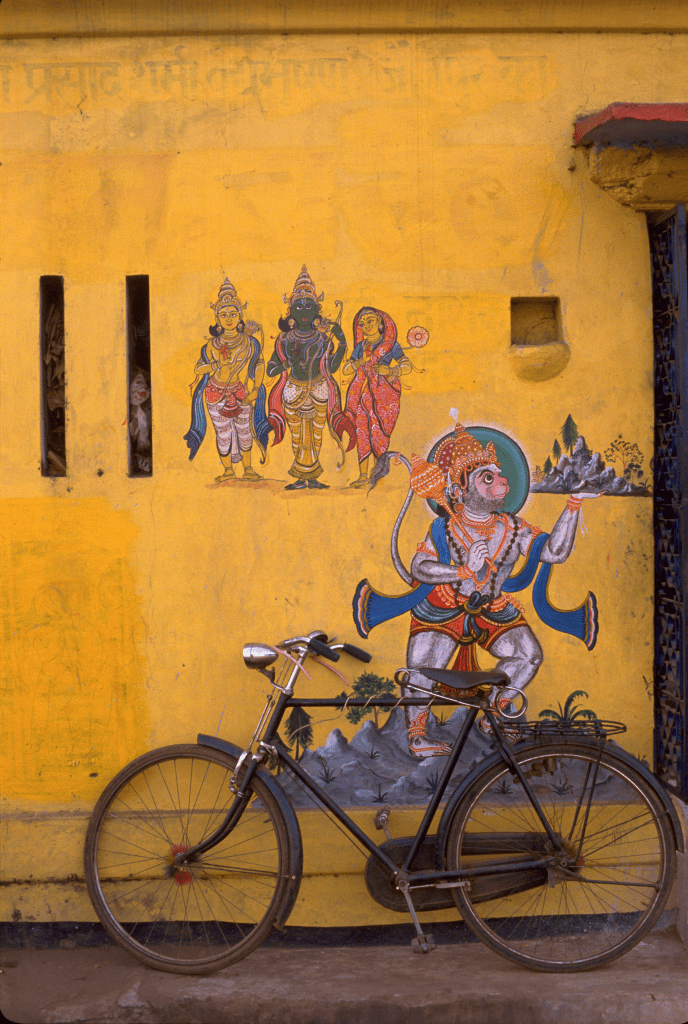
Residential mural in Bhubaneshwar by Nate Rabe

Today I arrived in a cemetery of a different sort. The great ancient temple city of Bhubaneshwar. Anย  initial quickie around the city has left me awed with the grandeur of Indiaโ€”truly the Wonder That Was. Iโ€™m none too impressed however by the greedy mahantas and pundits who follow me with visitor books filled with the names of foreigners who have come before me and donated Rs. 100 or 150. They are like blood suckers who will not detach themselves from you until you fork over some cash.ย  Muttered curses follow me when I hand over a fist of Rs. 2 notes or a tenner. โ€œYou should give at least Rs. 50,โ€ one calls out as I walk away.

24 January 1990

Had a sleepless night. The bed in the Janpath Hotel was infested with bedbugs and the room abuzz with mosquitos. I was so tired and on the verge of the final descent into sleep only to be woken by a damn katmal gnawing at some remote part of my body. The room was distinctly shitty. A weak but persistent stench wafted across the room. No windows, only some cement grating at the top of the wall which allowed easy access for the mosquitos.

I flung my few large pieces of cloth on the floor and turned on the fan. I caught a cold and my neck ached but I must have fallen asleep between 2 and 3.

I blearily wandered off toward the Lingaraja complex which was still as impressive as it was yesterday evening.ย  The priest left me alone to take some photos. I met two young pandas[7] who were only interested in chatting, not in extracting money from me.ย  One was Kuna and the other Bichchi. Kuna kept classifying women into a personal scale of โ€˜sexualโ€™.ย  โ€œWestern lady very sexualโ€, or โ€œJapanese lady most sexualโ€.ย  He was full of obscure English aphorisms.ย  โ€œEvery book has a cover every woman a loverโ€, was his favorite but others addressed less sexual subjects as well.

Bichchi was interested in telling me about politics. One of the Patnaik[8]s was in power. Another Patnaik was trying to squeeze him out now that he (the second Patnaik) had the leverage of the National Front government in Delhi.  Bichchi was confident that his Patnaik (the second one) would be victorious in the end. The main complaint against the ruling Patnaik was thatโ€”as best as I could understand from Bichchiโ€™s broken Hindiโ€”he liked to consort with little boys.  If not that he drank or smoked something that wasnโ€™t good.

Kuna immediately spoke up. โ€œIs there only one tiger in the jungle? They all do these things. Have you ever seen only one tiger in the jungle?โ€

They tried to encourage me to drink some bhang[9]. Being already light-headed from a sleepless night I declined.ย  They extolled the virtues of bhang but cursed heroin, charas [10]and alcohol.ย  All these vices Bichchi attributed to the Pakistanis.ย  He saw a nefarious attempt to destroy his country. Apparently, there are in Bhubaneshwar a growing number of drug addicts.

Kuna again offered his own interpretation. โ€œIt is good. We have 90 crore[11] people here in India. If a few kill themselves with heroin good. It will keep our population down.โ€

I took my leave after an hour under the shade of the Lingaraja, one of 125,000 temples said to be scattered around the city.  This statistic came from Bichchi.  I was tired and wanted to nap but didnโ€™t want to do it in the Janpath Hotel.  Over a beer at the Kenilworth Hotel, I resolved to head immediately to Puri in search of cleaner mattresses and an airy room.

25 January 1990

ย Puri strikes me as an overgrown seaside fishing village. Except for the fact that it is one of Hinduismโ€™s four major dhams[12], there didnโ€™t seem much to commend the place.ย  The beach is here too, of course, but it has none of the isolated charm of Gopalpur or the lushness of Kovalum. The alleys are dark and damp and only Hindus are permitted to enter the ancient Jagganath[13] temple. For a photographer it is also frustrating. The temple is set at an awkward angle which makes it almost impossible to capture well. The square in front of the temple is in glaring light most the day so people huddle in the shadows under the tarped awnings.ย  After walking around searching for some good light, I put my cameras away. From now on Iโ€™ll stick to the alleys where little icons and shrines add color to the landscape.

I talk with Mohammad Yusuf who is selling reptile scales for the cure of piles and general unwanted blood flow. He makes rings of these and advises his customers to wear them on their left hand so as when they perform their toilet, the ringsโ€™ magical effects will โ€œmake you 100% clean. You can spend Rs. 10,000 on a doctor but these rings will cure you completely.โ€

He is an Oriya[14] but like most Muslims in the north speaks quite good Urdu.  When I told him I was living in Pakistan he quietly asked, โ€œWhatโ€™s the news? Is it good?โ€  I find the Muslims Iโ€™ve run into โ€“a lotโ€”to be sad people, though Iโ€™m probably projecting.  In Calcutta all the booksellers and tape hawkers on Free School Street are Muslims from Howrah. One told me with a bit of over enthusiasm that โ€œHindus are the best. I have more Hindu friends than Muslims. We have no problems here!โ€

Another, Salim, is a waiter at the Janpath Hotel in Bhubaneshwar.ย  He was soft spoken and left me with a feeling tender. He claimed to make Rs 200 a month in the hotel of which $150 he remits to his family.ย  He used to work in Calcutta in a factory that makes cooking utensils but for some reason came, as he put it, โ€œinto the hotel line.โ€ He doesnโ€™t like the work but is stuck.ย  He saw two postcards I had bought from a sidewalk dealer on Sudder Street. One was of the Kaaba[15] the other was of Imam Hussain on his horse. Salim kissed them and pressed them against his forehead when I offered them to him.

The Muslims seem to be accepted and other than a slight hesitation before telling me their names, they seem content. They confess to cheering for Pakistanโ€™s cricket team but have been quite uninterested in asking me about life in Pakistan. Only one, a cloth merchant in Bhubaneshwar, asked me if I preferred India or Pakistan.

Tomorrow, I take a day trip to Konarak. Itโ€™s Republic Day and will be overrun with tourists undoubtedly.

26 January 1990

I was accompanied to Konarak by a Gujarati, Dr. Parwar. A pleasant and gentle man who had pulled himself up to a position of considerable rank and authority in a government hospital.  His father was a manual labourer in Pune, โ€œso I have seen life from close up.โ€ Through hard work he got his MBBS and MD from one of the best medical schools in India and has since added a triad of MAโ€™s in subjects like Public Health, Venereal Diseases and Administration.   He has been attending a conference in Calcutta on Public Health Administration and has come to Puri to kill some time.

He is deeply committed to serving the people of India as a doctor back in Ahmedabad.  He has no desire for an overseas job or money. He proclaims more than once how proud he is of being Indian.  This is not something I hear in Pakistan very often.

Konarak is impressive. The stone sculpture is beautiful and majestic. The monument is set out as a sun chariot with 24 giant wheels pulled by 7 rearing horses. Most of the original temple has been destroyed but the remaining bits inspire awe for their size and beauty.  The original temple rose more than twice as high at the remaining remnant which rises 80 feet into the air.

Dr. Parwar and I climb to the top of the temple and gaze into a deep opening. A pedestal is at one edge where we overhear a guide explain, โ€œThis is the place where the image of the Surya (the Sun God) stoodโ€.  Inside his stone head and feet, apparently, was magnet which when a certain interaction of physics and metaphysics transpired โ€œcaused the Godโ€™s head and feet to move.โ€

The Indian government is preserving the temple. Dozens of lungi[16] clad workers scratch the eroded stone with water-soaked bamboo brushes. Here and there new plinths and slabs of granite have been fitted into the chariot spokes and walls.  Up near the top they have placed two huge Buddha-like images, upon which, during the Eastern Ganga dynasty[17] which built the temple, the sun was said to have shone continuously. One at dawn, one at noon and one at dusk. The third image is yet to be restored.

Dr Parwar and I silently take in this magnificent piece of human-divine cooperation before boarding a bus back to Puri.


[1] Raiwind, a town near Lahore, famous as the headquarters of a major Islamic missionary organisation, Tablighi Jamaโ€™at

[2] Hindustan Ambassador. Iconic Indian manufactured sedan which for decades was about the only car available in most parts of India.

[3] Literally, ‘tea water’. Colloquially used to indicate a small gift/bribe.ย 

[4] A Sikh movement for Khalistan as a separate country was raging in the 80s and early 90s. Often trains passing through Punjab were bombed as part of the terroristic tactics of militant Sikh groups. By 1990 things had calmed down quite a bit but my question was not entirely unjustified.

[5] Hindi/Urdu word meaning โ€˜chaosโ€™; โ€˜confusionโ€™; โ€˜disorganisationโ€™. Colloquially, โ€˜hassleโ€™.

[6] Part of the Salvation Armyโ€™s global charity empire. Cheaper rates for Christian missionaries right in the heart of Calcutta!

[7] Hindi word for priest or guide to a temple. Not the Chinese animal.

[8] A prominent political dynasty in the state of Orissa/Odisha.

[9] Traditional Indian cannabis drink.

[10] Hashish

[11] Hindi/Urdu for the numerical value of 10,000,000

[12] The four dham are the major Hindu pilgrimage destinations located at each cardinal point of the compass. Dwaraka (West), Puri (East), Badrinath (North) and Rameshwaram (South)

[13] From which we get the English word, juggernaut.

[14] A native of Orissa/Odisha

[15] The stone building at the center of Islam’s most important mosque and holiest site, the Masjid al-Haram in Mecca, Saudi Arabia

[16] sarong

[17] 11-15th century CE
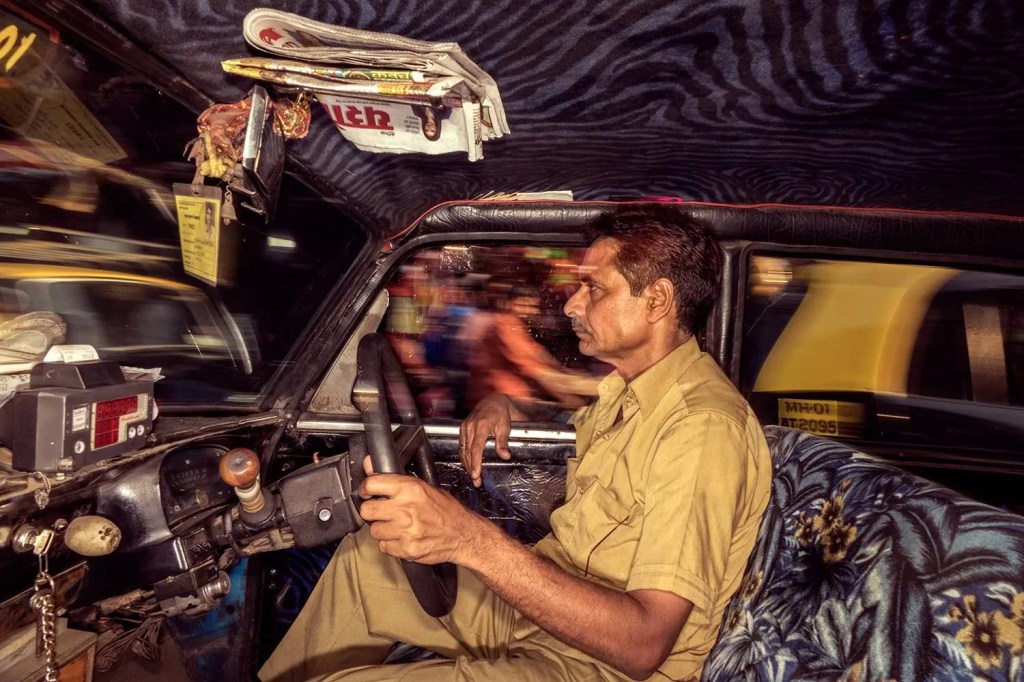
Recalled Conversations: Taxi driver, Delhi.

Photo by Dougie Wallace

For the first several minutes he said nothing, just guiding his yellow and black Suzuki taxi through the clamorous traffic of midday Delhi.   My daughter wanted me to ask him what his name was.  โ€œJai Bhagwan,โ€ he said. โ€œAn old-fashioned name.โ€ His smile is half apologetic.

โ€œYouโ€™ll be going to Jaipur? Thatโ€™s a beautiful city. They call it the Pink City. Its a five hour drive from Delhi and Pushkar is another 2 or 2 and half hours further.  Youโ€™ll stay in Pushkar for a few days? No? I see, just for a day. Ajmer is just half hour more away. What a place that is. Moinuddin Chisti…the Emperor of India!  Will you be taking the train from Ajmer to Varanasi?  No, from Agra. Ok. I see, your agent arranged it that way. Watch out for these agents. Theyโ€™re in it for themselves, a lot of them.

This traffic is like this but not for too long. Thereโ€™s a fly over up  ahead and the road narrows so everything slows down to a crawl. But soon weโ€™ll be moving again.  Yes, that metro line was made for the Commonwealth Games in 2010. What a rip off!  The organizers stole 80% of the investments. Only 20% was spent on the infrastructure. The main crook, Kapladi is in jail but what does it matter. It wonโ€™t change anything. The rich and our netas donโ€™t give a shit. All the rules are for the poor, not one of them is for the rich.  It never changes.

My people used to own the land around the airport.  A long time ago the government came and forced us off the land and gave us Rs1.40 per square meter! A very low price. But they got what they wanted. You know Gandhi? They say he is the father of the nation. We say heโ€™s the number one Thief. Donโ€™t believe me? What did he ever do for us? Did he do anything to improve our lot? He and Nehru did everything for themselves and to make their own money and name.  Gandhi, the old bastard, used to feed his goat grapes while the rest of the country starved. 

The real hero of India was Subhas Chandra Bose. What a guy. You know what his slogan was? Give me your blood and Iโ€™ll give you freedom!  He was a man of action. Thatโ€™s why they killed him. You know Gandhi could have freed Bhagat Singh but he didnโ€™t. He let him hang. All for his own glory.

Ambedkar? Yeah, he was a good man too.  He wrote the Constitution. No one else could have done that. He was a great man actually. I have nothing bad to say about Ambedkar.

Right, weโ€™re almost at your destination. Just 5-10 minutes more.โ€

How Do You Like It?

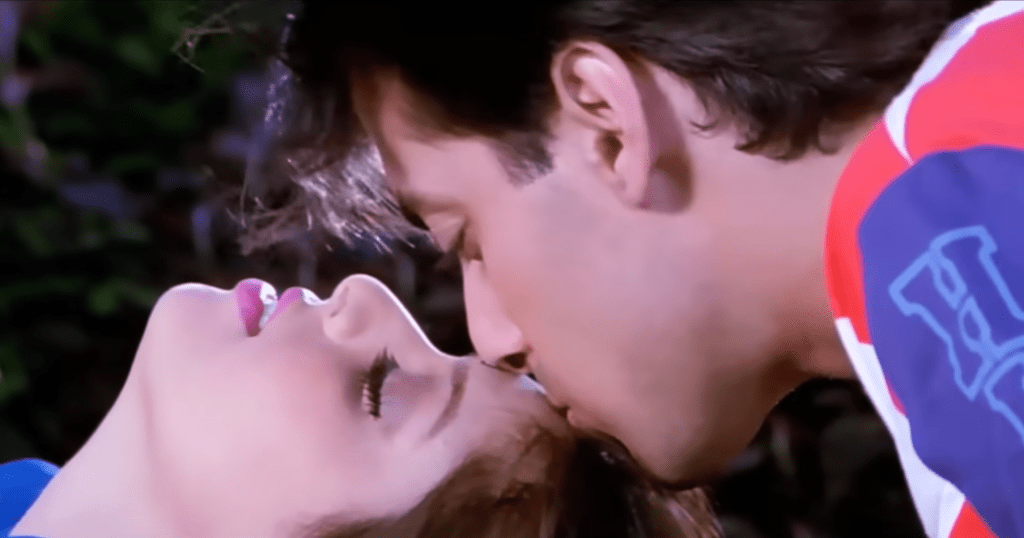
Nagma and Salman Khan

The Flying Coach had just pulled out of Gujrat. Passengers were settling in for a couple hours of sleep before our arrival in Pindi. Quietly whispering to each other, fussing with their reclining seats. Yawning. I had a window seat. My head rested against the glass. Outside, pitch black.

The driver inserted a tape into the deck and a mix of recent Indian film songs competed with the post-dinner clamour. Indian film songs in Pakistan are hugely popular. Slowly the coach fell silent and the music was the only thing to be heard.ย  One of the songs immediately caught my ear. It had a smooth, soft-rock sound with a steady disco pulse at the bottom. Definitely catchy. Much closer to Western pop than โ€˜classicโ€™ Hindi film fare. The singers teased each other by asking, โ€˜Kaisa lagata haiโ€™ (How do you like it?) and responding, โ€˜Achha lagata haiโ€™ (I love it).ย 

Pure earworm stuff.

Hearing the song again the other day, memories flooded back, not just of that road trip but of that general era. The very end of the โ€˜80s and the beginning of the โ€˜90s were hugely turbulent years in India. ย One ุฏูˆุฑ (daur/epoch) was quickening to an end. The new age, still undefined, was just beginning to emerge.

Though many of the giants of the โ€˜60s and โ€˜70s were still in the game, all across the film world fresh young faces, alluring voices and disruptive attitudes were pushing their way into public consciousness. Kishore Kumar whose peak came in the 70s, was still recording as were the nightingale sisters Lata (Mangeshkar) and Asha (Bhosle). But Kishoreโ€™s son Amit, who won Best Playback Singer of 1990 for Kaisa Lagata Hai, was in big demand. Lata and Asha were still beloved but new arrivals Anduradha Paudwal, Alka Yagnik and Kavita Krishnamurthy were popular among the younger set.  

The scene from the movie in which the song was inserted depicted a country starting to creak toward a major makeover. The stars Salman Khan and Nagma were fresh and young. Salmanโ€™s red white and blue striped jumper clearly represented kids who looked to America rather than the Soviet Union as did many of their parents. They are shown shopping at Foodland one of Bombayโ€™s early western-style supermarkets and buying large blocks of Toblerone chocolateโ€ฆhitherto a rarity other than in Duty Free stores. Despite their new cool clothes and products their behaviour very much was still line with the flirty, cutesy comportment of previous eras; devoid of any adult sensuality.

**+**

India felt like it was going to explode in those years. Something had to give. There was so much potential being held back by an inefficient bureaucracy and the sclerotic โ€œnetas/เคจเฅ‡เคคเคพโ€ (leaders) of Independence-era politics. The subterranean rumble of a vibrant business, media, creative and learned sector was impossible to ignore. The political system was fizzling with sparks and thick smoke while shooting colourful lower caste personalities who leveraged significant political influence, into the public realm. Something unstoppable was going on. India was changing. Perhaps too fast. Perhaps long overdue. But with no clear vision (yet) of the destination.

I lived in Pakistan at the time which was trying to cope with its own massively shifting tectonics. (Another story for another time.) Many of my holidays were spent in India, where I had been born and lived until the age of 17.  As soon as you crossed the border the energy of a changing culture was everywhere to be seen, heard and felt.

Whatever you thought of Rajiv he was not your usual Indian politico. The Great Leaderโ€™s grandson, who flew commercial jets. Undoubtedly young and handsome ย but also henpecked by his fierce Italian wife. Rajiv was the first national leader with some actual experience of the world beyond Congress and JP politics. He was admired pretty much universally. For a few years anyway. ย With his blood connection to Nehru and Indira, Rajiv led the country to the base camp of the political Everest that would eventually be summited and claimed by Narendra Modi.

Mud vessels were replaced overnight by cheap bright colored plastic buckets. Tea was now always served in a porcelain cup or glass tumbler. Youโ€™d get it in a clay mutka only in certain out-of-the-way places.

Doordarshan, the stuffy national television station was being bruised up by Star TV and Zee TV.  Networks that provided youth-centric game shows, music videos and reruns of international television hits. Bandits were in the news. Phoolan Devi and Veerapan. Multiple states were sites of โ€˜rebellionsโ€™: Punjab, Assam, Kashmir. Khalistan and Gurkhaland were put forward as new ideas.  Naxalites seemed to be resurging in Andhra. Hand painted movie hoardings were quickly fading away.  Digitally produced adverts choked off one of the great pleasures of being a film buff.    

Everything was in flux. It was an edgy time. Assassinations of Prime Ministers. Caste politics. Phoolan Devi was sent to jail for her crimes against the upper castes but then was elected to Parliament. Elections, held once every five years, had been up to this point, a yawning affair in which Congress or Indira seemed always to win. But between 1996 and 1999 the country voted 3 times. Seven PMs took the oath of office in the 90s. Most of them lasted a year, tops. Some a few months. A fatigued shopkeeper in Mysore sighed deeply as he gave me my change, โ€œToo many elections.โ€

India as a real center of global power and influence was still largely rhetorical but everyone knew it was only a matter of time before the โ€˜old waysโ€™ of running India were shredded for good. ย Looking back, it was a generational change. A transition from a solid base built by a single political organisation and its most prominent family, to skyscrapers, flyovers, Pepsi and the birth of India’s billionaire class, Ambanis jaise. Hard to believe today the Nehru/Gandhis could ever have been relevant and admired.ย  Narendra Modi was a state based political apparatchik at the time but the wave he would ride to successive victories was starting to swell.ย  A group of young men talked loudly to me as we rode a train through central India. The Muslims had it coming. They were tricky and dirty and evil minded. This is a Hindu country.ย  ย 

**+**

Pop music, which in India equates to filmi[1] music, was sounding different too. ย A decade earlier the first lightning bolt to electrify the airwaves struck in the form of a 15yr old Pakistani girl singing the catchy, Aap Jaise Koi (Somebody Like You) in Qurbani (Sacrifice), the biggest movie of 1980.ย  With a sound that mirrored perfectly the soft rock heard on American AM radio in the mid-70s (groovy bass, scratchy rhythm guitar, synth, soaring melody lines) the singer (Nazia Hassan) and producer/composer (Biddu) went on to become international stars throughout the 80s. Disco-lite had arrived in India.

A transition from the founding fathers and sons of Hindi film music, to a new crew of shamelessly self-promoting producers/writers/composers like Bappi Lahiri began chipping away at the thick walls that had protected film moguls from even considering changing their decades-old formula. Four voices[2], two female and two male, had completely dominated filmi music since the 60s. The soundscapes in which they were asked to sing were equally dominated by Indian instruments and compositions based upon classical ragas or Punjabi/Bengali folk songs. If Western sounds and instruments were heard it was to signal the arrival of the vamp or the Vat 69-drinking villain.

Bappi Lahiri was a different kind of music director. He reveled in excess. As big as Barry White, he draped himself in bling, wore flamboyant shades 24/7 and embraced the wildest ideas. ย A true disrupter. He could compose in the comforting, long-standing sound of the 50s-70s with real conviction and skill. ย But a trip to a nightclub in Chicago in 1979 changed his career from a respected composer/arranger into the badass of Bombay. โ€œAfter a Chicago show,โ€ Bappi told an interviewer. โ€œWe went to a club.ย  A DJ was playing the most amazing music. Something completely new and fresh. John Travolta and the Bee Gees. I asked him what this was and he said, โ€˜Disco.โ€™โ€ ย 

Disco hit Bappi hard and upon return to India he introduced its thumping beats into nearly every one of his projects. If Biddu had snuck sweet Western pop melodies into Qurbani, Bappi turned the volume up to 11 and exploded woofers from one end of India to the next. Bappi was shameless. For the rest of his career his name was synonymous with upbeat, percussive dance music. Though the โ€œDisco Kingโ€™sโ€ formula rarely strayed from a steady, 4 on the floor beat, and vapid, repetitious lyrics, there is no question that without Bappi Lahiri there would be no AR Rahman.

Huge as Bappi was (he died in 2022) it was technology that really laid the walls of filmi music to waste. Cassette tapes came to India later than the rest of the world. They started to appear in the late 70s but import restrictions and decades-old laws that promoted local manufacturing meant they were priced as a luxury item. Or at least the machines that played them were. But as demand increased some restrictions on manufacturing both tapes and tape recorders were lifted and Indian entrepreneurs jumped into the deep end with gusto.

In the winter of 1984 on a visit to Allahabad I was blown away by the carts of cassette tapes being hawked in every bazar in the city. Literally hundreds of titles by artists I had never heard of. Everyone was browsing and buying, even rickshaw walas, school kids and policemen, who until that moment had probably never owned anything but a radio. Especially popular was a genre called ghazal. Especially as sung by a husband and wife pair, Jagjit and Chitra Singh. Their tapes sold fast and new ones released just as fast. What was even more remarkable was that this was not filmi music.

Ghazals and Jagjit and Chitra may have been the most successful genre in cassettes but they were not the only style and type being bought up. All sorts of regional folk styles hitherto untouched by the major recording companies (EMI and Polydor), in every language and dialect under the Indian sun were suddenly available dirt cheap. Tapes with sexy lyrics, comedy tapes, religious chants and pop music by wannabe stars from small cities in the hinterland were available everywhere.

Not just a giant tech leap forward, the cassette boom must surely rank as one of the great economic stimulants of that period. Piracy helped the revolution along. What just a couple years before had been seen as a โ€˜foreignโ€™ object for the well-to-do, was now available for a few rupees. This was a very exciting period to be a music lover in India. I could not get over the fact that here were the faces of Kishore and Rafi or Amitabh on a cassette cover, equally at home as Michael Jackson and the Rolling Stones .

In the words of Peter Manuel, whose 1993 book Cassette Culture: popular music and technology in north India documents this period of transition, โ€œโ€ฆcassette technology effectively restructured the music industry in India. In effect, the cassette revolution had definitively ended the hegemony of GCI,[3] of the corporate music industry in general, of film music, of the Lata- Kishore duocracy, and of the uniform aesthetic which the Bombay film-music producers had superimposed on a few hundred million listeners over the preceding forty years.โ€

Filmi musicโ€™s share of the market shrank immediately and dramatically to less than 50%. Indipop, as this new wave of non-film music was labeled, stormed into public consciousness. New stars singing in new languages, including loads of English phrases, new factories set up in places like Bhopal, Coimbatore and Dehra Dun opened thousands of new markets. ย It seemed filmi music was going to die a quick death. ย Indipop flourished, thanks to the plastic cassette and the arrival of what Indians call โ€˜liberalisationโ€™.

By the late 80s, Indiaโ€™s protected and insular economy was no longer fit for purpose. All political parties understood this and in 1990 a process of doing away with the restrictive import duties, tariffs and allergic attitude to foreign investment especially in products valued by the booming middle class began.  Satellite and cable TV showed foreign movies and TV shows. People with money could travel more freely and experience the same things people outside of India took for granted.

The film industry was given government financing for the first time in its 60 year history. More movies were being shot overseas. Sound quality of the music improved dramatically. Audiences thrilled to see their idols dance through the streets of Paris, Cairo and Sydney all in the same song! But filmi music held on. It learned from the changing times and by the early 2000s had once again grabbed back its near monopoly of the popular music market. Indipop stars, once the great โ€˜altโ€™ pop singers, were invited to sing in the films. ย The half dozen geriatric (though immensely beloved) singers who had โ€˜ownedโ€™ filmi music were steadily pushed aside, along with those folk and classical talas and sensibilities.

Songs like Kaisa Lagta Hai were among the first to move in a new direction. Kishore Kumarโ€™s son, Amit, sang the male lead. Anuradha Paudwal the female lead. Amit eventually retired, blown away by the likes of Anu Malik, Kumar Sanu, Udit Narayan, Lucky Ali and in the late 90s and early 2000s exciting singers from Pakistan: Atif Aslam, Zafar Ali and Adnan Sami. ย Sophisticated, widely influenced and wildly talented composers, exemplified by AR Rahman were now firmly in control of the filmi ship.ย  American and European audiences grooved to Jai Hoย and Mundian Bach Ke. Bappi Lahiriโ€™s compositions found new life in American/European songs like Addictive (Truth Hurts), Freeze (Madlib) and Come Closer (Guts).

And India today, whether you like Modi or not, is a true global power center and influence peddler. It all began when the floor of old India and the old Hindi filmi world fell away with the tentative arrival of songs like Kaisa Lagta Hai.


[1] Music and songs from Indian, mainly Hindi/Urdu language, movies.

[2] Lata Mangeshkar, Asha Bhosle, Mohammad Rafi and Kishore Kumar

[3] Gramophone Company of India, formerly known as His Masterโ€™s Voice, was until the late 60s the only significant producer of recorded music.

Almost There

For the first several minutes he said nothing, just guiding his yellow and black Suzuki taxi through the clamorous traffic of midday Delhi.   My daughter wanted me to ask him what his name was.  โ€œJai Bhagwan,โ€ he said. โ€œAn old-fashioned name.โ€ His smile is half apologetic.

โ€œYouโ€™ll be going to Jaipur? Thatโ€™s a beautiful city. They call it the Pink City. Its a five hour drive from Delhi and Pushkar is another 2 or 2 and half hours further.ย  Youโ€™ll stay in Pushkar for a few days? No? I see, just for a day. Ajmer is just a half hour more away. What a place that is. Moinuddin Chisti…the Emperor of India!ย  Will you be taking the train from Ajmer to Varanasi?ย  No, from Agra. Ok. I see, your agent arranged it that way. Watch out for these agents. Theyโ€™re in it for themselves, a lot of them.

“This traffic is like this but not for too long. Thereโ€™s a fly over upย  ahead and the road narrows so everything slows down to a crawl. But soon weโ€™ll be moving again.ย  Yes, that metro line was made for the Commonwealth Games in 2010. What a rip off!ย  The organizers stole 80% of the investments. Only 20% was spent on the infrastructure. The main crook, Kapladi is in jail but what does it matter. It wonโ€™t change anything. The rich and our netas (leaders) donโ€™t give a shit. All the rules are for the poor, not one of them is for the rich.ย  It never changes.

“My people used to own the land around the airport.ย  A long time ago the government came and forced us off the land and gave us Rs. 1.40 per square meter! A very low price. But they got what they wanted. You know Gandhi? They say he is the father of the nation. We say heโ€™s the number one Thief. Donโ€™t believe me? What did he ever do for us? Did he do anything to improve our lot? He and Nehru did everything for themselves and to make their own money and name.ย  Gandhi, the old bastard, used to feed his goat grapes while the rest of the country starved.ย 

“The real hero of India was Subhas Chandra Bose. What a guy. You know what his slogan was? Give me your blood and Iโ€™ll give you freedom!ย  He was a man of action. Thatโ€™s why they killed him. You know Gandhi could have freed Bhagat Singh but he didnโ€™t. He let him hang. All for his own glory.

“Ambedkar? Yeah, he was a good man too.ย  He wrote the Constitution. No one else could have done that. He was a great man actually. I have nothing bad to say about Ambedkar.

“Right, weโ€™re almost at your destination. Just 5-10 minutes more.โ€

Two films I recommend

One is Civil War. Here is a piece I thought I had shared one of my other blogs (C90 Lounge) but may have not. Apologies if you’ve read this before.

I saw Civil War yesterday. My companion, an emotionally hard-boiled Aussie of the 80s, was sceptical. He expected a โ€˜made for TVโ€™ type production and groaned at the posterโ€™s depiction of a gunnerโ€™s nest in the flame of the Statue of Liberty. 

Iโ€™m invested in this, I said.  

Years ago, in the era of โ€˜Wโ€™, my brother and I half-seriously agreed that should ever there be a revolution in America, we would return (he was living in Canada, me in Australia) and fight for the good guys.   So, Iโ€™ve been seeing armed rebellion in the heartland for decades. In the intervening years Iโ€™ve worked in Iraq and the former Yugoslavia and Tajikistan. Each of those countries, in their own space and time, were places where citizens believed, โ€˜it will never happen hereโ€™.  

Of course, it did happen there. Half a century of state building and brutal imposition of power by an ultimate stable, seemingly intractable family or party structure crumbled faster than anyone could have imagined leaving once proud capital cities and rural hamlets alike pockmarked with the imprints of thousands of shells, collapsed roofs, burned out vehicles and bands of uniformed heavily armed men with trembling trigger fingers in attack or perhaps in retreat. 

The picturisation of the road trip from NYC to DC depicted in Civil War gets full marks from me. The mayhem and the menace were completely believable. The Americanisation of the scene, for an initial moment seemed unreal, but quickly the recollection of similar road trips Iโ€™ve made through Bosnia and Kosovo, Central Asia and Angola, made me appreciate the truism, local context is everything.  This is exactly what civil war and the collapse of a national superstructure looks like. It just so happens that McDonalds dot the landscape instead of mosques.  

The film is not edifying. I left scratching my head what it said about the media. Villian or simply the least-worst group in a land full of horrible people?  The scene with the red-headed militia man with his red sunglasses was completely real and believable.  Appropos to the storyline I left the theatre wondering, โ€˜who were the good guys?โ€™. Maybe my brother and I would have fighting each other, not side by side. It was depressing. 

Much better than I expected, said my hardboiled friend. Neither of us had much to say for a long time. 

**

The second film is Shatranj ke khiladi (The Chess Players). It came out in 1977 and is a brilliant picturisation of Indian writer, Munshi Prem Chand’s, beloved short story of the same name.

Set in 1856 it recounts the final days of nawabi 1Lucknow, the most important ‘successor’ kingdom to emerge in the years following the severe collapse of Mughal political authority in north and central India, beginning in the early 18th century.

Satyajit Ray directed the all star cast which includes Sanjeev Kumar, Saeed Jaffrey, Sir Richard Attenborough, Amitabh Bachchan, Shabana Azmi, Amjad Khan, Victor Bannerji and Tom Alter, with whom I share a personal connection and whom I knew as an ‘upperclassman’ at boarding school. Each actor gives a generous and pitch perfect performance.

I love the sound of this film which is told in Urdu. Lucknow was accepted as the center of the Urdu speaking world and Urdu, with a Sanskrit grammar base but Persianised vocabulary, is among the most beautiful languages ever devised by us humans. The atmosphere (mise-en-scรจne?) of the film is authentic to my imagined 19th century nawabi Hindustan, 2 and captures the dust-layered pale clay and brushy landscape of that part of India perfectly.

The story is both hilarious and deeply sad. It is a tale of self delusion in a time of political chaos and confusion. A story about the passing of one era and the forceful, violent birth of a new order. A story perfect for this notorious American moment. The copy that is on You Tube is high quality with English sub titles, though significant parts of the story are told in English. Highly recommended!

  1. Nawabi is an Urdu term meaning ‘royal’ but which over time has become shorthand for a particular culture and lifestyle of Muslim (mainly) elites, centered in Lucknow but prevalent across much of the Gangetic plains of north India. Nawabi is a way to signal decadence, hedonism and a self indulgent ruling class of land owners and pleasure seekers. โ†ฉ๏ธŽ
  2. Hindustan is often used to refer to India as a whole, but historically and culturally it refers to the area of northern India the is watered by the Yamuna and Ganga (Ganges) rivers, also known as the doab (two waters.) More broadly it refers to the heartland of Muslim India that stretches from Lahore in Pakistan to Dhaka in Bangladesh. โ†ฉ๏ธŽ

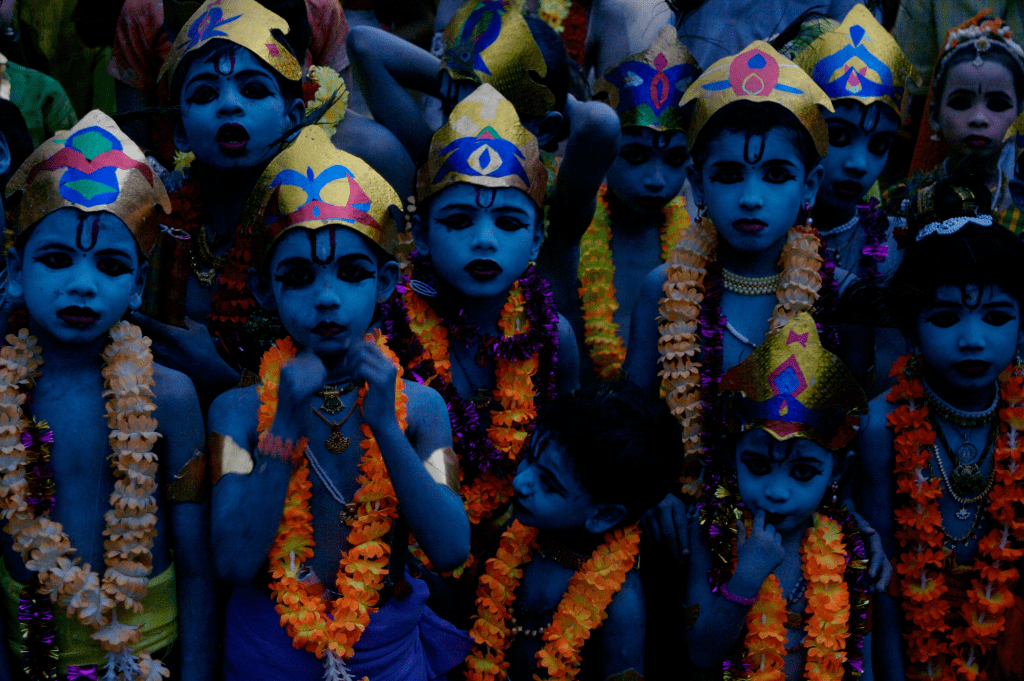
Little Krishnas

Young boys dressed up as young Krishna on the occasion of Sri Krishna Jayanti, 2009. Near Trisshur, Kerala.

I didnโ€™t really learn about India until I left to attend University in Minnesota. ย I had lived there virtually all my life up to that point and had a slightly above average knowledge of Hindi but it was pretty rough. I understood India as the place where I felt most at home in the world. A place I identified as โ€˜homeโ€™. But I had only the sketchiest understanding of Indian history; the sitar and Hindi movies summed up Indian culture.

My world was largely European/American/white/Christian. Though I grew up speaking an Indian language as early as or even before English, though I had many Indian playmates and in school, close mates, and though my family in no way tried to isolate ourselves from Indians or Indian culture and society, by dint of another culture and tradition I knew precious little about, that of evangelical missionaries in India, Indian culture remained a vague notion with very few points of clarity and authentic appreciation. 

This came home to me in my early semesters in University. I got into mid-level Hindi class only to discover how limited my vocabulary was and how ungrammatical was my speech. I really didnโ€™t know how to write a coherent paragraph.  The name Mohammad Rafi had never registered with  me. Whilst reading a passage from a newspaper aloud in class (my pronunciation/accent was always very good) I stumbled at the reference to โ€˜Rafiโ€™. As there are no capital letters in written Hindi I didnโ€™t realise it was a name; the sentence didnโ€™t make any sense.  Ultimately, the professor, who himself had never been to India, had to tell me that Rafi was a proper name and referred to Indiaโ€™s most famous male singer, Mohammad Rafi.  

I think my choice of South Asian Studies as my undergrad major and then my Masters in Modern South Asian history, were attempts to make up for this huge ignorance about the place I said I loved and that I called home. 

After formal education my years in Pakistan enlightened me about the impacts of Modern Indian history and how tangled and fascinating is the relationship between Pakistan and India.  

In 2010 I began blogging about music. All kinds. But I understood that I could create a bit of niche and a following by focusing on South Asian music, another subject about which I was almost completely ignorant. And so, my learning and education about India (in the broadest sense of that term) continued.  My current research on the history of the Pakistani movie industry a.k.a. Lollywood, is the same. It seems I have an unsatiable desire to learn ever more about the subcontinent.

There was no subject more unknown to and less understood by me then the world of Hindu philosophy and religion. Naturally, missionary children were not encouraged to learn too much about it for obvious reasons. To fight this โ€˜dark forceโ€™ was what had brought my parents to India in the first place. But also, I had enough of spiritual instruction and religious activity in my daily life already. Daily prayers and Bible readings, devotions, camps, Bible clubs, spiritual conventions and tent meetings, church services and baptisms.  The idea of trying to figure out a second religion was the last thing on my mind.  Creedence and the Beatles, Dev Anand and Zeenat Aman were far more exciting fields to plough. 

I still know so little about it, though I do love reading the many stories behind the many aspects of God that Hindus and Indians have concocted and pay homage to. 

I was in Kerala on business.  One evening I hired a taxi to visit a friend who lived near Trisshur. I wasnโ€™t going to take my cameras but after the quiet voice reminded me, โ€œTake your camera with you everywhere you go,โ€ I headed out. 

About half way there we turned a corner to find the road blocked by these young fellas. 

A couple villages were celebrating Krishna Janamasthami the annual festival of Krishnaโ€™s birth. Families celebrate by swinging their youngest son around in circles and then painting young boys in blue, placing cardboard crowns on their heads and wandering around the village singing, laughing and pretending to play the flute, Lord Krishnaโ€™s instrument of love.  Later, entire busloads of villagers will visit the Guruvayur Shri Krishna Temple in Thrisshur for more ritualistic and formal acts of worship. Like many places, the temple claims to trace its history back 5000 years (doubtful) and is one of southern Indiaโ€™s largest places of Krishna worship, something usually associated with north India. 

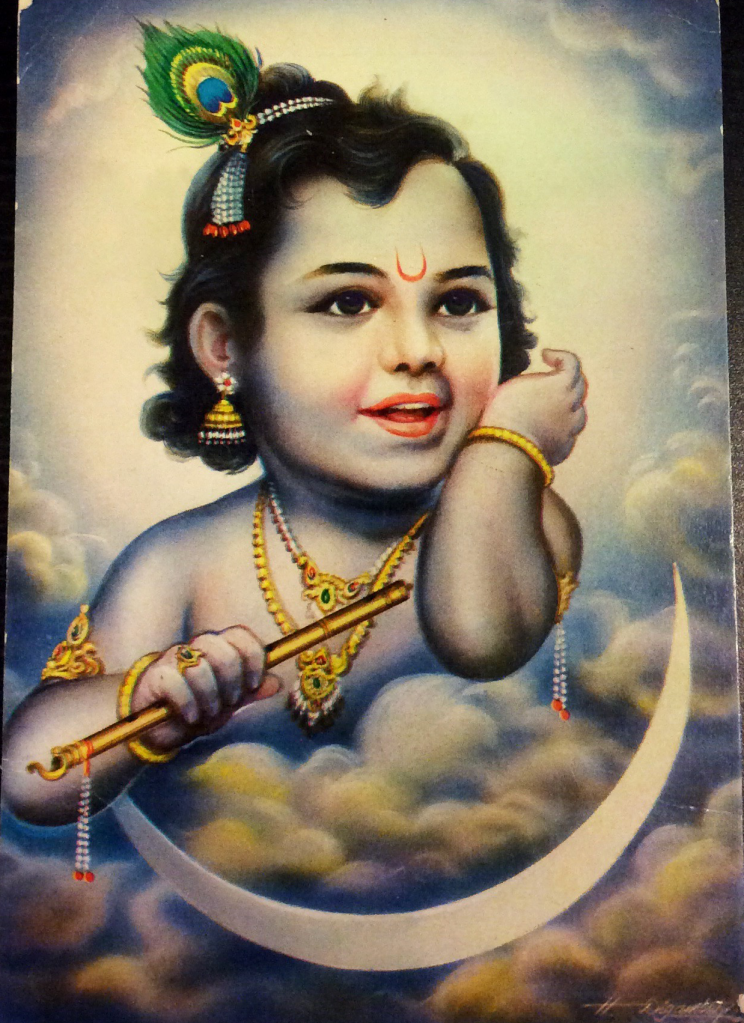
Krishna in his infancy and boyhood is known as Balakrishna, (literally, child Krishna). A stage on his life remembered for his mischievousness and antics. He is depicted in books, magazines, murals, calendars and stickers with chubby cheeks, rolls of fat on his little belly and often with his hands full of butter which he has stolen from his mother.

The following bhajan tells that story.

Balakrishna postcard


A way into India

Iโ€™ve been trying to write about India all my life.  

And failing. 

 Over the weekend I began to organise my old drafts and re-drafts of things Iโ€™ve written since 1980.  It appears that I’m a frustrated memoirist. Certainly, a bit of a narcissist too.  There were several drafts of a piece I wrote about Varanasi which I think I ultimately did (unsuccessfully) submit for publication. I remember struggling with that, trying to understand what I actually wanted to say about the city. What to include, what to leave out. Most versions were a mix of the travel section of your weekend paper, heart-felt expressions of my love for the city and passages which sounded as if they had been written by an AI bot decades before the stuff was even thought of.   All in all, it is awful. 

Of course, Varanasi is the kind of place that even the most sensitive or knowledgeable of writers struggle to write about.  It is one of those subjects that exists in history, in imagination, in the spiritual realm, on the map, in art and in philosophy. It is as big a subject as any in this world. So, I take my failure to capture it as inevitable. 

There were lots of other much shorter pieces too. One, on an obscure south Indian puja. Several recollected conversations with people along the way. A bunch of false starts and dead ends on my two hometowns of Mussoorie and Allahabad.  

What tied them all together was my inability to find the right voice to express what I wanted to say about India. Sure, I was learning a craft and had little command over my thoughts, let alone the words to describe those ideas. But there were other things in the way. Inarticulate passion & emotion which derailed things almost immediately. But more than anything the subject itselfโ€”India–seemed to block my path. 

India is a country and a state of mind that people tend to love or hate. Even if you havenโ€™t been, youโ€™ve probably got an opinion about it.  It is the ultimate in exotic. It is the place where โ€˜everyone everyday is steeped in spirituality,โ€™ and where everyone wears โ€˜colouful, garish, brightly hued clothingโ€™ where the bazars are jammed with โ€˜teeming humanity and mountains of red, yellow and black spices that amaze the casual visitorโ€™. Where the โ€˜extremes of human experienceโ€™ reveal themselves against a background of โ€˜fabled monuments and ancient temples built by long dead dynastiesโ€™.   

Heat and dust. 

Itโ€™s creative writing 101 crossed with National Geographic.    

India โ€˜overwhelms the sensesโ€™, โ€˜drowns one in โ€˜sensory overloadโ€™. India is romantic. An enigma. A land of gurus and maharajas and the worldโ€™s best cricket players.  It is pastiche and projection.  

It is cliche. 

Speaking of National Geographic, that fine publicationโ€™s contribution to this way of looking at the world is immense.  As a budding photographer my favorite subject was India (and within India it was Varanasi). For years the National Geographic approach to visualising India, epitomized by Steve McCurry, was what I emulated. I wanted to capture the best close-up portraits of Indian faces.  I wanted to capture the Himalayas, grand and snowcapped and the temples silhouetted at dusk. I did get lucky from time to time but never came within a mile of McCurry or Raghubir Singh who seemed to have such a knack for uncovering those shots. 

Raghubir Singh himself grew so fed up with this approach that he devoted an entire book to looking at his country with a new eye. Itโ€™s called A Way Into India. I highly recommend you go to the library or your bookstore and check it out.  In essence he used the iconic Indian car, the Hindustan Ambassador, as a lens to see his country with fresh eyes.  And in the process, all those noble portraits, disappeared. What he revealed were glimpses of things every other photographer dismissed as irrelevant or ugly. Details or scenes that are often hard to decipher. It gave his photography new life and has cemented his place in the pantheon of great modern photographers. 

All this is to say Iโ€™m still struggling with how to write about and visualise India. It bugs he hell out of me and frustrates me. I should be able to do this, I say to myself. Why canโ€™t I get beyond the โ€˜garish sarisโ€™ and โ€˜wizened old sadhusโ€™?   The closest Iโ€™ve come is by letting Indians I meet along the way, speak to me in their own words.  In this blog youโ€™ll find several such conversations. I try not to embellish them or add my judgements to them.  Just let them speak about their Indian experience.   

But that is still not what Iโ€™m searching for.  I want to tell my story. Iโ€™m searching for a way into India that is true to both my experience and to the subject, Mother India.

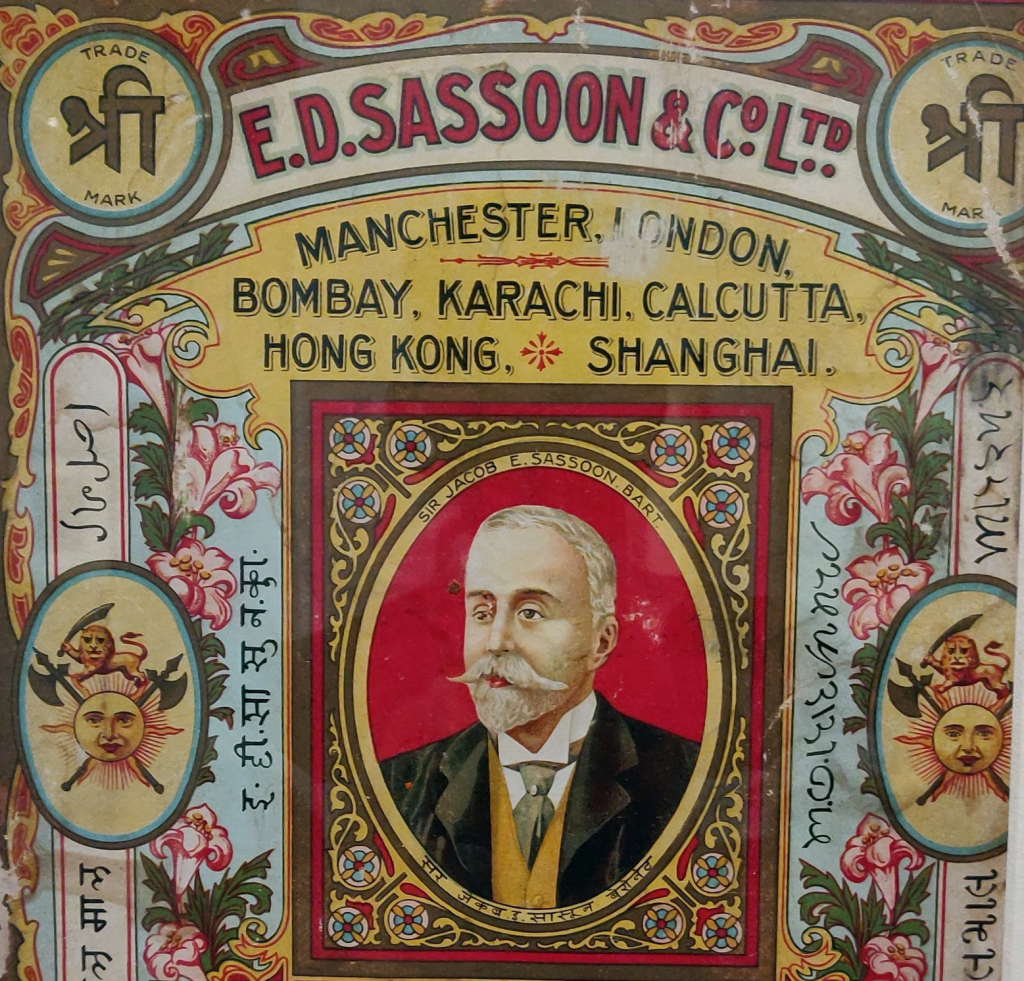
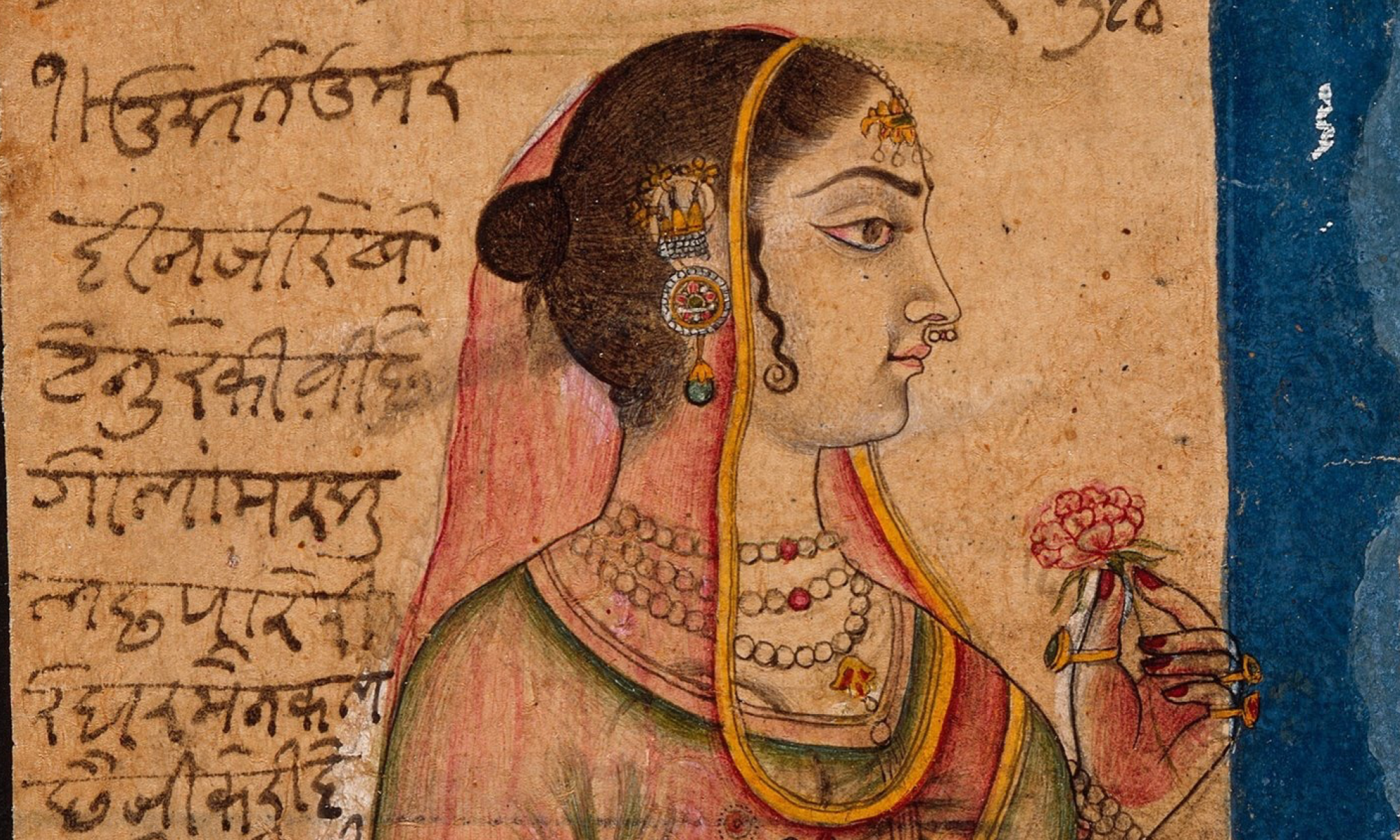
A note on the image at the top of this post. An advertisement (could have been from a calendar or a biscuit tin) for the Sassoon commercial house. The Sassoons were Baghdadi Jews who landed in India in 1830 and went on to become a leading pillar of that city’s economic and cultural heritage. The image is a cultural melange of scripts and symbols, recognisable to Indians and foreigners. The scripts mostly transcribe the family name. Sir Jacob Sassoon was the third or fourth generation to run the business. As the image depicts, he expanded operations to Karachi (now Pakistan) and Shanghai. The family, like so many of Bombay’s elite families was involved in the opium, tea, silver racket that financed the rise of the English empire. More on that in the future.

My Desi Heart: Intro

Allahabad, 1965

I was born in India in 1957. ย The youngest of four siblings in an American missionary family from small town North Dakota and Minnesota. We were evangelicals. Conservative in a Protestant theology heavily influenced by the Holiness movement of the 19th century. Small sect Methodism that believed all sinners could be completely โ€˜sanctifiedโ€™ or perfect, in their lifetimes. Among other things of course.ย 

I was born in the southern Tamil temple city of Madurai but we lived 850 kilometers northwest in a Kanarese speaking area of what is now the Indian state of Karnataka. Dadโ€™s employer, the Oriental Missionary Society or OMS, had established a bible training college in the town of Gadag, famous for producing one of classical Indian musicโ€™s noblest performers, Pandit Bhimsen Joshi, and a lively printing industry. 

Dad taught theology and related subjects to young Christian men and women from the surrounding areas. He regularly preached at outdoor revival meetings with his colleagues and students. Mom helped out wherever she was needed, sometimes as the bookkeeper for the college, sometimes she would join the pastorsโ€™ wives in their rural evangelizing campaigns but mostly she raised us kids.  

They had landed in Bombay after a long voyage across several oceans from New York in February 1952. They were appointed to join another American family, The Davises, who had two boys round about the same age as my two brothers, and a jolly, tubby spinster from Baltimore, Mary Ella Taylor. 

Mike my oldest brother was 5. Gregg, next up was 3. My sister Rebecca would arrive 3 years later, in 1955 and I brought up the rear in โ€˜57. There is a good case to be made that another sister was stillborn before I came along. 

We lived on the campus of the Karnataka Bible Seminary, whose red brick buildings dated back several decades. It was well shaded at least in the front part and served as a safe, walled but sprawling little world for me to explore as a kid.  

We were generally happy and normal. Among our subcultured circle of missionaries anyway. In fact, compared with the Davises,  mom and dad were liberal youngsters, which did cause ongoing friction between them over the years.  As is the wont of every child what they see in their homes they project onto the entire Universe.  There was nothing different about us. We all believed broadly the same things about the Bible and God and Jesus. We shared a barebone existence with few physical comforts. It was simple, filled with good food, devotions, trips to exotic places like the temples of Hampi, Shravanabelagola and the beaches of Karwar. Of course, โ€œweโ€ in these instances refers to other OMS missionaries or white folk in India more broadly.  

It was impossible not to notice that most everyone else around us and among us did not believe these things. But then, that was the whole point of our landing up in rural southern India. To try to get as many of them as possible to come over to our team.  A spiritual kabaddi match. 

Only recently have I begun to distance myself from the lived experience of my childhood. To look at it not from within but from a distance of 60 year; and from the outside. How did this rural, poor family from Minnesota end up in the villages of central India, speaking strange tongues and eating strange food? Why?  What was going on in India at the time? And how did being surrounded by religion and spirituality, in the home or everywhere you went in India, and speaking Kanarese simultaneously as fluidly as English and having Indian friends to whom I was closer than to my brothers who were away in boarding school?

What does /did this niche childhood-โ€“Minnesota, Holiness Methodists, missionaries, newly Independent India, bilingual communication–influence who I am today?   

This is about that.  

India has been an indivisible aspect of my life since 10 July 1957. At times some have found it irritating and maddening.  Others have seen it as fascinating and exotic. Most just shrug, especially now in this tiny world we live in, in the 2020s.   

My connection to India is something Iโ€™ve always loved but havenโ€™t known how to incorporate into my story. Or stories. It depended on the audience of course, as all stories do. My wives have felt threatened by India which is so easy to love in comparison with a real complex woman. So, there is shame and protection mixed in with my love of India. Iโ€™m sure many, including myself, thought I would outgrow my romantic childhood when I became an adult and that its influence would settle into a manageable and quaint curry now and then and perhaps one grand tour with the family when the kids are old enough to enjoy an adventure.  

But it hasnโ€™t happened that way. The older I got the more attached and fascinated by and in love with the place I become.  I chose to study Hindi rather than Latin or French in high school. At the University of Minnesota, I jumped from majoring in Anthropology and Journalism and English before settling on South Asian Studies and History. I studied Urdu as well as Hindi. I spent a year after university studying in Lahore Pakistan. I was thinking of doing a PhD on one of the most important figures in modern South Asian Islam, Maulana Maududi. But then I got a job with the UN in Islamabad and began a career that took me around the world. India faded into the background for those years but never died.  

I began blogs about South Asian music and wrote a novel set in Pakistan. I read books on the caste system, Tamil anti-Brahmanism, Aurangzeb and the film industry, travelled and photographed across India whenever I could, did an ongoing deep dive into south Asian music and film and wrote a weekly column on the subject for an Indian online paper. I was asked to write a history of the Pakistani movie industry and now Iโ€™m thinking of leading tours to the sub-continent.   

India is not fading away like it was supposed to.  

Many of my kind (Missionary Kids from India and Pakistan) break into song when asked by Indians to explain ourselves.   

Mera juta hai Japani 

Yeh Patloon Englstani 

Sar pe lal topi Russi 

Phir bhi dil hai hindustani 

(I wear Japanese shoes and English trousers, The red hat on my head is Russian but still my heart is Indian)  

Itโ€™s a hackneyed trope but does capture the essence. 

My first blog I named, the Washermanโ€™s Dog which is the English version of another famous Indian aphorism: na ghar ka na ghat ka, dhobi ka kuta (neither of the ghat nor the home, the washermanโ€™s dog) 

Both sets of lyrics resonate with me. I do feel homeless in a way, neither from here nor there. But also completely blended in with India.  

Hence, it seems appropriate to name this column, My Desi Heart. A place where Iโ€™ll explore the story of my love-affair with the sub-continent. 

The Silent One

After a breakfast of cold TBJ (toast butter jam) at one of the several โ€˜hippie cafesโ€™ that line the narrow tarmac road running along Puriโ€™s beachfront, I walked down to the station to buy a newspaper.ย  When I arrived, I was informed that as today is the day after Republic Day there are no papers.ย 

On my way back to the cafรฉ I stopped to observe a sadhu who was holding court outside a colourfully decorated, low-ceilinged temple not far from the entrance to the station.ย 

He was toking up when I arrived. The chilam was offered to me but I declined. A group of rickshaw walas and assorted young men squatted in a semi circle near him. Each drew deep on the pipe as it made the rounds.ย 

I asked them if they werenโ€™t afraid that the police would round them up. 

This has been purchased under a government license. No problem. 

A man with rotting teeth told me that smoking hash was essential to the peopleโ€™s daily existence.ย  Some people eatย  paan, others smoke ganja, some like bhang, others charas. Its all for digestion of the food.ย  It is necessary.ย 

I reply that I get paranoid when I smoke it.ย ย 

They all laugh. Their tired red eyes remain motionless while their faces move in different ways.   Like all addicts, they agree that moderation is the attitude to be employed. But they exclude themselves from their own advice with a shrug of the shoulders. 

I am told the sadhu has not spoken for 12 years.ย ย ย 

He has four more to go before his vow is complete. 

I wonder if he will still remember how to form words after 16 years of silence. 

He communicates through gestures and a penetrating gaze but cracks an engaging smile once in a while. His sidekick, also a sanyasi, seems to have sworn the opposite vow: to talk as much as he can in as short a space as possible.ย 

He interprets the silent oneโ€™s flailing arms and pointing fingers.  He details their recent past and spells out their future intentions. (They are headed to Nepal, next). The sidekick tells of fabulous bright silver coins and good charas in Kashmir.  

We sleep wherever we find a spot. A sanyasi has no home.  

Do you travel by foot, I ask. 

He laughs.ย  No. No. No. We are sanyasis. We go by train.ย  Whoever has heard of a sadhu paying for his travel?ย 

As I leave, the silent one pinches some ashes from his smoldering fire and signals that I should smear some on my forehead, which I do.  

Sidekick then rattles, Now swallow the rest. 

I hesitate but do he says.  I walk away with a gritty taste in my mouth. 

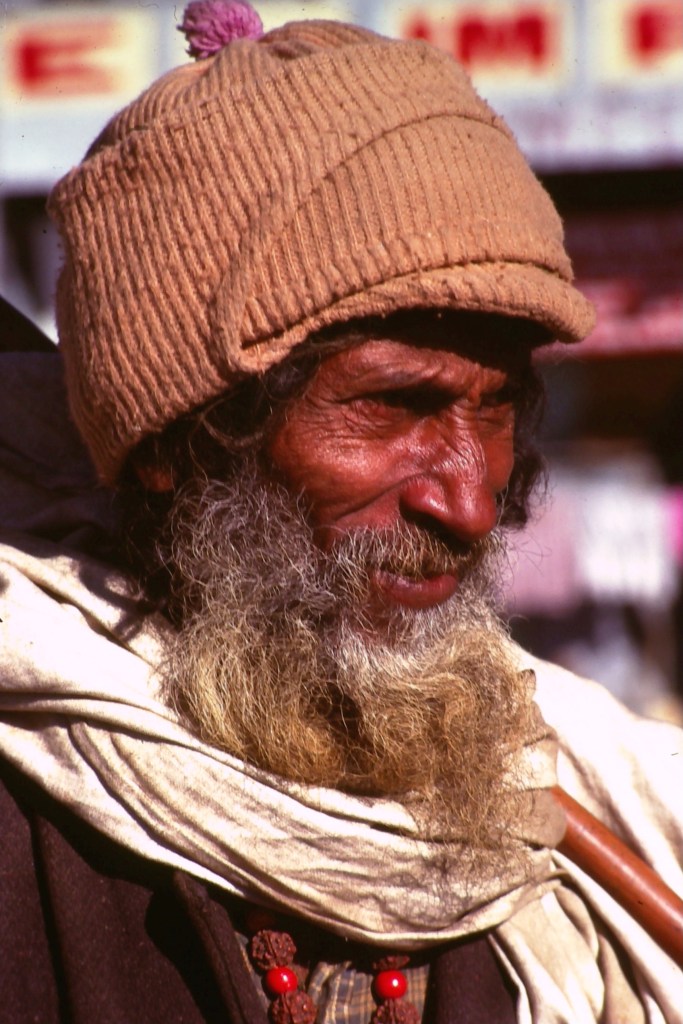
This piece was written in January 1989 while on a holiday in eastern India. The image is called ‘Mussoorie baba’ It is NOT a portrait of the Silent One of Puri, but of a wanderer I met in the hill station , Mussoorie, where I did my pre-university education in a storied boarding school. Such men could be classified as sadhus or sanyasis but are more endearingly referred to as baba. The former terms have a spiritual connotation; that one’s wandering is part of one’s spiritual practice. Baba on the other hand is a more generic term for men who amble around the countryside with no precise motive or destination. It is also sometimes used to refer to young boys. I was referred to as Nate baba, while growing up, by many older Indians.

The photo was one of the first of mine to be published by a company in the Twin Cities that published brochures for churches!