My Missionary Family Pt 3 : Ocean Liners and St. Thomas

My folks and two older brothers landed in Bombay on 2 February 1952. A second application for a visa had been successful and 28 days after leaving New York they squinted at the skyline of India’s largest city ‘with its many high-rises [that] looked pale yellow in the hazy afternoon sun, more modern looking that we had expected. 

The country where they would live and work for nearly 40 years was still young then.  Four and half years earlier the British had left in a rush leaving behind two new countries. Pakistan and India, to sort out the affairs of state amidst deep political divisions over the Partition of the subcontinent, heightened communal identify and sensitivity, a bankrupt treasury and a level of poverty that had been severely exacerbated by several massive famines in Bengal, Punjab and Sindh. 

Politically, Pakistan was in turmoil. Their first Prime Minister, Liaqat Ali Khan had been assassinated in October 1951, which saw the first direct intervention of the military in the country’s governance, a legacy the people of Pakistan continue to fight against.  The UN had declared a ceasefire in January 1951 and sent peacekeepers to Kashmir to manage the fallout of the first of four wars fought over that territory.   

India had the good fortune of being led by a charismatic visionary Prime Minister, Jawaharlal Nehru, who enjoyed stature across the globe.  When the SS Stratheden, a British ocean liner that carried troops (during the war) and mail (after) between the UK and Australia, and which George Orwell had sailed to Morocco on in 1938, dropped anchor at Ballard Pier in Bombay, India’s first parliamentary elections since gaining independence were almost complete.  Nehru’s Congress party would win easily and remain in power for the next 25 years.  

In Madras, the original Indian colonial city, 1300 kms southeast of Bombay, a cricket match between England and India got underway on the 6th of February.  King George VI died that same day, placing young Elizabeth on the throne where she would remain for many years after mom and dad both passed away.  India went on to gain its first Cricket Test victory in that match which marks the rise of the mighty Indian team of our times.  

Our family, and few missionaries that we knew,1 cared little for cricket.  It was a quaint British game played over 5 (!) days by princes and engineers.  Like polo, it was an elite sport. Nothing like the massively wealthy and dominant public phenomenon it is today. Field hockey was the more popular and accomplished sport1 in those years. 

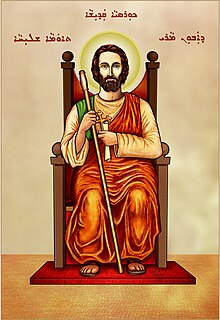
We weren’t Brits so the change of monarchs in the UK would have been little more than headline news. There was, however, one anniversary or milestone that Dad would have liked (and probably knew). That his own missionary career was beginning exactly 1900 years after one of Christ’s own apostles had first arrived in India.  The tradition (which is generally accepted) tells of St. Thomas, one of the original Twelve, landing along the south east coast of India in the vicinity of the modern city of Chennai (Madras)in 52 CE. He preached to the locals and had some success but other locals, usually identified as stuffy Brahmins, murdered him around 72 CE.  But he left behind India’s first indigenous Christian community and church, the Mar Thoma, which can, with strong historical evidence, claim to be one of the oldest, if not the oldest Christian community outside of Palestine.  

Syro-Malabar icon of Throne of St. Thomas the Apostle

If I’m to understand my parents’ life as missionaries in India I have to spend some time exploring a much broader history, that of Christian India, which pre-dates any formal European missionary by nearly 2 millennia.  In the next few instalments, I’m going to highlight some of the highpoints in that fascinating but underreported history. 

  1. India holds the record for most consecutive Olympic Golds (6) and most total Olympic Golds (8) in the sport. ↩︎

My Missionary Family Pt. 2

By mid-1951 Dad and Mom’s preparations to leave for India were in high gear. The few worldly possessions they had accumulated were packed away, ready to be shipped to their new home, or stored in the garages and basements of relatives in Minneapolis.   They had been recruited by a mission board known as the Oriental Missionary Society (OMS), a minnow in a lake dominated by the mainline Methodist and Presbyterian churches.  

They were excited but anxious, not knowing what to expect or how to prepare for what was going to be their first 5yr tour of duty.  They received two bits of advice from senior missionaries. Dad writes about the first one: 

Orville French (an OMS missionary in India) accompanied us for a walk. He encouraged us to keep focused on India–’a desperately dark and needy land’, he said. Later while studying in Houghton [College, New York] we corresponded with the Frenches who had arrived in Gadag by then. In one of his letters Orville asked us about our conjugal relationship. Hmm. He said that couples planning to serve in India, especially, needed to be sure that they were well adjusted sexually, and ‘at peace’ with their sex lives. For India, he warned, was a place where sex was overtly ‘worshipped’ (Shiva phallus symbol, erotic temple carvings etc.) and this might prove to be troublesome! His concern was doubtless given in the context of what happened to two missionary families who were forced to return home because of the husbands’ improprieties. Orville’s questions we found a bit intriguing, and actually the ‘only word of counsel’ we had from OMS on how to get ready for India. 

Now. If there ever was a paragraph that deserved unpacking, this is it.  But Dad’s final statement is not entirely accurate.  Mom wrote of another piece of advice they received, this time from Orville’s wife, Aileen. 

Aileen, in response to my queries as to what to bring with us, replied that India (and Gadag in particular) was rather drab and dreary, so ‘Bring whatever you can to make your home cheery and cozy.’ One surprising suggestion was to bring toilet paper—India’s being hard to obtain and or poor quality, if and when available. We packed a [55 gallon] drum full of it when we sailed for our first term. 

Thus alerted to the pitfalls they could expect to find, they were ready to set sail from New York in September, 1951.  With tickets booked and much of their luggage enroute to New York, they were informed that their visa had been refused by the Indian government.  This was, in Dad’s words, ‘a slap in the face’ and suddenly it looked as if the erotic temples, jewel encrusted turbans and lost souls would remain figments of their imaginations forever. 

The Indian government’s hardening stance against new missionaries was a theme of many family conversations throughout my childhood.  Though individuals who could be classified as Christian missionaries had been in India since the early years after the crucifixion of Jesus of Nazareth and though southern India was home to one of the oldest orthodox churches in the world, predating any European missionary presence by centuries, the ‘modern’ missionary movement in India really began in the early 18th century. 

It is a story filled with ups and downs and long periods of marginalization followed by shorter bouts by lionization before an inevitable return to ostracism. I’ll write more about that at some other point, but for now, the refusal of a visa for Mom and Dad, though disappointing for them, was not surprising given the political context of a newly independent country. 

Indian elites had waged an ever more acrimonious and violent war of resistance against Imperial Britian, aka The Raj, for decades. Indeed, you could make the case that the ‘natives had been restless’ for more than a century and that the first mass armed uprising against the British had taken place in 1857, when a loose coalition of soldiers, disempowered regional rulers and peasants, nearly succeeded in wiping all Europeans off the north Indian map. 

The country’s new rulers, though committed to building a non-sectarian, secular state, viewed missionaries as a subversive, antiquated, anachronistic and altogether unwanted cohort of foreigners living in their midst.  Missionary evangelizing, as unsuccessful as it was in convincing more than a handful of Indians to renounce the faith of their birth, was especially hated.  

Prominent leaders including the Governor General Mr. Rajagopalachari and Prime Minister Nehru expressed their views that missionaries were cultural aggressors and foreign fifth columnists. An official investigation in the early 50s by the government of Madhya Pradesh concluded:  

Which must be halted immediately, the report declared.  

Things didn’t look good for wannabe missionaries like Rudy and Eleanore Rabe and their two young sons Michael (4) and Gregg (2). 

Little Krishnas

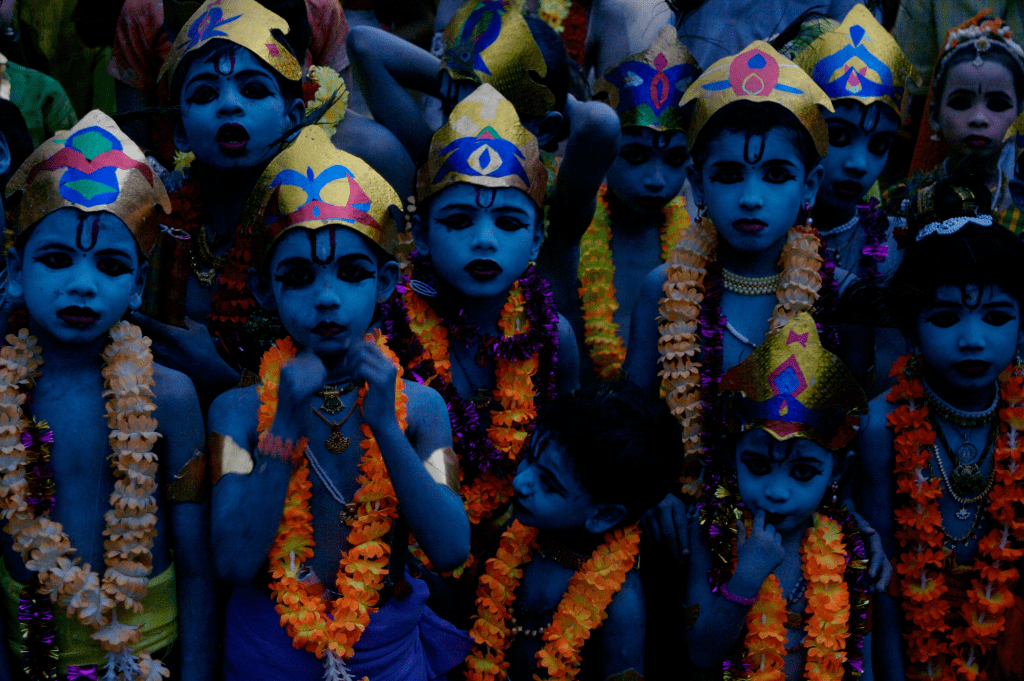
Young boys dressed up as young Krishna on the occasion of Sri Krishna Jayanti, 2009. Near Trisshur, Kerala.

I didn’t really learn about India until I left to attend University in Minnesota.  I had lived there virtually all my life up to that point and had a slightly above average knowledge of Hindi but it was pretty rough. I understood India as the place where I felt most at home in the world. A place I identified as ‘home’. But I had only the sketchiest understanding of Indian history; the sitar and Hindi movies summed up Indian culture.

My world was largely European/American/white/Christian. Though I grew up speaking an Indian language as early as or even before English, though I had many Indian playmates and in school, close mates, and though my family in no way tried to isolate ourselves from Indians or Indian culture and society, by dint of another culture and tradition I knew precious little about, that of evangelical missionaries in India, Indian culture remained a vague notion with very few points of clarity and authentic appreciation. 

This came home to me in my early semesters in University. I got into mid-level Hindi class only to discover how limited my vocabulary was and how ungrammatical was my speech. I really didn’t know how to write a coherent paragraph.  The name Mohammad Rafi had never registered with  me. Whilst reading a passage from a newspaper aloud in class (my pronunciation/accent was always very good) I stumbled at the reference to ‘Rafi’. As there are no capital letters in written Hindi I didn’t realise it was a name; the sentence didn’t make any sense.  Ultimately, the professor, who himself had never been to India, had to tell me that Rafi was a proper name and referred to India’s most famous male singer, Mohammad Rafi.  

I think my choice of South Asian Studies as my undergrad major and then my Masters in Modern South Asian history, were attempts to make up for this huge ignorance about the place I said I loved and that I called home. 

After formal education my years in Pakistan enlightened me about the impacts of Modern Indian history and how tangled and fascinating is the relationship between Pakistan and India.  

In 2010 I began blogging about music. All kinds. But I understood that I could create a bit of niche and a following by focusing on South Asian music, another subject about which I was almost completely ignorant. And so, my learning and education about India (in the broadest sense of that term) continued.  My current research on the history of the Pakistani movie industry a.k.a. Lollywood, is the same. It seems I have an unsatiable desire to learn ever more about the subcontinent.

There was no subject more unknown to and less understood by me then the world of Hindu philosophy and religion. Naturally, missionary children were not encouraged to learn too much about it for obvious reasons. To fight this ‘dark force’ was what had brought my parents to India in the first place. But also, I had enough of spiritual instruction and religious activity in my daily life already. Daily prayers and Bible readings, devotions, camps, Bible clubs, spiritual conventions and tent meetings, church services and baptisms.  The idea of trying to figure out a second religion was the last thing on my mind.  Creedence and the Beatles, Dev Anand and Zeenat Aman were far more exciting fields to plough. 

I still know so little about it, though I do love reading the many stories behind the many aspects of God that Hindus and Indians have concocted and pay homage to. 

I was in Kerala on business.  One evening I hired a taxi to visit a friend who lived near Trisshur. I wasn’t going to take my cameras but after the quiet voice reminded me, “Take your camera with you everywhere you go,” I headed out. 

About half way there we turned a corner to find the road blocked by these young fellas. 

A couple villages were celebrating Krishna Janamasthami the annual festival of Krishna’s birth. Families celebrate by swinging their youngest son around in circles and then painting young boys in blue, placing cardboard crowns on their heads and wandering around the village singing, laughing and pretending to play the flute, Lord Krishna’s instrument of love.  Later, entire busloads of villagers will visit the Guruvayur Shri Krishna Temple in Thrisshur for more ritualistic and formal acts of worship. Like many places, the temple claims to trace its history back 5000 years (doubtful) and is one of southern India’s largest places of Krishna worship, something usually associated with north India. 

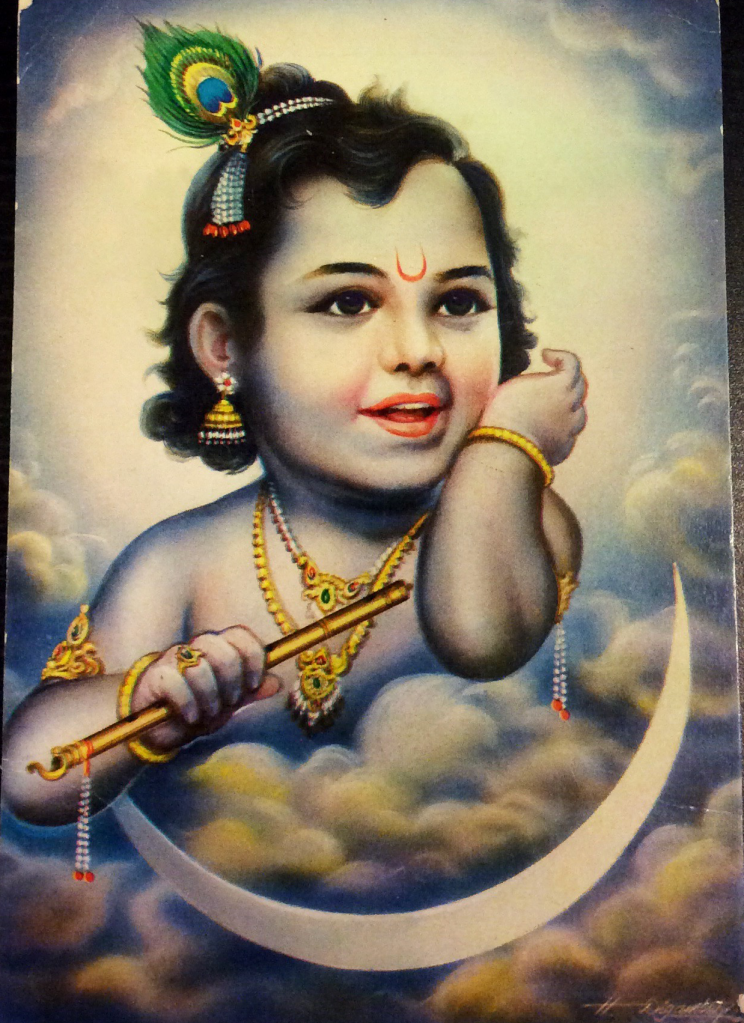
Krishna in his infancy and boyhood is known as Balakrishna, (literally, child Krishna). A stage on his life remembered for his mischievousness and antics. He is depicted in books, magazines, murals, calendars and stickers with chubby cheeks, rolls of fat on his little belly and often with his hands full of butter which he has stolen from his mother.

The following bhajan tells that story.

Balakrishna postcard


Running Home (pt 1)

When I was 15 I ran away.

Like most teenagers, I had a fantasy about running away from home.  I was going to escape and ride my push bike 2500 km to the tip of India. I was going to live a life free of adult authority along the Grand Trunk road. I was going to go far away.

But when the moment came to make a dash, I ran straight home.

**

The Himalayan monsoon that year seemed to have no end. The rains had come early and weeks went by without a glimpse of blue sky. By mid-July, my heart was aching for some warmth and a flat horizon

Mussoorie, the hill station where I attended boarding school, was  hemmed in with a brittle, misty fog that pricked your skin like needles. Every tree dripped. The narrow dirt trails we navigated around the hillside had turned into rivelets of mud.

One Sunday the claustrophobia was particularly intense. The dampness of the trees, clouds and earth had soaked into every pore of my body. I couldn’t get warm and I couldn’t shake the restlessness that had been building up for days.

I and a few friends had spent the weekend in the basement of a friend’s house at the top of a prominent hill in town. On Sunday afternoon, the crowd I hung with attended Bible Club–two hours of singing, praying and Bible teaching mixed with ping pong, homemade cakes and pretty girls.

That Sunday I sat glumly to one side, resentlng the endless rendition of “Put Your Hand in the Hand of the Man”, coming from a keen group of devotees in the main room. Tim Buehler’s electric guitar had been a novelty the previous year. Today it grated my nerves. I wanted to be away. To be far from this place and be by myself. I pushed my way through my friends to the door which I closed quietly behind me.  

And then I began to run.

My mind was blank but my body took control. I sprinted up the dirt path to the chukkar, a concrete motor road that ran around the top of the hill. Within seconds, almost with every step, a plan developed in my mind.  Ten minutes of jogging got me to Dr Olsen’s place. I charged into the basement and rifled through the pockets of whosever jeans I could find. I fished out three rupees from one pair.  With my sleeping roll under my arm, I half marched, half ran down the chakkar toward town.

My heart beat madly. I was exhilarated by my decision though I was not yet sure what it was. I was heading for the bazaar but I didn’t dare think too much about it.

One of the rules of school was that students were not allowed in Mussoorie town, one of India’s most famous tourist destinations, alone and without the permission of a parent or staff member, except on Saturdays. I knew if I met anyone remotely connected with the hierarchy of the school–staff, staff’s spouse, school karmachari or friend of a staff member–I could be legitimately questioned about my presence in town. If I had no written notice on me I would be forced to return.

I made it down Mullingar Hill, a ski slope of a road that wound through Landour, unnoticed. A few shop keepers eyed me with some surprise as I passed by but none tried to stop me.

My biggest fear was meeting Mr Kapadia, the In-Charge of Hostel, the highschool boys residential hall where I lived. In addition to being a strict disciplinarian, Mr K was known to be a raconteur who often went drinking of an evening with his Rotary buddies. What if he approached, gambolling home slightly tipsy?

While my eyes flitted like a criminal’s ahead, to the side and even back, searching for a familiar face, I realized that this was the first time I had actually been in the bazaar on a non-Saturday. The worn familiarity of the alleys and shops had been replaced by a hostile feeling, as if a friend had turned against me. I breathed deep and kept going.

At Thukral’s Photo Studio I sensed victory. It was now only a 5 minute walk to the bus stand. That was the first destination in my half baked plan. What I would do once there I hadn’t yet figured out.

I approached the ticket cubicle of the UP State Roadways Transport Service and shoved my three rupee notes across the counter. A man gave me 75 paise in change along with a ticket.  He nodded at the appropriate bus. It was empty. Not wanting to take a chance I lay down on the seats and waited for the bus to start. Not many people were travelling that evening and once we started swaying around the hairpin bends I sat up. For the first time in weeks I felt myself relax.

**

The bus deposited me at the Dehra Dun Railway station. I knew now that my soul was taking me home to Allahabad, 860 kilometers to the east, but how I was to make the journey remained a mystery. My buying power, all of 75 paise, was limited to 3 cups of tea.

Without much thought (my body still operated as an independent agent) I marched into the Station Master’s office on the main platform. The room was long, orderly and brightly lit by neon tubes that hummed like a swarm of bees.

A uniformed official sat behind a desk surrounded by phones and stacks of papers. He looked up as I came in. I opened my mouth. What came out surprised me. “My mother is sick and I need to return to Allahabad, urgently. I have no money for tonight’s train.” 

He surveyed me for a moment. “You are a student of Woodstock School?”

I nodded.

“Does Mr Kapadia know you are here?”

The mention of the name sent a shiver though my body. I must have mumbled something but can’t recall what. I seemed a stranger to myself.

He reached for a phone and dialled a number. The game was up. I froze.  After a minute he put the phone down and said there was no answer. I backed out of his office. He may or may not have called the Much Feared Kapadia, but he didn’t pursue me.

With Plan A foiled I was fresh out of plans. I paced up and down the platform struggling to keep my panic under check. I knew if I could make it to Hardwar, a couple three hours down the track I’d feel safer. I knew someone there, or at least had a name and a face, if no address. Hardwar was that much further into the Indian plain. And that much farther away from the horrid imprisoning hills. But a certain distance had to be traversed yet. I bought a cup of tea and squatted down to contemplate the dilemma.

The night came up quickly. Tube lights flickered on. I was getting hungry but needed to hold on to my meagre resources, now just half a rupee. Some trains came and others went. I watched them as years later I would watch planes high in the sky and wish I was on them. The beast within me was restless again. He didn’t like this hanging about. I kept walking the platform, crossing the footbridges and back again.

“Where you headed,” a coolie asked me as I shuffled by. He was on his haunches, cupping a bidi in his fist. I squatted next to him and mumbled, “Hardwar.”

“That one leaves tomorrow morning, eight o’clock,” he said indicating a dark chain of carriages.

I would have shared his bidi if he had asked. I usually smoked Four Square when my friends and I were in our secret tea shops in Mussoorie. I wanted smoke in my lungs at that moment. Heat and fire to match my restless anger. He didn’t offer me the bidi but he did yell at a nearby chai wala to give me a clay matka of tea and a nice, soft, cellophane-wrapped tea bun.

I slurped the tea, gratefully. As I chewed, the coolie and I chatted. He asked  where I was from, who my father was and what sort of service he did. I admired the brass identity badge on his arm with a number that certified his official status as a porter. He treated me as if I was his nephew, not a stranger. After a while, when our conversation slowed he showed me where to lay out my sleeping bag on the platform. “In the morning, the bogie you want will stop right here.”

During our chat he had assured me that I shouldn’t worry about not having a ticket. “Do you think all these people have tickets?” His tone indicated what the answer was. “Just don’t jump into a reserved bogie and no one will even look at you.”

The following morning the platform was chaos. As I rolled up my gear my coolie friend appeared amidst the melee. He told me to follow him, then elbowed and abused his way to the carriage. He sat me down by a window. Before he disappeared he smiled at me.

The train started to roll. This was electrifying. Traversing India by train, perhaps because I did it so little and mostly on holidays, was always a thrill. As the carriages lurched and swayed through the ancient Siwalik range I couldn’t have cared less that I had no money, had not eaten a meal in 24 hours and had no address for my friend in the rather large and rather holy pilgrim city of Hardwar, just a couple hours in the future. The sound, the motion and the hot breeze generated by the coal fueled engine had my heart racing. This was very illegal and very fun.

Around mid-morning we pulled into Hardwar. First hurdle was to get past the official who stood at the exit collecting tickets.  One option was to press into the crowd and attempt to squeeze through unnoticed. But with a white face, this was a risky stategy. Instead, I held back until the exiting throng had dissipated and the TC with his pockets full of little cardboard tickets, retired to his fan cooled office. With the coast clear I quickly stepped out of the gate and into the heat.

My plan, such as it was, was to rent a cycle for the day, and seek out a church where I was certain I’d find someone who knew my friend, a recently graduated seminarian from the college where my Dad was principal. In such a predominantly Hindu town as Hardwar, I figured there would be no more than a handful of churches and that they would stick out like sore thumbs. Everyone would know where to find them.

Near the station I found a hire shop and rented an Atlas bike for Rs 1. I gave the man my remaining change and promised the remainder upon return. As I swung my leg onto the seat I asked him where the church was. He shrugged and went back to work. I quickly realized that people came to Harwar to vist a handful of monumental Hindu holy spots and left. Churches were not on anybody’s menu of interesting places.

A passerby called out to me and asked with a twist of his fingers where I was going? “I’m looking for a church to find a friend.”

He acted as if he wasn’t listening but then said, “You’ll find your kind in Jalalabad, at the BHEL compound.”

“Christians?” I said, sounding like a young Vasco da Gama.

Again he shrugged. “Russians. They run that place. Go there they will help you.” He moved away into the crowd.

This was great news. White people. Russians, sure, but white folks nonetheless. I headed toward Jalalabad and after cycling for some time asked a man how far it was. “8 kms,” he said.

My heart quivered. 8 kilometeres?!

The sun was high. My legs felt like they were swelling inside my jeans. Still, the Russians were my only hope.  I pushed on and perhaps half an hour later sighted the huge Bharat Heavy Electrical Limited complex. Tall brick walls with electrified barbed wire skirted a massive industrial estate. Yet the gate was unattended so I wheeled myself in.
A way into India

I’ve been trying to write about India all my life.  

And failing. 

 Over the weekend I began to organise my old drafts and re-drafts of things I’ve written since 1980.  It appears that I’m a frustrated memoirist. Certainly, a bit of a narcissist too.  There were several drafts of a piece I wrote about Varanasi which I think I ultimately did (unsuccessfully) submit for publication. I remember struggling with that, trying to understand what I actually wanted to say about the city. What to include, what to leave out. Most versions were a mix of the travel section of your weekend paper, heart-felt expressions of my love for the city and passages which sounded as if they had been written by an AI bot decades before the stuff was even thought of.   All in all, it is awful. 

Of course, Varanasi is the kind of place that even the most sensitive or knowledgeable of writers struggle to write about.  It is one of those subjects that exists in history, in imagination, in the spiritual realm, on the map, in art and in philosophy. It is as big a subject as any in this world. So, I take my failure to capture it as inevitable. 

There were lots of other much shorter pieces too. One, on an obscure south Indian puja. Several recollected conversations with people along the way. A bunch of false starts and dead ends on my two hometowns of Mussoorie and Allahabad.  

What tied them all together was my inability to find the right voice to express what I wanted to say about India. Sure, I was learning a craft and had little command over my thoughts, let alone the words to describe those ideas. But there were other things in the way. Inarticulate passion & emotion which derailed things almost immediately. But more than anything the subject itself—India–seemed to block my path. 

India is a country and a state of mind that people tend to love or hate. Even if you haven’t been, you’ve probably got an opinion about it.  It is the ultimate in exotic. It is the place where ‘everyone everyday is steeped in spirituality,’ and where everyone wears ‘colouful, garish, brightly hued clothing’ where the bazars are jammed with ‘teeming humanity and mountains of red, yellow and black spices that amaze the casual visitor’. Where the ‘extremes of human experience’ reveal themselves against a background of ‘fabled monuments and ancient temples built by long dead dynasties’.   

Heat and dust. 

It’s creative writing 101 crossed with National Geographic.    

India ‘overwhelms the senses’, ‘drowns one in ‘sensory overload’. India is romantic. An enigma. A land of gurus and maharajas and the world’s best cricket players.  It is pastiche and projection.  

It is cliche. 

Speaking of National Geographic, that fine publication’s contribution to this way of looking at the world is immense.  As a budding photographer my favorite subject was India (and within India it was Varanasi). For years the National Geographic approach to visualising India, epitomized by Steve McCurry, was what I emulated. I wanted to capture the best close-up portraits of Indian faces.  I wanted to capture the Himalayas, grand and snowcapped and the temples silhouetted at dusk. I did get lucky from time to time but never came within a mile of McCurry or Raghubir Singh who seemed to have such a knack for uncovering those shots. 

Raghubir Singh himself grew so fed up with this approach that he devoted an entire book to looking at his country with a new eye. It’s called A Way Into India. I highly recommend you go to the library or your bookstore and check it out.  In essence he used the iconic Indian car, the Hindustan Ambassador, as a lens to see his country with fresh eyes.  And in the process, all those noble portraits, disappeared. What he revealed were glimpses of things every other photographer dismissed as irrelevant or ugly. Details or scenes that are often hard to decipher. It gave his photography new life and has cemented his place in the pantheon of great modern photographers. 

All this is to say I’m still struggling with how to write about and visualise India. It bugs he hell out of me and frustrates me. I should be able to do this, I say to myself. Why can’t I get beyond the ‘garish saris’ and ‘wizened old sadhus’?   The closest I’ve come is by letting Indians I meet along the way, speak to me in their own words.  In this blog you’ll find several such conversations. I try not to embellish them or add my judgements to them.  Just let them speak about their Indian experience.   

But that is still not what I’m searching for.  I want to tell my story. I’m searching for a way into India that is true to both my experience and to the subject, Mother India.

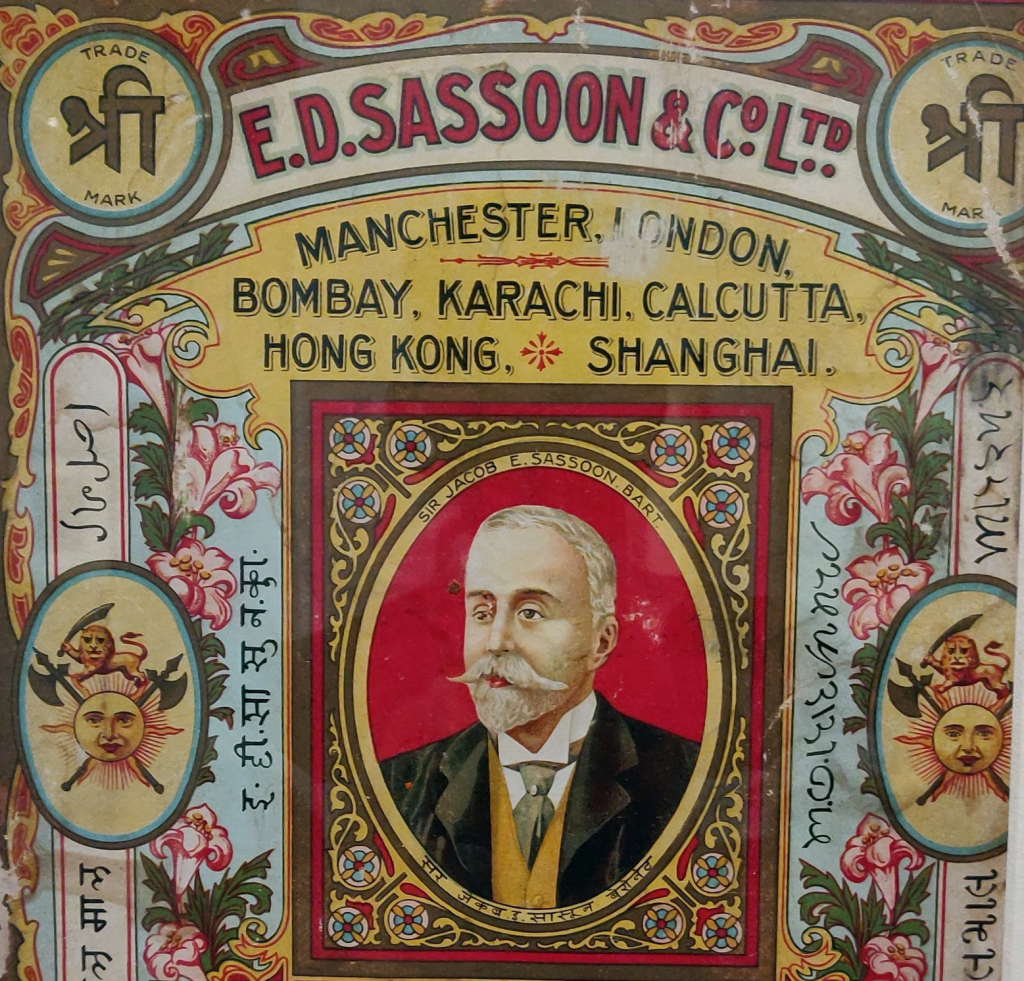
A note on the image at the top of this post. An advertisement (could have been from a calendar or a biscuit tin) for the Sassoon commercial house. The Sassoons were Baghdadi Jews who landed in India in 1830 and went on to become a leading pillar of that city’s economic and cultural heritage. The image is a cultural melange of scripts and symbols, recognisable to Indians and foreigners. The scripts mostly transcribe the family name. Sir Jacob Sassoon was the third or fourth generation to run the business. As the image depicts, he expanded operations to Karachi (now Pakistan) and Shanghai. The family, like so many of Bombay’s elite families was involved in the opium, tea, silver racket that financed the rise of the English empire. More on that in the future.

Letter from Dushanbe

Rudaki Square, Dushanbe

LETTER FROM DUSHANBE 
 
There are two things that could kill you in Tajikistan these days. The first is a massive earthquake. Tajikistan, the poorest of the former Soviet Central Asian republics with a population of six million, is the place where four major mountain ranges meet as the Indian subcontinent inexorably crushes and grinds northwards into Europe. You feel the earth tremor here almost every week: sometimes just a low quiver; at others a quick chiropractic snap that rattles your windows and creaks the walls. 

The second way you can be deprived of your life is to be slammed by a vehicle with tinted windows (could be a Jeep Cherokee, could be a tiny Lada 1500) whizzing dangerously through the shaded intersections of Rudaki Avenue, equally scornful of traffic signals and pedestrians as of the sour-faced militia that hang thick as bats along the main drags of the capital, Dushanbe. Not too long ago the odds on being kidnapped and then murdered, or shot in the crossfire of street fights were definitely better than the first two scenarios. 
 
So, on the face of it, things have improved in Tajikistan. Gangsters may be bad drivers but at least snipers aren’t drawing a bead on you when you go shopping. Tajikistan’s society fell apart the same moment the Soviet Union declared itself null and void. Seventy years of communist wall papering had done nothing but thinly cover the rifts that had been cracking across the landscape for centuries. Northern Tajiks, long the “blessed ones” of the political system began to squabble with uppity, uncouth Southerners. Democrats from Dushanbe and Islamicists from the isolated, honey producing Karategin valley joined forces against Communist party hacks. Ethnic Uzbeks, Russians and Germans were attacked, harassed and forced to quit the country. Fighting broke out in the streets of Dushanbe and carried on for five years. Tens of thousands of Tajiks fled into Afghanistan (could there be a worse place on earth to seek refuge?) as hundreds of thousands more became displaced within the country. 

Tajikistan, like many other recently independent states, is one of the lost nations of our world. Though not yet a failed state, Tajikistan is falling with increasing velocity towards the bottom of the misery stakes. It has always been a poor country and except for a couple of centuries a millennium ago, when Tajiks were the undisputed rulers of this part of the world, holding the northern borders of the first Islamic Persian empire, the Tajik people have always been lesser partners in the power arrangements of Central Asia. The fabled cities of Bukhara (ascetic and spare), and Samarkand (opulent and gregarious), are their proudest contribution to world civilization. But with the gradual loss of the northern realms to Turkic tribes the Tajiks were unequivocally usurped and subjugated to a life of cultural domination and political irrelevance. Until, that is, 1924, when the new Soviet state carved out a Tajik Autonomous Region. For the first time the Tajiks began to imagine themselves as a distinct national group. The Tajiks’ feelings toward the Soviet Union were, not unnaturally, largely positive. They were grateful for bringing them into the world. And being part of a sprawling powerful Union gave the tiny land-locked country much greater security and prosperity than it would have been able to acquire on its own. If there was any doubt about what their fate could have been without the Soviet Union, one only has to glance south of the border to the basket case called Afghanistan. Ten years ago, when Tajikistan followed the general trend and declared its independence the occasion was a cheerless event. Those once fond feelings have given way to bitterness and regret. The civil war that broke out almost immediately achieved little of positive consequence. The industry, farms and orchards of the most dependent economy of the former Soviet Union (40% of the budget had come in direct subsidy from Moscow) fell into utter neglect and disrepair. Nothing was produced and very little grown. Factories stood as empty as the revolutionary slogans that had suddenly fallen out of vogue. Bazaars were deserted. Restaurants were beyond imagination. Since an UN-brokered peace settlement four years ago Tajikistan has struggled to find its way in the big bad frightening world marketplace. It will be years before the people of this country enjoy the standard of living they had as Soviets when time extended securely into the future and holidays in Georgia were assured. 
 
Ten years after independence there remains little warm feeling for the capitalist, free market and democratic jargon their leaders mouth each day in the smudgy, thin, state-controlled newspapers. Hunger and poverty are growing in Tajikistan. The World Bank estimates that 96% of the people live on less than $28 a month. More than a third live on less than $5. Forty one percent of children under five years of age are seriously malnourished and weigh less than children their age in all except the poorest countries. Basic buying power is the issue in this country. Most Tajiks don’t have any. There is no work and what is available pays a paltry sum. Many agriculture workers working the old state and collective cotton farms have not seen a wage for three years. In most households outside of the capital (and increasingly here as well) the day’s meal is a loaf of round naan bread and tea. Russians, once the prime beneficiaries of the system, but now among the poorest, have taken to stewing dogs in some urban centers. Poverty can be measured in any number of ways. But if you calculate the degree to which a people’s standard of living has fallen (evaporated nearly overnight) then the collapse of most of the Soviet-dependent societies has produced one of the cruelest forms of privation. Recently I visited the home of a deaf pensioner who receives a small donation of American wheat flour and vegetable oil. The effects of a stroke twist his face. His flat, on the first floor of a concrete tower on the outskirts of Dushanbe, is shabby and dark. His trousers are pinned together and his shirt collar is worn; old spectacles off kilter. “I used to be a highly skilled type setter at a publishing house. Now all I can do is cry.” As I left the building I recalled what one man said to me when I asked him what he thought of the new world order. “The Russians used to say ‘We’ll screw you but then we’ll feed you.’ Now we are being fucked but there’s no food.” 

This piece appeared first on the blog Hackwriters in 2003

I lived and worked in Dushanbe, Tajikistan between 1999-2001. Dushanbe is the Tajik word for the second day of the week, (Tuesday) and was named for a historical weekly Tuesday market that had been held in the area for centuries. During the Soviet era the city was known as Stalinabad (1929-1961). With the ‘thaw’ that followed the death of Josef Stalin, the ancient historical name was reinstated.