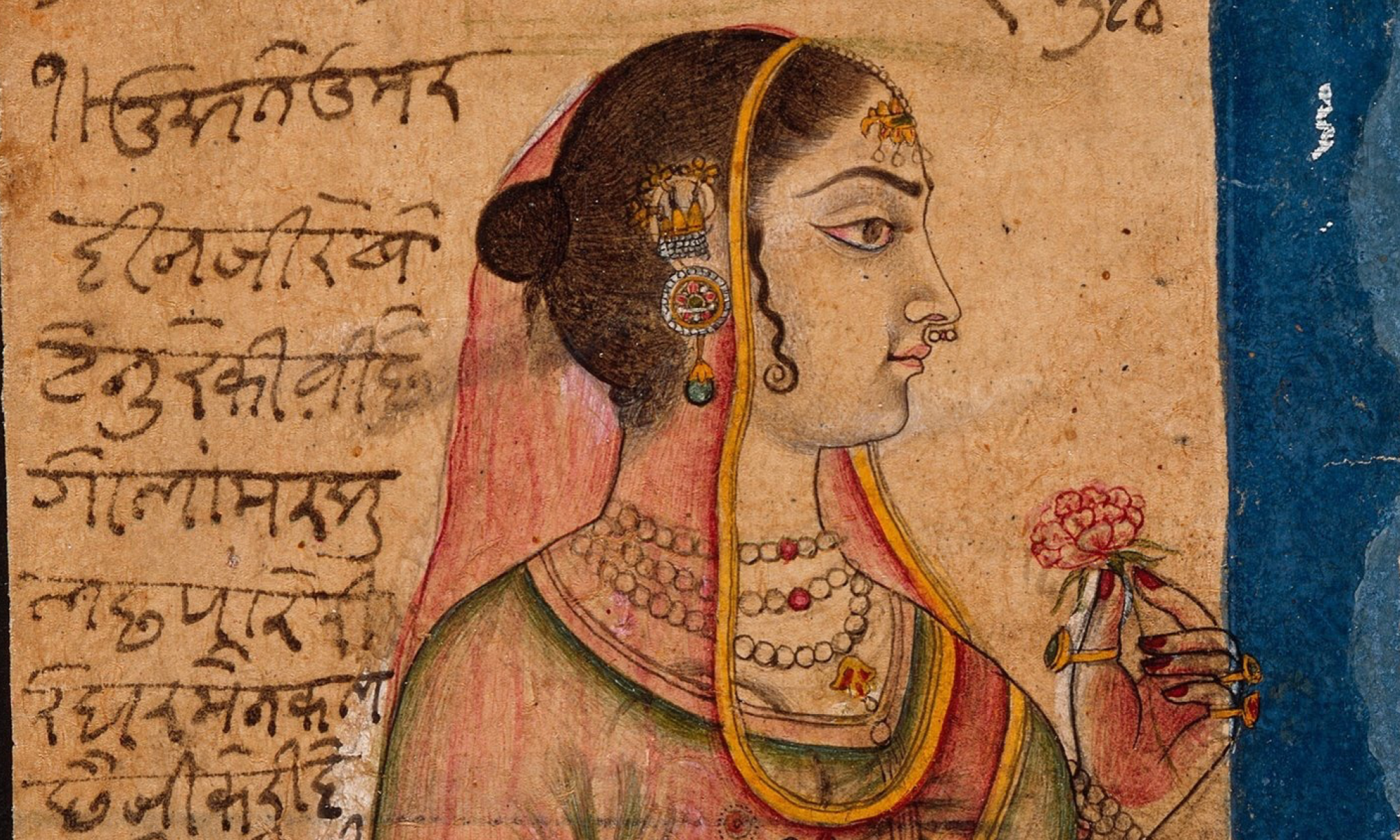




Abdul Rahman’s marriage ceremony had been morose. During his childhood his father had bankrupted the family through his uncontrollable gambling. In the early days his lust for money had motivated him, but like all gamesters he quickly became a complete and hopeless slave to his passion. For weeks without end he gambled borrowed cash, or his rare winnings, in some secret location away from the home village, Khazamiyah. From a young age Abdul Rahman had been left alone with his mother and paralysed brother to manage the family’s small shop, which sold matches, rice, candles, soap boxes and string; the kind of cheap items villagers could afford.
Angry strangers and desperate men came to the house at every hour of the night and day demanding to see his father, who, if he was inside, would send Abdul Rahman to the door to placate them while he hid under the bed. The strangers would not leave the house until they had fed their own greed with something which did not belong to them. His mother’s plea, ‘We have nothing to give you, sir. If only you can wait until Abdul Karim returns, perhaps any day, I’m sure he will be able to satisfy your claims’,was inevitably ignored. Their raging, angry desire for payment would only soften if they went away with something in their hands; a chair was as good as a piece of lace or a picture frame.
One time, just before the end of Ramadan, a vicious looking man from Ba’qubah with yellow teeth and a head of curling, violent hair, insisted upon removing the green silk cover embroidered with golden threads, which covered the Koran Abdul Rahman’s grandmother had passed on to her daughter. His mother pleaded. She hugged the man’s knees and wailed, but his only response was to become even more greedy. As he rushed from the house he grabbed a small Japanese transistor as if he were a hungry frog and the radio a fly. The loss of the radio was bearable — was there time in a day to enjoy such a thing? — but the Koran cover was a loss too great for his mother to bear. And during the holy month! The rest of her days she passed in unrelenting supplication to God for his forgiveness. Abdul Rahman vowed on the day of his marriage that he would never leave Abida with her needs unmet. He would give to his children that of which his father, the foul shyster, had been incapable. Love.
Under such circumstances Abdul Rahman had no expectation that his wedding would be happy. Hiring the traditional wedding band was out the question; a neighbour boy banged an irritating beat on a leather drum but after fifteen minutes Abdul Rahman paid him with a handful of sweets to keep quiet. Even the qazi who performed the ceremony complained to uncle Habib that it had been many years since he’d received such a poor feed. The man of God found it sinful that the pieces of meat were so small and so few. He burrowed into his plate of rice and asked rhetorically if this was a piece of meat or a raisin. What few relatives and guests attended the ceremony in the back of the shop came out of pitiful curiosity. The shame on the house was unbearable. The ceremony over, Abdul Rahman sold the shop to one of the guests and, with the money, paid his father’s most impatient creditors, settled his mother with uncle Habib’s family, and three days later, with his chubby new bride Abida by his side, caught a bus to Baghdad. Being away from the small town of his unhappy childhood was a great relief, and within two weeks he was employed as a filing clerk in the Ministry of Transport.
‘Ooh what luck!’ Abida squealed when Abdul Rahman came home that afternoon with a small cardboard box of sweets. ‘So many others have been waiting and begging for work for months, even years, but you have found a position so quickly.’ She clapped her hands. ‘I have married a lucky man. Oh, thank God!’
Naturally, Abdul Rahman shared Abida’s joy, and together they celebrated by eating the box of baklava. But his wife’s belief in luck was something Abdul Rahman definitely did not share.
From his earliest years, throughout his entire life in fact, Abdul Rahman had been eaten inside by a restlessness. He called it a fever. His body temperature did increase when it was most persistent, but sometimes it was nothing more than an overpowering feeling of anxiety. Whatever its manifestation, the feeling was the earliest indication that he shared an unnatural (maybe supernatural) bond with unknown persons and that his life was a part of a larger force and purpose. When his fever came he would lie awake at night, unable to rest. In the morning his legs would feel weak. It stole his desire for food and he dreaded the heat it generated in his arms and head. For long stretches the fever would be absent, but then, like an unexpected shadow across the sun, it would darken his mood. He had tried to ignore it, to subdue it, especially as a youth, but as the years passed he understood that it was to be as constant a reality as any in his life. And he came to appreciate his ‘fever’ as a rare gift that would some day carry him to his ultimate destiny. What words could explain this sensation? Even Abida knew nothing of this. Abdul Rahman’s ‘fever’ was his most hidden secret, but in time he learned to nurture the heat and to welcome its wisdom. It was to this restless anxiety that he attributed his success in finding employment so quickly. Nothing to do with luck.
Although the fever had oppressed him for many years, his meeting with Faris Fadhal Wathban was the first time Abdul Rahman appreciated the value of keeping records of such encounters. He had heard of an office in Souq al Quadimiyah that was accepting applications for labourers to build a bridge across the Tigris. As Abdul Rahman stood waiting for the bus, quite by chance, because he knew no one in Baghdad, he was approached by Faris. The man came to stand next to Abdul Rahman and, without introducing himself, asked for directions to the Ministry of Transport. Abdul Rahman apologised and told him that he was new to the city himself. ‘Then you must be looking for a position just as I am.’ Abdul Rahman replied that he had already approached several companies but none had offered any hope.
‘Then let’s find the Ministry together. My brother-in-law is an official there and he said to meet him as soon as I arrived in Baghdad. He swore that he is able to employ me with no difficulties. The salary is not much but it is secure employment. Perhaps if he is able to find me a position he can do the same for you. What do you say?’
Abdul Rahman agreed. Together, by asking several people and walking a great deal through the wide streets, they found the Ministry. Along the way, Faris told Abdul Rahman how he had come to Baghdad. As he spoke, Abdul Rahman sensed the heat in his arms and stomach increasing. He heard Faris’s words but did not comprehend the sentences, or the story he was telling. Abdul Rahman grew agitated but managed to hide this from Faris. When they met the brother-in-law at a big building near the Martyr’s Monument, Abdul Rahman was struggling to keep his hands from shaking, so much energy was pulsing down and up his arms and to his head. Faris chattered away with his relative: ‘I have come as you said and here is my new friend, if you help me you must help him, I insist. No. Who can drink coffee on a day as hot as today, but a juice I will accept, what do you say, eh, Abdul Rahman?’ Abdul Rahman was observing them from a great height. He was a bird on the sill, or a gecko on the wall near the ceiling, frightened and wide-eyed; they spoke in foreign whispers far below him. He wanted desperately to leave the building but would his legs not collapse if he stood up? Faris turned at last and winked, ‘All arranged. Come tomorrow at nine a.m. to begin your work. Do you know about files? I know nothing of such things, but my brother-in-law assures me that the work is light and easy to understand. Agree?’
Outside in the shady boulevard the pressure in Abdul Rahman’s head decreased somewhat. He breathed deeply with the realisation that his fingers no longer twitched and tingled; the ringing between his ears was silent. ‘Thank you for your assistance, Faris,’ he said. ‘I will definitely be here tomorrow morning.’ Abdul Rahman turned to leave but Faris pulled his shoulder.
‘You can’t hide your tongue. You are from the north is that right? My family are northerners as well. What’s your village?’ Faris demanded.
Abdul Rahman told him.
‘Do you know Habib Nasruddin? He is a prominent man there.’
Abdul Rahman replied, ‘He is my uncle. Of course I know him.’
Faris laughed and clapped Abdul Rahman on both shoulders as if he were a big pair of brass cymbals. ‘Wallahi! He is also my mother’s cousin, Samiha’s, relative. You are my relation!’
That was the first time his fever, call it his spiritual anxiety, directly benefited Abdul Rahman. It brought Faris to him on the street that morning and it, not luck, as Abida squealed, led to his employment, in his freshly married state. Soon after that day Abdul Rahman bought the book of accounts. And since that time, a consciousness was born in Abdul Rahman that an event of great significance in his life was often signalled by the rising heat in his body and the mental disquiet that accompanied it. He liked to tell himself that his fever was the breath of others’ good fortune passing close by.
*
Abdul Rahman closed the ledger and tucked it away in its blue cloth. Sweat rolled off his face and beaded in dirty black drops on his hairy arms; oil seemed to be seeping into him as surely as if he were one of the discarded rags littering the shed floor. A swig of warm, no hot, water from the jerrycan made his stomach jump in protest. He spat on the ground. Who knows how long he’d be caged like a strange jungle animal in this dingy space? In case it was a long wait, Abdul Rahman didn’t dare deplete his most precious resource so early on. Not water. They’d give him more of that. But the luxurious feeling which came over him each time he opened the heavy green cover of the ledger: that was precious.
Trying to untangle my family’s German Russian roots
What I know or thought I knew about my father’s family line was the following. Dad’s dad’s arrived in America as a very young boy in the company of his mother and older brother, Uncle Julius, around 1906. They somehow ended up in the flatlands of North Dakota where grandpa grew up, became an itinerant preacher, a sort of Methodist circuit rider, raised a large family of nine children, with Dad stuck in the middle at number 4, moved to the suburbs of Los Angeles where some of his children had settled, got cancer and in 1955 passed away two years before I wandered onto the stage.
Grandpa was German and had come from that vague geography known as Prussia. ‘Around Danzig,’ I would tell people. That’s it. The history of the Rudolph Rabe line was a concise one. It began somewhere in the eastern German lands, beyond which stretched a vast, silent horizon of Nothing.
There are cousins who have done some research and who have known more than this for a long time. But as I have lived in distant lands, far from the continental USA, for most of my adult life I have not been privy to family gatherings where such tales and faded photographs are shared. To be honest, the thumbnail history I’ve just retold was sufficient for my purposes. I never met grandpa Rabe and had little curiosity about exact details.
__
It’s inevitable that a day would come when I would want to know more. I’ve spent a lot of time throughout my life thinking about the sort of family I was raised in. At various times I’ve tried to write about being raised in India as a missionary kid. Or being raised as an evangelical preacher’s kid. Having studied history at university I am always interested in the ‘but why did that happen?’ questions. Once I make sense of one part of the story, I like to zoom out a couple layers and see the wider view and understand the context.
When Dad died in 2018, I did a bit of reading on the Holiness movement, the cultural pond he was spawned and swam around in as a child. Camp meetings ‘down by the riverside’ featured bigly in this history; both dad and mom talked about the Watson Camp Meeting in southern Minnesota where they met and where Dad was inspired to pursue a career as a missionary in India.
Dad and Mom jointly wrote a memoir of their life together in which grandpa Rabe’s history was covered off in the first two paragraphs. Grandpa was born in Poland of German parents wrote my dad, which helps to explain why Danzig always popped into my head, as that city’s name in Polish is Gdansk, which everyone got to know through the Solidarity movement in the early 80s.
Grandpa had kept a diary for some years in which he talked about his life as a poor Methodist preacher in the Dakotas, Montana and Minnesota. I read it but don’t remember him shedding any light on his childhood, family or history in Europe. What was interesting about his diary was his obvious total commitment to his Christian faith. That fit in well with my own experience. His son, my dad, who shared his name, Rudolph, was also a barnacled believer in Jesus. Like father, like son. Senior and Junior.
Together the memoir and diary added a lot of color to my imaginary family portrait. I got a glimpse of how financially unstable grandpa’s upbringing had been. And how that continued for most of my dad’s childhood. The diary revealed grandpa to be a man tormented by regular and frequent emotional highs and lows. He was, it seems, a manic depressive. Many of my immediate family, including myself, have also battled with the Big D and other mental illness avatars. I was starting to feel more connected to this guy.
As for his religion, I began to understand just how specific a world it really was. The Holiness Methodist churches in which he preached were small, rural and probably quite marginal as far as the broader German community went. Most parishioners were farm folk who clung to their German lifestyle and language, mainline Lutheran mainly but also some Catholics. Grandad’s family appears to have come out a Pietist dissident movement whose adherents migrated from Germany to the Black Sea regions of southern Russia in the early 19th century.
Here was a thread that tied together my own strong evangelical upbringing back into a history of a particular religious group who espoused many of the same principles that both Rudolphs held dear.
__
There was this guy named George Rapp who lived in the German-speaking state of Württemberg. Rapp believed he was a prophet and when he said as much in front of the Lutheran church hierarchy he was jailed and quickly thereafter, gathered some followers, who like him believed that Christ’s second coming would take place in the United States, fled Württemberg for Pennsylvania. There, he established a community–the Harmony Society–that emphasised separation from the world of non-believers (enemies number 1 and 2 being other Christians), personal holiness, celibacy and communal ownership of community assets.
Influential in his time as a radical Pietist [1] among similar ‘evangelical’ sects, denominations and communities but also with some important early figures of the Methodist movement in the US in the early 1800s, he once met the President, Thomas Jefferson, who personally interceded with Congress to allocate 40,000 acres of land for Rapp to establish his spiritual colony.
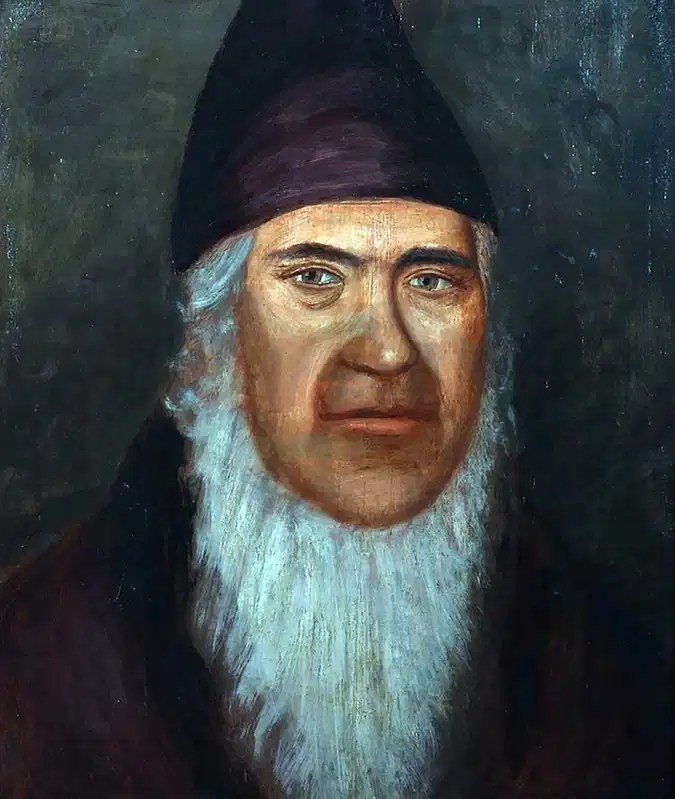
If he lived today, he would be called a cult leader and be the subject of a Netflix documentary. In addition to believing in the second coming, personal sanctification and wealth accumulation (which Rapp somehow believed was essential to winning Jesus’ favour upon his return), the Rappists as they were sometimes called, believed in alchemy, direct communication with God and submitted themselves to complete domination by Father Rapp. In the words of a journalist at the time, “The laws and rules of the society were made by George Rapp according to his own arbitrary will and command. The members were never consulted as to what rules should be adopted; they had no voice in making the laws.”[2]
What does this have to do with the European phase of my family history? Maybe nothing, as I’ve not read much on Rapp and the whole Pietist movement that came out of the Lutheran church in Württemberg. But the link between this radical evangelical, holiness-focused cult with the growth of Methodism, especially among German speaking immigrants in the States, is interesting. To what extent (if any) was the Holiness Methodist denomination, in which grandpa preached and in which my Dad and his siblings, as well as Mom’s family were raised, influenced by Rapp and his teaching?
Even more interesting is that the surname Rapp is closely connected with the surname Rabe. They both trace their origins to the Middle High German[3] word ‘raven’, hence a nickname for someone with black hair or some other supposed resemblance to the bird.[4] Though Rapp has become its own family name, it was originally an abbreviated form of Rabe (Raabe).
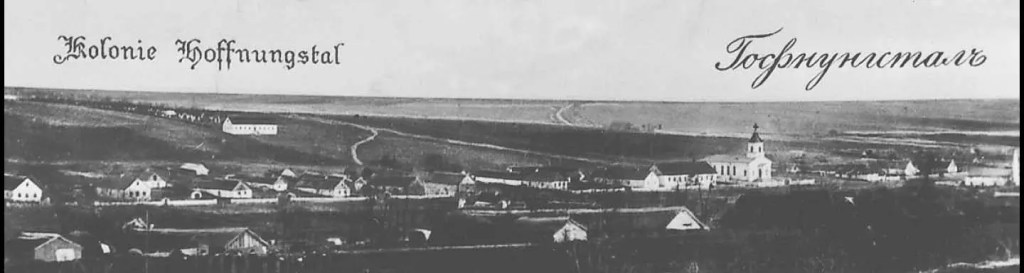
The third thin but interesting thread of this tapestry is that our step Great-Grandfather, husband of Grandpa Rabe’s mother at the time of their arrival in the States, Frederick Kenzle (Kingsley) a.k.a. “Grandpa Fritz”, according to family conversation, was born in a village called Hoffnungstal, in the Bessarabian region abutting the Black Sea.
So what?
Here’s what.
George Rapp was not the only religious radical dissident to take leave of Württemberg in the early 19th century. The Holy Roman Empire State of Württemberg, in the southwestern corner of modern Germany, was one of the first States to embrace Luther’s Reformation. The kingdom became a power center of the Evangelical Lutheran Church but also threw up several important ‘Pietist’ movements in the 18th century that positioned themselves against the formality and rituals of what was in essence the State religion.
Pietists were Lutheran dissidents who reacted against Big Church. They emphasised personal piety and purity, social separation, small worship circles often in houses and often a communal approach to property and wealth.[5] They also expected the second coming of Christ to happen ‘soon’ but had different opinions on where in fact Jesus and his white horse would land. Rapp thought the new country of the United States was the site. Others believed it would be Jerusalem. This group, led by another evangelical leader, J. Lutz, looked eastwards, towards the vast plains of Russia, as a place to move to, since it was quite a bit closer to the Holy Land. Come the Day, they would be able to get to Jerusalem quicker than if they stayed in Germany or moved to Pennsylvania, like the Rappists.
__
Germans, with their reputation as good farmers, were invited by Catherine the Great to move to Russia where she promised them attractive special privileges[6] especially freedom of religion. First settled in the Volga River region, the response was so positive that in 1803 the newly acquired territories of the Crimea and southern Ukraine surrounding the Black Sea were opened up to German and German-speaking settlers. These allotments too quickly filled up with Mennonites, Lutherans and Pietists migrants, a lot from Württemberg, setting up German colonies and villages where they were free to do things in their German way, including speaking German and practicing their own version of Christianity. Germans had over the centuries settled elsewhere in Eastern Europe, including Prussia, Czechoslovakia and Poland.
Soon after Rapp moved to America, another group of Pietist Württembergers headed towards Odessa where a large number of Germans were settled. They settled and moved around the Odessa area for a couple of decades but didn’t always have friendly relations with other settler colonies. In fact, a feature of many German settlements was their physical and social isolation from other villages, especially Russian, Ukrainian, Polish and even other Germans. Economically they were self-sufficient, selling their produce in regional markets and giving birth to smaller ‘colonies’ close to the ‘mother colony’.
In 1819, the Pietists established a colony they named Hoffnungstal (Valley of Hope) near Odessa (Ukraine) but in 1842 moved their colony to what was then Bessarabia and over the next century was to be found on maps as part of Romania, Ukraine and Russia, depending on the political configurations of the time. Germans who had settled in Poland earlier also flowed into this final bit of land set aside for German immigrants. Today the site of Hoffnungstal is in the Ukrainian town of Nadezhdivka, about 20 km south of the Moldovan border.
The unstable political situation naturally made it difficult for lots of Black Sea Germans to identify precisely the country of their birth. Grandpa Rabe’s birthplace in the 1930 Federal Census lists his birthplace as Russia. And that of his father and mother as Germany. Dad wrote in Our Life Together, that his dad had been born in Poland. We know that Grandpa Fritz was born in Hoffnungstal (in Bessarabia, Romania, Ukraine or Russia, take your pick) and that Grandpa Rabe’s mother, Karolina, is listed as being born in Ukraine in 1858.
For what it’s worth, here is my take on our garbled family heritage.

Karolina Schieve (mother of Rudolph Rabe Snr.; grandmother of Dad; my great grandmother) was probably born into a German speaking Lutheran evangelical community settled in the areas around the Black Sea, near Odessa, in 1858. Maybe Hoffnungstal, maybe a similar colony. She married Adolph Schulz whom it seems already had some children, namely Amelia (Mollie), William and Mary all of whom settled in Guelph, North Dakota a tiny, unincorporated village on the plains in the early 20th century. The Schultz’s had lived for some time (if not permanently) in a small town, Lemnitz, not too far from the border with the modern Czech Republic.
Adolph, it seems was a widower and probably quite a bit older than Karolina. One characteristic of the German speaking settlements across Eastern Europe was they moved around a lot. If things weren’t working out in Poland then they would try somewhere else, perhaps around the Black Sea or the Caucasus region. They were double and triple migrants. Maybe Adolph, after the death of his first wife, found himself near Odessa/Bessarabia and married Karolina (or she was compelled to marry him for economic or social reasons; often the case). In any case, Adolph and Karolina had no children together. Perhaps the old (er) man passed away but in February 1885, Karolina married Karl Wilhelm Raabe. She was 27 years old. Raabe was perhaps a couple years older but far closer in age to her than Adolph.
With this liaison, and the entrance into the drama of my Great-Grandfather, Karl Wilhelm Raabe, our family’s deep religious roots once again break the surface. Karl Raabe was born in Leipsig. Not the large, historically famous city and home of Johann Sebastian Bach, Richard Wagner and Richard Schumann. No. But the small German enclave of Leipsig, far away on the eastern steppes of the Ural Mountains and spitting distance from the border with the modern country, Kazakhstan. The bulk of German-speaking immigrants to Imperial Russia had settled in the Volga River basin and around the Black Sea with smaller communities in the northern Caucasus region. But Leipsig, where Great Grandpa Karl was born, was truly ‘in the middle of nowhere’. Podunk, Russia.
Given that social and physical isolation was valued among Pietist/evangelical/non-conformist Christian sects, all the more so they could remain pious as they awaited the second coming of Christ, it’s not stretching it too far to suggest that the Germans in this far outback of Russia, were particularly devout & committed to removing themselves from the world and creating a holy society on earth. Given the small size of the town (never more than a few hundred souls) it seems fair to conclude that the Raabe’s adhered to this strain of spiritual living. Interestingly, the commune of Leipsig was established in 1842, the same year that Hoffnungstal Colony, 3000 kilometers to the south, and from where Karolina and her children emigrated to North Dakota, found its ultimate home in Bessarabia.
Transportation and communication in late 19th century Russia were neither easy nor frequent. But historians have shown that there was considerable movement of Germans across the Russian lands as they sought better opportunities. As many of the communities shared a theology, worldview and lifestyle and came from similar regions back in ‘Germany’[7], it is not at all inconceivable that the Raabe clan way out in the boonies were in touch with the Schieves and or Schultz’s down in Hoffnungstal. Especially when they were searching for suitable mates for their children.
In any case, Karl Wilhelm and Karolina were joined in holy matrimony in February 1885 and enjoyed 15 years of married life together. Edward was born 18 months later in 1886, followed by Wanda (1887), Olga (1890), Julius (1891) with Rudolph, my grandfather, bringing up the rear in 1894. By the time Karolina was 36, she had been married twice and given birth to five children. All on the cold Russian steppes!
__
In 1897, Karl and Karolina and their five young Rabe[8] children were among nearly 2 million Germans living in Russia. They had been drawn by promises of land, non-interference in matters of religion, language and education, exemption from military service and despite the tough environment (blizzards, floods, droughts, armed conflict, hostility from locals) had thrived. Few were outright wealthy but Germans in Russia did enjoy a privileged status. In 1926, 95% of German Russians spoke German at home and few spoke the local languages. We can assume the same about Karl and Karolina.
In the 1870s however, Tsar Alexander II introduced a ‘modernization’ agenda which broadly cancelled all the privileges the Germans had enjoyed for nearly a century. In effect, Germans were now Russian citizens and subject to all the laws and obligations of every other Russian, including military service (6 years upon reaching the age of 20). For Mennonites and other pacifist groups, this presented a crisis. Even if they had no ideological, theological or moral position against military service, few Germans relished sending their sons to war in far away parts of the Empire.
In 1891-92 a major famine (largely man made, as most famines are) ravaged the Volga River basin, and even extended south into Bessarabia, southern Ukraine and even parts of Chelyabinsk region where the Raabe clan had settled in Leipsig.
In 1862, over in the United States, Congress passed the Homestead Act which granted 160 acres of surveyed public land to any adult male who had not borne arms against the American government if they agreed to stay on it for a full five years. Ten years later, in 1872, our dear northern neighbours, the Canadians, enacted the Dominion Lands Act with a similar hope of attracting immigrants to settle their vast prairie lands. And, to ensure America did not encroach on the land and claim it as part of American Territory. Oh, how history repeats itself!
And thus, began another massive wave of German immigration. This time across the oceans to the New World.
In 1874, Germans across Russia began immediately looking for opportunities to move elsewhere. Emissaries were sent from colonies in Bessarabia to investigate migrating to nearby Dobrudscha, in what is now Bulgaria and Romania, and, at the time, a part of the Ottoman Empire. They found it a suitable place to move and left Russia to settle in both existing and newly founded villages. Others migrated to recently opened areas in Central Asia and Siberia, where, although still a part of Russia, there was plenty of land and the laws weren’t strictly enforced yet.[9]
Karl and Karolina must have discussed all these developments as they watched their children grow. In 1900 Karl passed away aged just forty-five leaving Karolina with five young children to manage and take care of. Resilient as she had proven herself to be already, I’m sure the death of Karl increased dramatically her sense of vulnerability and anxiety, especially as Edward her eldest son approached his later teen years. Pretty soon after Karl’s passing Karolina married again, this time to Frederick Kenzle (later Kingsley) who Dad and his siblings referred to Grandpa Fritz. Born in 1860 in Hoffnungstal Colony, it seems possible he and Karolina knew each other at the time they joined forces. Both had children from previous marriages and in 1902 they dispatched Edward Raabe and all three of Fred’s children, Mollie, Mary and William, to North America. To Guelph, North Dakota to be exact. Edward was only 16 but “being happy with what they found America to be, made arrangements for the rest of the family to join them”,[10] which they did the following year, 1903.
Karolina was remembered in her obituary as a ‘good Christian woman’ but I suspect life had caught up with her. 3 marriages. 5 children. Who knows how many significant relocations in ‘Russia’ before arriving in a country where she did not know the language. According to Dad’s memoir, “Fritz Kingsley was a kind man, but unfortunately an alcoholic who at times made life miserable for his family.”

Karolina, the matriarch of the Rudolph Rabe family, passed away in 1908, just fifty years old.
[1] Radical Pietism has been defined by Chauncy David Ensign as ”That branch of the pietisitic movement in Germany, which emphasized separatistic, sectarian and mystical elements”. Quoted in Scott Kisker, Radical Pietism and Early German Methodism: John Seybert and The Evangelical Association, Methodist History, 37:3 (April 1999): 175-188
[2] James Towney, “Divine Economy: George Rapp, The Harmony Society and Jacksonian Democracy” (Masters Thesis, Liberty University, 2014), pg. 6.
[3] 1000-1350 C.E.
[4] Ancestry.com RAPP and Ancestry.com RABE
[5] John Wesley, the founder of Methodism, was strongly influenced by the Pietists and adopted the principles of the centrality of the Bible, personal spiritual transformation and spiritual disciplines such as Bible study and devotions.
[6] 1) free transportation to Russia; 2) freedom to settle anywhere in the country; 3) freedom to practice any trade or profession; 4) generous allotments of land to those who chose agriculture; 5) free transportation to the site of settlement; 6) interest-free loans for ten years to establish themselves; 7) freedom from custom duties for property brought in; 9) freedom from taxes for from five to thirty years, depending on the site of the settlement; 9) freedom from custom or excise duties for ten years for those who set up new industries; 10) local self-government for those who established themselves in colonies; 11) full freedom to practice their religion; 12) freedom from military service; 13) all privileges to be applicable to their descendants; 14) freedom to leave if they found Russia unsuitable.
[7] Modern Germany was not established until 1871. Prior to this it was a crazy quilt of independent regional kingdoms, and duchys such as and including, Württemberg.
[8] Raabe, Robey, Robie or Robbie, as per your preference.
[9] Sandy Schilling Payne, “16 June 1871—Tsar Alexander II Revokes German Colonists’ Privileges”, Germans from Russia Settlement Locations (Blog) 16 June 2021
[10] No author credited, “Guelph North Dakota: Granary of the Plains 1883-1983”, Guelph Centennial Committee, 1983, pg. 279
‘Shhhhhht. Shhhhhht. Hey! Iraqi. Shht.’ It was the tea man with the billowy turban and the long shirt below his knees, and he was agitated. His face was pressed between the bars of the window as if for some incredible reason he actually wanted to join Abdul Rahman inside. He whispered loudly but Abdul Rahman seemed dead to the world. A tiny pebble sailed through the thick air and hit the Iraqi’s cheek. ‘Shhht. Iraqi. Refugee. Wake up!’
Abdul Rahman turned towards the window to see the tea man beckoning frantically with the same floppy hand that had called him out of the sun the day before. He stood up and walked to the window. The tea man started to put words together, some Arabic, some Persian and the little ones in between in a language that Abdul Rahman had no idea what to call.
‘Refugee. You.’ The giant pointed at Abdul Rahman who nodded. ‘Allah.’ Pointing to the sky this time, ‘Allah.’ Something. ‘Refugee.’ Another strange word, followed by ‘help.’ And did he say ‘duty’? The tea man beat his chest. ‘Duty. Holy duty.’
‘Allah says it is your duty to help refugees,’ Abdul Rahman put what he thought the tea man was trying to say together.
‘Yes. Yes. Me,’ he beat his chest again, ‘help refugees. Allah say good action.’
Now that he had decoded the man’s message Abdul Rahman didn’t know what to say next. He waited. The tea man smiled and bobbed his head as if he were a servant. He looked back across the road and then, quickly, as if he were handing over a kilo of heroin, lifted up a bundle wrapped in a faded piece of blue cotton. Abdul Rahman’s heart stopped. He searched the man’s face for an explanation.
‘Holy Koran,’ said the tea man as he pushed the bundle through the bars of the window. As if he were giving a blessing, he pulled Abdul Rahman’s face forward, planted a kiss on his forehead, and walked back in the direction of his teashop on the other side of the village.
He thinks it’s the Koran! Abdul Rahman laughed to himself. It’s enough to make me believe. Abdul Rahman cradled the bundle in his arms as if it were his first born, and stared at the dirty cloth with the sort of love others would give an infant who has smiled for the very first time.
II
Swaddled in the blue cloth was a book. Not the Koran, but just as holy. Abdul Rahman’s scriptures. Covered in deep green leather, worn but not yet cracked. Heavy. It would take a strong man to lift the book with one hand. Perfectly etched in lush gold print as if by the hand of an angel, a third of the way down from the top edge, was the
word al Hisab. Accounts. The edges of the each page were delicately gilded and not a one was dog-eared. Inside, the pale-yellow pages were ruled by thin spartan lines: Balance Brought Forward. Transaction. Cash Payment. Credit Billed. New Balance. For thirty years or more Abdul Rahman had kept the Accounts Ledger, but it showed nothing of income or cash outflows, debits or credits. The debits he recorded and transactions he credited referred not to financial matters but to the balance sheet of his life.
Delicately, he removed the cloth that covered the ledger. They would think me mad if they knew I carry such a heavy thing. With exaggerated tenderness Abdul Rahman opened the book and let his eyes run over the photos and newspaper clippings and diagrams and notations as if he was reassuring them that all would be fine now that they were reunited and rescued from the hands of strangers. The photographs were of his relatives. Not his wife and children, but of more distant relations: the outer and upper branches of the great family tree that hid him in its shade. Some of them were insignificant. But most were very high officials. Famous people in Iraq. In the early years he had felt he was doing something morally wrong by keeping non-fiscal records such as photographs and bio-data of prominent persons in a ledger made specifically for charting the flow of money. He had never liked to mix such things up; it always struck him as contrary to the will of fate. But he had spent considerable time searching the bookshops and paper markets of Baghdad for a volume large enough to house his dreams and in the end the accounts ledger was the only book available.
Over many years Abdul Rahman had developed a philosophy which demanded that he keep abreast of the lives of prominent members of his family. Between sleep and work, most of his time had been given
over to the practice of his own personal faith. Abdul Rahman was not a religious man. He could not remember ever visiting a mosque, even as a child, and certainly he refused to believe in God. But he possessed a sensitive nature, acutely aware of the tuggings and yearnings of the spirit, and it was from his ledger that the invisible fingers of destiny caressed Abdul Rahman’s heart and soul. Here in the accounts ledger were details of Generals, Directors, Vice-chancellors and diplomats. All his relations. Beside each photograph or clipping he noted in a meticulous script their names, the significant dates of their lives (marriage, births, deaths, promotions, prizes), the schools which educated them and the departments which employed them. And most important of all, by way of simple diagram (or not so simple depending on the person), he demonstrated the nature of each person’s relationship to himself.
There was Mustafa Badawi, Mayor of Kifri (1979–1984) and third cousin to Abdul Rahman’s wife. Mustafa had served in the airforce before becoming mayor. From his birth he had led a blessed life. Success was all around him. Unfortunately, several years after his appointment as mayor, Mustafa’s progress slowed. His wife, (her name, Salwa, was noted next to her husband’s) operated a hair salon and restaurant in Kifri. She was prominent in the town and began to take an active role in Mustafa’s political affairs. He appointed her chairman of the Education Council and eventually Deputy Mayor. The Governor cautioned Mustafa that he could be seen as favouring his family and that his career could suffer, but Mustafa paid no attention. A brother of Mustafa’s, Rasul, became Director of the Agricultural Co-operative Bank’s regional office. Nobody minded that he had no qualifications for the post but the Party had not recommended him and that was a problem. Mustafa then awarded the contract for expanding the sports complex to a cousin, Mu’aza. One night, Mustafa
was found dead in his office. Traces of poison were discovered in the tea leaves. The sports complex was given to another contractor and Salwa left the country within six weeks. She now lived in Jordan.
In the margin of Mustafa’s page there was a notation that one of Abdul Rahman’s back teeth had caused so much trouble around the time of Mustafa’s murder that he had been admitted to the hospital for three days. Root canal procedure not done properly. A week of non-stop pain, was the neatly written note.
And here on another page was Rahim Bazzaz, brother-in-law to some cousin, who had decided it would be advisable to say his prayers in the office. On the same page, Uncle Lutfi, who questioned the appropriateness of banning the import of certain literature from abroad, peered up in a scholarly manner towards the camera, in a badly reproduced news clipping. As he revisited the pages of the ledger, Abdul Rahman could not help but feel cheated by these members of his family. My stupid relations. You have let me down. Most definitely. They had come to their inevitable early end because they lacked control. They had been unable to understand that the secret of success is to be found, not in the indulgence of whims, but by maintaining mastery over one’s fancies and inclinations. Opinions and rights may all be valid. Abdul Rahman, too, had these; but the difference between his opinions and those of his ‘stupid relations’ was that he had always understood the place of things. Chaos and confusion flow when one is unable to keep separate the various parts of life. These men, now forgotten or unaccounted for, had led uncontrolled lives. God is in the mosque, Abdul Rahman would tell himself. Only fools such as cousin Bazzaz insist that the Almighty must accompany them to the office.
But though he had no religious feeling, Abdul Rahman gained sustenance from reflecting upon the lives of his relations. Even the stupid ones were able to teach a lesson. His account ledger was his Koran: holy and true. It showed him the path of right living, as well as the consequences of an uncontrolled, mixed-up life. His spirit received strength not from Friday prayers or recitations but from following the trajectory of the stars of his relations. These were the sextants by which he had divined his own path for over thirty years. Whenever he could he sought asylum in his fantasies. Hours would pass like seconds when Abdul Rahman gazed into the photographs and re-read the articles and made notes. Peace and clarity of mind came to him from these pages; between the images and newsprint he was assured of a refuge, protected and removed from the everyday persecutions of life. And always, without fail, his relatives talked with him and encouraged him, or warned him, as surely as if they were sitting right by his side. When his relatives succeeded, he too became hopeful. But when their lives become troubled, Abdul Rahman prepared himself for a jolt in his own affairs. That not one of these prominent men knew of his existence didn’t bother him; it was not necessary that they know him. Families are large in Iraq. It was not a strange thing to have many unmet or unknown relatives.
A faith worn on the sleeve is no good for anything. Matters of the heart, believed Abdul Rahman, were best kept secret, and so he shared his accounts ledger with no one. Only Abida, his wife, knew of the ledger, and she disapproved. But hers was a principled disapproval; the principle being that everything done in life should produce some tangible, and hopefully material, benefit.
‘If you approached these big shots and got them to do some tricks for us, fine. But what’s the point of only watching? It’s just
shopping.’ She always curled her nose distastefully when he mentioned one of his relatives. ‘It may look very nice being General So and So’s fifth cousin by marriage and Professor Bighead’s step-nephew, but has our situation improved because of them? Don’t even bother to answer!’
She was right to a degree. Not once had his important relatives gifted Abdul Rahman with a car, or granted him a plot on which to build a shop or house. But this was not the point. Abdul Rahman had never cared for the material things his wife so craved. What he received from his ledger was not material, but it was just as real. Just as essential for existence.
‘Everything is connected,’ Abdul Rahman would try to explain to his plump wife. ‘Fate, perhaps what you call God, has established connections, hundreds and thousands of unseen links, like those of a spider’s web, between each of us. And not just links of blood, such as the connections in this ledger, but between our doubts and desires as well. My own desires are a part of the yearnings of many others. They are not my own private, individual affair. So too, my failures have been committed by others: those to whom fate has connected me so mysteriously. Others’ failures and triumphs are drops in my own cup, which in turn overflows into the cups of others. I am alone neither in victory, nor in disaster. I cannot, and have never sought credit or praise for my achievements. And by the same token, why should I assume responsibility for my mistakes? This is what my ledger provides: eternal principles.’ But Abida detested spiders and webs and always turned off her ears when Abdul Rahman spoke this way.
*
Abdul Rahman settled himself as comfortably as he could on the grass mat and, with care not to let even a hint of the filth of the shed fall on the pages, opened the ledger to the very first entry: Faris Fadhal Wathban, whom he had met soon after his marriage to Abida.






 Missionaries, Mercenaries and Misfits