Lollywood: stories of Pakistan’s unlikely film industry

Chapter One: An Invention With No Future

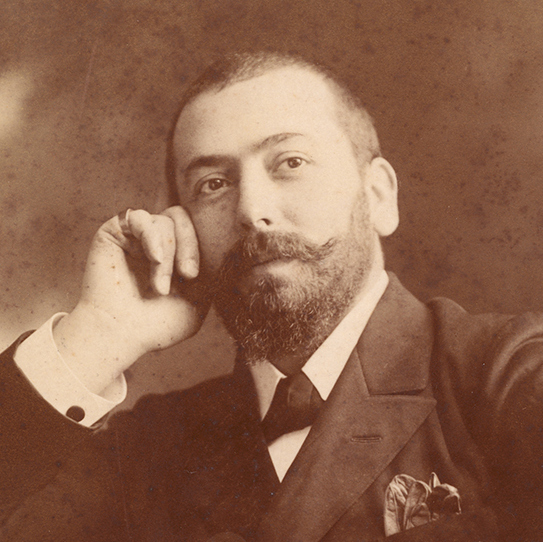
Marius Sestier

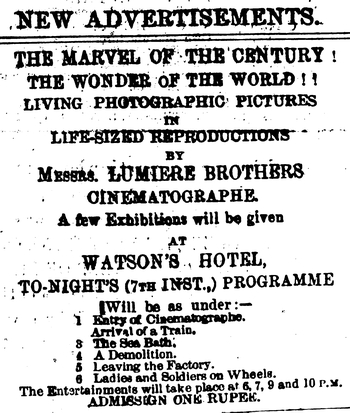
Fifty one years to the day before India won its Independence, on 15th August 1896, the well heeled citizens of Bombay enjoyed a final evening of the most โ€˜marvellousโ€™ spectacle the city had ever experienced.  For several weeks, first at Watsonโ€™s Hotel in Kalaghoda and then at the Novelty Theatre on Grant Road, a Frenchman en route to Australia, had been delighting audiences with the latest hi-tech entertainment.  Called the โ€˜cinematographeโ€™ his contraption, which looked like an ordinary wooden box with a hand crank on one side and a small brass-encased lens on the other, was the closest thing to magic audiences could imagine. As the Frenchman rotated the crank a spool of thin grey film through which light flowed from a second box attached to the top, the most unbelievable photographic images danced against a white screen.  In the darkened hall the rapt viewers wondered if they had not been transported to a new dimension.

The projection of moving pictures was the most exciting development yet in the short life of the revolutionary new science of photography. Two French brothers Auguste and Louis Lumiere had been experimenting with colour photography for a number of years and as a sort of intellectual side-project had attacked the problem of combining animation with projection of light. Just nine months earlier, in December 1895, at Parisโ€™ Grand Cafe, the brothers had stunned audiences with the first commercial showing of a film, which over a span of 49 seconds, depicted a train pulling into a station and passengers jumping on and off. 

The Lumiere brothersโ€™ version of the movie camera-cum-projector was small and light enough to be carried about outdoors. At first, the inventor brothers didnโ€™t know what to make of their apparatus. In fact, they saw it not so much as an idea whose time had come but, as Louis Lumiere said, as โ€˜an invention without a future.โ€™ His brother put it even more emphatically: โ€˜our inventionโ€ฆhas no commercial future whatsoever.โ€™

But in direct contradiction of their conviction, the siblings launched a campaign to take the Cinematographe experience to audiences around the world. To assist them they contracted a fellow Frenchman, a pharmacist by trade, named Marius Sestier to be this new technologyโ€™s evangelist in the furthest end of the world, Australia. So dubious of their inventionโ€™s prospects were the brothers that a year or two later they put together a travelling road show complete with 40 magicians to tour Asia, the Far East and the Fiji Islands.  If the moving pictures didnโ€™t draw the crowds perhaps the wonder workers would be a profitable Plan B.

Sestier, who sported a trim beard and moustache with ends that curled confidently upwards in the style of an upperclass gentleman, set sail, with this wife, from Marseilles on 11 June 1896 with a passage to India.  They docked in Bombay nineteen days later and though it seems Sestier knew little English, he immediately set out making arrangements for the showing of several films. Over a period of four nights people crammed into a small room in Watsons Hotel to watch six short films[1], including the much bally-hooed Arrival of a Train, all produced by the Lumiere brothers.  The local papers proclaimed this new thing, โ€˜The Wonder of the World!โ€™

The impact was tremendous and immediate.  More showings were added (though one was cancelled due to an early case of load shedding) and additional, larger venues were secured. The local press gushed enthusiastically about this amazing Marvel of the Century but found Mr Watsonโ€™s hotel to be somewhat unsuitable. The Bombay Gazetteโ€™s reporter complained that because of โ€œthe smallness of the room, the operator is unable to have the instrument sufficiently removed from the canvas to make the figures life-size, and this has the further disadvantage that it makes the actors in each of the scenes move about rather too quickly.โ€

Sestier responded to the criticism by securing the premises of the Novelty Theatre as a corrective measure.  Built in 1878, the Novelty was one of Bombayโ€™s glittering new theatres along Grant Road, the cityโ€™s answer to Broadway. It boasted a large 90 x 65 ft. stage and accommodated 1400 people. The Lumieres were in business! At Rs. 1 a seat, Sestier grossed close to Rs. 100,000 (close to one million in contemporary terms) over more than 60 sold-out shows, which proved beyond any argument, that inventors should not be relied upon for their business acumen.

By the time Sestier boarded the French steamship Caledonien for Colombo and Sydney on 26th August, he had changed India forever. The movie bug had found a new host. Many Indians had attended the shows at the Novelty Theatre and one in particular, a photographer, Harishchandra Sakharam Bhatwadekar (aka ‘Save Dada’) was so enraptured he immediately placed an order for a Lumiere Cinematographe with the London firm Riley Brothers. The investment set him back a pretty penny but within three years Bhatwadekar had made and shown Indiaโ€™s first documentary film, The Wrestlers, which depicted a match at Bombay’s Hanging Gardens between a couple of popular local wrestlers, Pundalik Dada and Krishna Navi.  Over the next several years Save Dada made a number of other films, all of mundane everyday subjects and reached his cinematic zenith by documenting the grand Delhi Durbar, a celebration of King Edward VIIโ€™s accession to the Imperial throne in 1903.

Save Dada was not alone.  In Calcutta and Madras, other men (yes, they were all men) were just as excited about this stunning new invention.  With a buzz that can only compare to the one we experienced when we received our first email or spent our first hours surfing the web, dreamers and entrepreneurs in every corner of British India sensed the magic of films and moved quickly to grab hold of it.

In Bengal, a rakishly thin lawyer, Hiralal Sen, scion of one of Bengalโ€™s prominent Bhadralok families moved to Calcutta from Dhaka in 1887 to indulge his fascination with photography and cameras.  Some years after his arrival in Calcutta, the legendary studio of Bourne and Shepherd sponsored a photographic competition which Sen, eager, like all budding photographers for some recognition, entered.  When he won a prize, the young lawyer was so encouraged he abandoned the Bar and rather rashly established his own photo business.

Though photography had been around for nearly half a century by this time, it was still so new.  Its possibilities intrigued practitioners who experimented with all manner of materials and processes. Everything had to be tested and tried. In between taking portraits of Calcuttaโ€™s citizenry Sen began experimenting with light by projecting shadowy images against the wall using a lantern and black cloth. But as far as we know, by 1896 Sen had not yet seen a motion picture.

This happy event happened in 1898, two years after Sestierโ€™s shows on the other side of the country. A certain Mr Stevenson, one of those minor characters that wanders across the stage of  history but about whom next to nothing is known, hired a swank venue on Beadon Street, the Star Theatre, where he exhibited a โ€˜Bioscopeโ€™ film that ran on the same bill as a popular stage play, The Flower of Persia.

Charles Urban, an American book and office supplies salesman with a fetish for silk hats, fell in love with movies from the first moment he put his eye to the peephole of a Kinetoscope, the early American film projector invented by Thomas Edison.  Ever the salesman, Urban immediately cottoned to the commercial potential of moving pictures (even if Edison, like the Lumieres, did not) and arranged to be Edisonโ€™s agent for the state of Michigan. By 1896, as Sestier was wowing Bombayโ€™s citizens at the Novelty Theatre, Urban was trying to sell Edisonโ€™s updated projector, the Vitascope from his shop in Detroit. A year later, after asking an engineer friend to come up with a better projector that didnโ€™t โ€˜flickerโ€™ as each frame passed through the light, Urban was marketing his very own Bioscope, a single wooden box more tall and narrow than Lumiereโ€™s but like theirs with a hand crank. His projector had the added advantage of not requiring electricity to operate.  The Bioscope was so successful that an English firm, Warwick Trading Company, invited Urban to move to London and head up the company with his Bioscope as its flagship product.

Charles Urban

Given his familyโ€™s wealth it appears not to have been a big deal for Sen to fork out Rs. 5000 for one of Urbanโ€™s spiffy new inventions.  Upon its arrival in India though the equipment was slightly damaged. And to complicate matters it came with no instruction manual. But Sen was not easily deterred.  He sought out a European friend, a Jesuit priest named Father Lafouis, who assisted Sen in repairing the Bioscope as well as figuring out how the contraption functioned. Within a short time Sen had so mastered the Bioscope that with the financial help of his brother Motilal and two other investors, he established the Royal Bioscope Company in 1899.  Sen quickly became an importer of European films and within a year had shot his own footage. Taking a cue from the mysterious Mr Stevenson, who appears to have moved on to greener pastures, Sen cut a deal with the Classic Theatre, to exhibit his films between acts of a stage play, as a sort of bonus entertainment.  The first Sen film to gather notices was Dancing Scenes from the Flower of Persia, which was a popular stage production at the time.  Encouraged by the publicโ€™s response Sen filmed scenes from other stage productions including Ali Baba, Sitaram and Life of Buddha which were then shown at other city theatres including the Star and Minerva. As in Bombay, the shows stunned the local press. โ€œThis is a thousand times better than the live circuses performed by real persons. Moreover, it is not very costly โ€ฆ Everybody should view this strange phenomenon,โ€ gushed one local daily.

And it wasnโ€™t just the residents of Indiaโ€™s most populous city that got to partake of this strange phenomenon. Royal Bioscope took their films to the countryside, setting up impromptu open-air cinemas in small towns across Bengal and Orissa, starting a practice of travelling movies that continues up to the present.  Hiralal turned out to be an artiste of amazing inquisitiveness and is credited with making Indiaโ€™s first political film (fiery nationalist speeches denouncing the British Raj by Surendranath Bannerjee, a founder of the Indian National Congress) as well the first commercials for a certain Edwards Tonic and Jabaskum Hair Oil.  He continued to film stage shows as well as produce  short films of everyday life for a decade and a half  but sadly his entire ouvre went up in smoke. Literally. In 1917 the Royal Bioscope Company warehouse caught fire and destroyed all his work and some of South Asiaโ€™s earliest and most important films.

Senโ€™s success ignited the imaginations of others and movies began their journey from novelty toward industry.  Back in Bombay, in 1911, Dhundiraj Govind โ€˜Dadasahebโ€™ Phalke, another photographer cum magician cum printmaker was completely smitten after catching a film called Amazing Animals, a sort of early David Attenborough nature film, at the America India Picture Palace.  He returned for more, this time buying a ticket to an Easter time showing of a French film called The Life of Jesus.  โ€˜Why,โ€™ he whispered quietly to his to his sceptical wife as they sat in the dark, โ€˜couldnโ€™t I tell the story of our Hindu gods and deities on film, as well?โ€™

How his wife answered we donโ€™t know. But Phalke who had struggled up this point to find anything that could capture his interest for more than a few years at a time, and whoโ€™s several business partnerships had ended acrimoniously,  spent the better part of a year buying up equipment and  learning as much as he could about film making before  travelling to England in February 1912 to meet with moviemakers and technicians. During this time one of Phalkeโ€™s correspondents was an American magician named Carl Hertz. Hertz had spent time in India tracking down fakirs who could reveal to him the secret of the Indian Rope Trick and meeting with the painter Raja Ravi Varma. Given subsequent events, in which he tours the South Pacific as part of the Lumiere brothers troupe of  40 magicians/ projectionists it seems likely that he may have met Sestier himself at one his Bombay movie exhibitions.

Dadasabeb Phalke

In any case, both men, Phalke and Hertz, were in Bombay around the same time and shared a passion for moving pictures and magic.  In the years proceeding his cinematic career, Phalke for a time had billed himself as a magic man named Professor Kelpha, an anagram of his family name. In another intriguing twist Phalke had done business with Raja Ravi Varma through one of his other commercial ventures the Phalke Engraving and Printing Works. So it is possible that Hertz had met Phalke as well.  After leaving India, Hertz integrated moving images into his magic show as a regular feature and went on to achieve a minor notoriety as the first man to show a film on a ship and in South Africa. 

Phalkeโ€™s London sojourn was a lightening trip.ย  He was back on Indian soil three months later, and on 1 April 1912, the very day he landed in Bombay, he registered the Phalke Films Company, and began putting together this first film, Raja Harischandra, based upon a legendary ruler of ancient India described in the epic Mahabharata and other literary works.

Released in 1913, Raja Harishchandra holds the official title as Indiaโ€™s first feature film. But in fact, a year earlier, in 1912, another enterprising Maharashtrian exhibited a movie titled, Shree Pundalik, at the Coronation Cinematograph at Girgaum. Most film historians reject the idea that it was in fact, โ€˜Dadasahebโ€™ Tornay, the maker of Shree Pundalik, who deserves the accolade as Indiaโ€™s earliest feature film maker, on the rather lame grounds that the camera was operated by a European named Johnson. And that the film was sent to London for processing. Had these criteria been sufficient to disqualify a film from being judged Indian, many films including some of the most loved such as the classic Pakeezah (1972) which was shot by German Josef Wirsching would also need to be removed from the canon.

But whereas Tornay failed–Shree Pundalik was a commercial flop–Phalke went on to make more than a hundred silent films many of which included his wizardry with special effects like the Hindu god Hanuman flying through the sky.  After a falling out with his business partners Phalke, who rightly, is credited as the father of Indo-Pakistani cinema, retired to the banks of the Ganges in Varanasi, a somewhat disillusioned and lonely man. For years he resisted making more films but eventually agreed to accept an offer from the maharaja of Kholapur to produce one final film, a talkie called Gangavatran. Like many others Phalke struggled to cope with the transition from silent to sound films and was unable to repeat his early silent film success.  He passed away in 1944 a forlorn and rather forgotten figure.

In the southern city of Madras, a dealer of imported American cars, Nataraja Mudaliar, was a fan of Phalkeโ€™s films, and like Sen, Bhatwadekar and Phalke just had to try his hand at the new craze.  Mudaliar requested an Englishman by the name of Stewart Smith who was in town filming a documentary on Lord Curzon ( Viceroy of India from 1899 to 1905), to give him several lessons on the finer points of using a camera.  With a confidence that only the amateur can muster, Mudaliar, established Indiaโ€™s first film studio, the India Film Company in Puruswalkam. The year was 1917.  Within a year, he had produced a series a well-received historical pictures including South Indiaโ€™s first feature film Keechaka Vatham, an episode from the Mahabharata, exhibited at the Elphinstone Theatre. The film was a smash hit by any standards thrilling audiences and netting Mudaliar Rs. 50,000.  Excited by the money making potential of his film, Mudaliar arranged for it to be shown in cities outside of India with large Tamil populations including Rangoon, Singapore and Colombo. These venues further netted him a handsome Rs. 15,000.  So infectious was this new art form that even the Father of Independent India, Mahatma Gandhiโ€™s family was caught up. His son Devdas Gandhi, then a journalist, was hired by Mudaliar to write the script cards for Keechaka Vatham in Hindi, in order that the film could be shown in the north.


[1] During his stay in Bombay, Sestier screened between 35-40 films, all presumably shot by his sibling sponsors in France. They included such delights as Rejoicing in the Marketplace, Foggy Day in London and Babies Quarrels.

Lollywood: stories of Pakistan’s unlikely film industry
Introduction

The bloody cataclysm of 1947 which resulted in the death and displacement of multiple millions of people, the destruction of an ancient cityโ€™s sense of community, the disruption of a vibrant economy and a fundamental reassessment of a peopleโ€™s and cityโ€™s very meaning and identity seemed to signal, beyond any shadow of doubt, the end of Lahoreโ€™s emerging movie making dream.

Within a month of Roop Kishoreโ€™s escape and the razing of his sparkling new studio the guts were ripped out of the entire industry. The financers and producers, most of whom were at least โ€˜nominalโ€™ Hindusโ€™ like Shorey, many of the editors and writers of the cityโ€™s lively film press, actors, music director, playback singers, directors and countless Sikh and Hindu techniciansโ€”cameramen, editors, sound recordists and visual artistsโ€”fled.  While most probably harboured hopes that โ€˜when things calm downโ€™ they would return–โ€˜maybe a few weeks, at most a month or twoโ€™– and pick up finishing the picture they were working on, all except a small handful never set foot in Lahore again. As it happened, Roop Kishore Shorey was one of the few who did. But weโ€™ll get to that a bit later.

By the end of 1947 the writing was on the wall. The exciting glory days of making films in Lahore was over.  The cityโ€™s movie refugees reconciled themselves to re-establishing themselves in Bombay, which except for the biggest names and most established stars turned out to be a struggle. Eventually some made it and went on to become rich. Even giants. Most found work, maybe even had a hit or three, but within a decade, they quietly faded away like the pages of the film magazines that once published their pictures.

Back in Lahore the remnant of the industry had other priorities: rebuilding their city, burying their dead, feeding and schooling their children. Making films seemed frivolous under the circumstances. And already questions were being raised by the mullahs, those who had championed the very idea of Pakistan as a thing, about whether there was a place for such a ridiculous, scandalous and even anti-Islamic thing as movies in the new country.

A number of Muslim actors, directors, producers singers and writers did leave Bombay and Calcutta and move to Lahore. But their number was small, especially in the early days.ย  It is said that Mehboob Khan, one of Indiaโ€™s most revered directors, maker of Mother India, made a quick post Partition foray into Lahore to assess whether he should emigrate. โ€œI need electricity to make films,โ€ he is reported to have snorted upon his return to Bombay.

Yes, Noor Jehan, Indiaโ€™s most famous and beloved singing actress, โ€˜optedโ€™ for Pakistan as did Manto, the incendiary writer, and a few other biggish names but obstacles and hurdles were so many that the idea of putting Lahore back on the film making map seemed the stuff of madmen. Manto drank himself to death, after spending most of his time in court fighting for artistic freedom.

One can empathise with their gloom. The dream had ended not only so abruptly, but too soon.

Films had been a part of Lahoreโ€™s life since at least the 1920s though one source claims that the Aziz Theatre in Shahi Mohalla was converted to a cinema in 1908. The cityโ€™s residents, especially the large number of students who attended Lahoreโ€™s many premier universities and colleges, were instant fans and supporters of the medium. Hollywood movies starring Mary Pickford, Hedy Lamar, Charlie Chaplain, Douglas Fairbanks and especially Rudolph Valentino were hugely popular. Rowdy Punjabi audiences were recognised (and most of the time appreciated) for their unabashed preference for action and romance pictures; by the late 1920s and early 30s the Northwest region of India was the number 1 film market outside of Bombay. The big production centers of Calcutta and Bombay made pictures that would appeal to the Punjabi and Muslim audience churning out Mughal era historicals and recreations of Arabic and Persian folk stories.

In the late 1920s a Bhatti Gate resident, Abdul Rashid Kardar, turned to making his own films. Filmed in open air along the banks of the Ravi river or amidst the cityโ€™s many medieval ruins, the films were well received even if by a tiny local audience. Wealthy businessmen and civic leaders started investing in the new technology. A high court judge invested Rs45,000 in a German Indian co-production called Prem Sanyas (The Light of Asia), a story of the Buddha, that has gone on to be claimed as a classic of world cinema.ย 

When speaking and singing pictures became possible others jumped into the river. โ€˜Studiosโ€™ and production units popped up all over the place in Muslim Town, on McLeod Road, along Multan Road, and especially Laxmi Chowk. Lahoreโ€™s publishing industry sprang into action and began pumping out film magazines in English and Urdu from as early as the 1920s and 30s. Roop Kishore Shorey started making rip offs of American and Bombay action films some of which got fair notices. After a downturn in the mid-1930s by the early 1940s Lahore was fast developing into the B-movie capital of India. A source of talent and story lines (the number of Lahore or Punjab born and or educated actors, directors, producers, singers and writers who made and whose children and grandchildren continue to make Bombay the world leading industry it is, is too numerous to count) Lahore was what the Americans call a farm club. A place where talent was procured tested and then sent up to the big leagues in Calcutta and Bombay.

While the smart movies were made in Calcutta and the big productions came out of Bombay the filmmakers of Lahore in no way suffered from an inferiority complex. They prioritised quantity, action and speed. They prioritised fun. They made money, they drank, they swapped wives, they got divorced, they gambled and raced the horses. They travelled the world looking for money and even produced films for international markets. 

But then the dark clouds of politics rolled in and poofโ€”like the bomb in one of their action movies–the game was up.

Yet, it was in the bloody rubble of Lahore that the seeds of a new industry were born. Not just a minor player, but within a few decades, a booming national film industry. By 1970 Pakistan was the largest film producer in the Islamic world and the 4th largest (by volume) in the world. Without its old stars it produced several generations of superstars, actors, starlets, writers and singers, oh the singers. Not just Noor Jehan, but Mehnaz, Irene, Nahid and the Bengali bomb, Runa Laila.  A lot of them went on to sing for Bollywood and still do (Atif, Adnan Sami, Ali Zafar, Rahat).

That Lahore would be a major world film centre is on the face of it improbable. It was far removed for the colonial power centers and indeed, is the only major south Asian movie city not based in a colonial city, that has survived and thrived. How weird is that? Especially, in such a hostile environment. In a land where official, political and religious biases have constantly been more of a threat than the erstwhile films of India which are forever being outlawed.

To understand this amazing, improbable story we have to start not with Roop Kishore Shorey staring into the ashes of his modern studio but go back in time to the very beginning.

Lollywood: stories of Pakistan’s unlikely film industry

Scenes from never-made Pakistani films [Number 1]

Film: Tabahi (Annihilation)

Released: June & July 1947

Starring: al Nasir, Vinod & Roop Kishore Shorey

A man stands by the side of the road staring into the smouldering skeleton of a large double storied building. He covers his nose with a blue silk handkerchief to keep the noxious, semi-sweet smell of burning nitrate at bay.  The lenses of his round rimmed glasses reflect the flames that leap from room to room.

The camera pans back for a super wide shot and reveals behind him the apocalypse that everyone had been praying would never come playing out.  The citizens of Lahore are moving hurriedly and fearfully towards the railway station. For once no one argues with the tonga walas who are demanding Rs100 to make the short journey. Bloated groups of people–women and children in the middle; wild-eyed men armed with swords, pistols, axes and lathis on the perimeters–move deliberately towards neighbourhoods where their co-religionists might give them safety. Hindus to Nisbet and Chamberlain Roads. Muslims to Mozang and Icchra. Sikhs want to make Amritsar or Delhi.

To the north, old Lahore is an inferno. The once rich markets and havelis of Shahalmi, one of Lahoreโ€™s mighty 13 gates is no more. Gangsters and politicians had banded together two days previous to raze the historic mohalla to the ground, killing hundreds of mostly Hindus.  War chants echo in waves as lorries race by loaded with enraged men. โ€œKhoon se lenge Pakistan!โ€  โ€œHar Har Mahadev.โ€   For weeks the citizens of Punjabโ€™s greatest city have heard that goondas from Amritsar have snuck into town to mock and shame their Muslim brothers to cleanse the city of all kafir.  In response the Sikh leaders have mobilised their small armies of jathas in an all out war of revenge.  Everyone knows that even the Lahore Relief Committee set up by some prominent Hindus is just a front for RSS militants more concerned with smuggling weapons to their frightened people than offering relief any sort of relief.

The days are unbearable. The early summer heat has maded the tar on the roads gooey. With the fires and explosions all across the city the temperature has never risen so high. Perhaps when the rains come all this madness with come to an end?

The staring man goes by the name of Roop Kishore Shorey. He turns away and falls into the backseat of an American sedan that has been idling for him. Inside an anxious driver guns the car down the road and yells out โ€œWhere to sahib? Lahore is no longer safe.โ€

Shorey doesnโ€™t answer. Next to him fidgeting anxiously sits his friend, the music director Vinod, who just a few months earlier had completed his first score for the movie Khamosh Nigahein at the now destroyed Shorey Studio.  Vinod shouts for the driver to turn the car, which was headed north toward the city and railway station, to the south.  โ€˜Go to Walton Air field.โ€™

At the airport the pair find Al Nasir, the debonair hero and recently licensed pilot, readying his tiny single prop plane for takeoff.  โ€œYou know, I only have room for one of you,โ€ Al Nasir says merrily, seemingly oblivious to the carnage in the city.

โ€œTake him.โ€ Vinod pushes a nearly catatonic Shorey forward. โ€œIโ€™ve got a family to worry about.โ€

 โ€œThirty-four and still a bachelor! Who can believe it,โ€ laughs Al Nasir. Sex and women were essential parts of the actorโ€™s life. Heโ€™d just divorced the beautiful Meena and was now hot in pursuit of a number of other starlets in Lahore and Bombay.

Shorey embraces Vinod seemingly unwilling to let him go, but the music director untangles himself. โ€œIโ€™ll follow you soon. Iโ€™ll find you, donโ€™t worry. My family must think Iโ€™m dead, I have to go.โ€

Vinod runs back to the car which speeds off toward the city.

Al Nasir gets in beside Shorey and notices that the producerโ€™s normally pristine white shirt is grey with dust and ash. Sweat and tears have muddied the lenses of his expensive German spectacles.  He smiles grimly at his friend and without waiting for approval from the tower taxis down the runway.  Lifting off, the plane circles and climbs steadily through the heavy, smoky air.  Shorey stares out of the window. The city of his birth, the city he loved, the city he was so determined would one day be as famous for its movies as Bombay, is now a medieval battleground. Fires, pillars of black smoke and crumbled buildings everywhere.  Around the railway station a mini city has grown up. He can hear gun shots, There are army trucks at every chowk.

โ€˜Weโ€™ll be back,โ€™ Al Nasir, calls out. Heโ€™s still smiling. โ€œNehru and Jinnah and Gandhi will sort it out. This is Lahore after all. Let them call it Pakistan. Itโ€™s still India. In a few weeks everyone will get tired of blood and bombs and the public will want to see our movies and have fun again.โ€ 

The plane climbs higher and disappears into a dark grey cloud.

World Muzak [not]

There is an ultra-thin niche in the Ameri-Euro music business that is best described as โ€˜world fusionโ€™. Colourful, mostly upbeat music, played by globalised musical combos or artists that draw on all manner of culture and creeds for their musical inspiration and membership.  Indian wedding bands alongside southern funk outfits. Spanish flamenco coloured by qawwali. Politically-charged West African hard rock. Reggae played by Mexicans. Indian ragas recreated in a bluegrass style.

I actually donโ€™t know, but as a rusted-on fan of this sort of music, I would suspect this sub-sub-no-genre is not huge. Certainly not in Australia and the States, the two Western countries I think I know the best.  Even in the home countries of many of the performers of this music, their following is tiny compared to hip-hop, J or K pop or the dozens of local musical styles.   It is a hybrid music which can seem to the casual listener to be contrived. Forced rather than natural.  A sort of international muzak for weirdos.  Exactly the sort of thing missionaries, mercenaries and misfits would love. Among my own circle of friends, few, I reckon, would echo my pro-โ€˜world fusionโ€™ sentiments.  

Iโ€™ve not spent time reflecting on who the โ€˜ideal marketโ€™ segment for this music might be, but fans seem to be generally well-read musically and well-travelled in life. Immigrants, refugees, aid workers, guestworkers, academics, third culture kids, diplomats and children of missionaries, such as myself.   World fusion lovers usually have some significant personal or emotional connection with WFโ€™s endless, restless creativity.

I find this musical omnium gatherum–corny as a lot of it sounds to the vast majority of music listeners–as essential to my comfort zone as shag carpet was to our homes in 1972.  I may not listen to it every day but I could never not enjoy listening to it.

I was born and lived most of my pre-University years in India. Iโ€™ve had the unbelievable privilege of working as an โ€˜aid-workerโ€™ in every continent bar Antarctica and South America. Though I didnโ€™t seriously listen to and pay attention to the โ€˜world musicโ€™ that I had been exposed to, be it an all-night Ravi Shankar concert in Delhi or the soukous bubbling out of every taxi in Nairobi until I began blogging in 2010, I have always enjoyed keeping my ears open to the music of wherever I happened to be at any given moment.

Iโ€™m not interested in defending or attacking the marketing category known as โ€˜world musicโ€™, one of the more pointless ways to spend time.  Iโ€™m not in any position to write a โ€˜historyโ€™ of world music if even such a history could be written.  What I am interested in exploring is why I so love โ€˜world fusionโ€™.

World music is arguably the loosest, broadest and most inclusive genre out there.  I mean, itโ€™s music. From the world.  The usual line in the sand that it must be from non-English speaking countries/artists, has always been misleading.  Taj Mahal, to cite just one quick example, is as much a world music artist (starting with his very nom du chanteur) as Nusrat Fateh Ali Khan.  If you doubt me, check out Mkutano or Music Fuh Ya’ (Musica Para Tu) only two of his several โ€˜world fusionโ€™ discs.

The much-loved Reddit debates about breaking music into sub and sub-sub categories is the second most pointless debate.  Spotify the evident source of all important musical data has come up with a list of over 1300 genres from #1 A Cappella to #1383 Zydeco.  Itโ€™s hilarious but kind of useful.  There are those, like my nephew, who eschew noting any genres in their music collections.  I empathise with that policy but find some sort of labelling is essential for me to keep track of a sprawling digital music hoard.  I generally cram everything into one of two dozen genres and forget about it.  But Iโ€™m wandering here.

On Spotifyโ€™s master genre list, just barely holding on by its fingernails at #1370, is a genre they call โ€˜world fusionโ€™. And thatโ€™s what Iโ€™m on about here.

I have no idea how โ€˜world fusionโ€™ is actually defined by the Scandihooligans as I donโ€™t have a sub to Spotify, but I would guess it would include everything from spa music to Buddha Bar and not much else.  

Hereโ€™s my definition.

World fusion music is a style, performed primarily by groups rather than individuals, that consciously mixes musical traditions, instruments, languages, singing styles from one or more cultural/musical traditions. The purpose is exploratory, adventure-seeking and overlaid with what these days would count as a โ€˜wokeโ€™ ethos; i.e. there is often a deliberate message of the unity of all humans and equal value to all of our cultures; a conviction that playing music with our politically identified enemies is actually a really good way to create some safe spaces in this world.  And as such, WF is a threat to the ever more popular “my country is the best” version of nationalism that is spreading across our weary planet. And to that extent, please call me โ€˜wokeโ€™.

Corny? Self deluded?  Perhaps, but itโ€™s the music Iโ€™m interested in not the political commentary.

In this category are bands like The Kronos Quartet, Tabla Beat Science, Hindugrass, Abrasaz, Bansal Trio, Ifriqiyya ร‰lectrique, Bustan Abraham and hundreds more.  Bands that freely experiment with blending bluegrass with ragas, rock โ€˜nโ€™ roll with North African gnawa, Western classical with jazzy Hindustani violin, oud and sitar, jazz and Carnatic horn blowing.

I love this music. It not only reminds me of places, experiences and people Iโ€™ve met, worked and lived with over the past 35 years but it keeps me connected to the world. In diminished circumstances, it allows me to travel the world. It is hopeful music in that if global cooperation, respect and decency are not politically palatable at least WF musicians are keeping these things alive notionally. Which is critical in our destructive times. World fusion simultaneously connects my personal story with a once and future state of mind. It is an almost invisible way to Resist.

On a more mundane plain โ€˜WFโ€™ inspires me to dig into a particular instrument (kamancheh; duduk) which often leads to learning about musical movements in which some of the artists or bands participated. It helps me appreciate what a particular music scene was like in a particular country at a particular moment (pre-Revolutionary Iran; 1980s Somalia). All of which feeds back into my understanding and appreciation of the many places Iโ€™ve lived and visited.  The music adds tonal depth, colour and additional realities to places like Angola and Afghanistan which during my sojourns there were understood almost entirely in political or humanitarian terms.

While some of the musical blends WF comes up with (bluegrass with Hindustani classical?) can seem contrived or dead-upon arrival, many times it works far better than you can imagine.  As I listen more and more to this music I marvel at how natural and organic it sounds. It turns out the tabla is one of the most versatile and expressive drums ever invented; it sounds good almost anywhere.  The oud of Araby has a strong resemblance to the lute of Europe and both pair well with sitar. The Afghan rubab is fucking exhilarating when used as a lead guitar. Bansuri, the Indian bamboo flute, is another instrument that seems universally suited to almost any other strain of music. 

World fusion can slip into dinner background music. Itโ€™s generally very melodic and interesting rhythmically. Maybe too much like smooth jazz for some ears.  I for one donโ€™t mind pleasant music playing in the background when Iโ€™m cooking or paying the bills or chatting over chocolate pudding.  Much as I love soft rock, chill-out, lo-fi or Top 40. In the right context anything can do the trick.

But when I pay attention, the better bands or groups amaze me with their inventiveness. Such as the group Abrasaz, a Germany-based collective with members from Austria, Turkey, Singapore and Japan.  A true ‘world fusion’ outfit who came together to release a single album, Biraminket, in 2008.

There is a strong South Asian atmosphere here with Ravi Srinivasan’s tabla featuring prominently throughout, especially on the opening track in which a racing pattern of drums and steady, plucked bass line (Akira Ando) set the stage for an intense musical hymn to Maya Wati, the mother of illusion and magic. Paul Schwingenschlรถgl’s trumpet/flรผgelhorn keeps the feel edgy and like Srinivasan’s drumming is the other magical part of this record.

On Samraat, Srinivasan, in addition to keeping the beat going, joins Mustafa el Dino in vocalising lines of one of South Asia’s great qawwalis, Shams-ud-duhaa Badr-ud-dujaa Teri Bari Tauqir Hai, which switches over to jazz scatting while Schwingenschlรถgl solos on flรผgelhorn.

Lhasa opens with a lovely piano alaap played by Schwingenschlรถgl which then he turns into an equally beautiful semi-ballad. Pentagram introduces the Kashmiri dulcimer (santoor) played by Srinivasan, whose slivery-steely tones immediately move us to a dream-like plain. The flรผgelhorn alternates between drone and improv.

Though Indian/Pakistani themes and titles abound, none of the performers is actually from those countries.  Yet they have been able to build on that platform to explore the limits of their instruments and voices in interesting directions. Purists of all types would find much to be offended here and sometimes it does seem that things are being thrown against the wall to see if the spaghetti sticks.  For me that is what makes this album so endlessly entertaining.  Because they owe no professional loyalty to qawwali or khayal they are able to approach each as a discrete musical element that can be tested to see if it fits. Thus, scatting against the Indian musical scale or picking out a line or two of a traditional much more famous piece, means they can connect to both European and Indian ears.  The sound is familiar enough to both but neither pure jazz nor Indian. Or anything else.  Oiwake, based on a much-loved Japanese folk song, allows Ando to foreground his bass before singing inspired by khayal soars above the driving rhythm, ultimately creating a twirling dervish chant.  The transition is as seamless and satisfying as George Harrison’s ‘hallelujah’ to ‘Hare Krisna’ chorus on My Sweet Lord.

If there is one thing that I wish I could change it would be highlighting more of the saz, the only stringed instrument featured here. The saz, like its cousin the bouzouki, is suited to both rhythm and solo and always adds excitement to the proceedings. Unfortunately, it is heard far too little here but has a nice turn on Kalbimiz Bir and Abraxis II.

An album that will be your friend forever.