Across North India by Train and Some People I Met

Calcutta bus by Nate Rabe

18 January 1990

What a rush at the airport. A huge group of Raiwindi[1]s was heading to Lahore from Karachi. It was a jumbo.

Wally met me in the drizzle at the airport and took me straight to the border. Heโ€™s pretty bummed out with the developments in the States. Berkeley has fucked him over the BULPIP directorship; hiring someone else and informing him that he was not even in the running for this yearโ€™s directorship.ย  Wally takes these things very hard but I know I would too.

Got across to Amritsar in an Ambassador[2] which stopped every half kilometer or so due to โ€˜blockageโ€™ in the fuel pump. An ansty Aussie shared the front seat with me. He was wiredโ€”shouting at the drunks, pissed off with having to pay Rs. 20 for the taxi and going on and on about missing concerts and plays back in London.  Not the kind of travelling companion I want. We parted at the Railway Station.

I was greeted by 2 friends–rickshaw walasโ€”from my last trip to Amritsar. Made a new oneโ€”a hustler who first told me there was no way Iโ€™d get a berth on the Amritsar-Howrah Mail tonight.  He left and then came back after a brief interval. He suggested if I paid a little โ€˜chai paniโ€™[3] Iโ€™d definitely get one.  So, I paid Rs. 20 for the ticket clerk and Rs. 40 to my new friend for the luxury of a sleeper berth. A good deal. Rs. 220 for a 1879km journey.

I asked my rickshaw friends if he was a โ€˜gentโ€™. Not the English term but a shortening of the word โ€˜agentโ€™, used in these parts to refer to touts and fixers. โ€œYesโ€, they replied, โ€œbut an honest one. Heโ€™ll do what he says he will.โ€ And he did.

I had asked if there were any bombings on the rails[4] these days.

They looked at me disappointingly. โ€œThis is written at the time of our birth. There is no changing it. Bombs or no bombs, when your number is up, itโ€™s up.โ€

One of the rickshaw walas then broke into a parable.

โ€œThere once was a man. A mad camel got to chasing him and to escape the man jumped into a well. The camel sat outside the well and said to himself, โ€˜Heโ€™s got to come out one day and when he does Iโ€™ll bite himโ€™. He settled down to wait.   After a couple of days a poisonous snake slithered by and bit the camel. In an instant the camel was dead.

โ€œThe man in the well finally crawled up to have a look. He saw the camel lying bloated in the sun, rotting away. He triumphantly strode forward and gave the camel a mighty kick. His leg sunk deep into the rotting belly of the camel. The manโ€™s leg got infected and he died.

โ€œSo, you see,โ€ said the rickshaw wala, โ€œeven when we take precautions, Fate tricks us.โ€

With such encouragement I set off for Calcutta.

19 January 1990

A long journey across northern India. Lucknow, Pratapgarh, Benaras, Patna. People flow in and out of the aisles as if choreographed. Itโ€™s stuffy on the top tier but I sleep a lot. Iโ€™m surprised at the spareness of the big stations. Itโ€™s hard to find even a packet of Marie biscuits. The thought crosses my mind that maybe the great lurch into the 21st century that India Today so proudly heralds has been at the expense of the further impoverishment of most Indians.

I share a smoke with a masala magnate from Calcutta. Heโ€™s actually Punjabi but his family moved to Calcutta from Lahore over a century ago. He never goes back to Punjab.

โ€œI like Calcutta because itโ€™s the cheapest and safest place in India. You have no riots, no ghadbad.[5] The loadshedding is tolerable-nothing like in Benaras. The prices of everything is cheapโ€”living, food, transport.โ€

Heโ€™s a real Calcutta booster. At one point to tells me, โ€œYes, the police are corrupt but at least a Bengali will do what heโ€™s bribed to do. You give him some money and your work is done.  Itโ€™s the honesty I like.โ€

He speaks in a soft voice. He begins to tell me about how he used to drink like a โ€˜mad manโ€™.ย  Always drunk. Always looking for a drink.ย  He was, as he puts it, โ€œat the last stageโ€.ย  He then sought the help of a guru, whose name is drowned out by the clacking of the rails as we whoosh by a dark Bihari village. He pulls out an amulet with a hand tinted image of his guru. โ€œWhatever he says, has to happen,โ€ he quietly says. He places the image back under his shirt and against his chest. He begins relating more miraculous acts of his guru to a couple sitting next to him.

I climb up again to the 3rd tier and fall asleep.

20 January 1990

Calcutta is the city of superlatives.  There is no end to the seeming premier-ness of the place. Most dirty city, most crowded. Most posters per pillar, most taxis per person. Most specialised bazaars. I saw one this morning which catered entirely to shoppers interested in balloons and rubber bands. Most cruel means of public transportation (hand-pulled rickshaws).  Most diverse inhabitants, most rundown colonial buildings. Most cultured city: International Film Festivals, Classical music programs, Beatlemania stage show. Most touts. Itโ€™s hard to find anything new to say or any new superlative to add to Calcuttaโ€™s already superlative list of stellar โ€˜mosts and bestsโ€™.

I have found a room in the Paragon Hotel, one of these new tourist hostels which are the same no matter where you go nowadays. The Ringo Guest House just off Connaught Place is no different than the Paragon Hotel just off Chowringhee.

Touristsโ€”Germans, Dutch, Japanese, Australians and a few frightened Americansโ€”writing in small script in their journals, talking to each other about their similar discoveries and eating out at the same restaurants.

I walk up Sudder Street. I remember coming here, to the Red Shield Guest House[6],with my family every other year enroute to a deserted beach in southern Orissa/Odishaโ€”Gopalpur-on-Sea.

Iโ€™m afraid to go Gopalpur these days. Afraid to find sparsely dressed Germans scowling at me as they strut around like they discovered the place.

In those days (late 60s) we seemed to be the only white faces in Calcutta.  Sudder Street was quiet; New Market cool and refreshing; the Globe Theatre ran movies like The Bible. Now it shows Young Doctors in Love and New Market is crawling with sad Muslim touts begging you to buy or sell something. Hotels proliferate. Tourists swarm.

These tourists are backpackers. Young folks from the 1st world bumming around the 3rd.  In Benaras they learn sitar, in Dharmsala they take a course in Buddhist meditation. In Jaisalmer they ride camels into the desert and here in Calcutta they volunteer for a week or so at Mother Teresaโ€™s. They then catch a train to Puri or Gaya.

I admire (in a way) their altruism for washing and feeding the dying. I wish I could do the same. But something rubs me the wrong way. There is a feeling of inevitability to their righteousness. Mother Teresa is another stop along the wayโ€”like the journey of the cross in Jerusalemโ€”full of good material to write home about. Mother Teresa is now another tourist franchise, another neat thing to do.

Calcutta is a pleasure to visit again despite the restless 1st Worlders who hang on like frightened knights of the tourist round table. The locals donโ€™t seem to give a damn about your origins here.


Calcutta by Nate Rabe

22 January 1990

Spent a thrilling few hours wandering among colonial tombstones in the Park Street Cemetery (opened 1760). The image that comes to mind is a ghost ship shipwrecked on an isolated reef, forgotten and dark. Like all cemeteries it has an immediate calming effect. Jumbled and disorderly tombstones and mausoleums crumble in silent gloom among trees and hundreds of potted plants. Some of the paths are under repair but other outlying areas are as untouched as they were a hundred years ago.

Iโ€™m instantly aware this place is an entire city. Stately and expansive.ย  Towering citadels with Corinthian columns, baths and porticos keep watch over a host of long-dead nabobs and Company servants far from home.ย  Each tomb is grander than the next. Spires rise 6, 8, 10 feet above the soil in honor of a young civil surgeon downed by โ€˜feverโ€™ or an indigo planter consumed by the pox.ย  The most ordinary of Indiaโ€™s first British colonizers have erected over their bones and spirits structures few Presidents can boast.

The Raj was young when Park Street opened. The Battle of Plassey was only three years won. Young men with no social standing back home, here had a chance to be rajahs off the plentitude of Bengal. These young men had never dreamed of the fortunes to be made in Bengal; Bengal had no way to stop them. Park Street memorialises the sense of destiny and ostentation of the early Raj. The world was waiting to be plucked from the mohur trees. Fortunes were huge and readily won for those who showed their ruthless ambition. For them this was a larger-than-life world. I suppose a bereaved father felt it perfectly natural to raise a small Roman temple in honour of his nine-month old infant son, dead by flux.  The cemetery, like the period, like the characters buried here is an overstatement. The epitaphs are sentimental and overegged. There was never a disliked, cruel or greedy person buried here.

Of course, not everyone buried here is insignificant. William Jones, the great Orientalist icon who was the first to propose the idea of a shared kinship between Sanskrit, Greek and Latin, lies under a 15-foot obelisk. Charles Dickensโ€™ second son has been lovingly moved here by students from Jadavpur University. Richmond Thackeray, father of William Makepeace Thackeray, a senior servant of the Company, lies here, as does the wife of William Hickey, Indiaโ€™s first prominent English journalist.

Teachers of Hindoostanee at Fort William College, traders and fair maidens, Park Street Cemetery is, more than any other place in India, a memorial to the Raj.ย  Here one can taste the self-aggrandisement, the self-importance and most of all, the self-pity which characterises British India. You only need to close your eyes to hear them speak again. Little do they realise that their ostentatious moments of death are long forgotten and ignored.

23 January 1990
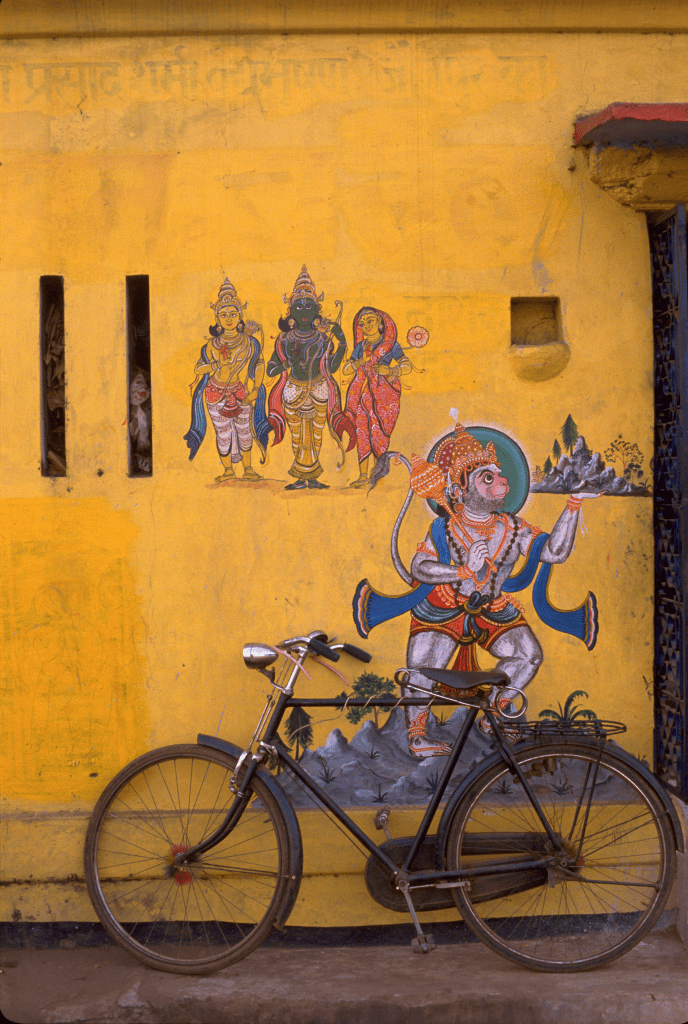
Residential mural in Bhubaneshwar by Nate Rabe

Today I arrived in a cemetery of a different sort. The great ancient temple city of Bhubaneshwar. Anย  initial quickie around the city has left me awed with the grandeur of Indiaโ€”truly the Wonder That Was. Iโ€™m none too impressed however by the greedy mahantas and pundits who follow me with visitor books filled with the names of foreigners who have come before me and donated Rs. 100 or 150. They are like blood suckers who will not detach themselves from you until you fork over some cash.ย  Muttered curses follow me when I hand over a fist of Rs. 2 notes or a tenner. โ€œYou should give at least Rs. 50,โ€ one calls out as I walk away.

24 January 1990

Had a sleepless night. The bed in the Janpath Hotel was infested with bedbugs and the room abuzz with mosquitos. I was so tired and on the verge of the final descent into sleep only to be woken by a damn katmal gnawing at some remote part of my body. The room was distinctly shitty. A weak but persistent stench wafted across the room. No windows, only some cement grating at the top of the wall which allowed easy access for the mosquitos.

I flung my few large pieces of cloth on the floor and turned on the fan. I caught a cold and my neck ached but I must have fallen asleep between 2 and 3.

I blearily wandered off toward the Lingaraja complex which was still as impressive as it was yesterday evening.ย  The priest left me alone to take some photos. I met two young pandas[7] who were only interested in chatting, not in extracting money from me.ย  One was Kuna and the other Bichchi. Kuna kept classifying women into a personal scale of โ€˜sexualโ€™.ย  โ€œWestern lady very sexualโ€, or โ€œJapanese lady most sexualโ€.ย  He was full of obscure English aphorisms.ย  โ€œEvery book has a cover every woman a loverโ€, was his favorite but others addressed less sexual subjects as well.

Bichchi was interested in telling me about politics. One of the Patnaik[8]s was in power. Another Patnaik was trying to squeeze him out now that he (the second Patnaik) had the leverage of the National Front government in Delhi.  Bichchi was confident that his Patnaik (the second one) would be victorious in the end. The main complaint against the ruling Patnaik was thatโ€”as best as I could understand from Bichchiโ€™s broken Hindiโ€”he liked to consort with little boys.  If not that he drank or smoked something that wasnโ€™t good.

Kuna immediately spoke up. โ€œIs there only one tiger in the jungle? They all do these things. Have you ever seen only one tiger in the jungle?โ€

They tried to encourage me to drink some bhang[9]. Being already light-headed from a sleepless night I declined.ย  They extolled the virtues of bhang but cursed heroin, charas [10]and alcohol.ย  All these vices Bichchi attributed to the Pakistanis.ย  He saw a nefarious attempt to destroy his country. Apparently, there are in Bhubaneshwar a growing number of drug addicts.

Kuna again offered his own interpretation. โ€œIt is good. We have 90 crore[11] people here in India. If a few kill themselves with heroin good. It will keep our population down.โ€

I took my leave after an hour under the shade of the Lingaraja, one of 125,000 temples said to be scattered around the city.  This statistic came from Bichchi.  I was tired and wanted to nap but didnโ€™t want to do it in the Janpath Hotel.  Over a beer at the Kenilworth Hotel, I resolved to head immediately to Puri in search of cleaner mattresses and an airy room.

25 January 1990

ย Puri strikes me as an overgrown seaside fishing village. Except for the fact that it is one of Hinduismโ€™s four major dhams[12], there didnโ€™t seem much to commend the place.ย  The beach is here too, of course, but it has none of the isolated charm of Gopalpur or the lushness of Kovalum. The alleys are dark and damp and only Hindus are permitted to enter the ancient Jagganath[13] temple. For a photographer it is also frustrating. The temple is set at an awkward angle which makes it almost impossible to capture well. The square in front of the temple is in glaring light most the day so people huddle in the shadows under the tarped awnings.ย  After walking around searching for some good light, I put my cameras away. From now on Iโ€™ll stick to the alleys where little icons and shrines add color to the landscape.

I talk with Mohammad Yusuf who is selling reptile scales for the cure of piles and general unwanted blood flow. He makes rings of these and advises his customers to wear them on their left hand so as when they perform their toilet, the ringsโ€™ magical effects will โ€œmake you 100% clean. You can spend Rs. 10,000 on a doctor but these rings will cure you completely.โ€

He is an Oriya[14] but like most Muslims in the north speaks quite good Urdu.  When I told him I was living in Pakistan he quietly asked, โ€œWhatโ€™s the news? Is it good?โ€  I find the Muslims Iโ€™ve run into โ€“a lotโ€”to be sad people, though Iโ€™m probably projecting.  In Calcutta all the booksellers and tape hawkers on Free School Street are Muslims from Howrah. One told me with a bit of over enthusiasm that โ€œHindus are the best. I have more Hindu friends than Muslims. We have no problems here!โ€

Another, Salim, is a waiter at the Janpath Hotel in Bhubaneshwar.ย  He was soft spoken and left me with a feeling tender. He claimed to make Rs 200 a month in the hotel of which $150 he remits to his family.ย  He used to work in Calcutta in a factory that makes cooking utensils but for some reason came, as he put it, โ€œinto the hotel line.โ€ He doesnโ€™t like the work but is stuck.ย  He saw two postcards I had bought from a sidewalk dealer on Sudder Street. One was of the Kaaba[15] the other was of Imam Hussain on his horse. Salim kissed them and pressed them against his forehead when I offered them to him.

The Muslims seem to be accepted and other than a slight hesitation before telling me their names, they seem content. They confess to cheering for Pakistanโ€™s cricket team but have been quite uninterested in asking me about life in Pakistan. Only one, a cloth merchant in Bhubaneshwar, asked me if I preferred India or Pakistan.

Tomorrow, I take a day trip to Konarak. Itโ€™s Republic Day and will be overrun with tourists undoubtedly.

26 January 1990

I was accompanied to Konarak by a Gujarati, Dr. Parwar. A pleasant and gentle man who had pulled himself up to a position of considerable rank and authority in a government hospital.  His father was a manual labourer in Pune, โ€œso I have seen life from close up.โ€ Through hard work he got his MBBS and MD from one of the best medical schools in India and has since added a triad of MAโ€™s in subjects like Public Health, Venereal Diseases and Administration.   He has been attending a conference in Calcutta on Public Health Administration and has come to Puri to kill some time.

He is deeply committed to serving the people of India as a doctor back in Ahmedabad.  He has no desire for an overseas job or money. He proclaims more than once how proud he is of being Indian.  This is not something I hear in Pakistan very often.

Konarak is impressive. The stone sculpture is beautiful and majestic. The monument is set out as a sun chariot with 24 giant wheels pulled by 7 rearing horses. Most of the original temple has been destroyed but the remaining bits inspire awe for their size and beauty.  The original temple rose more than twice as high at the remaining remnant which rises 80 feet into the air.

Dr. Parwar and I climb to the top of the temple and gaze into a deep opening. A pedestal is at one edge where we overhear a guide explain, โ€œThis is the place where the image of the Surya (the Sun God) stoodโ€.  Inside his stone head and feet, apparently, was magnet which when a certain interaction of physics and metaphysics transpired โ€œcaused the Godโ€™s head and feet to move.โ€

The Indian government is preserving the temple. Dozens of lungi[16] clad workers scratch the eroded stone with water-soaked bamboo brushes. Here and there new plinths and slabs of granite have been fitted into the chariot spokes and walls.  Up near the top they have placed two huge Buddha-like images, upon which, during the Eastern Ganga dynasty[17] which built the temple, the sun was said to have shone continuously. One at dawn, one at noon and one at dusk. The third image is yet to be restored.

Dr Parwar and I silently take in this magnificent piece of human-divine cooperation before boarding a bus back to Puri.


[1] Raiwind, a town near Lahore, famous as the headquarters of a major Islamic missionary organisation, Tablighi Jamaโ€™at

[2] Hindustan Ambassador. Iconic Indian manufactured sedan which for decades was about the only car available in most parts of India.

[3] Literally, ‘tea water’. Colloquially used to indicate a small gift/bribe.ย 

[4] A Sikh movement for Khalistan as a separate country was raging in the 80s and early 90s. Often trains passing through Punjab were bombed as part of the terroristic tactics of militant Sikh groups. By 1990 things had calmed down quite a bit but my question was not entirely unjustified.

[5] Hindi/Urdu word meaning โ€˜chaosโ€™; โ€˜confusionโ€™; โ€˜disorganisationโ€™. Colloquially, โ€˜hassleโ€™.

[6] Part of the Salvation Armyโ€™s global charity empire. Cheaper rates for Christian missionaries right in the heart of Calcutta!

[7] Hindi word for priest or guide to a temple. Not the Chinese animal.

[8] A prominent political dynasty in the state of Orissa/Odisha.

[9] Traditional Indian cannabis drink.

[10] Hashish

[11] Hindi/Urdu for the numerical value of 10,000,000

[12] The four dham are the major Hindu pilgrimage destinations located at each cardinal point of the compass. Dwaraka (West), Puri (East), Badrinath (North) and Rameshwaram (South)

[13] From which we get the English word, juggernaut.

[14] A native of Orissa/Odisha

[15] The stone building at the center of Islam’s most important mosque and holiest site, the Masjid al-Haram in Mecca, Saudi Arabia

[16] sarong

[17] 11-15th century CE
Punch Houses to Parsi Theatre

Lollywood: stories of the Pakistani film industry

From Punch houses to Parsi Theatre

Though the early years of the East India Company are remembered in history as a time when hundreds of British men came to India and rapidly became very wealthy, life in a small up-country district was tough. Though the British public, to the extent they had time to care, resented the new โ€˜nabobsโ€™ who returned home to England full of ill-gotten wealth and social swagger, relatively few servants of the company actually made fortunes. Many stayed on in India after their tours setting themselves up as indigo planters or scrounging for work in the big cities. For those not part of the elite โ€˜Covenanted Officerโ€™ class which included most non-Indians, the Englishmanโ€™s daily round involved three essential things: work, avoiding illness and drink, with the last usually combined with the first two. Alcohol consumption was both a way to stay aliveโ€“especially since local water supplies were contaminatedโ€”and a way to pass the time.  The highest rungs of British society had access to a variety of European wines, porters and spirits.  The sailors, soldiers and planters, on the other hand, could mostly only afford locally brewed (and occasionally, deadly) concoctions that mixed ingredients like coconut spirits, chillis and opium.  

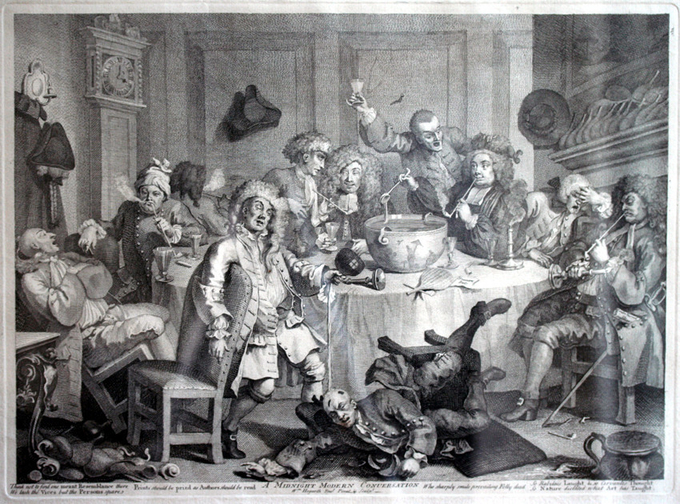
Though the origin of its name is contended (does it refer to the 500 litre wooden barrel that held it, known as a โ€˜puncheonโ€™ or to the Hindustani word, panch, for the number 5, the number of ingredients) punch was an alcoholic innovation invented in India by early European residents who wanted a lighter, sweeter drink than the local spirits or fiery rum. ย Experimentation found that by mixing rum or arrack,ย sugar,ย lemon/citrus juice, rosewater andย spices in water a very tasty and potent beverage emerged. As early as the 1630s, Englishmen were writing home about this new drink they called โ€˜punchโ€™. ย When the Companyโ€™s ships returned from India loaded with exotic luxuries, the shipsโ€™ crew and locals enjoyed evenings together drinking Punch on the docks. Though the many of the individual ingredients (lemons, nutmeg) were expensive in Britain, punch became โ€˜the tipple of choice for English aristocratsโ€™ for the next hundred years and since then has become a regular offering at parties, weddings and even church potlucks across the English-speaking world.

In India, however, the grimy taverns where such alcoholic drinks were sold became known as punch houses.  Not dissimilar to the famous jook joints in the southern United States, famous for their cheap booze and violence, punch houses were perfect venues for drinking binges, rowdy roughhousing, fisticuffs and whoring by bored sailors, down on their luck Europeans and soldiers. Indeed, one Englishman summarised the entertainment available for the British lower classes in India as amounting to โ€œdrinking hells, gambling hells or other hells.โ€  For the upper-class elite, punch houses were a definite โ€˜no goโ€™.

By the early decades of the 19th century this public drunkenness and violence was so pervasive in the three colonial cities as well as smaller outposts across the country that the authorities grew increasingly alarmed at the damage such behaviour was doing to the image of European and Christian superiority. Serial campaigns were launched. Multiple strategies tested. Workhouses were built, as were insane asylums. Forced religious conversion was tried out, so too was jail time.  None was very successful and the problem of European drunkenness remained forever an embarrassing black spot on the rulers publicly promoted sense of moral superiority.

Though alcohol abuse remained a problem among the British, over time the raw violence of the punch house gave way to other forms of entertainment. Musical evenings, card games and regularly scheduled visits to other European homes were popular among the โ€˜betterโ€™ classes.  The rowdier types (i.e. drunken sailors high on Punch) were drawn to disrupting dramas and causing havoc at dramatic performance at a number of theatres that began to pop up across Bombay.   

Bombayโ€™s first theatre opened in 1776, situated on a space known as โ€˜The Greenโ€™ surrounded by other official buildings. The Bombay Theatre, as it was christened, catered to officials and their families and staged performances by amateur drama enthusiasts from among the European community. It experienced a difficult life through the early years of its existence and ultimately stood shuttered and unused for many. It was eventually bought by the cityโ€™s post prominent businessman, Jamsetjee Jeejeebhoy, a Parsi opium and shipping magnate, who never bothered to reopen it.

By the mid 1840s, the city was wealthy and large enough (thanks in large part to the illegal trade of opium smuggling) to demand better entertainment. Wealthy Indians, again mostly Parsis, championed theatre building as an important part of their civic duty which grew to include funding public charities, colleges and museums. The Grant Road Theatre opened on the northern edge of the city in 1846, at the time, quite a distance from the Fort area inhabited by the elites of the Company. Though opened with an eye on that market few English found the prospect of travelling into underdeveloped outer suburbs, where hygiene and other surprises lay in wait, attractive. Very quickly the financiers opened the halls to local artists who staged plays in Bombayโ€™s most widely spoken languages, Gujarati, Urdu and Hindi.

Somnath Gupt, who wrote a history of Parsi theatre summed up the transition this way. โ€œAs long as it was patronized by the governor and high-level officials, the theatre was frequented by people of good family. Because of the location on Grant Road, however, their attendance decreased. Some Christian preachers also opposed the theatre as depraved and immoral. The Oriental Christian Spectator was chief among those newspapers that wrote in opposition to Hindu drama. In consequence, the theatre was attended by sailors from trading ships, soldiers and traders. A low class public came and made the theatre foul-smelling with their smoking. The performances began to start late, and etiquette deteriorated.  Drunken sailors and soldiers behaved rudely with the women. It began to be necessary to bring in the police to keep order. This audience wasโ€ฆinherited by the Parsi theatre.โ€[1]

Grant Road Theatre, Bombay ca 1860

The Grant Road Theatre hosted international troupes enroute to and from Australia when they showed up but the 1850s saw Parsi-owned theatrical troupes mushroom to fill the supply of plays, actors and audiences. Based on the European proscenium-style theatre that featured a huge arch over the stage as a frame for the action, the Parsis saw the theatre as a way to both entertain and educate Bombayโ€™s growing middle class.

What quickly became known as Parsi theatre was an instant hit.  The plays set the imagination of Bombay-ites on fire.  Many of the plays were wildly popular, running to packed houses night after night for years on end. A whole new class of Parsi actors, playwrights, directors, composers and producers grew up, many of whom moved seamlessly into the film world in the early 20th century. Many companies toured the countryside, not just around Bombay but to far flung parts of the interior and even to places as far away as Sumatra, Malaya, Burma and Ceylon. Drawing on local talent and tales from Hindu, Islamic and Persian epics, Parsi theatre became a uniquely Indian and lively form of entertainment many aspects of whichโ€”song, dance, bawdy humor, melodramaโ€”were directly absorbed by the subcontinentโ€™s early film makers.

Along with the companies and cohort of professional players, more theatres were built with names like the Elphinstone, Gaiety, Novelty and Tivoli. The staging of dramas was by the 1870s and 80s a huge part of Bombayโ€™s entertainment scene. Jamshedji Framji Madan โ€œ๏ปฟthe Parsi actor-turned-wine merchant-turned owner of the largest chain of theatres and cinemas in India in the first three decades of the 20th centuryโ€[2] exemplifies the central role the Parsi community played not just in whetting the Indian appetite for staged comedic and dramatic entertainment in purpose built buildings, but of leading the transition from Parsi Theatre to what would become one of the most consequential film industries the world has ever seen.

J.F. Madan

Madan started his career in the theatre first as an actor but he made a considerable fortune in y securing large contracts to provision British troops with the wine that the governing classes so condemned for corrupting Her Majestyโ€™s troops.  Sensing greater opportunities in the capital of British India, Calcutta, and loaded with money from his wine-provisioning business, Madan in 1902 set up a diversified business group, J.F Madan & Co., with interests in everything from insurance to film equipment and real estate.  He also began buying up Calcutta theatres (the Alfred and the Corinthian) where playwrights including Agha Hashr Kashmiri, aka Indiaโ€™s Shakespeare, plied their trade. Kashmiri, though from Banaras, moved to Lahore in his later years where he also wrote for films, an early example of the cross fertilisation of cinematic talent between India and what would soon become Pakistan.

Immediately after arriving in Calcutta, he set up the โ€œ๏ปฟElphinstone Bioscope Company and began showing films in tents on the Maidan before opening the first dedicated movie house in Calcutta, the Elphinstone Picture Palace.โ€[3] The venue not only was Calcuttaโ€™s and Indiaโ€™s first dedicated movie hall but marked the beginning of Indiaโ€™s first cinema hall chain.  In 1917 his company, Far Eastern Films, partnered with Maurice Bandman, an American entertainment magnate based in Calcutta to distribute foreign films in India. ๏ปฟ ๏ปฟโ€œIn 1917 his company Madanโ€™s Far Eastern Films joined forces with Bandmann to form the Excelsior Cinematograph Syndicate dedicated to distributing films as well as owning and managing a chain of cinemas. In 1919 Madan, like Bandmann, floated a public company, Madan Theatres Ltd, which incorporated the other companies. It was this company that formed the basis of the remarkable growth of the Madan empire.โ€ Madanโ€™s multiple interests in theatre and commerce led him to producing his own films, including the first commercial length feature in Bengali, Bilwamangal (1918).

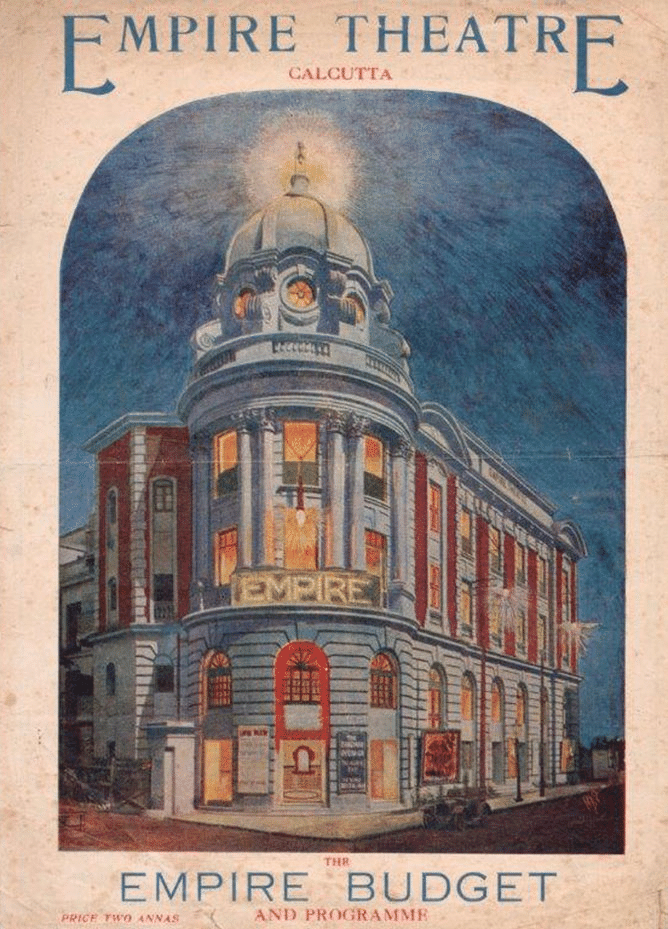
Title page of a programme of the Empire Theatre Calcutta, the headquarters of Maurice Bandman’s theatrical company and his touring circuit. It was modelled on the Gaiety Theatre in London.

Madanโ€™s strong commercial eye recognized that the medium would need its own venues and screening halls, rather than relying on established theatres.  By 1919 the Madan Theatres Limited was in business and set to become India’s largest integrated film production-distribution-exhibition company with assets located not just across India but in Ceylon and Burma as well.  Madan issued shares that generated Rs. 10 million and through effective management practices was able to procure a huge number of theatres across South and SE Asia. Though film making was picking up steam in India, the vast majority of films shown were foreign.  In 1926 only 15% of films were Indian. 85% were foreign, mostly American, movies. By partnering with the French company ๏ปฟPathรฉ Madanโ€™s theatres were to a significant degree responsible for creating an audience for American and European films in India by importing and screening Hollywood films, such as the Perils of Pauline, The Mark of Zorro and Quo Vadis.

By the mid-1920s Madan controlled half of all revenues from the Indian box office and owned 127 movie houses.  His hiring of foreign directors such as the Italian, Eugenio De Liguoro who directed 6 films for Madan Theatres, gave many of his films a sheen of expertise and craft that was not yet visible within local ranks.  In essence, Madan had monopolised Indiaโ€™s nascent film industry.

**

The Lumiere brothers may not have understood the commercial viability of their inventions but it seemed that many Indians did. The great colonial cities of Bombay and Calcutta both quadrupled in size between 1850 and 1900 to be home for nearly 1 million people. Bombay and Calcutta were now world cities.  It was not surprising that this most modern and hypnotic of new technologies would catch on in places like this.  But Bombay, Calcutta and Madras were not alone.  Far to the West, on the far frontier of British India another city was starting to make waves in the movie world too. 


[1] Hansen, Kathryn. (Translator) 2001, โ€œThe Parsi Theatre: Its Origins and Development (Pt 2).Pdf.โ€

[2] Balme, Christopher. 2015. โ€œManaging Theatre and Cinema in Colonial India: Maurice E. Bandmann, J.F. Madan and the War Filmsโ€™ Controversy.โ€ Popular Entertainment Studies 6: 6โ€“21.

[3] Ibid.

Lollywood: stories of Pakistan’s unlikely film industry

Chapter One: An Invention With No Future

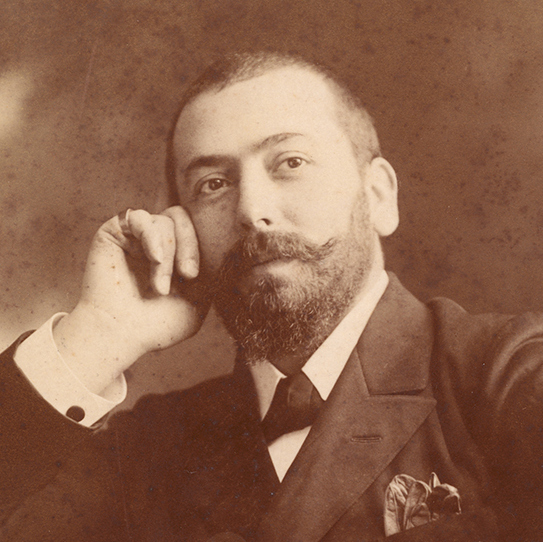
Marius Sestier

Fifty one years to the day before India won its Independence, on 15th August 1896, the well heeled citizens of Bombay enjoyed a final evening of the most โ€˜marvellousโ€™ spectacle the city had ever experienced.  For several weeks, first at Watsonโ€™s Hotel in Kalaghoda and then at the Novelty Theatre on Grant Road, a Frenchman en route to Australia, had been delighting audiences with the latest hi-tech entertainment.  Called the โ€˜cinematographeโ€™ his contraption, which looked like an ordinary wooden box with a hand crank on one side and a small brass-encased lens on the other, was the closest thing to magic audiences could imagine. As the Frenchman rotated the crank a spool of thin grey film through which light flowed from a second box attached to the top, the most unbelievable photographic images danced against a white screen.  In the darkened hall the rapt viewers wondered if they had not been transported to a new dimension.

The projection of moving pictures was the most exciting development yet in the short life of the revolutionary new science of photography. Two French brothers Auguste and Louis Lumiere had been experimenting with colour photography for a number of years and as a sort of intellectual side-project had attacked the problem of combining animation with projection of light. Just nine months earlier, in December 1895, at Parisโ€™ Grand Cafe, the brothers had stunned audiences with the first commercial showing of a film, which over a span of 49 seconds, depicted a train pulling into a station and passengers jumping on and off. 

The Lumiere brothersโ€™ version of the movie camera-cum-projector was small and light enough to be carried about outdoors. At first, the inventor brothers didnโ€™t know what to make of their apparatus. In fact, they saw it not so much as an idea whose time had come but, as Louis Lumiere said, as โ€˜an invention without a future.โ€™ His brother put it even more emphatically: โ€˜our inventionโ€ฆhas no commercial future whatsoever.โ€™

But in direct contradiction of their conviction, the siblings launched a campaign to take the Cinematographe experience to audiences around the world. To assist them they contracted a fellow Frenchman, a pharmacist by trade, named Marius Sestier to be this new technologyโ€™s evangelist in the furthest end of the world, Australia. So dubious of their inventionโ€™s prospects were the brothers that a year or two later they put together a travelling road show complete with 40 magicians to tour Asia, the Far East and the Fiji Islands.  If the moving pictures didnโ€™t draw the crowds perhaps the wonder workers would be a profitable Plan B.

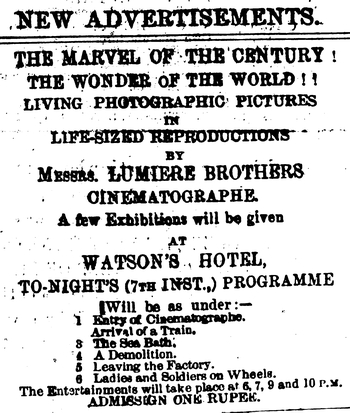
Sestier, who sported a trim beard and moustache with ends that curled confidently upwards in the style of an upperclass gentleman, set sail, with this wife, from Marseilles on 11 June 1896 with a passage to India.  They docked in Bombay nineteen days later and though it seems Sestier knew little English, he immediately set out making arrangements for the showing of several films. Over a period of four nights people crammed into a small room in Watsons Hotel to watch six short films[1], including the much bally-hooed Arrival of a Train, all produced by the Lumiere brothers.  The local papers proclaimed this new thing, โ€˜The Wonder of the World!โ€™

The impact was tremendous and immediate.  More showings were added (though one was cancelled due to an early case of load shedding) and additional, larger venues were secured. The local press gushed enthusiastically about this amazing Marvel of the Century but found Mr Watsonโ€™s hotel to be somewhat unsuitable. The Bombay Gazetteโ€™s reporter complained that because of โ€œthe smallness of the room, the operator is unable to have the instrument sufficiently removed from the canvas to make the figures life-size, and this has the further disadvantage that it makes the actors in each of the scenes move about rather too quickly.โ€

Sestier responded to the criticism by securing the premises of the Novelty Theatre as a corrective measure.  Built in 1878, the Novelty was one of Bombayโ€™s glittering new theatres along Grant Road, the cityโ€™s answer to Broadway. It boasted a large 90 x 65 ft. stage and accommodated 1400 people. The Lumieres were in business! At Rs. 1 a seat, Sestier grossed close to Rs. 100,000 (close to one million in contemporary terms) over more than 60 sold-out shows, which proved beyond any argument, that inventors should not be relied upon for their business acumen.

By the time Sestier boarded the French steamship Caledonien for Colombo and Sydney on 26th August, he had changed India forever. The movie bug had found a new host. Many Indians had attended the shows at the Novelty Theatre and one in particular, a photographer, Harishchandra Sakharam Bhatwadekar (aka ‘Save Dada’) was so enraptured he immediately placed an order for a Lumiere Cinematographe with the London firm Riley Brothers. The investment set him back a pretty penny but within three years Bhatwadekar had made and shown Indiaโ€™s first documentary film, The Wrestlers, which depicted a match at Bombay’s Hanging Gardens between a couple of popular local wrestlers, Pundalik Dada and Krishna Navi.  Over the next several years Save Dada made a number of other films, all of mundane everyday subjects and reached his cinematic zenith by documenting the grand Delhi Durbar, a celebration of King Edward VIIโ€™s accession to the Imperial throne in 1903.

Save Dada was not alone.  In Calcutta and Madras, other men (yes, they were all men) were just as excited about this stunning new invention.  With a buzz that can only compare to the one we experienced when we received our first email or spent our first hours surfing the web, dreamers and entrepreneurs in every corner of British India sensed the magic of films and moved quickly to grab hold of it.

In Bengal, a rakishly thin lawyer, Hiralal Sen, scion of one of Bengalโ€™s prominent Bhadralok families moved to Calcutta from Dhaka in 1887 to indulge his fascination with photography and cameras.  Some years after his arrival in Calcutta, the legendary studio of Bourne and Shepherd sponsored a photographic competition which Sen, eager, like all budding photographers for some recognition, entered.  When he won a prize, the young lawyer was so encouraged he abandoned the Bar and rather rashly established his own photo business.

Though photography had been around for nearly half a century by this time, it was still so new.  Its possibilities intrigued practitioners who experimented with all manner of materials and processes. Everything had to be tested and tried. In between taking portraits of Calcuttaโ€™s citizenry Sen began experimenting with light by projecting shadowy images against the wall using a lantern and black cloth. But as far as we know, by 1896 Sen had not yet seen a motion picture.

This happy event happened in 1898, two years after Sestierโ€™s shows on the other side of the country. A certain Mr Stevenson, one of those minor characters that wanders across the stage of  history but about whom next to nothing is known, hired a swank venue on Beadon Street, the Star Theatre, where he exhibited a โ€˜Bioscopeโ€™ film that ran on the same bill as a popular stage play, The Flower of Persia.

Charles Urban, an American book and office supplies salesman with a fetish for silk hats, fell in love with movies from the first moment he put his eye to the peephole of a Kinetoscope, the early American film projector invented by Thomas Edison.  Ever the salesman, Urban immediately cottoned to the commercial potential of moving pictures (even if Edison, like the Lumieres, did not) and arranged to be Edisonโ€™s agent for the state of Michigan. By 1896, as Sestier was wowing Bombayโ€™s citizens at the Novelty Theatre, Urban was trying to sell Edisonโ€™s updated projector, the Vitascope from his shop in Detroit. A year later, after asking an engineer friend to come up with a better projector that didnโ€™t โ€˜flickerโ€™ as each frame passed through the light, Urban was marketing his very own Bioscope, a single wooden box more tall and narrow than Lumiereโ€™s but like theirs with a hand crank. His projector had the added advantage of not requiring electricity to operate.  The Bioscope was so successful that an English firm, Warwick Trading Company, invited Urban to move to London and head up the company with his Bioscope as its flagship product.

Charles Urban

Given his familyโ€™s wealth it appears not to have been a big deal for Sen to fork out Rs. 5000 for one of Urbanโ€™s spiffy new inventions.  Upon its arrival in India though the equipment was slightly damaged. And to complicate matters it came with no instruction manual. But Sen was not easily deterred.  He sought out a European friend, a Jesuit priest named Father Lafouis, who assisted Sen in repairing the Bioscope as well as figuring out how the contraption functioned. Within a short time Sen had so mastered the Bioscope that with the financial help of his brother Motilal and two other investors, he established the Royal Bioscope Company in 1899.  Sen quickly became an importer of European films and within a year had shot his own footage. Taking a cue from the mysterious Mr Stevenson, who appears to have moved on to greener pastures, Sen cut a deal with the Classic Theatre, to exhibit his films between acts of a stage play, as a sort of bonus entertainment.  The first Sen film to gather notices was Dancing Scenes from the Flower of Persia, which was a popular stage production at the time.  Encouraged by the publicโ€™s response Sen filmed scenes from other stage productions including Ali Baba, Sitaram and Life of Buddha which were then shown at other city theatres including the Star and Minerva. As in Bombay, the shows stunned the local press. โ€œThis is a thousand times better than the live circuses performed by real persons. Moreover, it is not very costly โ€ฆ Everybody should view this strange phenomenon,โ€ gushed one local daily.

And it wasnโ€™t just the residents of Indiaโ€™s most populous city that got to partake of this strange phenomenon. Royal Bioscope took their films to the countryside, setting up impromptu open-air cinemas in small towns across Bengal and Orissa, starting a practice of travelling movies that continues up to the present.  Hiralal turned out to be an artiste of amazing inquisitiveness and is credited with making Indiaโ€™s first political film (fiery nationalist speeches denouncing the British Raj by Surendranath Bannerjee, a founder of the Indian National Congress) as well the first commercials for a certain Edwards Tonic and Jabaskum Hair Oil.  He continued to film stage shows as well as produce  short films of everyday life for a decade and a half  but sadly his entire ouvre went up in smoke. Literally. In 1917 the Royal Bioscope Company warehouse caught fire and destroyed all his work and some of South Asiaโ€™s earliest and most important films.

Senโ€™s success ignited the imaginations of others and movies began their journey from novelty toward industry.  Back in Bombay, in 1911, Dhundiraj Govind โ€˜Dadasahebโ€™ Phalke, another photographer cum magician cum printmaker was completely smitten after catching a film called Amazing Animals, a sort of early David Attenborough nature film, at the America India Picture Palace.  He returned for more, this time buying a ticket to an Easter time showing of a French film called The Life of Jesus.  โ€˜Why,โ€™ he whispered quietly to his to his sceptical wife as they sat in the dark, โ€˜couldnโ€™t I tell the story of our Hindu gods and deities on film, as well?โ€™

How his wife answered we donโ€™t know. But Phalke who had struggled up this point to find anything that could capture his interest for more than a few years at a time, and whoโ€™s several business partnerships had ended acrimoniously,  spent the better part of a year buying up equipment and  learning as much as he could about film making before  travelling to England in February 1912 to meet with moviemakers and technicians. During this time one of Phalkeโ€™s correspondents was an American magician named Carl Hertz. Hertz had spent time in India tracking down fakirs who could reveal to him the secret of the Indian Rope Trick and meeting with the painter Raja Ravi Varma. Given subsequent events, in which he tours the South Pacific as part of the Lumiere brothers troupe of  40 magicians/ projectionists it seems likely that he may have met Sestier himself at one his Bombay movie exhibitions.

Dadasabeb Phalke

In any case, both men, Phalke and Hertz, were in Bombay around the same time and shared a passion for moving pictures and magic.  In the years proceeding his cinematic career, Phalke for a time had billed himself as a magic man named Professor Kelpha, an anagram of his family name. In another intriguing twist Phalke had done business with Raja Ravi Varma through one of his other commercial ventures the Phalke Engraving and Printing Works. So it is possible that Hertz had met Phalke as well.  After leaving India, Hertz integrated moving images into his magic show as a regular feature and went on to achieve a minor notoriety as the first man to show a film on a ship and in South Africa. 

Phalkeโ€™s London sojourn was a lightening trip.ย  He was back on Indian soil three months later, and on 1 April 1912, the very day he landed in Bombay, he registered the Phalke Films Company, and began putting together this first film, Raja Harischandra, based upon a legendary ruler of ancient India described in the epic Mahabharata and other literary works.

Released in 1913, Raja Harishchandra holds the official title as Indiaโ€™s first feature film. But in fact, a year earlier, in 1912, another enterprising Maharashtrian exhibited a movie titled, Shree Pundalik, at the Coronation Cinematograph at Girgaum. Most film historians reject the idea that it was in fact, โ€˜Dadasahebโ€™ Tornay, the maker of Shree Pundalik, who deserves the accolade as Indiaโ€™s earliest feature film maker, on the rather lame grounds that the camera was operated by a European named Johnson. And that the film was sent to London for processing. Had these criteria been sufficient to disqualify a film from being judged Indian, many films including some of the most loved such as the classic Pakeezah (1972) which was shot by German Josef Wirsching would also need to be removed from the canon.

But whereas Tornay failed–Shree Pundalik was a commercial flop–Phalke went on to make more than a hundred silent films many of which included his wizardry with special effects like the Hindu god Hanuman flying through the sky.  After a falling out with his business partners Phalke, who rightly, is credited as the father of Indo-Pakistani cinema, retired to the banks of the Ganges in Varanasi, a somewhat disillusioned and lonely man. For years he resisted making more films but eventually agreed to accept an offer from the maharaja of Kholapur to produce one final film, a talkie called Gangavatran. Like many others Phalke struggled to cope with the transition from silent to sound films and was unable to repeat his early silent film success.  He passed away in 1944 a forlorn and rather forgotten figure.

In the southern city of Madras, a dealer of imported American cars, Nataraja Mudaliar, was a fan of Phalkeโ€™s films, and like Sen, Bhatwadekar and Phalke just had to try his hand at the new craze.  Mudaliar requested an Englishman by the name of Stewart Smith who was in town filming a documentary on Lord Curzon ( Viceroy of India from 1899 to 1905), to give him several lessons on the finer points of using a camera.  With a confidence that only the amateur can muster, Mudaliar, established Indiaโ€™s first film studio, the India Film Company in Puruswalkam. The year was 1917.  Within a year, he had produced a series a well-received historical pictures including South Indiaโ€™s first feature film Keechaka Vatham, an episode from the Mahabharata, exhibited at the Elphinstone Theatre. The film was a smash hit by any standards thrilling audiences and netting Mudaliar Rs. 50,000.  Excited by the money making potential of his film, Mudaliar arranged for it to be shown in cities outside of India with large Tamil populations including Rangoon, Singapore and Colombo. These venues further netted him a handsome Rs. 15,000.  So infectious was this new art form that even the Father of Independent India, Mahatma Gandhiโ€™s family was caught up. His son Devdas Gandhi, then a journalist, was hired by Mudaliar to write the script cards for Keechaka Vatham in Hindi, in order that the film could be shown in the north.


[1] During his stay in Bombay, Sestier screened between 35-40 films, all presumably shot by his sibling sponsors in France. They included such delights as Rejoicing in the Marketplace, Foggy Day in London and Babies Quarrels.