My Missionary Family Pt 3 : Ocean Liners and St. Thomas

My folks and two older brothers landed in Bombay on 2 February 1952. A second application for a visa had been successful and 28 days after leaving New York they squinted at the skyline of India’s largest city ‘with its many high-rises [that] looked pale yellow in the hazy afternoon sun, more modern looking that we had expected. 

The country where they would live and work for nearly 40 years was still young then.  Four and half years earlier the British had left in a rush leaving behind two new countries. Pakistan and India, to sort out the affairs of state amidst deep political divisions over the Partition of the subcontinent, heightened communal identify and sensitivity, a bankrupt treasury and a level of poverty that had been severely exacerbated by several massive famines in Bengal, Punjab and Sindh. 

Politically, Pakistan was in turmoil. Their first Prime Minister, Liaqat Ali Khan had been assassinated in October 1951, which saw the first direct intervention of the military in the country’s governance, a legacy the people of Pakistan continue to fight against.  The UN had declared a ceasefire in January 1951 and sent peacekeepers to Kashmir to manage the fallout of the first of four wars fought over that territory.   

India had the good fortune of being led by a charismatic visionary Prime Minister, Jawaharlal Nehru, who enjoyed stature across the globe.  When the SS Stratheden, a British ocean liner that carried troops (during the war) and mail (after) between the UK and Australia, and which George Orwell had sailed to Morocco on in 1938, dropped anchor at Ballard Pier in Bombay, India’s first parliamentary elections since gaining independence were almost complete.  Nehru’s Congress party would win easily and remain in power for the next 25 years.  

In Madras, the original Indian colonial city, 1300 kms southeast of Bombay, a cricket match between England and India got underway on the 6th of February.  King George VI died that same day, placing young Elizabeth on the throne where she would remain for many years after mom and dad both passed away.  India went on to gain its first Cricket Test victory in that match which marks the rise of the mighty Indian team of our times.  

Our family, and few missionaries that we knew,1 cared little for cricket.  It was a quaint British game played over 5 (!) days by princes and engineers.  Like polo, it was an elite sport. Nothing like the massively wealthy and dominant public phenomenon it is today. Field hockey was the more popular and accomplished sport1 in those years. 

We weren’t Brits so the change of monarchs in the UK would have been little more than headline news. There was, however, one anniversary or milestone that Dad would have liked (and probably knew). That his own missionary career was beginning exactly 1900 years after one of Christ’s own apostles had first arrived in India.  The tradition (which is generally accepted) tells of St. Thomas, one of the original Twelve, landing along the south east coast of India in the vicinity of the modern city of Chennai (Madras)in 52 CE. He preached to the locals and had some success but other locals, usually identified as stuffy Brahmins, murdered him around 72 CE.  But he left behind India’s first indigenous Christian community and church, the Mar Thoma, which can, with strong historical evidence, claim to be one of the oldest, if not the oldest Christian community outside of Palestine.  
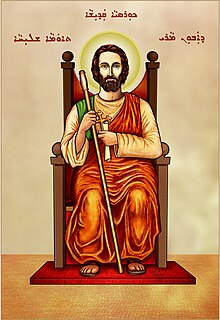
Syro-Malabar icon of Throne of St. Thomas the Apostle

If I’m to understand my parents’ life as missionaries in India I have to spend some time exploring a much broader history, that of Christian India, which pre-dates any formal European missionary by nearly 2 millennia.  In the next few instalments, I’m going to highlight some of the highpoints in that fascinating but underreported history. 

  1. India holds the record for most consecutive Olympic Golds (6) and most total Olympic Golds (8) in the sport. ↩︎

My Missionary Family Pt. 2

By mid-1951 Dad and Mom’s preparations to leave for India were in high gear. The few worldly possessions they had accumulated were packed away, ready to be shipped to their new home, or stored in the garages and basements of relatives in Minneapolis.   They had been recruited by a mission board known as the Oriental Missionary Society (OMS), a minnow in a lake dominated by the mainline Methodist and Presbyterian churches.  

They were excited but anxious, not knowing what to expect or how to prepare for what was going to be their first 5yr tour of duty.  They received two bits of advice from senior missionaries. Dad writes about the first one: 

Orville French (an OMS missionary in India) accompanied us for a walk. He encouraged us to keep focused on India–’a desperately dark and needy land’, he said. Later while studying in Houghton [College, New York] we corresponded with the Frenches who had arrived in Gadag by then. In one of his letters Orville asked us about our conjugal relationship. Hmm. He said that couples planning to serve in India, especially, needed to be sure that they were well adjusted sexually, and ‘at peace’ with their sex lives. For India, he warned, was a place where sex was overtly ‘worshipped’ (Shiva phallus symbol, erotic temple carvings etc.) and this might prove to be troublesome! His concern was doubtless given in the context of what happened to two missionary families who were forced to return home because of the husbands’ improprieties. Orville’s questions we found a bit intriguing, and actually the ‘only word of counsel’ we had from OMS on how to get ready for India. 

Now. If there ever was a paragraph that deserved unpacking, this is it.  But Dad’s final statement is not entirely accurate.  Mom wrote of another piece of advice they received, this time from Orville’s wife, Aileen. 

Aileen, in response to my queries as to what to bring with us, replied that India (and Gadag in particular) was rather drab and dreary, so ‘Bring whatever you can to make your home cheery and cozy.’ One surprising suggestion was to bring toilet paper—India’s being hard to obtain and or poor quality, if and when available. We packed a [55 gallon] drum full of it when we sailed for our first term. 

Thus alerted to the pitfalls they could expect to find, they were ready to set sail from New York in September, 1951.  With tickets booked and much of their luggage enroute to New York, they were informed that their visa had been refused by the Indian government.  This was, in Dad’s words, ‘a slap in the face’ and suddenly it looked as if the erotic temples, jewel encrusted turbans and lost souls would remain figments of their imaginations forever. 

The Indian government’s hardening stance against new missionaries was a theme of many family conversations throughout my childhood.  Though individuals who could be classified as Christian missionaries had been in India since the early years after the crucifixion of Jesus of Nazareth and though southern India was home to one of the oldest orthodox churches in the world, predating any European missionary presence by centuries, the ‘modern’ missionary movement in India really began in the early 18th century. 

It is a story filled with ups and downs and long periods of marginalization followed by shorter bouts by lionization before an inevitable return to ostracism. I’ll write more about that at some other point, but for now, the refusal of a visa for Mom and Dad, though disappointing for them, was not surprising given the political context of a newly independent country. 

Indian elites had waged an ever more acrimonious and violent war of resistance against Imperial Britian, aka The Raj, for decades. Indeed, you could make the case that the ‘natives had been restless’ for more than a century and that the first mass armed uprising against the British had taken place in 1857, when a loose coalition of soldiers, disempowered regional rulers and peasants, nearly succeeded in wiping all Europeans off the north Indian map. 

The country’s new rulers, though committed to building a non-sectarian, secular state, viewed missionaries as a subversive, antiquated, anachronistic and altogether unwanted cohort of foreigners living in their midst.  Missionary evangelizing, as unsuccessful as it was in convincing more than a handful of Indians to renounce the faith of their birth, was especially hated.  

Prominent leaders including the Governor General Mr. Rajagopalachari and Prime Minister Nehru expressed their views that missionaries were cultural aggressors and foreign fifth columnists. An official investigation in the early 50s by the government of Madhya Pradesh concluded:  

Which must be halted immediately, the report declared.  

Things didn’t look good for wannabe missionaries like Rudy and Eleanore Rabe and their two young sons Michael (4) and Gregg (2). 

Historical Fiction and the Saviour of the World

All religions are rife with factions. And in that way, they are a manifestation of the most primitive and base of human instincts.  Group think. Tribalism. Belief regardless of a lack of evidence. Even evidence to the contrary.     

I was born and nurtured within the ‘Bible is the inerrant Word of God’ tribe.  The people who insist that every word, every story, every miracle found within the Christian/Jewish Bible is cent per cent pure and untainted by any contradiction or human failing.  The Universe was created in six 24-hour days. Elijah ascended to ‘heaven’ in a burning chariot. The Supreme Lord of Everything addressed Abraham through a burning bush. Wine to water. 2 pieces of bread and 5 sardines fed 5000 people.   You get the picture. 

I should clarify. My father, our clan leader, actually felt most comfortable in a sub-faction of this larger tribe.  I would call it ‘the Bible is the actual reflection of God’s mind but not 100% historically or scientifically accurate’.   He argued that science and learning were needed to understand the mysteries of such a revered set of writings as the old and new testaments. He would acknowledge (later in life) that humans did not have the capacity to understand ‘God’  and so, ultimately, whether or not Jesus did turn a cistern of water into Merlot at the wedding party, it was not worth starting a war over. He liked to believe it, but he and others in the sub-faction allowed space for individual interpretation. 

I have no personal faith or belief in Jesus, Yahweh, God or any other such divine creature. But I had a good childhood and my 25 years of practicing Christianity has made an indelible imprint on my mind.  I cannot and do not want to excise that part of me.  I find great comfort in many passages of the Bible (OT and NT).  I still love and sing along to the hymns and choruses I learned from countless Bible Clubs, camps and revival services.  And throughout my adult years I have enjoyed reading academic and true-believer debates about all manner of Biblical studies and archaeology.    

I recently read a book titled Jesus Interrupted. I didn’t finish it because it was a bit too elementary for me. The author, is an ex-believer like myself, but a scholar of the Bible. His audience seems to be those of the ‘Bible is the inerrant Word of God’ tribe who are looking for encouragement to use their minds rather than practice blind faith.  I can hear him whispering to them ‘It’s ok. Jump. You won’t be crushed by what you find.’  

He spends a lot of time talking about ‘contradictions’ and ‘inconsistencies’ within the 4 Gospels and other books of the New Testament.  Of which there are many. And which should be sufficient for any unbiased reader to understand that what they are reading is not History.  For those who have come to believe that the God of the Bible is a distinct and discrete being, separate from the Universe, and who’s wont is to stick his hand into the petri dish called Earth and mess things up or direct action in a particular way, the notion that the story of the 3 wise men or the resurrection is not the accurate tale of an actual event, is a hard concept to embrace. 

I have published two novels, the first of which is what bookstores label, ‘historical fiction’.  It is set in mid-20th century Iraq and as such the narrative refers to and is framed by actual events. And people who are historical figures, the most prominent of which is Saddam Hussain.  But there are many others who pop up, mostly in very minor and insignificant roles.  The main characters are entirely fictional and most of the happenings that the book describes are real only to the characters. They have no basis in history.  

If you used my book to prepare for a trip to Iraq you might get a EXTREMELY HIGH LEVEL  glimpse of the turbulent political history of modern Iraq up to about 1985. But I hope no one would ascribe the words I put in the mouth of real historical figures as ‘accurate’ or historical.  The point of my book, what got me going, was to explore and try to understand the idea of politically-motivated violence against people who think differently.  Torture.  What goes on in the mind of the man who willingly and knowingly inflicts physical pain upon those who have been captured and have no way to fight back? 

I was not writing and didn’t set out to write a description of the Ba’ath party or Iraqi politics.  It was my way of unpacking an issue I was confronted with on a daily basis when I worked with the UN refugee agency. 

As I read Jesus, Interrupted it dawned on me that the best way to describe the Gospels and other Biblical stories is as “historical fiction”.   They are historic in the sense that they describe a society and historical figures that really did exist. But they are like tent poles or stakes that hold the story up but which are really supportive rather than central to the action.  Yes, there was a tough guy named Pontius Pilate. And there were a group of Jews known as Pharisees. Nazareth and Bethlehem can be found on a map. But anything beyond this sort of thing is historically iffy. Even the historic reality of the central hero, Jesus. 

The gospels, written decades after Jesus was allegedly crucified, by unknown writers, were composed to tell a specific story to a specific audience. The story was one of spiritual and moral guidance not a biography of the Nazarene. 

None of this is fresh insight. It’s as old as the hills.  But it does help me understand these essential texts of my life.  They are not history. But they are not fiction, either. They are historical fiction. 

My Desi Heart: Intro

Allahabad, 1965

I was born in India in 1957.  The youngest of four siblings in an American missionary family from small town North Dakota and Minnesota. We were evangelicals. Conservative in a Protestant theology heavily influenced by the Holiness movement of the 19th century. Small sect Methodism that believed all sinners could be completely ‘sanctified’ or perfect, in their lifetimes. Among other things of course. 

I was born in the southern Tamil temple city of Madurai but we lived 850 kilometers northwest in a Kanarese speaking area of what is now the Indian state of Karnataka. Dad’s employer, the Oriental Missionary Society or OMS, had established a bible training college in the town of Gadag, famous for producing one of classical Indian music’s noblest performers, Pandit Bhimsen Joshi, and a lively printing industry. 

Dad taught theology and related subjects to young Christian men and women from the surrounding areas. He regularly preached at outdoor revival meetings with his colleagues and students. Mom helped out wherever she was needed, sometimes as the bookkeeper for the college, sometimes she would join the pastors’ wives in their rural evangelizing campaigns but mostly she raised us kids.  

They had landed in Bombay after a long voyage across several oceans from New York in February 1952. They were appointed to join another American family, The Davises, who had two boys round about the same age as my two brothers, and a jolly, tubby spinster from Baltimore, Mary Ella Taylor. 

Mike my oldest brother was 5. Gregg, next up was 3. My sister Rebecca would arrive 3 years later, in 1955 and I brought up the rear in ‘57. There is a good case to be made that another sister was stillborn before I came along. 

We lived on the campus of the Karnataka Bible Seminary, whose red brick buildings dated back several decades. It was well shaded at least in the front part and served as a safe, walled but sprawling little world for me to explore as a kid.  

We were generally happy and normal. Among our subcultured circle of missionaries anyway. In fact, compared with the Davises,  mom and dad were liberal youngsters, which did cause ongoing friction between them over the years.  As is the wont of every child what they see in their homes they project onto the entire Universe.  There was nothing different about us. We all believed broadly the same things about the Bible and God and Jesus. We shared a barebone existence with few physical comforts. It was simple, filled with good food, devotions, trips to exotic places like the temples of Hampi, Shravanabelagola and the beaches of Karwar. Of course, “we” in these instances refers to other OMS missionaries or white folk in India more broadly.  

It was impossible not to notice that most everyone else around us and among us did not believe these things. But then, that was the whole point of our landing up in rural southern India. To try to get as many of them as possible to come over to our team.  A spiritual kabaddi match. 

Only recently have I begun to distance myself from the lived experience of my childhood. To look at it not from within but from a distance of 60 year; and from the outside. How did this rural, poor family from Minnesota end up in the villages of central India, speaking strange tongues and eating strange food? Why?  What was going on in India at the time? And how did being surrounded by religion and spirituality, in the home or everywhere you went in India, and speaking Kanarese simultaneously as fluidly as English and having Indian friends to whom I was closer than to my brothers who were away in boarding school?

What does /did this niche childhood-–Minnesota, Holiness Methodists, missionaries, newly Independent India, bilingual communication–influence who I am today?   

This is about that.  

India has been an indivisible aspect of my life since 10 July 1957. At times some have found it irritating and maddening.  Others have seen it as fascinating and exotic. Most just shrug, especially now in this tiny world we live in, in the 2020s.   

My connection to India is something I’ve always loved but haven’t known how to incorporate into my story. Or stories. It depended on the audience of course, as all stories do. My wives have felt threatened by India which is so easy to love in comparison with a real complex woman. So, there is shame and protection mixed in with my love of India. I’m sure many, including myself, thought I would outgrow my romantic childhood when I became an adult and that its influence would settle into a manageable and quaint curry now and then and perhaps one grand tour with the family when the kids are old enough to enjoy an adventure.  

But it hasn’t happened that way. The older I got the more attached and fascinated by and in love with the place I become.  I chose to study Hindi rather than Latin or French in high school. At the University of Minnesota, I jumped from majoring in Anthropology and Journalism and English before settling on South Asian Studies and History. I studied Urdu as well as Hindi. I spent a year after university studying in Lahore Pakistan. I was thinking of doing a PhD on one of the most important figures in modern South Asian Islam, Maulana Maududi. But then I got a job with the UN in Islamabad and began a career that took me around the world. India faded into the background for those years but never died.  

I began blogs about South Asian music and wrote a novel set in Pakistan. I read books on the caste system, Tamil anti-Brahmanism, Aurangzeb and the film industry, travelled and photographed across India whenever I could, did an ongoing deep dive into south Asian music and film and wrote a weekly column on the subject for an Indian online paper. I was asked to write a history of the Pakistani movie industry and now I’m thinking of leading tours to the sub-continent.   

India is not fading away like it was supposed to.  

Many of my kind (Missionary Kids from India and Pakistan) break into song when asked by Indians to explain ourselves.   

Mera juta hai Japani 

Yeh Patloon Englstani 

Sar pe lal topi Russi 

Phir bhi dil hai hindustani 

(I wear Japanese shoes and English trousers, The red hat on my head is Russian but still my heart is Indian)  

It’s a hackneyed trope but does capture the essence. 

My first blog I named, the Washerman’s Dog which is the English version of another famous Indian aphorism: na ghar ka na ghat ka, dhobi ka kuta (neither of the ghat nor the home, the washerman’s dog) 

Both sets of lyrics resonate with me. I do feel homeless in a way, neither from here nor there. But also completely blended in with India.  

Hence, it seems appropriate to name this column, My Desi Heart. A place where I’ll explore the story of my love-affair with the sub-continent.