Lollywood: stories of Pakistan’s unlikely film industry
Rivers and Stories
His eyes might there command whatever stood
City of old or modern fame, the seat
Of mightiest empire, from the destined walls
Of Cambalu, seat of Cathian Can,
And Samarcand by Oxus, Temir’s throne,
To Paquin of Sinaen Kings, and thence
To Agra and Lahore of Great Mogul….
(Paradise Lost XI 385-91. John Milton)
Fourteen hundred kilometres due north of Bombay and seventeen hundred kilometres to the northwest of Calcutta, sprawled across the flat northwest plains, lay the fabled city of Lahore. The city, erstwhile capital of not just the Mughals but numerous Afghan, Arab, Turk and Hindu kingdoms, had a reputation that extended across oceans, continents and time itself. Lahore was mentioned in Egyptian texts and visited by travellers and adventurers from China and Arabia in the early centuries of the current era, all of whom valorised the river city as a place of incredible wealth, luxury and refined taste. Elizabethan poets and dramatists including Milton and Dryden, fascinated by the contemporary accounts of adventurers from France and Italy imagined Lahore to be one of the grandest cities ever constructed by humans. Even in the late 19th century, the Orientalist opera Le Roi de Lahore (The King of Lahore) by French composer Jules Massanet, ran to full houses and ecstatic reviews all across Europe and North America. It’s bungled-up quasi-historical plot, set in the 11th century, had Lahore ruled by a ‘Hindoo’ raja named Alim (a Muslim name!) who tries to rally his people to stop the Muslim invaders. Almost forgotten today, Le Roi de Lahore was able to succeed simply by playing on the city’s name, which more than any other conjured up the mysterious exotic Orient in the minds of 19th century Europeans.
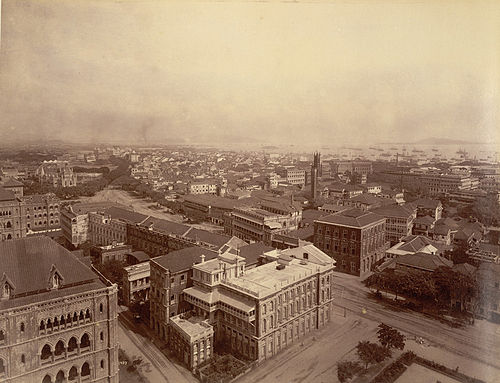
Compared to Bombay or Calcutta, Lahore was a seeming backwater. It possessed none of the attributes of the sparkling imperial cities. Where Bombay was new and young, Lahore was ancient. Where Calcutta was the modern power centre of India, Lahore was the sometime capital of the recently vanquished House of Babur. The new colonial metropolises looked outward, beyond India, to the future. Lahore and its walled ‘inner city’ seemed to be the perfect symbol of an insular and irrelevant past.
Far from the coasts, a distant outpost of Empire, there was nothing about Lahore that would suggest that movies, this most modern and technologically complex of entertainments, would take root here. In the early days (1900-1935) films were produced in all sorts of town across the subcontinent. Hyderabad, Kholapur, Coimbatore, Salem and even Gaya, reputedly the site of where Siddhartha Gautama meditated under a bodhi tree on his way to becoming, the Buddha. All had film production units, though almost all fell by the wayside after one or two outings.
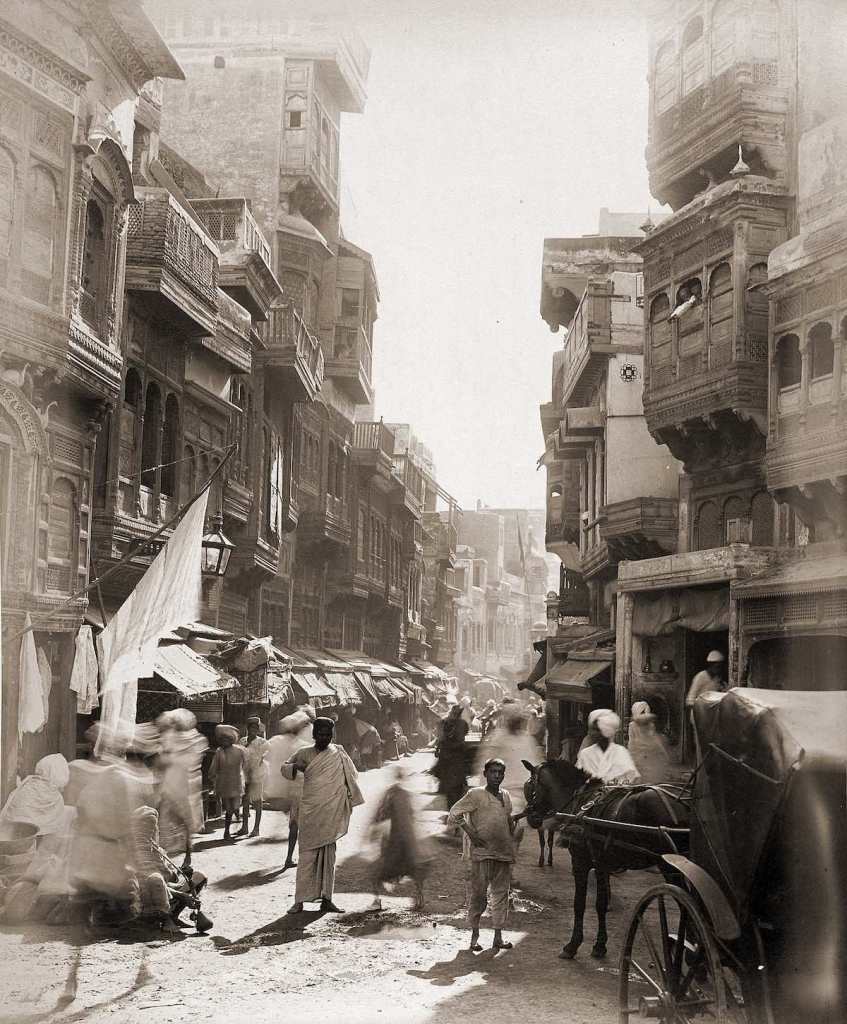
Movie making was a cottage industry of sorts and anyone with a story and some basic equipment could shoot a short film. But as the audience for movies grew and with it a demand for meaningful and quality content (there were only so many wrestling matches and train arrivals you could stomach), production became concentrated in Bombay, Calcutta and Madras. With the possible exception of the Prabhat Film Company, initially based in Kholapur but by 1933 centred in Poona (Pune), and which over a short life of less than 30 years produced only 45 films, Lahore was the only non-colonial city in South Asia to produce films of high quality, significant volume, in multiple languages over an extended period. And which continues to do so.
Why Lahore?
While Bombay, Madras and Calcutta had the location and access to new forms of capital and technology, the one thing they didn’t have much of prior to the arrival of the British was stories, the most ancient and beloved form of human entertainment. At heart, movies are nothing more than the most dramatic way of telling stories humans have yet invented. And prior to the arrival of Europeans, the three Imperial cities of India had little history. It was the British who conceived and built the cities; in essence their histories are inseparable from the history of the British Raj. This is not to suggest that the countryside around what became the three great Presidency cities was some terra nullius, devoid of human settlement and imagination. The islands of Bombay had been part of various kingdoms stretching back to prehistory and even under the Mauryas a regional centre of learning and religion. Various Hindu and Muslim dynasts had controlled the islands and, the settlements along the coast had well established links with far away Egypt. But by the time the English took possession of the islands they had lost any significant political or economic consequence. Prior to the East India Company there no Bombay.
So too with Calcutta and Madras. Though they were located in regions which had been part of ancient civilisations, both were mere villages that the English built into complex urban metropolises. Any stories that were told in these new cities had been brought in from outside. Bombay, Madras and Calcutta were blank canvases upon which was written a modern tale of interaction between Europeans and Indians. History was being created here. The past with its legends, myths and tales belonged to the countryside, the far away ‘interior’ from whence the cities residents had come to seek their fortunes.
Lahore, though, was different. It was not just ancient, it was still a vital, thriving city with a huge catalogue of stories stretching back to the very beginning of the Indian imagination. Like the other cities, Lahore attracted to it people from other parts of India but the stories they brought with them were absorbed into an already deep and luxurious sediment of fables, sagas and epics that remained every bit alive when the British arrived as they were when they were first told.
The Pakistani film industry, that which today some call Lollywood, is built more than anything upon this uniquely rich Punjabi culture. At the heart of which lies the immemorial city of Lahore. It’s worth taking a quick tour of this landscape to help us understand why the emergence of a movie industry here was not so much unlikely, as almost inevitable.
Treasure trove of tales
Punjab is the cradle of Indian civilisation. It was here in the land of five rivers (panj/5; ab/water) beyond which, in the words of Babur, Mughal India’s founding monarch, ‘everything is in the Hindustan way’, that the very story of India began.
Greater Punjab which includes all of the present day Province and State of Punjab in Pakistan and India, as well as parts of Khyber Pakhtunkwa, Rajasthan, Sindh, Haryana and Delhi, is home to one of the world’s richest, most variegated and dynamic of South Asia’s innumerable cultures. Peoples, and with them their stories, poems, music, gods, heroes, languages and ideas, have been flowing into the subcontinent via the Punjab since the earliest days of human settlement on the subcontinent. It is not in the least surprising that when the right historic moment arrived a lively and resilient cinema would be crafted from this treasure trove of material.
And to truly appreciate the deep roots of Pakistani films it is essential to have an understanding of the shared culture of language, song, theatre, poetry, storytelling and visual art that has distinguished this part of South Asia for millennia. It is from this profound tradition that Pakistani films initially took inspiration and upon which they continue to draw. And why, despite the many attempts to legislate against the industry, or even blow cinema halls up, Pakistanis keep making and watching movies.
Spies, scholars and antiquities
The good old man unfolds full many a tale,
That chills and turns his youthful audience pale,
Or full of glorious marvels, topics rich,
Exalts their fancies to intensest pitch.
Charles Masson
In 1832, while carrying out his undercover duties as a ‘news writer’ (spy) in the employ of the British East India Company, a certain Karamat Ali was taken by the recent arrival of a strange European in the bazaars of Kabul. Following from a distance he made mental notes of the character which he included in his next report to his control Mr. Claude Wade, British Political Agent in Ludhiana.
‘I would like to bring to your kind attention’ writes Karamat Ali in an undiscovered report, ‘the presence of an Englishman in the city. He keeps his hair (which is the colour of some of my countrymen who stain their beards with henna) cut close to his head. His eyes I have noted are the colour of a cat, by which I mean, grey and transparent. His beard is red as well. He appears to be a strong man as he has no horse or mule with him. His clothes are dusty from walking across the countryside and on top of his head he wears a cap made of green cloth. You may find it difficult to believe but he wears neither stockings nor shoes on his feet. I have learnt he carries with him some strange books, a compass and a device by which he reads the stars and thus makes his way from one place to the next. He answers to the name of Masson and speaks excellent Persian. I trust you will find this information helpful in your duties as Political Agent. Post Script. He could be mistaken for a faqir.’
Mr. Wade was well pleased with this information which he tucked away in the back of his mind. Over the next several years this mysterious Mr Masson continued to enter and exit official British communications like a phantom. Some reports had him pegged as an American physician from the backwoods of Kentucky. Others spoke of his brilliant command of Italian and that he was in fact a Frenchman. He popped up in Persia then Baluchistan; some reports detailed his convincing tales of journeys across Russia and the Caucasus.
But Afghanistan was where this strange morphing wanderer seemed most at home. He was reported to be interested in the history of some old earthen mounds outside of Kabul and had enlisted a number of the natives to assist him in his digging. Political Agent Wade kept tabs on Masson until finally three years after Karamat Ali’s report he wrote a letter to the wanderer with some shocking news. Over the years Wade had pieced together the mystery man’s history and in his letter he took great pleasure in letting Masson know about it.
‘I know who you are, Masson. And not just me. Calcutta is perfectly informed of your antecedents. The jig is up, old boy. You are not Charles Masson at all, sir. You are an Englishman and a traitor. Your true name is James Lewis born in London the son of a common brewer. You arrived in this ghastly country some dozen years ago as a private soldier in the Bengal European Artillery 1st Brigade, 3rd Troop.’
The letter which clearly made Masson panic went on to detail his history as a deserter from the Company ranks at Agra and the precarious position vis-a-vis his former employer he now occupied: he was due to be shot if apprehended. But Wade being a practical sort of man and a patriot had already received permission from his superiors to throw Masson a lifeline.
‘We’ve noted your excellent knowledge of several languages including Persian, French and Hindoostani. You also appear to be blessed with a natural ease in your interactions with the natives of the regions you have traversed. Your mind clearly, though not pointed in the proper direction, is sharp. In light of this and by way of making amends for your dereliction of duty and in recognition of the reality that the Tsar is intent on extending Russia’s influence into our Asiatic possessions, I offer you the following modest proposal.’
Wade informed Masson that if he would like to escape the firing-squad he would be wise to accept the Company’s offer to return to Kabul as its spy and to use his sharp mind, ears and eyes to keep Wade abreast of events in ‘lower Afghanistan and Kabul with special attention on the comings and goings of the tribesmen in support of Dost Mohammad but even more so the Russians.’
Mr Charles Masson of course agreed to Wade’s proposition and did (unhappily) return to Afghanistan as the Company’s ‘news writer.’ For several years, leading up to the invasion of the country by his compatriots in 1839, Masson filed detailed and insightful reports many of which cautioned against a British invasion. At the same time, he continued his archaeological digs on the outskirts of Kabul and beyond, wrote ponderous historical poems and engraved a couplet that included his name onto the majestic 55 metre high Buddhas of Bamiyan where it remained until the icons were blown up by the Taliban in 2001.

By the time he left the Company’s employ in 1838, Masson had ensured his place in history. Not so much as a spy or soldier but as a scholar. His archaeological digs around Kabul are now acknowledged as advancing the world’s understanding of ancient Afghanistan as well as its archaeological history. His work is still hailed as absolutely fundamental, especially his identification of Bagram as the ancient city of Alexandria Caucasum. Alexandria in the Caucasus while geographically inaccurate was indeed a city established by the Macedonian conqueror, Alexander, but one that history seemed to have assigned to legend. No one knew where exactly it was located which perhaps accounts for the faulty identification of the mountains where it was thought to have been located. Did it even exist?
By digging up tens of thousands of coins many with Greek script on one side and the Kharosthi script on the other, around the town of Bagram, north of Kabul, famous in more recent times as the site of the US Air Force’s major military post in Afghanistan, Masson identified the city as not only as one of the many ancient Alexandrias but shed new light on the Greco-Buddhist culture that dominated the area until the arrival of Islam. Indeed, Masson was instrumental in uncovering evidence of the spread of Buddhism into Central Asia from its Indian birthplace, as well as unearthing the names of several hitherto unknown monarchs of the region.
Masson returned to England in 1842 where he faded away, the only trace being the thousands of artefacts he dug from the Afghan dirt and transported back home and which are now on display in collections across the country. And though he is regarded as a pioneer of Afghan archaeology this rough and tumble shape shifting scholar-spy-poet is also credited with another landmark historical discovery.
Reflecting in 1842 on his initial desertion from the Company’s army in Agra and escape through the Punjab plains sixteen years earlier, Masson wrote,
A long march preceded our arrival at Hairpah (Harappa) through jangal of the closest description…Behind us was a large circular mound or eminence, and to the west was an irregular rocky height, crowned with remains of buildings, in fragments of walls, with niches, after the eastern manner…I examined the remains on the height, and found two circular perforated stones, affirmed to have been used as bangles, or arm rings, by a faqir of renown. He has also credit for having subsisted on earth and other unusual substances…The walls and towers of the castle are remarkably high, though, from having been deserted, they exhibit in some parts the ravages of time and decay.’ (Narrative of Various Journeys in Balochistan, Afghanistan, and the Punjab 1842, pg 452-54)
Thus, within a few lines from an adventurer’s memoir the Western world hears the name Harappa for the first time. Harappa, of course, is the small town just 24 km west of the modern Pakistani city of Sahiwal where 95 years after Masson’s overnight camp, excavations lead to the uncovering of a large buried city, and ultimately one of the world’s oldest, most sophisticated and enigmatic urban societies.
Thirty years after Masson’s visit, British engineers engaged in building the rail line between Multan and Lahore discovered a trove of wonderfully hard but thin kiln-fired bricks lying just beneath the surface of the earth. The bricks, much to the engineers’ delight made the perfect beds upon which to lay the rails and tens of thousands of them were used and in fact remain in place even today. The bricks formed the ‘castle’ Masson described in his book. Scattered in and amongst the bricks, railway workers discovered a number of small soapstone seals, no larger than a large modern postage stamp, but exquisitely crafted. They were quaint, mysterious objects whose beauty and workmanship were beyond question but whose history and significance baffled the archaeologists. A few made their way into the British Museum where bearded antiquarians speculated they dated to a Buddhist past around the turn of the millennium. In 1921, a young Punjabi archaeologist and Sanskrit whiz, Daya Ram Sahni, did some initial excavating at Harappa for the Archaeological Survey of India. His report piqued the interest of the ASI’s Director, John Marshall, who authorised Sahni to undertake more systematic excavations.
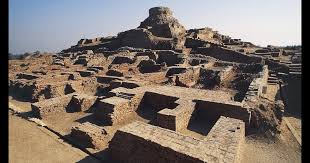
To their amazement Sahni’s men uncovered an entire city laid out with gridded streets and communal buildings. Delicate, finely worked beads and bracelets emerged out of the Punjabi mud as well as further south in Mohenjo Daro in the Sindh region. Many of the artefacts, especially the seals, were marked what appears to be a script–lines, single or in close formation–squiggles and geometric designs. Despite the efforts of Sahni and others to decode the language, the lines remain one of antiquity’s great mysteries. But the archaeologists noted that the most extensive use of the language was visible on the seals and amulets which also featured a menagerie of beasts.

These seals depicted bulls with massive humps, rhinos, elephants, tigers and deer, sometimes with humans bowing before them, sometimes with the poor sods being attacked. Here was India’s first story. But what exactly is the plotline? What is the point of these images? Are they telling us about the spirit world or the world of markets and trade? Who are the heroes? Which ones are the demons and villains? If only we could make out that writing.
What seems clear is that the people of Harappa and other Indus Valley cities were not particular inclined to warfare and violence. Archaeologists have not found anything that suggests the people were massacred or that their cities were burned or destroyed in combat. Rather, the similar layout and construction of the houses, the lack of particularly large private dwellings together with those seals, which scholarly consensus suggests, were “probably used to close documents and mark packages of goods“, (they’ve been found as far away as Iraq) suggests early Punjabi life was relatively cooperative, civil, peaceful, prosperous and not very religious. There is little of the elaborate hierarchy of later Hindu India and relatively little evidence of great economic inequality.
Such readings of the Indus Valley story are speculative but not so far-fetched. However, the relatively tolerant, accepting, less heirarchical social structure that some scholars attribute to the people of the Indus Valley does echo, if ever so faintly, the Punjab which until the mid-19th century was renowned for its syncretic, less orthodox and unitary culture.
One thing that can be said without any doubt about the people of the Indus Valley is that these earliest of Punjabis had vivid imaginations. Of all the animals depicted on the seals the most common is what appears to be a unicorn, a cow like quadruped with a long pointy horn protruding out of its forehead.

This unique beast which we now associate with rainbows and 8 year old girls, was born in the Indus Valley but doesn’t seem to have survived in the post Harappan culture. Further west though, the unicorn went on to enjoy a glorious career as a symbol of chastity, the Incarnation of Christ, strength and true love. The one horned Punjabi horse/cow was and is so revered it graces the coats of arms of noble houses from the Czech Republic to England and is the subject of some of the most sublime works of European art and storytelling.
The cities, script, society and unicorns of the Indus Valley vanished from the Punjabi story about 1900 BC and would all but be forgotten for thousands of years. But an even richer series of chapters began to unfold around the same time. Nomads from the steppes of Central Asia came across the mountains with horses, powerful hallucinogens and a love of gambling. Over several centuries they herded their cattle and horses across the plains and between the Punjab’s many rivers. These nomads who called themselves Arya began to recite an elaborate series of poems that told tales of mighty gods and wily demons who provided instructions on how to sacrifice animals and conduct animal sacrifices. Like the American blues would millennia in the future, the Aryan poets bemoaned the addictions of gambling and intoxication.
Unlike the Harappans, the Vedic Punjabis left no cities or monuments. The only way we know them is through their stories—the Vedas—especially the Rg Veda, a song cycle of 1028 verses that was and continues to be passed down by people who took it upon themselves to memorize its every syllable, tone, character and subplot. Suddenly, around 4000 years ago, the Punjabi/Aryan/Vedic/Indian imagination erupts with the intensity, colour and wild swirlings of an acid trip.
The rivers of this land, the Rg Veda tell us, are not five but seven and the land is called Sapta Sindhu (seven rivers). Each one of them is identified by name and is in some way a geographic representation of a character in the grand Vedic story. Vyasa (Beas) is the great sage who divides the Vedas into parts and Askini (Chenab) is married to Daksha who is instructed by Brahma to create all living beings. One of the great Vedic sages Kashyap has a daughter Iravati (Ravi) and one day he asks the goddess Parvati to come to Kashmir to clean up its valleys which she does by becoming the river Vitasta (Jhelum). Saraswati, the goddess of arts and learning herself is a river that flows through the desert but eventually dries up leaving one of her tributaries, Sutdiri (Sutlej), to carry on and join with the others in the rushing Sindhu (Indus).
In these early Punjabi poems and narratives it’s easy to find the deepest roots of many of the outlines of what would one day depicted in the films made in Bombay and Lahore. Take for example the story of the lout who takes a swig of soma (a sort of pre-historic Vat 69) and with his mates tosses the dice onto the gambling mat. He laughs and carouses as his dutiful and kind wife watches silently. Eventually, but too late, the gambler realises his mistake. “I’ve driven my blameless wife away from me. My mother-in-law hates me and all my friends have deserted me. They have as much use for me as a decrepit old horse.”
His mother cries and tries to make him stop but he pushes her away. As the sun goes down, he starts his lament confessing that as soon as he thinks of the tumbling dice, he is off to the gambling dens with his male buddies. Like the drunken Talish in the 1957 film Saat Lakh, who sings the apologia, Yaaron mujhe muaff rakho, mein nashe main hun, [Friends, forgive me, I’m completely pissed] the Vedic gambler sings, “I can’t stop and all my friends desert me.” As the story comes to an end he collapses and dies. (Rg Veda 10:34). Very Lollywood!
The Aryans slowly moved eastward, leaving their beloved Sapta Sindhu behind to push into the northern plains watered by the Ganga and Yamuna rivers. Eventually Vedic religion as outlined in the Rg Veda was transformed into what we recognize as Hinduism and the central importance of Punjab to the Hindu story diminished somewhat. Which is not to say it was completely forgotten, as later epics such as the Ramayana and Mahabharata are filled with references to the places and people of Punjab.
This northwest corner of the subcontinent which was the reputed land of legendary wealth was coveted by other non-Indian empires. Persians, Greeks, Chinese, Mongols, Turks and Arabs and numerous waves of Afghan raiders came crashing through the Punjab on their way to the fabled riches of India. With each of these incursions came not just soldiers but new traditions, new ideas, new heroes and new villains.
During the period 500 BC-300 CE small fiefdoms and city states vied for control of the Punjab and more layers were added to the already rich three-millennia old culture. Taxila, 375 kms northwest of Lahore, became the most significant political and cultural centre of the region. It was here, the story goes, that the sage Vaishampayana (pupil of Vyasa) gave the original recital of the Mahabharata to king Janamejaya. The world’s longest narrative poem (100,000+ verses) the Mahabharata tells with fantastic imagination and a cast of thousands, the battle of various Punjabi tribes for supremacy.
Darius I of Persia, drawn to India for its supply of elephants, camels, gold and silk conquered Taxila in the mid 5th century BCE. By the 4th century Buddhist jataka tales (fables of the Buddha’s early incarnations) were speaking of Taxila as a mighty kingdom and centre of great learning. Indeed, it was around Taxila that Greeks who had ventured to the edge of India as part of Alexander’s victorious army, intermarried with local women and developed the unique and elegant Greek-Buddhist Gandhara, culture that added a distinctly European flavour to Indian culture and which Charles Masson did so much to illuminate.
Tales and narratives travelled in both directions, influencing the stories of Punjab but also taking Indian stories to the far corners of the world. The fable of Alexander and the Poisoned Maiden is one such Punjabi story that grew out of this mingling of Greeks and Indians. Though it is long forgotten in India the story was picked up and recorded by the Persians from whom it was passed to Arabs, Jews, and eventually Europeans who recorded it in Latin.
The astrologers of an Indian king warn him that a man named Alexander will one day try to conquer his kingdom and before he does, he will demand tribute of four gifts: a beautiful girl; a wise man able to reveal all of nature’s mysteries; a top notch physician and; a bottomless cup in which water is never heated when placed on fire.
When Alexander arrives in the kingdom, the king obliges in hopes of saving his kingdom. He selects a beautiful maiden whom all of Alexander’s emissaries agree is the most beautiful woman they have ever laid eyes on. Little did they know however, that the woman had been raised as a child by a snake and has been fed poison all her life, instead of milk. Alexander immediately falls in love and that night sleeps with her. However, the top notch physician is aware of the woman’s true nature and quickly slips Alexander a special herb that protects him from the girl’s poison. A grateful Alexander is able to enjoy sex with the woman but not die and he goes on to conquer the Indian king’s country.
Though his story does not exist in any Indian text its central character–a dangerous woman who in fact is a snake (nagina)–is a famous and recurring subject of many a horror film in both Pakistan and India.
Such fantastic stories pop up throughout the history of the region and are buried deep in the DNA of Punjab. We have stories of Buddha as a college boy at Taxila University as well as stories from Zoroastrian Iran. There is even a story told of how St. Thomas was sold into slavery to the king of Taxila by none other than Jesus himself but who manages to secure his freedom by raising the Punjabi king’s brother from the dead! A thousand years later the film makers of Lahore would tell a similar story in the cult horror classic Zinda Laash (Living Corpse).
Note: the letters from Karamat Ali to Charles Wade and related conversations are made up. However, the basics of the narrative are historically accurate.

 Missionaries, Mercenaries and Misfits