Lollywood: stories of Pakistan’s unlikely film industry
Mughal Stories
From day to day, experts present books to the emperor who hears every book from beginning to end. Every day he marks the spot where they have reached with his pearl-strewing pen. He does not tire of hearing a book again and again, but listens with great interest. The Akhlaq-i-Nasiri by Tusi, the Kimiya-yi-sa’adat by Ghazzali, the Gulistan by Sa’di, the Masnavi-i-ma’navi by Rumi, the Shahnama by Firdausi, the khamsa of Shaikh Nizami, the kulliyats of Amir Khusrau and Maula Jami, the divans of Khaqani, Anvari and other history books are read out to him. He rewards the readers with gold and silver according to the number of pages read.
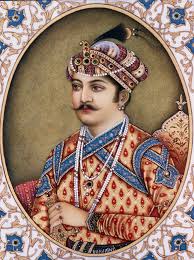
It was between the 9th and 19th centuries when north India was ruled by a series of Muslim sultans that Lahore reached its cultural apogee. And especially under the Mughals who built India into the medieval world’s grandest empire. Akbar, the greatest of all the Mughal emperors of India loved books and stories. The snippet above, from his biographer Abul Fazl, is a fascinating glimpse into the cultured atmosphere that permeated the courts of the ruling elite of northern India. The royal library, Abul Fazl proudly noted, included books written in Hindavi (early Hindustani), Greek, Persian, Arabic and Kashmiri. Akbar’s sons and grandsons and many of his senior nobles continued to add to the library, composing their own works but also drawing to the great darbar (court) of Lahore the greatest talents from all across India, Afghanistan, Central Asia, and even as far away as Iraq.
The Mughals looked to Persia for their notions of culture and gave pride of place not just to the Persian language but to the great poets and thinkers of Iran. And it was from Persia that many of the grand stories they loved so much and which they adopted and were absorbed into Indian culture first came. The elites of northern Indian during this period adopted a number of Persian poetic and literary forms in which they preserved their histories, but also stories, poems and philosophies.
Several of these forms, especially the qasida, which was a poem in praise of the monarch, remained a novelty of the darbar and did not influence broader society, but several others did. Chief among these was the qissa, an extended poem that combined elements of moral and linguistic instruction as well as entertainment. The subject matter were stories of military valour, spiritual attainment, love and romance. The Mughals, especially Akbar and his son Jahangir enjoyed the qissa Dastan-i-Amir Hamza which relates at great length and with vivid imagination the fantastic adventures of the Prophet Mohammad’s uncle Hamza. So much did Akbar appreciate this work that he commissioned a massive project to illustrate the entire epic. Completed over a period of 14 years (1562-77) the final product included 1400 full page miniature paintings and was housed in 14 volumes.
Qissas were not just stories but in the control of a good narrator, complete one-man performances/ shows. Some of the royal qissa-khawans (story tellers) are recorded as demonstrating all manner of expressions, body movements and vocal tones in their telling, sometimes even transforming themselves, in the words of one critic of Lucknow, into tasvirs (pictures). Thus, introducing for the first time into Lahore the concept of moving pictures! Akbar so loved the story that several times he is described as telling and acting out the qissa himself in front of courtiers and guests. When Delhi was sacked by the Afghan Nadir Shah in 1739 the reigning emperor Muhammad Shah pleaded that after the peacock throne what he most desired to be returned to him was Akbar’s Hamzanama which had illustrations ‘beyond imagination’.

The critics of the day stressed both telling and listening to stories were beneficial to the soul with some claiming that in the cosmic order of beings, poets and storytellers were ranked second, right behind Prophets and before Emperors! Though this is undoubtedly a minority view, the best qissa-khawans were indeed highly esteemed.
In 1617, Emperor Jahangir, son of Akbar the Great, recorded the following event:
Mulla Asad the storyteller, one of the servants of Mirza Ghazi, came in those same days from Thatta and waited on me. Since he was skilled in transmitted accounts and sweet tales, and was good in his expression, I was struck with his company, and made him happy with the title of Mahzuz Khan. I gave him 1000 rupees, a robe of honor, a horse, an elephant in chains, and a palanquin. After a few days I gave the order for him to be weighed against rupees, and his weight came up to 4,400 rupees. He was honored with a mansab of 200 persons, and 20 horse. I ordered that he should always be present at the gatherings for a chat [gap].
It was under the reign, and patronage of Jahangir that Lahore became the favoured city of the Mughals. The emperor is remembered for ruling over a stable and prosperous Empire and for patronizing painting, poetry and architecture. A man of artistic inclinations it was during this time that story forms like masnavi which told of current events and wonderful victories and ghazal a short romantic-mystical form of poetry superseded other forms of literature. The ghazal in particular was championed by Jahangir and his son and successor, Shahjahan.
The ghazal both facilitated a large appreciation of poetry outside the circles of the aristocracy, among people of all walks of life, and began to be composed and recited in all sorts of settings including by women, in private homes, in public houses and in competitions. The masnavi quickly declined because compared to the ghazal it was a bit lengthy and rather tedious. The ghazal on the other hand, was snappy, called for clever word play and rarely ran more than a few verses. Mushaira, poetry recitations that centred around the ghazal, became one of the most popular forms of entertainment in Lahore during this period.
Many tales are told of courtly mushaira presided over by the Emperor who believed that when expertly delivered, a ghazal was full of magical power.
One night a singer by the name of Sayyid Shah was performing for the Emperor and impersonated an ecstatic state (sama). Jahangir questioned the meaning of one line from the ghazal
Every community has its right way, creed and prayer
I turn to pray towards him with his cap awry
From the audience the royal seal engraver, one Mulla Ali gave an explanation of the line which was written by Amir Khusrau and which his father had taught him. As soon as he finished telling the story, Mulla Ali collapsed and despite the best efforts of the royal physicians to revive him, passed away.
Of course, this literary world of elaborate illustrated tomes, royal qisse and the like was not uniquely Punjabi. Rather it was the literary province of the elite and as such, familiar to most urban literate North Indians. But the mass of people was not literate and had no access to the libraries, the texts, treatises and poets of the nobility. And yet beyond the forts and palaces and even beyond the urban areas of Mughal India there pulsated a great tradition of storytelling that influenced the emergence of films in the early 20th century.
To name all of the genres of Punjabi storytelling would be nearly impossible. In addition to qissa and ghazal there were afsane (stories), dastan (heroic tales), latifa (jokes), katha (Puranic stories), naat (poetry in praise of the Prophet), kafi (sufi poems), boliyan (musical couplets sung by women), dhadhi, kirtan, bhajan, swang, sangit, nautanki , marsiya, mo’jizat kahanis (miracle stories of Shi’a Muslims), mahavara (proverbs) and so on.
These forms of storytelling were a part of everyday life for the people of Lahore and the Punjab. Though they may never have seen the beautiful courtly books produced by the Emperors, the characters, plotlines and themes were deeply embedded in the consciousness and culture of common folk.
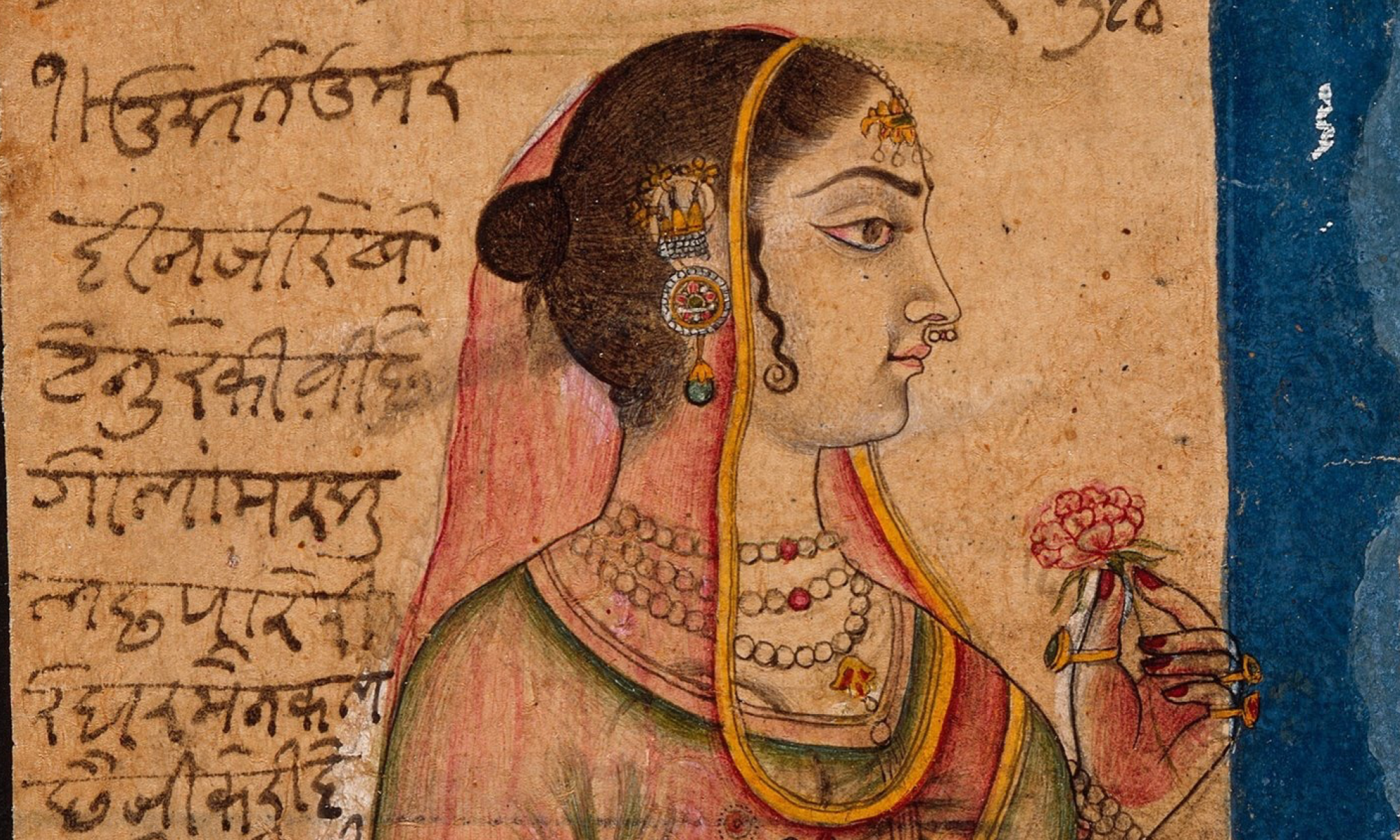
One story in particular, Heer Ranjha, based on the Arabic classic Laila Majnun, was especially beloved by Punjabis. Compiled originally in the time of Akbar by a storyteller named Damodar Gulati, Heer Ranjha tells the story of a beautiful girl, Heer, who is wooed by a flute-playing handsome young man Ranjha. Rejected by Heer’s family because he belongs to a rival Punjabi clan, Ranjha turns toward a spiritual path. He spends time in Tilla Jogian, the premier centre of Hindu ascetism in the medieval period, and becomes a powerful kanpatha (pierced ear) jogi. His identity is uncovered by Heer’s friends who convince her to run away with him which ends badly with the death of both lovers.
The tale is the greatest of the many similar legends known as tragic love stories, the speciality of Punjab. Sohni Mahiwal, Sassi Pannu and Dhola Bhatti are taken from the same tradition and have been told, acted and sung to rapt audiences for centuries. Stories such as these and others, like Anarkali, whether recorded in royal tomes or told under a tree by a wondering minstrel formed the foundational inspiration for Lahore’s movie makers. By 1932, just four years after the Lahore produced its first film, Heer Ranjha had already been made into a movie four times!
Performing Arts
Though the earliest Punjabi stories were written down during the Indus Valley civilization, once Harappa and the other cities were abandoned, India would not use writing again until the rule of the emperor Asoka, more than 1500 years later.
The Vedas were memorised and passed on word for word from generation to generation through a caste of priests, the Brahmins. And though many of the later Buddhist tales and eventually, even the Mahabharata and Ramayana were put into written form, writing, reading and access to these skills were confined to the very thinnest layer of elite society. The stories of Punjab survived because they were remembered, retold, performed on stages, recited in poems, acted out in the streets and reimagined with each generation. This oral and physical transmission, this retelling and telling again, kept the stories fresh and alive, changing, not only depending on who was doing the dancing or singing but whether the context was spiritual, secular, public or private.

As with its oral and written literature, Punjab is likewise blessed with a huge variety of musical styles and musician groups. Broadly referred to by the public as mirasi, the society of hereditary Punjabi musicians is complex, and highly differentiated. Though musicians, singers and dancers were uniformly relegated to the outer limits of the caste and class system they played an important, even essential role in Punjabi society. They were the repositories of significant parts of family, folk, clan culture and history. When the movies arrived, the mirasi provided many of the musicians, dancers, singers and composers of what more than any other single trait exemplifies Pakistani/Indian popular movies, the song.
Certain groups of singers have had a direct and enduring connection with the film industry. The dhadhis, wandering minstrels and balladeers who trace their lineage back to the times of Akbar the Great, were particularly active in Punjab. Accompanying themselves on an hourglass-shaped hand drum (dhadh) and a variety of bowed instruments, dhadis specialised in singing heroic tales (var) of local chieftains, especially Sikh rajas ,as well as the tragic love tales such as Heer Ranjha and Sohni Mahiwal. Qawwals, who are sometimes considered part of the dhadhi tradition, were associated with the Sufi shrines and sing an intense trance (sama) inducing music that is so identified with South Asian Islamic practice. Qawwali was a form that was quickly picked up by film makers who inserted it into scenes as light relief or as a sonic representation of an Islamic character or theme.
Also associated with spiritual singing were a class of Muslim singers known as rubabis (after the Afghan stringed lute, rubab). The Sikh gurus employed rubabis to sing kirtans and shabad, essentially the sayings of the various Sikh gurus sung in their temples (gurdwara) as part of Sikh worship. These musicians had respected musical pedigrees and were expert on the rubab, harmonium, drums and other instruments. Being largely a Muslim group, most moved to Pakistan after 1947 and several played critical, pioneering roles as musical directors in the film world that grew up in Lahore.
The brass wedding bands that became an urban phenomenon in north India in the 19th century drew their members from yet another group of hereditary musicians known variously as Mazhabi (if they were Sikh), Musalli (if they were Muslim) and Valmiki (if they were Hindu). These musicians provided services including acting as town criers and news readers. They would make community announcements while beating their drums and playing their horns and clarinets. During festivals and celebrations they entertained people from their vast repertoire of religious and secular songs. As the forms of entertainment changed in the 20th century and especially when sound and music were incorporated into movies in the 1930s, these skilled players formed the backbone of the studio orchestras that produced the amazing soundtracks of the films.
In addition to singers and musicians a universe of street performers, actors and magicians made up part of the Punjabi landscape as well. There were bazigaars (acrobats and contortionists who also sang and acted), bhands (comics) who interrupted weddings and other events to make fun of prominent members of the family and their guests with quick jokes and bawdy repartee for small sums, madaars (jugglers and magicians) who with their magical powders and wands would make birds, eggs and even people disappear and reappear at will.
These groups performed publicly on the streets, in city squares or open fields and bazaars. At any fair (mela) or ‘urs’ (sufi celebration at a shrine) all of these and more would be part of the entertainment. Indian diplomat, Pran Neville, writes in his memoir of Lahore, “we had but to walk into the streets to be entertained by one or the other professional jugglers, madaris (magicians), baazigars (acrobats), bhands (jesters), animal and bird tamers, snake charmers, singers, not to mention the Chinese performers of gymnastic feats who would be out on their daily rounds.”[1] Like the mirasi, many of these castes of public entertainers found that the new film studios popping up in Lahore could be an unexpected source of livelihood.

If Parsi Theatre inspired the early film makers of Bombay, in Punjab other forms of theatre were just as important: swang, naqqali and nautanki. Each of these theatrical codes were common across the Punjabi countryside where performing troupes travelled and performed a rich variety of dramas.
The most important of the traditional theatres in Punjab was a form of nautanki known locally as swang. In essence swang which takes its name from the Sanskrit word for music (sangit) is informal folk opera. The production incorporates liberal portions of singing and dance and often all the parts are sung rather than spoken.
A performance would generally take place in an open part of a village where a local dignitary had invited the troupe to play. After a day of preparation during which the excitement built as stages were erected and children ran amok amidst the activity. The performers prepared by singing for hours with the heads facing downwards into the village’s wells, a practice that allowed them to improve their range and enhance their projection. The actual performance would finally begin late in the evening and continue till the early hours of the morning. If the plot was a long one this would continue over a number of evenings.
Audience participation–hissing, shouting, calling out requests for songs or jokes to be repeated–was expected and happily accommodated. The performers were masterful singers who had to project their voices over the audience noise and often compete against a rival troupe performing in another part of the village. It was said that some of the best singers could be heard more than a mile away. One only needs to listen to the resounding voice of Noor Jehan, Pakistan’s Queen of Melody, and one of the greatest film singers of the subcontinent, to get a sense of the amazing power of these traditional singers.
Long before Nargis played Radha in Mother India (1957) or Prithviraj Kapoor played Akbar in Mughal-e-Azam (1960) these open-air travelling opera companies were laying the essential template of and sketching out the iconic roles for South Asian popular cinema.
The City as a Story
Lahore, the cultural capital of the greater Punjab region was itself was a city of a million tales. In many ways Lahore, a city so fabled for so long, was the most famous of Punjab’s myriad stories.

The origins of Lahore stretch back to one of the two foundational epics of Hinduism, the Ramayana. In a storyline familiar to all movie lovers in South Asia, we are told that Sita, Rama’s wife and a goddess in her own right, becomes pregnant making her jealous husband, Rama, question her fidelity. Falsely accusing her of adultery, Rama turns Sita out of the house. Deep in a forest Sita gives birth to twin boys, Lav and Kush, whom she raises with great love and devotion. In a dramatic twist of Fate, years later, the boys are reunited with their father whom they have never met. They take him into the forest to meet their mother. Ram is stunned and realises his mistake but despite Rama’s protestations and desperate apologies, Sita is swallowed up by the earth and returned to the Heavens. Rama goes on to rule his kingdom with his two sons by his side in a Golden Era of peace and stability. When the time comes, he sets Lav and Kush up in the far West of his country where they establish themselves in two cities. Kush in Kasur, 52 km southeast of Lahore on the Indian border, and Lav in Lavapuri, modern Lahore, where even today, inside the fort of Lahore, there is still a small temple dedicated to this son of Lord Rama.
Despite its hoary Hindu roots, and being described as early as 300 BCE by the Greek historian Megasthenes as a place ‘of great culture and charm’, Lahore’s greatest glory was experienced when it was the capital of various Muslim sultanates and states. Throughout the medieval period when northern India was ruled by a succession of ethnic Turkish rulers who promoted a heavily Persianised culture, Lahore was a city of prime strategic, commercial and cultural significance. And despite its oppressive summer heat a reputation of luxury, elegance and sophistication attached to the city. Its guilds and craftsmen were heralded throughout the region and beyond; its poets, some of the most beloved, even in Persia. Like a handful of other cities around the world—modern Paris and New York for example—Lahore has developed a special atmosphere which has caused both natives and visitors to fall in love with it. Way back in the 12th century, Masud ibn Said al Salman one of the city’s most popular poets found himself imprisoned far from his home city for pissing off one of the city’s rulers. Pining away in his cell he wrote a lamentation.
Lahore my love… How are you?
Without your radiant sun, oh How are you?
Your darling child was torn away from you
With sighs, laments and cries, woe! How are you?
Each of the four great Mughals (Akbar, Jahangir, Shahjahan and Aurangzeb) did their bit to build, extend and refurbish the city. Along with Agra and Delhi and for a while Fatehpur Sikri, Lahore served for years at a time as the Imperial capital and was heavily fortified as a military hub. As it enjoyed the presence of the Emperor himself, artists, administrators, philosophers and emissaries hailing from all across the world came to Lahore to live, seek patronage and practice their speciality.
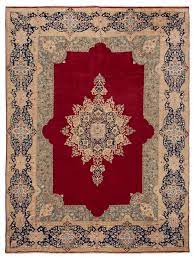
Poets such as ‘Urfi’ of Iran made Lahore their home finding the relatively tolerant and inclusive atmosphere a delicious change from the claustrophobic Shi’a Islam of his home country. He and other poets employed by the durbar [court] produced sublime poems which were sometimes reproduced on paper reputed to be as delicate and as thin as butterfly wings. Artisans brought their skills and looms to the royal city which by the 16th century had an international reputation for producing exquisite silken carpets which, in the words of one historian, made “the carpets made at Kirman in the manufactory of the kings of Iran, look like coarse” rugs.
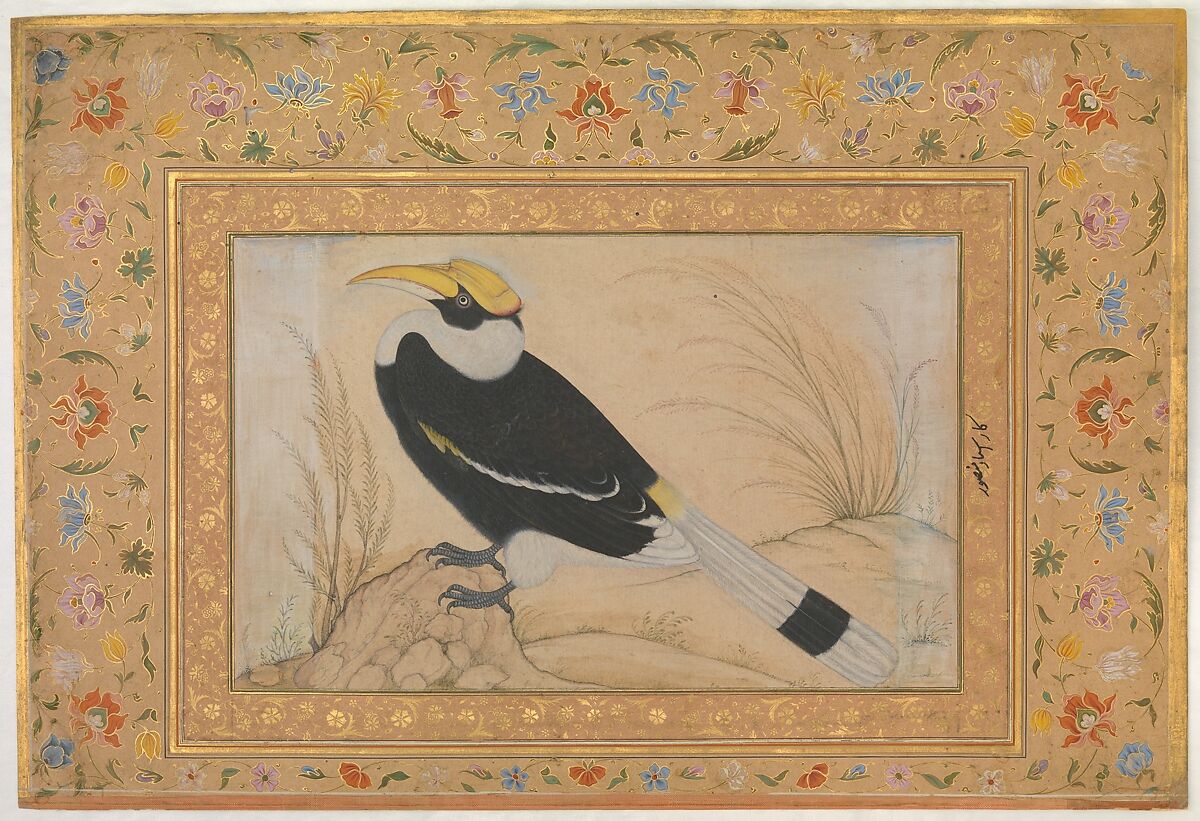
The painters who made Lahore their home—both immigrants from Iran and the hills of Punjab and Kashmir, as well as natives—brought glory and awe to the city and its rulers. Ibrahim Lahori and Kalu Lahori, two painters in the court of Akbar illustrated a book called Darabnama (The Story of Darab) which set out the exploits of the young Akbar, sometimes in fantastic detail, just after he had decided to leave his new purpose-built capital, Fatehpur Sikri, to take up residence in Lahore. Their miniatures brought to life the Persian text which told wild tales of dragons swallowing both horses and their riders in one awesome gulp, as well as radical illustrations of naked humans which according to art historians were never before so accurately depicted by Indian artists. The Darabnama which is recorded as being one of the emperor’s favourite story books also depicts scenes from courtly life such as Akbar being praised and honoured by rulers from other parts of the world and India. Ibrahim Lahori along with miniaturists like Madhu Khurd are credited with bringing a fresh and naturalistic realism to portraiture. It was in Lahore-produced books like the Darabnama that for the first time individuals with all their physical quirks—bulging pot bellies, monobrows, turban styles—could be identified as real historical individuals.

The city’s countless mosques and Sufi dargah (tombs) honouring Lahore’s many saints and pirs are not just revered places of devotion but subjects of and characters in stories filled with miracles and magic that are still told today. The city’s storied inner walled city dominated by the domes of the Jam’a masjid but filled with hundreds of other havelis (mansions), shrines, tombs, pleasure palaces and gardens are themselves characters in the various storylines. How many poems, songs, operas and movies, including made in Hollywood, include the name Shalimar—those famous Mughal-era gardens of Lahore?

Probably the most famous of Lahore’s many stories and one that has been retold in film in both Pakistan and India many times, is that of Anarkali. Like all tales that have been passed down through generations this one has several different tellings but the most famous and popular one is the tragic one.
One day a Persian trader came to Lahore for business and brought with him members of his family. In his caravan was his beautiful pink complexioned daughter Nadira also known as Sharf un-Nissa. Her beauty stunned the bazaars of Lahore and word quickly reached the Emperor himself that there was a woman as splendidly gorgeous as a pomegranate seed in his city. He summoned the merchant to his court and upon seeing the young woman fell immediately in love with her graceful charm. The young woman’s father was only too pleased to accede to the great Mughal’s request for Nadira to be allowed to join the royal harem.
Much to the chagrin of his wives and other concubines Akbar seemed completely fixated upon the beautiful Iranian girl who was rechristened Anarkali (pomegranate seed) by the King himself. The only time she was not by his side was when he was away from Lahore, conquering yet more lands and expanding the glory of his family and empire. And so it happened when Akbar was leading his armies in a campaign in central India, Anarkali and the crown prince, Salim, later to rule as Jahangir, developed an intimate relationship. The gossip hit the bazaars and everyone spoke of how much the two loved each other. Salim it was said was ready even to renounce his right to the throne of India for a life with Anarkali.
When Akbar returned to Lahore he called for Anarkali but immediately sensed something different in the way she approached him. ‘What is the matter,’ he cooed but she resisted his embrace and made an excuse to retire to her chambers as swiftly as possible. Akbar was upset and soon livid when his spies and courtiers informed him of the fool Anarkali had made of him during his absence. ‘The bazaar is echoing with jokes that say Your Highness is too old to water such a lovely tree as Anakali’.
The next day Anarkali was summoned to the Emperor’s chambers. ‘Is what I am told true? That you love Salim more than me?’
Anarkali tried to demur but the wizened old ruler knew a lie when it was uttered no matter how lovely the lips that spoke it.
He sent his favourite concubine back to the harem and then called his chief wazir and instructed him to arrest Anarkali before the night was through. ‘You should bury the witch alive and leave no marking of her cursed tomb’.
In the years that followed Lahore was abuzz with rumours and theories of what happened to Anarkali. Salim was depressed as she was nowhere to be seen. Had she been banished back to Iran?
Eventually the old Mughal died and Salim ascended the jewel encrusted throne of Lahore. One of his first acts was to build a simple tomb on the spot where Anarkali had been so heartlessly murdered. Inscribed upon the tomb is a couplet from the love-lorn Jahangir himself, If I could behold my beloved only once, I would remain thankful to Allah till doomsday
[1] Pran Neville. Lahore: A Sentimental Journey. (New Delhi: HarperCollins, 1997), 60.
 Missionaries, Mercenaries and Misfits