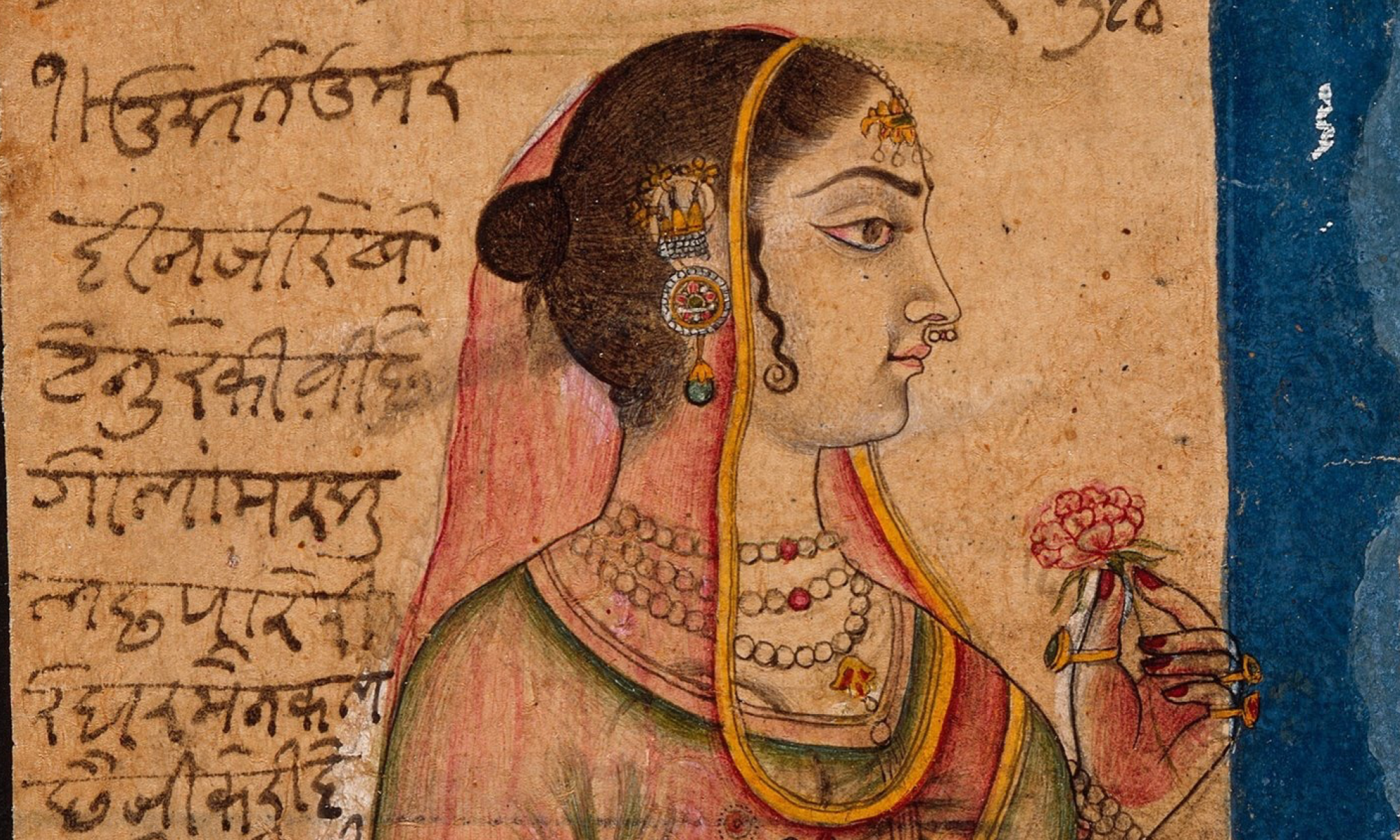

My Missionary Family Pt 3 : Ocean Liners and St. Thomas

My folks and two older brothers landed in Bombay on 2 February 1952. A second application for a visa had been successful and 28 days after leaving New York they squinted at the skyline of India’s largest city ‘with its many high-rises [that] looked pale yellow in the hazy afternoon sun, more modern looking that we had expected.
The country where they would live and work for nearly 40 years was still young then. Four and half years earlier the British had left in a rush leaving behind two new countries. Pakistan and India, to sort out the affairs of state amidst deep political divisions over the Partition of the subcontinent, heightened communal identify and sensitivity, a bankrupt treasury and a level of poverty that had been severely exacerbated by several massive famines in Bengal, Punjab and Sindh.
Politically, Pakistan was in turmoil. Their first Prime Minister, Liaqat Ali Khan had been assassinated in October 1951, which saw the first direct intervention of the military in the country’s governance, a legacy the people of Pakistan continue to fight against. The UN had declared a ceasefire in January 1951 and sent peacekeepers to Kashmir to manage the fallout of the first of four wars fought over that territory.
India had the good fortune of being led by a charismatic visionary Prime Minister, Jawaharlal Nehru, who enjoyed stature across the globe. When the SS Stratheden, a British ocean liner that carried troops (during the war) and mail (after) between the UK and Australia, and which George Orwell had sailed to Morocco on in 1938, dropped anchor at Ballard Pier in Bombay, India’s first parliamentary elections since gaining independence were almost complete. Nehru’s Congress party would win easily and remain in power for the next 25 years.
In Madras, the original Indian colonial city, 1300 kms southeast of Bombay, a cricket match between England and India got underway on the 6th of February. King George VI died that same day, placing young Elizabeth on the throne where she would remain for many years after mom and dad both passed away. India went on to gain its first Cricket Test victory in that match which marks the rise of the mighty Indian team of our times.
Our family, and few missionaries that we knew,1 cared little for cricket. It was a quaint British game played over 5 (!) days by princes and engineers. Like polo, it was an elite sport. Nothing like the massively wealthy and dominant public phenomenon it is today. Field hockey was the more popular and accomplished sport1 in those years.
We weren’t Brits so the change of monarchs in the UK would have been little more than headline news. There was, however, one anniversary or milestone that Dad would have liked (and probably knew). That his own missionary career was beginning exactly 1900 years after one of Christ’s own apostles had first arrived in India. The tradition (which is generally accepted) tells of St. Thomas, one of the original Twelve, landing along the south east coast of India in the vicinity of the modern city of Chennai (Madras)in 52 CE. He preached to the locals and had some success but other locals, usually identified as stuffy Brahmins, murdered him around 72 CE. But he left behind India’s first indigenous Christian community and church, the Mar Thoma, which can, with strong historical evidence, claim to be one of the oldest, if not the oldest Christian community outside of Palestine.
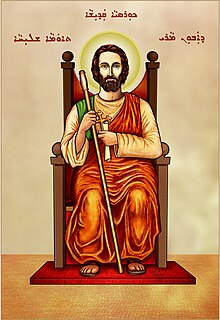
If I’m to understand my parents’ life as missionaries in India I have to spend some time exploring a much broader history, that of Christian India, which pre-dates any formal European missionary by nearly 2 millennia. In the next few instalments, I’m going to highlight some of the highpoints in that fascinating but underreported history.
- India holds the record for most consecutive Olympic Golds (6) and most total Olympic Golds (8) in the sport. ↩︎
My Missionary Family Pt. 2
By mid-1951 Dad and Mom’s preparations to leave for India were in high gear. The few worldly possessions they had accumulated were packed away, ready to be shipped to their new home, or stored in the garages and basements of relatives in Minneapolis. They had been recruited by a mission board known as the Oriental Missionary Society (OMS), a minnow in a lake dominated by the mainline Methodist and Presbyterian churches.
They were excited but anxious, not knowing what to expect or how to prepare for what was going to be their first 5yr tour of duty. They received two bits of advice from senior missionaries. Dad writes about the first one:
Orville French (an OMS missionary in India) accompanied us for a walk. He encouraged us to keep focused on India–’a desperately dark and needy land’, he said. Later while studying in Houghton [College, New York] we corresponded with the Frenches who had arrived in Gadag by then. In one of his letters Orville asked us about our conjugal relationship. Hmm. He said that couples planning to serve in India, especially, needed to be sure that they were well adjusted sexually, and ‘at peace’ with their sex lives. For India, he warned, was a place where sex was overtly ‘worshipped’ (Shiva phallus symbol, erotic temple carvings etc.) and this might prove to be troublesome! His concern was doubtless given in the context of what happened to two missionary families who were forced to return home because of the husbands’ improprieties. Orville’s questions we found a bit intriguing, and actually the ‘only word of counsel’ we had from OMS on how to get ready for India.
Now. If there ever was a paragraph that deserved unpacking, this is it. But Dad’s final statement is not entirely accurate. Mom wrote of another piece of advice they received, this time from Orville’s wife, Aileen.
Aileen, in response to my queries as to what to bring with us, replied that India (and Gadag in particular) was rather drab and dreary, so ‘Bring whatever you can to make your home cheery and cozy.’ One surprising suggestion was to bring toilet paper—India’s being hard to obtain and or poor quality, if and when available. We packed a [55 gallon] drum full of it when we sailed for our first term.
Thus alerted to the pitfalls they could expect to find, they were ready to set sail from New York in September, 1951. With tickets booked and much of their luggage enroute to New York, they were informed that their visa had been refused by the Indian government. This was, in Dad’s words, ‘a slap in the face’ and suddenly it looked as if the erotic temples, jewel encrusted turbans and lost souls would remain figments of their imaginations forever.
The Indian government’s hardening stance against new missionaries was a theme of many family conversations throughout my childhood. Though individuals who could be classified as Christian missionaries had been in India since the early years after the crucifixion of Jesus of Nazareth and though southern India was home to one of the oldest orthodox churches in the world, predating any European missionary presence by centuries, the ‘modern’ missionary movement in India really began in the early 18th century.
It is a story filled with ups and downs and long periods of marginalization followed by shorter bouts by lionization before an inevitable return to ostracism. I’ll write more about that at some other point, but for now, the refusal of a visa for Mom and Dad, though disappointing for them, was not surprising given the political context of a newly independent country.
Indian elites had waged an ever more acrimonious and violent war of resistance against Imperial Britian, aka The Raj, for decades. Indeed, you could make the case that the ‘natives had been restless’ for more than a century and that the first mass armed uprising against the British had taken place in 1857, when a loose coalition of soldiers, disempowered regional rulers and peasants, nearly succeeded in wiping all Europeans off the north Indian map.
The country’s new rulers, though committed to building a non-sectarian, secular state, viewed missionaries as a subversive, antiquated, anachronistic and altogether unwanted cohort of foreigners living in their midst. Missionary evangelizing, as unsuccessful as it was in convincing more than a handful of Indians to renounce the faith of their birth, was especially hated.
Prominent leaders including the Governor General Mr. Rajagopalachari and Prime Minister Nehru expressed their views that missionaries were cultural aggressors and foreign fifth columnists. An official investigation in the early 50s by the government of Madhya Pradesh concluded:
Evangelisation in India appears to be part of a uniform world policy to revive Christendom, to re-establish Western supremacy and is not prompted by spiritual motives. The objective is to disrupt the solidarity of the non-Christian societies, with danger to the security of the State. Enormous sums of foreign money flow into the country, and it is out of such funds that the Lutherans and other proselytising agencies were able to secure nearly four thousand converts. Missions are in some places used to serve extra-religious ends. As conversion muddles the convert’s sense of solidarity with his society there is a danger of his loyalty to his country being undermined.
A vile propaganda against the religion of the majority is being systematically and deliberately carried out so as to create an apprehension of breach of public peace. There has been an appreciable increase in the American personnel of missionary organisations in India.
Which must be halted immediately, the report declared.
Things didn’t look good for wannabe missionaries like Rudy and Eleanore Rabe and their two young sons Michael (4) and Gregg (2).
My Missionary Family: Part 1
There is no generic missionary. There is no single description that all missionaries would agree on. Missionaries were/are as diverse as any other group of humans. They had a variety of motivations for being in India, vastly differing theologies and lifestyles. Many didn’t like each other, even when they worked for the same ‘mission board’. Some were world class historians and biologists and linguists. Some developed new nutritious products for the emerging middle class. Some led the world in the treatment of blindness and leprosy. Some ‘went native’. Others went mad and had to be shipped back to Ohio. Some believed every word of the Bible was historically accurate and spiritually true. Others could not find their way to 2 Chronicles. One even became a leading White Supremacist.
What follows is what my missionary world looked like.
My parents came to India in 1952. Dad was 27. Mom 30. Dad had been appointed by ‘the Mission’ to teach in a small Bible college in a not-very-significant district town in what was then Bombay Province but which, in 1956, was included within the freshly minted Mysore State that was renamed again in 1973 as Karnataka State.
Home for both Mom and Dad was the upper Midwest: Minnesota and the Dakotas. Both families were of German extract and both were equally poor. And both families belonged to the ultra-small, ultra-conservative Holiness Methodist denomination.
Mom was older than Dad by three years. She had grown up a farmer’s daughter and harbored the suspicion that she was an ‘afterthought’. She always claimed to have enjoyed a loving childhood but one that was lonely and isolated. Her siblings were 10-15 years older and the farms she grew up on, first outside the northern Minnesota town of Detroit Lakes and later near Paynesville, in Stearns Country–heavy German immigrant territory– were several miles from civilisation. She loved (and dreamed of) sharp clothes, baking and reading.
Going on to High School was a major aspiration for most of her social network. Though her father lost his farm in Detroit Lakes during the early days of the Depression, forcing him to become a sharecropping dirt farmer, mom did graduate high school and went on to Business College in Minneapolis just as WWII began. She admitted to having a few boys from the community make eyes at her, even a few handsome lads, but she never made eyes back. Mainly because it was clear to her that they had no desire to go to High School. Or they smoked. Had no real prospects. One boy, however, did stand out–Melvin Finger. She liked the look of him and noted with approval that he was ‘serious-minded and read TIME magazine’.
She grew up loved, she said. She also said, she felt as if her mother, a devout and extremely soft-spoken woman, had hoped she would be a boy because she confessed to hoping that her final child would be a ‘preacher or missionary’. To mom, these were clear signals that she had disappointed her mother by being a woman. I think she carried that feeling of being ‘second best’ with her throughout life.
Her dad, a tall and toothless man with a hearty laugh and a 19th century outlook, was not particularly religious. He’d go to church occasionally but did nothing to encourage Christian faith in his children. That was their mother’s role. He was too busy scraping enough sustenance together from the tiny Minnesota plots he farmed.
Her upbringing was stifling. Though she accepted the conservative Christian values and faith of her family and neighbors she knew early on that she needed to escape rural Minnesota. In later years she would cackle over the thought of her being a Minnesota farmer’s wife, something that bemused and terrified her. When a recruiter from Minneapolis Business College laid out brochures of a nine-month secretarial course in the Big Smoke, she didn’t hesitate. Minneapolis was a ‘magical city’ for her. Shops full of wonderful dresses and shoes and a place where she could be surrounded by people but still keep to herself.
In their memoir Mom wrote:
Though I didn’t know exactly what I wanted to do or be, I was SURE I did not want to spend my life on a farm! Dad and mom had worked their fingers to the bone for years, and what did they have to show for it? I wanted to have a nice home and some stylish clothes—admittedly I was ‘materially’ minded. Attending business college offered me a way out of Paynesville and an escape from the farm. What could be better? I was excited!
**
Dad’s family were more recent German immigrants. Grandpa had arrived with his mother and siblings from what is now western Poland in 1903. They settled in Guelph, North Dakota, a speck on the prairie not too far from the South Dakota border. The Great Northern Railway that linked St. Paul with Seattle in far west Washington State ran through Guelph and provided jobs for grandpa and his brother Julius. But the hard physical labor didn’t do it for Grandpa, Rudolph Senior, who was still a couple years shy of fifteen. Around that time he was dragged to a ‘revival meeting’, had a spiritual conversion and dedicated himself to ‘full time Christian ministry’. He committed himself to a Holiness theology, serving as a preacher (who often had to move from parish to parish filling in for small rural communities) and eventually General Secretary of the denomination. Here’s how Dad summed him up in the memoir he wrote with Mom in 2011.
The Holiness Methodists were a small, struggling denomination with never more than 30-35 churches and preaching points. But they established a small Bible school (Holiness Methodist School of Theology) in Minneapolis. A year or so after his conversion. Rudolph felt God was calling him to the ministry, so went to Minneapolis and enrolled at HMST. After just a year’s study, the church assigned him as a pioneering evangelist to a remote area way out in northern Montana.
For a year and a half—April 1915 to October 1916—he lived in a small mountain cabin in close proximity to the Pinkham Creek and Fortine lumber camps located a few miles from the town of Eureka. Life in those Rocky Mountain woods was primitive, ultra simple, far from being as romantic as one might think.
He married a feisty woman named Leona and together produced a large family of 9 children of which Dad was number four. Grandpa struggled with depression throughout his life (Dad brushed it aside as nothing more than ‘the winter blues’) which is probably one of the reasons he returned to Minneapolis and HMST. The family could barely put food on the table, especially as Rudolph Senior’s body began to break down with the stress of scraping a living together in the Depression.
Dad spent most of his youth moving between small towns in South Dakota and Minnesota before completing his high school in Duluth. Like his soon-to-be girlfriend, Eleanore Naugle, that older, lonesome, beautiful farm girl he met at the annual Watson Camp Meeting, Dad knew from a young age that he had to escape this small, loving but culturally isolated world of poor Midwestern farmers and laborers for something more hopeful and spacious.
Both Mom and Dad spoke fondly of the annual Holiness camp meetings they attended in the tiny Christian enclave of Watson (pop. 290) in south central Chippewa County. A regular feature of rural American Christianity, the camp meeting tradition had its roots in the so-called Second Great Awakening of the late 18th century. The meetings were ten days of hallelujahs, hymns, fire and brimstone preaching and sanctification under a tent in the woods. They were an opportunity for socially isolated people to meet their co-religionists and for preachers and hucksters to reach tens of thousands of people in one place. And as ever, camp meetings were places for young people to meet up, fall in love and probably do all sorts of unsanctified and sinful things like smooching.
[Listen to Brother Claude Ely singing at a camp meeting ca. late 1940s]
Dad’s favorite part of the meetings were the sermons of visiting missionaries who told stories of the exotic, colorful and spiritually benighted Hindoos and Mohammadans of India.
In 1946, now married to Mom, they once more attended the Watson camp meetings.
There, the camp’s missionary speaker was…China missionary Roland [Rollie] Rice…. I had been thinking quite a bit about India during our last months in Fort Robinson, remarking more than once that I had wished the army had sent me there instead of one of my Camp Dodge buddies. This friend, Carl, and I corresponded during our Fort time. In one letter he was complaining about some of India’s negatives and wrote ‘You’d be crazy Rabe, to ever want to come to this place!’
My interest in India had been kindled years earlier and only kept growing. The stories of India that Rev. F.B. Whistler told [in previous years at Watson camp] had ignited that early-on ‘India interest’. That interest was reinforced (admittedly in a fanciful way) through reading about the country—particularly in the adventure books of Richard Halliburton who wrote about snake charmers, tiger hunting, maharajas with jewel encrusted turbans and other exotic minutia. In one of those ‘I plan to be’ talks in a Denfield high school class, I informed my classmates I planned to join the US Foreign Service. Around that time I also made up a fictitious address in Bombay, gave it to my mother saying, ‘Some day you will be writing to me in Bombay where I’ll be serving as US Ambassador or as some officer for the US Government.’ She smiled and said, ‘Yes, Rudy, I think I’ll be writing to you in India one day, but you’ll be there as an Ambassador for Jesus Christ, not the US government.’ I always thought it interesting that 10 years later when we got to India, our first mailing address included the name Bombay: Gadag, Dharwar District, Bombay Presidency.
And so it became family history. Dad was the one who had been inspired to be a missionary as a young boy. Eleanore fell in love with him and ‘accepted as part of the deal’ that her commitment to him meant a life far from her family in what must have seemed to her a hostile and harsh environment on the other side of the world.
But re-reading their joint memoir, I have a much stronger sense of Mom’s agency in this. She knew exactly who she was marrying. Rudy had many of the qualities she admitted to liking in men. He was a Christian. He was good looking. He didn’t smoke or drink. He was ‘serious minded and read TIME magazine’ like one of her early crushes Melvin Finger did. And like him she shared a desire to get away from the stifling atmosphere of rural Minnesota and have a bit of adventure. And similar to Dad, her mother had already committed her last child to God to be one of His missionaries.
On the last night of 1946 camp, Dad and Mom both publicly declared their desire to move to India to ‘serve the Lord’.
The reality, in fact, seems to be, contrary to family oral history, that a career in India was something they both consciously chose. Maybe Dad’s interest in the country was deeper and more longstanding than Mom’s, who probably had zero curiosity about the place, but both of them were excited about the prospect of leaving America in search of adventure and souls to save.
Years later after attending her high school class’s 50th reunion she commented with obvious, if well-controlled glee: “Although I had been such a shy and unassuming little girl, I probably traveled farther and had a more exciting life than most anyone else. It’s safe to say that Rudy, the man I married, was the secret of my out-of-the-ordinary’ life.”
Free at Last: Weekly MX3 Mixtape

Exit and Entry
33 years 2 months and 2 days ago Mikhail Gorbachev announced his resignation as leader of the Soviet Union. The next day, 26 January 1991, the world learned that the Soviet Union itself, had ceased to exist as a political entity.
I watched Gorbachev on American TV. The enormity of his resignation and the dissolution of USSR silenced the room. The consequences of it were unclear but generally I think everyone felt lighter; things were bound to get better.
Today, I watched President Trump and VP Vance go on TV and announce their desire to join a new USSR, led by their buddy Vlad Putin. The enormity of this decision was lost in a squabble of hectoring and scolding more akin to a WWE extravangza than a diplomatic photo opp.
Just as Gorbachev’s announcement stunned the world, so too the Dynamic Duo’s performance on live TV today, has left the world immobile with shock. Only instead of hope we watch in horror, knowing for sure that only worse lies ahead.
A few months earlier I had watched Boris Yeltsin jump onto a tank in the middle of Moscow and rally his fellow Russians to resist the coup that had been launched by hardline Communists against Gorbachev’s glasnost and perestroika. I remember thinking, ‘Wow, that’s ballsy!’ And the people rallied, the coup was put down and Big Boris led them into a new era.
I don’t watch TV or read much news anymore. But I find it interesting that Yeltsin’s demonstration of leadership and purpose is apparently so uninspiring to the politicians of the Greatest Country in the History of Humanity. Our leaders, our so-called Yeltsins’, our hardcore anti-Putin hawks, now flap their wings and coo quietly in harmony with the two assholes at the top.
DJT is leading us into a new era too.
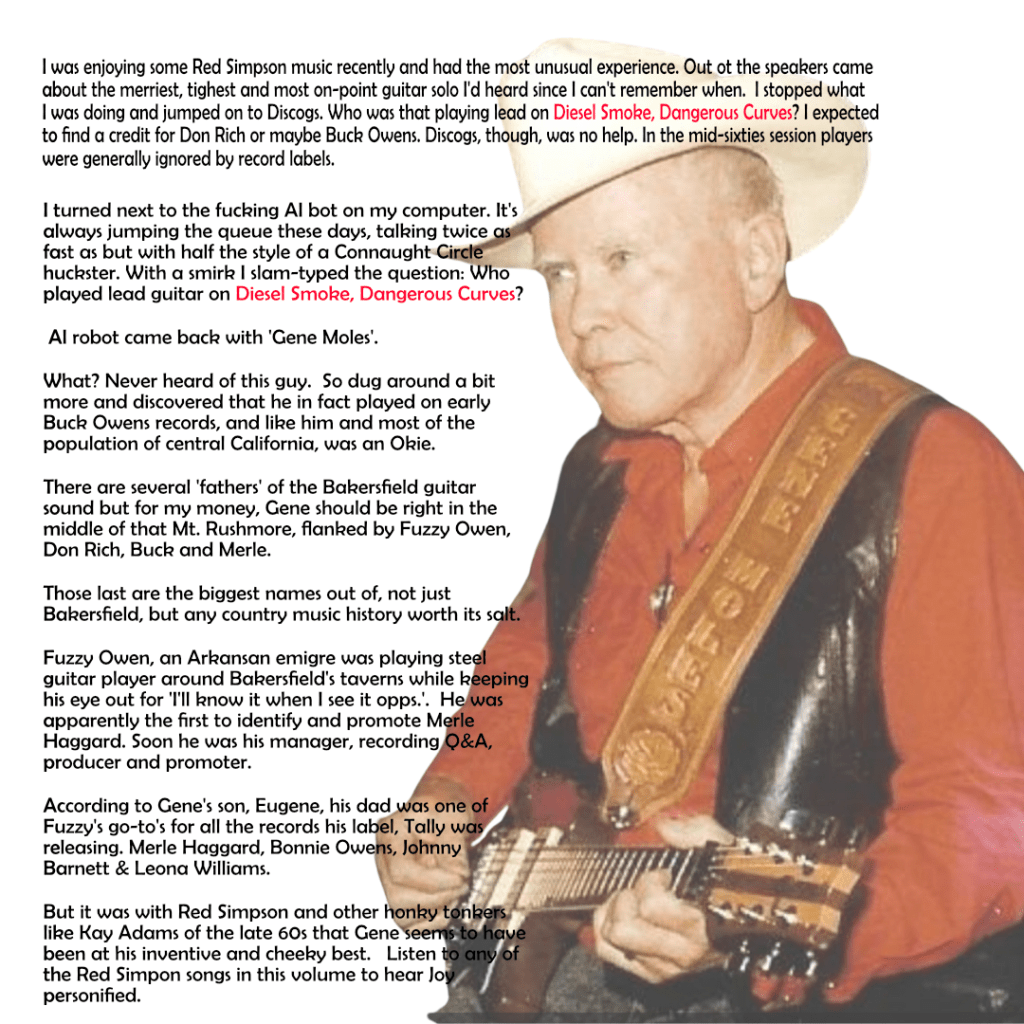
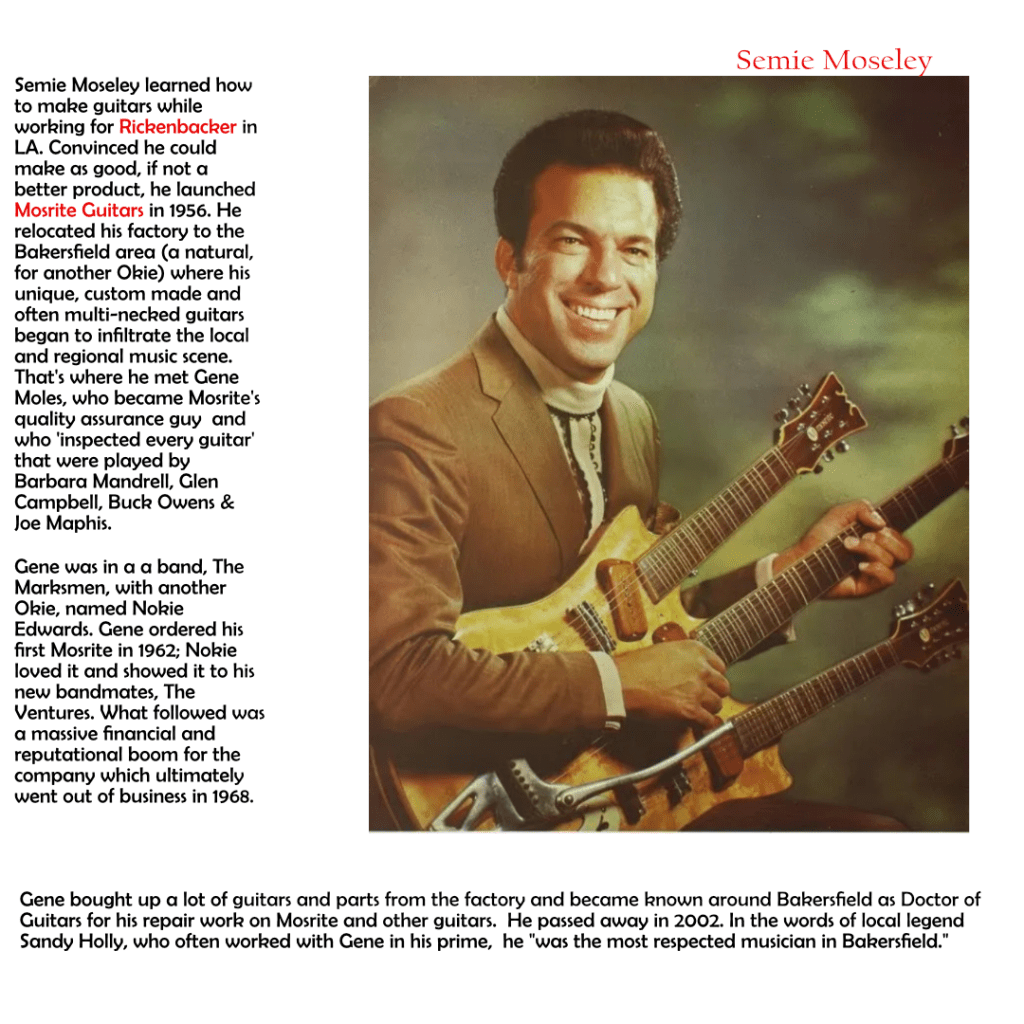
Gene Moles: Bakersfield’s Secret Weapon



Historical Fiction and the Saviour of the World

All religions are rife with factions. And in that way, they are a manifestation of the most primitive and base of human instincts. Group think. Tribalism. Belief regardless of a lack of evidence. Even evidence to the contrary.
I was born and nurtured within the ‘Bible is the inerrant Word of God’ tribe. The people who insist that every word, every story, every miracle found within the Christian/Jewish Bible is cent per cent pure and untainted by any contradiction or human failing. The Universe was created in six 24-hour days. Elijah ascended to ‘heaven’ in a burning chariot. The Supreme Lord of Everything addressed Abraham through a burning bush. Wine to water. 2 pieces of bread and 5 sardines fed 5000 people. You get the picture.
I should clarify. My father, our clan leader, actually felt most comfortable in a sub-faction of this larger tribe. I would call it ‘the Bible is the actual reflection of God’s mind but not 100% historically or scientifically accurate’. He argued that science and learning were needed to understand the mysteries of such a revered set of writings as the old and new testaments. He would acknowledge (later in life) that humans did not have the capacity to understand ‘God’ and so, ultimately, whether or not Jesus did turn a cistern of water into Merlot at the wedding party, it was not worth starting a war over. He liked to believe it, but he and others in the sub-faction allowed space for individual interpretation.
I have no personal faith or belief in Jesus, Yahweh, God or any other such divine creature. But I had a good childhood and my 25 years of practicing Christianity has made an indelible imprint on my mind. I cannot and do not want to excise that part of me. I find great comfort in many passages of the Bible (OT and NT). I still love and sing along to the hymns and choruses I learned from countless Bible Clubs, camps and revival services. And throughout my adult years I have enjoyed reading academic and true-believer debates about all manner of Biblical studies and archaeology.
I recently read a book titled Jesus Interrupted. I didn’t finish it because it was a bit too elementary for me. The author, is an ex-believer like myself, but a scholar of the Bible. His audience seems to be those of the ‘Bible is the inerrant Word of God’ tribe who are looking for encouragement to use their minds rather than practice blind faith. I can hear him whispering to them ‘It’s ok. Jump. You won’t be crushed by what you find.’
He spends a lot of time talking about ‘contradictions’ and ‘inconsistencies’ within the 4 Gospels and other books of the New Testament. Of which there are many. And which should be sufficient for any unbiased reader to understand that what they are reading is not History. For those who have come to believe that the God of the Bible is a distinct and discrete being, separate from the Universe, and who’s wont is to stick his hand into the petri dish called Earth and mess things up or direct action in a particular way, the notion that the story of the 3 wise men or the resurrection is not the accurate tale of an actual event, is a hard concept to embrace.
I have published two novels, the first of which is what bookstores label, ‘historical fiction’. It is set in mid-20th century Iraq and as such the narrative refers to and is framed by actual events. And people who are historical figures, the most prominent of which is Saddam Hussain. But there are many others who pop up, mostly in very minor and insignificant roles. The main characters are entirely fictional and most of the happenings that the book describes are real only to the characters. They have no basis in history.
If you used my book to prepare for a trip to Iraq you might get a EXTREMELY HIGH LEVEL glimpse of the turbulent political history of modern Iraq up to about 1985. But I hope no one would ascribe the words I put in the mouth of real historical figures as ‘accurate’ or historical. The point of my book, what got me going, was to explore and try to understand the idea of politically-motivated violence against people who think differently. Torture. What goes on in the mind of the man who willingly and knowingly inflicts physical pain upon those who have been captured and have no way to fight back?
I was not writing and didn’t set out to write a description of the Ba’ath party or Iraqi politics. It was my way of unpacking an issue I was confronted with on a daily basis when I worked with the UN refugee agency.
As I read Jesus, Interrupted it dawned on me that the best way to describe the Gospels and other Biblical stories is as “historical fiction”. They are historic in the sense that they describe a society and historical figures that really did exist. But they are like tent poles or stakes that hold the story up but which are really supportive rather than central to the action. Yes, there was a tough guy named Pontius Pilate. And there were a group of Jews known as Pharisees. Nazareth and Bethlehem can be found on a map. But anything beyond this sort of thing is historically iffy. Even the historic reality of the central hero, Jesus.
The gospels, written decades after Jesus was allegedly crucified, by unknown writers, were composed to tell a specific story to a specific audience. The story was one of spiritual and moral guidance not a biography of the Nazarene.
None of this is fresh insight. It’s as old as the hills. But it does help me understand these essential texts of my life. They are not history. But they are not fiction, either. They are historical fiction.
Two films I recommend
One is Civil War. Here is a piece I thought I had shared one of my other blogs (C90 Lounge) but may have not. Apologies if you’ve read this before.
I saw Civil War yesterday. My companion, an emotionally hard-boiled Aussie of the 80s, was sceptical. He expected a ‘made for TV’ type production and groaned at the poster’s depiction of a gunner’s nest in the flame of the Statue of Liberty.
I’m invested in this, I said.
Years ago, in the era of ‘W’, my brother and I half-seriously agreed that should ever there be a revolution in America, we would return (he was living in Canada, me in Australia) and fight for the good guys. So, I’ve been seeing armed rebellion in the heartland for decades. In the intervening years I’ve worked in Iraq and the former Yugoslavia and Tajikistan. Each of those countries, in their own space and time, were places where citizens believed, ‘it will never happen here’.
Of course, it did happen there. Half a century of state building and brutal imposition of power by an ultimate stable, seemingly intractable family or party structure crumbled faster than anyone could have imagined leaving once proud capital cities and rural hamlets alike pockmarked with the imprints of thousands of shells, collapsed roofs, burned out vehicles and bands of uniformed heavily armed men with trembling trigger fingers in attack or perhaps in retreat.
The picturisation of the road trip from NYC to DC depicted in Civil War gets full marks from me. The mayhem and the menace were completely believable. The Americanisation of the scene, for an initial moment seemed unreal, but quickly the recollection of similar road trips I’ve made through Bosnia and Kosovo, Central Asia and Angola, made me appreciate the truism, local context is everything. This is exactly what civil war and the collapse of a national superstructure looks like. It just so happens that McDonalds dot the landscape instead of mosques.
The film is not edifying. I left scratching my head what it said about the media. Villian or simply the least-worst group in a land full of horrible people? The scene with the red-headed militia man with his red sunglasses was completely real and believable. Appropos to the storyline I left the theatre wondering, ‘who were the good guys?’. Maybe my brother and I would have fighting each other, not side by side. It was depressing.
Much better than I expected, said my hardboiled friend. Neither of us had much to say for a long time.
**
The second film is Shatranj ke khiladi (The Chess Players). It came out in 1977 and is a brilliant picturisation of Indian writer, Munshi Prem Chand’s, beloved short story of the same name.
Set in 1856 it recounts the final days of nawabi 1Lucknow, the most important ‘successor’ kingdom to emerge in the years following the severe collapse of Mughal political authority in north and central India, beginning in the early 18th century.
Satyajit Ray directed the all star cast which includes Sanjeev Kumar, Saeed Jaffrey, Sir Richard Attenborough, Amitabh Bachchan, Shabana Azmi, Amjad Khan, Victor Bannerji and Tom Alter, with whom I share a personal connection and whom I knew as an ‘upperclassman’ at boarding school. Each actor gives a generous and pitch perfect performance.
I love the sound of this film which is told in Urdu. Lucknow was accepted as the center of the Urdu speaking world and Urdu, with a Sanskrit grammar base but Persianised vocabulary, is among the most beautiful languages ever devised by us humans. The atmosphere (mise-en-scène?) of the film is authentic to my imagined 19th century nawabi Hindustan, 2 and captures the dust-layered pale clay and brushy landscape of that part of India perfectly.
The story is both hilarious and deeply sad. It is a tale of self delusion in a time of political chaos and confusion. A story about the passing of one era and the forceful, violent birth of a new order. A story perfect for this notorious American moment. The copy that is on You Tube is high quality with English sub titles, though significant parts of the story are told in English. Highly recommended!
- Nawabi is an Urdu term meaning ‘royal’ but which over time has become shorthand for a particular culture and lifestyle of Muslim (mainly) elites, centered in Lucknow but prevalent across much of the Gangetic plains of north India. Nawabi is a way to signal decadence, hedonism and a self indulgent ruling class of land owners and pleasure seekers. ↩︎
- Hindustan is often used to refer to India as a whole, but historically and culturally it refers to the area of northern India the is watered by the Yamuna and Ganga (Ganges) rivers, also known as the doab (two waters.) More broadly it refers to the heartland of Muslim India that stretches from Lahore in Pakistan to Dhaka in Bangladesh. ↩︎

 Missionaries, Mercenaries and Misfits