Ghazals Galore Redux
Only one thing had given Abdul Rahman more pleasure than the accounts ledger. Zubeida. Darling Zubi. His daughter — sweet canary — on whom he had doted from the minute of her birth. But since fleeing Baghdad — was it truly two full years now? — Abdul Rahman had not permitted himself more than a sliver of reminiscence. Probably because the memories which swirled up inside of him, like black windy currents, were too painful to control. And Abdul Rahman was a man who prided himself on self-control. Since being on the run he could not allow anything, not even a few moments with his beloved Zubeida, to distract him from the task of staying alive. But here he was trapped. I am in the hands of others. For the moment. And he was glad. Now there was no good reason why for just a few minutes he could not visit his angel, Zubi. There was no photo of Zubeida. Not in the accounts ledger or in any other album. In fact, he had only ever kept one photograph of his daughter, but that, like the rest of his life, seemed lost and beyond recovery. The photograph, like a buried treasure, had lain hidden in the top right drawer of his desk under lock and key. For weeks on end he had drawn pleasure from the fundamental assurance that it was there. The mere knowledge of its existence gladdened him. No need to ogle it every day. But every so often, maybe once in a month, he’d unlock the drawer to admire the features it revealed. The image of a smiling, pretty young woman seemed slightly adrift inside the oversized brass frame. Though it had been made in a studio, how relaxed and candid was Zubeida’s pose. In fact, it was not a pose at all. Her natural confidence and modesty were irrepressible. She was the true lost treasure of his life. She had given the photograph to Abdul Rahman on the day she had been admitted to the university: the same day as his fiftieth birthday. My birthday was of no importance but you insisted on creating a fuss.
For weeks prior to the day, she had made arrangements with the kitchen of a new foreign hotel to prepare a feast of kishmish rice and Greek lamb. A baker in the same hotel constructed a bulky cake in two pieces, one a number five and the other, slightly larger, slightly lopsided, a zero. Her mother had paid over forty dinars without Abdul Rahman’s knowledge, and by some miracle, or threat, had succeeded in keeping the boys’ mouths shut until everyone broke into laughter and screamed, Happy Birthday! over and over again until Abdul Rahman begged them to be quiet.
‘Father, Happy Birthday,’ Zubi kissed his cheek.
‘The greater occasion is your successful entrance into university, Zubi. That achievement means, and will always remain, more significant than any milestone I will ever pass. Especially one as inevitable as a birthday,’ he said.
Zubeida, still not eighteen, smiled. Her eyes were sparkling fountain-spray. ‘Without your encouragement I would never have entered university. You are the source of my success, father.’
Zubi’s modesty was a trait Abdul Rahman had nurtured from her youngest days. That day as she stood on the edge of womanhood, modesty enhanced her physical beauty. She had felt shy in presenting her father with a framed portrait of herself. Such silliness. Self-centred indulgence. Being the centre of attention had always made Zubeida anxious. Her mother had had an argument with Zubi over what sort of frame to put around the gift; she had suggested a simple wood frame painted black, but Zubeida’s natural reluctance to be noticed forced her to choose a wide brass frame painted with a gaudy enamelled paisley pattern instead.
Abdul Rahman and Zubeida shared the sort of understanding only found between a father and daughter: his strength and love guarded her from danger; she protected him from sadness. Since the day of her birth, Abdul Rahman had regarded Zubi as more than his first born. More than even a princess. She was an angel sent to earth especially for him. And as she grew, Abdul Rahman’s fundamental purpose became to serve her. Never had he felt such an urge toward God or religion. Her accomplishments encouraged him as much as her exquisite features cheered him: skin as pale and smooth as milk, eyes the colour of young dates.
Whenever he found a few empty moments or hours, they would sit together and she would tell him about school or her friends. She recited children’s poems; he taught her songs in return. Folk songs, which somehow through the miserable soundtrack of his village youth, he’d managed to retain like the odd coin from a collection long ago abandoned. But his favourite, and Zubi’s as well, were songs from the Indian ‘dance and fight’ films which played in every town’s cinema from Mashad to Moscow. He taught her how to sound the words and she repeated them slowly, deliberately and accurately. Even as a young girl she insisted that her father explain what each song meant. If he refused or hesitated, she pouted and pretended to be angry. ‘You are a cheater, Father. Why do you not do as I request? A big cheater! She would repeat this over and over until he surrendered and explained what the words meant. Abdul Rahman himself cared nothing for the words. Melodies were what he craved. The tunes which came from her bird-like throat entranced him in the same way a cobra is spellbound by the charmer’s gourd pipe.
Zubedia sought her father’s advice on everything: which subjects should I study when I complete high school? Is this a sweet name for the dove? (He had had the bird shipped especially for her from Mosul.) Whatever he requested — sing a song for guests, or bring him coffee in his room — she did gladly.
It was through his little canary that Abdul Rahman discovered colour in
the world. Each pair of her shoes, all her frocks, and the ribbons she tied in her hair, were bright. Yellows and oranges and purples, deep blues and greens. Abdul Rahman made sure she had a new frock for any and every occasion, but one time she pouted after he gave her a billowy dress of pink lace.
‘Pink is for dolls, not dresses. I don’t like pink.’ She threw the dress at him as if it were a rag. Abdul Rahman could see her point but he had to tell her that he disapproved of her attitude.
‘You must never refuse a gift. Especially a gift from your father, someone who loves you more than any other.’ He made a mental note that day to avoid the colour pink in all future gifts, but Zubi never again objected to anything her father gave her. In this way they both were satisfied, and found joy and pleasure in each other’s happiness.
By the time she turned eleven, Zubi understood that she was, to him, the most important person in the world. This pleased her. Who would not feel special if they received such affection as he lavished on her? But he did notice, only occasionally, but very clearly, that his darling angel, in the midst of all his generosity, did feel disturbed as well. It was if she felt that such powerful love was somehow undeserved, and in her modesty she tried to deflect some of the attention she received on to her mother and her two younger brothers.
After Zubeida’s birth Abdul Rahman would have been content to have had no more children. His life’s entire ambition was met in her. Most of his relatives were driven to near madness to produce a son, but for him the idea had no substance whatsoever. They suffered an illness he had never understood. Sons, or even a second daughter, he considered, would be mere accessories. Superfluous to his needs and life, not part of them. Barnacles clinging for dear life to the ship. But his wife, Abida, was like everyone else, and to give birth to a son was of supreme importance. ‘Perhaps she detects that I love her less than Zubeida,’ he once confided in his friend Aziz.
‘Do you?’ Aziz asked.
‘It is true, I confess. Perhaps not less, but differently. Abida has been ignored by her mother and as an adult she has grown sensitive to such things. To give birth to another child is the only way she can diminish her resentment.’
But until Zubeida was six she remained the only child. Two boys, Haroun and Hassan, followed but Abdul Rahman hardly took notice. There was not much left over to give the boys after a day’s doting on his little canary. Of course, there were reasons why they lagged behind their sister when it came to their father’s affection. Neither of the boys liked to study very much; the very word ‘university’ turned their stomachs. Football or comics. That’s what they wanted, and as much as he tried to get them to think straight and to think about the future, (‘how are you ever going to support your family by reading cartoons?’ was his desperate appeal), their attitude only got worse. Somewhere in their young years, Abdul Rahman abandoned his sons to the care of Abida in the hope that she would have better luck than he.
As far as Zubeida was concerned, all he demanded in return for his love was that she study diligently and enter the university. They sometimes talked of her qualifying as an engineer or perhaps a doctor, but he refused to impose his preferences on her. His only demand was that she succeed in her studies. And by the time she entered secondary school it was obvious that the angel would never fail. On more than one occasion Abida passed on to her husband comments from Zubi’s teachers. ‘Mr Nabil was full of praise for Zubeida in the most recent reports. He came personally to the house yesterday to tell us that he believes she has the potential to be a scientist.’ Such comments pleased Abdul Rahman, but not unduly. He considered that he himself had struggled hard and for many years, to mould Zubi into what she was; not to have received such praise would have alarmed him.
‘Zubi, I want only that you enter university. Whatever subject you choose, whichever path your heart leads you to follow, that is the one you must follow. You will succeed in anything you do. Of that I am certain. But you must train yourself now and study hard.’ Zubeida knew her father was right. She appreciated his sincerity.
V
Although it was through Faris’s intervention that Abdul Rahman attained his first professional position in the Ministry of Transport, he did not become friendly with Faris. Not because Faris was an unpleasant man. No. Simply because Abdul Rahman had little interest in or time for friends. Between work’s end and the beginning of another day most of his attention was devoted to maintaining the accounts ledger. A garden could not have been tended more lovingly. He dug and trimmed. He clipped and pasted. Each day he visited his relatives and each day the connection between them grew stronger. Encountering Faris was something for which he would be forever grateful, but Faris was soon transferred to another division and the two men lost contact.
Several years later, Abdul Rahman himself was transferred to the Interior Ministry as Senior Clerk. Not much of a move but the salary was slightly more and his duties were slightly more interesting. For the first time Abdul Rahman was working with people, and was given the task of training and supervising new clerical workers. It was a job that appealed to him because he was able to organise the recruits to do things in an orderly fashion. The way he believed things should be. The head of the Financial Control Division praised Abdul Rahman’s combination of discipline and kindness; Abdul Rahman, the head of Division said, seemed to know how to get the most out of people.
In those days, between the first failed Ba’athist uprising and 1968, when they finally got what they wanted, blood washed the streets of Iraq. The army supported the Ba’athists the first time round but then got fed up with their unsubtle tactics. Within nine months the Ba’athists were put out like a cat into the night. For a while things improved. But by the end of the Six Day War the grand Iraqi army, which had squashed the Ba’athists so decisively just a few years before, now looked weak to everybody. The Zionist humiliation (all Arab armies wiped out in less than one week!) was too much to bear. Which Iraqi can say he wasn’t baying for military blood? A strong government, that’s what we want. And we want it now. No more excuses and delays. So the cat bided its time, and in the morning the door was left open and in marched the Ba’athists once more. This time they refused to budge for anyone.
A month later Faris made an unexpected appearance, with another proposition for Abdul Rahman to consider. Again, Abdul Rahman was waiting for a bus when Faris strolled up acting as if he was just passing by. ‘Oh! Abdul Rahman, brother. How long its been,’ he said. ‘Come, let me buy you a coffee.’
Around the corner a Palestinian named Mazin, famous for serving his coffee with fresh almonds, ran a filthy parlour. The cafe was always full, morning till night, but the two old acquaintances managed to find two seats against the front window.
‘Brother, how is the Finance Division?’ Faris always called Abdul Rahman brother. As his own brother had died as a lad, Abdul Rahman appreciated this.
They chatted about Abdul Rahman’s work and Faris’s own affairs for several minutes. Then very directly Faris looked into Abdul Rahman’s cave-like eyes and said, ‘Brother. Would you like to play an important role in helping to maintain the Revolution? Very good salary. You know,’ he went on without allowing Abdul Rahman to respond, ‘behind President al Bakr is one of our own countrymen. Number two in the Ba’ath set up and he’s from Tikrit. Like you. And my family as well. Al Bakr is President but people are saying that this Tikriti is the true revolutionary leader.’
That was the first time Abdul Rahman had heard the name of Saddam Hussein. Politics, revolutions and parties, even the Ba’ath Party, were to him like the stars and moon. They provided protection and could be lovely to observe, but who has ever visited a star? The place of stars is the skies. The place for humans is in their homes, with their families. On earth. But on the other hand, who could ignore the chaos and uncertainty of the last few years? Every day, the roads of Baghdad seemed to be filled with angry mobs shouting for this and that. Family life had been disrupted by all the strikes. And during the war the price of all essential commodities — sugar, olive oil, tomato paste, flour — left everyone hungry most nights. Abdul Rahman hoped those days were over. Who did not? Everybody knew that the Ba’athists were tough bastards. Things were bound to get better now.
But unlike Faris, who became more excited as he talked of the Ba’ath party — ‘this man from Tikrit’, ‘the people’s Revolution’, ‘Arab brotherhood’ — politics bored Abdul Rahman. His relative’s talk of politics and revolution did not interest him at all. But Faris’s proposition was quite attractive: the chance to leave clerical matters behind. And to be paid more. Zubeida was just two years old and Abdul Rahman knew that he would not be able to provide for her the things a young girl needs on his low ministry salary.
‘Listen, brother,’ said Faris. ‘This man Saddam Hussein has made it known in Tikrit that the fate of the Ba’ath Revolution ultimately lies with those from that area. Many affairs can be given to those from other regions, but finally this is a Revolution of and for those who live in the areas surrounding Tikrit and Sammara. And it is to us that the Ba’athis have entrusted the most sensitive tasks of the State.’ Faris used such phrases and words as if he had invented them himself, but Abdul Rahman sensed that he hardly knew their meaning. Abdul Rahman had only studied to the eighth class and he knew that Faris had even less education.
Abdul Rahman strained forward to hear Faris because his voice had fallen to a frantic whisper. ‘Under the direct orders of Saddam, a secret department has been established within the Party, Jihaz Haneen, which is responsible directly to one of Saddam’s trusted fellows. When I visited home last week I was approached by a Colonel Petros — or was it Paulus? — who told me all about this new division. And that loyal and committed brothers from the area are required. I immediately thought of you, brother Abdul Rahman. Your village is al Khazimiyah, no? No more than fifty kilometres from Tikrit, no? Perhaps you know of this man already, eh? You know more than I? Is that it?’
He looked at Abdul Rahman, who imagined that Faris’s eyes would pop out of his face at any moment.
‘No, I am sorry. I have never heard of this man, Hussein. In fact, I have never set foot in Tikrit, except that the bus from my village passes that way. Perhaps I am not who you are searching for.’ Abdul Rahman prepared to leave, thinking Faris had nothing to offer except his excitement about the political changes. ‘Excuse me brother Faris, thank you very much for the coffee. I must leave now.’
‘No wait, brother! Why so eager to leave? Drink another cup. Here, boy!’ He shouted loudly at the gloomy child rubbing the tabletop next to theirs with an oily cloth. ‘Bring two more coffees, quickly! Before I slap you.’ He turned to Abdul Rahman again.
‘I am not mistaken. You are like my brother, Abdul Rahman. This is an opportunity for you as well as me. You see, this man, Petros, he told me — that is a Christian name, no, Petros? — that al Jihaz Haneen is seeking one hundred persons. Immediately. In the future more will be needed. But now he is eager to recruit one hundred people from the districts surrounding Tikrit and Samarra. All directions. Up to Jebel Hamrin. No further. Beyond those mountains the people are untrustworthy. That is what the man…Petros…said.’
‘What are these one hundred persons to do?’ Abdul Rahman asked.
‘Research. That much I know. But what of that? He told me that the salary is to be seventy-five dinars a month! I know you brother. You will work in the ministry for seventy-five years before you make such a salary!’ Faris smiled and bobbed his head as if he had made a subtle philosophical point. He slurped his coffee.
‘Of course, that is a fine salary. But what is research?’
‘No idea! Surely it means investigation of some kind. After all, the division is secret, like al Amn: those boys are always watching and collecting information aren’t they? We will do the same, I’m sure. Whatever it is,’ and once again he was whispering, ‘it is very important. Only reliable and loyal Tikritis are to be recruited.’ He gave Abdul Rahman’s shoulder a poke. ‘Like you and me. Those who believe in the Revolution. The division will be very important and responsible to Saddam, that man I told you of just now. Next in line to the President himself.’
Abdul Rahman wasn’t sure. The salary was excellent but the rest of Faris’s talk was vague.
‘I am not Tikriti. And what do I care of the Revolution?’ He pushed back his chair.
‘Shh…h…h.!’ The sound Faris made was like air rushing from a tire. ‘Brother! Don’t ever say that again. By Tikrit I mean the area surrounding the city, not only the town itself. I have explained this already. Your native district.’ He was becoming exasperated. ‘The Ba’ath Revolution is our mother and father. Are you not Arab? This Revolution is more important than your parents. They eventually die and become useless. But the Ba’ath Revolution will be the eternal mother and father of all Arabs, and will realise our destiny. I too, know little about the Party, but brother, never say you don’t care. Promise me, brother.’ He looked over his shoulder like a thief. ‘We Arabs have never had such a friend as the Ba’ath Party. Look around us. Arab society is trampled on by foreigners: Jews, Persians, Europeans, and even in this country, Kurds. Under the Ba’ath, society will be based on Arab principles. There will be order and structure, not like when Aref was around, throwing Iraq before anyone who happened along. Even Communists!’
President Aref. The idiot responsible for the recent upheavals. One of the military’s pawns. Thank heavens al Bakr and the Ba’ath had tossed him out like a squatter from the palace. Abdul Rahman’s flagging attention revived. He appreciated stability and an orderly society. Hadn’t his father created havoc and left only turmoil for his mother and him?
‘What am I to do if I say I may be interested in your proposition?’ he asked.
‘Excellent! Abdul Rahman you are a true revolutionary. I will notify you soon about the next stage.’ Suddenly, Faris jumped up, threw some fils on the table and ran from the cafe.
For a month, maybe more, Abdul Rahman did not see Faris. He began to think of his talk as that of a fool. Abdul Rahman continued on in the Finance division at the Interior until October, (Zubeida had been admitted to the hospital with appendicitis and Abdul Rahman had spent two nights by her side) when Faris came to his office, wobbly as if he was intoxicated. He told Abdul Rahman that he should report to a certain room at the Ba’ath Party office next to the GPO the following day. At home, during the night, Abdul Rahman decided not to go, but in the morning his head and arms vibrated with the fever. He had no choice.
When he arrived at the Party office Abdul Rahman’s head was lighter than cotton. The small room was filled with nearly thirty men. He picked a chair against the wall away from the others. He didn’t dare let them observe his shaking hands. But though his anxious state caused him discomfort, a certainty of something momentous about to transpire excited him. Like the day he’d first met Faris.
Faris was not present and after twenty minutes Abdul Rahman had determined to leave, when a man dressed in a military uniform introduced himself as Major Walid al Sammara’i. He began speaking about revolution, enemies, the Party, Arab fraternity. All things which Abdul Rahman knew or cared nothing for. The men were congratulated for stepping forward to play a crucial role in the revolution of the Ba’ath Party; a repetition of what Faris had bumbled that day in the coffee parlour. Then the Major informed the men that Saddam Hussein was personally interested in each of them. At last! The first point of interest. That such a senior and important personage as Saddam would be interested in Abdul Rahman made him weak with gratitude; a curtain had been pulled back in his mind. Light poured in, and for the first time he understood exactly what Faris and the Major were talking about. It was true. Certain tasks of the State could only be entrusted to those from Tikrit. They were too precious and delicate to hand over to strangers. That day, Abdul Rahman became a Tikriti, and by joining Jihaz Haneen, he became wedded to the future President of the Republic.
At the end of the meeting Major Walid instructed the men to return to their departments and ministries. ‘You will continue to work until you are contacted again.’ He threatened them that they were not to mention the meeting or Jihaz Haneen to anyone. ‘Even your heart should not be aware of Haneen.’ Weeks passed but still Abdul Rahman received no further information. No one contacted him. Not even Faris. In fact, he never saw his relative again. Of course, he obeyed Major Walid’s command and did not speak of the meeting or Haneen to Abida or anyone else.
In later years, Abdul Rahman loved to reflect on those events, even though he could not say precisely what steps he had taken to arrive at his destination within Party Intelligence. Indeed, it hadn’t been a destination he had been conscious of wanting to reach at all. But in retrospect there was no doubt that it was the fortuitous hand of fate which had selected him and put him on the path.
On the one hand you have BIG CHURCH influencers, TV preachers, small town Reverends, fundamentalist Bible scholars, Young Earth Christo-theme park owners, Creationists, Pre as well as Post Millennialist theologians and millions upon millions of ordinary Bible bros and sisters looking at the Bible as 100% accurate reliable history, geography and sociology. The Garden of Eden and the Serpent and the apple core can be found if we just dig deep enough somewhere up in northern Iraq. Jesus turned water into the finest Shiraz wine. Millions of Hebrew slaves sought asylum in the Sinai desert where they wandered about for 40 years eating bread that fell from heaven and water that fountained out of stone.
These nuts have an inordinate amount of influence on American politics, society and culture. Whenever they have a problem to solve they look back to the Book of Numbers to figure out what a tribe of olive farmers in the 8th century BCE wrote down on some scroll.
On the other hand you have BIG TECH billionaires, Weird as shit TECH bros, AI enthusiasts, Chainsaw wielding neo Nazis and millions upon millions of basement dwelling boys and girls who aspire to be the world’s first Tech Trillionaire, watching Star Wars, Dune and reading Heinlein, Asimov, Dick and the Strugatsky brothers as a precise guide to life in the future. Warp Drive? Why not. Eternal Life? Let’s go. Colonies on Mars? Just a few years and tax breaks away, bro.
These goons have an inordinate amount of influence on American politics, society and culture. Whenever they have a problem to solve return to Luke Skywalker and Yoda to figure out what a bunch of CGI movie characters think.
God Help Us All!


Abdul Rahman’s marriage ceremony had been morose. During his childhood his father had bankrupted the family through his uncontrollable gambling. In the early days his lust for money had motivated him, but like all gamesters he quickly became a complete and hopeless slave to his passion. For weeks without end he gambled borrowed cash, or his rare winnings, in some secret location away from the home village, Khazamiyah. From a young age Abdul Rahman had been left alone with his mother and paralysed brother to manage the family’s small shop, which sold matches, rice, candles, soap boxes and string; the kind of cheap items villagers could afford.
Angry strangers and desperate men came to the house at every hour of the night and day demanding to see his father, who, if he was inside, would send Abdul Rahman to the door to placate them while he hid under the bed. The strangers would not leave the house until they had fed their own greed with something which did not belong to them. His mother’s plea, ‘We have nothing to give you, sir. If only you can wait until Abdul Karim returns, perhaps any day, I’m sure he will be able to satisfy your claims’,was inevitably ignored. Their raging, angry desire for payment would only soften if they went away with something in their hands; a chair was as good as a piece of lace or a picture frame.
One time, just before the end of Ramadan, a vicious looking man from Ba’qubah with yellow teeth and a head of curling, violent hair, insisted upon removing the green silk cover embroidered with golden threads, which covered the Koran Abdul Rahman’s grandmother had passed on to her daughter. His mother pleaded. She hugged the man’s knees and wailed, but his only response was to become even more greedy. As he rushed from the house he grabbed a small Japanese transistor as if he were a hungry frog and the radio a fly. The loss of the radio was bearable — was there time in a day to enjoy such a thing? — but the Koran cover was a loss too great for his mother to bear. And during the holy month! The rest of her days she passed in unrelenting supplication to God for his forgiveness. Abdul Rahman vowed on the day of his marriage that he would never leave Abida with her needs unmet. He would give to his children that of which his father, the foul shyster, had been incapable. Love.
Under such circumstances Abdul Rahman had no expectation that his wedding would be happy. Hiring the traditional wedding band was out the question; a neighbour boy banged an irritating beat on a leather drum but after fifteen minutes Abdul Rahman paid him with a handful of sweets to keep quiet. Even the qazi who performed the ceremony complained to uncle Habib that it had been many years since he’d received such a poor feed. The man of God found it sinful that the pieces of meat were so small and so few. He burrowed into his plate of rice and asked rhetorically if this was a piece of meat or a raisin. What few relatives and guests attended the ceremony in the back of the shop came out of pitiful curiosity. The shame on the house was unbearable. The ceremony over, Abdul Rahman sold the shop to one of the guests and, with the money, paid his father’s most impatient creditors, settled his mother with uncle Habib’s family, and three days later, with his chubby new bride Abida by his side, caught a bus to Baghdad. Being away from the small town of his unhappy childhood was a great relief, and within two weeks he was employed as a filing clerk in the Ministry of Transport.
‘Ooh what luck!’ Abida squealed when Abdul Rahman came home that afternoon with a small cardboard box of sweets. ‘So many others have been waiting and begging for work for months, even years, but you have found a position so quickly.’ She clapped her hands. ‘I have married a lucky man. Oh, thank God!’
Naturally, Abdul Rahman shared Abida’s joy, and together they celebrated by eating the box of baklava. But his wife’s belief in luck was something Abdul Rahman definitely did not share.
From his earliest years, throughout his entire life in fact, Abdul Rahman had been eaten inside by a restlessness. He called it a fever. His body temperature did increase when it was most persistent, but sometimes it was nothing more than an overpowering feeling of anxiety. Whatever its manifestation, the feeling was the earliest indication that he shared an unnatural (maybe supernatural) bond with unknown persons and that his life was a part of a larger force and purpose. When his fever came he would lie awake at night, unable to rest. In the morning his legs would feel weak. It stole his desire for food and he dreaded the heat it generated in his arms and head. For long stretches the fever would be absent, but then, like an unexpected shadow across the sun, it would darken his mood. He had tried to ignore it, to subdue it, especially as a youth, but as the years passed he understood that it was to be as constant a reality as any in his life. And he came to appreciate his ‘fever’ as a rare gift that would some day carry him to his ultimate destiny. What words could explain this sensation? Even Abida knew nothing of this. Abdul Rahman’s ‘fever’ was his most hidden secret, but in time he learned to nurture the heat and to welcome its wisdom. It was to this restless anxiety that he attributed his success in finding employment so quickly. Nothing to do with luck.
Although the fever had oppressed him for many years, his meeting with Faris Fadhal Wathban was the first time Abdul Rahman appreciated the value of keeping records of such encounters. He had heard of an office in Souq al Quadimiyah that was accepting applications for labourers to build a bridge across the Tigris. As Abdul Rahman stood waiting for the bus, quite by chance, because he knew no one in Baghdad, he was approached by Faris. The man came to stand next to Abdul Rahman and, without introducing himself, asked for directions to the Ministry of Transport. Abdul Rahman apologised and told him that he was new to the city himself. ‘Then you must be looking for a position just as I am.’ Abdul Rahman replied that he had already approached several companies but none had offered any hope.
‘Then let’s find the Ministry together. My brother-in-law is an official there and he said to meet him as soon as I arrived in Baghdad. He swore that he is able to employ me with no difficulties. The salary is not much but it is secure employment. Perhaps if he is able to find me a position he can do the same for you. What do you say?’
Abdul Rahman agreed. Together, by asking several people and walking a great deal through the wide streets, they found the Ministry. Along the way, Faris told Abdul Rahman how he had come to Baghdad. As he spoke, Abdul Rahman sensed the heat in his arms and stomach increasing. He heard Faris’s words but did not comprehend the sentences, or the story he was telling. Abdul Rahman grew agitated but managed to hide this from Faris. When they met the brother-in-law at a big building near the Martyr’s Monument, Abdul Rahman was struggling to keep his hands from shaking, so much energy was pulsing down and up his arms and to his head. Faris chattered away with his relative: ‘I have come as you said and here is my new friend, if you help me you must help him, I insist. No. Who can drink coffee on a day as hot as today, but a juice I will accept, what do you say, eh, Abdul Rahman?’ Abdul Rahman was observing them from a great height. He was a bird on the sill, or a gecko on the wall near the ceiling, frightened and wide-eyed; they spoke in foreign whispers far below him. He wanted desperately to leave the building but would his legs not collapse if he stood up? Faris turned at last and winked, ‘All arranged. Come tomorrow at nine a.m. to begin your work. Do you know about files? I know nothing of such things, but my brother-in-law assures me that the work is light and easy to understand. Agree?’
Outside in the shady boulevard the pressure in Abdul Rahman’s head decreased somewhat. He breathed deeply with the realisation that his fingers no longer twitched and tingled; the ringing between his ears was silent. ‘Thank you for your assistance, Faris,’ he said. ‘I will definitely be here tomorrow morning.’ Abdul Rahman turned to leave but Faris pulled his shoulder.
‘You can’t hide your tongue. You are from the north is that right? My family are northerners as well. What’s your village?’ Faris demanded.
Abdul Rahman told him.
‘Do you know Habib Nasruddin? He is a prominent man there.’
Abdul Rahman replied, ‘He is my uncle. Of course I know him.’
Faris laughed and clapped Abdul Rahman on both shoulders as if he were a big pair of brass cymbals. ‘Wallahi! He is also my mother’s cousin, Samiha’s, relative. You are my relation!’
That was the first time his fever, call it his spiritual anxiety, directly benefited Abdul Rahman. It brought Faris to him on the street that morning and it, not luck, as Abida squealed, led to his employment, in his freshly married state. Soon after that day Abdul Rahman bought the book of accounts. And since that time, a consciousness was born in Abdul Rahman that an event of great significance in his life was often signalled by the rising heat in his body and the mental disquiet that accompanied it. He liked to tell himself that his fever was the breath of others’ good fortune passing close by.
*
Abdul Rahman closed the ledger and tucked it away in its blue cloth. Sweat rolled off his face and beaded in dirty black drops on his hairy arms; oil seemed to be seeping into him as surely as if he were one of the discarded rags littering the shed floor. A swig of warm, no hot, water from the jerrycan made his stomach jump in protest. He spat on the ground. Who knows how long he’d be caged like a strange jungle animal in this dingy space? In case it was a long wait, Abdul Rahman didn’t dare deplete his most precious resource so early on. Not water. They’d give him more of that. But the luxurious feeling which came over him each time he opened the heavy green cover of the ledger: that was precious.
Trying to untangle my family’s German Russian roots
What I know or thought I knew about my father’s family line was the following. Dad’s dad’s arrived in America as a very young boy in the company of his mother and older brother, Uncle Julius, around 1906. They somehow ended up in the flatlands of North Dakota where grandpa grew up, became an itinerant preacher, a sort of Methodist circuit rider, raised a large family of nine children, with Dad stuck in the middle at number 4, moved to the suburbs of Los Angeles where some of his children had settled, got cancer and in 1955 passed away two years before I wandered onto the stage.
Grandpa was German and had come from that vague geography known as Prussia. ‘Around Danzig,’ I would tell people. That’s it. The history of the Rudolph Rabe line was a concise one. It began somewhere in the eastern German lands, beyond which stretched a vast, silent horizon of Nothing.
There are cousins who have done some research and who have known more than this for a long time. But as I have lived in distant lands, far from the continental USA, for most of my adult life I have not been privy to family gatherings where such tales and faded photographs are shared. To be honest, the thumbnail history I’ve just retold was sufficient for my purposes. I never met grandpa Rabe and had little curiosity about exact details.
__
It’s inevitable that a day would come when I would want to know more. I’ve spent a lot of time throughout my life thinking about the sort of family I was raised in. At various times I’ve tried to write about being raised in India as a missionary kid. Or being raised as an evangelical preacher’s kid. Having studied history at university I am always interested in the ‘but why did that happen?’ questions. Once I make sense of one part of the story, I like to zoom out a couple layers and see the wider view and understand the context.
When Dad died in 2018, I did a bit of reading on the Holiness movement, the cultural pond he was spawned and swam around in as a child. Camp meetings ‘down by the riverside’ featured bigly in this history; both dad and mom talked about the Watson Camp Meeting in southern Minnesota where they met and where Dad was inspired to pursue a career as a missionary in India.
Dad and Mom jointly wrote a memoir of their life together in which grandpa Rabe’s history was covered off in the first two paragraphs. Grandpa was born in Poland of German parents wrote my dad, which helps to explain why Danzig always popped into my head, as that city’s name in Polish is Gdansk, which everyone got to know through the Solidarity movement in the early 80s.
Grandpa had kept a diary for some years in which he talked about his life as a poor Methodist preacher in the Dakotas, Montana and Minnesota. I read it but don’t remember him shedding any light on his childhood, family or history in Europe. What was interesting about his diary was his obvious total commitment to his Christian faith. That fit in well with my own experience. His son, my dad, who shared his name, Rudolph, was also a barnacled believer in Jesus. Like father, like son. Senior and Junior.
Together the memoir and diary added a lot of color to my imaginary family portrait. I got a glimpse of how financially unstable grandpa’s upbringing had been. And how that continued for most of my dad’s childhood. The diary revealed grandpa to be a man tormented by regular and frequent emotional highs and lows. He was, it seems, a manic depressive. Many of my immediate family, including myself, have also battled with the Big D and other mental illness avatars. I was starting to feel more connected to this guy.
As for his religion, I began to understand just how specific a world it really was. The Holiness Methodist churches in which he preached were small, rural and probably quite marginal as far as the broader German community went. Most parishioners were farm folk who clung to their German lifestyle and language, mainline Lutheran mainly but also some Catholics. Grandad’s family appears to have come out a Pietist dissident movement whose adherents migrated from Germany to the Black Sea regions of southern Russia in the early 19th century.
Here was a thread that tied together my own strong evangelical upbringing back into a history of a particular religious group who espoused many of the same principles that both Rudolphs held dear.
__
There was this guy named George Rapp who lived in the German-speaking state of Württemberg. Rapp believed he was a prophet and when he said as much in front of the Lutheran church hierarchy he was jailed and quickly thereafter, gathered some followers, who like him believed that Christ’s second coming would take place in the United States, fled Württemberg for Pennsylvania. There, he established a community–the Harmony Society–that emphasised separation from the world of non-believers (enemies number 1 and 2 being other Christians), personal holiness, celibacy and communal ownership of community assets.
Influential in his time as a radical Pietist [1] among similar ‘evangelical’ sects, denominations and communities but also with some important early figures of the Methodist movement in the US in the early 1800s, he once met the President, Thomas Jefferson, who personally interceded with Congress to allocate 40,000 acres of land for Rapp to establish his spiritual colony.
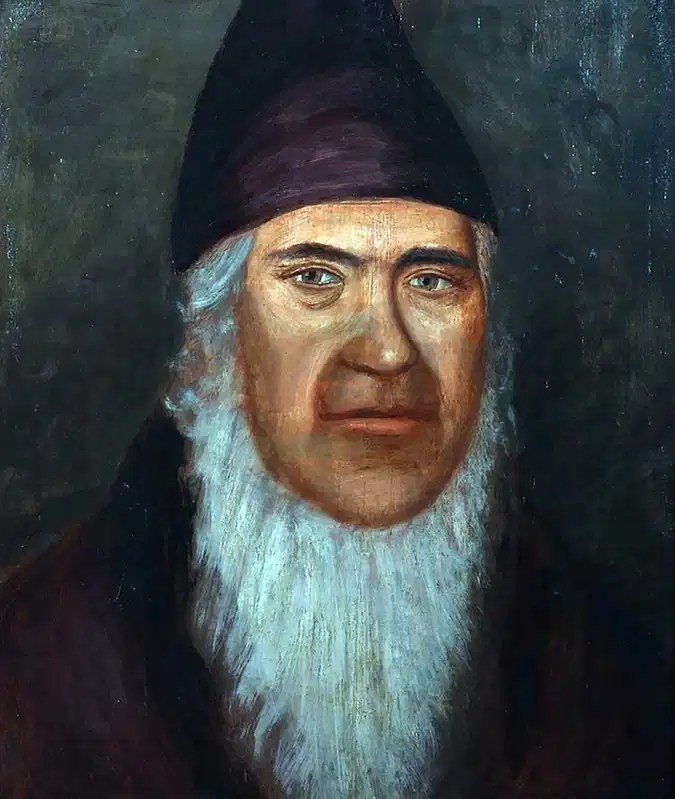
If he lived today, he would be called a cult leader and be the subject of a Netflix documentary. In addition to believing in the second coming, personal sanctification and wealth accumulation (which Rapp somehow believed was essential to winning Jesus’ favour upon his return), the Rappists as they were sometimes called, believed in alchemy, direct communication with God and submitted themselves to complete domination by Father Rapp. In the words of a journalist at the time, “The laws and rules of the society were made by George Rapp according to his own arbitrary will and command. The members were never consulted as to what rules should be adopted; they had no voice in making the laws.”[2]
What does this have to do with the European phase of my family history? Maybe nothing, as I’ve not read much on Rapp and the whole Pietist movement that came out of the Lutheran church in Württemberg. But the link between this radical evangelical, holiness-focused cult with the growth of Methodism, especially among German speaking immigrants in the States, is interesting. To what extent (if any) was the Holiness Methodist denomination, in which grandpa preached and in which my Dad and his siblings, as well as Mom’s family were raised, influenced by Rapp and his teaching?
Even more interesting is that the surname Rapp is closely connected with the surname Rabe. They both trace their origins to the Middle High German[3] word ‘raven’, hence a nickname for someone with black hair or some other supposed resemblance to the bird.[4] Though Rapp has become its own family name, it was originally an abbreviated form of Rabe (Raabe).
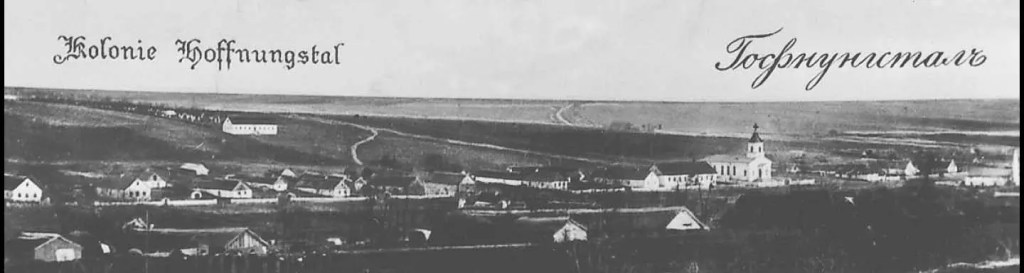
The third thin but interesting thread of this tapestry is that our step Great-Grandfather, husband of Grandpa Rabe’s mother at the time of their arrival in the States, Frederick Kenzle (Kingsley) a.k.a. “Grandpa Fritz”, according to family conversation, was born in a village called Hoffnungstal, in the Bessarabian region abutting the Black Sea.
So what?
Here’s what.
George Rapp was not the only religious radical dissident to take leave of Württemberg in the early 19th century. The Holy Roman Empire State of Württemberg, in the southwestern corner of modern Germany, was one of the first States to embrace Luther’s Reformation. The kingdom became a power center of the Evangelical Lutheran Church but also threw up several important ‘Pietist’ movements in the 18th century that positioned themselves against the formality and rituals of what was in essence the State religion.
Pietists were Lutheran dissidents who reacted against Big Church. They emphasised personal piety and purity, social separation, small worship circles often in houses and often a communal approach to property and wealth.[5] They also expected the second coming of Christ to happen ‘soon’ but had different opinions on where in fact Jesus and his white horse would land. Rapp thought the new country of the United States was the site. Others believed it would be Jerusalem. This group, led by another evangelical leader, J. Lutz, looked eastwards, towards the vast plains of Russia, as a place to move to, since it was quite a bit closer to the Holy Land. Come the Day, they would be able to get to Jerusalem quicker than if they stayed in Germany or moved to Pennsylvania, like the Rappists.
__
Germans, with their reputation as good farmers, were invited by Catherine the Great to move to Russia where she promised them attractive special privileges[6] especially freedom of religion. First settled in the Volga River region, the response was so positive that in 1803 the newly acquired territories of the Crimea and southern Ukraine surrounding the Black Sea were opened up to German and German-speaking settlers. These allotments too quickly filled up with Mennonites, Lutherans and Pietists migrants, a lot from Württemberg, setting up German colonies and villages where they were free to do things in their German way, including speaking German and practicing their own version of Christianity. Germans had over the centuries settled elsewhere in Eastern Europe, including Prussia, Czechoslovakia and Poland.
Soon after Rapp moved to America, another group of Pietist Württembergers headed towards Odessa where a large number of Germans were settled. They settled and moved around the Odessa area for a couple of decades but didn’t always have friendly relations with other settler colonies. In fact, a feature of many German settlements was their physical and social isolation from other villages, especially Russian, Ukrainian, Polish and even other Germans. Economically they were self-sufficient, selling their produce in regional markets and giving birth to smaller ‘colonies’ close to the ‘mother colony’.
In 1819, the Pietists established a colony they named Hoffnungstal (Valley of Hope) near Odessa (Ukraine) but in 1842 moved their colony to what was then Bessarabia and over the next century was to be found on maps as part of Romania, Ukraine and Russia, depending on the political configurations of the time. Germans who had settled in Poland earlier also flowed into this final bit of land set aside for German immigrants. Today the site of Hoffnungstal is in the Ukrainian town of Nadezhdivka, about 20 km south of the Moldovan border.
The unstable political situation naturally made it difficult for lots of Black Sea Germans to identify precisely the country of their birth. Grandpa Rabe’s birthplace in the 1930 Federal Census lists his birthplace as Russia. And that of his father and mother as Germany. Dad wrote in Our Life Together, that his dad had been born in Poland. We know that Grandpa Fritz was born in Hoffnungstal (in Bessarabia, Romania, Ukraine or Russia, take your pick) and that Grandpa Rabe’s mother, Karolina, is listed as being born in Ukraine in 1858.
For what it’s worth, here is my take on our garbled family heritage.

Karolina Schieve (mother of Rudolph Rabe Snr.; grandmother of Dad; my great grandmother) was probably born into a German speaking Lutheran evangelical community settled in the areas around the Black Sea, near Odessa, in 1858. Maybe Hoffnungstal, maybe a similar colony. She married Adolph Schulz whom it seems already had some children, namely Amelia (Mollie), William and Mary all of whom settled in Guelph, North Dakota a tiny, unincorporated village on the plains in the early 20th century. The Schultz’s had lived for some time (if not permanently) in a small town, Lemnitz, not too far from the border with the modern Czech Republic.
Adolph, it seems was a widower and probably quite a bit older than Karolina. One characteristic of the German speaking settlements across Eastern Europe was they moved around a lot. If things weren’t working out in Poland then they would try somewhere else, perhaps around the Black Sea or the Caucasus region. They were double and triple migrants. Maybe Adolph, after the death of his first wife, found himself near Odessa/Bessarabia and married Karolina (or she was compelled to marry him for economic or social reasons; often the case). In any case, Adolph and Karolina had no children together. Perhaps the old (er) man passed away but in February 1885, Karolina married Karl Wilhelm Raabe. She was 27 years old. Raabe was perhaps a couple years older but far closer in age to her than Adolph.
With this liaison, and the entrance into the drama of my Great-Grandfather, Karl Wilhelm Raabe, our family’s deep religious roots once again break the surface. Karl Raabe was born in Leipsig. Not the large, historically famous city and home of Johann Sebastian Bach, Richard Wagner and Richard Schumann. No. But the small German enclave of Leipsig, far away on the eastern steppes of the Ural Mountains and spitting distance from the border with the modern country, Kazakhstan. The bulk of German-speaking immigrants to Imperial Russia had settled in the Volga River basin and around the Black Sea with smaller communities in the northern Caucasus region. But Leipsig, where Great Grandpa Karl was born, was truly ‘in the middle of nowhere’. Podunk, Russia.
Given that social and physical isolation was valued among Pietist/evangelical/non-conformist Christian sects, all the more so they could remain pious as they awaited the second coming of Christ, it’s not stretching it too far to suggest that the Germans in this far outback of Russia, were particularly devout & committed to removing themselves from the world and creating a holy society on earth. Given the small size of the town (never more than a few hundred souls) it seems fair to conclude that the Raabe’s adhered to this strain of spiritual living. Interestingly, the commune of Leipsig was established in 1842, the same year that Hoffnungstal Colony, 3000 kilometers to the south, and from where Karolina and her children emigrated to North Dakota, found its ultimate home in Bessarabia.
Transportation and communication in late 19th century Russia were neither easy nor frequent. But historians have shown that there was considerable movement of Germans across the Russian lands as they sought better opportunities. As many of the communities shared a theology, worldview and lifestyle and came from similar regions back in ‘Germany’[7], it is not at all inconceivable that the Raabe clan way out in the boonies were in touch with the Schieves and or Schultz’s down in Hoffnungstal. Especially when they were searching for suitable mates for their children.
In any case, Karl Wilhelm and Karolina were joined in holy matrimony in February 1885 and enjoyed 15 years of married life together. Edward was born 18 months later in 1886, followed by Wanda (1887), Olga (1890), Julius (1891) with Rudolph, my grandfather, bringing up the rear in 1894. By the time Karolina was 36, she had been married twice and given birth to five children. All on the cold Russian steppes!
__
In 1897, Karl and Karolina and their five young Rabe[8] children were among nearly 2 million Germans living in Russia. They had been drawn by promises of land, non-interference in matters of religion, language and education, exemption from military service and despite the tough environment (blizzards, floods, droughts, armed conflict, hostility from locals) had thrived. Few were outright wealthy but Germans in Russia did enjoy a privileged status. In 1926, 95% of German Russians spoke German at home and few spoke the local languages. We can assume the same about Karl and Karolina.
In the 1870s however, Tsar Alexander II introduced a ‘modernization’ agenda which broadly cancelled all the privileges the Germans had enjoyed for nearly a century. In effect, Germans were now Russian citizens and subject to all the laws and obligations of every other Russian, including military service (6 years upon reaching the age of 20). For Mennonites and other pacifist groups, this presented a crisis. Even if they had no ideological, theological or moral position against military service, few Germans relished sending their sons to war in far away parts of the Empire.
In 1891-92 a major famine (largely man made, as most famines are) ravaged the Volga River basin, and even extended south into Bessarabia, southern Ukraine and even parts of Chelyabinsk region where the Raabe clan had settled in Leipsig.
In 1862, over in the United States, Congress passed the Homestead Act which granted 160 acres of surveyed public land to any adult male who had not borne arms against the American government if they agreed to stay on it for a full five years. Ten years later, in 1872, our dear northern neighbours, the Canadians, enacted the Dominion Lands Act with a similar hope of attracting immigrants to settle their vast prairie lands. And, to ensure America did not encroach on the land and claim it as part of American Territory. Oh, how history repeats itself!
And thus, began another massive wave of German immigration. This time across the oceans to the New World.
In 1874, Germans across Russia began immediately looking for opportunities to move elsewhere. Emissaries were sent from colonies in Bessarabia to investigate migrating to nearby Dobrudscha, in what is now Bulgaria and Romania, and, at the time, a part of the Ottoman Empire. They found it a suitable place to move and left Russia to settle in both existing and newly founded villages. Others migrated to recently opened areas in Central Asia and Siberia, where, although still a part of Russia, there was plenty of land and the laws weren’t strictly enforced yet.[9]
Karl and Karolina must have discussed all these developments as they watched their children grow. In 1900 Karl passed away aged just forty-five leaving Karolina with five young children to manage and take care of. Resilient as she had proven herself to be already, I’m sure the death of Karl increased dramatically her sense of vulnerability and anxiety, especially as Edward her eldest son approached his later teen years. Pretty soon after Karl’s passing Karolina married again, this time to Frederick Kenzle (later Kingsley) who Dad and his siblings referred to Grandpa Fritz. Born in 1860 in Hoffnungstal Colony, it seems possible he and Karolina knew each other at the time they joined forces. Both had children from previous marriages and in 1902 they dispatched Edward Raabe and all three of Fred’s children, Mollie, Mary and William, to North America. To Guelph, North Dakota to be exact. Edward was only 16 but “being happy with what they found America to be, made arrangements for the rest of the family to join them”,[10] which they did the following year, 1903.
Karolina was remembered in her obituary as a ‘good Christian woman’ but I suspect life had caught up with her. 3 marriages. 5 children. Who knows how many significant relocations in ‘Russia’ before arriving in a country where she did not know the language. According to Dad’s memoir, “Fritz Kingsley was a kind man, but unfortunately an alcoholic who at times made life miserable for his family.”

Karolina, the matriarch of the Rudolph Rabe family, passed away in 1908, just fifty years old.
[1] Radical Pietism has been defined by Chauncy David Ensign as ”That branch of the pietisitic movement in Germany, which emphasized separatistic, sectarian and mystical elements”. Quoted in Scott Kisker, Radical Pietism and Early German Methodism: John Seybert and The Evangelical Association, Methodist History, 37:3 (April 1999): 175-188
[2] James Towney, “Divine Economy: George Rapp, The Harmony Society and Jacksonian Democracy” (Masters Thesis, Liberty University, 2014), pg. 6.
[3] 1000-1350 C.E.
[4] Ancestry.com RAPP and Ancestry.com RABE
[5] John Wesley, the founder of Methodism, was strongly influenced by the Pietists and adopted the principles of the centrality of the Bible, personal spiritual transformation and spiritual disciplines such as Bible study and devotions.
[6] 1) free transportation to Russia; 2) freedom to settle anywhere in the country; 3) freedom to practice any trade or profession; 4) generous allotments of land to those who chose agriculture; 5) free transportation to the site of settlement; 6) interest-free loans for ten years to establish themselves; 7) freedom from custom duties for property brought in; 9) freedom from taxes for from five to thirty years, depending on the site of the settlement; 9) freedom from custom or excise duties for ten years for those who set up new industries; 10) local self-government for those who established themselves in colonies; 11) full freedom to practice their religion; 12) freedom from military service; 13) all privileges to be applicable to their descendants; 14) freedom to leave if they found Russia unsuitable.
[7] Modern Germany was not established until 1871. Prior to this it was a crazy quilt of independent regional kingdoms, and duchys such as and including, Württemberg.
[8] Raabe, Robey, Robie or Robbie, as per your preference.
[9] Sandy Schilling Payne, “16 June 1871—Tsar Alexander II Revokes German Colonists’ Privileges”, Germans from Russia Settlement Locations (Blog) 16 June 2021
[10] No author credited, “Guelph North Dakota: Granary of the Plains 1883-1983”, Guelph Centennial Committee, 1983, pg. 279





 Missionaries, Mercenaries and Misfits