Running Home (Pt. 2)

The Russians were easy to find.  I heard their tipsy, vodka-soaked laughter coming from a shady part of the compound. Four or five of them were sitting on adjacent porches of their apartments, their fleshy faces flushed red with heat and drink. 

As I approached, silence fell.  

I smiled, hoping it would break the ice. It didn’t.  

They stared at me, obviously perplexed and irritated that I had interrupted their lunch break. One of the women whispered something to her friend. 

“Excuse me,” I began. 

By now I had my tale-of-woe down pat. I told them my mother was ill and I needed some money. “I need to get to Allahabad, about 700 kilometers from here,” 

“No. No money,” one of them said.   

A couple others joined in the chorus. “No money. Go away.”  A man with huge arms and angry eyes said it louder than the others. With real authority.   

Having spent 8 years in boarding school I knew a lost cause when I met one. I turned back toward the gate.   

But I was dying of thirst. With a drinking gesture I said, “Could I have some water?” 

This second request really set them off.  Amidst the general clamor of, “No water. Go!’, one of the men made a move towards me.  He didn’t follow me but I didn’t have a the courage to turn back and check until I was several meters down the path I had come up just a couple minutes earlier.  When I did turn they were still tense. They glared at me but as I retreated the laughing resumed.   

A mali was sitting in the shade on his haunches watering a guava tree. He beckoned me over.  

He held up the hose for me to drink.  He didn’t say much and I didn’t offer anything.  I have no doubt he had been watching the scene play out from a distance. I sensed it was one he himself was familiar with. I took his kindness as an act of solidarity. 

The thought of a 10 km ride back to Hardwar in the midday sun depressed me, especially as I was no richer for my effort.  I was too spent to formulate my next move, but I knew I needed to be in town where there existed at least the potential of assistance.   

I must have looked miserable pedaling along the highway because out of nowhere a man appeared. He had well oiled, wavy hair that glistened in the sun. He wore narrow legged pants and a plaid yellow shirt.  I can’t remember how it happened but he successfully commandeered my bike, sat me on the rear carrier and began cycling toward Hardwar. 

Despite the heat, we got a bit of breeze going which cooled my cheeks slightly.  I vaguely remember the Stranger talking to me but can’t recollect about what.  Before I knew it we were back at the Station. He dropped me at the cyclewala and even paid the outstanding balance. Then with a nod of his head he disappeared as unexpectedly as he’d appeared. 

** 

I retreated to the relative comfort of the 1st class Waiting Room. I dozed on a rattan lounge chair with extendable arms that doubled as leg rests, one of the distinctive artifacts of railway waiting halls in those days.  But I was hungry. And more than a little anxious about how I was going to make the next leg of the journey. 

A middle class family were the only others in the Waiting Room. The patriarch reclined on a rattan chair like mine, staring blankly at a ceiling fan that swayed as it whirred. From time to time he lifted his buttocks and farted.  But other than that, he didn’t move. 

He may have been oblivious to me but I had been watching him for some time. After one of his farts I cleared my throat and in my best Hindi launched into conversation. I learned they had come to Hardwar on yatra (pilgrimage) and were now heading back home. I asked him about his business (the nature of which I’ve forgotten) and may have said a nice thing or two about his young child.  

As a conversationalist he was unenthusiastic.  

“My mother is ill,” I offered, hoping to pique his interest. 

He may have nodded, but if he did, it was ever so slightly. 

“I need to get home. To Allahabad. But I have no money.” 

“Why do you not have money?” 

“I was robbed,” I found my mouth saying.  I couldn’t believe it. But I was in the water now, so I had to keep paddling.  

“This morning on the way from Dehra Dun, it was very crowded in the bogie and when I got here I realized someone had stolen my money.” 

He looked at me skeptically.  

“Could you provide me with Rs. 20, so I could get a ticket? My mother is very ill.” 

“You must report to the Railway Police, if you have been a victim of theft.” 

As far as he was concerned the conversation was over. The spinning fan captured his attention once more.  I felt foolish but let a decent interval pass before shuffling out of the Waiting Room. 

** 

Once again, 24 hours after the first occasion, I entered the office of an Indian Railways bureaucrat.  I had mulled over what the farting businessman had said. He was absolutely correct in his observation that the Police needed to be notified in the event of a crime.  But in this case there had been no crime committed so fronting up to the Police would not be the smartest tactic.  On the other hand, I was clean out of options. 

The Railway Police office was shabbier than the Station Master’s in Dehra Dun. The man behind the desk had a pot belly and sweat stains all over his khaki uniform.  His closely shaved head sported a choti, the little tuft of hair that identified him as a high caste Hindu.  Unlike the Station Master his face lit up when I stood in front of his desk. 

“Kya baat hai, baba?” he asked. What is it, lad? 

Though he addressed me in Hindi he clearly didn’t expect me to respond in kind. 

“Meri ma bimaar hai, aur mere paas ticket ka kiraya nahi hai,” I said, laying down the by now firm foundation of my story. 

“Arey! Hindi bolte!” His belly jiggled with delight.  “Ay shabaash!” 

Before I could continue with my dishonest story he shot a series of questions at me in an attempt to come to grips with the fact that a white kid could speak Hindi. 

I told him about me. I was American. I studied in Mussoorie. I was born in India. Rajesh Khanna was a good actor, yes.  

Whereas the Station Master in Dehra Dun had instantly linked Woodstock School and my being in his office to funny business, this jolly man didn’t give a stuff.  Indeed, he was hooting to a couple of underlings about what a spectacular thing I was. 

Somehow in the midst of this excitement I managed to explain my dilemma: 700 kms. No money. Sickly mother. 

Before I knew it he grabbed my wrist and dragged me out of his office. A couple of minutes later we were seated at an open air dhaba that sold tea and fast food to the throngs around the station.   

He instructed the dhabawala to give me a plate of curry and a few chapatis. “This fellow is American but born in India! It’s true. And he speaks spasht Hindi! Just listen.”  He could hardly contain himself. 

Though my mouth was full (this was my first food in nearly 36 hours) I knew this was price I had to pay for my dinner. A small crowd had appeared; rather the endless crowd of passersby stopped for a moment to look at me. It was my cue.   

I restated in Hindi what I had told the Policeman a few minutes earlier, that I was American, born in India, lived in Allahabad but studied in Mussoorie. 

People marveled and exclaimed. The Policeman couldn’t have beamed wider had I been his son. He ordered my plate to be filled. I ate up. He continued to hold court but eventually passersby grew bored and the rhythm of the bazaar returned to normal.   

The Police Inspector led me back to his office.  I was grateful for the meal but had no idea how I was going to make it home. 

He pressed a buzzer on his desk which immediately produced an underling.  The underling was sent forth to find others and after several minutes returned with two colleagues who carried rifles and bulleted shoulder straps.  They noisily pushed a pair of prisoners into the office in front of them.  With their legs and wrists in irons the prisoners shuffled and clanged like cheap robots.  

The inspector didn’t move from his desk and in a loud voice told the newly arrived cops that they were to include me in their party.  They were on official duty, transporting criminals from Hardwar to the state capital, Lucknow.  “You take this boy with you to Lucknow but do not let anyone, and I mean anyone, speak with him.” 

With that, the chubby Police Inspector himself walked me to a train and bade me bon voyage.  I was on my way at last. Still with no ticket but a pair of personal armed guards.  

Running Home (pt 1)

When I was 15 I ran away.

Like most teenagers, I had a fantasy about running away from home.  I was going to escape and ride my push bike 2500 km to the tip of India. I was going to live a life free of adult authority along the Grand Trunk road. I was going to go far away.

But when the moment came to make a dash, I ran straight home.

**

The Himalayan monsoon that year seemed to have no end. The rains had come early and weeks went by without a glimpse of blue sky. By mid-July, my heart was aching for some warmth and a flat horizon

Mussoorie, the hill station where I attended boarding school, was  hemmed in with a brittle, misty fog that pricked your skin like needles. Every tree dripped. The narrow dirt trails we navigated around the hillside had turned into rivelets of mud.

One Sunday the claustrophobia was particularly intense. The dampness of the trees, clouds and earth had soaked into every pore of my body. I couldn’t get warm and I couldn’t shake the restlessness that had been building up for days.

I and a few friends had spent the weekend in the basement of a friend’s house at the top of a prominent hill in town. On Sunday afternoon, the crowd I hung with attended Bible Club–two hours of singing, praying and Bible teaching mixed with ping pong, homemade cakes and pretty girls.

That Sunday I sat glumly to one side, resentlng the endless rendition of “Put Your Hand in the Hand of the Man”, coming from a keen group of devotees in the main room. Tim Buehler’s electric guitar had been a novelty the previous year. Today it grated my nerves. I wanted to be away. To be far from this place and be by myself. I pushed my way through my friends to the door which I closed quietly behind me.  

And then I began to run.

My mind was blank but my body took control. I sprinted up the dirt path to the chukkar, a concrete motor road that ran around the top of the hill. Within seconds, almost with every step, a plan developed in my mind.  Ten minutes of jogging got me to Dr Olsen’s place. I charged into the basement and rifled through the pockets of whosever jeans I could find. I fished out three rupees from one pair.  With my sleeping roll under my arm, I half marched, half ran down the chakkar toward town.

My heart beat madly. I was exhilarated by my decision though I was not yet sure what it was. I was heading for the bazaar but I didn’t dare think too much about it.

One of the rules of school was that students were not allowed in Mussoorie town, one of India’s most famous tourist destinations, alone and without the permission of a parent or staff member, except on Saturdays. I knew if I met anyone remotely connected with the hierarchy of the school–staff, staff’s spouse, school karmachari or friend of a staff member–I could be legitimately questioned about my presence in town. If I had no written notice on me I would be forced to return.

I made it down Mullingar Hill, a ski slope of a road that wound through Landour, unnoticed. A few shop keepers eyed me with some surprise as I passed by but none tried to stop me.

My biggest fear was meeting Mr Kapadia, the In-Charge of Hostel, the highschool boys residential hall where I lived. In addition to being a strict disciplinarian, Mr K was known to be a raconteur who often went drinking of an evening with his Rotary buddies. What if he approached, gambolling home slightly tipsy?

While my eyes flitted like a criminal’s ahead, to the side and even back, searching for a familiar face, I realized that this was the first time I had actually been in the bazaar on a non-Saturday. The worn familiarity of the alleys and shops had been replaced by a hostile feeling, as if a friend had turned against me. I breathed deep and kept going.

At Thukral’s Photo Studio I sensed victory. It was now only a 5 minute walk to the bus stand. That was the first destination in my half baked plan. What I would do once there I hadn’t yet figured out.

I approached the ticket cubicle of the UP State Roadways Transport Service and shoved my three rupee notes across the counter. A man gave me 75 paise in change along with a ticket.  He nodded at the appropriate bus. It was empty. Not wanting to take a chance I lay down on the seats and waited for the bus to start. Not many people were travelling that evening and once we started swaying around the hairpin bends I sat up. For the first time in weeks I felt myself relax.

**

The bus deposited me at the Dehra Dun Railway station. I knew now that my soul was taking me home to Allahabad, 860 kilometers to the east, but how I was to make the journey remained a mystery. My buying power, all of 75 paise, was limited to 3 cups of tea.

Without much thought (my body still operated as an independent agent) I marched into the Station Master’s office on the main platform. The room was long, orderly and brightly lit by neon tubes that hummed like a swarm of bees.

A uniformed official sat behind a desk surrounded by phones and stacks of papers. He looked up as I came in. I opened my mouth. What came out surprised me. “My mother is sick and I need to return to Allahabad, urgently. I have no money for tonight’s train.” 

He surveyed me for a moment. “You are a student of Woodstock School?”

I nodded.

“Does Mr Kapadia know you are here?”

The mention of the name sent a shiver though my body. I must have mumbled something but can’t recall what. I seemed a stranger to myself.

He reached for a phone and dialled a number. The game was up. I froze.  After a minute he put the phone down and said there was no answer. I backed out of his office. He may or may not have called the Much Feared Kapadia, but he didn’t pursue me.

With Plan A foiled I was fresh out of plans. I paced up and down the platform struggling to keep my panic under check. I knew if I could make it to Hardwar, a couple three hours down the track I’d feel safer. I knew someone there, or at least had a name and a face, if no address. Hardwar was that much further into the Indian plain. And that much farther away from the horrid imprisoning hills. But a certain distance had to be traversed yet. I bought a cup of tea and squatted down to contemplate the dilemma.

The night came up quickly. Tube lights flickered on. I was getting hungry but needed to hold on to my meagre resources, now just half a rupee. Some trains came and others went. I watched them as years later I would watch planes high in the sky and wish I was on them. The beast within me was restless again. He didn’t like this hanging about. I kept walking the platform, crossing the footbridges and back again.

“Where you headed,” a coolie asked me as I shuffled by. He was on his haunches, cupping a bidi in his fist. I squatted next to him and mumbled, “Hardwar.”

“That one leaves tomorrow morning, eight o’clock,” he said indicating a dark chain of carriages.

I would have shared his bidi if he had asked. I usually smoked Four Square when my friends and I were in our secret tea shops in Mussoorie. I wanted smoke in my lungs at that moment. Heat and fire to match my restless anger. He didn’t offer me the bidi but he did yell at a nearby chai wala to give me a clay matka of tea and a nice, soft, cellophane-wrapped tea bun.

I slurped the tea, gratefully. As I chewed, the coolie and I chatted. He asked  where I was from, who my father was and what sort of service he did. I admired the brass identity badge on his arm with a number that certified his official status as a porter. He treated me as if I was his nephew, not a stranger. After a while, when our conversation slowed he showed me where to lay out my sleeping bag on the platform. “In the morning, the bogie you want will stop right here.”

During our chat he had assured me that I shouldn’t worry about not having a ticket. “Do you think all these people have tickets?” His tone indicated what the answer was. “Just don’t jump into a reserved bogie and no one will even look at you.”

The following morning the platform was chaos. As I rolled up my gear my coolie friend appeared amidst the melee. He told me to follow him, then elbowed and abused his way to the carriage. He sat me down by a window. Before he disappeared he smiled at me.

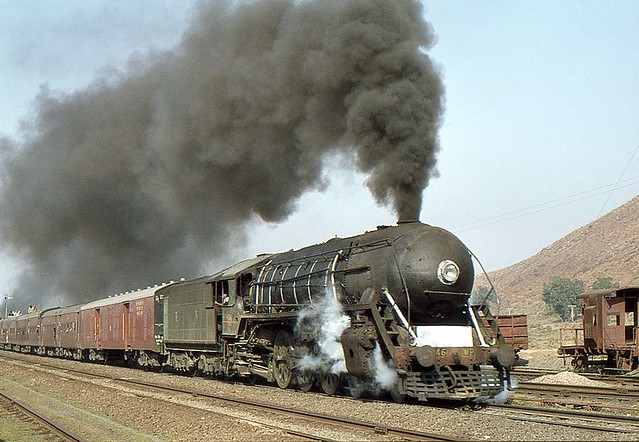
The train started to roll. This was electrifying. Traversing India by train, perhaps because I did it so little and mostly on holidays, was always a thrill. As the carriages lurched and swayed through the ancient Siwalik range I couldn’t have cared less that I had no money, had not eaten a meal in 24 hours and had no address for my friend in the rather large and rather holy pilgrim city of Hardwar, just a couple hours in the future. The sound, the motion and the hot breeze generated by the coal fueled engine had my heart racing. This was very illegal and very fun.

Around mid-morning we pulled into Hardwar. First hurdle was to get past the official who stood at the exit collecting tickets.  One option was to press into the crowd and attempt to squeeze through unnoticed. But with a white face, this was a risky stategy. Instead, I held back until the exiting throng had dissipated and the TC with his pockets full of little cardboard tickets, retired to his fan cooled office. With the coast clear I quickly stepped out of the gate and into the heat.

My plan, such as it was, was to rent a cycle for the day, and seek out a church where I was certain I’d find someone who knew my friend, a recently graduated seminarian from the college where my Dad was principal. In such a predominantly Hindu town as Hardwar, I figured there would be no more than a handful of churches and that they would stick out like sore thumbs. Everyone would know where to find them.

Near the station I found a hire shop and rented an Atlas bike for Rs 1. I gave the man my remaining change and promised the remainder upon return. As I swung my leg onto the seat I asked him where the church was. He shrugged and went back to work. I quickly realized that people came to Harwar to vist a handful of monumental Hindu holy spots and left. Churches were not on anybody’s menu of interesting places.

A passerby called out to me and asked with a twist of his fingers where I was going? “I’m looking for a church to find a friend.”

He acted as if he wasn’t listening but then said, “You’ll find your kind in Jalalabad, at the BHEL compound.”

“Christians?” I said, sounding like a young Vasco da Gama.

Again he shrugged. “Russians. They run that place. Go there they will help you.” He moved away into the crowd.

This was great news. White people. Russians, sure, but white folks nonetheless. I headed toward Jalalabad and after cycling for some time asked a man how far it was. “8 kms,” he said.

My heart quivered. 8 kilometeres?!

The sun was high. My legs felt like they were swelling inside my jeans. Still, the Russians were my only hope.  I pushed on and perhaps half an hour later sighted the huge Bharat Heavy Electrical Limited complex. Tall brick walls with electrified barbed wire skirted a massive industrial estate. Yet the gate was unattended so I wheeled myself in.