


If you don’t know by now, let me lay it out there once and for all: I am in love with the music of the 1970s. It’s when my musical ears started to grow up. I am emotionally tied to the ‘70s, the years that took me from a 13-year old dork to a married man in 1980. University, travel, losing the Big V, jobs, drinking too much, etc. Formative years.
This doesn’t mean I spend my days listening only to peak Elton and Born to Run. I spend a lot of time in the weeds in music from around the world, especially the Indian barsageer, and contribute to the profits of Bandcamp quite faithfully. But with age comes many things. One of which is a dropping away of the need to be considered hip. Another is going deep into things. The music of the 70s may be comforting and familiar but in the same way I knew nothing of India until I came to America, it is only in the 3rd decade of the 21st century that I’ve begun to try to really listen to what was going on in the popular music of those years.
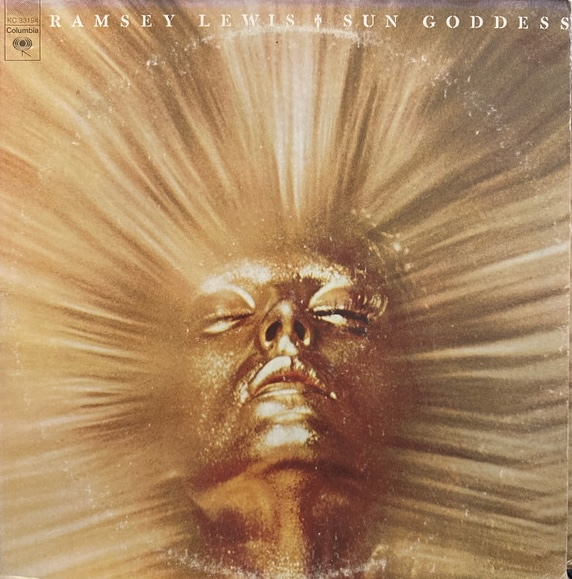
I knew of Ramsey Lewis from regular visits to the local record store. His albums of that time, especially Sun Goddess (1974) and Salongo (1976) were very attractive. Covers that stood out from the mass that called out to be picked up handled. Being poverty struck I was never going to put $4.98 down to actually buy one, but man, I really did love the look of those albums.
Ramsey had got his start in Chicago in the mid-50s. He played what I call club jazz. A sort of diet-Jazz that was accessible, occasionally funky and generally soothing. You’d hear it in small clubs in big cities across America. Les McCann and Lou Rawls, would be there the week before you, maybe Willis Jackson or Brother Jack McDuff, the week after.
Ramsey was a very accomplished pianist/keyboard player and a warm person. But the overseers of ‘Jazz’ showered him with putdowns like lightweight, mainstream, ‘happy clappy’ and bland. He didn’t care. Some of the giants of jazz, including the Duke himself, were fans and mentors. And besides, he was actually making money and had a mixed audience of black and white fans who liked his cross-pollination of styles.
When jazz synced up with R&B and became soul-jazz in the late 60s and allowed George Benson, Grover Washington Jr., and the like to become pop stars in the 70s, Ramsey fit right in. He’d been laying the foundations of soul-jazz for years.
Sun Goddess was released at the end of 1974. The cover pictured the gilded face of a beautiful woman set against what looks like a background of liquid silk shooting out like rays of the sun. Bold & beautiful. Confident. Daring & intriguing.
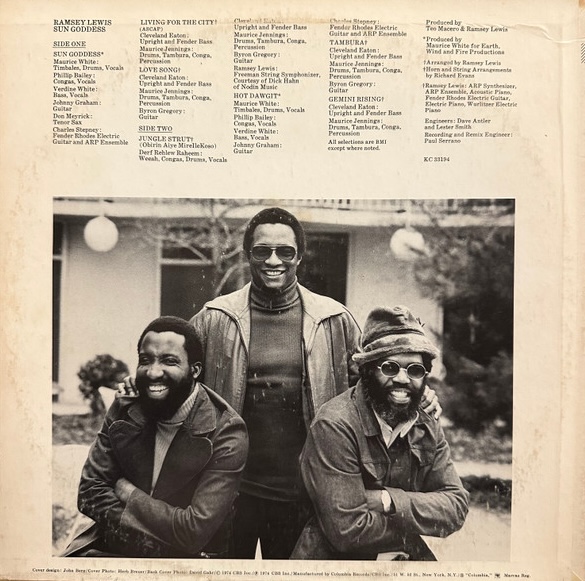
When the stylus hit the wax that lush, warm sound of the times filled the room. Maurice White and several mates from Earth, Wind & Fire were in the studio as players and producers which gives several of the tracks, especially the title and opener, a funky EW&F feel. Maurice and Ramsey went way back. Maurice had been picked up as a session drummer by Ramsey after the departure of Redd Holt in 1966. They had stayed together for several years until Maurice laid out his idea for a large, dance, funk and pop group to Ramsey around 1970. Ramsey smiled and wished him every piece of luck as Maurice moved to LA.
By 1974 White’s group was about to release their breakthrough That’s the Way of the World which included the Billboard Number 1, Shining Star. That EW&F were in essence Ramsey’s backing band on Sun Goddess no doubt gave him and the album a huge boost of street cred.
The music exemplifies that strain of African-Americana which is confident, unapologetic and intensely positive. On the charts in those years were songs like Love Train (The O’Jays), Wake Up Everybody (Harold Melvin & The Bluenotes) and Black Wonders of the World (Billy Paul). Sun Goddess is the sonic realisation of the popular slogan, “Proud and Black”.
Scratch guitars look forward to disco, about the happiest music ever created, but which was still an underground phenom. Ramsey’s keyboards, on piano or Fender Rhodes, always stand out even though he is surrounded by some of the best musicians working at that time. Critics consider Sun Goddess to be a deliberate attempt by Lewis to cross over to R&B. Could be. But there is no sense that he is out of his depth or uncomfortable with the increase in funk that defines the sound. He’s perfectly at ease and as accomplished and classy as ever.
If you’re interested in understanding the music of the 1970s, then you’ve got to get this record.
I wish ‘they’ still made music like this.
 Missionaries, Mercenaries and Misfits