My bodyguards followed their orders and allowed no one to talk to me. Including themselves. From Hardwar to Lucknow, a journey of 15 hours, they kept their prisoners on a tight leash, taking turns at dozing, sometimes whispering, occasionally sharing bidis. Up on the top tier, I was left alone. Neither uttered a word to me.
When the train pulled into Lucknow, our party clanged and shuffled its way across a platform or two until one of the cops pointed at a train. “That one will take you to Pratapgarh,” he said.
With their duty done, they turned their detainees around once more and left me to my own devices.
An empty train in India is a rare thing. The one I boarded was oven hot and completely quiet. I had the feeling of entering a long steel church. There was a similar air of hope and faith that the train would soon start moving. A handful of passengers lay stretched out here and there, prostrate before the Sun god. I found a window seat on the shady side of the compartment and waited.
Eventually, the train did pull away from the station and onto the dry, scrabbly plain of central UP. I squinted into the wavy horizon. Though it must have been close to 45 degrees, I relished the way the heat burned the monsoon chill out of my bones.
The slow swaying and jolting of the carriages comforted me. I lost myself in the clacking of the rails. I was excited now. Just a couple more hours to go and I’d be home.
I must have nodded off for I was woken by someone tapping my shoulder. In front of me stood a Sikh ticket inspector in a navy blue blazer with worn cuffs. He had his hand outstretched and asked me to show him my ticket.
“I don’t have one.”
Perhaps because a representative of the Indian government itself had deposited me, Special Delivery, on this train my fear was gone.
‘Why?”
“My money was stolen and the Railway Police told me to take this train. My mother is sick in Allahabad and I’m going there.” The further I travelled the longer my opening line became.
The Ticket Inspector eyed me quietly for a minute. As he did, my courage wilted. The same panic I had felt after the Russians had laughed me out of the compound, rushed through me. I was sure the moment of my arrest had arrived.
“You do one thing,” he said after a while. “Just before we enter Pratapgarh Station, the train will stop. You alight there and walk to the city. There will be no issue of ticket-shicket.”
I nodded my assent somewhat incredulously. How was it that a man charged with enforcing the rules was advising me on the best way to break them?
Several minutes later the train did roll to a stop about 200 metres from the station. I, along with what seemed like every other passenger on the train, hopped onto the hot earth and scampered out of the railway premises through a hole in a symbolic fence standing bent and rusty 5 metres from the highway.
I’ll never forget that sardarji.
**
Pratapgarh is a small district town famous for not much. Its main role is as a rail junction and transport hub. I entered a chowk bustling with activity. People were streaming up and down the road toward the station. Buses and Tempos, India’s awkward three wheeler taxis that ferried people to remote villages off the main highway, stood three deep on both sides of the road.
Touts shouted out destinations of nearby towns and villages. Hawkers shouted the prices of their fruit and peanuts. Horns blasted incessantly. Loudspeakers attached to trees blasted Lata Mangeshkar and Rafi songs.
“Illaahabad, Illaahabad. Illahabaaad! Hey kid, why not go with us?”
A man with sweat dripping from his nose and ears and with a soiled handkerchief around his neck motioned me in his direction.
He was standing by a taxi. I couldn’t afford a taxi. I was looking for a bus. I couldn’t afford a bus either but somehow catching a free ride on the latter seemed more feasible than in a taxi.
‘Where you going?”
“Allahabad.”
“Come on. I have one seat left, Rs. 12 is all. Come on, quickly, right over here.”
He pulled me towards the Ambassador.
“I don’t have 12 rupees.”
“No problem, how much do you have?”
“None. But if you stop on Stanley Rd, across from Beli Hospital I can get you some.”
“Done,” he said. “Sit down, here.”
He pulled open a creaky door and shoved me into the back seat. I joined five other adults. Across their laps they carried a charpai, a country rope-bed that had been partially disassembled to fit into the auto. None of them could move from the weight of the wooden legs and the tangle of rope. I squeezed in as best I could, holding the door shut with my arm.
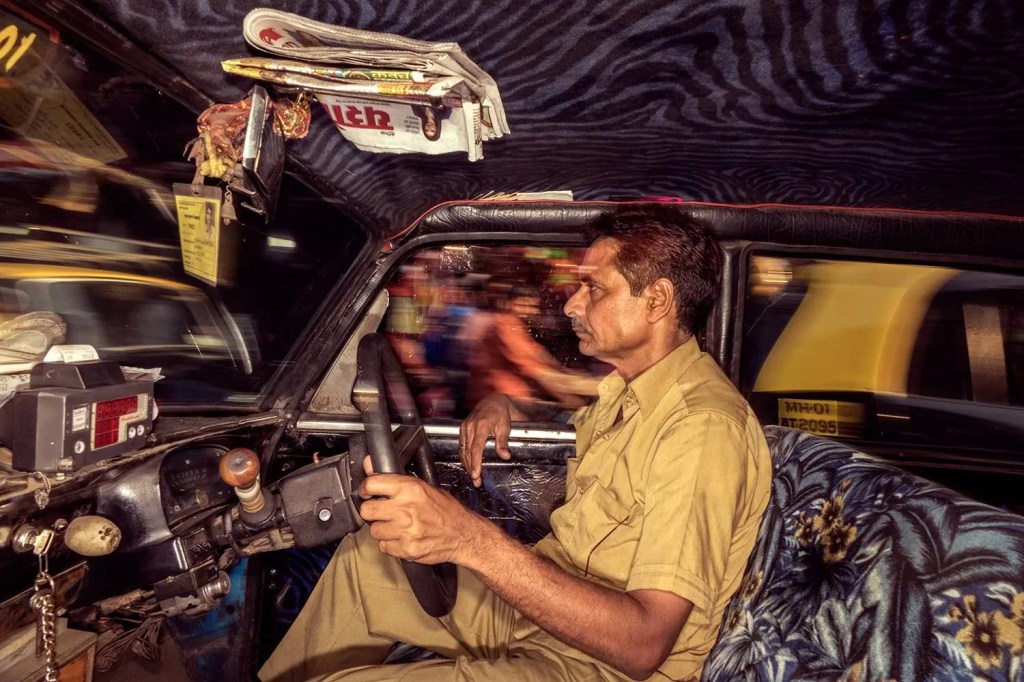
In the front seat sat another four adults. Not one of them was the driver. With his taxi now full the driver began to insinuate himself little by little behind the wheel. After some wiggling and numerous requests for reconfigurations in the passenger’s sitting arrangements, he was able to reach both feet to the pedals. His back was mostly resting against the front door which caused him to maneuver the wheel with distinct awkwardness. As if he was puppet with broken arms.
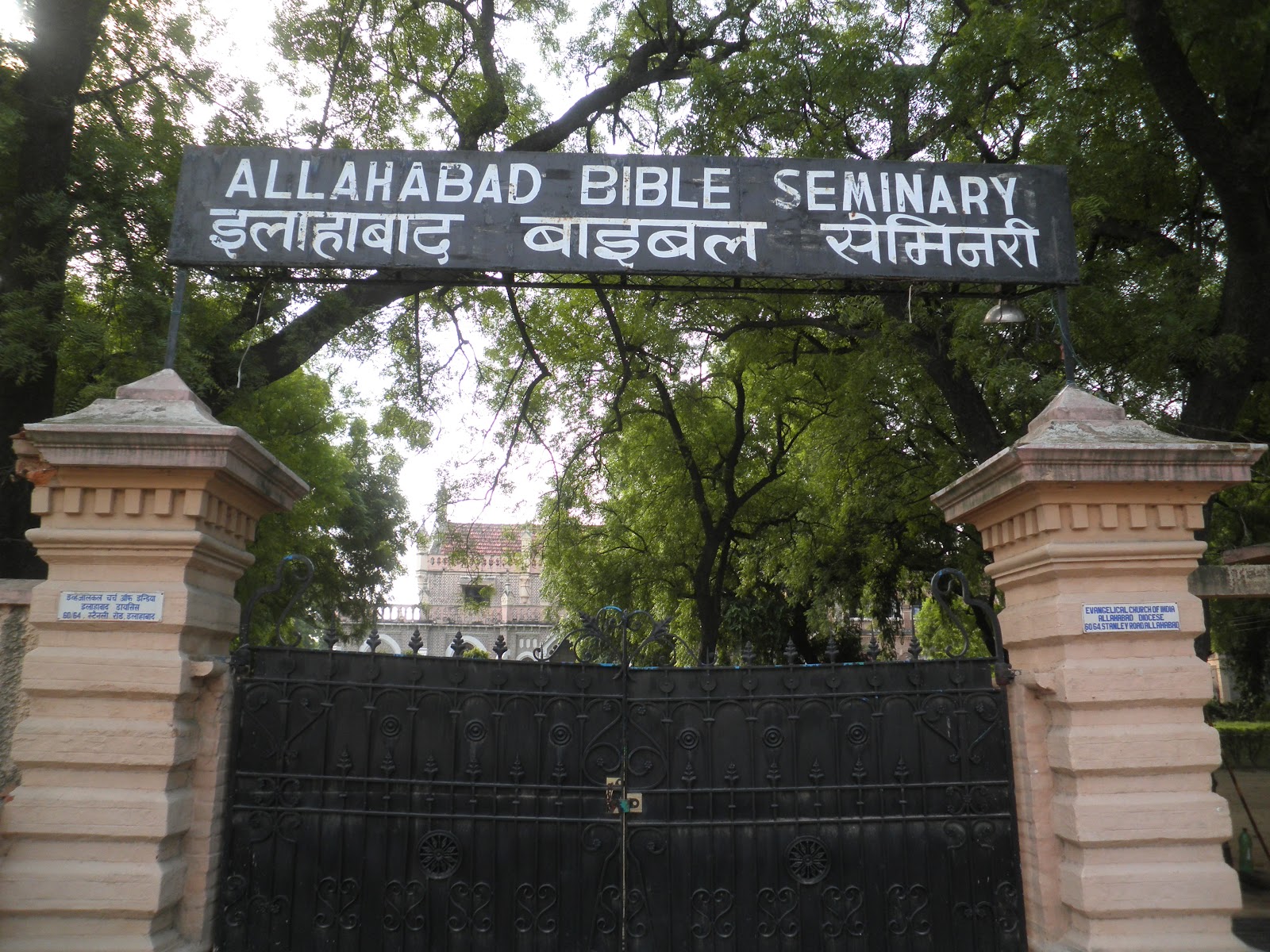
Somehow, by stretching and nudging the gear shift with the very tips of his fingers, the driver got us rolling down the highway. Inconceivably, in every little bazaar we passed through he shouted out loudly, “Illahabad. Kacheri chowk savari. Jaldi aa!” as if he were the only one in the car. Luckily, no one took up his offer and an hour and a half later just as the hottest sun of the day was turning into cool evening, we stopped in front of Allahabad Bible Seminary.
Before I managed to tell the driver to wait while I got Rs 12 from my parents, the car lurched and sputtered down the Grand Trunk Road.
48 hours after leaving Mussoorie I walked into the shady compound of home.
**
My parents were expecting me. Mr. Kapadia had called to inform them that while the school didn’t know my exact whereabouts, “I suspect he’s on his way to you.”
I spent a week at home. When my folks grilled me about what had caused me to take such a drastic step I didn’t know what to say. For the entire journey I had operated on the principle of forward motion. I didn’t doubt my feeling that I needed to be home and had spent no time analyzing why I had bolted.
I had no words to express the oppression I felt inside. The monsoon, the mist, the mountains, the Bible Club, the school, the cold had all worked to make me feel agitated and disconnected. Out of sorts.
My sister Beckie had graduated that summer and gone to the States for college. I was the last of my siblings, so perhaps I felt alone and vulnerable. Without an older brother or sister as a reference point boarding school seemed more scary and hostile. All I knew for sure was that I had an overwhelming but inarticulate need for home.
After a week my dad put me back on the train. “We told Mr Kapadia that he has our agreement to punish you in whatever manner the school decides.”
It was matter-of-fact statement. I didn’t care. My inner battery was recharged.
When I got back to Mussoorie I felt strong and connected. And heroic. People that I had admired or been intimidated by looked at me in awe. “Rabe, you actually ran away! Far out!”
I don’t know if anyone followed my example but for a brief moment I considered myself a trailblazer.
Mr Kapadia informed me that I would be gated for 10 days. No extra curricular activity and straight home after school. I was to serve my sentence in the home of the Harpers, whose son Phil, was a classmate. Mrs Harper, a vivacious, larger-than-life, extremely liberal minded woman welcomed me with love, a no-nonsense attitude and French Toast for breakfast.
“If you ever want to run away again,” Mr Kapadia told me when it was all said and done, “just come to me. We’ll have a talk. If you want a cigarette I’ll let you smoke in my house. Just don’t frighten everyone by disappearing!”
 Missionaries, Mercenaries and Misfits