

Especially consequential was the emergence of a prosaic marketing gimmick for record stores and music journalists–‘World Music’. A new category for obscure (to Western fans) African and Asian artists, singing in non-English languages.
The music these artists performed and recorded stood out sharply from the pop music of the time (especially, the American variety) with heretofore unheard instruments, revamped rhythms and lyrics in Arabic, Yoruba, Bambara, Zulu, Swahili, Lingala and colonial creoles.
The creation of this immediately contentious category/genre not only gave these artists a legitimate place within European record stores but more importantly, a platform from which they could grow their audiences, make a bit of money and in some cases become internationally feted stars.
In fact, ‘world music’ proved to be a much-needed shot in the arm for a music industry struggling with oversaturation, commercialisation and a technological transition from vinyl to cassette tapes to CDs. African bands and artists took to these new media without hesitation, especially cassette tape, relishing in their inexpensive production costs and portability. Suddenly their music was available everywhere, at home in Africa but also in Manchester, Dusseldorf, Minneapolis and Copenhagen. Fans loved it. And in no small way, ‘world music’, dominated by African sounds and artists, rejuvenated the global music business of the time.
This wasn’t the first wave of African music in Europe. The performers’ fathers and uncles, who came of age in the 1950s and 1960s just as the political ‘winds of change’ blew across Africa, had been the first to introduce African music to Europeans: Congolese rumba, soul drenched crooners from Portuguese Africa, South African jazz, Ghanian highlife. These were the sounds of the dance halls, boîtes (night clubs) and musseques (shantytowns) of Johannesburg, Kinshasa and Luanda transplanted into the pubs and community halls of London, Brussels and Lisbon.
I’m not sure what sort of fan base this first wave of African music had beyond the immigrant communities themselves. Apart from South Africans Mariam Makeba, Hugh Masekela and Abdullah Ibrahim who enjoyed relatively prominent reputations internationally, few Africans broke into the American cultural mainstream. But given the nature of post-colonial European societies, especially the large number of Africans moving to Europe in the 70s and 80s, Europeans seemed to be quite receptive to this music.
My first encounter with contemporary Afro-pop was in 1991. I was a junior staff member in the UN assistance program in northern Iraq. Living in tents against the side of a brushy hills a few klicks from the Iranian border, our evenings were monotonous. Beer, whiskey, cigarettes and music was about it. The nearest town, Sulaymaniyah, was 90 minutes away by road and in any case, offered no entertainment for European/American tastes.
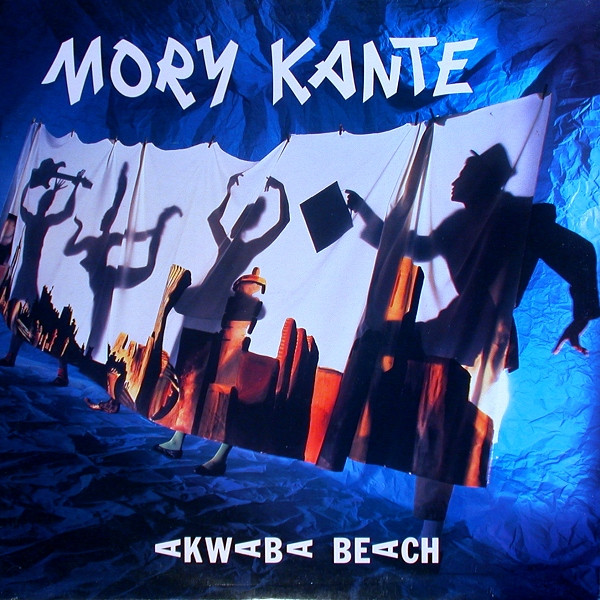
Every so often we’d roast a wild boar and circle our 4x4s around the fire, open the doors, slip a cassette into the tape player and dance about until the wee hours. On one such occasion one of our Scandinavian colleagues slipped Akwaba Beach into the deck and cranked the volume.
People speak of those lightning strike moments. The Beatles at Shea Stadium. Elvis on the on Ed Sullivan Show. Dylan at Newport. A piece of music and moment in time that changes their lives forever.
The opening notes of Yé ké yé ké with its brazen blasts of brass, rapid fire vocalising and jerk-me-till-I’m-dead rhythms hit me like a bolt from on high. I had never heard anything like this. My entire body felt as if it were captured inside the music. The song sparked every dull, fuzzy and ho-hum part of my experience into a mass of shivering electricity. I hadn’t realised just how much I needed to hear this music. We played that tape over and over for months and the album has enjoyed a permanent seat on my musical security council ever since.
According to our Nordic DJ Yé ké yé ké was not some niche crate-digger’s discovery but a huge hit across Europe. Africa’s first million seller and a #1 hit on both continents. And no wonder.
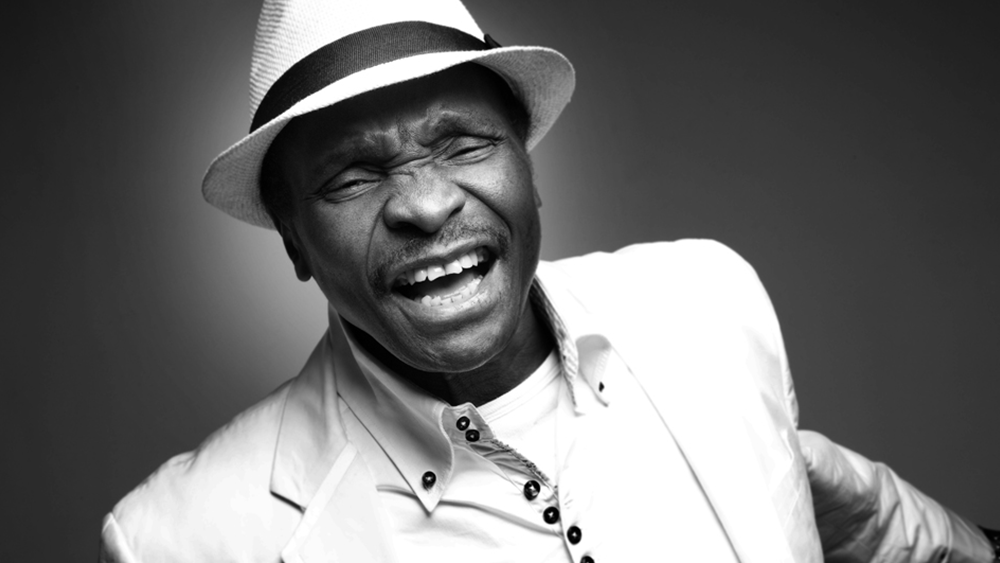
Mory Kanté was born in Guinea but moved at a young age to Mali to learn the kora and further his family griot traditions. His big break came when he joined the Rail Band where he teamed up with Salif Keita and Djelimady Tounkara as part of the classic lineup of one of Africa’s iconic musical groups. When Keita left, Kanté stepped into the lead singer role before pursuing what came to be one of the most successful solo careers of any African performer.
Akwaba Beach, a dazzling example of Euro-Africaine dance/club music, opens with the #1 smash hit Yé ké yé ké and continues in the same upbeat vein for the rest of the album. Fast moving synth pop mixed with Kanté’s thrilling tenor voice, punchy kora riffs, blaring brass, feisty backup choruses led by Djanka Diabate and the percussion riding high in the mix. Dance music distilled to its essence.
Released in 1987, Akwaba Beach pounds with drum machines and shimmers with the synths that dominated the music of that decade. But unlike a lot of other relics of the 80’s, these machine instruments fit Kanté’s music to a ‘T’. It is the cocky, blatant sound required when performing in a crowded, noisy club. Unapologetic disco. If you’re looking for folk-lorish ‘authentic’ African music, you’ve come to wrong place. Kanté’s singing and playing is so good, his musicians so tuned into his vision, all that matters is the quickening of your blood.
Akwaba Beach shot Kanté into outer space as a world music superstar and opened the field for other Africans to experiment and go boldly into new territory.
__
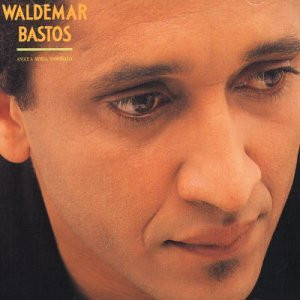
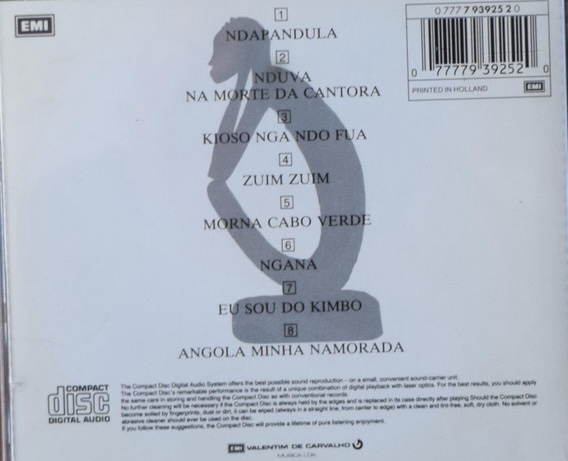
On the other end of the BPM spectrum is Waldemar Bastos’s 1990 album, Angola Minha Namorada (Angola, My Beloved). Recorded in the picturesque Portuguese coastal town of Paco D’Arcos and released in 1990, this music is urbane and sublime. There is none of the frenetic energy of Akwaba Beach within 100 miles.
Waldemar Bastos, who passed away in 2020 was born in colonial Angola in 1954. Like so many creative Angolans, he self-exiled himself from his country to settle in Portugal after it became clear that the revolution was willing to strike down musicians and other artists, not just ideological opponents. Music had played a huge part in mobilising the Angolan people to support the anti-colonial revolution, but many popular singers and musicians found themselves caught up in the 27th of May 1977 purge unleashed by the ruling Marxist-Leninist party in reaction to an internal ideological challenge. Within 18 months of securing independence, artists and musos were realizing that the dream was turning into a nightmare. Bastos left his homeland in 1982, aged 28.
Blessed with a warm and supple voice not dissimilar to that of Al Jarreau, Waldemar was considered in his lifetime a giant of Angolan music. His album, Angola Minha Namorada, was released nearly a decade before Pretaluz, the record that saw him “breakthrough” to European and American music fans in 1998.
It’s a gorgeous album. Calm, somewhat laid back in pace but deeply felt lyrically and musically. This record is the thing you want to listen to on late Sunday morning. When there is no reason to rush, nowhere to go and everything to be gained by letting Waldemar’s soulful voice slowly insinuate itself into your being. Hues of fado and tints of jazz colour this beautiful music. Though entirely different from the club music of Mory Kanté this album is another fine example of Euro-Afro pop.







 Missionaries, Mercenaries and Misfits