My Missionary Family: Part 1

There is no generic missionary.  There is no single description that all missionaries would agree on.  Missionaries were/are as diverse as any other group of humans. They had a variety of motivations for being in India, vastly differing theologies and lifestyles.  Many didn’t like each other, even when they worked for the same ‘mission board’. Some were world class historians and biologists and linguists. Some developed new nutritious products for the emerging middle class. Some led the world in the treatment of blindness and leprosy. Some ‘went native’. Others went mad and had to be shipped back to Ohio. Some believed every word of the Bible was historically accurate and spiritually true. Others could not find their way to 2 Chronicles. One even became a leading White Supremacist. 

What follows is what my missionary world looked like.  

My parents came to India in 1952.  Dad was 27. Mom 30.  Dad had been appointed by ‘the Mission’ to teach in a small Bible college in a not-very-significant district town in what was then Bombay Province but which, in 1956, was included within the freshly minted Mysore State that was renamed again in 1973 as Karnataka State. 

Home for both Mom and Dad was the upper Midwest: Minnesota and the Dakotas.  Both families were of German extract and both were equally poor.  And both families belonged to the ultra-small, ultra-conservative Holiness Methodist denomination. 

Mom was older than Dad by three years. She had grown up a farmer’s daughter and harbored the suspicion that she was an ‘afterthought’.  She always claimed to have enjoyed a loving childhood but one that was lonely and isolated. Her siblings were 10-15 years older and the farms she grew up on, first outside the northern Minnesota town of Detroit Lakes and later near Paynesville, in Stearns Country–heavy German immigrant territory– were several miles from civilisation.  She loved (and dreamed of) sharp clothes, baking and reading.  

Going on to High School was a major aspiration for most of her social network. Though her father lost his farm in Detroit Lakes during the early days of the Depression, forcing him to become a sharecropping dirt farmer, mom did graduate high school and went on to Business College in Minneapolis just as WWII began.  She admitted to having a few boys from the community make eyes at her, even a few handsome lads, but she never made eyes back. Mainly because it was clear to her that they had no desire to go to High School.   Or they smoked. Had no real prospects. One boy, however, did stand out–Melvin Finger. She liked the look of him and noted with approval that he was ‘serious-minded and read TIME magazine’. 

She grew up loved, she said. She also said, she felt as if her mother, a devout and extremely soft-spoken woman, had hoped she would be a boy because she confessed to hoping that her final child would be a ‘preacher or missionary’.  To mom, these were clear signals that she had disappointed her mother by being a woman. I think she carried that feeling of being ‘second best’ with her throughout life. 

Her dad, a tall and toothless man with a hearty laugh and a 19th century outlook, was not particularly religious. He’d go to church occasionally but did nothing to encourage Christian faith in his children. That was their mother’s role. He was too busy scraping enough sustenance together from the tiny Minnesota plots he farmed.  

Her upbringing was stifling. Though she accepted the conservative Christian values and faith of her family and neighbors she knew early on that she needed to escape rural Minnesota.  In later years she would cackle over the thought of her being a Minnesota farmer’s wife, something that bemused and terrified her.  When a recruiter from Minneapolis Business College laid out brochures of a nine-month secretarial course in the Big Smoke, she didn’t hesitate.  Minneapolis was a ‘magical city’ for her. Shops full of wonderful dresses and shoes and a place where she could be surrounded by people but still keep to herself.  

In their memoir Mom wrote:  

Though I didn’t know exactly what I wanted to do or be, I was SURE I did not want to spend my life on a farm! Dad and mom had worked their fingers to the bone for years, and what did they have to show for it?  I wanted to have a nice home and some stylish clothes—admittedly I was ‘materially’ minded. Attending business college offered me a way out of Paynesville and an escape from the farm.  What could be better? I was excited! 

** 

Dad’s family were more recent German immigrants. Grandpa had arrived with his mother and siblings from what is now western Poland in 1903.  They settled in Guelph, North Dakota, a speck on the prairie not too far from the South Dakota border. The Great Northern Railway that linked St. Paul with Seattle in far west Washington State ran through Guelph and provided jobs for grandpa and his brother Julius. But the hard physical labor didn’t do it for Grandpa, Rudolph Senior, who was still a couple years shy of fifteen. Around that time he was dragged to a ‘revival meeting’, had a spiritual conversion and dedicated himself to ‘full time Christian ministry’. He committed himself to a Holiness theology, serving as a preacher (who often had to move from parish to parish filling in for small rural communities) and eventually General Secretary of the denomination.  Here’s how Dad summed him up in the memoir he wrote with Mom in 2011. 

The Holiness Methodists were a small, struggling denomination with never more than 30-35 churches and preaching points. But they established a small Bible school (Holiness Methodist School of Theology) in Minneapolis. A year or so after his conversion. Rudolph felt God was calling him to the ministry, so went to Minneapolis and enrolled at HMST. After just a year’s study, the church assigned him as a pioneering evangelist to a remote area way out in northern Montana. 

For a year and a half—April 1915 to October 1916—he lived in a small mountain cabin in close proximity to the Pinkham Creek and Fortine lumber camps located a few miles from the town of Eureka. Life in those Rocky Mountain woods was primitive, ultra simple, far from being as romantic as one might think. 

He married a feisty woman named Leona and together produced a large family of 9 children of which Dad was number four.  Grandpa struggled with depression throughout his life (Dad brushed it aside as nothing more than ‘the winter blues’) which is probably one of the reasons he returned to Minneapolis and HMST.  The family could barely put food on the table, especially as Rudolph Senior’s body began to break down with the stress of scraping a living together in the Depression. 

Dad spent most of his youth moving between small towns in South Dakota and Minnesota before completing his high school in Duluth. Like his soon-to-be girlfriend, Eleanore Naugle, that older, lonesome, beautiful farm girl he met at the annual Watson Camp Meeting, Dad knew from a young age that he had to escape this small, loving but culturally isolated world of poor Midwestern farmers and laborers for something more hopeful and spacious. 

Both Mom and Dad spoke fondly of the annual Holiness camp meetings they attended in the tiny Christian enclave of Watson (pop. 290) in south central Chippewa County. A regular feature of rural American Christianity, the camp meeting tradition had its roots in the so-called Second Great Awakening of the late 18th century. The meetings were ten days of hallelujahs, hymns, fire and brimstone preaching and sanctification under a tent in the woods. They were an opportunity for socially isolated people to meet their co-religionists and for preachers and hucksters to reach tens of thousands of people in one place.  And as ever, camp meetings were places for young people to meet up, fall in love and probably do all sorts of unsanctified and sinful things like smooching. 

Dad’s favorite part of the meetings were the sermons of visiting missionaries who told stories of the exotic, colorful and spiritually benighted Hindoos and Mohammadans of India.  

In 1946, now married to Mom, they once more attended the Watson camp meetings.  

There, the camp’s missionary speaker was…China missionary Roland [Rollie] Rice…. I had been thinking quite a bit about India during our last months in Fort Robinson, remarking more than once that I had wished the army had sent me there instead of one of my Camp Dodge buddies.  This friend, Carl, and I corresponded during our Fort time. In one letter he was complaining about some of India’s negatives and wrote ‘You’d be crazy Rabe, to ever want to come to this place!’ 

My interest in India had been kindled years earlier and only kept growing. The stories of India that Rev. F.B. Whistler told [in previous years at Watson camp] had ignited that early-on ‘India interest’. That interest was reinforced (admittedly in a fanciful way) through reading about the country—particularly in the adventure books of Richard Halliburton who wrote about snake charmers, tiger hunting, maharajas with jewel encrusted turbans and other exotic minutia. In one of those ‘I plan to be’ talks in a Denfield high school class, I informed my classmates I planned to join the US Foreign Service. Around that time I also made up a fictitious address in Bombay, gave it to my mother saying, ‘Some day you will be writing to me in Bombay where I’ll be serving as US Ambassador or as some officer for the US Government.’ She smiled and said, ‘Yes, Rudy, I think I’ll be writing to you in India one day, but you’ll be there as an Ambassador for Jesus Christ, not the US government.’  I always thought it interesting that 10 years later when we got to India, our first mailing address included the name Bombay: Gadag, Dharwar District, Bombay Presidency. 

And so it became family history. Dad was the one who had been inspired to be a missionary as a young boy. Eleanore fell in love with him and ‘accepted as part of the deal’ that her commitment to him meant a life far from her family in what must have seemed to her a hostile and harsh environment on the other side of the world. 

But re-reading their joint memoir, I have a much stronger sense of Mom’s agency in this.  She knew exactly who she was marrying.  Rudy had many of the qualities she admitted to liking in men. He was a Christian. He was good looking. He didn’t smoke or drink. He was ‘serious minded and read TIME magazine’ like one of her early crushes Melvin Finger did.  And like him she shared a desire to get away from the stifling atmosphere of rural Minnesota and have a bit of adventure.  And similar to Dad, her mother had already committed her last child to God to be one of His missionaries.  

On the last night of 1946 camp, Dad and Mom both publicly declared their desire to move to India to ‘serve the Lord’.  

The reality, in fact, seems to be, contrary to family oral history, that a career in India was something they both consciously chose. Maybe Dad’s interest in the country was deeper and more longstanding than Mom’s, who probably had zero curiosity about the place, but both of them were excited about the prospect of leaving America in search of adventure and souls to save. 

Years later after attending her high school class’s 50th reunion she commented with obvious, if well-controlled glee: “Although I had been such a shy and unassuming little girl, I probably traveled farther and had a more exciting life than most anyone else. It’s safe to say that Rudy, the man I married, was the secret of my out-of-the-ordinary’ life.”  
Exit and Entry

33 years 2 months and 2 days ago Mikhail Gorbachev announced his resignation as leader of the Soviet Union. The next day, 26 January 1991, the world learned that the Soviet Union itself, had ceased to exist as a political entity.

I watched Gorbachev on American TV. The enormity of his resignation and the dissolution of USSR silenced the room. The consequences of it were unclear but generally I think everyone felt lighter; things were bound to get better.

Today, I watched President Trump and VP Vance go on TV and announce their desire to join a new USSR, led by their buddy Vlad Putin. The enormity of this decision was lost in a squabble of hectoring and scolding more akin to a WWE extravangza than a diplomatic photo opp.

Just as Gorbachev’s announcement stunned the world, so too the Dynamic Duo’s performance on live TV today, has left the world immobile with shock. Only instead of hope we watch in horror, knowing for sure that only worse lies ahead.

A few months earlier I had watched Boris Yeltsin jump onto a tank in the middle of Moscow and rally his fellow Russians to resist the coup that had been launched by hardline Communists against Gorbachev’s glasnost and perestroika. I remember thinking, ‘Wow, that’s ballsy!’ And the people rallied, the coup was put down and Big Boris led them into a new era.

I don’t watch TV or read much news anymore. But I find it interesting that Yeltsin’s demonstration of leadership and purpose is apparently so uninspiring to the politicians of the Greatest Country in the History of Humanity. Our leaders, our so-called Yeltsins’, our hardcore anti-Putin hawks, now flap their wings and coo quietly in harmony with the two assholes at the top.

DJT is leading us into a new era too.

Historical Fiction and the Saviour of the World

All religions are rife with factions. And in that way, they are a manifestation of the most primitive and base of human instincts.  Group think. Tribalism. Belief regardless of a lack of evidence. Even evidence to the contrary.     

I was born and nurtured within the ‘Bible is the inerrant Word of God’ tribe.  The people who insist that every word, every story, every miracle found within the Christian/Jewish Bible is cent per cent pure and untainted by any contradiction or human failing.  The Universe was created in six 24-hour days. Elijah ascended to ‘heaven’ in a burning chariot. The Supreme Lord of Everything addressed Abraham through a burning bush. Wine to water. 2 pieces of bread and 5 sardines fed 5000 people.   You get the picture. 

I should clarify. My father, our clan leader, actually felt most comfortable in a sub-faction of this larger tribe.  I would call it ‘the Bible is the actual reflection of God’s mind but not 100% historically or scientifically accurate’.   He argued that science and learning were needed to understand the mysteries of such a revered set of writings as the old and new testaments. He would acknowledge (later in life) that humans did not have the capacity to understand ‘God’  and so, ultimately, whether or not Jesus did turn a cistern of water into Merlot at the wedding party, it was not worth starting a war over. He liked to believe it, but he and others in the sub-faction allowed space for individual interpretation. 

I have no personal faith or belief in Jesus, Yahweh, God or any other such divine creature. But I had a good childhood and my 25 years of practicing Christianity has made an indelible imprint on my mind.  I cannot and do not want to excise that part of me.  I find great comfort in many passages of the Bible (OT and NT).  I still love and sing along to the hymns and choruses I learned from countless Bible Clubs, camps and revival services.  And throughout my adult years I have enjoyed reading academic and true-believer debates about all manner of Biblical studies and archaeology.    

I recently read a book titled Jesus Interrupted. I didn’t finish it because it was a bit too elementary for me. The author, is an ex-believer like myself, but a scholar of the Bible. His audience seems to be those of the ‘Bible is the inerrant Word of God’ tribe who are looking for encouragement to use their minds rather than practice blind faith.  I can hear him whispering to them ‘It’s ok. Jump. You won’t be crushed by what you find.’  

He spends a lot of time talking about ‘contradictions’ and ‘inconsistencies’ within the 4 Gospels and other books of the New Testament.  Of which there are many. And which should be sufficient for any unbiased reader to understand that what they are reading is not History.  For those who have come to believe that the God of the Bible is a distinct and discrete being, separate from the Universe, and who’s wont is to stick his hand into the petri dish called Earth and mess things up or direct action in a particular way, the notion that the story of the 3 wise men or the resurrection is not the accurate tale of an actual event, is a hard concept to embrace. 

I have published two novels, the first of which is what bookstores label, ‘historical fiction’.  It is set in mid-20th century Iraq and as such the narrative refers to and is framed by actual events. And people who are historical figures, the most prominent of which is Saddam Hussain.  But there are many others who pop up, mostly in very minor and insignificant roles.  The main characters are entirely fictional and most of the happenings that the book describes are real only to the characters. They have no basis in history.  

If you used my book to prepare for a trip to Iraq you might get a EXTREMELY HIGH LEVEL  glimpse of the turbulent political history of modern Iraq up to about 1985. But I hope no one would ascribe the words I put in the mouth of real historical figures as ‘accurate’ or historical.  The point of my book, what got me going, was to explore and try to understand the idea of politically-motivated violence against people who think differently.  Torture.  What goes on in the mind of the man who willingly and knowingly inflicts physical pain upon those who have been captured and have no way to fight back? 

I was not writing and didn’t set out to write a description of the Ba’ath party or Iraqi politics.  It was my way of unpacking an issue I was confronted with on a daily basis when I worked with the UN refugee agency. 

As I read Jesus, Interrupted it dawned on me that the best way to describe the Gospels and other Biblical stories is as “historical fiction”.   They are historic in the sense that they describe a society and historical figures that really did exist. But they are like tent poles or stakes that hold the story up but which are really supportive rather than central to the action.  Yes, there was a tough guy named Pontius Pilate. And there were a group of Jews known as Pharisees. Nazareth and Bethlehem can be found on a map. But anything beyond this sort of thing is historically iffy. Even the historic reality of the central hero, Jesus. 

The gospels, written decades after Jesus was allegedly crucified, by unknown writers, were composed to tell a specific story to a specific audience. The story was one of spiritual and moral guidance not a biography of the Nazarene. 

None of this is fresh insight. It’s as old as the hills.  But it does help me understand these essential texts of my life.  They are not history. But they are not fiction, either. They are historical fiction. 

Were the Dark Ages really that bad? W(h)ither Aidland?

I’ve been scanning a few articles and posts on LinkedIn about the crash&burn approach to USAID of the new Trusk administration.  There are two broad schools of thought being advocated. 

The Insider School: this is the worst possible and most unfair action taken against an agency that strives to do only good. The hardship faced by many tens of thousands employee, contractors and implementing partners down the food chain is the main objection, with many expressing solidarity with this newly and unexpectedly large cohort of jobless humanitarians.  Suddenly everyone has the green halo around their profile picture; I’m Open to Work.  

Indeed, this is a shitful way to begin a new year.  I am not directly impacted by Trusk’s actions but suddenly my already slim chances of finding employment within the sector I’ve worked in my entire career are as close to nil as they can possibly be.   

Imagine a series of ponds connected by a stream.  The one at the top is full with just a few fish in it. The middle pond has lots of water but also a huge number of fish.  The stream has been silting up for time and some fish have been struggling to breathe for years. Yet, for the most part the pond has just enough water and oxygen to maintain the status quo.  In the third pond, the water levels are really low but the fish are smaller and seem to be able to do ok though they are constantly aware that the stream from the middle pond is getting dammed and blocked.  

Overnight the top pond is drained of all its water. In a panic, the fish there move into the middle pond. But this is not a solution because the largest feeder stream is dry and the pond’s water supply has dropped by nearly 50%. But there are a huge number of new fish to accommodate. 

In the third pond, fish are dying fast.  Not to mention the many animals surrounding the ponds that depend on the water to survive.  

It’s easy to understand the solution demanded by this group school of thought. Reinstate USAID and all its funding immediately. Turn the tap back on and let the water flow once more.  

The Opportunity School of Thought: This is advocated mainly by (many) fish in the middle and lower ponds. And fisheries experts who work at think tanks and write blogs. The basic argument is: the structure of the ponds and streams was inherently unfair and broken.  The top fish have always determined the quantity and quality of the water flowing to the lower ponds and for the fish in the lower ponds and the animals who depend on the water in the pond, the emptying of the top pond is probably an opportunity to rebuild the system so that it is more equitable. 

No one has yet articulated what a new system might look. The prescriptions are finely articulated statements of principle that have been echoing around Aid-Land forever. They all appear to ignore the cruel reality that we fish, and the animals we support, need water. And if we are going to support a lot of animals and really attack the problems that the animals face, we need lots of water for a long, long time.   

Ok, enough already of this silly analogy. 

The point is that large scale development and humanitarian responses require large volumes of money. And on a steady basis. Governments are generally the only source of such largesse.  Sure, there are billionaires and rich corporations but their interests are extremely narrow and self-serving.  The private sector will never be a reliable source of base funding for humanitarian or development work. 

So, I’m sceptical of the Opportunity school. Of course, if USAID is gone for good NGOs will adjust. Many will cease to exist altogether (not bad in itself); almost all will downsize, shrink their ambition and keep their heads down even lower.  But I’m not holding my breath for a new government led aid infrastructure and financing system to emerge that will be better than the one we love to hate currently. 

And there is a lot to hate. Bureaucracy. Hypocrisy. Conditionality. Compliance over assistance. Risk transfer. Salaries. Bad CEOs with no accountability. Lack of diversity at the top. Recycled thinking. Opaque transparency. Salaries. Sexual harassment and abuse. Baked-in white middle-class privilege.  Over-weening earnestness. Commerical firms who market themselves as humanitarian but are profit making machines for shareholders. 

But the one thing, above all other things, that sucks about the aid business is the donor-implementing partner (be they big hairy international behemoths or a local disabled persons NGO in the south Pacific) relationship. Governments are not just the only viable source of sustainable financing for aid but they call the shots. Their Congresses and Parliaments put so many ridiculous conditions on the receipt of and spending of their funds that many NGOs spend as much time, if not more, filling out reports for donors to ensure they are not violating an ever-growing number of conditions, as they do actually helping actual people.  

For all our claims to be innovative and independent, we have always been beholden to what the State Department or Foreign Office wants.  

This doesn’t put me in the Insider’s camp. I sympathize with those who lost their jobs. Doing away overnight with such a major pillar of the Aidland superstructure will be nothing but disastrous.  And given how most countries take signals from the White House the impact on Aidland is going to be widespread and indefinite.  

I don’t have a solution but frankly I cannot think of any group that can replace government funded aid agencies. 100 Soros’ can’t compete.  I don’t see new scalable financing models emerging. Innovation will happen but at the local level only.  Like democracy, government funded aid is the best of many flawed systems.

The Golden Age of International NGOs and AID is well and truly over. Maybe the Dark Ages weren’t really so bad. 

Running Home (Pt.3)

My bodyguards followed their orders and allowed no one to talk to me. Including themselves.  From Hardwar to Lucknow, a journey of 15 hours, they kept their prisoners on a tight leash, taking turns at dozing, sometimes whispering, occasionally sharing bidis.  Up on the top tier, I was left alone.  Neither uttered a word to me.

When the train pulled into Lucknow, our party clanged and shuffled its way across a platform or two until one of the cops pointed at a train. “That one will take you to Pratapgarh,” he said.  

With their duty done, they turned their detainees around once more and left me to my own devices. 

An empty train in India is a rare thing. The one I boarded was oven hot and completely quiet.  I had the feeling of entering a long steel church. There was a similar air of hope and faith that the train would soon start moving.  A handful of passengers lay stretched out here and there, prostrate before the Sun god.  I found a window seat on the shady side of the compartment and waited.  

Eventually, the train did pull away from the station and onto the dry, scrabbly plain of central UP.  I squinted into the wavy horizon.  Though it must have been close to 45 degrees, I relished the way the heat burned the monsoon chill out of my bones.  

The slow swaying and jolting of the carriages comforted me. I lost myself in the clacking of the rails.  I was excited now.  Just a couple more hours to go and I’d be home.   

I must have nodded off for I was woken by someone tapping my shoulder. In front of me stood a Sikh ticket inspector in a navy blue blazer with worn cuffs. He had his hand outstretched and asked me to show him my ticket.  

“I don’t have one.” 

Perhaps because a representative of the Indian government itself had deposited me, Special Delivery, on this train my fear was gone.   

‘Why?” 

“My money was stolen and the Railway Police told me to take this train. My mother is sick in Allahabad and I’m going there.”  The further I travelled the longer my opening line became. 

The Ticket Inspector eyed me quietly for a minute.  As he did, my courage wilted. The same panic I had felt after the Russians had laughed me out of the compound, rushed through me. I was sure the moment of my arrest had arrived. 

“You do one thing,” he said after a while. “Just before we enter Pratapgarh Station, the train will stop.  You alight there and walk to the city. There will be no issue of ticket-shicket.” 

I nodded my assent somewhat incredulously. How was it that a man charged with enforcing the rules was advising me on the best way to break them?  

Several minutes later the train did roll to a stop about 200 metres from the station. I, along with what seemed like every other passenger on the train, hopped onto the hot earth and scampered out of the railway premises through a hole in a symbolic fence standing bent and rusty 5 metres from the highway. 

I’ll never forget that sardarji. 

** 

Pratapgarh is a small district town famous for not much. Its main role is as a rail junction and transport hub.  I entered a chowk bustling with activity. People were streaming up and down the road toward the station. Buses and Tempos, India’s awkward three wheeler taxis that ferried people to remote villages off the main highway, stood three deep on both sides of the road. 

Touts shouted out destinations of nearby towns and villages. Hawkers shouted the prices of their fruit and peanuts.  Horns blasted incessantly. Loudspeakers attached to trees blasted Lata Mangeshkar and Rafi songs. 

“Illaahabad, Illaahabad. Illahabaaad! Hey kid, why not go with us?” 

A man with sweat dripping from his nose and ears and with a soiled handkerchief around his neck motioned me in his direction. 

He was standing by a taxi. I couldn’t afford a taxi. I was looking for a bus. I couldn’t afford a bus either but somehow catching a free ride on the latter seemed more feasible than in a taxi. 

‘Where you going?” 

“Allahabad.” 

“Come on. I have one seat left, Rs. 12 is all. Come on, quickly, right over here.” 

He pulled me towards the Ambassador.  

“I don’t have 12 rupees.” 
 

“No problem, how much do you have?” 

“None. But if you stop on Stanley Rd, across from Beli Hospital I can get you some.” 

“Done,” he said. “Sit down, here.” 

He pulled open a creaky door and shoved me into the back seat. I joined five other adults. Across their laps they carried a charpai, a country rope-bed that had been partially disassembled to fit into the auto.  None of them could move from the weight of the wooden legs and the tangle of rope.  I squeezed in as best I could, holding the door shut with my arm. 

In the front seat sat another four adults. Not one of them was the driver. With his taxi now full the driver began to insinuate himself little by little behind the wheel. After some wiggling and numerous requests for reconfigurations in the passenger’s sitting arrangements, he was able to reach both feet to the pedals. His back was mostly resting against the front door which caused him to maneuver the wheel with distinct awkwardness. As if he was puppet with broken arms. 

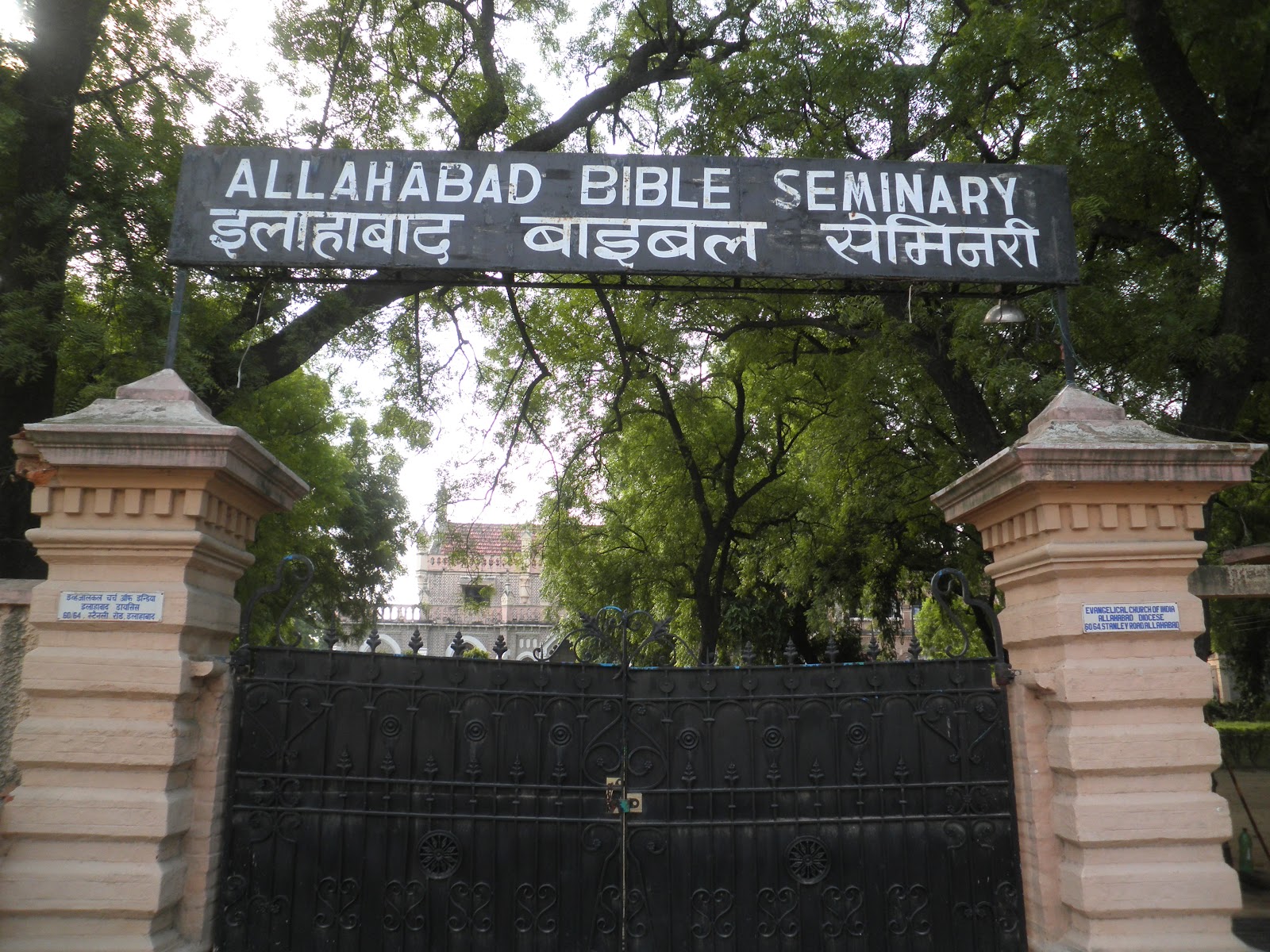
Somehow, by stretching and nudging the gear shift with the very tips of his fingers, the driver got us rolling down the highway.  Inconceivably, in every little bazaar we passed through he shouted out loudly, “Illahabad. Kacheri chowk savari. Jaldi aa!” as if he were the only one in the car.  Luckily, no one took up his offer and an hour and a half later just as the hottest sun of the day was turning into cool evening, we stopped in front of Allahabad Bible Seminary.  

Before I managed to tell the driver to wait while I got Rs 12 from my parents, the car lurched and sputtered down the Grand Trunk Road. 

48 hours after leaving Mussoorie I walked into the shady compound of home.  

** 

My parents were expecting me.  Mr. Kapadia had called to inform them that while the school didn’t know my exact whereabouts, “I suspect he’s on his way to you.” 

I spent a week at home.  When my folks grilled me about what had caused me to take such a drastic step I didn’t know what to say. For the entire journey I had operated on the principle of forward motion.  I didn’t doubt my feeling that I needed to be home and had spent no time analyzing why I had bolted. 

I had no words to express the oppression I felt inside. The monsoon, the mist, the mountains, the Bible Club, the school, the cold had all worked to make me feel agitated and disconnected. Out of sorts.  

My sister Beckie had graduated that summer and gone to the States for college. I was the last of my siblings, so perhaps I felt alone and vulnerable.  Without an older brother or sister as a reference point boarding school seemed more scary and hostile.   All I knew for sure was that I had an overwhelming but inarticulate need for home.   

After a week my dad put me back on the train. “We told Mr Kapadia that he has our agreement to punish you in whatever manner the school decides.” 

It was matter-of-fact statement.  I didn’t care. My inner battery was recharged. 

When I got back to Mussoorie I felt strong and connected.  And heroic. People that I had admired or been intimidated by looked at me in awe. “Rabe, you actually ran away! Far out!” 

I don’t know if anyone followed my example but for a brief moment I considered myself a trailblazer. 

Mr Kapadia informed me that I would be gated for 10 days. No extra curricular activity and straight home after school.  I was to serve my sentence in the home of the Harpers, whose son Phil, was a classmate.  Mrs Harper, a vivacious, larger-than-life, extremely liberal minded woman welcomed me with love, a no-nonsense attitude and French Toast for breakfast.   

“If you ever want to run away again,” Mr Kapadia told me when it was all said and done, “just come to me. We’ll have a talk. If you want a cigarette I’ll let you smoke in my house.  Just don’t frighten everyone by disappearing!” 

The circle is Complete

We’ve completed the circle. We Americans have gone out into the world, seen what we’ve seen, come rushing back home slammed the door shut and fitted out the house with surveillance cameras, automatic machine guns, potbellied camo boys with tattoos that scream like John Prine’s* waitress, “Make America Great Again”, a moat slithering with crocodiles and snakes and a steel wall.  

We are ugly Americans again. Led by Mr. Uggers himself, DJT.  His Pestilence is assisted by a black shirted, Seig Heiling immigrant who fled Apartheid not because he opposed it but apparently because he sensed the USA’s soil was more fertile for such diabolic Dogebags** as he.  

They say JFK read the novel The Ugly American and felt shame. Soon afterwards he announced the Peace Corps. And created USAID.  Not so every child in Asia could have cotton candy every morning but because he and his bros believed the USA could win friends by being decent.   

Now his nephew sparks outbreaks of measles in small Pacific Island states.  

We’ve completed the circle. We Americans are ugly again.   

* His 1972 song, Rocky Mountain Time, goes:

I walked in the restaurant
For something to do
The waitress yelled at me
So did the food

**A brilliant turn of phrase from Jon Favreau, former speech writer for Obama, who coined it to describe the youngsters tearing down the Republic.

Running Home (Pt. 2)

The Russians were easy to find.  I heard their tipsy, vodka-soaked laughter coming from a shady part of the compound. Four or five of them were sitting on adjacent porches of their apartments, their fleshy faces flushed red with heat and drink. 

As I approached, silence fell.  

I smiled, hoping it would break the ice. It didn’t.  

They stared at me, obviously perplexed and irritated that I had interrupted their lunch break. One of the women whispered something to her friend. 

“Excuse me,” I began. 

By now I had my tale-of-woe down pat. I told them my mother was ill and I needed some money. “I need to get to Allahabad, about 700 kilometers from here,” 

“No. No money,” one of them said.   

A couple others joined in the chorus. “No money. Go away.”  A man with huge arms and angry eyes said it louder than the others. With real authority.   

Having spent 8 years in boarding school I knew a lost cause when I met one. I turned back toward the gate.   

But I was dying of thirst. With a drinking gesture I said, “Could I have some water?” 

This second request really set them off.  Amidst the general clamor of, “No water. Go!’, one of the men made a move towards me.  He didn’t follow me but I didn’t have a the courage to turn back and check until I was several meters down the path I had come up just a couple minutes earlier.  When I did turn they were still tense. They glared at me but as I retreated the laughing resumed.   

A mali was sitting in the shade on his haunches watering a guava tree. He beckoned me over.  

He held up the hose for me to drink.  He didn’t say much and I didn’t offer anything.  I have no doubt he had been watching the scene play out from a distance. I sensed it was one he himself was familiar with. I took his kindness as an act of solidarity. 

The thought of a 10 km ride back to Hardwar in the midday sun depressed me, especially as I was no richer for my effort.  I was too spent to formulate my next move, but I knew I needed to be in town where there existed at least the potential of assistance.   

I must have looked miserable pedaling along the highway because out of nowhere a man appeared. He had well oiled, wavy hair that glistened in the sun. He wore narrow legged pants and a plaid yellow shirt.  I can’t remember how it happened but he successfully commandeered my bike, sat me on the rear carrier and began cycling toward Hardwar. 

Despite the heat, we got a bit of breeze going which cooled my cheeks slightly.  I vaguely remember the Stranger talking to me but can’t recollect about what.  Before I knew it we were back at the Station. He dropped me at the cyclewala and even paid the outstanding balance. Then with a nod of his head he disappeared as unexpectedly as he’d appeared. 

** 

I retreated to the relative comfort of the 1st class Waiting Room. I dozed on a rattan lounge chair with extendable arms that doubled as leg rests, one of the distinctive artifacts of railway waiting halls in those days.  But I was hungry. And more than a little anxious about how I was going to make the next leg of the journey. 

A middle class family were the only others in the Waiting Room. The patriarch reclined on a rattan chair like mine, staring blankly at a ceiling fan that swayed as it whirred. From time to time he lifted his buttocks and farted.  But other than that, he didn’t move. 

He may have been oblivious to me but I had been watching him for some time. After one of his farts I cleared my throat and in my best Hindi launched into conversation. I learned they had come to Hardwar on yatra (pilgrimage) and were now heading back home. I asked him about his business (the nature of which I’ve forgotten) and may have said a nice thing or two about his young child.  

As a conversationalist he was unenthusiastic.  

“My mother is ill,” I offered, hoping to pique his interest. 

He may have nodded, but if he did, it was ever so slightly. 

“I need to get home. To Allahabad. But I have no money.” 

“Why do you not have money?” 

“I was robbed,” I found my mouth saying.  I couldn’t believe it. But I was in the water now, so I had to keep paddling.  

“This morning on the way from Dehra Dun, it was very crowded in the bogie and when I got here I realized someone had stolen my money.” 

He looked at me skeptically.  

“Could you provide me with Rs. 20, so I could get a ticket? My mother is very ill.” 

“You must report to the Railway Police, if you have been a victim of theft.” 

As far as he was concerned the conversation was over. The spinning fan captured his attention once more.  I felt foolish but let a decent interval pass before shuffling out of the Waiting Room. 

** 

Once again, 24 hours after the first occasion, I entered the office of an Indian Railways bureaucrat.  I had mulled over what the farting businessman had said. He was absolutely correct in his observation that the Police needed to be notified in the event of a crime.  But in this case there had been no crime committed so fronting up to the Police would not be the smartest tactic.  On the other hand, I was clean out of options. 

The Railway Police office was shabbier than the Station Master’s in Dehra Dun. The man behind the desk had a pot belly and sweat stains all over his khaki uniform.  His closely shaved head sported a choti, the little tuft of hair that identified him as a high caste Hindu.  Unlike the Station Master his face lit up when I stood in front of his desk. 

“Kya baat hai, baba?” he asked. What is it, lad? 

Though he addressed me in Hindi he clearly didn’t expect me to respond in kind. 

“Meri ma bimaar hai, aur mere paas ticket ka kiraya nahi hai,” I said, laying down the by now firm foundation of my story. 

“Arey! Hindi bolte!” His belly jiggled with delight.  “Ay shabaash!” 

Before I could continue with my dishonest story he shot a series of questions at me in an attempt to come to grips with the fact that a white kid could speak Hindi. 

I told him about me. I was American. I studied in Mussoorie. I was born in India. Rajesh Khanna was a good actor, yes.  

Whereas the Station Master in Dehra Dun had instantly linked Woodstock School and my being in his office to funny business, this jolly man didn’t give a stuff.  Indeed, he was hooting to a couple of underlings about what a spectacular thing I was. 

Somehow in the midst of this excitement I managed to explain my dilemma: 700 kms. No money. Sickly mother. 

Before I knew it he grabbed my wrist and dragged me out of his office. A couple of minutes later we were seated at an open air dhaba that sold tea and fast food to the throngs around the station.   

He instructed the dhabawala to give me a plate of curry and a few chapatis. “This fellow is American but born in India! It’s true. And he speaks spasht Hindi! Just listen.”  He could hardly contain himself. 

Though my mouth was full (this was my first food in nearly 36 hours) I knew this was price I had to pay for my dinner. A small crowd had appeared; rather the endless crowd of passersby stopped for a moment to look at me. It was my cue.   

I restated in Hindi what I had told the Policeman a few minutes earlier, that I was American, born in India, lived in Allahabad but studied in Mussoorie. 

People marveled and exclaimed. The Policeman couldn’t have beamed wider had I been his son. He ordered my plate to be filled. I ate up. He continued to hold court but eventually passersby grew bored and the rhythm of the bazaar returned to normal.   

The Police Inspector led me back to his office.  I was grateful for the meal but had no idea how I was going to make it home. 

He pressed a buzzer on his desk which immediately produced an underling.  The underling was sent forth to find others and after several minutes returned with two colleagues who carried rifles and bulleted shoulder straps.  They noisily pushed a pair of prisoners into the office in front of them.  With their legs and wrists in irons the prisoners shuffled and clanged like cheap robots.  

The inspector didn’t move from his desk and in a loud voice told the newly arrived cops that they were to include me in their party.  They were on official duty, transporting criminals from Hardwar to the state capital, Lucknow.  “You take this boy with you to Lucknow but do not let anyone, and I mean anyone, speak with him.” 

With that, the chubby Police Inspector himself walked me to a train and bade me bon voyage.  I was on my way at last. Still with no ticket but a pair of personal armed guards.  

Running Home (pt 1)

When I was 15 I ran away.

Like most teenagers, I had a fantasy about running away from home.  I was going to escape and ride my push bike 2500 km to the tip of India. I was going to live a life free of adult authority along the Grand Trunk road. I was going to go far away.

But when the moment came to make a dash, I ran straight home.

**

The Himalayan monsoon that year seemed to have no end. The rains had come early and weeks went by without a glimpse of blue sky. By mid-July, my heart was aching for some warmth and a flat horizon

Mussoorie, the hill station where I attended boarding school, was  hemmed in with a brittle, misty fog that pricked your skin like needles. Every tree dripped. The narrow dirt trails we navigated around the hillside had turned into rivelets of mud.

One Sunday the claustrophobia was particularly intense. The dampness of the trees, clouds and earth had soaked into every pore of my body. I couldn’t get warm and I couldn’t shake the restlessness that had been building up for days.

I and a few friends had spent the weekend in the basement of a friend’s house at the top of a prominent hill in town. On Sunday afternoon, the crowd I hung with attended Bible Club–two hours of singing, praying and Bible teaching mixed with ping pong, homemade cakes and pretty girls.

That Sunday I sat glumly to one side, resentlng the endless rendition of “Put Your Hand in the Hand of the Man”, coming from a keen group of devotees in the main room. Tim Buehler’s electric guitar had been a novelty the previous year. Today it grated my nerves. I wanted to be away. To be far from this place and be by myself. I pushed my way through my friends to the door which I closed quietly behind me.  

And then I began to run.

My mind was blank but my body took control. I sprinted up the dirt path to the chukkar, a concrete motor road that ran around the top of the hill. Within seconds, almost with every step, a plan developed in my mind.  Ten minutes of jogging got me to Dr Olsen’s place. I charged into the basement and rifled through the pockets of whosever jeans I could find. I fished out three rupees from one pair.  With my sleeping roll under my arm, I half marched, half ran down the chakkar toward town.

My heart beat madly. I was exhilarated by my decision though I was not yet sure what it was. I was heading for the bazaar but I didn’t dare think too much about it.

One of the rules of school was that students were not allowed in Mussoorie town, one of India’s most famous tourist destinations, alone and without the permission of a parent or staff member, except on Saturdays. I knew if I met anyone remotely connected with the hierarchy of the school–staff, staff’s spouse, school karmachari or friend of a staff member–I could be legitimately questioned about my presence in town. If I had no written notice on me I would be forced to return.

I made it down Mullingar Hill, a ski slope of a road that wound through Landour, unnoticed. A few shop keepers eyed me with some surprise as I passed by but none tried to stop me.

My biggest fear was meeting Mr Kapadia, the In-Charge of Hostel, the highschool boys residential hall where I lived. In addition to being a strict disciplinarian, Mr K was known to be a raconteur who often went drinking of an evening with his Rotary buddies. What if he approached, gambolling home slightly tipsy?

While my eyes flitted like a criminal’s ahead, to the side and even back, searching for a familiar face, I realized that this was the first time I had actually been in the bazaar on a non-Saturday. The worn familiarity of the alleys and shops had been replaced by a hostile feeling, as if a friend had turned against me. I breathed deep and kept going.

At Thukral’s Photo Studio I sensed victory. It was now only a 5 minute walk to the bus stand. That was the first destination in my half baked plan. What I would do once there I hadn’t yet figured out.

I approached the ticket cubicle of the UP State Roadways Transport Service and shoved my three rupee notes across the counter. A man gave me 75 paise in change along with a ticket.  He nodded at the appropriate bus. It was empty. Not wanting to take a chance I lay down on the seats and waited for the bus to start. Not many people were travelling that evening and once we started swaying around the hairpin bends I sat up. For the first time in weeks I felt myself relax.

**

The bus deposited me at the Dehra Dun Railway station. I knew now that my soul was taking me home to Allahabad, 860 kilometers to the east, but how I was to make the journey remained a mystery. My buying power, all of 75 paise, was limited to 3 cups of tea.

Without much thought (my body still operated as an independent agent) I marched into the Station Master’s office on the main platform. The room was long, orderly and brightly lit by neon tubes that hummed like a swarm of bees.

A uniformed official sat behind a desk surrounded by phones and stacks of papers. He looked up as I came in. I opened my mouth. What came out surprised me. “My mother is sick and I need to return to Allahabad, urgently. I have no money for tonight’s train.” 

He surveyed me for a moment. “You are a student of Woodstock School?”

I nodded.

“Does Mr Kapadia know you are here?”

The mention of the name sent a shiver though my body. I must have mumbled something but can’t recall what. I seemed a stranger to myself.

He reached for a phone and dialled a number. The game was up. I froze.  After a minute he put the phone down and said there was no answer. I backed out of his office. He may or may not have called the Much Feared Kapadia, but he didn’t pursue me.

With Plan A foiled I was fresh out of plans. I paced up and down the platform struggling to keep my panic under check. I knew if I could make it to Hardwar, a couple three hours down the track I’d feel safer. I knew someone there, or at least had a name and a face, if no address. Hardwar was that much further into the Indian plain. And that much farther away from the horrid imprisoning hills. But a certain distance had to be traversed yet. I bought a cup of tea and squatted down to contemplate the dilemma.

The night came up quickly. Tube lights flickered on. I was getting hungry but needed to hold on to my meagre resources, now just half a rupee. Some trains came and others went. I watched them as years later I would watch planes high in the sky and wish I was on them. The beast within me was restless again. He didn’t like this hanging about. I kept walking the platform, crossing the footbridges and back again.

“Where you headed,” a coolie asked me as I shuffled by. He was on his haunches, cupping a bidi in his fist. I squatted next to him and mumbled, “Hardwar.”

“That one leaves tomorrow morning, eight o’clock,” he said indicating a dark chain of carriages.

I would have shared his bidi if he had asked. I usually smoked Four Square when my friends and I were in our secret tea shops in Mussoorie. I wanted smoke in my lungs at that moment. Heat and fire to match my restless anger. He didn’t offer me the bidi but he did yell at a nearby chai wala to give me a clay matka of tea and a nice, soft, cellophane-wrapped tea bun.

I slurped the tea, gratefully. As I chewed, the coolie and I chatted. He asked  where I was from, who my father was and what sort of service he did. I admired the brass identity badge on his arm with a number that certified his official status as a porter. He treated me as if I was his nephew, not a stranger. After a while, when our conversation slowed he showed me where to lay out my sleeping bag on the platform. “In the morning, the bogie you want will stop right here.”

During our chat he had assured me that I shouldn’t worry about not having a ticket. “Do you think all these people have tickets?” His tone indicated what the answer was. “Just don’t jump into a reserved bogie and no one will even look at you.”

The following morning the platform was chaos. As I rolled up my gear my coolie friend appeared amidst the melee. He told me to follow him, then elbowed and abused his way to the carriage. He sat me down by a window. Before he disappeared he smiled at me.

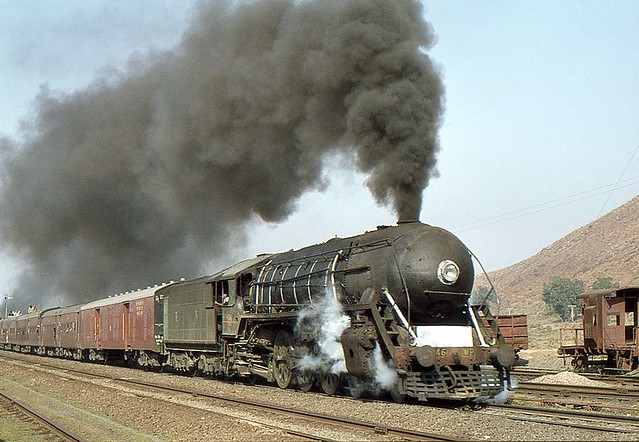
The train started to roll. This was electrifying. Traversing India by train, perhaps because I did it so little and mostly on holidays, was always a thrill. As the carriages lurched and swayed through the ancient Siwalik range I couldn’t have cared less that I had no money, had not eaten a meal in 24 hours and had no address for my friend in the rather large and rather holy pilgrim city of Hardwar, just a couple hours in the future. The sound, the motion and the hot breeze generated by the coal fueled engine had my heart racing. This was very illegal and very fun.

Around mid-morning we pulled into Hardwar. First hurdle was to get past the official who stood at the exit collecting tickets.  One option was to press into the crowd and attempt to squeeze through unnoticed. But with a white face, this was a risky stategy. Instead, I held back until the exiting throng had dissipated and the TC with his pockets full of little cardboard tickets, retired to his fan cooled office. With the coast clear I quickly stepped out of the gate and into the heat.

My plan, such as it was, was to rent a cycle for the day, and seek out a church where I was certain I’d find someone who knew my friend, a recently graduated seminarian from the college where my Dad was principal. In such a predominantly Hindu town as Hardwar, I figured there would be no more than a handful of churches and that they would stick out like sore thumbs. Everyone would know where to find them.

Near the station I found a hire shop and rented an Atlas bike for Rs 1. I gave the man my remaining change and promised the remainder upon return. As I swung my leg onto the seat I asked him where the church was. He shrugged and went back to work. I quickly realized that people came to Harwar to vist a handful of monumental Hindu holy spots and left. Churches were not on anybody’s menu of interesting places.

A passerby called out to me and asked with a twist of his fingers where I was going? “I’m looking for a church to find a friend.”

He acted as if he wasn’t listening but then said, “You’ll find your kind in Jalalabad, at the BHEL compound.”

“Christians?” I said, sounding like a young Vasco da Gama.

Again he shrugged. “Russians. They run that place. Go there they will help you.” He moved away into the crowd.

This was great news. White people. Russians, sure, but white folks nonetheless. I headed toward Jalalabad and after cycling for some time asked a man how far it was. “8 kms,” he said.

My heart quivered. 8 kilometeres?!

The sun was high. My legs felt like they were swelling inside my jeans. Still, the Russians were my only hope.  I pushed on and perhaps half an hour later sighted the huge Bharat Heavy Electrical Limited complex. Tall brick walls with electrified barbed wire skirted a massive industrial estate. Yet the gate was unattended so I wheeled myself in.

A way into India

I’ve been trying to write about India all my life.  

And failing. 

 Over the weekend I began to organise my old drafts and re-drafts of things I’ve written since 1980.  It appears that I’m a frustrated memoirist. Certainly, a bit of a narcissist too.  There were several drafts of a piece I wrote about Varanasi which I think I ultimately did (unsuccessfully) submit for publication. I remember struggling with that, trying to understand what I actually wanted to say about the city. What to include, what to leave out. Most versions were a mix of the travel section of your weekend paper, heart-felt expressions of my love for the city and passages which sounded as if they had been written by an AI bot decades before the stuff was even thought of.   All in all, it is awful. 

Of course, Varanasi is the kind of place that even the most sensitive or knowledgeable of writers struggle to write about.  It is one of those subjects that exists in history, in imagination, in the spiritual realm, on the map, in art and in philosophy. It is as big a subject as any in this world. So, I take my failure to capture it as inevitable. 

There were lots of other much shorter pieces too. One, on an obscure south Indian puja. Several recollected conversations with people along the way. A bunch of false starts and dead ends on my two hometowns of Mussoorie and Allahabad.  

What tied them all together was my inability to find the right voice to express what I wanted to say about India. Sure, I was learning a craft and had little command over my thoughts, let alone the words to describe those ideas. But there were other things in the way. Inarticulate passion & emotion which derailed things almost immediately. But more than anything the subject itself—India–seemed to block my path. 

India is a country and a state of mind that people tend to love or hate. Even if you haven’t been, you’ve probably got an opinion about it.  It is the ultimate in exotic. It is the place where ‘everyone everyday is steeped in spirituality,’ and where everyone wears ‘colouful, garish, brightly hued clothing’ where the bazars are jammed with ‘teeming humanity and mountains of red, yellow and black spices that amaze the casual visitor’. Where the ‘extremes of human experience’ reveal themselves against a background of ‘fabled monuments and ancient temples built by long dead dynasties’.   

Heat and dust. 

It’s creative writing 101 crossed with National Geographic.    

India ‘overwhelms the senses’, ‘drowns one in ‘sensory overload’. India is romantic. An enigma. A land of gurus and maharajas and the world’s best cricket players.  It is pastiche and projection.  

It is cliche. 

Speaking of National Geographic, that fine publication’s contribution to this way of looking at the world is immense.  As a budding photographer my favorite subject was India (and within India it was Varanasi). For years the National Geographic approach to visualising India, epitomized by Steve McCurry, was what I emulated. I wanted to capture the best close-up portraits of Indian faces.  I wanted to capture the Himalayas, grand and snowcapped and the temples silhouetted at dusk. I did get lucky from time to time but never came within a mile of McCurry or Raghubir Singh who seemed to have such a knack for uncovering those shots. 

Raghubir Singh himself grew so fed up with this approach that he devoted an entire book to looking at his country with a new eye. It’s called A Way Into India. I highly recommend you go to the library or your bookstore and check it out.  In essence he used the iconic Indian car, the Hindustan Ambassador, as a lens to see his country with fresh eyes.  And in the process, all those noble portraits, disappeared. What he revealed were glimpses of things every other photographer dismissed as irrelevant or ugly. Details or scenes that are often hard to decipher. It gave his photography new life and has cemented his place in the pantheon of great modern photographers. 

All this is to say I’m still struggling with how to write about and visualise India. It bugs he hell out of me and frustrates me. I should be able to do this, I say to myself. Why can’t I get beyond the ‘garish saris’ and ‘wizened old sadhus’?   The closest I’ve come is by letting Indians I meet along the way, speak to me in their own words.  In this blog you’ll find several such conversations. I try not to embellish them or add my judgements to them.  Just let them speak about their Indian experience.   

But that is still not what I’m searching for.  I want to tell my story. I’m searching for a way into India that is true to both my experience and to the subject, Mother India.

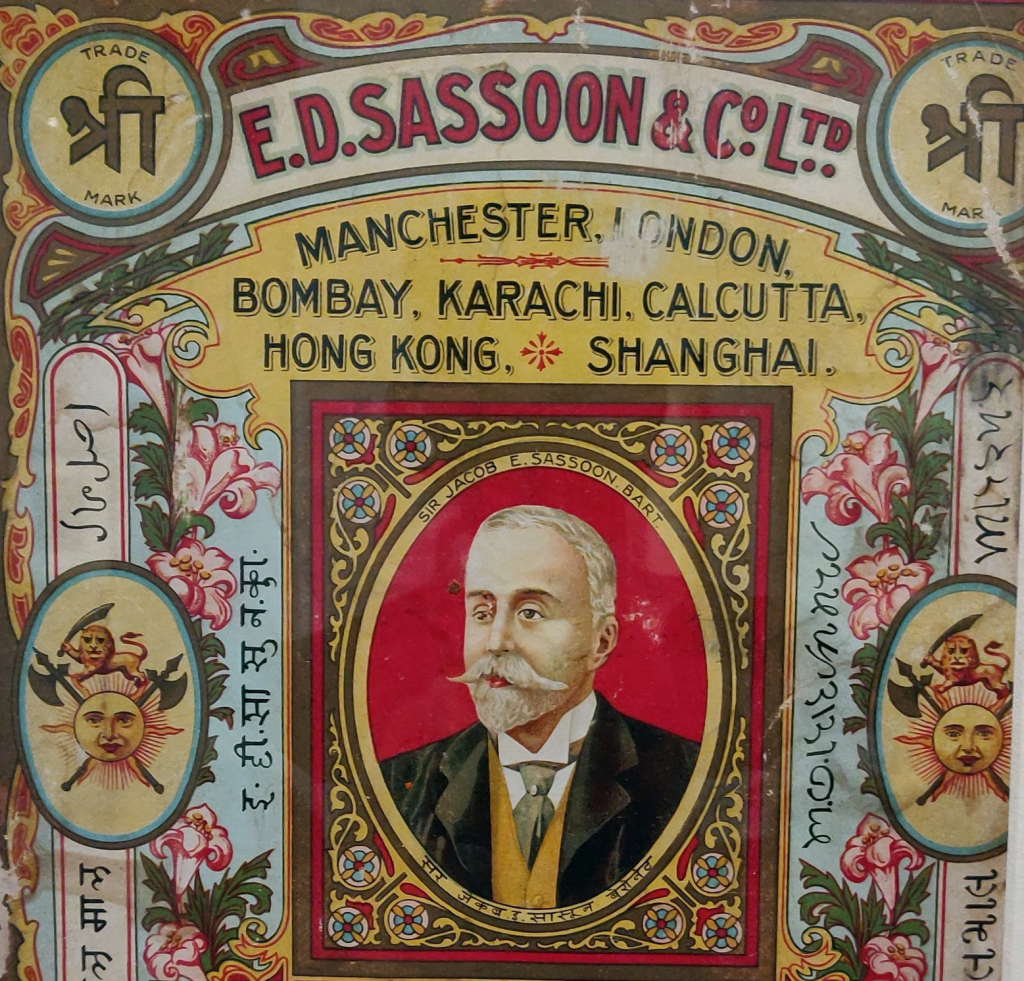
A note on the image at the top of this post. An advertisement (could have been from a calendar or a biscuit tin) for the Sassoon commercial house. The Sassoons were Baghdadi Jews who landed in India in 1830 and went on to become a leading pillar of that city’s economic and cultural heritage. The image is a cultural melange of scripts and symbols, recognisable to Indians and foreigners. The scripts mostly transcribe the family name. Sir Jacob Sassoon was the third or fourth generation to run the business. As the image depicts, he expanded operations to Karachi (now Pakistan) and Shanghai. The family, like so many of Bombay’s elite families was involved in the opium, tea, silver racket that financed the rise of the English empire. More on that in the future.