
My folks and two older brothers landed in Bombay on 2 February 1952. A second application for a visa had been successful and 28 days after leaving New York they squinted at the skyline of India’s largest city ‘with its many high-rises [that] looked pale yellow in the hazy afternoon sun, more modern looking that we had expected.
The country where they would live and work for nearly 40 years was still young then. Four and half years earlier the British had left in a rush leaving behind two new countries. Pakistan and India, to sort out the affairs of state amidst deep political divisions over the Partition of the subcontinent, heightened communal identify and sensitivity, a bankrupt treasury and a level of poverty that had been severely exacerbated by several massive famines in Bengal, Punjab and Sindh.
Politically, Pakistan was in turmoil. Their first Prime Minister, Liaqat Ali Khan had been assassinated in October 1951, which saw the first direct intervention of the military in the country’s governance, a legacy the people of Pakistan continue to fight against. The UN had declared a ceasefire in January 1951 and sent peacekeepers to Kashmir to manage the fallout of the first of four wars fought over that territory.
India had the good fortune of being led by a charismatic visionary Prime Minister, Jawaharlal Nehru, who enjoyed stature across the globe. When the SS Stratheden, a British ocean liner that carried troops (during the war) and mail (after) between the UK and Australia, and which George Orwell had sailed to Morocco on in 1938, dropped anchor at Ballard Pier in Bombay, India’s first parliamentary elections since gaining independence were almost complete. Nehru’s Congress party would win easily and remain in power for the next 25 years.
In Madras, the original Indian colonial city, 1300 kms southeast of Bombay, a cricket match between England and India got underway on the 6th of February. King George VI died that same day, placing young Elizabeth on the throne where she would remain for many years after mom and dad both passed away. India went on to gain its first Cricket Test victory in that match which marks the rise of the mighty Indian team of our times.
Our family, and few missionaries that we knew,1 cared little for cricket. It was a quaint British game played over 5 (!) days by princes and engineers. Like polo, it was an elite sport. Nothing like the massively wealthy and dominant public phenomenon it is today. Field hockey was the more popular and accomplished sport1 in those years.
We weren’t Brits so the change of monarchs in the UK would have been little more than headline news. There was, however, one anniversary or milestone that Dad would have liked (and probably knew). That his own missionary career was beginning exactly 1900 years after one of Christ’s own apostles had first arrived in India. The tradition (which is generally accepted) tells of St. Thomas, one of the original Twelve, landing along the south east coast of India in the vicinity of the modern city of Chennai (Madras)in 52 CE. He preached to the locals and had some success but other locals, usually identified as stuffy Brahmins, murdered him around 72 CE. But he left behind India’s first indigenous Christian community and church, the Mar Thoma, which can, with strong historical evidence, claim to be one of the oldest, if not the oldest Christian community outside of Palestine.
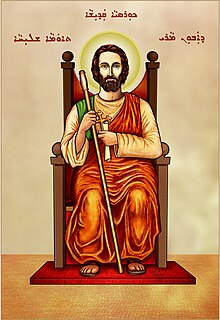
If I’m to understand my parents’ life as missionaries in India I have to spend some time exploring a much broader history, that of Christian India, which pre-dates any formal European missionary by nearly 2 millennia. In the next few instalments, I’m going to highlight some of the highpoints in that fascinating but underreported history.
- India holds the record for most consecutive Olympic Golds (6) and most total Olympic Golds (8) in the sport. ↩︎


Do you know about Christ’s tomb in Srinagar? Who wouldn’t want to die in Kashmir? A semi-relaible source tells me it is spectacularly beauctiful.
LikeLiked by 1 person
Yeah that’s one of many colourful traditions. Kashmir is gorgeous and there is a sect of Muslims who believe that he is buried there. Obviously, it’s a historic fantasy. But whatever happened he seems to have had a very busy short life. India, china, the American West, and the Palestine! All before jet travel…phew!
LikeLike
I work with a number of people who emigrated from Kerala, and only recently learned that the history of Christianity in India is the reason that their surnames are Mathew, Thomas, Joseph, etc. instead of Patel or Desai (who seem to be the Smiths and Joneses of the subcontinent).
LikeLike
Indeed. It is not a very well known fact of Xtian history, that south India was one of the very first lands visited by Christians. Patels are usually from western India (Gujarat) and many many have come westward hence its familiarity to American ears. Probably the ultimate ‘Smith’ and Jones would be Lal and Kumar
LikeLike