Lollywood: stories of Pakistan’s unlikely film industry

Chapter One: An Invention With No Future

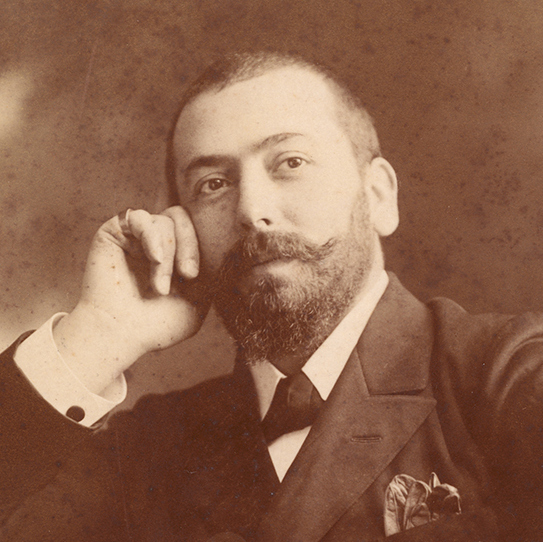
Marius Sestier

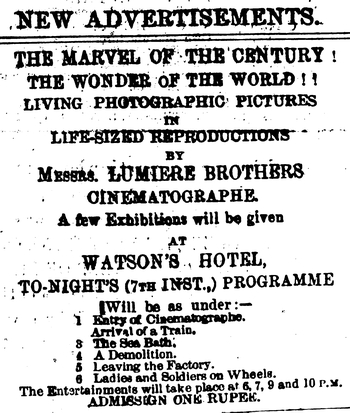
Fifty one years to the day before India won its Independence, on 15th August 1896, the well heeled citizens of Bombay enjoyed a final evening of the most โ€˜marvellousโ€™ spectacle the city had ever experienced.  For several weeks, first at Watsonโ€™s Hotel in Kalaghoda and then at the Novelty Theatre on Grant Road, a Frenchman en route to Australia, had been delighting audiences with the latest hi-tech entertainment.  Called the โ€˜cinematographeโ€™ his contraption, which looked like an ordinary wooden box with a hand crank on one side and a small brass-encased lens on the other, was the closest thing to magic audiences could imagine. As the Frenchman rotated the crank a spool of thin grey film through which light flowed from a second box attached to the top, the most unbelievable photographic images danced against a white screen.  In the darkened hall the rapt viewers wondered if they had not been transported to a new dimension.

The projection of moving pictures was the most exciting development yet in the short life of the revolutionary new science of photography. Two French brothers Auguste and Louis Lumiere had been experimenting with colour photography for a number of years and as a sort of intellectual side-project had attacked the problem of combining animation with projection of light. Just nine months earlier, in December 1895, at Parisโ€™ Grand Cafe, the brothers had stunned audiences with the first commercial showing of a film, which over a span of 49 seconds, depicted a train pulling into a station and passengers jumping on and off. 

The Lumiere brothersโ€™ version of the movie camera-cum-projector was small and light enough to be carried about outdoors. At first, the inventor brothers didnโ€™t know what to make of their apparatus. In fact, they saw it not so much as an idea whose time had come but, as Louis Lumiere said, as โ€˜an invention without a future.โ€™ His brother put it even more emphatically: โ€˜our inventionโ€ฆhas no commercial future whatsoever.โ€™

But in direct contradiction of their conviction, the siblings launched a campaign to take the Cinematographe experience to audiences around the world. To assist them they contracted a fellow Frenchman, a pharmacist by trade, named Marius Sestier to be this new technologyโ€™s evangelist in the furthest end of the world, Australia. So dubious of their inventionโ€™s prospects were the brothers that a year or two later they put together a travelling road show complete with 40 magicians to tour Asia, the Far East and the Fiji Islands.  If the moving pictures didnโ€™t draw the crowds perhaps the wonder workers would be a profitable Plan B.

Sestier, who sported a trim beard and moustache with ends that curled confidently upwards in the style of an upperclass gentleman, set sail, with this wife, from Marseilles on 11 June 1896 with a passage to India.  They docked in Bombay nineteen days later and though it seems Sestier knew little English, he immediately set out making arrangements for the showing of several films. Over a period of four nights people crammed into a small room in Watsons Hotel to watch six short films[1], including the much bally-hooed Arrival of a Train, all produced by the Lumiere brothers.  The local papers proclaimed this new thing, โ€˜The Wonder of the World!โ€™

The impact was tremendous and immediate.  More showings were added (though one was cancelled due to an early case of load shedding) and additional, larger venues were secured. The local press gushed enthusiastically about this amazing Marvel of the Century but found Mr Watsonโ€™s hotel to be somewhat unsuitable. The Bombay Gazetteโ€™s reporter complained that because of โ€œthe smallness of the room, the operator is unable to have the instrument sufficiently removed from the canvas to make the figures life-size, and this has the further disadvantage that it makes the actors in each of the scenes move about rather too quickly.โ€

Sestier responded to the criticism by securing the premises of the Novelty Theatre as a corrective measure.  Built in 1878, the Novelty was one of Bombayโ€™s glittering new theatres along Grant Road, the cityโ€™s answer to Broadway. It boasted a large 90 x 65 ft. stage and accommodated 1400 people. The Lumieres were in business! At Rs. 1 a seat, Sestier grossed close to Rs. 100,000 (close to one million in contemporary terms) over more than 60 sold-out shows, which proved beyond any argument, that inventors should not be relied upon for their business acumen.

By the time Sestier boarded the French steamship Caledonien for Colombo and Sydney on 26th August, he had changed India forever. The movie bug had found a new host. Many Indians had attended the shows at the Novelty Theatre and one in particular, a photographer, Harishchandra Sakharam Bhatwadekar (aka ‘Save Dada’) was so enraptured he immediately placed an order for a Lumiere Cinematographe with the London firm Riley Brothers. The investment set him back a pretty penny but within three years Bhatwadekar had made and shown Indiaโ€™s first documentary film, The Wrestlers, which depicted a match at Bombay’s Hanging Gardens between a couple of popular local wrestlers, Pundalik Dada and Krishna Navi.  Over the next several years Save Dada made a number of other films, all of mundane everyday subjects and reached his cinematic zenith by documenting the grand Delhi Durbar, a celebration of King Edward VIIโ€™s accession to the Imperial throne in 1903.

Save Dada was not alone.  In Calcutta and Madras, other men (yes, they were all men) were just as excited about this stunning new invention.  With a buzz that can only compare to the one we experienced when we received our first email or spent our first hours surfing the web, dreamers and entrepreneurs in every corner of British India sensed the magic of films and moved quickly to grab hold of it.

In Bengal, a rakishly thin lawyer, Hiralal Sen, scion of one of Bengalโ€™s prominent Bhadralok families moved to Calcutta from Dhaka in 1887 to indulge his fascination with photography and cameras.  Some years after his arrival in Calcutta, the legendary studio of Bourne and Shepherd sponsored a photographic competition which Sen, eager, like all budding photographers for some recognition, entered.  When he won a prize, the young lawyer was so encouraged he abandoned the Bar and rather rashly established his own photo business.

Though photography had been around for nearly half a century by this time, it was still so new.  Its possibilities intrigued practitioners who experimented with all manner of materials and processes. Everything had to be tested and tried. In between taking portraits of Calcuttaโ€™s citizenry Sen began experimenting with light by projecting shadowy images against the wall using a lantern and black cloth. But as far as we know, by 1896 Sen had not yet seen a motion picture.

This happy event happened in 1898, two years after Sestierโ€™s shows on the other side of the country. A certain Mr Stevenson, one of those minor characters that wanders across the stage of  history but about whom next to nothing is known, hired a swank venue on Beadon Street, the Star Theatre, where he exhibited a โ€˜Bioscopeโ€™ film that ran on the same bill as a popular stage play, The Flower of Persia.

Charles Urban, an American book and office supplies salesman with a fetish for silk hats, fell in love with movies from the first moment he put his eye to the peephole of a Kinetoscope, the early American film projector invented by Thomas Edison.  Ever the salesman, Urban immediately cottoned to the commercial potential of moving pictures (even if Edison, like the Lumieres, did not) and arranged to be Edisonโ€™s agent for the state of Michigan. By 1896, as Sestier was wowing Bombayโ€™s citizens at the Novelty Theatre, Urban was trying to sell Edisonโ€™s updated projector, the Vitascope from his shop in Detroit. A year later, after asking an engineer friend to come up with a better projector that didnโ€™t โ€˜flickerโ€™ as each frame passed through the light, Urban was marketing his very own Bioscope, a single wooden box more tall and narrow than Lumiereโ€™s but like theirs with a hand crank. His projector had the added advantage of not requiring electricity to operate.  The Bioscope was so successful that an English firm, Warwick Trading Company, invited Urban to move to London and head up the company with his Bioscope as its flagship product.

Charles Urban

Given his familyโ€™s wealth it appears not to have been a big deal for Sen to fork out Rs. 5000 for one of Urbanโ€™s spiffy new inventions.  Upon its arrival in India though the equipment was slightly damaged. And to complicate matters it came with no instruction manual. But Sen was not easily deterred.  He sought out a European friend, a Jesuit priest named Father Lafouis, who assisted Sen in repairing the Bioscope as well as figuring out how the contraption functioned. Within a short time Sen had so mastered the Bioscope that with the financial help of his brother Motilal and two other investors, he established the Royal Bioscope Company in 1899.  Sen quickly became an importer of European films and within a year had shot his own footage. Taking a cue from the mysterious Mr Stevenson, who appears to have moved on to greener pastures, Sen cut a deal with the Classic Theatre, to exhibit his films between acts of a stage play, as a sort of bonus entertainment.  The first Sen film to gather notices was Dancing Scenes from the Flower of Persia, which was a popular stage production at the time.  Encouraged by the publicโ€™s response Sen filmed scenes from other stage productions including Ali Baba, Sitaram and Life of Buddha which were then shown at other city theatres including the Star and Minerva. As in Bombay, the shows stunned the local press. โ€œThis is a thousand times better than the live circuses performed by real persons. Moreover, it is not very costly โ€ฆ Everybody should view this strange phenomenon,โ€ gushed one local daily.

And it wasnโ€™t just the residents of Indiaโ€™s most populous city that got to partake of this strange phenomenon. Royal Bioscope took their films to the countryside, setting up impromptu open-air cinemas in small towns across Bengal and Orissa, starting a practice of travelling movies that continues up to the present.  Hiralal turned out to be an artiste of amazing inquisitiveness and is credited with making Indiaโ€™s first political film (fiery nationalist speeches denouncing the British Raj by Surendranath Bannerjee, a founder of the Indian National Congress) as well the first commercials for a certain Edwards Tonic and Jabaskum Hair Oil.  He continued to film stage shows as well as produce  short films of everyday life for a decade and a half  but sadly his entire ouvre went up in smoke. Literally. In 1917 the Royal Bioscope Company warehouse caught fire and destroyed all his work and some of South Asiaโ€™s earliest and most important films.

Senโ€™s success ignited the imaginations of others and movies began their journey from novelty toward industry.  Back in Bombay, in 1911, Dhundiraj Govind โ€˜Dadasahebโ€™ Phalke, another photographer cum magician cum printmaker was completely smitten after catching a film called Amazing Animals, a sort of early David Attenborough nature film, at the America India Picture Palace.  He returned for more, this time buying a ticket to an Easter time showing of a French film called The Life of Jesus.  โ€˜Why,โ€™ he whispered quietly to his to his sceptical wife as they sat in the dark, โ€˜couldnโ€™t I tell the story of our Hindu gods and deities on film, as well?โ€™

How his wife answered we donโ€™t know. But Phalke who had struggled up this point to find anything that could capture his interest for more than a few years at a time, and whoโ€™s several business partnerships had ended acrimoniously,  spent the better part of a year buying up equipment and  learning as much as he could about film making before  travelling to England in February 1912 to meet with moviemakers and technicians. During this time one of Phalkeโ€™s correspondents was an American magician named Carl Hertz. Hertz had spent time in India tracking down fakirs who could reveal to him the secret of the Indian Rope Trick and meeting with the painter Raja Ravi Varma. Given subsequent events, in which he tours the South Pacific as part of the Lumiere brothers troupe of  40 magicians/ projectionists it seems likely that he may have met Sestier himself at one his Bombay movie exhibitions.

Dadasabeb Phalke

In any case, both men, Phalke and Hertz, were in Bombay around the same time and shared a passion for moving pictures and magic.  In the years proceeding his cinematic career, Phalke for a time had billed himself as a magic man named Professor Kelpha, an anagram of his family name. In another intriguing twist Phalke had done business with Raja Ravi Varma through one of his other commercial ventures the Phalke Engraving and Printing Works. So it is possible that Hertz had met Phalke as well.  After leaving India, Hertz integrated moving images into his magic show as a regular feature and went on to achieve a minor notoriety as the first man to show a film on a ship and in South Africa. 

Phalkeโ€™s London sojourn was a lightening trip.ย  He was back on Indian soil three months later, and on 1 April 1912, the very day he landed in Bombay, he registered the Phalke Films Company, and began putting together this first film, Raja Harischandra, based upon a legendary ruler of ancient India described in the epic Mahabharata and other literary works.

Released in 1913, Raja Harishchandra holds the official title as Indiaโ€™s first feature film. But in fact, a year earlier, in 1912, another enterprising Maharashtrian exhibited a movie titled, Shree Pundalik, at the Coronation Cinematograph at Girgaum. Most film historians reject the idea that it was in fact, โ€˜Dadasahebโ€™ Tornay, the maker of Shree Pundalik, who deserves the accolade as Indiaโ€™s earliest feature film maker, on the rather lame grounds that the camera was operated by a European named Johnson. And that the film was sent to London for processing. Had these criteria been sufficient to disqualify a film from being judged Indian, many films including some of the most loved such as the classic Pakeezah (1972) which was shot by German Josef Wirsching would also need to be removed from the canon.

But whereas Tornay failed–Shree Pundalik was a commercial flop–Phalke went on to make more than a hundred silent films many of which included his wizardry with special effects like the Hindu god Hanuman flying through the sky.  After a falling out with his business partners Phalke, who rightly, is credited as the father of Indo-Pakistani cinema, retired to the banks of the Ganges in Varanasi, a somewhat disillusioned and lonely man. For years he resisted making more films but eventually agreed to accept an offer from the maharaja of Kholapur to produce one final film, a talkie called Gangavatran. Like many others Phalke struggled to cope with the transition from silent to sound films and was unable to repeat his early silent film success.  He passed away in 1944 a forlorn and rather forgotten figure.

In the southern city of Madras, a dealer of imported American cars, Nataraja Mudaliar, was a fan of Phalkeโ€™s films, and like Sen, Bhatwadekar and Phalke just had to try his hand at the new craze.  Mudaliar requested an Englishman by the name of Stewart Smith who was in town filming a documentary on Lord Curzon ( Viceroy of India from 1899 to 1905), to give him several lessons on the finer points of using a camera.  With a confidence that only the amateur can muster, Mudaliar, established Indiaโ€™s first film studio, the India Film Company in Puruswalkam. The year was 1917.  Within a year, he had produced a series a well-received historical pictures including South Indiaโ€™s first feature film Keechaka Vatham, an episode from the Mahabharata, exhibited at the Elphinstone Theatre. The film was a smash hit by any standards thrilling audiences and netting Mudaliar Rs. 50,000.  Excited by the money making potential of his film, Mudaliar arranged for it to be shown in cities outside of India with large Tamil populations including Rangoon, Singapore and Colombo. These venues further netted him a handsome Rs. 15,000.  So infectious was this new art form that even the Father of Independent India, Mahatma Gandhiโ€™s family was caught up. His son Devdas Gandhi, then a journalist, was hired by Mudaliar to write the script cards for Keechaka Vatham in Hindi, in order that the film could be shown in the north.


[1] During his stay in Bombay, Sestier screened between 35-40 films, all presumably shot by his sibling sponsors in France. They included such delights as Rejoicing in the Marketplace, Foggy Day in London and Babies Quarrels.

Lollywood: stories of Pakistan’s unlikely film industry

Introduction

The bloody cataclysm of 1947 which resulted in the death and displacement of multiple millions of people, the destruction of an ancient cityโ€™s sense of community, the disruption of a vibrant economy and a fundamental reassessment of a peopleโ€™s and cityโ€™s very meaning and identity seemed to signal, beyond any shadow of doubt, the end of Lahoreโ€™s emerging movie making dream.

Within a month of Roop Kishoreโ€™s escape and the razing of his sparkling new studio the guts were ripped out of the entire industry. The financers and producers, most of whom were at least โ€˜nominalโ€™ Hindusโ€™ like Shorey, many of the editors and writers of the cityโ€™s lively film press, actors, music director, playback singers, directors and countless Sikh and Hindu techniciansโ€”cameramen, editors, sound recordists and visual artistsโ€”fled.  While most probably harboured hopes that โ€˜when things calm downโ€™ they would return–โ€˜maybe a few weeks, at most a month or twoโ€™– and pick up finishing the picture they were working on, all except a small handful never set foot in Lahore again. As it happened, Roop Kishore Shorey was one of the few who did. But weโ€™ll get to that a bit later.

By the end of 1947 the writing was on the wall. The exciting glory days of making films in Lahore was over.  The cityโ€™s movie refugees reconciled themselves to re-establishing themselves in Bombay, which except for the biggest names and most established stars turned out to be a struggle. Eventually some made it and went on to become rich. Even giants. Most found work, maybe even had a hit or three, but within a decade, they quietly faded away like the pages of the film magazines that once published their pictures.

Back in Lahore the remnant of the industry had other priorities: rebuilding their city, burying their dead, feeding and schooling their children. Making films seemed frivolous under the circumstances. And already questions were being raised by the mullahs, those who had championed the very idea of Pakistan as a thing, about whether there was a place for such a ridiculous, scandalous and even anti-Islamic thing as movies in the new country.

A number of Muslim actors, directors, producers singers and writers did leave Bombay and Calcutta and move to Lahore. But their number was small, especially in the early days.ย  It is said that Mehboob Khan, one of Indiaโ€™s most revered directors, maker of Mother India, made a quick post Partition foray into Lahore to assess whether he should emigrate. โ€œI need electricity to make films,โ€ he is reported to have snorted upon his return to Bombay.

Yes, Noor Jehan, Indiaโ€™s most famous and beloved singing actress, โ€˜optedโ€™ for Pakistan as did Manto, the incendiary writer, and a few other biggish names but obstacles and hurdles were so many that the idea of putting Lahore back on the film making map seemed the stuff of madmen. Manto drank himself to death, after spending most of his time in court fighting for artistic freedom.

One can empathise with their gloom. The dream had ended not only so abruptly, but too soon.

Films had been a part of Lahoreโ€™s life since at least the 1920s though one source claims that the Aziz Theatre in Shahi Mohalla was converted to a cinema in 1908. The cityโ€™s residents, especially the large number of students who attended Lahoreโ€™s many premier universities and colleges, were instant fans and supporters of the medium. Hollywood movies starring Mary Pickford, Hedy Lamar, Charlie Chaplain, Douglas Fairbanks and especially Rudolph Valentino were hugely popular. Rowdy Punjabi audiences were recognised (and most of the time appreciated) for their unabashed preference for action and romance pictures; by the late 1920s and early 30s the Northwest region of India was the number 1 film market outside of Bombay. The big production centers of Calcutta and Bombay made pictures that would appeal to the Punjabi and Muslim audience churning out Mughal era historicals and recreations of Arabic and Persian folk stories.

In the late 1920s a Bhatti Gate resident, Abdul Rashid Kardar, turned to making his own films. Filmed in open air along the banks of the Ravi river or amidst the cityโ€™s many medieval ruins, the films were well received even if by a tiny local audience. Wealthy businessmen and civic leaders started investing in the new technology. A high court judge invested Rs45,000 in a German Indian co-production called Prem Sanyas (The Light of Asia), a story of the Buddha, that has gone on to be claimed as a classic of world cinema.ย 

When speaking and singing pictures became possible others jumped into the river. โ€˜Studiosโ€™ and production units popped up all over the place in Muslim Town, on McLeod Road, along Multan Road, and especially Laxmi Chowk. Lahoreโ€™s publishing industry sprang into action and began pumping out film magazines in English and Urdu from as early as the 1920s and 30s. Roop Kishore Shorey started making rip offs of American and Bombay action films some of which got fair notices. After a downturn in the mid-1930s by the early 1940s Lahore was fast developing into the B-movie capital of India. A source of talent and story lines (the number of Lahore or Punjab born and or educated actors, directors, producers, singers and writers who made and whose children and grandchildren continue to make Bombay the world leading industry it is, is too numerous to count) Lahore was what the Americans call a farm club. A place where talent was procured tested and then sent up to the big leagues in Calcutta and Bombay.

While the smart movies were made in Calcutta and the big productions came out of Bombay the filmmakers of Lahore in no way suffered from an inferiority complex. They prioritised quantity, action and speed. They prioritised fun. They made money, they drank, they swapped wives, they got divorced, they gambled and raced the horses. They travelled the world looking for money and even produced films for international markets. 

But then the dark clouds of politics rolled in and poofโ€”like the bomb in one of their action movies–the game was up.

Yet, it was in the bloody rubble of Lahore that the seeds of a new industry were born. Not just a minor player, but within a few decades, a booming national film industry. By 1970 Pakistan was the largest film producer in the Islamic world and the 4th largest (by volume) in the world. Without its old stars it produced several generations of superstars, actors, starlets, writers and singers, oh the singers. Not just Noor Jehan, but Mehnaz, Irene, Nahid and the Bengali bomb, Runa Laila.  A lot of them went on to sing for Bollywood and still do (Atif, Adnan Sami, Ali Zafar, Rahat).

That Lahore would be a major world film centre is on the face of it improbable. It was far removed for the colonial power centers and indeed, is the only major south Asian movie city not based in a colonial city, that has survived and thrived. How weird is that? Especially, in such a hostile environment. In a land where official, political and religious biases have constantly been more of a threat than the erstwhile films of India which are forever being outlawed.

To understand this amazing, improbable story we have to start not with Roop Kishore Shorey staring into the ashes of his modern studio but go back in time to the very beginning.

Personal Update

Thank you to everyone who is following this blog and especially thank you to those who have donated! So appreciated.

I am current navigating some severe weather in other parts of my life and am not posting much at all. This will pick up soon I hope but thanks for sticking around.

Historical Fiction and the Saviour of the World

All religions are rife with factions. And in that way, they are a manifestation of the most primitive and base of human instincts.  Group think. Tribalism. Belief regardless of a lack of evidence. Even evidence to the contrary.     

I was born and nurtured within the โ€˜Bible is the inerrant Word of Godโ€™ tribe.  The people who insist that every word, every story, every miracle found within the Christian/Jewish Bible is cent per cent pure and untainted by any contradiction or human failing.  The Universe was created in six 24-hour days. Elijah ascended to โ€˜heavenโ€™ in a burning chariot. The Supreme Lord of Everything addressed Abraham through a burning bush. Wine to water. 2 pieces of bread and 5 sardines fed 5000 people.   You get the picture. 

I should clarify. My father, our clan leader, actually felt most comfortable in a sub-faction of this larger tribe.  I would call it โ€˜the Bible is the actual reflection of Godโ€™s mind but not 100% historically or scientifically accurateโ€™.   He argued that science and learning were needed to understand the mysteries of such a revered set of writings as the old and new testaments. He would acknowledge (later in life) that humans did not have the capacity to understand โ€˜Godโ€™  and so, ultimately, whether or not Jesus did turn a cistern of water into Merlot at the wedding party, it was not worth starting a war over. He liked to believe it, but he and others in the sub-faction allowed space for individual interpretation. 

I have no personal faith or belief in Jesus, Yahweh, God or any other such divine creature. But I had a good childhood and my 25 years of practicing Christianity has made an indelible imprint on my mind.  I cannot and do not want to excise that part of me.  I find great comfort in many passages of the Bible (OT and NT).  I still love and sing along to the hymns and choruses I learned from countless Bible Clubs, camps and revival services.  And throughout my adult years I have enjoyed reading academic and true-believer debates about all manner of Biblical studies and archaeology.    

I recently read a book titled Jesus Interrupted. I didnโ€™t finish it because it was a bit too elementary for me. The author, is an ex-believer like myself, but a scholar of the Bible. His audience seems to be those of the โ€˜Bible is the inerrant Word of Godโ€™ tribe who are looking for encouragement to use their minds rather than practice blind faith.  I can hear him whispering to them โ€˜Itโ€™s ok. Jump. You wonโ€™t be crushed by what you find.โ€™  

He spends a lot of time talking about โ€˜contradictionsโ€™ and โ€˜inconsistenciesโ€™ within the 4 Gospels and other books of the New Testament.  Of which there are many. And which should be sufficient for any unbiased reader to understand that what they are reading is not History.  For those who have come to believe that the God of the Bible is a distinct and discrete being, separate from the Universe, and whoโ€™s wont is to stick his hand into the petri dish called Earth and mess things up or direct action in a particular way, the notion that the story of the 3 wise men or the resurrection is not the accurate tale of an actual event, is a hard concept to embrace. 

I have published two novels, the first of which is what bookstores label, โ€˜historical fictionโ€™.  It is set in mid-20th century Iraq and as such the narrative refers to and is framed by actual events. And people who are historical figures, the most prominent of which is Saddam Hussain.  But there are many others who pop up, mostly in very minor and insignificant roles.  The main characters are entirely fictional and most of the happenings that the book describes are real only to the characters. They have no basis in history.  

If you used my book to prepare for a trip to Iraq you might get a EXTREMELY HIGH LEVEL  glimpse of the turbulent political history of modern Iraq up to about 1985. But I hope no one would ascribe the words I put in the mouth of real historical figures as โ€˜accurateโ€™ or historical.  The point of my book, what got me going, was to explore and try to understand the idea of politically-motivated violence against people who think differently.  Torture.  What goes on in the mind of the man who willingly and knowingly inflicts physical pain upon those who have been captured and have no way to fight back? 

I was not writing and didnโ€™t set out to write a description of the Baโ€™ath party or Iraqi politics.  It was my way of unpacking an issue I was confronted with on a daily basis when I worked with the UN refugee agency. 

As I read Jesus, Interrupted it dawned on me that the best way to describe the Gospels and other Biblical stories is as โ€œhistorical fictionโ€.   They are historic in the sense that they describe a society and historical figures that really did exist. But they are like tent poles or stakes that hold the story up but which are really supportive rather than central to the action.  Yes, there was a tough guy named Pontius Pilate. And there were a group of Jews known as Pharisees. Nazareth and Bethlehem can be found on a map. But anything beyond this sort of thing is historically iffy. Even the historic reality of the central hero, Jesus. 

The gospels, written decades after Jesus was allegedly crucified, by unknown writers, were composed to tell a specific story to a specific audience. The story was one of spiritual and moral guidance not a biography of the Nazarene. 

None of this is fresh insight. Itโ€™s as old as the hills.  But it does help me understand these essential texts of my life.  They are not history. But they are not fiction, either. They are historical fiction. 

True Yarns Vol. 23: songs inspired by real events and people

TY23

My Man [Eagles] – Gram Parsons was not really an Eagles fan. He famously blew them off as โ€˜bubblegumโ€™ just before he passed away in 1973.  He didnโ€™t think they were country enough, even though they were being heralded as the ultimate country-rock players, a genre most historians agree Gram Parsons almost single-handedly invented.  There was always a tug-of-war in the Eagles, country vs. Rock โ€˜nโ€™ roll.  Eventually, the rockerโ€™s won. The two members of the band with the strongest country music credentials, Randy Meisner and Bernie Leadon, departed after Hotel California and One of These Nights respectively. Leadon had come to the Eagles originally after a short stint in the Flying Burrito Brothers, Parsons pioneering band, during which he played on their second album, Burrito Deluxe (1970). My Man was written and sung by Leadon as a tribute to his hero. It was included on their 1974 On the Border album, though it was issued as a single only in the UK. 

Malcolm X [The Skatalites] โ€˜As the nationโ€™s most visible proponent of Black Nationalism, Malcolm Xโ€™s challenge to the multiracial, nonviolent approach of Martin Luther King, Jr., helped set the tone for the ideological and tactical conflicts that took place within the black freedom struggle of the 1960s. Given Malcolm Xโ€™s abrasive criticism of King and his advocacy of racial separatism, it is not surprising that King rejected the occasional overtures from one of his fiercest critics. However, after Malcolmโ€™s assassination in 1965, King wrote to his widow, Betty Shabazz: โ€œWhile we did not always see eye to eye on methods to solve the race problem, I always had a deep affection for Malcolm and felt that he had the great ability to put his finger on the existence and root of the problemโ€.โ€™ Malcolm X was gunned down in February 1965.  The Skatalites released this tribute later in the year based upon Sidewinder by jazz trumpeter Lee Morgan released a year previous. 

Presidential Rag [Arlo Guthrie] Nice guy Arlo digs the knife into Richard Nixon a few months before he resigned in disgrace.  But with lines like, โ€œNobody elected your family/nobody elected your friends/no one voted your advisers/ and nobody wants the menโ€  this could not be more topical to this current moment. 

John Riley [Grรกda] An Irish band singing about an Irishman stuck in the San Patricios who fought bravely in the Battle of Churobusco (1847) of the Spanish-American War. โ€œThis Mexican unit actually consisted of former American soldiers, mostly Irishmen, who had deserted in the face of anti-Irish sentiments in the old army, and wary of fighting a fellow Catholic nation. The San Patricios had made a name for themselves, fighting from MonterreyBuena Vista, and Cerro Gordo. Knowing that defeat and capture meant almost certain death for desertion, the San Patricios kept fighting, tearing down the white flag of surrender that other Mexican troops tried to fly. Finally, they were subdued.โ€ 

Ode to Olivia [Stella Parton] Dollyโ€™s sister stands up for Olivia Newton-John whose early forays into the American music scene were criticized for not being โ€œreal country musicโ€. A debate that will rage till the next meteor wipes us all clean off Earth. โ€œThe Country Music Associationโ€™s founding premise in 1958 was to keep country music pure; to prevent the infiltration of rock โ€˜nโ€™ roll. When Olivia won Female Vocalist of the Year in 1974, she raised eyebrows and ruffled feathers. Look at the titleists either side of her winning year: Loretta Lynn, Tammy Wynette, Dolly Parton โ€“ Nashville Royalty. Olivia remains the only non-American to win the CMA Female Vocalist of the Year.  Heads of Nashville convened and formed the Association of Country Entertainers (ACE) in response, to lobby on behalf of traditional country artists. (It fell in a heap when John Denver won Entertainer of the Year the following year and Charlie Rich infamously burned the envelope with Denverโ€™s name in it).โ€  The song is interesting primarily because Dolly was not an Olivia fan at the time. When Stella sang it for her Dolly begged her not to share with Porter Wagoner, her singing partner at the time, apparently because he would freak out! 

Vida Blue [Albert Jones] โ€œVida Blue burst onto the scene in major-league baseball as a fireballing left-hander for the Oakland Aโ€™s and served as one of the primary characters in the Aโ€™s streak of five division championships and three World Series championships. His career, which spanned from 1969 to 1986, would see high points, including the multiple World Series championships and outstanding pitching performances, as well as dark days, such as his suspension from the game for drug use and his involvement in one of the most publicized contract holdouts in the history of the game. In many ways, the ups and downs of Blueโ€™s baseball career, both on and off of the field, reflected the times during which he played perhaps more than any other of his contemporaries.โ€  Soulman Albert Jones was a Detroit boy and no doubt loved his hometown Tigers but Blue so captured the American imagination in the early 70s a song such as this is a valuable historical milestone. The song was inspired by Vida Blue’s incredible performance in 1971, when he achieved a 24-8 record with a 1.82 ERA, making him the standout player that year. 

Lindy Comes to Town [Al Stewart] From Songfacts.com โ€œCharles Lindbergh (1902-74) was an authentic American hero; he rose to fame after making the first nonstop flight from New York to Paris, but suffered personal tragedy when his baby son was kidnapped and murdered, a story that made worldwide headlines; German immigrant Bruno Hauptmann was tried, convicted and executed for the crime. Before the United States entered the Second World War, Lindbergh fought bitterly for the Isolationists, but after it was dragged in by the sneak attack on Pearl Harbor, he dusted off his pilot’s wings and joined the conflict in the Pacific. Although Stewart has written many quite detailed biographical songs, this upbeat number focuses solely on Lindbergh’s epic 1927 flight in the Spirit of St Louis, a journey that took 33 1/2 hours and earned him the adulation of millions. It is an antidote to Woody Guthrie’s factually inaccurate “Lindbergh.”   

Letter to Linda [Tanya Tucker] A love letter to Linda Ronstadt from Tanya Tucker. 

Piney Brown Blues [Big Joe Turner] Written about a real/mythical (?) KC bartender and released in 1955.  But a blues singer named Columbus Perry assumed the name Piney Brown in the late 40s and so perhaps this song is inspired by him. Maybe Perry was a bartender too? He did spend time in KC trying to get established before moving East.  

Korea Blues [Clifford Blivens & The Johnny Otis Band] The Korean war never ended. And recently the Kim family leader has renounced all efforts and goals to peacefully reunify with the South. Its new chosen path is complete subjugation, by war if necessary. Expect more Blues from Korea in the future. 

Ford Econoline [Nancy Griffith] Inspired by the inspiring Rosalie Sorrells, American folk singer of Mormon roots who is way underappreciated.  See more about her on the final track of this edition. Of course, the Ford Econoline, โ€œA Workhorse with a Legacyโ€, has also inspired millions of Americans to haul shit around. When I was 19, we had our eye on one to refurbish and drive down to Mexico. Por supuesto, nunca lo hicimos

Dixon Ticonderoga [The Carolyn Sills Combo] The combo sings a hymn to a revolutionary innovation of the modern world

18 Minute Gap [Rue Barclay] Most readers of this blog are of the age when another American Republican President got into trouble for his corrupt ways. Sadly, unlike these days when America is once again Great, Nixon had to pay the price. So unfair. A victim of leftist lunatics and vermin.  Want to know what was on those tapes? Want the full story of the tapes and a downloadable version of the 18.35 minutes of nothing? [Editorโ€™s note: that last link is essential reading!] 

Simply Spalding Gray [Steve Forbert] Spalding Gray was an iconic New York downtown actor and writer. He is most known for the autobiographical monologues that he wrote and performed for the theatre in the 1980s and 1990s. Theatre critics John Willis and Ben Hodges described his monologue work as โ€œtrenchant, personal narratives delivered on sparse, unadorned sets with a dry, WASP, quiet mania.โ€ Gray became famous with his monologue Swimming to Cambodia, which was adapted into a film in 1987 by filmmaker Jonathan Demme. Other one-man shows by Gray that were captured on film include Monster in a Box, directed by Nick Broomfield, and Grayโ€™s Anatomy, directed by Steven Soderbergh. Gray died in New York City, New York, of an apparent suicide in 2004.   

Sabra et chatila [Nass el Ghiwane] Another time. Another place. Same shit. The Sabra and Shatila massacre was a massacre of up to 3,500 Palestinian refugees by Israelโ€™s proxy militia, the Phalange, during Israelโ€™s invasion of Lebanon in 1982. The horrific slaughter prompted outrage and condemnation around the world, with the United Nations General Assembly condemning it as โ€œan act of genocide.โ€  British television called it the Lebanese warโ€™s โ€˜darkest chapterโ€™. 

From Little Things Big Things Grow [Kev Carmody & Paul Kelly] This song has become one of Australiaโ€™s informal national anthems. โ€œ[P]aying tribute to the Gurindji people, and becoming symbolic of the broader movement for Indigenous equality and land rights in Australia.โ€ 

Tennessee Valley Authority [Chatham County Line] The Tennessee Valley Authority act of May 18, 1933, created the Tennessee Valley Authority to oversee the construction of dams to control flooding, improve navigation, and create cheap electric power in the Tennessee Valley basin. 

Sunbury 73 [Chris Wilson] The Sunbury Pop Festival was an annual Australian rock music festival held on a 620-acre (2.5 km2) private farm between Sunbury and Diggers Rest, Victoria, which was staged on the Australia Day (26 January) long weekend from 1972 to 1975. Check out Broderick Smith and Carson boogie-ing along as the audience does the usual festival things.  

Brigham Young [Rosalie Sorrells] Rosalie Sorrells was one of those American folk artists that insisted on ploughing her own path which was accomplished but largely un(der)recognised. To quote an oft-quoted quote from Elijah Wald, โ€œShe traveled around the country while raising five children. She drinks strong men under the table and is the first one up in the morning, bright and cheery and planning one of her famous dinners. And she can make the noisiest barroom crowd shut up and listen when she sings.”  See track 12 for Nancy Griffithโ€™s tip of the hat to her.   Brigham Young, of course, was the charismatic elder of the Morman Church during its formative pioneering years in Utah.  Rosalie was not a Morman but wrote and sang a lot of songs about the community. 

A Note to Visitors

If you have come to Missionaries, Mercenaries and Misfits looking for one of my older blogs (Washerman’s Dog, Harmonium Music, C90 Lounge etc.) welcome!

Those blogs are now ‘dead’ in the sense that I will no longer post there. I will be posting what I used to post on those blogs, here from now on. That means you will find music (all regions, all styles, including South Asia)and more here.

Thanks for stopping by and I hope you like what you find here. I’m still populating this site so keep checking in. There should be stuff posted almost every day.

A’salaam!

Two films I recommend

One is Civil War. Here is a piece I thought I had shared one of my other blogs (C90 Lounge) but may have not. Apologies if you’ve read this before.

I saw Civil War yesterday. My companion, an emotionally hard-boiled Aussie of the 80s, was sceptical. He expected a โ€˜made for TVโ€™ type production and groaned at the posterโ€™s depiction of a gunnerโ€™s nest in the flame of the Statue of Liberty. 

Iโ€™m invested in this, I said.  

Years ago, in the era of โ€˜Wโ€™, my brother and I half-seriously agreed that should ever there be a revolution in America, we would return (he was living in Canada, me in Australia) and fight for the good guys.   So, Iโ€™ve been seeing armed rebellion in the heartland for decades. In the intervening years Iโ€™ve worked in Iraq and the former Yugoslavia and Tajikistan. Each of those countries, in their own space and time, were places where citizens believed, โ€˜it will never happen hereโ€™.  

Of course, it did happen there. Half a century of state building and brutal imposition of power by an ultimate stable, seemingly intractable family or party structure crumbled faster than anyone could have imagined leaving once proud capital cities and rural hamlets alike pockmarked with the imprints of thousands of shells, collapsed roofs, burned out vehicles and bands of uniformed heavily armed men with trembling trigger fingers in attack or perhaps in retreat. 

The picturisation of the road trip from NYC to DC depicted in Civil War gets full marks from me. The mayhem and the menace were completely believable. The Americanisation of the scene, for an initial moment seemed unreal, but quickly the recollection of similar road trips Iโ€™ve made through Bosnia and Kosovo, Central Asia and Angola, made me appreciate the truism, local context is everything.  This is exactly what civil war and the collapse of a national superstructure looks like. It just so happens that McDonalds dot the landscape instead of mosques.  

The film is not edifying. I left scratching my head what it said about the media. Villian or simply the least-worst group in a land full of horrible people?  The scene with the red-headed militia man with his red sunglasses was completely real and believable.  Appropos to the storyline I left the theatre wondering, โ€˜who were the good guys?โ€™. Maybe my brother and I would have fighting each other, not side by side. It was depressing. 

Much better than I expected, said my hardboiled friend. Neither of us had much to say for a long time. 

**

The second film is Shatranj ke khiladi (The Chess Players). It came out in 1977 and is a brilliant picturisation of Indian writer, Munshi Prem Chand’s, beloved short story of the same name.

Set in 1856 it recounts the final days of nawabi 1Lucknow, the most important ‘successor’ kingdom to emerge in the years following the severe collapse of Mughal political authority in north and central India, beginning in the early 18th century.

Satyajit Ray directed the all star cast which includes Sanjeev Kumar, Saeed Jaffrey, Sir Richard Attenborough, Amitabh Bachchan, Shabana Azmi, Amjad Khan, Victor Bannerji and Tom Alter, with whom I share a personal connection and whom I knew as an ‘upperclassman’ at boarding school. Each actor gives a generous and pitch perfect performance.

I love the sound of this film which is told in Urdu. Lucknow was accepted as the center of the Urdu speaking world and Urdu, with a Sanskrit grammar base but Persianised vocabulary, is among the most beautiful languages ever devised by us humans. The atmosphere (mise-en-scรจne?) of the film is authentic to my imagined 19th century nawabi Hindustan, 2 and captures the dust-layered pale clay and brushy landscape of that part of India perfectly.

The story is both hilarious and deeply sad. It is a tale of self delusion in a time of political chaos and confusion. A story about the passing of one era and the forceful, violent birth of a new order. A story perfect for this notorious American moment. The copy that is on You Tube is high quality with English sub titles, though significant parts of the story are told in English. Highly recommended!

  1. Nawabi is an Urdu term meaning ‘royal’ but which over time has become shorthand for a particular culture and lifestyle of Muslim (mainly) elites, centered in Lucknow but prevalent across much of the Gangetic plains of north India. Nawabi is a way to signal decadence, hedonism and a self indulgent ruling class of land owners and pleasure seekers. โ†ฉ๏ธŽ
  2. Hindustan is often used to refer to India as a whole, but historically and culturally it refers to the area of northern India the is watered by the Yamuna and Ganga (Ganges) rivers, also known as the doab (two waters.) More broadly it refers to the heartland of Muslim India that stretches from Lahore in Pakistan to Dhaka in Bangladesh. โ†ฉ๏ธŽ

What a great leader!

Under President Trumpโ€™s bold leadership, his administration is ushering in a new era of financial transparency in government. Iโ€™ve long wondered where my tax dollars are going but havenโ€™t bothered to do the five minutes of research it would take to learn that all that information is already meticulously documented and tracked in numerous publicly available reports and websites.

(Read this entire article not written by me!)

Article